Complex quoting, long buying cycles, and distributor relationships are hard enough, then production and finance step in and visibility disappears. monday CRM keeps every quote, account, and interaction connected, with automations and AI agents that keep pipelines moving and current.


.svg)

Manufacturing deals rarely move in a straight line, an RFQ turns into a quote, the quote gets negotiated, and the order bounces between sales, production, and finance before it closes. monday CRM keeps every account, quote, and distributor relationship connected in one no-code platform, so nothing gets lost in the handoff.
monday CRM's AI agents reduce admin work across quoting and account management, so reps spend less time on updates and more time selling.
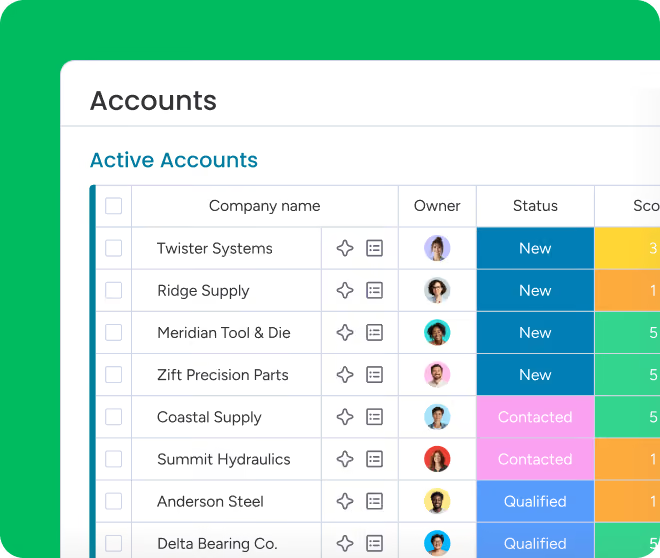
monday CRM supports the full quote-to-order motion manufacturers depend on, with each RFQ tracked as a deal connected to the right contact and account.
.avif)
Manufacturing sales don't end when the quote goes out, they require coordination across sales, account management, finance, legal, and post-sale teams.
.avif)
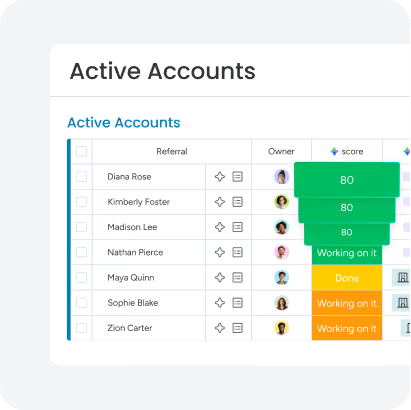
Sales often run through distributors, dealers, and multi-location accounts, each with their own stakeholders and quote history, and monday CRM brings structure to all of it.
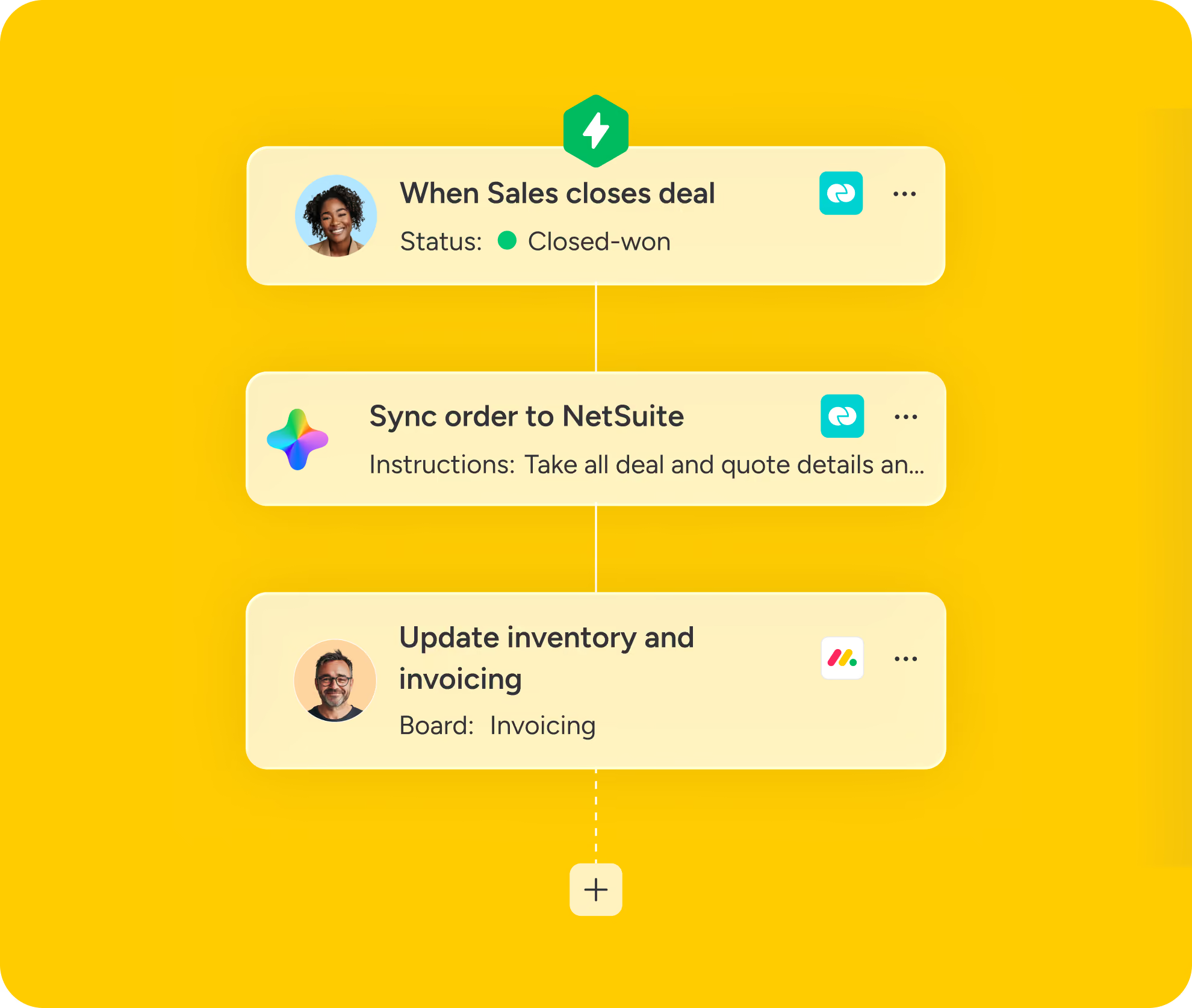
monday CRM integrates with your existing tech stack, ERP, inventory, finance tools, calendars, and email, so sales stays connected to operational context without switching platforms.
monday CRM gives sales and operations leaders visibility into pipeline value and expected order volume, so production planning isn't guesswork.
.avif)
Whether you're quoting a straightforward equipment order or managing a multi-month pharma deal, monday CRM's built-in AI adapts to keep it moving.
.avif)



״The way you can integrate monday CRM with monday work management is the smartest thing that we’ve done.״

.avif)
Integrate your tech stack to reduce admin time and boost velocity.





.png)
.png)
.png)
.png)

Get the unfiltered scoop from sales leaders about how to tackle major challenges with care.
Be the first to get the latest on the newest features and updates we’re rolling out on monday CRM.

Sharpen your monday CRM skills and master every stage of the customer journey.

Follow us on LinkedIn for pro sales tips, product updates, hilarious memes, and much more!
A manufacturing CRM is a system for managing the quote-to-order sales cycle—tracking RFQs, quotes, customer accounts, and distributor/dealer activity in one place. In monday CRM, you connect leads, deals, contacts, and accounts so every email, meeting, file, and quote history is attached to the right record via the Item Card and Emails & Activities timeline, giving sales and account teams a single source of truth for where each RFQ and order stands.
For manufacturing, prioritize CRM features that support complex buying groups and operational handoffs: sales pipeline management with customizable stages, Emails & Activities to log emails, meetings, calls, and notes in a single timeline with email tracking, Quotes & Invoices to generate and send documents, Dashboards for forecasting and funnel conversion, and automations for lead assignment and follow-up reminders to keep quotes moving.
monday CRM is a strong fit for manufacturers that need flexibility for different product lines, quoting steps, and channel models without heavy admin overhead. You can tailor pipelines, fields, and automations to match how your team sells (direct, distributor, dealer, or mixed), while keeping communications centralized in Emails & Activities. For visibility into risk and next steps, teams can also use the Deal Insights widget.
Pricing depends on plan and seats, and manufacturing teams typically choose based on which CRM capabilities they need. Standard and above includes Emails & Activities for centralized communication, Pro and above adds Quotes & Invoices and advanced reporting/dashboards, and Pro/Ultimate offers Deal Insights widget availability. AI usage may involve AI credits. For exact pricing, compare plans on monday CRM's pricing page and map them to your quote volume and team roles.
monday CRM connects to ERP, inventory, and production systems using integrations and flexible APIs, so sales can see order status signals without duplicating work. A common manufacturing setup triggers on deal/quote stage changes (e.g., "PO received"), syncs key fields like SKU list, quantities, and ship date to your ERP or pulls updates back into the deal record, keeping sales, planning, and finance aligned from quote through fulfillment while operational systems remain the system of record for production.
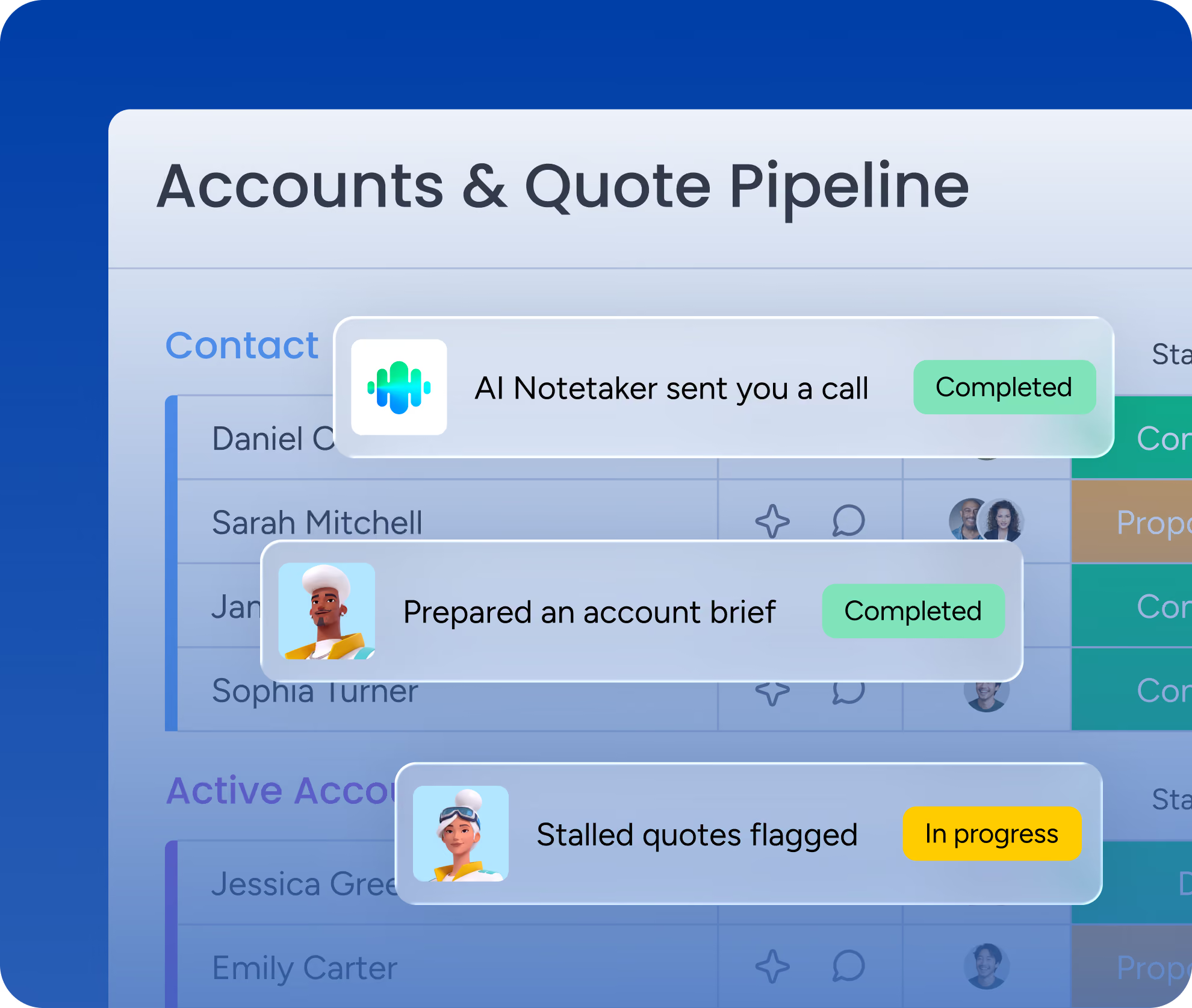
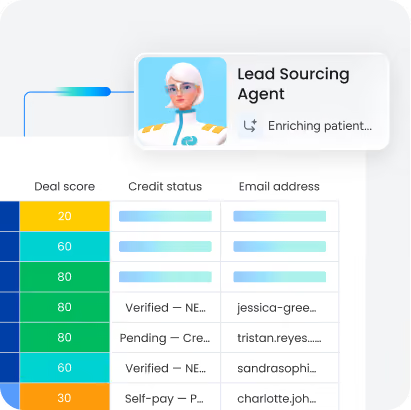
monday CRM's named AI agents reduce admin work across quoting and account management. The AI Notetaker joins sales calls, transcribes, and auto-syncs quote details, blockers, and next steps to the CRM record. The Meeting Prep Agent delivers a ready-to-use account brief before calls, the Pipeline Monitor Agent flags stalled quotes and recommends next steps, and monday sidekick lets reps query call notes and CRM data in natural language. You can also expand capacity with the Lead Sourcing Agent, Calling Agent, or build your own custom agent.
Track channels by structuring your CRM around accounts (distributors/dealers), contacts (stakeholders), and deals (quotes/opportunities). Next, connect them so every interaction rolls up to the right relationship. Use the Connect Boards Column to link dealer accounts to deals and end-customer accounts, log communication in Emails & Activities so channel conversations stay visible, and use Round robin automations to assign inbound RFQs automatically. For channel health, the Deal Insights widget can surface signals like low engagement or stalled progression (where available).
A manufacturing CRM manages the customer-facing side, think quotes, pipeline stages, communications, and relationship, so teams can win and retain business. An ERP typically manages operational execution such as inventory, production planning, purchasing, and accounting. In monday CRM, you keep the opportunity and relationship context centralized, and use integrations to pass finalized order data to the ERP when a deal reaches a "PO received" or "Won" stage.
monday CRM supports RFQ-to-order by managing each quote as a structured record connected to the right contact and account. Capture RFQs via forms or imports into your Leads board, qualify and convert to contacts, then create a deal for the quote with value, target close date, and stage. Generate and send documents using Quotes & Invoices, and automate follow-ups using email templates, sequences, and email tracking so no quote goes cold, keeping quote status, files, and communications in one place.
Start by implementing the core connected structure, then layer in automation and AI. Import leads into the Leads board, define your manufacturing pipeline stages in the Deals board using the built-in Pipeline view, and connect you deals, accounts, and contacts so quote history and stakeholders are always attached to the right company. Turn on Emails & Activities to centralize communication logging, add client onboarding tracking post-sale using connected boards, then add Round robin automations and agents like AI Notetaker and Pipeline Monitor Agent.



.avif)