

Imagine orchestrating a company-wide digital transformation. The marketing team is launching a new CRM, IT is migrating to the cloud, and operations is overhauling customer workflows. These aren’t just separate projects — they’re interconnected pieces of a strategic puzzle. So, who ensures they all fit together to create a cohesive picture?
Enter the program manager. Unlike project managers who focus on individual deliverables, program managers coordinate multiple related projects to achieve strategic business objectives. They bridge the gap between high-level strategy and ground-level execution, ensuring various workstreams move in the same direction while delivering measurable business value.
This guide covers everything you need to know about program management in 2027. We’ll explore key responsibilities, essential skills, career progression paths, and how AI is transforming the role.
You’ll also see how sophisticated platforms like monday work management help program managers stay on top of complex initiatives, automate busywork, and focus on the strategic leadership that actually moves the needle.
Key takeaways
- Program managers align strategy and execution: they coordinate multiple related projects to deliver measurable business outcomes rather than isolated deliverables.
- Influence matters more than authority: successful program managers build alignment across teams departments and leadership without direct line management.
- Technology enables portfolio-level visibility: modern platforms help program managers track dependencies risks and outcomes across complex initiatives.
- monday work management supports strategic coordination: unified portfolios automation and AI insights help program managers reduce manual work and focus on leadership.
- The role demands both business and people skills: strong program managers combine stakeholder management data analysis and change leadership to drive impact.
A program manager coordinates multiple related projects to achieve strategic business objectives.
Unlike project managers who focus on individual deliverables, program managers oversee interconnected initiatives that collectively deliver organizational value. They connect high-level strategy to ground-level execution, making sure every workstream pulls in the same direction.
Consider a digital transformation initiative. This program might include distinct projects such as a website redesign, CRM implementation, and staff training curriculum. While project managers handle daily execution, the program manager makes sure these pieces fit together and deliver real business value.
Here’s the key terminology that defines how program managers work:
- Program: a collection of related projects managed together to obtain benefits not available from managing them individually.
- Portfolio: a high-level collection of programs, projects, and operations managed as a group to achieve strategic objectives.
- Strategic alignment: the process of connecting work execution to business goals to ensure resources support the organization’s mission.
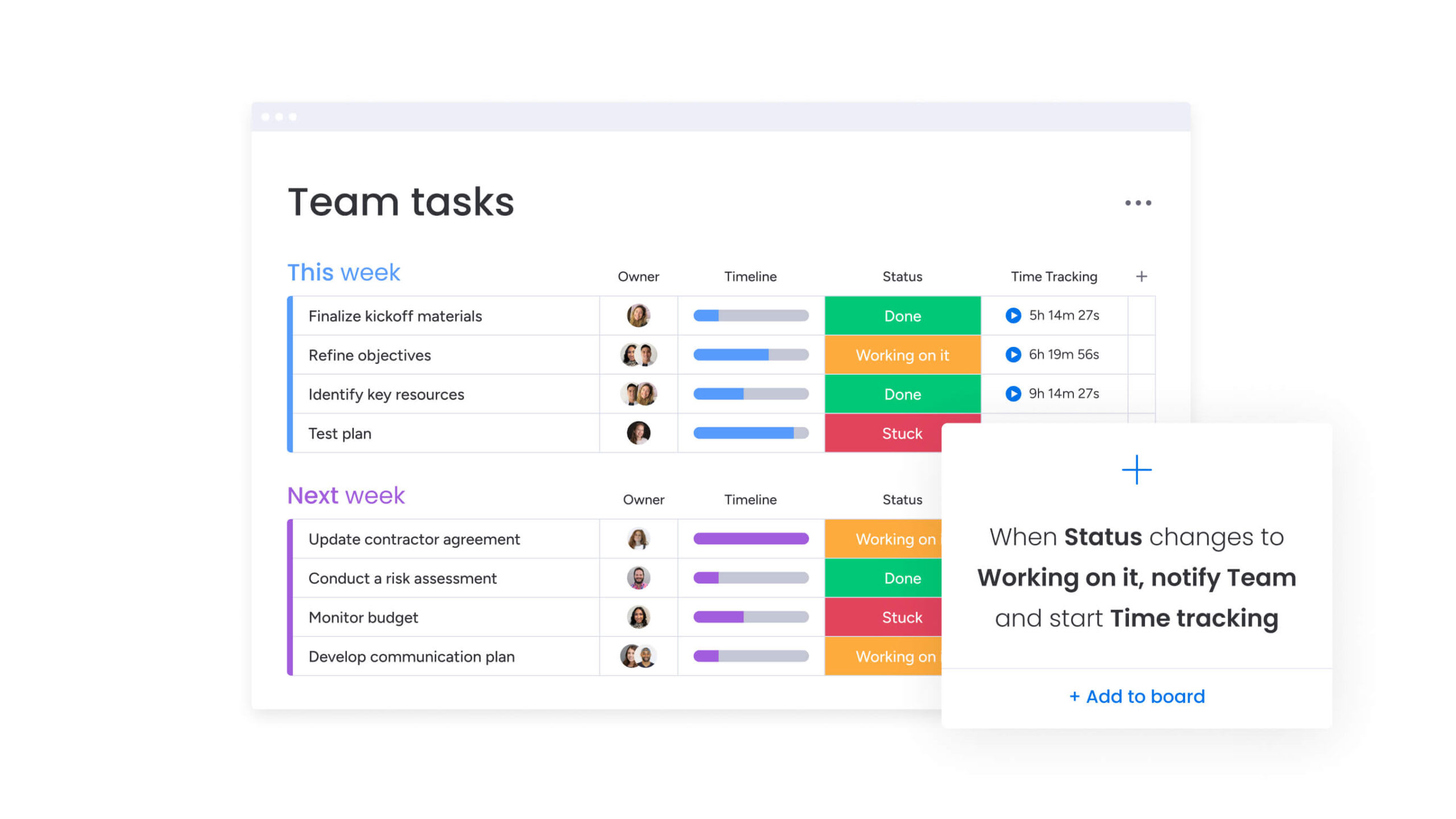
Program manager responsibilities cover strategy, operations, and leadership. These responsibilities determine whether interconnected projects deliver real value or miss the mark. Each area demands different skills and approaches.
Strategic portfolio oversight
Program managers keep individual projects aligned with company strategy. This means defining program objectives, setting success metrics, and making sure every project contributes to bigger business goals.
Key activities include:
- Quarterly business reviews: conducting regular assessments of program progress against strategic objectives.
- Stakeholder reporting: managing communication with executive leadership and cross-functional teams.
- Strategic pivots: executing course corrections based on market changes or organizational shifts.
Using a platform like monday work management, program managers can articulate how their approach maps to company strategy and set KPIs that measure program health, not just individual project status.
Cross-functional team leadership
This program manager role requires leadership without direct authority, influencing through collaboration and shared objectives. Program managers work with stakeholders across departments and build consensus among different teams.
Matrix management is critical here. You coordinate resources with different reporting lines while aligning marketing, IT, and operations teams on shared initiatives. How well you navigate these relationships makes or breaks the program.
Risk and dependency management
Program management professionals identify and mitigate risks that span multiple projects. They manage interdependencies between deliverables, anticipate how delays ripple across initiatives, and build contingency plans.
Dependency tracking means watching how technical integration challenges in one project impact another’s timeline. Clear escalation paths help resolve resource conflicts and timeline dependencies before they derail the program.
Business outcome alignment
But what is the single biggest responsibility of a program manager? Measuring and reporting program success against business objectives — not just project completion. This means tracking value realization, ROI, and post-implementation benefits.
Program managers track customer satisfaction improvements, cost savings, or revenue generation from the program. They make sure the program delivers financial value that matches the investment and prove its impact to executives.
Try monday work managementProgram manager vs project manager
While both roles involve coordination and delivery, they operate at different organizational levels with distinct scopes and objectives as detailed in program manager vs. project manager comparisons..
Understanding these differences helps organizations assign the right leadership to each initiative.
| Aspect | Program manager | Project manager |
|---|---|---|
| Scope | Multiple related projects | Single project |
| Timeline | Ongoing program lifecycle | Defined project duration |
| Focus | Strategic outcomes and benefits | Deliverables and tasks |
| Stakeholders | Executive leadership and cross-organizational groups | Project team and immediate stakeholders |
| Success metrics | Business value realization | On-time, on-budget delivery |
| Authority | Influence and coordination | Direct team management |
| Skills emphasis | Strategic thinking and relationship management | Technical execution |
A project manager might oversee CRM system implementation, focusing on technical setup and data migration. The program manager coordinates the entire customer experience transformation, which includes the CRM implementation, staff training, process redesign, and customer communication strategy.
7 essential skills every program manager needs
Successful program management requires strategic, technical, and interpersonal skills. These skills separate effective program managers from those who struggle.
Developing these skills also determines whether you can coordinate multiple initiatives without losing strategic focus.
1. Strategic leadership and stakeholder management
Program managers influence without authority, build consensus across different groups, and stay focused on strategy despite competing priorities. This means communicating with executives, advocating for change, and resolving conflicts.
You’ll present progress to the C-suite, manage competing departmental interests, and push adoption of new initiatives across the organization. How well you navigate these relationships while keeping everyone aligned makes or breaks the program.
2. Digital fluency and technology integration
Understanding how technology enables program delivery is critical. Program managers evaluate and implement digital platforms that support program coordination — from collaboration to automation.
This includes:
- Platform selection: choosing project management platforms that support cross-functional coordination.
- Workflow automation: implementing automated processes to reduce manual effort and improve consistency.
- Data analytics: leveraging analytics capabilities for program insights and decision-making.
Tech fluency helps you make smart decisions about which tools will accelerate your program.
3. Data analysis and decision intelligence
Synthesizing information from multiple sources, spotting trends, and making data-backed decisions is essential. This means portfolio-level reporting, predictive analytics for risk management, and performance measurement.
Program managers create dashboards, perform trend analysis, and make evidence-based recommendations to leadership. Turning raw data into useful insights drives more informed decisions.
4. Cross-functional communication
Tailoring communication style and content for different audiences keeps everyone aligned. This includes documentation standards, meeting facilitation, and stakeholder reporting.
Communication formats include:
- Technical specifications: writing detailed requirements for development teams.
- Executive summaries: creating concise updates for leadership review.
- Status updates: providing regular progress reports to project teams.
5. Agile and adaptive thinking
Program managers pivot strategies based on changing conditions while keeping program objectives on track. This requires iterative planning, continuous improvement, and staying resilient when things get uncertain.
Responding to market changes, managing resource constraints, and navigating unexpected technical challenges without losing sight of the end goal becomes second nature. Flexibility allows you to adjust course while keeping the program on track.
6. Change management expertise
Understanding organizational change dynamics, resistance patterns, and adoption strategies is critical to program success. This means communication planning, training coordination, and cultural transformation.
Program managers oversee digital transformation efforts, process redesigns, and organizational restructuring. They make sure changes stick by addressing both the technical and human sides of transformation.
7. Business acumen and financial literacy
Deep understanding of business models, financial impact, and value realization helps program managers speak the language of business. This means budget management, ROI calculation, and business case development.
Conducting cost-benefit analysis, making resource allocation decisions, and using value measurement frameworks helps prove program worth to stakeholders.
Try monday work management
Technology has transformed program management from spreadsheet-based tracking to integrated platforms that provide real-time visibility and automated insights. The right capabilities change what program managers can accomplish.
Portfolio management platforms
These provide centralized visibility across multiple projects, resource tracking, and dependency management. Features include Gantt charts for timeline visualization, resource planning, and cross-project reporting.
Program managers pull data from all projects across different programs into one high-level view to detect bottlenecks and problems. This unified view lets you manage proactively instead of constantly putting out fires.
AI-powered analytics and automation
AI improves program management through predictive analytics, automated risk detection, and smarter resource allocation.
Key AI capabilities include:
- Sentiment analysis: understanding stakeholder feedback patterns.
- Pattern recognition: identifying potential delays in project data.
- Automated reporting: generating status updates without manual compilation.
Collaboration and workflow capabilities
Integration between communication platforms, document management, and project execution cuts down on context switching. This covers real-time collaboration, workflow automation, and stakeholder engagement.
Teams collaborate in real-time with live boards, dashboards, and project data embedded directly into documents. This integration keeps everyone aligned without constant status meetings.
Real-time reporting dashboards
Customizable reporting lets you create stakeholder-specific views and automated data visualization. This includes executive reporting, team performance tracking, and trend analysis.
Dashboards display portfolio health indicators, resource utilization reports, and milestone tracking in real-time. Program managers can create different views for executives, team leads, and individual contributors.

“monday.com has been a life-changer. It gives us transparency, accountability, and a centralized place to manage projects across the globe".
Kendra Seier | Project Manager
“monday.com is the link that holds our business together — connecting our support office and stores with the visibility to move fast, stay consistent, and understand the impact on revenue.”
Duncan McHugh | Chief Operations OfficerHow to become a successful program manager
Program management careers develop through different paths, with success depending on both formal qualifications and hands-on experience. Building expertise requires strategic career planning, skill development, and real experience with complex initiatives.
Education and certification requirements
Typical educational backgrounds include business, engineering, or relevant domain expertise. Valuable certifications include:
- Project Management Professional (PMP): foundation for project management principles.
- Program Management Professional (PgMP): advanced program management certification.
- Managing Successful Programmes (MSP): framework for program management best practices.
Continuing education is crucial as methodologies evolve. Certification costs and time investments vary but can significantly impact your career path and credibility.
4 career progression paths
Path 1: project manager to program manager
This is the natural progression from managing individual projects to coordinating multiple related initiatives. This requires developing strategic skills, gaining experience with larger scopes, and shifting from task execution to outcome management.
Path 2: functional expert to program manager
Domain expertise in areas like IT, marketing, or operations leads to program management roles. Professionals use subject matter knowledge while developing coordination and leadership skills.
Path 3: consultant to internal program manager
Consultants transition to internal program leadership. Consulting experience provides valuable perspective on organizational change, stakeholder management, and aligning strategy.
Path 4: MBA to program manager
Business education provides a strong strategic foundation. Graduates combine academic knowledge with practical experience gained through internships or entry-level positions.
How to build your program management experience
Gaining relevant experience means seeking volunteer opportunities, participating in cross-functional projects, and finding mentorship programs. Building a portfolio of managed initiatives, networking within the industry, and demonstrating coordination skills are critical steps.
Start by leading small cross-functional initiatives within your current role. Document outcomes, key lessons, and stakeholder feedback to build credibility for larger opportunities.
Salary expectations and growth potential
Salary ranges vary based on experience levels, geographic regions, industry, company size, and program complexity. Senior program managers in large technology companies or complex industries often command higher compensation.
Entry-level program managers typically earn $75,000-$95,000, while senior roles can exceed $150,000-$200,000. Total compensation including bonuses and equity can reach significantly higher levels in technology and finance sectors.
How AI is revolutionizing program management
AI is transforming program management from reactive coordination to proactive leadership. AI enhances human decision-making rather than replacing program managers, changing how programs are managed day-to-day.
These capabilities let program managers focus on strategic activities while AI handles routine coordination processes.
Automated risk detection and mitigation
AI analyzes patterns across project data to identify potential risks before they impact program delivery. Predictive analytics flag timeline delays, resource conflicts, and budget overruns early.
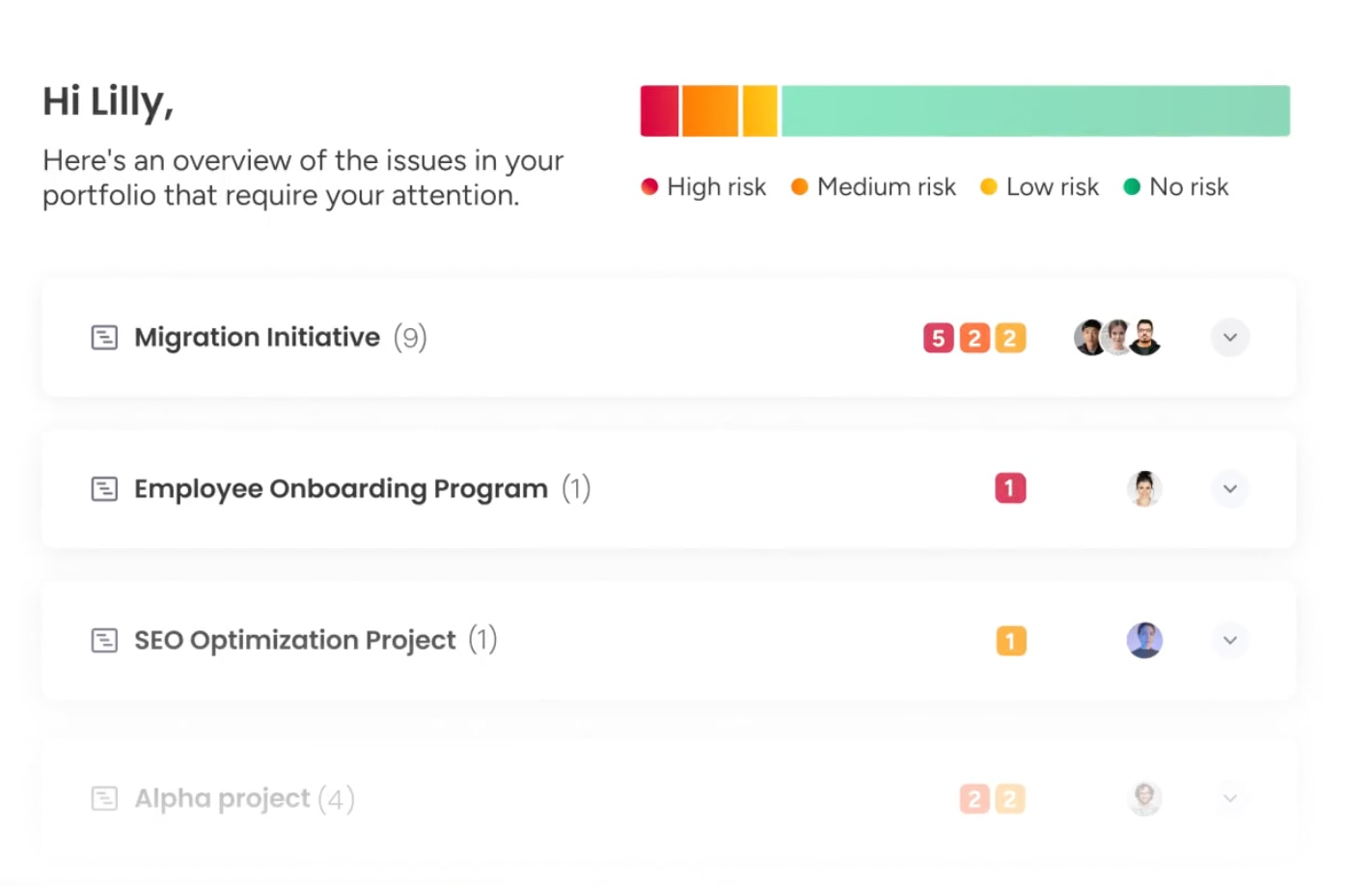
Portfolio Risk Insights on modern platforms like monday work management scan all project boards and flags potential risks by severity. Program managers spot critical issues at a glance without manually combing through data, addressing problems before they escalate.
Intelligent resource allocation
AI optimizes resource assignment based on skills, availability, workload, and project requirements. Machine learning algorithms improve allocation decisions over time by learning from past project performance.
Teams using monday work management assign the right people to the right projects, taking into account effort, level, availability, and skills through AI-powered resource management. This ensures optimal utilization without overloading key contributors.
Predictive analytics for portfolio health
AI synthesizes data from multiple projects to provide portfolio-level insights and forecasting. Trend analysis and performance prediction models help managers understand likely outcomes of current trajectories.
Portfolio dashboards powered by AI provide executive reporting that highlights areas requiring attention. Program managers can anticipate issues weeks in advance rather than discovering them at critical milestones.
Digital workers for program support
AI-powered digital workers handle routine program management tasks, freeing program managers for strategic activities. These capabilities manage automated reporting, stakeholder communication, and administrative coordination.
The Project Analyzer on monday work management monitors projects in real-time, flags bottlenecks, and provides proactive insights to keep everything on track. This continuous monitoring ensures nothing falls through the cracks.
Transform your program management with monday work management
The intelligent monday work management platform provides comprehensive capabilities designed specifically for the complex coordination challenges program managers face. The solution connects strategy to execution, ensuring every initiative aligns with business goals.
These integrated capabilities below eliminate the need for multiple disconnected systems while providing enterprise-grade security and scalability.
Unified portfolio visibility at scale
The platform provides centralized visibility across multiple projects, programs, and portfolios. Dashboard capabilities allow for cross-project reporting and executive-level insights.
Key portfolio management features include:
- Portfolio management: connect projects across different programs for high-level visibility and bottleneck detection.
- Resource management: plan, schedule, and allocate resources based on skills and availability using workload widgets.
- Gantt charts: track project scope, schedules, milestones, and dependencies at any level.
- Customizable dashboards: display live project data with drag-and-drop widgets for budget, goals, schedules, and resources.
AI-driven program insights
monday work management integrates AI capabilities specifically relevant to program management. AI Blocks enable automated categorization, summarization, and analysis of program data.
AI-powered capabilities include:
- Risk management: identify risks across hundreds of projects with AI-driven analysis and continuous execution insights.
- Resource allocation: AI assigns the right people to the right projects considering effort, level, availability, and skills.
- Project Analyzer: monitor projects in real-time, flag bottlenecks, and receive proactive insights.
- AI Blocks: categorize project requests, extract information from documents, and summarize complex project data.
Automated cross-functional workflows
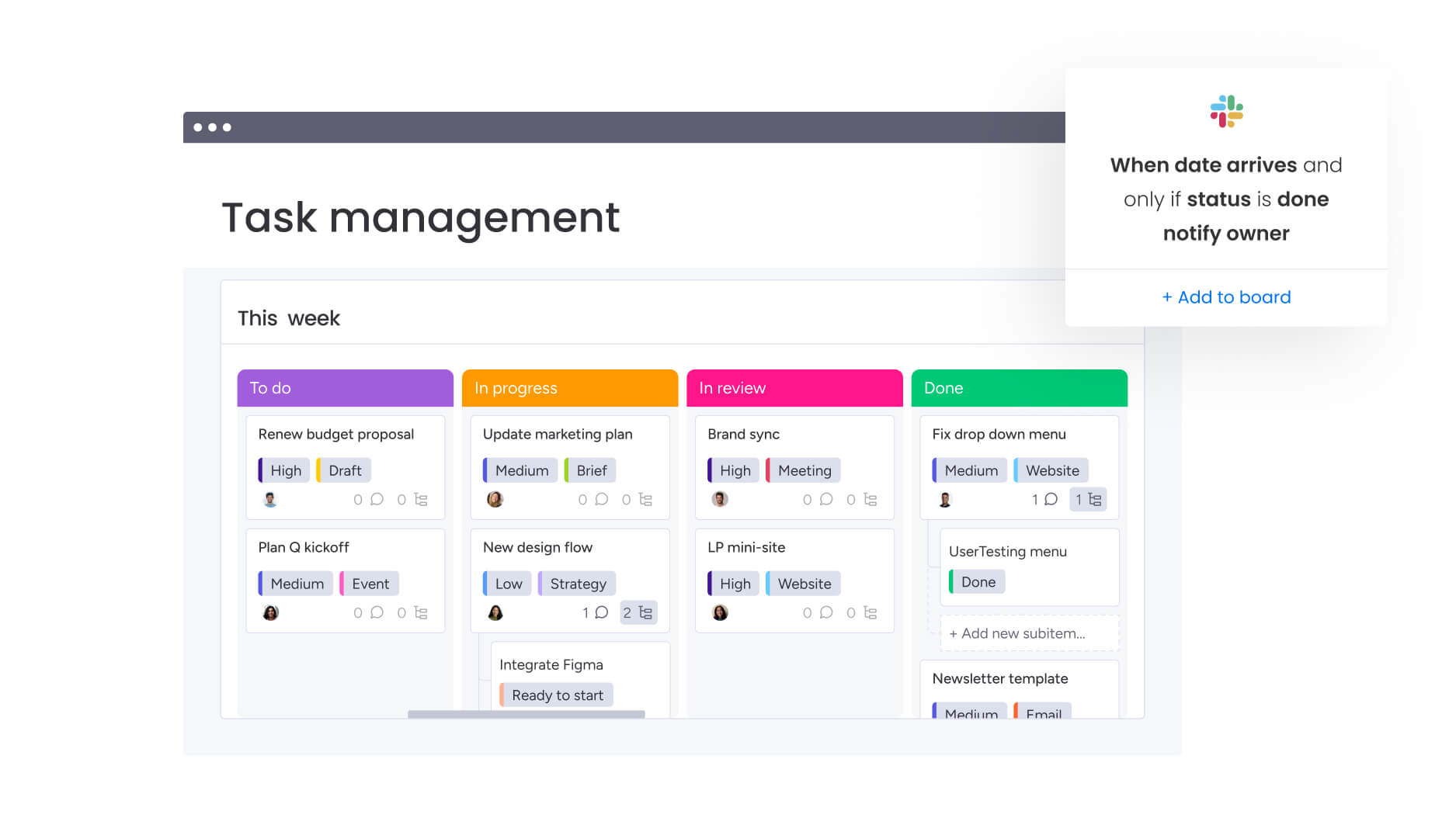
Workflow automation capabilities reduce manual coordination. The platform integrates with existing applications, provides automated notifications, and standardizes processes.
Automation features include:
- Automations and templates: save time with templated project boards, approval notifications, and automated reminders.
- Forms: collect standardized information for project proposals and work requests.
- Integrations: connect with 200+ applications including Microsoft Teams, Gmail, Slack, Jira, and Salesforce.
- monday workdocs: collaborate in real-time with embedded boards, dashboards, and project data.
Enterprise-grade security and governance
Security features, permission management, and compliance capabilities are essential for enterprise program management. The platform offers multi-level permissions, data protection, and audit capabilities.
| Capability | monday work management | Traditional PM platforms | Spreadsheet-based |
|---|---|---|---|
| Portfolio visibility | Unified dashboard across all programs | Limited cross-project views | Manual consolidation required |
| AI-powered insights | Automated risk detection and resource optimization | Basic reporting only | No intelligent analysis |
| Cross-functional collaboration | Integrated workflows with 200+ connections | Siloed project management | Email-based coordination |
| Scalability | Enterprise-grade with unlimited customization | Fixed feature sets | Manual scaling challenges |
| Security and governance | Multi-level permissions with enterprise compliance | Basic user management | Limited security controls |
Accelerate your program management success now
Program managers who master strategic coordination, stakeholder alignment, and technology integration drive measurable business outcomes. The role demands both visionary thinking and practical execution skills, requiring professionals who can navigate complexity while maintaining focus on strategic objectives.
Organizations benefit most when program managers have access to integrated platforms that provide real-time visibility, AI-powered insights, and automated workflows. These capabilities transform program management from reactive coordination to proactive leadership, enabling teams to anticipate challenges and optimize resource allocation.
Your next step involves evaluating how current program management approaches align with organizational goals and identifying opportunities for improvement. Consider how unified portfolio visibility, intelligent automation, and cross-functional collaboration capabilities could accelerate your program delivery and strategic impact.
Frequently asked questions
Is program manager a stressful job?
The job of a program manager can be demanding due to the complexity of coordinating multiple projects and stakeholders. Stress levels vary significantly based on organizational support, workload management, and individual experience. Many program managers find the role rewarding despite challenges, particularly when supported by effective program management platforms and organizational processes.
What is the highest salary for a program manager?
Senior program managers at large technology companies can earn $200,000-$300,000+ annually. Total compensation including bonuses and equity potentially reaches $400,000 or more. Salary varies significantly based on industry, location, company size, and program complexity.
Do program managers need coding skills?
Program managers typically don't need hands-on coding abilities. Technical literacy and understanding of software development processes are valuable, especially in technology-focused programs. The most important skills are strategic thinking, stakeholder management, and coordination capabilities rather than technical implementation.
Can you become a program manager without a degree?
While many program management positions prefer a bachelor's degree, extensive relevant experience, professional certifications, and demonstrated success in project coordination can substitute for formal education. Career progression often depends more on proven ability to manage complex initiatives than specific educational credentials.
What's the difference between a program manager and a portfolio manager?
Program managers coordinate multiple related projects to achieve specific business objectives. Portfolio managers oversee collections of programs and projects across an entire organization to optimize resource allocation and strategic alignment. Portfolio management operates at a higher organizational level with broader scope and longer-term perspective.
How many projects does a program manager typically manage?
Program managers typically oversee up to ten related projects simultaneously. This varies significantly based on project complexity, organizational size, and program scope. The focus is on coordination and strategic alignment rather than direct management of individual project activities.

 Get started