


Not long ago, a single support phone number was enough to meet customer expectations. Today, customer support has expanded across email, live chat, messaging apps, and social media, transforming how businesses engage with their audiences.
As customer journeys become more fragmented, delivering consistent service across multiple channels requires more than simply adding new touchpoints. Without a clear strategy, teams risk siloed data, inconsistent experiences, and rising operational costs.
This handy guide provides a complete framework for building and scaling an effective multi-channel customer support operation in 2026. It covers the essential support channels, a step-by-step implementation strategy, common challenges to avoid, and practical ways to use support data to drive smarter business decisions.
Key takeaways
- Multi-channel support enhances customer satisfaction and efficiency: Letting customers reach you via email, chat, phone, or social media improves convenience and reduces costs by routing simple issues to more cost-effective channels.
- Adopt a structured rollout approach: Start with a few core channels like email and chat, then expand gradually using a clear process that includes mapping customer journeys, selecting platforms, unifying data, designing workflows, training teams, adding automation, and continuous optimization.
- Leverage integrated platforms to streamline operations: monday service unifies all channels in a single dashboard with AI-powered routing and workflow automation, helping teams respond faster while maintaining complete customer context.
- Measure cross-channel performance for smarter decisions: Track metrics beyond individual channels, including customer journeys and ROI, to compare platform costs against operational savings and improvements in customer retention.
- Avoid common multi-channel pitfalls: Maintain consistent quality across channels, connect siloed data, and balance automation with human interaction to scale support without losing the personal touch.
What is multi-channel customer support?
Multi-channel customer support is the practice of assisting customers across multiple platforms, such as email, chat, phone, or social media. This approach allows customers to connect through their preferred method, whether they are on a laptop, smartphone, or calling from their office.
Think of it as opening multiple doors for your business. Some customers prefer composing detailed questions via email, while others want instant answers through live chat. Multi-channel support acknowledges these preferences and meets customers where they are most comfortable.
The key difference from single-channel support is flexibility. Instead of directing everyone through a single method, customers have multiple options and each channel operates independently (while maintaining your service standards).
Multi-channel vs omnichannel customer service
Although multi-channel and omnichannel strategies may seem similar on the surface, they operate completely differently. Multi-channel support offers several independent platforms, whereas omnichannel creates a connected experience across all channels.
Understanding these differences is absolutely crucial for selecting the right strategy for your organization’s growth stage and long-term objectives.
- Channel connection: Multi-channel keeps each platform separate. If a customer emails then calls, they might need to explain their issue twice. Omnichannel remembers everything across channels.
- Data management: Multi-channel stores information in each channel. Omnichannel creates one unified customer record.
- Implementation complexity: Multi-channel is simpler to set up. Omnichannel requires advanced integration and higher investment.
How multi-channel support drives business growth
As support volumes grow, the way requests enter and move through your business starts to matter just as much as how they’re resolved. A multi-channel setup gives teams more control over that flow, helping them meet customers where they are while managing demand efficiently behind the scenes.
When channels are connected rather than siloed, support becomes easier to scale, cheaper to run, and far more useful as a source of insight. The sections below show how that plays out in practice.
Boost customer satisfaction across touchpoints
Different customers have different communication preferences. Tech-savvy users might prefer self-service portals. Others want the reassurance of talking to a real person: multi-channel support accommodates everyone.
This flexibility directly impacts your bottom line too. Satisfied customers stay longer, spend more, and recommend your business to others. They trust companies that make support accessible and convenient.
Reduce operational costs with smart channel management
Not every issue needs expensive phone support. Multi-channel strategies help you direct inquiries to the most cost-effective resolution path:
- Self-service deflection: Knowledge bases and FAQs handle simple questions automatically.
- Smart routing: AI sends complex issues to specialists, simple ones to junior agents.
- Channel optimization: Email handles detailed inquiries, chat manages quick questions.
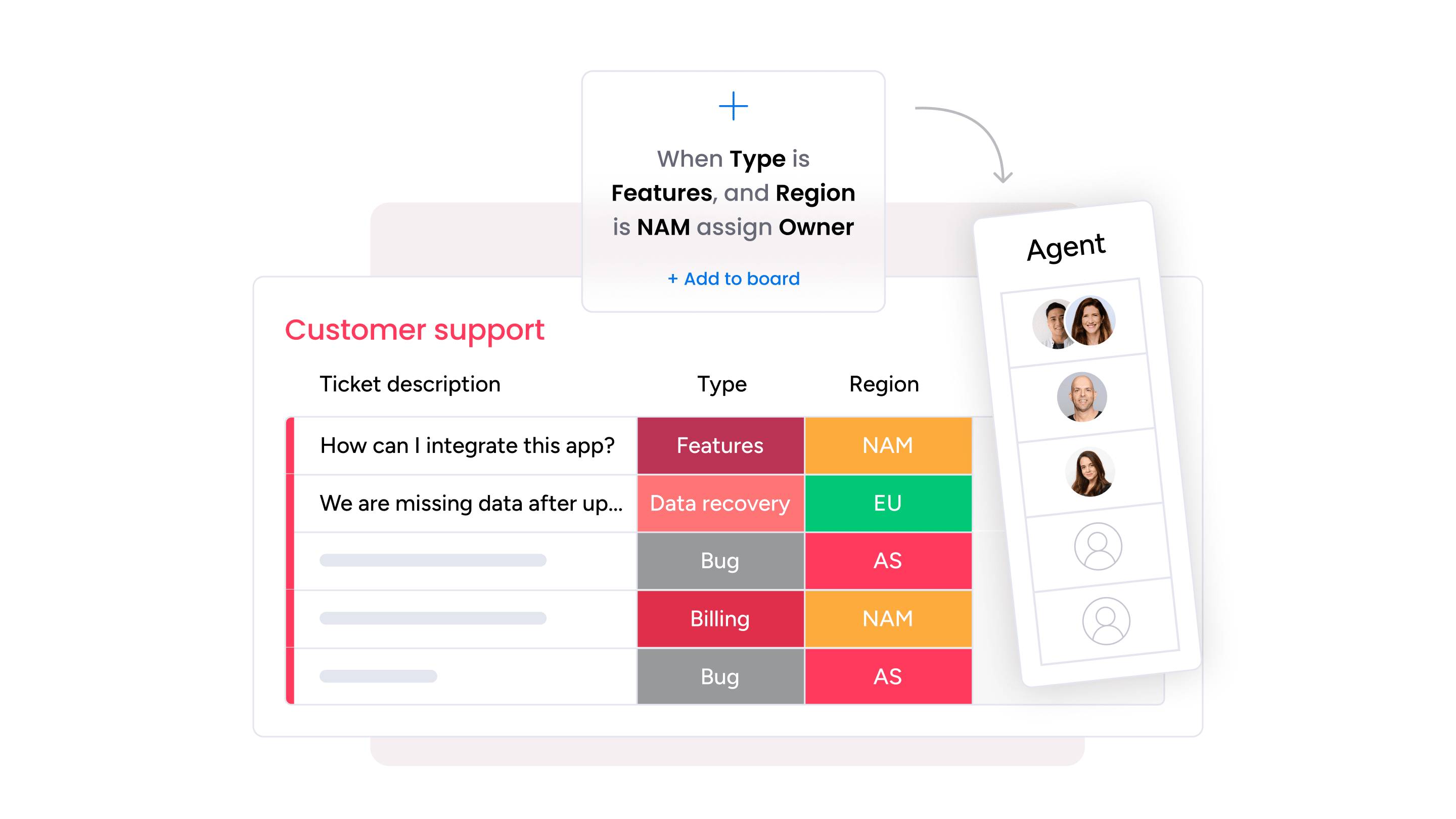
Intelligent solutions like monday service automate these routing decisions, ensuring each request goes to the right place without manual sorting.
Scale your support without scaling headcount
Growing businesses face a challenge: more customers mean more support requests. Multi-channel support helps you handle increased volume without proportionally increasing staff.
Automation handles repetitive tasks. Self-service resources answer common questions. Smart workflows distribute work efficiently. Your team focuses on complex issues while technology handles the routine stuff.
Turn support data into business intelligence
Every support interaction generates valuable data. Multi-channel platforms capture insights across all touchpoints, revealing patterns single-channel support might miss.
What products cause the most confusion? Which features need better documentation? When do support volumes spike? These insights inform product development, marketing strategies, and operational planning.
6 essential channels for modern customer support
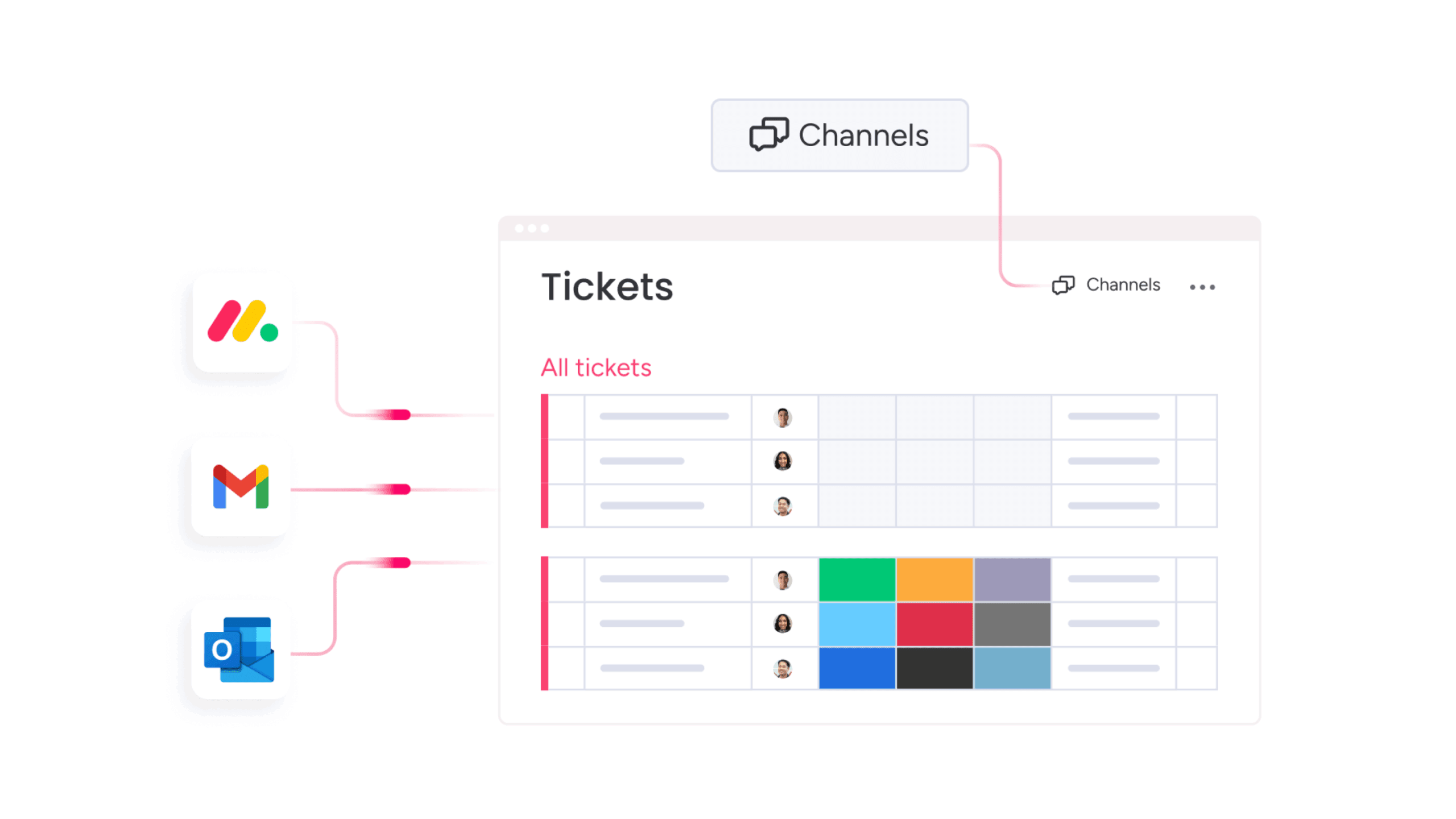
Customers don’t think in channels — they just expect help to be available when and where they need it. Modern support teams respond by combining a small set of core channels, each suited to different types of questions, urgency levels, and customer preferences.
Below are the channels that matter most today, and the role each one plays in delivering reliable, scalable support.
Email support
Email remains critical for complex issues requiring detailed explanations. Customers value documentation and the ability to attach files.
Challenges include managing response times. Customers expect replies within hours, and ticketing systems help teams prioritize messages. Automation can send acknowledgments and escalate urgent requests.
Live chat and messaging
Live chat on your website provides instant support during the customer journey. Messaging platforms like WhatsApp extend that immediacy to apps customers already use.
Chatbots handle initial inquiries, collecting information and answering FAQs. When customers need human help, the handoff should be seamless. Context transfers with the conversation, so agents don’t start from scratch.
Phone and voice support
Phone support is ideal for complex or emotional issues. Voice conveys nuance that text may miss, and some customers prefer direct conversations.
Smart routing ensures callers reach the right expertise. Follow-ups via email and call recordings support quality assurance and training.
Social media engagement
Social media support is public and immediate, influencing brand perception. Prompt, helpful responses build trust, while delays can damage reputation.
Platform-specific strategies are essential. Twitter expects rapid replies, LinkedIn requires professional tone, and Facebook allows longer conversations. monday service integrates social inquiries into a central workflow, preventing missed interactions.
Self-service knowledge base
Many customers prefer finding answers themselves. A well-organized knowledge base reduces ticket volume while improving satisfaction.
Effective self-service includes:
- Search functionality: AI-powered search understands natural language queries.
- Content organization: Clear categories and tags help navigation.
- Regular updates: Keep articles current with product changes.
- Usage analytics: Track what customers search for and where they get stuck.
Mobile app support
In-app support leverages the customer’s current context. Knowing the screen, actions, and account details accelerates resolution. Push notifications provide proactive assistance, and in-app messaging ensures engagement without switching platforms. Mobile support becomes increasingly essential as usage grows.
How to build your multi-channel support strategy in 7 steps
Developing effective multi-channel support requires structured planning. Follow these steps today to create a system that delivers excellent service and scales with your organization:
Step 1: Map your customer journey
Firstly, understanding how customers interact with your business highlights where support is most needed. Track every touchpoint from initial research to post-purchase interactions.
It’s also essential to dentify friction points. Where do customers experience delays? Which channels do they prefer for specific issues? Are there customer segments with unique requirements?
Journey mapping platforms help visualize these patterns. Survey data captures the customer perspective, while support ticket analysis reflects actual behavior. Compare your current state to the ideal experience and prioritize improvements accordingly.
Step 2: Select your technology platform
Your platform choice shapes your entire support strategy, so selecting one with features aligned to your goals is essential. A comprehensive platform should include native channel integrations, a unified inbox, and automation capabilities that allow teams to work efficiently.
Key features to keep an eye out for include:
- Channel integration: Native support for all major communication methods.
- Unified inbox: View all customer interactions in one place.
- Automation engine: Manage routine tasks without manual effort.
- Analytics dashboard: Track performance across all channels.
- API access: Connect seamlessly with existing business systems.
Sophisticated and modern solutions like monday service deliver these capabilities in a flexible, no-code platform. Teams customize workflows without technical expertise.
Step 3: Unify your customer data
Scattered data creates poor experiences. When agents can’t see previous interactions, customers repeat themselves. Unifying data requires:
- Data migration: Move information from old systems.
- Data cleaning: Remove duplicates and errors.
- Ongoing sync: Keep records current across platforms.
- Security controls: Protect customer privacy.
The effort pays off in faster resolutions and happier customers.
Step 4: Design your channel workflows
Different requests need different handling. Design clear paths for common scenarios:
- Simple questions: Route to self-service or junior agents.
- Technical issues: Escalate to specialists.
- Complaints: Flag for priority handling.
- Cross-department requests: Define handoff procedures.
Document workflows clearly. Visual workflow builders within platforms like monday service can really help to simplify design and updates.
Step 5: Train your support team
Multi-channel support demands new skill sets. Agents require channel-specific training alongside general best practices.
Cross-training enhances flexibility, allowing agents to cover multiple channels during peak periods. Specialization develops expertise for complex interactions. Ongoing development ensures skills remain current.
Change management is critical. Involve teams in process design, address concerns openly, and celebrate early wins. When agents recognize benefits, adoption accelerates.
Step 6: Implement AI and automation
AI enhances human capabilities without replacing empathy. Start with clear use cases:
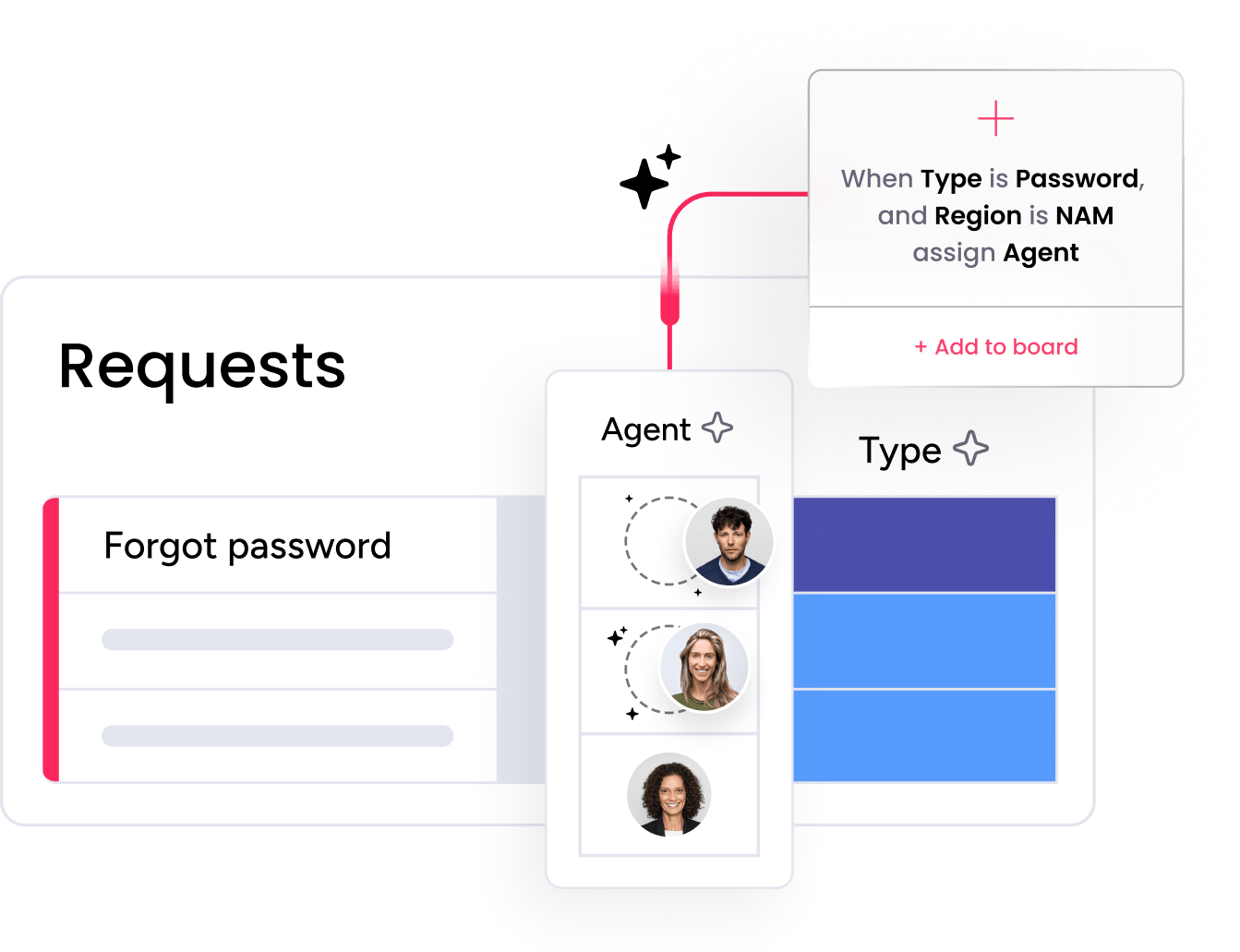
- Ticket routing: Analyze content to assign the right team.
- Response suggestions: Recommend templates based on issue type.
- Sentiment detection: Flag frustrated customers for priority.
- Chatbot deflection: answer FAQs without agent involvement.
Balance automation with human touch. Always provide escalation paths. Review AI performance regularly. monday service integrates AI naturally into workflows.
Step 7: Launch and optimize
Finally, roll out new processes in phases to minimize disruption. Begin with one or two channels, learn from results, then expand gradually.
Track key metrics from the start:
- Response times: How quickly you acknowledge requests.
- Resolution rates: Percentage solved on first contact.
- Customer satisfaction: Post-interaction survey scores.
- Channel performance: Which channels work best for which issues.
Use insights to refine workflows continuously. Customer needs evolve, new channels emerge, and regular reviews ensure your strategy stays relevant.
How to overcome common multi-channel challenges
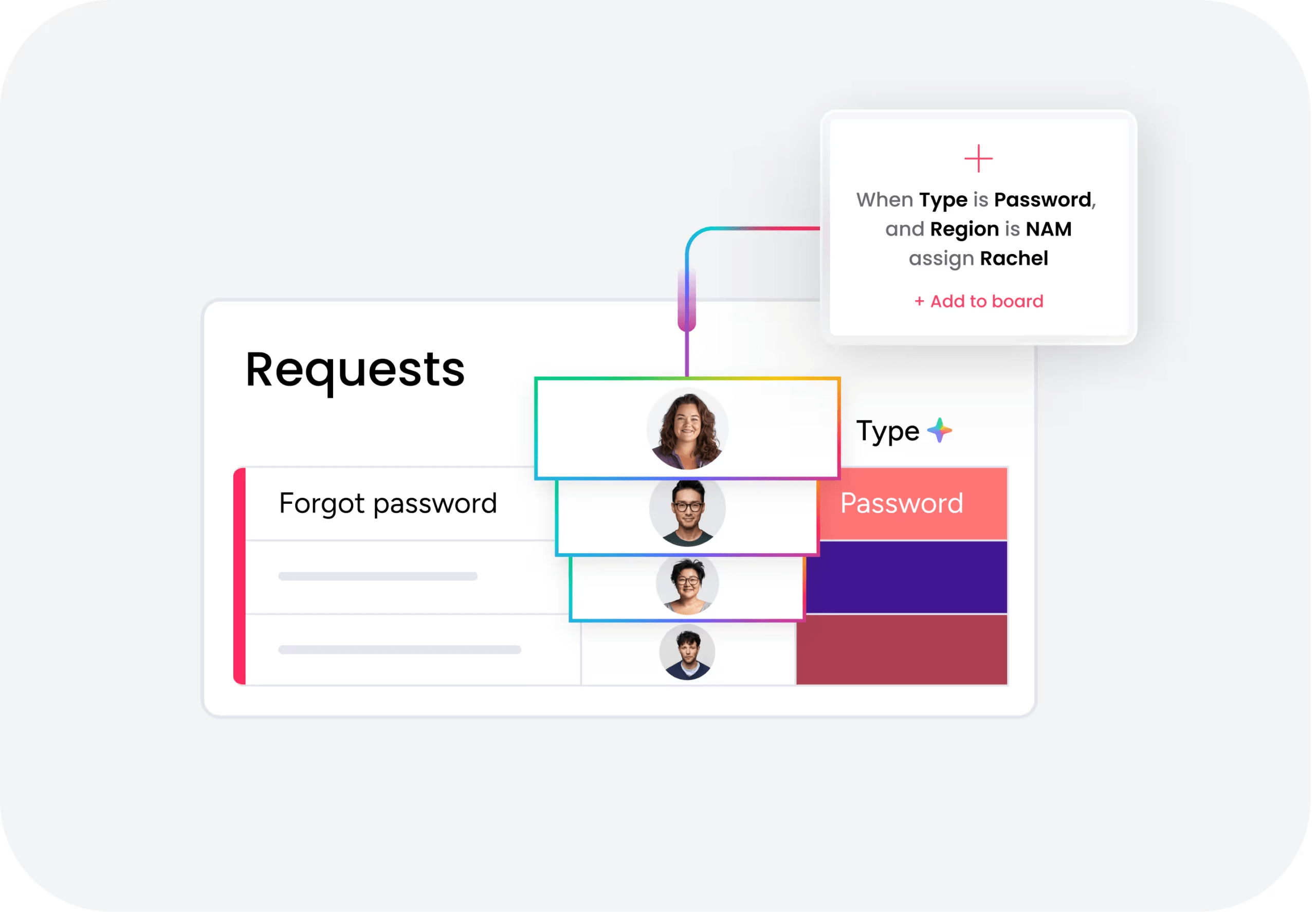
Expanding support across multiple channels improves accessibility, but it also introduces new operational challenges. Without the right structure, teams face inconsistent experiences, fragmented data, and increasing complexity that slows response times and frustrates customers.
The good news is that these issues are predictable — and solvable. By standardizing workflows, connecting channel data, and balancing automation with human judgment, support teams can scale multi-channel operations while preserving quality and efficiency.
The sections below break down the most common obstacles and how to address them effectively.
Create consistent experiences everywhere
Customers expect uniform quality across channels. Style guides standardize communication, training reinforces standards, and quality assurance identifies inconsistencies. Centralized resources on monday service, including response templates, knowledge articles, and escalation procedures, support consistent interactions.
Connect siloed channel data
Disconnected channels create repeated requests and limit agent visibility. Integrations connect channels natively, while APIs link legacy systems. Unified data allows faster resolutions, clearer trend identification, and customers who feel heard.
Maintain personal touch at scale
Even at high volumes, interactions can feel personalized. Segment customers to tailor responses, and use personalization engines to suggest relevant content. Allow agents time to build rapport, automate routine tasks, and reward exceptional service.
Manage growing complexity
More channels increase operational complexity. Standardization, clear ownership, and regular performance reviews maintain order. Teams may evolve, with channel specialists providing deep expertise and cross-functional teams handling end-to-end journeys. Governance frameworks align operations with business goals.
Track multi-channel performance that matters
Multi-channel support only works if performance is measured as a connected system, not a set of isolated touchpoints. Looking at one channel in isolation can hide friction, duplicate effort, or missed opportunities to improve the overall experience.
The right approach combines channel-level performance, customer experience signals, and business impact to show what’s working, what isn’t, and where small changes can deliver outsized gains.
Essential KPIs for each channel
- Email: Response time and resolution rate.
- Chat: Concurrent conversations and session length.
- Phone: Handle time and first-call resolution.
Efficiency metrics are necessary, but quality matters too. Customer satisfaction scores and conversion rates reveal whether support drives meaningful outcomes. monday service dashboards provide real-time visualization and custom reporting for deeper insights.
Measure cross-channel customer journeys
Single interactions rarely reveal the full experience. Customer effort scores and channel-switching patterns highlight friction points. Insights indicate where additional training or alternative support channels may be required.
Calculate your multi-channel ROI
Investing in multi-channel support requires demonstrating returns. Consider costs, platform fees, setup, training, and ongoing management, and benefits like operational savings and higher customer retention. Track ROI over time as benefits compound.
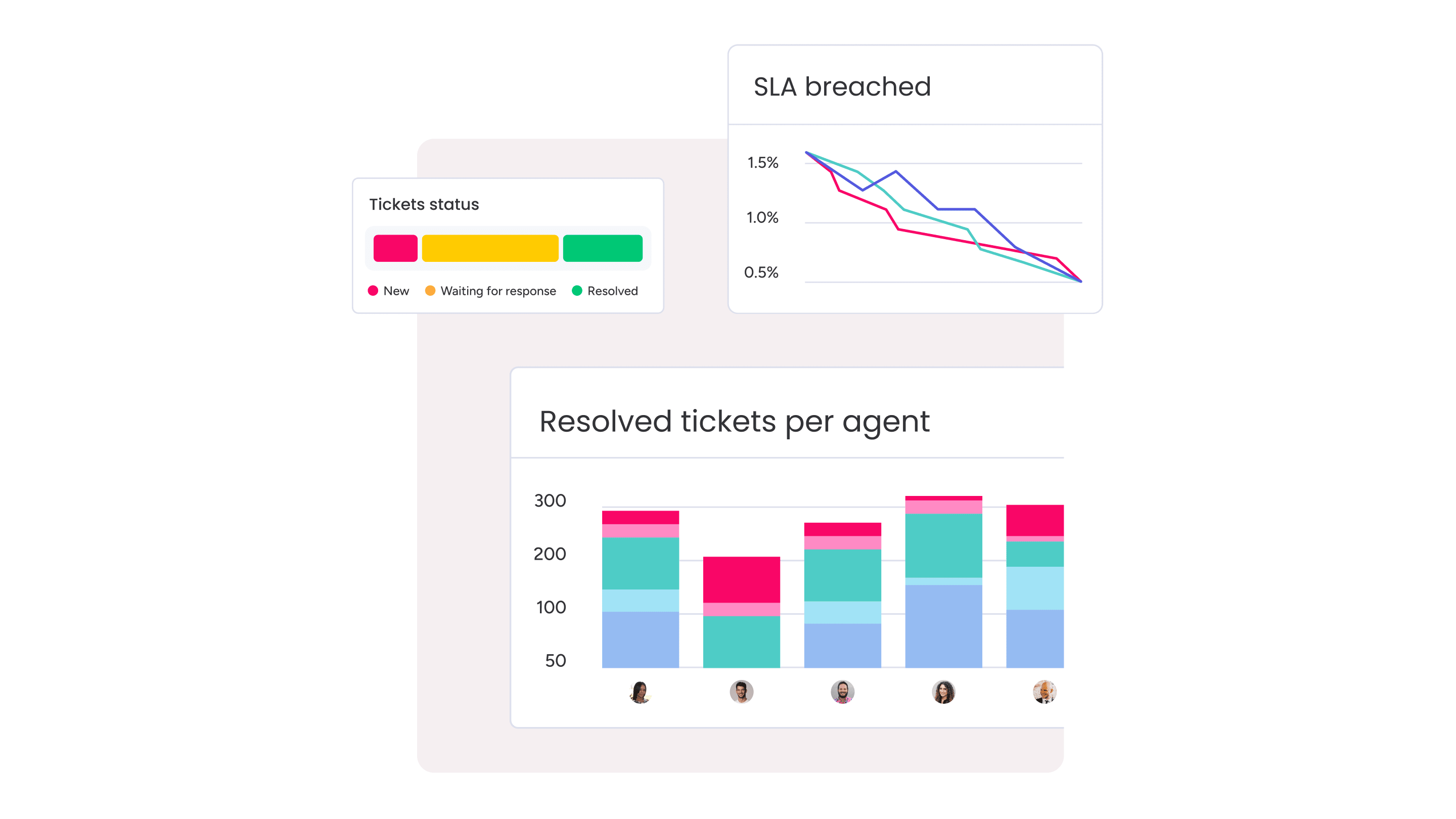
Accelerate your multi-channel success with monday service today
As this guide has highlighted, modern customer support teams face growing complexity: multiple channels, fragmented data, inconsistent service, and rising operational costs can strain workflows and impact customer satisfaction.
Intuitive solutions like monday service address these challenges by connecting daily support operations to broader business goals, allowing teams to deliver consistent, efficient, and scalable service.
Key benefits include:
- Unified platform: Centralizes email, chat, phone, social media, and in-app support for complete visibility across all customer interactions.
- Workflow automation: Streamlines routing, escalations, and repetitive tasks, freeing agents to focus on complex issues.
- AI-powered insights: Provides real-time analytics, sentiment detection, and trend identification to drive smarter decisions.
- Scalable solutions: Easily add new channels or expand operations without disrupting existing processes.
- Consistent customer experience: Standardized templates, knowledge bases, and cross-channel context ensure every interaction reflects your brand values.
By integrating tools, data, and automation into one cohesive system, monday service helps support teams work smarter, align daily efforts with strategic objectives, and enhance customer satisfaction, without added complexity.
Frequently asked questions
What is the best way to manage customer service interactions across multiple channels?
The best way to manage multi-channel customer service is through a unified platform that consolidates all channels into one dashboard. This approach lets agents see complete customer histories and maintain consistent quality. Smart routing and standardized processes ensure appropriate support regardless of channel choice.
How much does implementing multi-channel customer support cost?
Multi-channel support costs vary by business size and complexity. Platform licensing typically runs $50-200 per agent monthly. Initial setup and training can range from $10,000-50,000. Total investment depends on channel selection, automation level, and integration needs.
Can small businesses benefit from multi-channel customer service?
Small businesses absolutely benefit from multi-channel service. Starting with two to three core channels like email, chat, and self-service meets customer expectations without overwhelming resources. Modern platforms offer scalable solutions that grow with your business.
What's the typical timeline for multi-channel customer support implementation?
Multi-channel implementation usually takes three to six months from planning to full deployment. Timeline depends on channel count, data migration complexity, and training requirements. Starting with core channels and expanding gradually accelerates deployment.
How do you ensure data security across multiple support channels?
Data security requires centralized policies, encrypted transmission, and role-based access controls. Regular audits verify compliance. Choose platforms with enterprise-grade security features and relevant certifications like GDPR or HIPAA compliance.
What is the difference between multi-channel and cross-channel customer support?
Multi-channel support offers multiple independent channels for customer contact. Cross-channel support lets customers switch between channels during one interaction while maintaining context. Cross-channel represents more advanced integration where channels work together seamlessly.

 Get started