

The journey from top candidate to top performer begins the moment a new hire accepts your offer. While organizations invest heavily in recruitment, a smooth, structured onboarding experience is what truly protects that investment and builds momentum. Effective employee onboarding is a strategic process that transforms new hires into confident, productive team members who contribute faster and stay longer.
This guide covers essential employee onboarding best practices, from pre-boarding and first-day activities to building a comprehensive 30-60-90 day plan. We’ll explore how to map cross-department responsibilities, standardize workflows, and connect every step in a single, visible system. With an AI-driven platform like monday service, you can turn onboarding from an administrative burden into a true competitive advantage.
Key takeaways
- Structured onboarding drives 90-day success: Create a clear timeline with specific milestones to reduce anxiety and catch problems early.
- Cross-department coordination prevents gaps: Map responsibilities between HR, IT, managers, and facilitiesto avoid handoff failures.
- First impressions matter most: Handle paperwork early so day one focuses on relationships and meaningful work.
- Unify scattered workflows with AI: Connect teams in one platform with AI-powered automation and real-time dashboards for complete visibility.
- Measure what matters: Track time to productivity, retention rates, and satisfaction scores to prove ROI and refine continuously.
What is employee onboarding and why it matters
Employee onboarding is the process of integrating new hires into your organization. It starts when someone accepts your offer and continues through their first few months on the job.
Good onboarding transforms a nervous new hire into a confident team member.
It covers everything from paperwork and system access to understanding company culture and building relationships. Much like customer onboarding, which focuses on helping new clients achieve value quickly, employee onboarding sets the foundation for long-term success and engagement. AI-powered platforms like monday service can personalize this journey at scale, ensuring each new hire receives the right information at the right time.
The difference between onboarding and orientation
Orientation is a one-day event focused on paperwork and policies. Onboarding is the complete journey that turns a new hire into a productive team member.
Think of orientation as the starting line. It’s where you handle the basics like benefits enrollment, security badges, and office tours. Onboarding is the full race, including training, relationship building, and performance development over weeks or months. With workflow automation, you can streamline orientation tasks while focusing human attention on the deeper onboarding experience.
Why structured onboarding programs drive higher retention
When onboarding follows a clear structure, new hires know what to expect and when. This predictability reduces anxiety and builds confidence from day one, which is critical given that, according to a 2025 report from McKinsey, 18% of new hires leave during their probationary period.
Structured programs also catch problems early. If someone struggles with a system or doesn’t understand expectations, you’ll spot it in week one, not month three. AI-powered insights in monday service can flag engagement issues and completion delays before they escalate, enabling early intervention that prevents small issues from becoming resignation letters.
How to build a comprehensive onboarding process
A comprehensive onboarding process connects every department and every step. Without coordination, new hires experience gaps, delays, and confusion that damage their first impression.
Create your onboarding timeline and milestones
Your onboarding timeline should map out exactly what happens from offer acceptance through the first 90 days. Each phase needs clear milestones that signal progress.
Pre-boarding covers everything before day one. The first day focuses on welcome activities and essential setup. First week launches training and assigns a buddy, and the first month validates skills and completes introductions. By 90 days, the new hire owns real work and receives formal feedback. AI agents in monday service can automatically guide new hires through each milestone, surfacing the right resources and next steps based on their progress.
Map cross-department responsibilities
Multiple departments contribute to successful onboarding, and each owns critical pieces. Clear ownership prevents the “I thought you were handling that” problem.
Here’s who typically owns what:
- HR: Documentation, benefits, overall schedule coordination
- IT: Hardware, accounts, system access, security setup
- Manager: Role expectations, goals, coaching, work assignments
- Facilities: Desk, badge, parking, office equipment
- Finance: Purchase approvals for hardware and software
Standardize workflows for consistency
Standard workflows ensure every new hire gets the same quality experience. Templates and checklists capture what works and prevent reinvention.
Create reusable checklists for common roles. Build templates for first-week schedules and 30-60-90 plans. Set up approval workflows that route automatically to the right person. Most importantly, keep everything in one system where progress stays visible, and AI can identify bottlenecks in real time.
Pre-boarding activities that accelerate day one success
Pre-boarding is your chance to handle administrative processes before the new hire arrives. When done right, day one focuses on people and learning instead of paperwork.
Manage documentation and compliance
Required documents vary by location and industry, but most organizations need similar basics. Getting these done early prevents day-one delays.
Employment forms establish eligibility and tax setup. Background checks must clear before system access is granted. Policy acknowledgments protect the company and set expectations. Benefits enrollment gives new hires time to make informed choices. AI-powered reminders in monday service ensure nothing falls through the cracks.
Coordinate technology and workspace setup
Nothing frustrates a new hire more than arriving to find no laptop or locked accounts. Technology preparation should finish at least two days before the start date.
A new hire can’t be productive without the right technology. Coordinating with your IT team well in advance ensures everything is ready on day one, preventing frustrating delays and signaling a high level of organization. Your IT checklist should include:
| Category | What to prepare | Timing |
|---|---|---|
| Hardware | Laptop, monitors, and accessories ordered and configured | 2-3 days before start date |
| Accounts | Email, SSO, and core systems provisioned | 1-2 days before start date |
| Access | Permissions granted based on role requirements | Day before start date |
| Software | Required applications installed and licensed | 2 days before start date |
| Workspace | Desk assigned and equipment ready | Day before start date |
Prepare your team for new arrivals
Your existing team plays a huge role in making new hires feel welcome. Give them advance notice and clear ways to help:
- Send an announcement introducing the new hire’s background and start date
- Assign a buddy who can answer daily questions
- Schedule key meetings in advance while calendars are open
- Identify a small first project that lets the new hire contribute early
Designing an exceptional first day experience
First impressions stick. A chaotic first day signals a chaotic workplace, while a smooth first day builds confidence and excitement.
Your new hire’s first day agenda
Balance structure with flexibility. Cover essentials without overwhelming, and leave room for natural conversation.
Start with a manager welcome that sets the tone and priorities. Verify system access before diving into training. Include team introductions over lunch to build connections. Provide company context to show how their role matters. End with a clear first assignment and next steps. AI-powered checklists in monday service ensure nothing gets missed while keeping the day feeling personal, not robotic.
Making meaningful team connections
Introductions work best when they include context. Don’t just share names, explain how people work together.
Small group meetings are more effective for building personal connections than large gatherings. Schedule 15-minute coffee chats instead of conference room presentations. Have the buddy explain unwritten rules and communication norms. Show how team rituals like standups actually work in practice, as building these connections is essential—33% cite relationships with colleagues among the top reasons to stay.
Sharing essential information without overwhelm
Everything feels new on day one. Prioritize what they need immediately and save the rest for later.
Focus on access, communication tools, and this week’s goals. Break policies and benefits into smaller sessions across the first month. Provide written summaries they can reference later. Create a simple “Day 1 essentials” page that links to deeper resources. AI agents can answer common questions instantly, reducing information overload while ensuring new hires get help when they need it.
First week integration that builds momentum
The first week establishes patterns. Make it count by mixing learning with real contribution.
Creating effective training plans
Effective training moves quickly from theory to practice. Show how work actually gets done, not just how it should work.
Training methods that accelerate learning:
- Job shadowing: Watch experienced teammates handle real situations
- Hands-on practice: Complete small tasks with guidance
- Documentation review: Read key resources then discuss questions
- Expert sessions: Learn from specialists in short, focused meetings
AI in monday service can recommend personalized training paths based on role, department, and learning pace, ensuring each new hire gets exactly what they need without manual curation.
Setting up your buddy system for success
A buddy provides the daily support new hires need but might hesitate to ask managers for. Choose buddies who know the work and communicate clearly.
Buddy responsibilities include explaining where to find information, translating team norms and expectations, making introductions with context, and flagging any struggles to improve the program. Knowledge management tools in monday service help buddies quickly surface relevant resources and documentation.
Scheduling strategic check-ins
Regular check-ins catch problems before they grow. Keep them short but consistent.
Days 1-3 need brief daily touchpoints to resolve immediate blockers. Days 4-5 benefit from a longer conversation about the week and what’s ahead. Ask about clarity, obstacles, connections made, confidence levels, and upcoming priorities. AI-powered dashboards can surface engagement signals that help managers focus check-ins on what matters most.
Your 30-60-90 day onboarding roadmap
The 30-60-90 framework moves new hires from learning to contributing to owning outcomes. Each phase builds on the last with clear expectations.
| Phase | Focus | Key goals | Success indicators |
|---|---|---|---|
| 30 days | Foundation building | Relationship mapping, system proficiency, training completion, first deliverable | Understands role, knows key people, delivers something tangible (e.g., fixes a small bug, completes a customer call, improves a process document) |
| 60 days | Quality and independence | Define performance standards, increase task ownership, begin tracking performance trends | Works with less supervision, understands what "good" looks like, meets specific metrics (response time, code quality, customer satisfaction) |
| 90 days | Full integration | Measure productivity against benchmarks, gather stakeholder feedback, document achievements and growth areas | Operates as full team member, produces at expected levels, collaborates smoothly, demonstrates cultural fit, transitions from "new person" to "teammate" |
Quick wins in the first 30 days build momentum and confidence. By 60 days, align on role-specific metrics to guide coaching conversations. At 90 days, create a development plan for continued successbased on documented achievements and feedback. AI insights in monday service track progress against these milestones automatically, flagging at-risk new hires before they disengage.
8 best practices for employee onboarding success
These practices transform onboarding from a checklist into a strategic advantage. Each one addresses common failure points and scales across organizations.
1. Create a centralized digital workspace for onboarding
A central hub eliminates confusion about where to find information. New hires access everything from one location instead of hunting through emails and folders.
Your hub should contain documents, schedules, contacts, and resources all in one searchable place. A platform like monday service serves this role by connecting tasks, documents, and communication in a single workspace, with AI-powered search that surfaces exactly what new hires need.
2. Automate repetitive tasks and approvals
Automation frees HR and managers to focus on relationship building instead of administrative work. It also prevents human error in routine processes.
Common automation opportunities:
- Document reminders: Nudge for missing forms automatically
- IT provisioning: Trigger account creation when start date confirms
- Task assignment: Route training based on role type
- Approval routing: Send requests to the right approver instantly
AI-powered workflow automation in monday service handles these tasks intelligently, learning from patterns to optimize routing and timing.
3. Design role-specific onboarding journeys
Generic onboarding wastes time on irrelevant content. Role-specific paths deliver exactly what each person needs to succeed.
Sales reps need CRM training and call shadowing. Engineers need repository access and code review processes. Support agents need ticketing system training and product knowledge. Managers need team information and performance tools. AI agents in monday service automatically customize onboarding journeys based on role, department, and individual progress.
4. Build in regular manager touchpoints
Manager involvement determines whether onboarding succeeds or fails. Schedule touchpoints that create consistent support without micromanagement.
Day 1 sets expectations. Week 1 reviews early progress. Weeks 2-4 provide weekly coaching. Days 30, 60, and 90 mark formal milestone reviews. Each conversation should address specific topics and document next steps. AI-generated summaries in monday service help managers prepare for these conversations with relevant context and progress data.
5. Foster cross-team collaboration early
How often does a new hire discover critical dependencies months into the job? Early cross-team exposure prevents surprises and builds working relationships.
Introduce partner teams with context about how you work together. Include new hires in relevant meetings to see collaboration in action. Assign a small cross-team project to practice collaborative workflows. Map stakeholders so they know who to engage for different needs. monday service’s unified workspace makes cross-team collaboration visible and seamless from day one.
6. Enable self-service for common questions
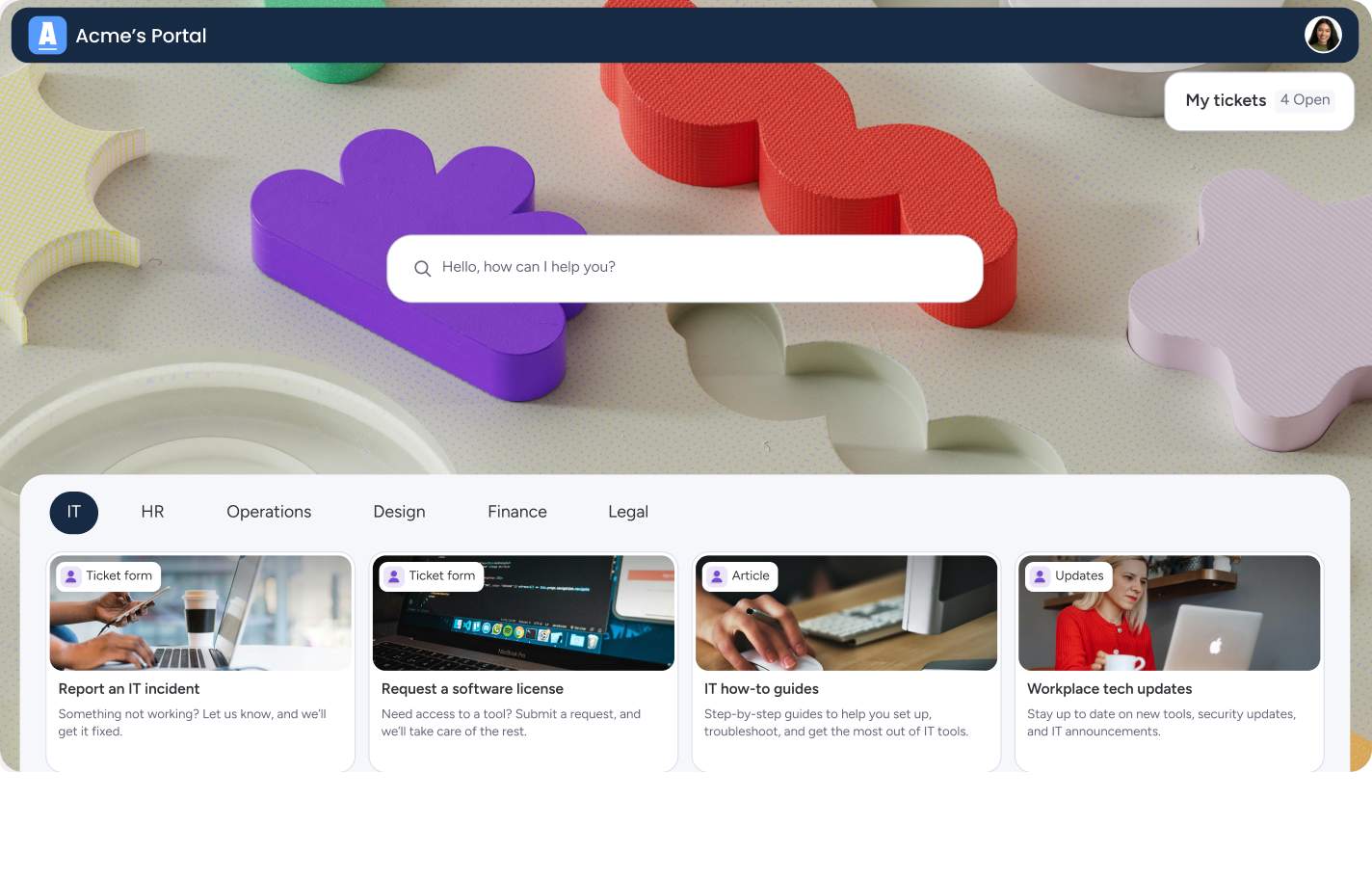
Self-service empowers new hires and reduces repetitive questions for your team. Build resources that answer predictable needs.
Create an FAQ covering expense policies, time off, and common procedures. Build a service catalog knowledge base for standard needs like software or equipment. Write simple guides for tasks like VPN setup or printer configuration. Keep everything updated and easy to search. AI agents in monday service provide instant answers to common questions, learning from each interaction to improve responses.
7. Track progress with real-time dashboards
What gets measured gets managed. Real-time dashboards show whether your onboarding process actually works.
Track completion rates by phase and team. Identify bottlenecks where tasks consistently stall. Compare experiences across departments to ensure consistency. Link onboarding metrics to business outcomes like retention and productivity. AI-powered dashboards in monday service surface insights automatically, highlighting trends and anomalies that require attention.
8. Collect feedback to drive continuous improvement
Your onboarding process should evolve based on real experiences. Systematic feedback collection turns one-time events into ongoing improvements.
Survey new hires at key milestones while memories are fresh. Ask managers where new hires struggle most. Gather input from buddies and stakeholders. Review operational data for systemic issues. Use insights to refine the process continuously. AI in monday service analyzes feedback patterns to recommend specific process improvements.
Measuring onboarding ROI and success metrics
Onboarding represents a significant investment. Measuring returns justifies the effort and identifies improvement opportunities, especially considering that talent innovations, including onboarding, show 3–5x ROI within 1–2 years.
Essential onboarding KPIs to monitor
Focus on metrics that connect onboarding quality to business outcomes. These KPIs reveal whether your investment pays off:
- Time to productivity: Shows how quickly new hires contribute meaningfully
- Early attrition: Highlights whether expectations match reality
- Task completion rates: Reveal process bottlenecks
- Satisfaction scores: Predict long-term engagement
- Manager feedback: Indicates ease of integration
AI-powered analytics in monday service track these KPIs automatically, comparing performance across cohorts and identifying leading indicators of success or risk.
Calculating time to full productivity
Full productivity means performing at the expected level for the role without excessive support. This looks different across positions but follows similar patterns.
Measure output volume, quality, and independence across key areas:
- Sales roles: Track pipeline generation and conversion rates
- Support roles: Measure ticket volume and satisfaction scores
- Engineering: Track code delivery and defect rates
- Complete picture: Combine quantitative metrics with manager assessment
Reducing your break-even period
The break-even period is when employee contributions exceed onboarding costs. Shorter periods mean faster returns on your hiring investment.
Accelerate break-even by:
- Assigning early meaningful work with appropriate guardrails
- Eliminating delays in access and equipment provisioning through AI-triggered workflows
- Setting clear expectations to reduce rework
- Standardizing training to minimize teaching time
Each improvement compounds to deliver value sooner. AI insights in monday service identify which interventions have the greatest impact on your specific break-even timeline.
How monday service streamlines employee onboarding
Different departments often use different systems, creating gaps and confusion. With monday service, everything gets brought together in one workspace, creating one unified workflow. It connects HR, IT, and managers around each new hire’s journey.
HR tracks documentation and milestones. IT manages provisioning and access. Managers monitor training and performance. Operations handles facilities and procurement. Everything connects to the same employee record, eliminating duplicate work and missed handoffs.
Automating complex workflows with AI
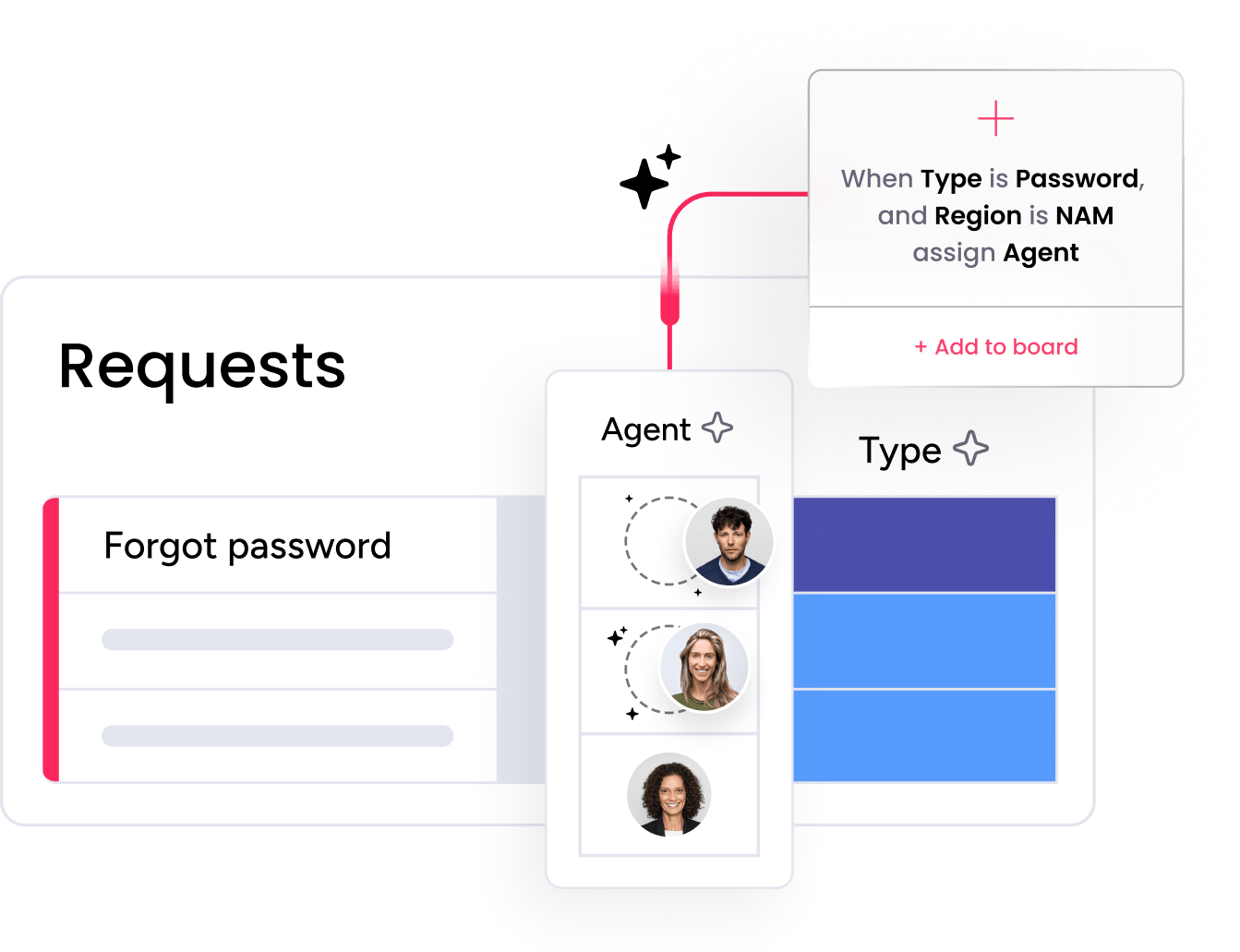
AI in monday service handles routine tasks, so your team focuses on human connections. Smart automation routes work, sends reminders, and flags risks.
Common automations include triggering IT tasks when start dates are confirmed, assigning training based on role type, escalating overdue items automatically, and summarizing status across multiple tasks. AI also helps standardize requests and highlight what needs attention. These intelligent automations learn from your organization’s patterns, becoming more effective over time.
Personalizing onboarding at scale with AI agents
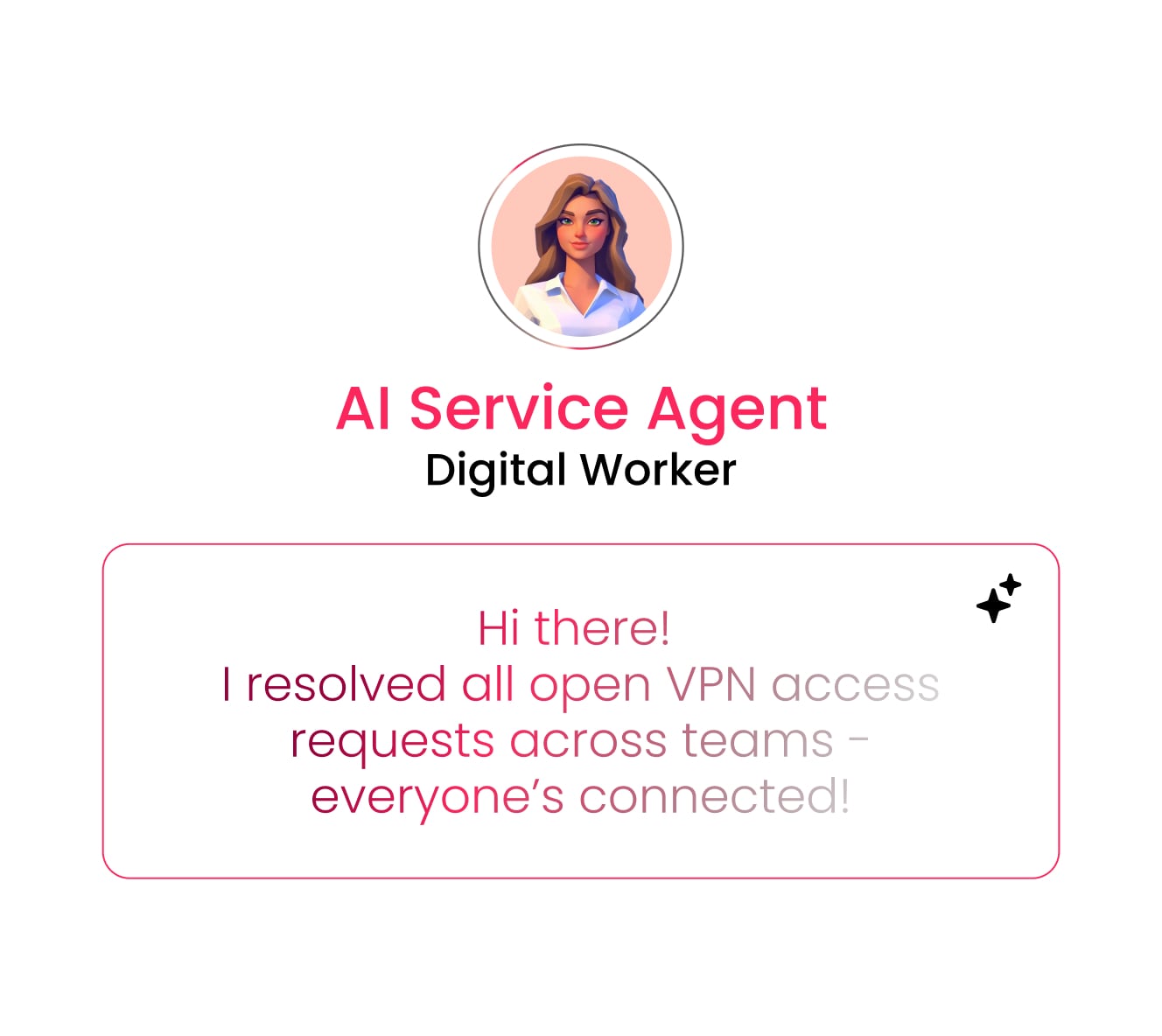
AI agents in monday service adapt onboarding experiences to each new hire’s role, department, and progress. They answer questions instantly, recommend next steps, and surface relevant resources without manual intervention.
New hires get immediate answers to common questions about benefits, policies, and procedures. AI agents suggest training modules based on role requirements and learning pace. They proactively notify stakeholders when action is needed and identify knowledge gaps before they slow progress. Personalization happens automatically, making every new hire feel supported without adding work for your team. These AI agents represent the future of scalable, personalized employee experiences.
Predicting and preventing onboarding risks with AI insights
AI-powered insights in monday service identify patterns that signal potential problems before they become turnover. Predictive analytics flag at-risk new hires based on engagement signals and completion trends.
The system detects when onboarding tasks consistently stall at specific steps, revealing process bottlenecks. It highlights new hires who aren’t engaging with training materials or missing key milestones. AI compares current cohorts against historical data to predict retention likelihood. These insights let you intervene early with targeted support, turning potential exits into success stories.
Gaining complete visibility across every journey
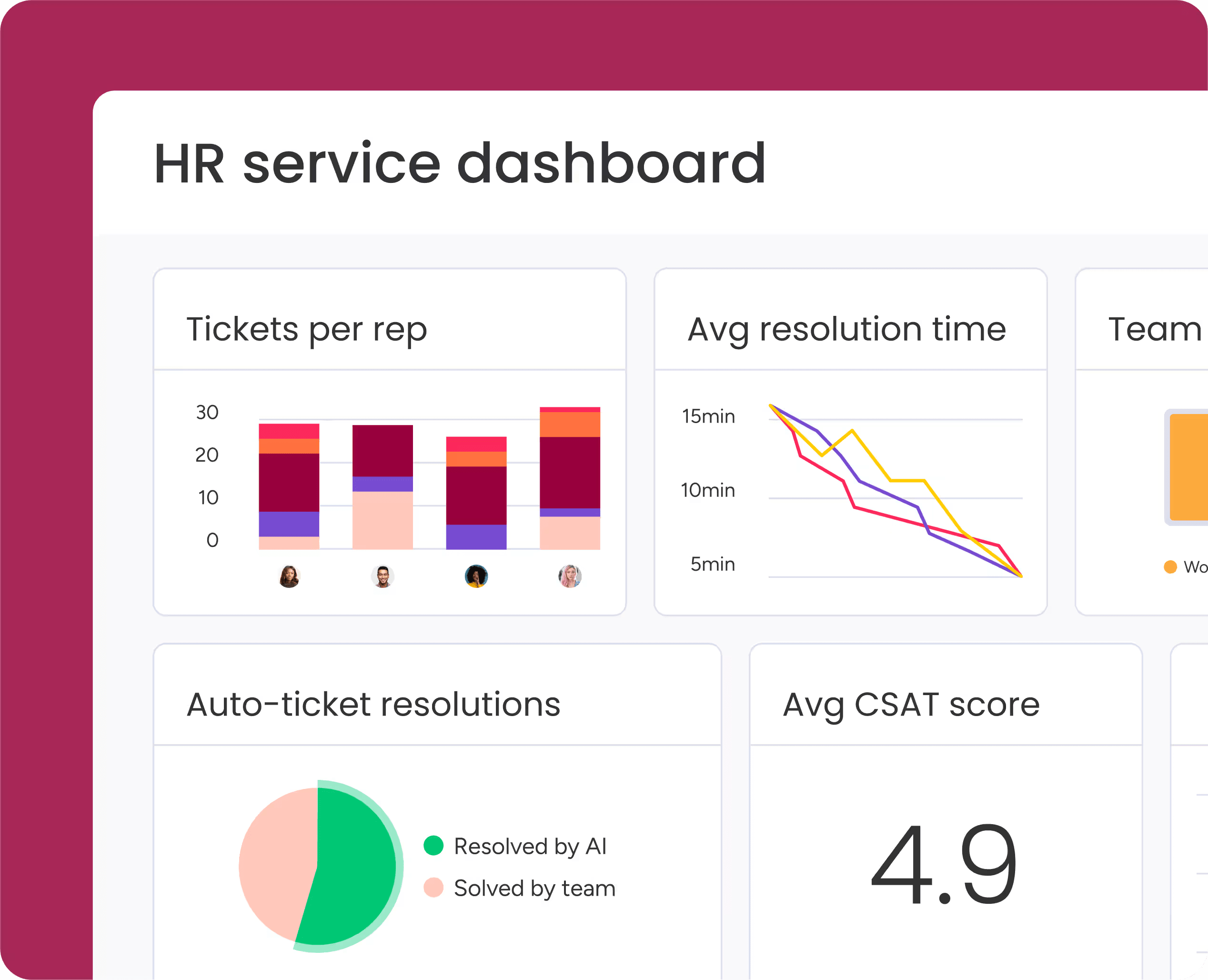
Real-time dashboards show exactly where each new hire stands in their journey. Spot delays, track trends, and measure success from one view.
Monitor individual progress and team patterns. Identify systemic bottlenecks before they impact experience. Connect onboarding metrics to retention and performance. Use data to continuously improve your process. Visibility transforms onboarding from hopeful to strategic, giving you the same level of insight you’d expect from a comprehensive AI service management platform.
Transform your onboarding into a competitive advantage
Great onboarding creates great employees. When you invest in structured, thoughtful integration, you build stronger teams and a better culture.
The best programs feel personal while running efficiently at scale. They turn nervous new hires into confident contributors. They prevent early turnover and accelerate performance. Most importantly, they signal that your organization values people from their very first day. With AI-powered tools like monday service, you can deliver this exceptional experience consistently, automatically, and at any scale.
Try monday serviceFAQs
How long should the employee onboarding process last?
The employee onboarding process typically lasts 90 days, though some organizations extend it to 6 months for complex roles. The first 30 days are most critical for building a solid foundation and confidence. AI-powered platforms can adapt this timeline based on individual progress and role complexity.
What is the typical cost of onboarding a new employee?
The typical cost of onboarding a new employee ranges from several thousand to over $10,000 when including training time, equipment, and productivity loss. Complex roles and longer ramp periods increase costs significantly. Automation and AI can reduce these costs by accelerating time to productivity.
How do you effectively onboard remote employees?
Remote employee onboarding requires extra attention to connection and communication. Provide equipment before day one, schedule regular video check-ins, and create virtual coffee chats for relationship building. AI agents can provide 24/7 support for remote workers across time zones.
What is the difference between onboarding and new employee orientation?
Orientation is a brief introduction to company basics, while onboarding is the complete integration journey lasting weeks or months. Orientation is just one small part of comprehensive onboarding. AI can automate orientation tasks while preserving human attention for deeper onboarding activities.
Which departments should be involved in onboarding?
Successful onboarding involves HR for program coordination, IT for technology setup, the direct manager for role training, and facilities for workspace preparation. Each department owns critical pieces of the experience, and a platform like monday service can connect them all in one unified workflow.
How do you measure the success of your onboarding program?
Measure onboarding success through time to productivity, retention rates, employee satisfaction scores, and manager feedback. Track both process metrics and business outcomes for a complete understanding. AI-powered analytics can surface patterns and predict outcomes across these metrics automatically.

 Get started