


Every employee’s journey with your company tells a story—one that begins long before their first day and extends well beyond their last. Whether the excitement of joining a new team, going on that amazing team retreat to Bermuda, or being passed over for promotion, each moment shapes their experience.
These moments aren’t random. They’re all part of a longer journey that’ll either feel intentional and supportive or disjointed and chaotic. That’s where employee lifecycle management comes in as a structured process to handle each of these moments with care and purpose.
This guide covers each lifecycle stage in more detail and explores how employee lifecycle management software like monday service support this essential people process.
Try monday serviceWhat is employee lifecycle management?
Employee lifecycle management is the practice of organizing and optimizing your workers’ experiences at your company. It encompasses every touchpoint, from their first interaction with your employer brand to the end of their tenure and any communication after their departure.
Not every company will commit to this process. But employee lifecycle management allows you to provide a superior experience as an employer. It acknowledges you’re passionate about supporting your people, you want to contribute positively toward their careers, and you have effective processes to manage their entire journey. And by doing so, you’ll reap plenty of organizational performance and productivity benefits.
What is the employee lifecycle model?
The employee lifecycle model illustrates the journey that every employee takes as they first become aware of your organization, before applying, joining, developing, and eventually departing it. However long their tenure lasts, employees move through 7 key stages that shape their overall experience.
HR teams use the employee lifecycle model to understand what people need at each stage and create more intentional, supportive interactions throughout the entire journey.
What are the 7 stages of the employee lifecycle model?
To provide a positive experience for your workforce, it helps to see how each stage of the lifecycle contributes to the overall journey. The table below summarizes the 7 stages at a glance, along with their goals, common challenges, and how HR teams can optimize them.
| Lifecycle stage | Main goal | Common challenges | High-level strategy |
|---|---|---|---|
| Brand attraction | Build awareness and interest | Weak EVP, inconsistent brand | Showcase culture, leverage employee advocacy |
| Recruitment | Identify and select best-fit candidates | Dropoff, ghosting, long timelines | Simplify hiring steps, improve communication |
| Onboarding | Ramp quickly and integrate socially | Confusion, slow setup | Structured onboarding plans, automated tasks |
| Professional development | Support growth and performance | Skill gaps, unclear direction | Training, mentorship, continuous feedback |
| Retention | Keep engaged, high-performing employees | Burnout, stagnation | Recognition, career paths, well-being programs |
| Offboarding | Create a respectful exit | Knowledge loss, compliance | Document handover, collect insights |
| Advocacy | Turn ex-employees into brand champions | Negative employee sentiment | Stay connected, alumni networks |
Next, we’ll describe each stage in detail, along with strategies you can steal to support your lifecycle management.
1. Brand attraction
The attraction stage wows potential candidates with a glimpse of what it would be like to work for your company. You might post social media content showcasing your corporate culture or publish a careers page showing what you offer as an employer.
For example, monday.com’s Careers page highlights us as a “Great Place to Work” winner. We also include plenty of testimonials describing what our team members love about working here.
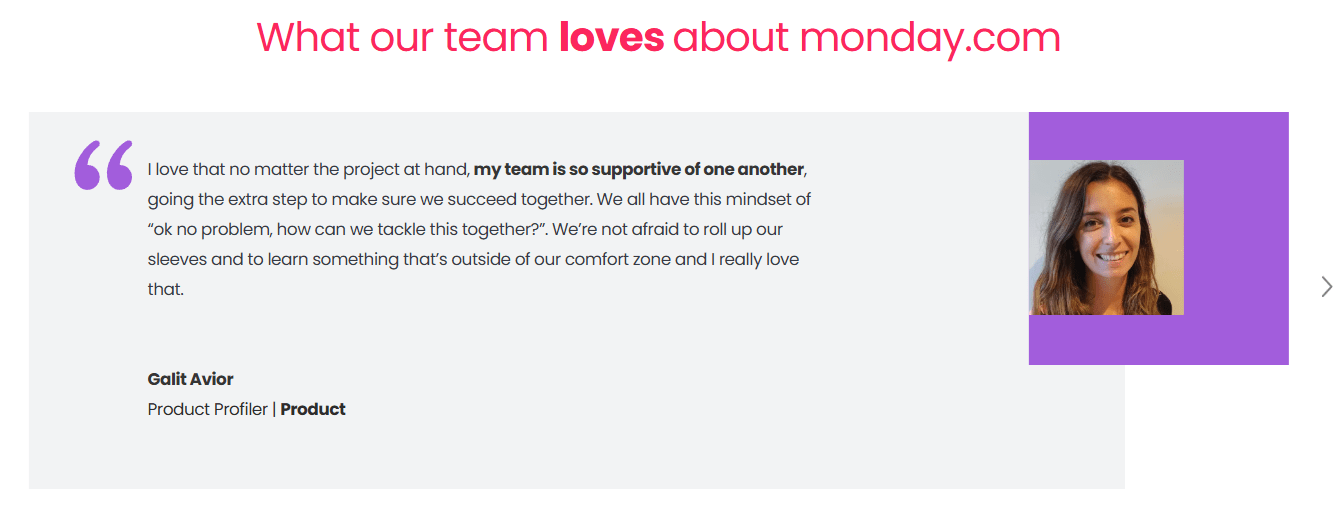
Potential applicants can view our employer value proposition (EVP), including our company values: ownership, transparency, impact, accountability, and being data-driven. And to highlight our commitment to DEIB (diversity, inclusivity, equity, and belonging) you’ll see our equal opportunity statement proudly displayed, too.
Strategies for optimizing brand attraction within the employee lifecycle
- Clarify your EVP: Communicate what candidates can expect from your culture, values, and opportunities.
- Highlight real employee stories: Use testimonials, short videos, or day-in-the-life posts to show authentic experiences.
- Optimize your careers page: Make your values, benefits, DEIB commitments, and awards easy to find.
- Stay consistent across channels: Ensure your employer brand message matches on social, job boards, and your website.
- Encourage employee advocacy: Ask teams to share open roles or culture moments to boost organic visibility.
2. Recruitment
70% of organizations find it difficult to recruit full-time employees for their organizations, according to SHRM. Some of the top challenges are:
- A low number of applications
- Competition from other employers
- An increase in qualified candidate ghosting
Notably, though, organizations with flexible work arrangements report less trouble recruiting than those without (22% vs. 29%.) Employers can also follow the below strategies to optimize the candidate experience, so acceptance rates are high for every job offer you extend. In practice, this means not expecting potential employees to jump through hoops and attend seventeen different interviews to secure a role.
Strategies for effective recruitment within the employee lifecycle
- Simplify the hiring process: Reduce unnecessary steps and keep interview stages consistent and predictable.
- Communicate clearly and often: Share timelines, expectations, and compensation details early to build trust.
- Provide timely, helpful feedback: Candidates value transparency and it improves acceptance rates.
- Embrace flexible work options: Promote hybrid or remote policies to widen your talent pool.
- Create a positive candidate experience: Make sure every interaction, including emails, interviews, and assessments, reflects your culture and respect for the candidate’s time.
3. Onboarding
Onboarding is just the start of the employee journey and it can be make or break time for some. 29% of starters have quit a job within the first 90 days, highlighting the importance of delivering an engaging, and friendly employee onboarding stage to improve new hire retention. Human Resources and Marketing Officer Christine Al Chadaideh explains,
From day one to the end of the probation period, guiding new joiners through clear goals, continuous feedback, and cultural integration sets the stage for long-term engagement and productivity. Onboarding is not just a process, it’s an opportunity to build trust, foster growth, and inspire loyalty.
Onboarding software can help new joiners feel embraced by their new team and engaged in your positive company culture. It should also provide access to everything employees need to ramp up and become productive quickly with minimal effort.
Strategies for successful onboarding within the employee lifecycle
- Set clear expectations from day one: Share role responsibilities, goals, and success measures early to reduce uncertainty.
- Standardize the onboarding process: Use checklists, templates, and workflows to deliver a consistent experience for every new hire.
- Provide the right tools immediately: Make sure equipment, system access, and key resources are ready before their first day.
- Assign a buddy or mentor: Pair new hires with an experienced colleague to support cultural integration and early learning.
- Schedule regular check-ins: Frequent touchpoints with managers help new employees feel supported and identify issues early.
Learn more: Employee onboarding automation
4. Professional development
Employees want and expect their employer to commit to their personal career growth. According to LinkedIn, employee development opportunities are the top strategy to improve retention rates for the 88% of organizations concerned about hanging onto their workers.
Employers can supercharge professional growth by offering a variety of development opportunities. The right combination will depend on the individual employee and their role.
Strategies for supporting professional development within the employee lifecycle
- Create clear career pathways: Give employees visibility into advancement options and the skills required to get there.
- Offer continuous learning opportunities: Provide access to courses, workshops, networking events, and on-the-job training that align with career goals.
- Encourage regular growth conversations: Use 1:1s and performance check-ins to discuss progress and evolving interests.
- Support mentorship and peer learning: Pair employees with experienced colleagues to build skills and confidence.
- Recognize and reward development: Celebrate milestones, such as certifications, new skills, promotions, to reinforce a culture of growth.
5. Retention
Almost half of employees are considering looking for a job in the next 3 months, according to Nectar. For those that are successful, this puts pressure on their remaining team members to pick up the slack while they wait for replacement workers to onboard and ramp. The company must also plunge funds into recruitment and training costs; SHRM estimates the cost of replacing a worker reaches 50% to 200% of their annual salary.
Understandably, then, companies have much to gain by focusing on increasing retention and reducing their employee turnover rate.
Strategies for achieving greater retention within the employee lifecycle
- Prioritize regular recognition: Celebrate achievements and contributions to help employees feel valued.
- Offer competitive, transparent compensation: Review salaries and benefits regularly in sync with market expectations.
- Support employee well-being: Provide flexible work options, mental health resources, and initiatives that reduce burnout.
- Invest in career mobility: Encourage internal transfers and promotions to help employees grow without leaving the organization.
- Act on employee feedback: Use engagement surveys, stay interviews, and 1:1 conversations to identify concerns early and respond quickly.
6. Offboarding
Every employee will eventually move on at some point. It could be for retirement, relocation, or new opportunities on a different career path. But every exit is an opportunity to leave on good terms and maintain positive relationships with former employees.
Exit interviews are one way to gather honest feedback from departing employees and understand any potential issues within the company that may have contributed to their departure. You can use these insights to make improvements and potentially increase future retention rates.
Strategies for enhancing offboarding within the employee lifecycle
- Use a structured offboarding workflow: Allow equipment return, access removal, knowledge transfer, and final documentation to happen smoothly.
- Conduct meaningful exit interviews: Gather honest insights to identify trends and opportunities for improving the employee experience.
- Maintain professionalism and empathy: Treat every departure, voluntary or not, with respect to protect morale and employer brand.
- Facilitate knowledge handover: Encourage departing employees to document their processes or train successors to reduce disruption.
- Stay connected post-exit: Create alumni networks or periodic touchpoints to keep the door open for boomerang employees.
7. Advocacy
Your ex-employees will now have a firm opinion about your employer brand, shaped by all the phases of the employee lifecycle they’ve experienced. Some will whizz through these stages in a few weeks or months (not a great sign), while others will have spent many years in stages 4 and 5.
Whether they’ve had a negative or positive employee experience, these people may now influence your recruiting process and ability to attract and retain fresh talent. They’ll spread the word about your company culture, talk to potential applicants or even shout out on social media about their time with you. When things have gone well, some may return to you as boomerang employees. But less satisfied people will dissuade others from joining your crew.
Strategies for promoting advocacy within the employee lifecycle
- Create an alumni community: Use newsletters, social groups, or events to keep former employees connected.
- Encourage reviews and referrals: Invite alumni to share feedback on employer review sites or refer candidates when appropriate.
- Celebrate boomerang employees: Highlight successful returns to reinforce positive relationships and long-term loyalty.
- Stay transparent and communicative: Maintain open, respectful communication during and after exit to preserve trust.
What are the challenges of employee lifecycle management?
Laying out the employee lifecycle into 7 clear stages makes it look manageable. But the reality is that delivering a consistent, high-quality experience across every lifecycle stage is complex.
The table below highlights some of the most common employee lifecycle management challenges and how they affect the overall experience. It also suggests potential solutions for HR teams, centered on using the right employee lifecycle management software.
| Challenge | Why it matters | Potential impact | How HR teams can address it |
|---|---|---|---|
| Fragmented HR processes | Different tools for hiring, onboarding, development, and offboarding create silos | Miscommunication, duplicated work, inconsistent experiences | Centralize workflows and data in a unified employee lifecycle management platform |
| Manual administrative tasks | Repetitive, time-consuming processes take away from strategic HR work | Errors, delays, slower response times | Automate recurring tasks like approvals, reminders, and setup |
| Inconsistent onboarding and offboarding | New hires and leavers don’t always receive the same level of support | Poor first impressions, knowledge loss, compliance gaps | Standardize processes with templates and checklists |
| Limited visibility across the employee experience | Hard to track progress, identify issues, or measure effectiveness | Missed opportunities for improvement; disengaged employees | Use dashboards and lifecycle reports for real-time insights |
| Poor cross-team collaboration | Lifecycle events require multiple teams to act in sync | Slow equipment setup, unfinished requests, low employee confidence | Use shared workflows and automated routing |
| Difficulty collecting and acting on employee feedback | Employees often share feedback too late—or not at all | Retention risks, declining morale, unresolved issues | Gather feedback at every stage and close the loop with action |
| Maintaining compliance and security | Sensitive data changes hands throughout the lifecycle | Manual updates increase risk of errors or non-compliance | Use secure systems with permission controls and audit trails |
How does employee lifecycle management software work?
Employee lifecycle management software is a digital workspace that organizes all the data, workflows, and people involved throughout the employee lifecycle. It brings together disparate HR processes and tools into a single platform to ensure consistency and operational efficiency. Here’s what you can expect from this type of platform:
Centralized data management
Job one with any type of HR software is to collect and store employee data in one centralized location. For example, you might use it to store:
- Resumes
- Job descriptions
- Recruitment ads
- Performance evaluations
- Training records
- Career development plans
- Employee feedback
- Employee survey data (for example, exit surveys)
Keeping everything organized is important for data security, and collaboration, allowing HR, recruiters, managers, and senior leaders to gain access to the details they need.
Process mapping and workflow automation
You’ll define workflows for every lifecycle event, from your recruitment phase through to offboarding. Automating these processes ensures everything runs smoothly, which enhances the employee experience.
For example, you might use onboarding software to trigger a series of predefined actions, like sending welcome emails, assigning training modules, and scheduling orientation sessions.
Integrations with other HR tools
Connecting your lifecycle management software to the rest of your HR tech stack extends its value. For example, you may wish to integrate it with any existing applicant tracking systems, payroll software, and performance management platforms in your ecosystem.
By doing so, data will flow freely between your systems, eliminating the need for manual input in multiple windows and reducing the chance of human error.
Task notifications
Your employee lifecycle management software ensures the right tasks are assigned to the right people at the right time. You might use triggers (such as certain deadline dates or box-checking) to send automated notifications to employees, managers, and HR teams for tasks like evaluations, policy updates, or contract renewals.
5 benefits of employee lifecycle management software
Any type of software requires an investment. Even free platforms require time and personnel to set everything up so it matches your internal processes. But with the right employee lifecycle management platform, you’ll receive numerous benefits that translate into an excellent return on your investment. These include:
Streamlined operations
With all your data and processes in one spot, HR teams no longer need to juggle multiple spreadsheets and email chains or manually track employee progress. Everything is easy to track, everything gets done on time, and there’s much less room for errors or confusion.
Improved employee experience
With your processes running like clockwork, your employees are more likely to be engaged and satisfied. They’ll receive timely communication on things that matter to them, like when they can expect to receive their new work laptop or the date of their next performance review. No more waiting around or second-guessing, just clear processes that your company follows to the letter.
Reduced turnover
Of course, when your employees are happy and well-informed, you’ll also notice fewer problems with employee retention. Although it’s natural for your talent to move on at some point, optimizing the employee lifecycle may encourage more of your people to seek their next career move within your organization rather than beyond it.
Enhanced decision-making
Your software also enables HR to identify any pain points in the employee lifecycle and then take action on them. For example, if you notice an increasing number of workers handing in their notice shortly after their annual appraisal, you’ll know to double down on improving your performance management processes.
Cost efficiency
Consolidating the entire employee lifecycle under one roof minimizes the resources you’ll need to make things happen. Instead of paying for multiple tools, you’ll invest in one. By dealing with only one vendor, you’ll only have one customer support team to liaise with and a single solution to bring your people up to speed. It’s unified, efficient, and cost-effective.
How do you choose the best employee lifecycle management software for your organization?
The employee lifecycle on offer at your organization will likely be different from anywhere else. The size of your company, your industry, your company culture, your approach to the career development stage, and so much more will shape the exact talent experience. It follows that some employee lifecycle management systems may not be the best fit for your specific talent life cycle model.
Ask yourself the following questions as you research the best platform for your needs:
Features
- Does the software cover all key lifecycle stages, from recruitment to offboarding?
- Does it include automation, AI support, templates, or workflows that reduce manual work?
- Can it centralize employee data, documents, and communications in one place?
Scalability
- Can the platform grow with your team or organization as headcount increases?
- Is it easy to add, remove, or reassign users as roles change?
- Does it support multiple departments, locations, or business units if needed?
Integration
- Will it connect smoothly with existing HR systems like ATS, payroll, and learning tools?
- Are there native integrations or APIs available for easy data syncing?
- Does it reduce double entry and eliminate silos between teams?
Ease of use
- Can HR teams, managers, and employees adopt it quickly with little training?
- Is the interface intuitive and mobile-friendly for everyday tasks?
- Do user reviews on sites like G2 or Capterra highlight good usability?
Customizability
- Can workflows, dashboards, and processes be adapted to your lifecycle model?
- Does the software support no-code or low-code customization?
- Can you tailor permissions, forms, and automations to match your policies?
Support and training
- Does the vendor provide 24/7 support or are they only available during working hours in a specific timezone?
- Are onboarding, implementation, or setup services included or paid add-ons?
- Is there a knowledge base, academy, or help center for ongoing learning?
Pricing
- Does the pricing model (per user, per module, or flat fee) fit your budget?
- What additional costs might arise, for storage, integrations, or premium features?
- Does the expected ROI justify the investment in time and tools?
Explore these 5 employee lifecycle management platforms
There’s no shortage of HR tools on the market, but not all support the employee lifecycle from start to finish. We’ve handpicked the platforms below because they genuinely play a meaningful role in managing employees across each lifecycle stage, from hiring and onboarding to development and offboarding. While they take different approaches, each is widely used, well-reviewed, and trusted by HR teams looking to improve the employee experience end to end.
1. monday service
Best for: connecting and automating employee lifecycle workflows across HR, IT, finance, and operations
monday service is an enterprise-grade service management platform built on the monday.com Work OS. Rather than acting as a traditional HRIS, (although it certainly can), it focuses on orchestrating the workflows, requests, and cross-team processes that shape the employee experience throughout the lifecycle. With built-in AI, automation, and deep integrations, monday service helps HR teams manage everything from onboarding and internal requests to offboarding, while keeping IT, finance, and operations fully aligned.
Key features
- Digital workers, including the AI service agent
- Consolidated service management platform for HR tickets
- Customized work solutions created with monday magic
- Service portal your people will love
- Customizable dashboard for access to trends and real-time insights
User reviews

"Our team LOVES the monday service platform and we’re already exploring how we could incorporate it for other departments, too. It has streamlined our workflow in a way that both our team and customers appreciate."
Andrew Marshall | VP Operations
״monday service provides clear insights into requests volume and types, response times, and trends - helping us continuously improve operations"
Grant De Waal-Dubla | CIO
"The biggest value for us is speed and flexibility. You can get up and running in days, change anything instantly, and see everything in real time. And you don’t need a dedicated admin to do it."
Clive Camilleri | Head of People Tech & OperationsPricing
- Free plan for up to 2 seats
- Free trial available
- Premium pricing starts at $26/seat/mo
- 3 premium plans available: Standard, Pro, and Enterprise
2. Personio
Best for: end-to-end employee lifecycle management for SMBs and mid-sized organizations
Personio is an all-in-one HR software platform designed specifically to manage the full employee lifecycle in one system. It combines core HR, recruiting, onboarding, time tracking, performance, and offboarding into a single, centralized solution. Personio is especially popular with growing companies that want a structured, HRIS-first approach to managing people data, processes, and compliance across the entire lifecycle.
Key features
- Digital employee files
- Time and attendance tracking
- Absence management
- Workflow automation
- Employee self-service and mobile app
User reviews
“An all-in-one software solution and not just one part product of the HR lifecycle. With Personio, you can manage everything – from an incoming application until the offboarding of the employee.” — Small business user
“Rolling out Personio has made not only the lives of our HR Department easier but also the employees’. We all enjoy that we can do almost everything in one place now. I think the report system does have its flaws here and there and has room for improvement.” — Joanna B., HR manager
Pricing
- Free trial available
- No free plan
- Premium plans are available: Core and Core Plus
- Accurate pricing is available from the vendor on request
3. Zoho People
Best for: core HR management for teams on a budget
Zoho People is a flexible HR management platform designed to handle essential employee lifecycle processes without the cost of enterprise-grade tools. Part of the wider Zoho ecosystem, it supports onboarding, attendance, time tracking, performance management, and employee self-service. Zoho People is a practical choice for small and mid-sized teams looking for broad HR coverage, especially if they already use other Zoho products.
Key features
- Zia, the HR chatbot
- Email and custom schedulers
- HR workflow automation
- HR analytics
- Shift management (including timesheets)
User reviews
“Zoho People facilitates the comprehensive management of employees’ entire lifecycle, commencing from onboarding, attendance, and leave management to holidays and exit formalities.” — Varsha K., a recruiter
“I never have to go to my HR or Management to ask for leaves or the quarterly performance reviews, it is all managed pretty well and conveniently in Zoho People. UI needs to be improved, seems like it hasn’t been updated for a long time.” — Prakhar S., a client success manager
Pricing
- 30-day free trial available for paid features
- Free plan available for up to 5 users
- 4 paid plans available: Professional, Premium, Enterprise, and People Plus
- Premium pricing starts at $1.50 per user/mo
4. Bob
Best for: modern HRIS needs for fast-growing, global, and hybrid teams
Bob is a modern HRIS built to support dynamic, people-first organizations. It centralizes employee data while placing a strong emphasis on culture, engagement, and visibility across distributed teams. With separate modules representing different lifecycle stages, Bob helps HR teams deliver meaningful experiences at scale while providing leaders with clear insights into workforce trends.
Key features
- People directory and org chart
- People analytics
- Document management including eSign
- Bob Hiring, Learning, and Talent modules
- US and UK payroll
User reviews
“I appreciate how HiBob HRIS serves as our main HRIS, covering a broad scope of functions such as employment data management, lifecycle changes, compensation, reporting, and talent management.” — Vilma V.
“We can centralize information and data outside of spreadsheets, track trends, and have significantly more visibility of important data. It would be useful to have the eNPS feature in the Employee Lifecycle Feedback forms as we use them to track different parts of the employee lifecycle like onboarding.” — Samantha H., a talent development manager
Pricing
- Accurate pricing is available from the vendor on request
5. BambooHR
Best for: simple, all-in-one HR management for growing teams
BambooHR is a well-established HR platform designed to simplify people operations for small and mid-sized organizations. It covers the core stages of the employee lifecycle, including hiring, onboarding, performance management, and offboarding, through an intuitive, user-friendly interface. BambooHR is often chosen by teams that want a straightforward HR system that’s easy to adopt and manage without extensive configuration.
Key features
- Employee experience features, including community, wellbeing, and satisfaction
- Global talent management
- Built-in compensation module, including benchmarking, and salary banding
- Ask BambooHR, an AI-powered chatbot
- HR data and reporting
User reviews
“BambooHR gives you the ability to provide employees with functionality within the full HR lifecycle. The system is overall easy to use for both admin and end users and very aesthetically pleasing.” — Lindsay B., people and culture manager
“As an HR manager, I wear a lot of hats, and BambooHR really helps me stay on top of everything. It’s easy to navigate, even for people who aren’t super tech-savvy, which means fewer questions coming my way for simple things like PTO balances or updating personal info.
The reporting tools can be a bit frustrating when I want to dig deeper or build custom reports. They cover the basics, but more flexibility would go a long way.” — Monica D., an admin and HR manager
Pricing
- Free trial available
- Flat pricing of $250 per month for companies with fewer than 25 employees
- 3 paid plans available for companies with more than 25 employees: Core, Pro, and Elite
- Accurate pricing is available from the vendor on request.
Streamline employee lifecycle management with monday service
Perhaps the greatest difference between monday service and other employee lifecycle management platforms is it doesn’t just focus on HR activities. That’s because employee lifecycle events rarely belong to HR alone. A new hire needs equipment, system access, and payroll setup. A departing employee triggers access removal, asset return, and final payments.
Meanwhile, day-to-day employee requests span policies, equipment, access, payroll, and development, to name a few.
For this reason, monday service brings all of these moving parts together in one service platform, making it easier for HR teams to manage the entire lifecycle without relying on disconnected tools or manual follow-ups. Here’s how monday service supports employee lifecycle management in practice, using automation, AI, and cross-team workflows to reduce friction at every stage.
Deliver faster answers to employees without adding HR workload
Employee questions don’t stop after onboarding. From PTO policies to benefits, expenses, and internal processes, HR teams are constantly responding to repeat requests.
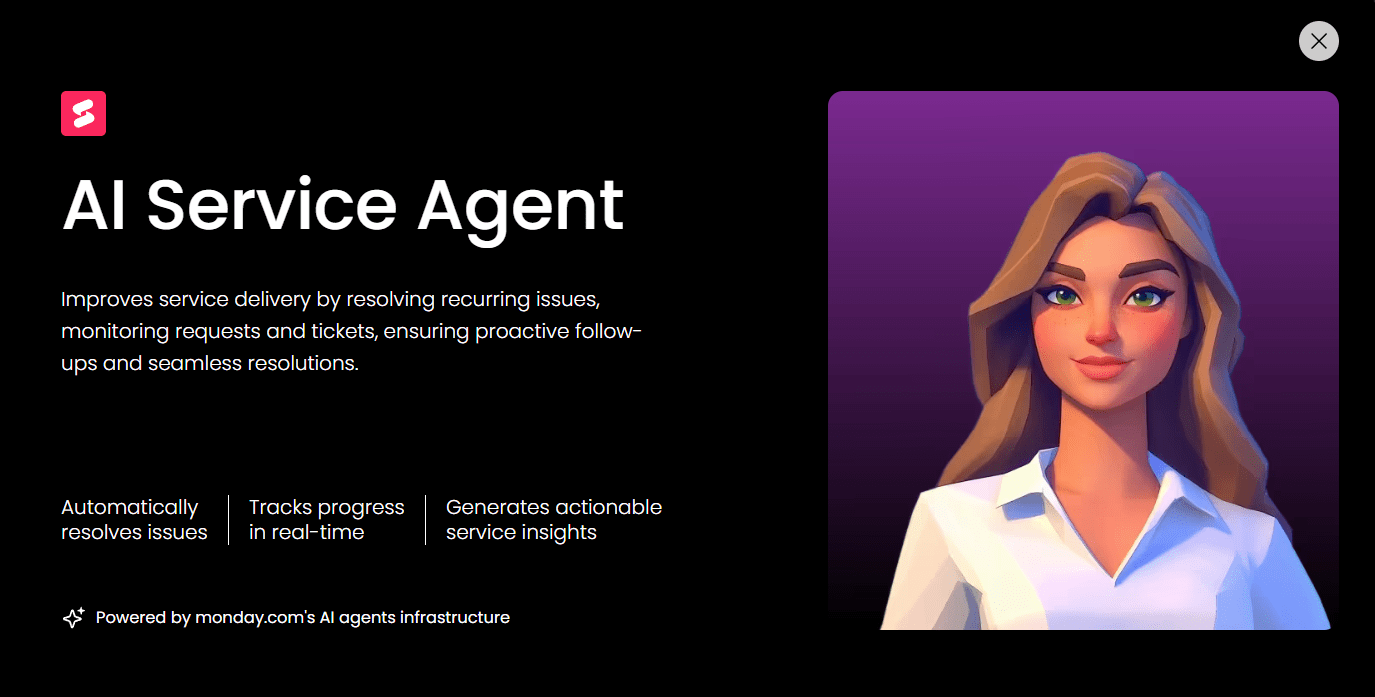
With monday service, HR teams can create a self-service experience where employees submit requests through a service portal and get answers immediately. The AI Service Agent and knowledge base work together to pinpoint relevant articles, suggest next steps, or resolve simple questions automatically, without a human ever needing to step in.
HR use cases
- Answering common questions about benefits, policies, and time off
- Guiding new hires through onboarding requirements
- Handling routine HR requests without creating ticket backlogs
Align HR, IT, and finance during key lifecycle moments
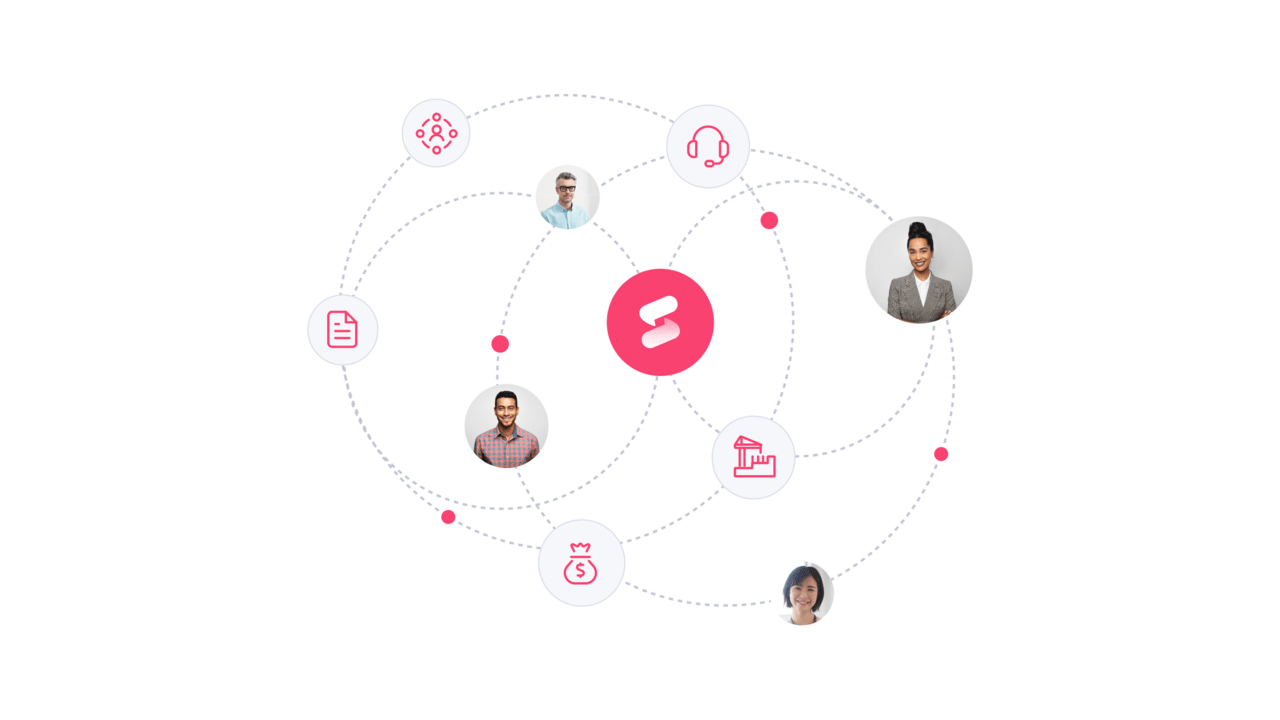
monday service enables cross-department collaboration in context, allowing HR to escalate requests, add approvers, and involve other teams directly within a single workflow. Everyone works from the same ticket, with clear ownership, deadlines, and updates.
HR use cases
- Coordinating onboarding across HR, IT, and facilities
- Managing offboarding checklists with automated task assignments
- Handling role changes, promotions, or transfers without email chains
Turn employee requests into action with automated workflows
Manual HR processes slow everything down, from onboarding tasks to policy approvals and lifecycle changes.
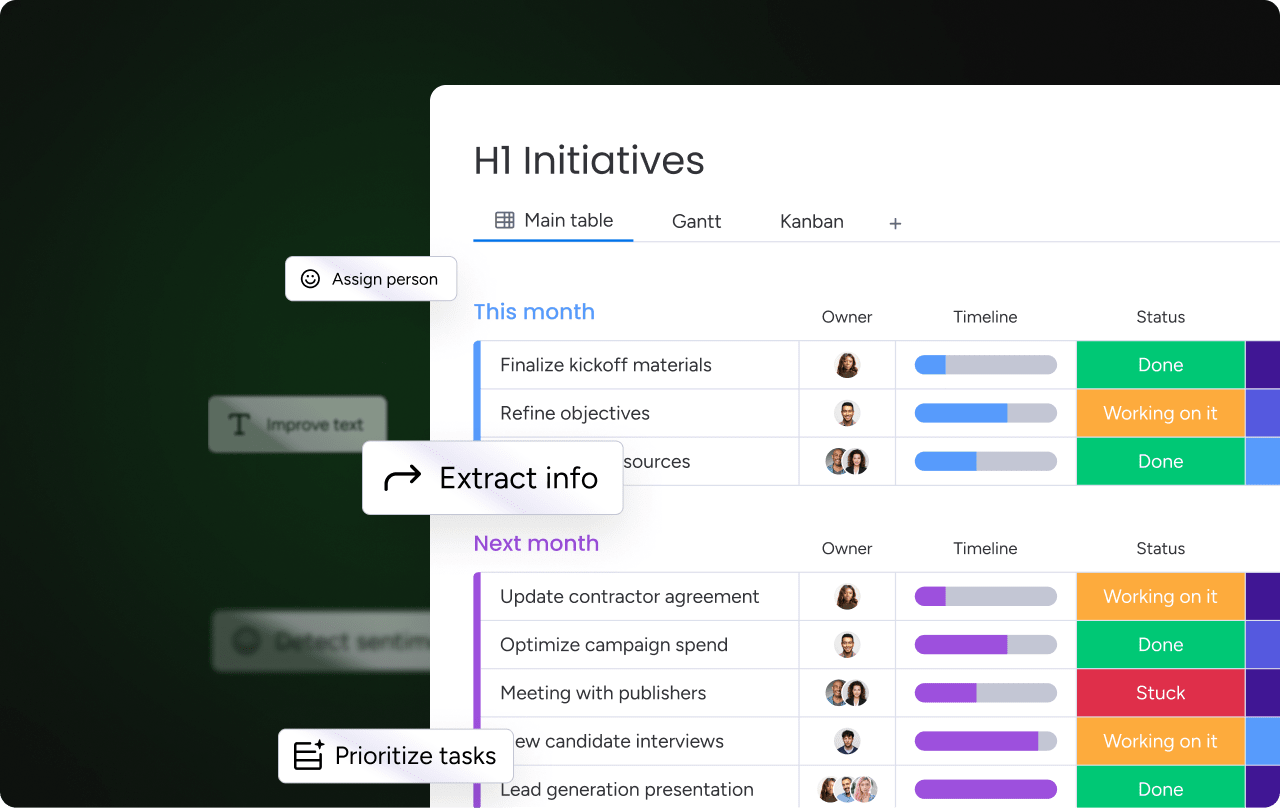
With monday service, HR teams can use no-code workflows and AI-powered automations to route requests, assign tasks, trigger approvals, and send updates automatically. AI Blocks can categorize requests, summarize information, extract key details from documents, and suggest next actions, removing repetitive admin work from the process. And if you need to build a work solution from scratch, just describe it to monday magic and create what your people need in seconds.
HR use cases
- Auto-routing requests based on type or urgency
- Categorizing employee tickets at scale
- Extracting information from forms or documents
Learn more: AI HR software
Manage the full employee journey in one integrated system
Employee lifecycle management depends on context. HR teams need visibility into people data, assets, systems, and past interactions to resolve requests efficiently.
monday service integrates with existing tools, such as email, Slack, document management, and employee directories, and offers an open API to connect with the rest of your HR tech stack. This allows HR teams to manage lifecycle touchpoints in one place, without duplicating data across systems.
HR use cases
- Connecting employee records to service requests
- Tracking equipment, access, and approvals alongside HR workflows
- Managing onboarding, changes, and exits without switching tools
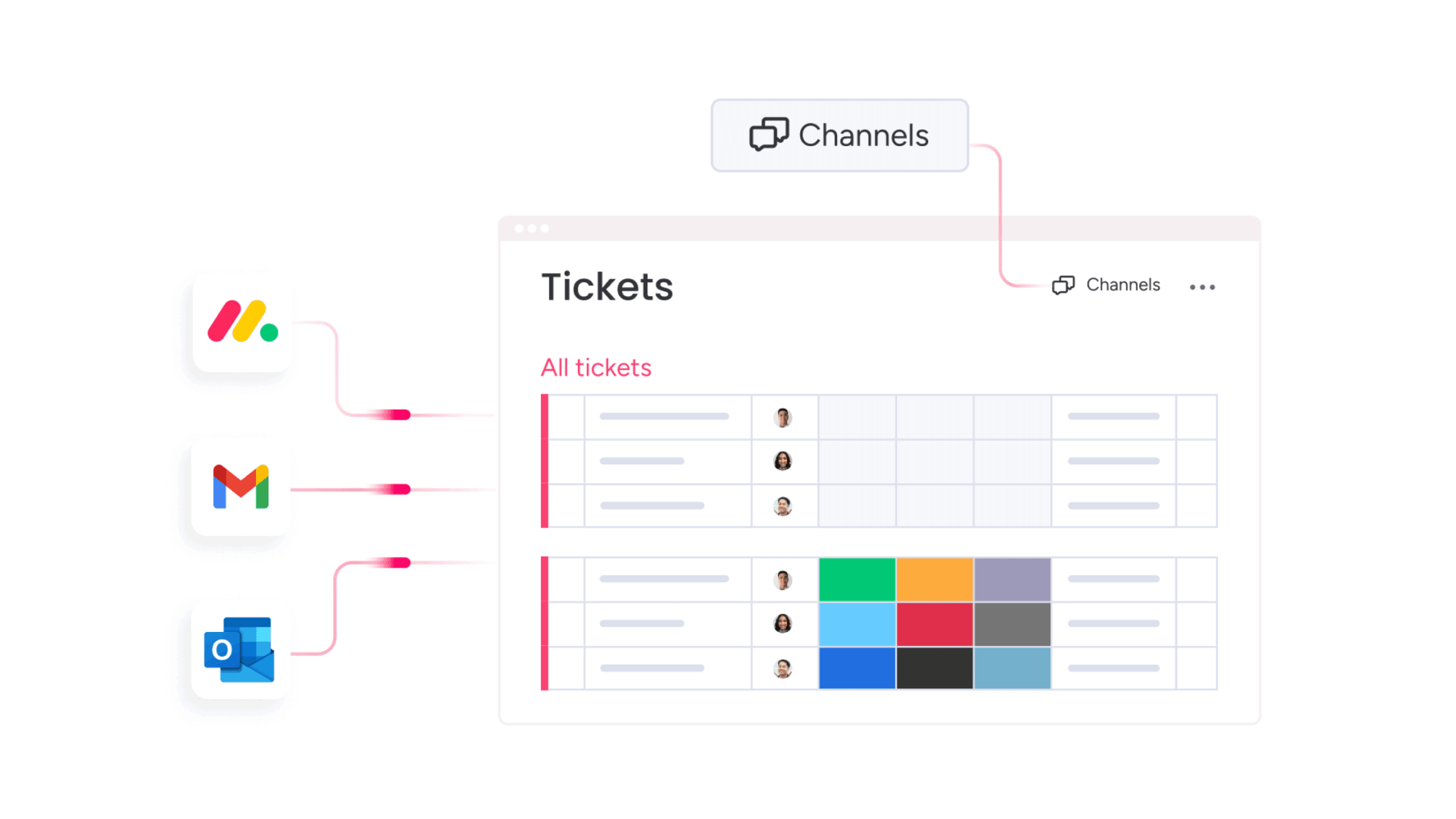
Spot lifecycle issues early with real-time insights and AI reporting
Employee experience issues are often highlighted too late, after disengagement or turnover has already started.
monday service provides real-time service analytics, dashboards, and AI-powered reporting that help HR teams identify trends across the employee lifecycle. The AI Service Agent can proactively monitor request volume, flag recurring issues, and generate reports that highlight emerging problems before they escalate.
HR use cases
- Tracking onboarding issues by department or role
- Identifying repeated employee complaints or bottlenecks
- Monitoring SLA performance for HR requests
- Reporting on lifecycle trends without manual analysis
3 tips to track your employee lifecycle
A platform like monday service is a rocksteady foundation you can use to start improving the employee experience. Use the following tips to extract the most value from the software.
1. Use real-time data
Retrospective data is useful. It helps you review, reflect, and make a better plan for the future. But there’s nothing like real-time data snapshots to take action and start improving things immediately. For example, you might notice a concerning trend in your employee satisfaction ratings after the first 90 days of employment. With real-time data on hand, you can identify potential issues and address them before it’s too late.
2. Conduct regular check-ins
Technology is no substitute for human connection. The best way to tap into the employee experience is to speak to your people throughout every stage of the lifecycle. Gather regular feedback from employees about important touchpoints like the recruitment process, performance development conversations, and offboarding.
Use your software to collect, store, and analyze the feedback. From here, you’ll use this intel to better understand their needs and make improvements where necessary.
3. Implement clear metrics at every stage
You can’t improve what you don’t measure. Instead of working off gut feelings, track metrics at every lifecycle stage to understand if your employee engagement strategies are connecting with your people. For example:
- Employee attrition rate
- Time to fill open positions
- Employee satisfaction ratings
- Percentage of employees promoted from within
- Number of current employees participating in professional development programs
- Diversity and inclusion metrics like gender and ethnicity distribution at each stage of the lifecycle
Learn more: AI employee management software
Support the entire employee lifecycle with monday service
Employee lifecycle management is the cornerstone of an effective HR strategy. By leveraging monday service, you can streamline processes, boost employee satisfaction, and create a thriving workplace culture. Get started with a free trial.
Try monday serviceFAQs about employee lifecycle management
What are the 7 stages of the employee lifecycle?
The 7 stages of the employee lifecycle are:
- Attraction
- Recruitment
- Onboarding
- Professional development
- Retention
- Offboarding
- Advocacy
What are the key points in the employee life cycle?
Each of the touchpoints involved in the employee lifecycle is critical to the overarching success. The initial attraction phase, along with recruitment, and onboarding set the tone with a strong first impression. But if companies take their finger off the pulse with professional development and retention, they’ll soon be involved in offboarding their workers and worrying about what they might say about their time there.
What is the HR life cycle model?
An employee life cycle model is a representation of the different stages an employee goes through during their time with a company. HR teams use this model to guide their strategies for effectively managing employees and creating a positive employee experience.
What is employee life cycle career management?
Employee life cycle career management involves providing career advancement opportunities. This includes setting clear expectations and goals, conducting regular performance reviews, and offering support and guidance in achieving career aspirations.
Does the employee life cycle apply to non-profit organizations?
Yes, the employee lifecycle applies just as much to non-profit organizations as it does to private or public companies. Every non-profit still attracts talent, hires, onboards, develops, and eventually offboards employees or volunteers. The key difference is that mission-driven culture often plays a larger role in attraction and retention, but the underlying lifecycle stages remain the same.
How does HR software support the entire employee journey from beginning to end?
HR software brings all the touchpoints of the employee journey into one place. It centralizes data, standardizes workflows, and automates routine tasks, like sending offer letters, assigning onboarding steps, or tracking performance goals. With everything connected, HR teams can deliver a smoother, more consistent experience from the moment a candidate applies to long after they leave the organization.
What are the primary benefits of implementing effective ELM within an organization?
When employee lifecycle management is well-considered, organizations see stronger engagement, smoother processes, and more reliable data. It reduces turnover, improves internal communication, and gives HR clearer visibility into what employees need at each stage. Ultimately, effective ELM leads to a more supportive, efficient, and people-focused workplace.
What’s the typical cost of modern employee lifecycle management software?
The cost of employee lifecycle management software varies depending on the size of your workforce, the features you need, and whether you pay per user or per module. Many platforms start with tiered plans for small teams and scale up for enterprise needs. Most organizations can expect to pay a monthly subscription fee, with additional costs for advanced features, onboarding services, or premium support.
How can an HR API improve employee lifecycle management?
An HR API allows different systems, like payroll, ATS, learning platforms, and service desks, to share information automatically. This reduces manual data entry, keeps records up to date, and ensures employees receive timely actions at each stage of the lifecycle. With APIs, HR teams can connect their entire tech stack and create seamless, automated workflows.
Can ELM strategies be successfully applied specifically to a sales team environment?
Yes. Sales teams experience the same lifecycle stages as any other department but often benefit even more from structured development and retention efforts. Clear onboarding, goal setting, coaching, and performance tracking help sales reps ramp quickly and stay motivated. Applying ELM principles makes sure that sales talent feel supported throughout their careers, not just during quota cycles.
Which employee lifecycle management systems are considered the best in 2026?
The best employee lifecycle management system in 2026 depends on your organization’s size, needs, budget, and existing tech stack. You’ll want a platform that complements, or even consolidates the tools you already use. monday service stands out in a crowded market thanks to its enterprise-grade AI and cross-team collaboration features, which connect HR workflows to every other operational process across the business. Get a free trial to start creating incredible employee experiences.

 Get started