

Every organization wants employees to feel supported, but the reality often looks different. Service requests bounce between IT, HR, and facilities with no clear owner. Employees toggle between a dozen apps just to reset a password or ask about benefits. The result is frustration, wasted hours, and a workforce that spends more time navigating internal systems than doing meaningful work.
The right employee experience software changes that equation entirely. It replaces fragmented service delivery with a single, intuitive platform where every request instantly finds the right team, self-service answers are available around the clock, and leadership gains real-time visibility into what employees actually need. For CIOs, IT directors, and HR leaders, it represents the shift from reactive firefighting to proactive service operations.
This guide compares 12 top employee experience software platforms for 2026, breaking down their features, pricing, and strengths so you can find the right fit for your organization. We also cover the essential capabilities to look for, how AI is reshaping employee service, and how platforms like monday service bring it all together on one unified system.
Get started with monday.comKey takeaways
- Unify service delivery across departments: break down silos by connecting IT, HR, and facilities on one intelligent platform, eliminating the frustrating ticket ping-pong that slows everyone down
- Accelerate resolutions with AI automation: let smart routing and automated workflows handle repetitive requests instantly, freeing your team to focus on high-impact work that drives real business value
- Empower employees with self-service: give your team a knowledge base and portal that answers common questions 24/7, reducing ticket volume while boosting satisfaction and productivity
- Measure what matters with real-time analytics: track resolution times, satisfaction scores, and cost savings through intuitive dashboards that turn service data into actionable insights for continuous improvement
- Scale seamlessly with the right employee experience software: consolidate multiple systems into one flexible employee experience platform that grows with your organization, reducing costs while delivering a consistent, exceptional experience

What is employee experience software, and why it matters now
Employee experience software acts as a single front door for your team, consolidating everything from IT fixes to HR questions and HR service management. It replaces the frustrating scavenger hunt across multiple apps with one central digital workspace where work simply flows. This model gives everyone in the organization a clear, direct path to getting the support they need fast.
This is the operating system for your entire service delivery. A true employee experience platform integrates ticketing, knowledge management, self-service portals, and analytics into a single, seamless experience that serves every department.
With teams working from everywhere, a unified platform has become non-negotiable. When support is hard to find, productivity suffers and engagement drops. By bringing all your employee services into one place, you boost adoption and ensure every single person gets the support they deserve.
Seven essential benefits of employee experience software
In the rapidly changing workplaces of 2026 and beyond, employees are often overwhelmed by “app fatigue” and fragmented processes that stall productivity. An employee experience platform serves as a strategic solution, consolidating workflows and automating service delivery to refocus on meaningful work.
The seven essential benefits of implementing an employee experience software platform include:
- It eliminates the frustration of juggling multiple apps and clunky processes by providing a single, streamlined destination for all employee needs
- Empowers staff to cut through administrative overhead and manual approvals, allowing them to focus on the high-impact work that actually drives the business forward
- Provides a central destination where employees can find answers independently, reducing the burden on support teams and accelerating time-to-resolution
- Leverages built-in AI and automation (like those in modern service platforms) to handle routine requests automatically, freeing up human talent for more complex projects
- Connects every moving part of the organization, ensuring that cross-departmental workflows, from HR to IT, function as a single, cohesive unit
- Turns service data into clear visualizations, allowing leadership to identify bottlenecks and use measurable wins to drive continuous improvement
- Increases organizational resilience by providing a system that truly works for the employees, you build a more productive, empowered, and stronger workforce capable of adapting to change
12 best employee experience software platforms
Choosing the right employee experience software is less about ticking feature boxes and more about ensuring real adoption across your teams. The platforms that make the biggest impact do not just fix immediate pain points; they transform how work gets done, fostering collaboration and efficiency at every level.
The true differentiators unify service delivery, automate repetitive workflows, and allow teams to dedicate their time to high-value work. When evaluating solutions, consider three key factors: fast implementation, seamless integration with existing systems, and real-time insights that show what is actually driving results.
Here is a quick comparison to help you narrow down your options:
| Platform | Best for | Starting price | Free trial |
|---|---|---|---|
| monday service | Cross-department service management | $31/seat/month | Yes |
| ServiceNow | Enterprise ITSM at scale | Quote-based | Demo |
| Zendesk | Omnichannel employee support | $19/agent/month | Yes |
| Qualtrics EmployeeXM | Engagement analytics and lifecycle intelligence | Quote-based | Demo |
| Workday Peakon | Continuous listening and feedback | Quote-based | Demo |
| Microsoft Viva | Microsoft 365 environments | Included in M365 E3/E5 | With M365 |
| Culture Amp | Culture and engagement surveys | Quote-based | Demo |
| Lattice | Performance + HR service | $8/seat/month | Demo |
| Workleap | Unified SMB people management | $5/user/month | Yes |
| 15Five | Performance management + coaching | $4/user/month | Yes |
| BambooHR | HR-centric small to midsize | $10/employee/month | Yes |
| Leapsome | HRIS + people enablement | Custom quote | 14-day trial |
1. monday service
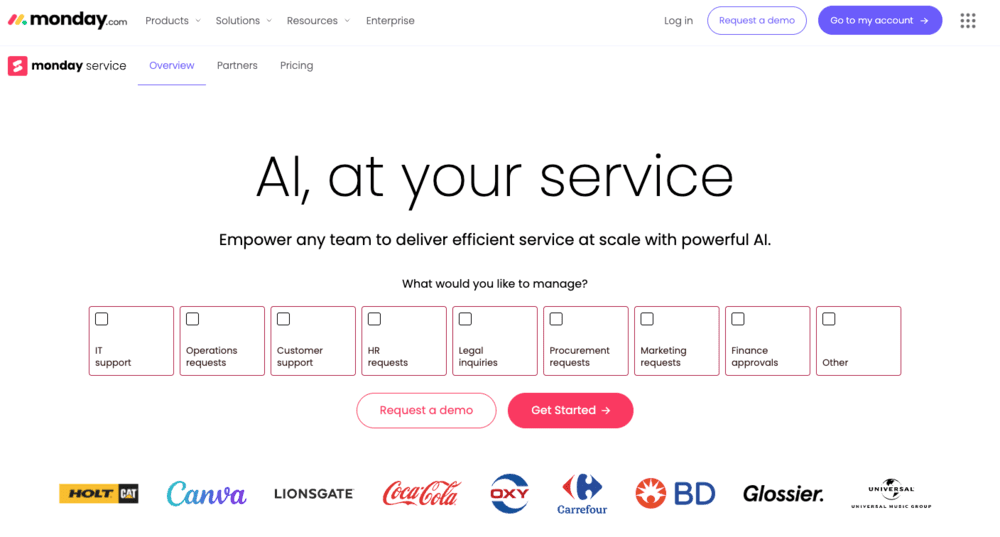
Organizations can transform how they handle employee requests by unifying IT, HR, and facilities workflows into one AI-powered platform with monday service. Built on the robust monday.com Work OS, it is designed for mid-sized to large companies looking to streamline service delivery across departments. The platform combines intelligent automation with intuitive design, making complex service operations feel surprisingly simple.
Best for
Organizations can centralize all employee service requests, from IT tickets to HR inquiries, while leveraging AI to accelerate resolution times and improve employee satisfaction on one unified platform.
Key features
- AI-powered ticket triage: automatically classifies, prioritizes, and routes requests across IT, HR, and facilities departments (with limits on the number of boards per plan)
- Customizable self-service portal: branded portal with SSO integration for self-service, with Standard (up to 10 users), Pro (up to 100 users), and Enterprise (unlimited)
- Incident management: urgent issue handling available on Pro and higher plans
Pricing
- Standard: $31/seat/month (billed annually)
- Pro: $45/seat/month (billed annually)
- Enterprise: custom pricing (quote-based)
- Minimum commitment: three seats required, with purchases available in increments of three, five, or 10 seats
- Ticket volume: unlimited tickets included across all plan tiers
Why it stands out
- Seamless monday integration: teams can manage service requests alongside projects and CRM activities without switching platforms
- AI-powered response acceleration: built-in AI assistant reduces first response times with suggested resolution steps and auto-replies (dynamic auto-responses available on Pro and higher plans)
- Enterprise-grade security and support: SOC and ISO certifications plus 24/7 support ensure reliability for organizations with strict governance (HIPAA compliance available on Enterprise plan)
Advanced AI features
- AI Service Workforce: specialized AI agents for IT, HR, procurement, customer support, facilities, finance, marketing, and legal that handle requests autonomously
- monday sidekick: AI assistant that suggests resolution steps, generates auto-replies, and accelerates every stage of the service workflow
- monday Agents: configurable AI agents that automate complex multi-step workflows without code
Automations
- No-code workflow builder: customize and automate any service workflow in minutes without writing a single line of code
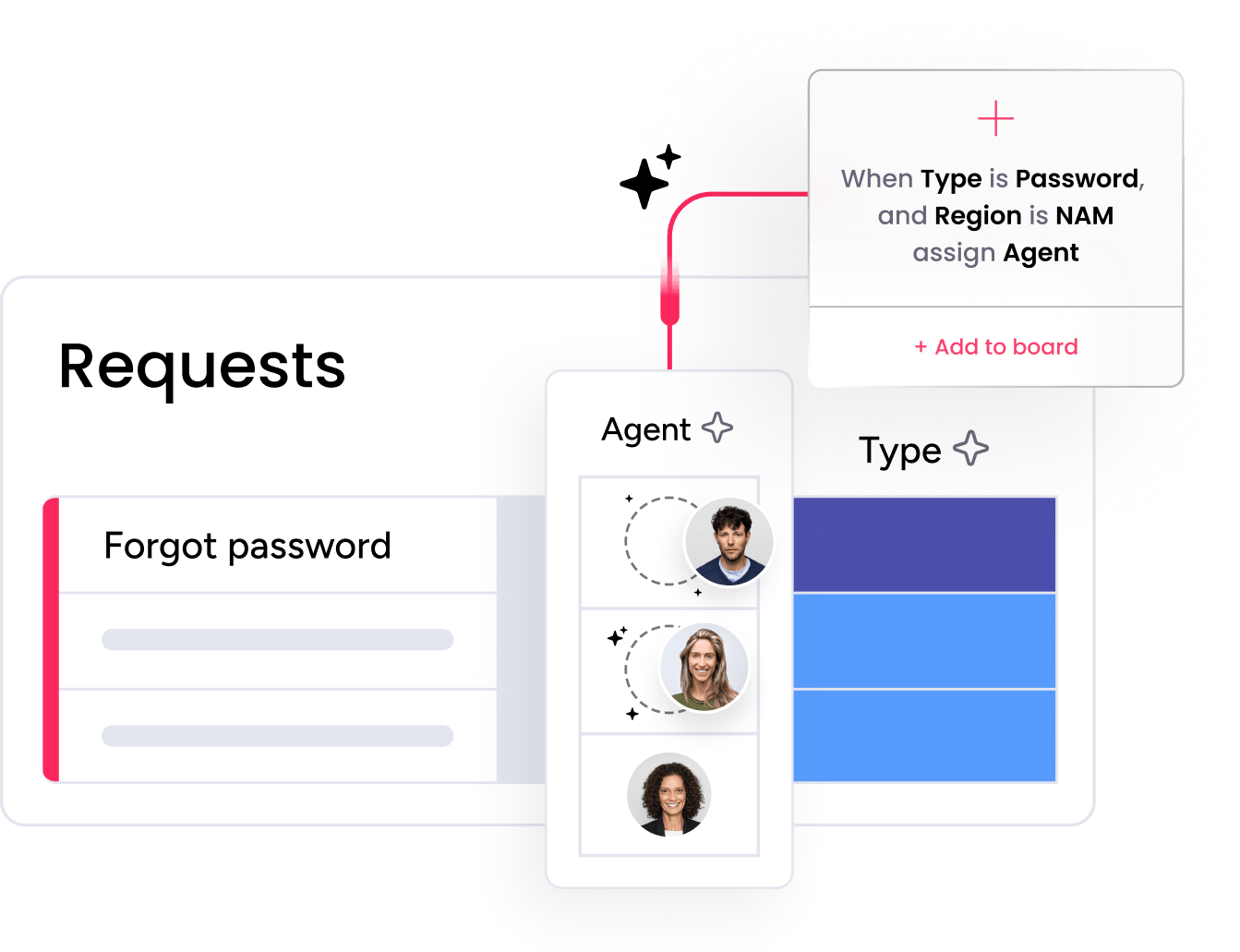
- Smart routing: automatically assigns requests to the right team member based on category, urgency, and availability
- Cross-department triggers: automate handoffs between IT, HR, and facilities so nothing falls through the cracks
Integrations
- 200+ integrations: connect with Slack, Microsoft Teams, and major enterprise systems
- monday MCP: Model Context Protocol support for connecting AI-powered workflows to external data sources
- Unified Work OS: service requests connect seamlessly to projects, CRM, and other monday.com products
Employee experience software features
- AI-powered knowledge base: empowers employees to find answers independently 24/7, reducing ticket volume and accelerating self-service
- Real-time analytics dashboards: intuitive visualizations tracking resolution times, satisfaction scores, and cost savings across every department
- Cross-departmental collaboration: a single platform connecting IT, HR, facilities, finance, and legal service delivery so employees never experience ticket ping-pong
2. ServiceNow
ServiceNow addresses enterprise-level service management by unifying complex workflows across IT, HR, and business operations on a single AI-powered platform. Built for large enterprises with intricate service delivery needs, the platform combines deep automation capabilities with extensive integration options to streamline operations at scale. With its robust Common Service Data Model (CSDM) and advanced analytics, ServiceNow helps organizations break down silos and accelerate resolution times across departments.

 Best for
ServiceNow excels at consolidating multiple service management systems into one unified platform, making it ideal for large enterprises seeking to standardize processes across IT, HR, customer service, and other business functions.
Key features
- Now Assist AI capabilities: generative AI providing record summarization, resolution recommendations, automated knowledge generation, and context-aware multimodal interactions through the AI Experience platform
- Employee Center Pro: centralized multi-departmental portal with personalized content, AI-driven enterprise search, and omnichannel approvals accessible via web, mobile, Teams, and kiosks
- Extensive integration library: pre-built connectors for Slack, Teams, Workday, and GitHub through IntegrationHub, plus EmployeeWorks for conversational workflow execution
Pricing
- Standard, Pro, and Enterprise tiers: quote-based pricing with AI features typically requiring Pro Plus or Enterprise Plus editions
- IntegrationHub subscriptions: tiered options (Starter/Standard/Pro/Enterprise) with transaction or volume-based entitlements
- Additional costs: GenAI “Assists” usage units, Store apps, premium success plans, and additional instances may incur extra fees
Considerations
- Implementation complexity: resource-intensive setup often requires dedicated IT support and extensive customization to get up and running
- most enterprise features require custom quotes, making cost planning challenging for budget-conscious organizations
3. Zendesk
With a focus on simplicity, Zendesk enhances employee support through AI-powered service management, making the process of getting help as intuitive as sending a message. The platform excels at creating seamless employee experiences across IT and HR services, with smart automation that routes requests instantly and resolves issues faster than traditional ticketing systems.

Best for
Zendesk for Employee Service delivers AI-powered ITSM and ESM capabilities in one workspace, enabling employees to get help through their preferred channels like Slack, Teams, email, or web portals.
Key features
- AI agents and Copilot: pre-trained AI agents handle common HR and IT requests autonomously, while Agent Copilot provides contextual suggestions to accelerate resolution for complex issues
- Omnichannel support: employees can request help via email, chat, phone, Slack, or Microsoft Teams for maximum convenience
- Customizable service catalog: Powered by Custom Objects, and integrated workflow capabilities with pre-built HRIS connectors for Workday, BambooHR, Rippling, and HiBob
Pricing
- Support Team: $19/agent/month (billed annually)
- Suite Professional: $115/agent/month (billed annually)
- Employee Service Suite: starting from $29/agent/month (billed annually)
- Add-ons: Copilot ($50/agent/month), Quality Assurance ($35/agent/month), Workforce Management ($25/agent/month)
- Startup program: six months free for eligible startups (up to 50 agents)
Considerations
- Advanced ITOM features like native CMDB and asset discovery require third-party integrations, which can add complexity compared to all-in-one ITSM suites
- Key capabilities like AI Copilot, quality assurance, and workforce management are priced separately, potentially increasing total cost of ownership as teams scale
4. Qualtrics EmployeeXM
Qualtrics EmployeeXM is the research-grade experience management software platform designed to capture, analyze, and act on employee feedback across the entire lifecycle. Built on one of the largest experience datasets in the world, it helps organizations move beyond annual surveys to continuous listening programs that surface actionable insights in real time. For CIOs and HR leaders who need data-driven workforce decisions, Qualtrics brings the analytical rigor that most employee feedback platforms lack.

Best for
Qualtrics EmployeeXM empowers organizations to understand and improve every moment that matters in the employee journey, from candidate experience through exit, using predictive analytics and AI-driven recommendations.
Key features
- Lifecycle intelligence: continuous listening programs spanning candidate experience, onboarding, engagement, development, and exit with AI-powered sentiment analysis across every stage
- Predictive analytics: machine learning models identify flight risks, engagement drivers, and organizational hotspots before they become problems
- 360-degree feedback and action planning: comprehensive multi-rater assessments combined with manager-facing action plans that close the loop between insight and impact
Pricing
- Contact sales for custom quotes based on headcount and selected modules
- Annual subscription with modular pricing for EmployeeXM, 360 Feedback, and Pulse programs
- Dedicated onboarding and success management included for qualifying contracts
Considerations
- No service management capabilities: Qualtrics is an analytics and listening platform, not a ticketing or service delivery system, so it complements rather than replaces platforms focused on service operations
- Enterprise-oriented pricing: quote-based model and implementation requirements may put it out of reach for smaller organizations
5. Workday Peakon
Workday Peakon is engineered to turn employee feedback into actionable insights, empowering organizations to drive meaningful change. The platform combines continuous listening with AI-powered analytics, making it perfect for enterprises that want to close the loop between employee sentiment and HR service delivery.

Best for
Workday Peakon enables organizations to create a seamless insight-to-action loop where employee feedback directly informs HR service delivery through integrated case management and guided support journeys.
Key features
- AI-driven comment analysis: generative summaries and sentiment tracking across 160+ countries
- Real-time pulse surveys: science-backed question libraries and True Benchmark comparisons
- Native integration: with Workday Help for HR case management and Workday Journeys for personalized employee support
Pricing
- Enterprise pricing: contact sales for custom quotes
- Workday Success Plans: available as an add-on for 24/7 support coverage
- Launch Now packages: fixed-fee options available for rapid deployment
Considerations
- Limited pricing transparency: no published rates, requiring sales engagement for cost evaluation
- AI rollout in progress: some advanced AI capabilities announced recently may still be rolling out across regions and tenants
6. Microsoft Viva
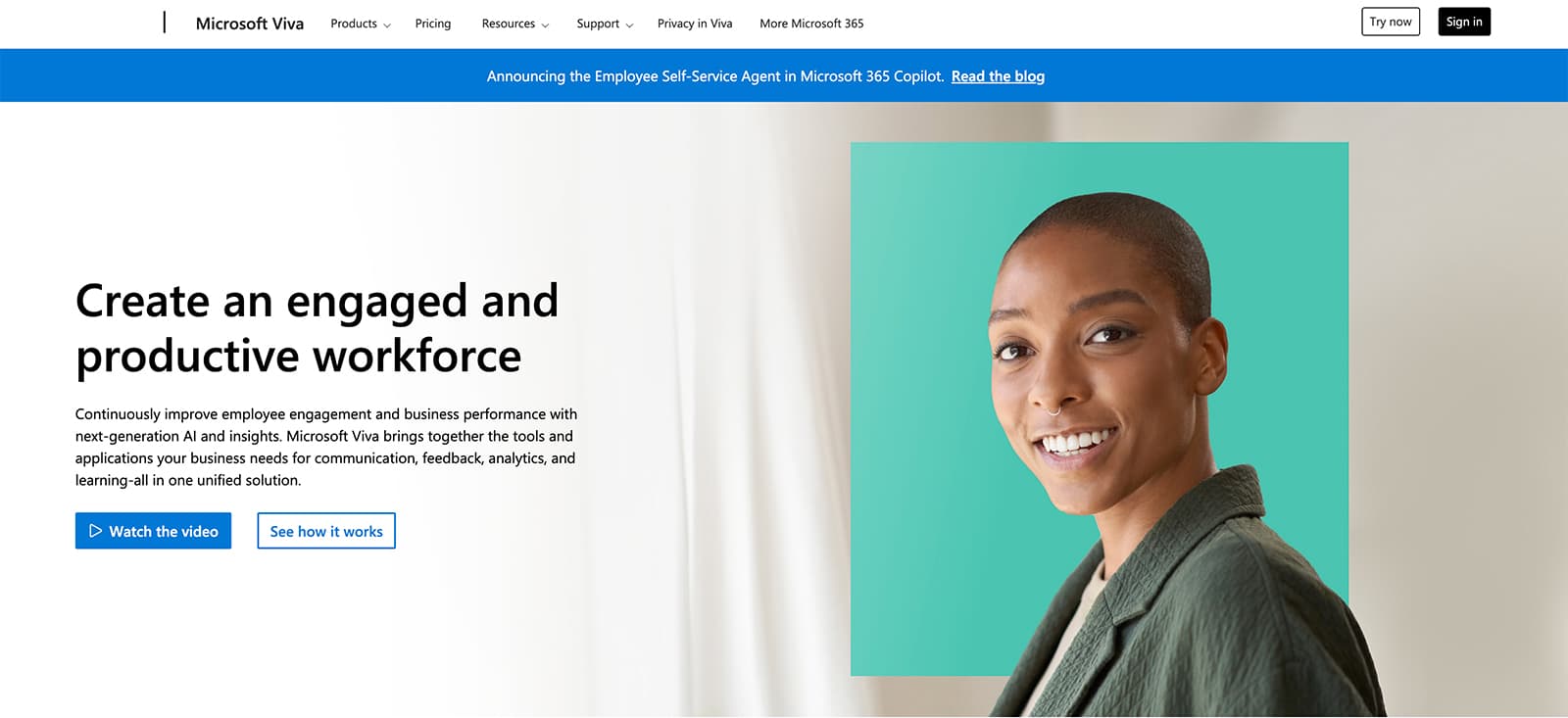
Microsoft Viva embeds employee experience workflows directly into Microsoft Teams, creating a unified digital workplace within the environment your team already uses every day. The platform has evolved significantly, now encompassing communications (Viva Connections, Amplify), engagement surveys (Viva Glint), learning (Viva Learning), productivity insights (Viva Insights), and social networking (Viva Engage) with Copilot AI woven throughout.
Best for
Microsoft Viva serves as the “front door” to work by consolidating service workflows, communications, learning, and engagement surveys within Teams to reduce context switching and improve employee productivity.
Key features
- Viva Glint: enterprise-grade engagement surveys with AI-recommended actions and real-time visibility, replacing the legacy Viva Pulse for quick team sentiment checks
- Copilot integration: AI assistance that personalizes learning suggestions, generates reports from natural language, and adjusts communication tone across all Viva modules
- Answers in Viva: crowdsourced Q&A for ticket deflection and organizational knowledge capture, embedded directly in Teams
Pricing
- Viva Employee Communications & Communities: $2/user/month (annual commitment)
- Viva Workplace Analytics & Employee Feedback: $6/user/month
- Viva Suite: $12/user/month (includes all premium features and integrations)
- Baseline features: included with Microsoft 365 E3/E5 plans
Considerations
- Service orchestrator focus: functions as a service orchestrator rather than a full ITSM suite, requiring integration with systems like ServiceNow for core service management functions
- Ecosystem dependency: maximum value requires Microsoft 365 E3/E5 licensing, and organizations outside the Microsoft ecosystem gain limited value
7. Culture Amp
Culture Amp provides a comprehensive suite of features designed to convert employee feedback into strategic, actionable insights that foster genuine organizational change. The platform combines comprehensive survey capabilities with advanced analytics, making it the go-to choice for companies serious about building strong workplace cultures and improving employee experiences at scale.

Best for
Culture Amp empowers organizations to measure, understand, and improve employee experiences through science-backed surveys and real-time analytics that turn feedback into strategic action.
Key features
- Comprehensive survey library: 40+ research-backed templates covering engagement, onboarding, performance reviews, and exit interviews
- AI-powered comment analysis: sentiment tracking that automatically categorizes feedback and identifies key themes
- Real-time benchmarking: compare against industry standards with actionable insights and improvement recommendations
Pricing
- Enterprise: quote-based pricing with full platform access and dedicated support
- Standard: quote-based pricing for mid-sized organizations with core features
- Self-starter: quote-based pricing for smaller teams getting started with employee experience programs
- Social impact discounts: 35% for nonprofits, 10% for B Corps, 38% for Black & Indigenous-owned businesses
Considerations
- Limited service management capabilities: focused on engagement and performance rather than ticketing or service delivery
- Support response times: email support can take 24 to 72 hours during peak periods, with no inbound phone support available
8. Lattice
Lattice offers a unified people management platform that combines performance management, engagement surveys, and AI-powered service delivery to elevate the employee experience. The platform has expanded significantly with a new AI HR help desk, succession planning module, and compensation benchmarking, making it a strong choice for HR teams that want to consolidate people operations and service delivery in one system.

Best for
Lattice delivers comprehensive employee experience management by integrating performance reviews, goal tracking, and AI-powered HR support into a single platform, reducing sprawl and accelerating employee service delivery.
Key features
- AI-powered HR help desk: automatically answers repetitive HR questions about benefits, policies, and PTO using your existing documentation, with Slack and Teams integration on the roadmap
- Succession planning: talent matrix combining performance scores, attrition risk, tenure, and readiness assessments to support workforce planning decisions
- Compensation management: performance-integrated pay decisions with benchmarking data to support equitable compensation reviews
Pricing
- Talent Management (Performance + Goals/OKRs + Manager features): $11/seat/month (annual billing)
- Engagement add-on: +$4/seat/month
- Grow (career development) add-on: +$4/seat/month
- Compensation add-on:+$6/seat/month
- Individual Performance or Goals & OKRs: $8/seat/month
- Annual minimum: $4,000 USD commitment required
Considerations
- Limited immediate availability: Some AI agent features, like Slack/Teams integration, are still listed as “coming soon,” which may limit immediate deployment options
- HR-focused scope: strong for HR service delivery, but lacks cross-department capabilities for IT or facilities ticketing
9. Workleap
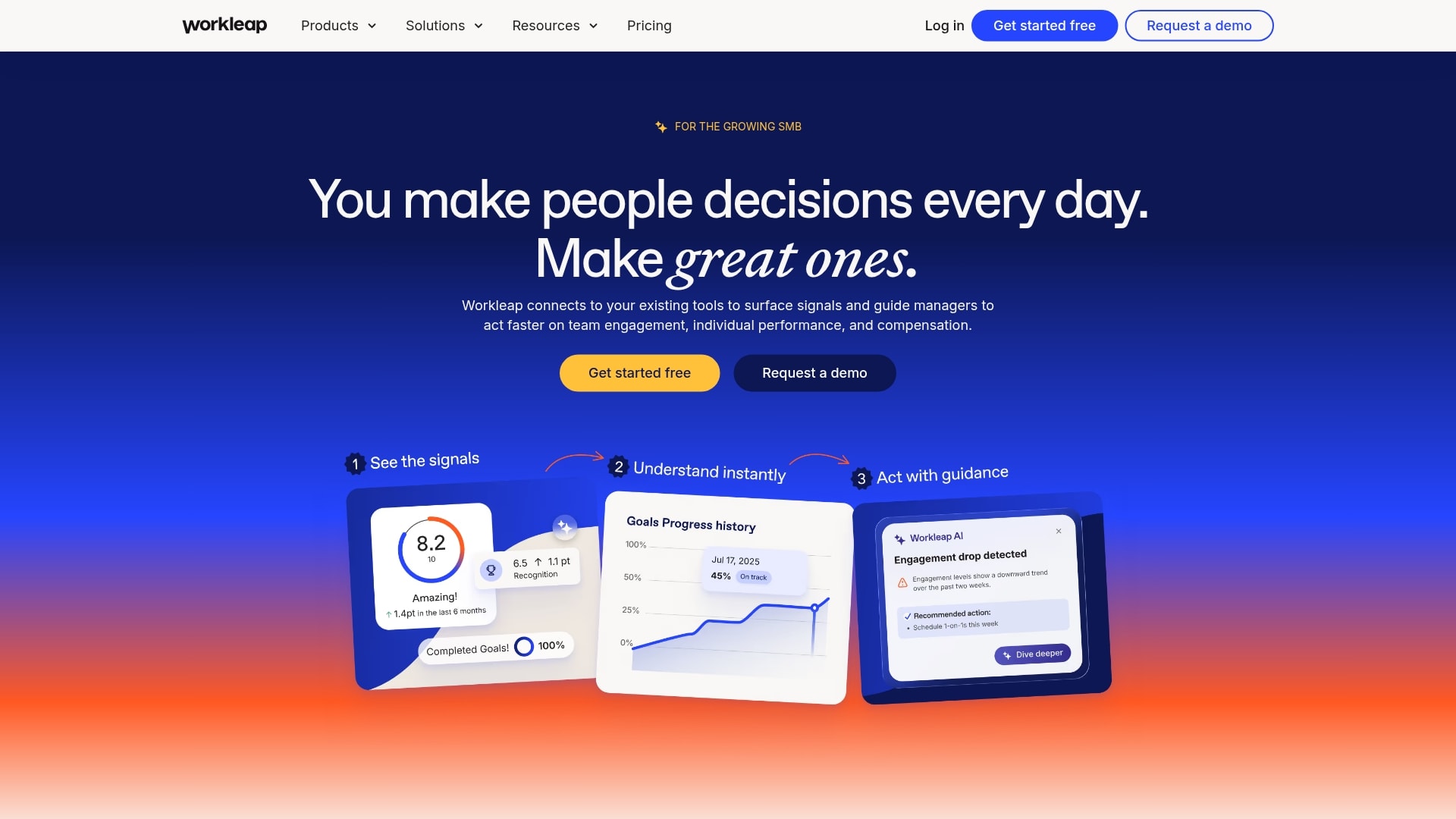
Workleap delivers a modular, AI-powered employee experience platform built for small to mid-sized businesses that want modern people management without enterprise complexity. The Montreal-based company has unified several products, including Officevibe (engagement), Performance, Compensation (formerly Barley), LMS, Onboarding, and Skills management, into one open-architecture system. This makes Workleap ideal for growing organizations with lean HR teams who need fast implementation and high adoption rates.
Best for
Workleap empowers growing organizations to manage the full employee lifecycle, from onboarding through engagement, performance, learning, and compensation, on one modular platform they can adopt at their own pace.
Key features
- Officevibe engagement module: pulse surveys, anonymous feedback, eNPS tracking, peer recognition (Good Vibes), and 10 core engagement metrics
- Unified employee lifecycle management: connecting engagement, performance reviews, compensation planning, onboarding, learning, and skills management in one integrated system
- Expanded AI capabilities: predictive attrition analysis, AI-assisted survey analysis, and generative feedback across all modules
Pricing
- Officevibe (engagement): $5/user/month with 10-user minimum
- Performance management: $5/user/month with 10-user minimum
- Compensation (Barley): $5/user/month with a 100-user minimum (demo required)
- LMS: $4/user/month with 10-user minimum
- Onboarding: $2/user/month with 10-user minimum
- Skills management: $2/user/month with 10-user minimum
- Workleap AI+ add-on: $4/user/month for expanded AI capabilities
- Bundle discount: Officevibe + Performance at $9/user/month (save 10% with annual commitment)
- Annual billing: save 20% across all modules
Considerations
- Customer support: limited to business hours only (Monday through Friday, 9 a.m. to 5 p.m. ET), which may not work for global teams needing 24/7 assistance
- Single HRIS integration: the platform restricts organizations to one active HRIS integration at a time, potentially limiting complex multi-system environments
10. 15Five
15Five provides a continuous performance management platform designed to build feedback-driven cultures by connecting performance data directly to business outcomes. The platform has expanded its AI capabilities with Kona Coach for real-time manager guidance and a Meeting Assistant that automatically generates summaries and action items, making it a strong option for organizations that prioritize manager effectiveness.

Best for
15Five empowers HR leaders to create data-driven performance and engagement outcomes through integrated AI coaching, manager effectiveness tracking, and comprehensive analytics dashboards.
Key features
- AI Kona Coach: real-time AI coaching for managers on performance conversations, leadership development, and team effectiveness
- AI Kona Meeting Assistant: automated meeting summaries and action items that keep teams aligned without manual note-taking
- HR Outcomes Dashboard: manager effectiveness indicators, engagement heat maps, and the Growth Studio 9-box Talent Matrix for succession planning
Pricing
- Engage: $4/user/month (billed annually)
- Perform: $11/user/month (billed annually)
- Total Platform: $16/user/month (billed annually)
- Kona AI Meeting Assistant add-on: $2/month per employee
- Kona Coach add-on: $19/month per manager
- Compensation add-on: starts at $9/month per manager
Considerations
- Limited support hours: support operates only during business hours with 24-hour response targets, which may be a challenge for global teams
- Add-on costs: advanced coaching services and AI capabilities require separate paid add-ons that can significantly increase the total investment
11. BambooHR
BambooHR streamlines HR service delivery with an all-in-one platform centered on employee self-service and AI-powered assistance. The platform expanded significantly in 2025 with a three-tier model (Core, Pro, Elite) and the Ask BambooHR AI assistant, making it simpler for small- to mid-sized businesses to provide employees with instant, permission-aware answers to their HR questions without overwhelming HR teams.

Best for
BambooHR empowers organizations to reduce HR ticket volume and accelerate response times through AI-driven self-service and automated workflows that handle common employee requests seamlessly.
Key features
- Ask BambooHR AI assistant: provides instant, permission-aware answers from HRIS data and company policies, accessible via web, mobile, and Slack, with increasingly advanced AI capabilities on Pro and Elite tiers
- Employee self-service portal: enables employees to update personal information, request time off, and track approval status with built-in workflow automation
- Smart approval workflows: automatically routes requests to appropriate managers with contextual information like PTO balances to improve decision quality
Pricing
- Core: starting at $10/month per employee (foundational HR automation with basic AI answers)
- Pro: enhanced features including performance management and upgraded AI that answers from company policies
- Elite: complete solution with compensation management, custom analytics, and advanced AI forecasting
- Small organization pricing: organizations with 25 or fewer employees start at $250/month flat rate
- Discounts: 15% discount available for nonprofits and when bundling US payroll and benefits administration
Considerations
- Limited cross-department capabilities: focused on HR service delivery without native cross-department ticketing for IT or facilities needs
- US-only features: some advanced features like payroll and benefits administration are restricted to US-based employees only
12. Leapsome
Leapsome delivers an all-in-one HR platform that integrates performance management, engagement surveys, learning development, and core HRIS functionality into a single AI-powered system. The platform has recently added an AI Copilot embedded across reviews and surveys, an AI Widget Builder for creating analytics dashboards from natural language, and a Meeting Coach that provides post-meeting feedback from transcript analysis. For organizations seeking to streamline their entire employee lifecycle, Leapsome supports 38+ languages and serves startups to global enterprises.

Best for
Leapsome delivers a unified HRIS and people enablement platform that reduces sprawl while accelerating employee development through AI-powered insights and structured change management support.
Key features
- AI Copilot and Widget Builder: AI embedded across performance reviews, engagement surveys, and goal tracking, plus the ability to create analytics dashboards from natural language queries
- Comprehensive HRIS: employee records, document management, e-signature, payroll integration, absence management, and time tracking in one system
- Meeting Coach: transcript analysis providing post-meeting feedback and coaching suggestions for more effective conversations
Pricing
- Modular pricing: custom quotes based on selected HRIS and people enablement modules
- 14-day free trial: available for all modules
- Startup discount: up to 25% off for qualifying startups for up to three years
- Minimum contract: one-year term required
- No setup fees: implementation included at no additional cost
- Add-ons available: compensation benchmarks and learning content bundles (pricing varies)
Considerations
- Limited customer success access: dedicated customer success services only available for annual contracts of EUR 6,000 or more, with smaller contracts limited to email support
- Language-limited support: support resources primarily available in English and German despite the platform’s multilingual interface covering 38+ languages
Must-have features in modern employee experience software
What separates a forgettable help desk from a platform employees actually want to use? It comes down to features that anticipate needs rather than just react to them. A superior employee experience platform transforms service from a disjointed series of tickets into an intuitive, connected system designed to genuinely help people.
The features that make the most difference combine smart automation with self-service and real-time visibility. Here are the capabilities to prioritize:
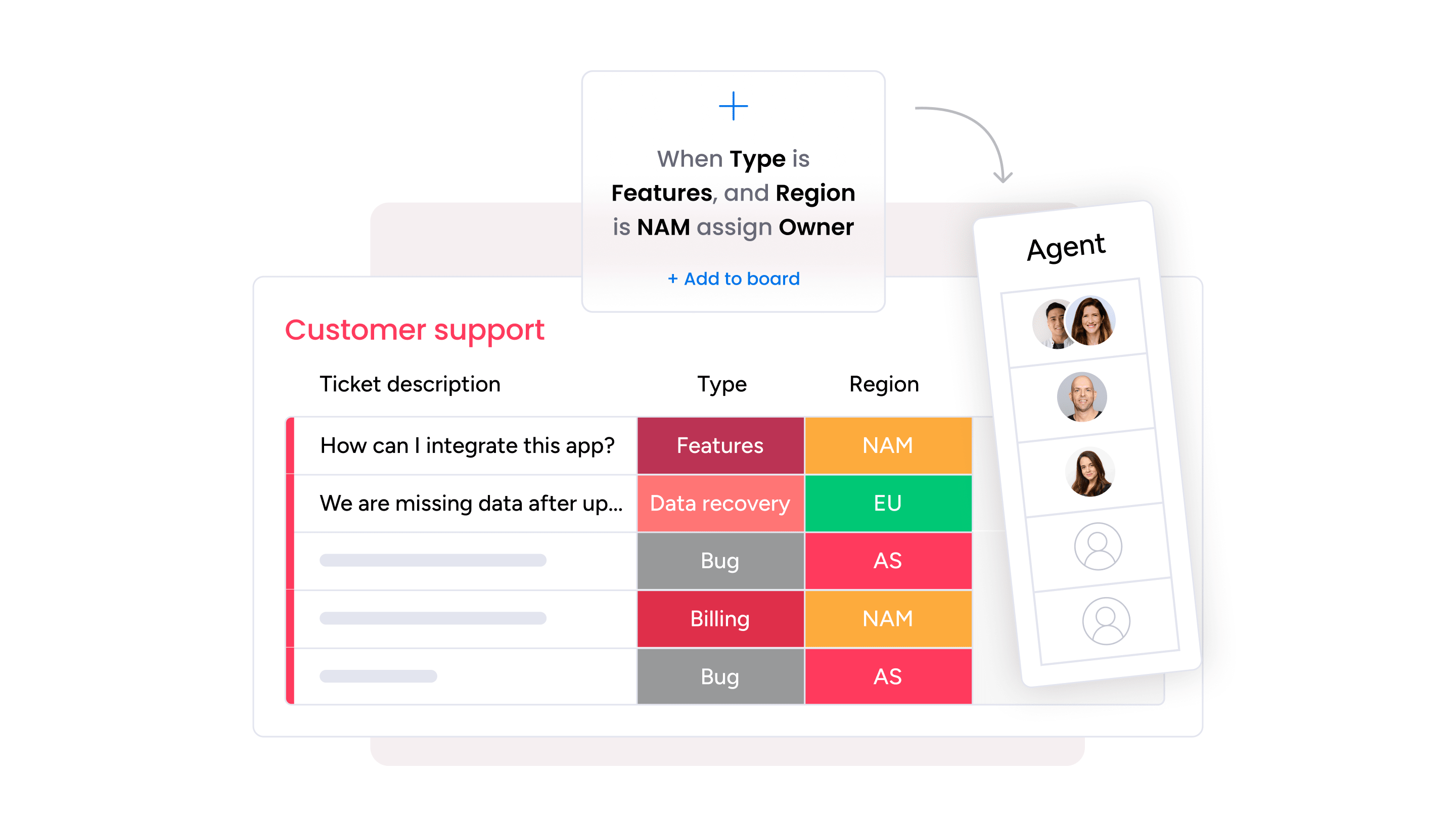
- AI-powered triage and routing: automatically classify, prioritize, and assign requests to the right team without manual sorting, so nothing sits in a queue waiting for someone to figure out where it belongs
- Self-service portals and AI-powered knowledge bases: empower employees to find answers independently 24/7, reducing ticket volume and freeing service teams for complex issues
- Cross-department workflows: connect IT, HR, facilities, and other departments on one platform so multi-step processes like onboarding or equipment provisioning flow seamlessly across teams
- Real-time analytics and dashboards: track resolution times, satisfaction scores, and cost savings, then use those insights to optimize operations before small issues become big headaches
- No-code customization: let teams adapt workflows, forms, and automations without developer support so the platform evolves as fast as the organization does
- Employee file management and document workflows: centralize employee documents, approvals, and compliance records so nothing gets lost across systems
The right combination of these capabilities creates a service engine that understands context, anticipates needs, and unifies the entire organization.

"Our team LOVES the monday service platform and we’re already exploring how we could incorporate it for other departments, too. It has streamlined our workflow in a way that both our team and customers appreciate."
Andrew Marshall | VP Operations
״monday service provides clear insights into requests volume and types, response times, and trends - helping us continuously improve operations"
Grant De Waal-Dubla | CIO
"The biggest value for us is speed and flexibility. You can get up and running in days, change anything instantly, and see everything in real time. And you don’t need a dedicated admin to do it."
Clive Camilleri | Head of People Tech & OperationsHow employee experience software transforms cross-department operations
Siloed IT, HR, and facilities teams often turn simple employee requests into a complex web of emails and follow-ups. How many times has a new hire waited days for a laptop because three departments could not coordinate a single workflow? The right employee experience software addresses this challenge by unifying departments on a single system, transforming operational fragmentation into streamlined, effective collaboration.
With the right platform, every department gains a shared, real-time view of all employee needs, from laptop requests to payroll questions, consolidated in one central location. This single source of truth reduces confusion and enables teams to collaborate more effectively, resolve issues faster, and address potential problems proactively.
Consider the employee onboarding process. Rather than managing separate tickets across multiple departments, modern employee experience platforms automate the entire workflow, ensuring clear visibility into responsibilities and timelines. This approach reduces administrative overhead while delivering a well-coordinated onboarding experience for new hires.
Here are the AI capabilities driving the most impact in employee experience management software:
- Autonomous AI agents: specialized AI agents handle routine IT, HR, and facilities requests end-to-end without human intervention. Leading platforms now offer an AI Service Workforce with dedicated agents for each department, resolving common requests in seconds rather than hours
- Predictive analytics and flight-risk detection: machine learning models analyze engagement patterns, performance data, and behavioral signals to identify employees at risk of disengagement or departure before it happens
- Continuous listening replacing annual surveys: AI-powered pulse programs capture real-time sentiment, automatically surfacing themes and trends so leadership can act on feedback within days rather than waiting for quarterly reports
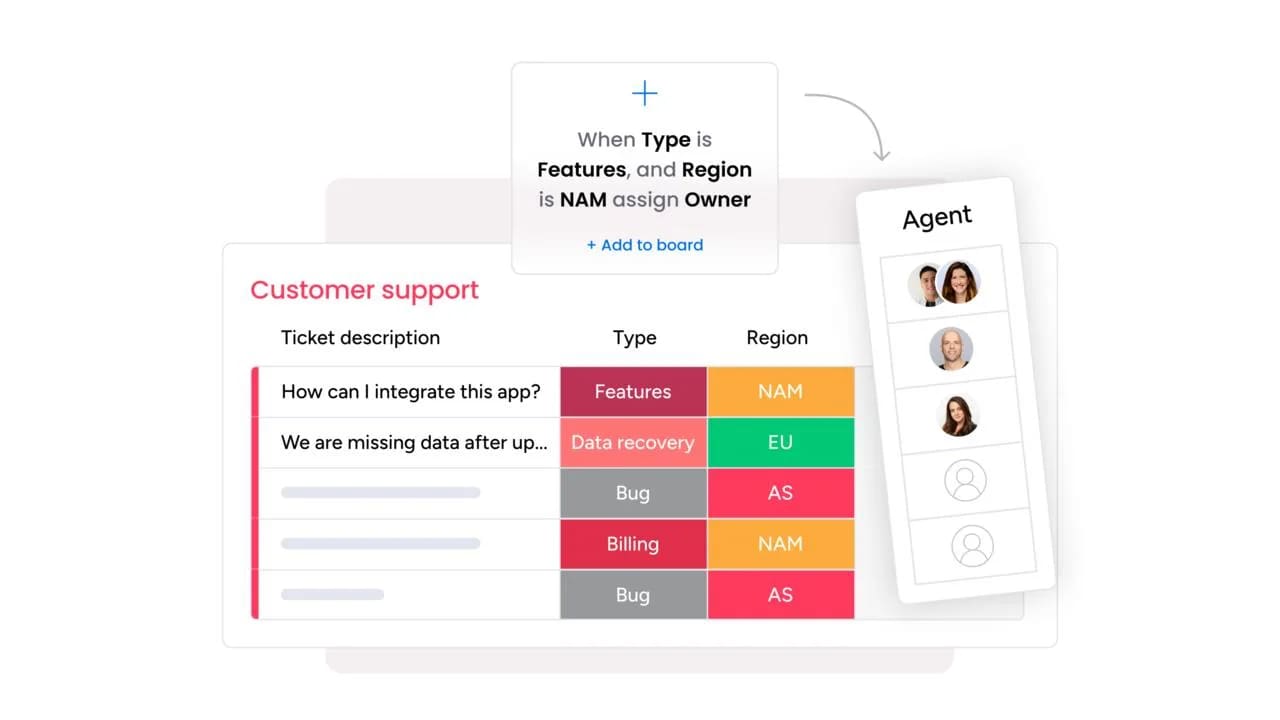
- Automated triage and intelligent routing: AI classifies incoming requests by type, urgency, and department, then routes them to the right team member instantly, eliminating the manual sorting that creates bottlenecks
The organizations seeing the most impact are those that pair AI capabilities with cross-department visibility, ensuring that intelligent automation serves the entire employee experience rather than just one department’s workflow.
The role of AI in next-generation employee experience management
Artificial intelligence acts as the ultimate force multiplier, automating repetitive, time-consuming tasks so teams can concentrate on strategic work that moves the needle.
The result is a support system so intelligent and seamless that employees get what they need without friction. This fundamental shift empowers service teams to evolve from reactive ticket-takers into proactive problem-solvers.
Built-in AI capabilities serve as the engine that makes this happen, intelligently routing tickets and automating follow-ups to eliminate bottlenecks before they even form.
Imagine a world where manual triage is a thing of the past: modern platforms turn that chaos into a clear, automated flow. This is how organizations accelerate resolution times and keep everyone in the loop, without anyone breaking a sweat.
And we’re not just talking about simple requests. Leading employee experience platforms can orchestrate complex, multi-step workflows, from new hire onboarding to cross-departmental equipment provisioning, all automated and tracked in one place.
This is how organizations scale exceptional support and optimize their operations, giving teams the power to deliver amazing service no matter how fast they grow.
Learn more: AI employee management software
How to choose the right employee experience platform for your organization
Choosing a new platform is a significant decision, as it becomes the central nervous system connecting IT, HR, and every team in between. The goal is to convert a chaotic stream of requests into a single, streamlined flow, giving your teams room to operate effectively. A clear game plan is essential for cutting through the noise and identifying the solution that will genuinely serve your organization.
Therefore, approach your selection process strategically:
- Audit your current setup: map where streamlining workflows and consolidating systems would free your team to focus on higher-value work, and identify where inefficiencies are draining your team’s productivity
- Prioritize seamless integration: focus on a platform that connects to your existing systems effortlessly and lets you customize workflows without writing a single line of code
- Start with a pilot program: launch with a small group to test drive workflows and iron out any wrinkles before rolling out organization-wide
- Invest in training and support: ensure everyone feels confident from day one with comprehensive onboarding and ongoing resources
- Optimize continuously: use real-time insights to refine your service engine and keep it running at peak performance
When it comes to pricing, entry-level employee experience platforms focused on engagement start at $4-$5/user/month, while comprehensive service management platforms range from $19-$45/seat/month. Enterprise solutions like ServiceNow and Qualtrics require custom quotes. Reference the comparison table above to see where each platform falls
Consider platforms as a comprehensive solution: robust enough to scale with your organization’s growth while remaining flexible to adapt to evolving needs, providing the foundation for delivering exceptional employee experiences at every stage of development.
Measuring ROI and impact of employee experience investments
The true measure of success goes beyond closing tickets to tangibly improving your team’s daily work life. Beyond closure times, the metrics that reveal the most about service quality are the ones that capture how people feel about the service they receive. Moving beyond simple statistics is key to understanding the real impact on satisfaction and engagement.
A fantastic employee experience is not just a “nice-to-have”; it is a powerful engine for growth that creates a ripple effect across the organization. When teams feel truly supported, they become more productive, stay with the company longer, and deliver outstanding customer experiences. The right platform visualizes this connection, turning service satisfaction into a clear story of business success.
The financial impact is where things get really exciting. According to Gallup’s State of the Global Workplace 2026 report, organizations with highly engaged employees achieve 23% higher profitability than those with low engagement (Gallup, 2026). Streamlining service delivery by consolidating platforms and automating repetitive work yields measurable cost reductions while improving key metrics such as first-contact resolution and employee satisfaction.
Making the shift from multiple platforms to a unified system
The constant juggling of disparate applications creates a state of perpetual motion without progress, preventing your team from focusing on its core mission: helping people. With information scattered across ticketing systems, spreadsheets, and chat channels, more time is spent searching for answers than providing them. This common hurdle is precisely what a unified employee experience platform is designed to overcome.
Consolidating onto a single platform delivers the following benefits:
- Unified service delivery: bring IT, HR, and facilities teams onto one intuitive platform with streamlined workflows for requests, projects, and knowledge sharing
- Consistent employee experience: deliver top-notch support every time by eliminating silos and creating a single source of truth for all service interactions
- Accelerated resolution times: teams see measurable improvements in resolution speed by consolidating work into one collaborative space, with measurable improvements in productivity, retention, and employee satisfaction
- Empowered service teams: free your agents from platform-switching chaos so they can focus on delivering faster, smarter service that truly helps people
A unified platform breaks down those silos, transforming fragmented processes into one seamless workflow. Consolidating your systems is not just about cleaning house; it is about unlocking your team’s true potential and creating a workplace where everything just works together.
How monday service elevates employee experience across your organization
An exceptional employee experience is built on operational ease, not superficial perks. It hinges on providing a single, intuitive channel for people to get the help they need, from IT and HR to facilities, without the typical runaround. What does it look like when every department finally operates from the same system?
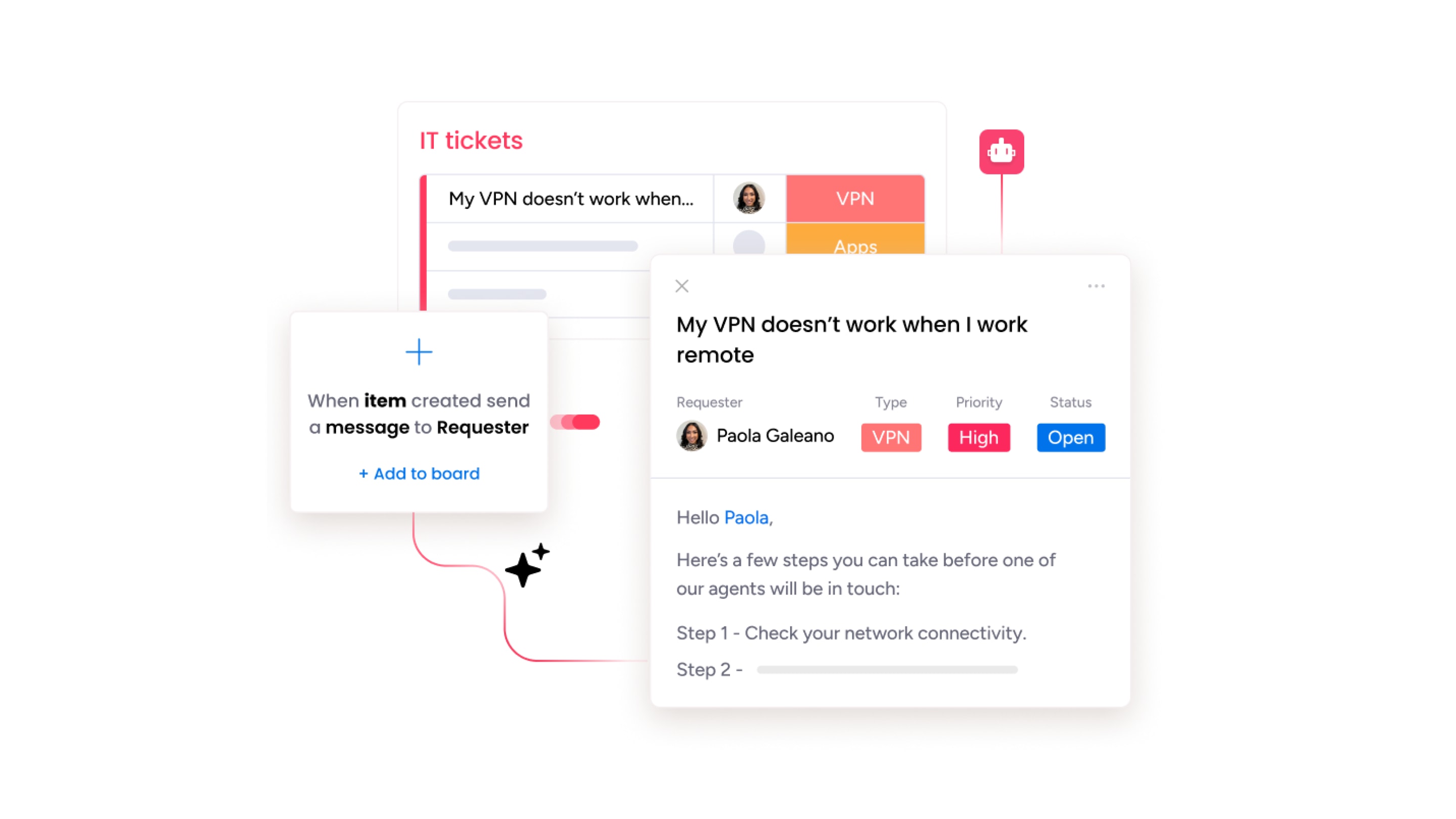
With monday service, service teams come together on one flexible employee experience software platform that everyone actually enjoys using. Our built-in AI automates the repetitive work to free up your teams for more important projects, while our no-code customization lets you adapt any workflow in minutes. This creates a consistent, seamless experience for your employees and provides your service teams with the real-time visibility they need to resolve issues before they escalate.
The AI Service Workforce takes this further with specialized AI agents for IT, HR, procurement, facilities, finance, and legal. These agents handle routine requests autonomously, from password resets to PTO approvals, so your human team members can focus on complex issues that require judgment and empathy.
The result is a measurable shift for your entire operation. Teams cut their resolution times significantly and dramatically boost employee satisfaction, all by unifying their service delivery on one employee experience platform. Ultimately, it is about giving people back their time and energy, allowing them to focus on high-impact work instead of getting bogged down by internal requests.
How to get started with employee experience software
Imagine an employee experience that functions not as a maze, but as a clear path forward. By connecting every team, from IT to HR, requests can be handled quickly and transparently, ensuring no one is left in the dark. The objective is to cultivate a workplace where obtaining help is simple, fast, and entirely frustration-free.
This is where we bring it all together on one intuitive platform that your teams will genuinely enjoy using. With monday service, you get a single, visual digital workspace to manage everything, using built-in AI to accelerate resolutions and real-time analytics to spot opportunities for improvement before they become problems. It is time to trade fragmented employee-experience software for a unified system that empowers everyone to do their best work.
Get started with monday.comThe content in this article is provided for informational purposes only and, to the best of monday.com’s knowledge, the information provided in this article is accurate and up-to-date at the time of publication. That said, monday.com encourages readers to verify all information directly.
Frequently asked questions
How long does it take to implement employee experience software?
The time it takes to implement employee experience software varies depending on the platform's complexity and your organization's size. While some enterprise platforms take months, you can launch monday service in just a few days using intuitive templates. Teams often start seeing value immediately because it is built for fast, easy adoption.
Can small businesses benefit from employee experience platforms?
Small businesses absolutely benefit from employee experience platforms because they automate manual work and consolidate multiple systems. It gives lean teams the power to deliver responsive service without the overhead of a large support staff.
What's the difference between employee experience and employee engagement tools?
The difference between employee experience and employee engagement platforms is that engagement platforms measure how employees feel through surveys, pulse checks, and sentiment analysis. Employee experience software goes further by improving how work actually gets done, streamlining everything from IT tickets to HR requests into a unified system. Engagement is one input; experience is the full picture.
How do employee experience tools integrate with existing HRIS systems?
Employee experience platforms connect seamlessly with existing HRIS systems through pre-built integrations and APIs that automatically sync employee data. This eliminates manual data entry and ensures that every service request is personalized and accurate , based on current employee records.
What metrics should we track to measure employee experience success?
The key metrics to track for employee experience success include employee satisfaction (CSAT), average resolution time, first-contact resolution rate, and platform adoption rates. High usage is the clearest signal that the platform is genuinely improving the daily experience for your team members.
How does AI improve employee experience management?
AI improves employee experience management by automating repetitive service requests, intelligently routing tickets to the right teams, and providing real-time sentiment analysis across employee interactions. AI-powered platforms can resolve common inquiries autonomously through self-service portals and knowledge bases, reducing wait times from days to minutes. Predictive analytics also help organizations identify flight risks and engagement drops before they become retention problems.
Do employee experience platforms work for remote and hybrid teams?
Employee experience platforms are essential for remote and hybrid teams because they provide a single, centralized digital workspace for all service needs. This ensures every employee receives the same consistent, high-quality support no matter where they work.

 Get started