


If you’re shopping around for an efficient project management platform, it’s likely that Trello and monday.com’s AI Work Platform are already on your radar. As two popular cloud-based solutions on the market for organizing tasks and projects, collaborating with teammates, and integrating with other tools in your tech stack, it can be tricky to hone in on which platform is best for your team.
Both are great options for managing your work, but honestly, they cater for different use cases. Trello, with its simple Kanban card and column format, is as simple as it gets. But monday.com’s AI Work Platform goes way beyond basic task tracking, delivering a comprehensive operating system that connects strategy to execution across entire organizations. With AI-powered automation, cross-departmental workflows, and portfolio-level visibility, it’s built for teams that need to scale operations without adding complexity.
This blog compares Trello and monday.com side by side, digging deep into the details of each platform’s features, pricing, and capabilities to determine the right fit for your business.
Get startedKey takeaways
- Team size determines the right fit: Trello works well for small teams with simple workflows. Once you hit 15+ people or multiple projects, however, you’ll run into visibility and reporting gaps.
- Portfolio visibility is a real differentiator: Without native cross-board dashboards, leaders managing multiple projects end up reporting manually or paying for add-ons.
- “Affordable” pricing can shift fast: Trello’s low entry price rises quickly once you add Power-Ups for timelines, reporting, and automations that other platforms include natively.
- Migration is more manageable than it looks: Direct board imports and phased rollouts with team champions make platform transitions smoother than expected.
- monday.com’s AI Work Platform connects daily work to strategy: With 15+ native views, cross-board automations, AI-powered risk detection, and workload management, teams run entire operations from one place.
Trello vs. monday.com's AI Work Platform at a glance
Choosing between Trello or an alternative like monday.com’s AI Work Platform comes down to understanding what your team needs today and where you’re headed tomorrow. Here’s how they stack up on the capabilities that matter most:
| Attribute | Trello | monday.com's AI Work Platform |
|---|---|---|
| Primary use case | Lightweight project and process tracking | Cross-departmental work and portfolio management |
| Board views available | Kanban (others require Power-Ups) | 15+ native views including Gantt and Workload |
| Automations | Single-board rule-based (Butler) | Cross-board, multi-step, and integration-triggered |
| Dashboards and reporting | Card and board-level only | Native cross-portfolio dashboards with 10+ widgets |
| AI capabilities | None | AI Blocks, Digital Workforce, and risk insights |
| Resource management | Manual card assignment | Dedicated workload views and capacity planning |
| Free plan | Yes (up to 10 boards per workspace) | Yes (up to 2 seats) |
| Best for team size | 1–15 users | 15–10,000+ users |
| Pricing starts at | $5/user/month | $9/user/month (billed annually) |
What is Trello?
Trello is a Kanban-based project management platform owned by Atlassian. Work moves visually from left to right across columns representing stages like “To do,” “In progress,” and “Done.”
The platform’s core structure is simple and rigid:
- Boards contain lists
- Lists contain cards
- Cards hold task details, attachments, and comments
This simple structure makes it easy for new users to see their work at a glance. Trello excels for solo users, small teams, and simple linear workflows. But as workflows expand beyond single boards, teams hit limits that require workarounds or additional platforms.
What is monday.com's AI Work Platform?
monday.com’s AI Work Platform unifies goals, projects, processes, and everyday work across departments, powered by embedded AI that transforms how teams operate. It goes far beyond project management, connecting strategic planning to tactical execution in a single intelligent workspace.
Teams across PMO, marketing, operations, HR, and IT rely on the AI Work Platform for cross-departmental workflows, portfolio visibility, resource management, and goal alignment. With AI-driven automation, risk detection, and intelligent insights built directly into every workflow, teams configure boards, automations, dashboards, and integrations with zero code, while AI actively manages work in the background.
Built for mid-to-large organizations managing concurrent projects at scale, monday.com’s AI Work Platform delivers the structure teams need to scale operations without adding complexity. AI capabilities don’t just automate updates—they predict bottlenecks, flag risks before they escalate, and provide proactive recommendations that keep projects on track. This is work management that thinks ahead.
monday.com vs Trello feature comparison
Here’s how each platform handles real work scenarios. The four capability areas below show the core differences between task tracking and comprehensive work management.
Workflow customization and board views
Workflow customization controls how teams structure, visualize, and move work through stages. Trello relies on boards, lists, and cards as its only structural units, with Kanban as the default view. Additional views require Power-Ups, which may be paid add-ons depending on your plan.
monday.com’s AI Work Platform offers over 15 native board views without requiring add-ons. Teams switch views on the same board depending on their needs — a project manager uses Gantt charts for planning while individual contributors work from Kanban boards. This matters when different stakeholders need to see the same data in different ways.
- Default views: Kanban, Table, Gantt, Timeline, Calendar, Workload, Map
- Additional views: 15+ native views included
- Custom columns/fields: 30+ native column types
- Sub-items: Native sub-items with full column support
- Dependencies: Native dependency tracking
- Templates: 200+ cross-industry workflow templates
Dashboards and cross-project reporting
Dashboards pull real-time data from one or more boards so you can track progress, spot risks, and report to stakeholders. Trello limits reporting to card and board level with no native cross-board dashboards. Reporting Power-Ups add cost and complexity but don’t give you unified portfolio views.
monday.com’s AI Work Platform features native, configurable dashboards with over 10 drag-and-drop widgets. Each widget serves specific reporting needs:
- Battery widget: Visualizes project progress across multiple boards in one consolidated view
- Chart widget: Displays data trends, resource allocation, and budget burn rates
- Workload widget: Tracks team capacity and individual assignments across all active projects
- Numbers widget: Aggregates budgets, costs, or time tracking totals from various boards
These dashboards pull data from multiple boards at once, so PMO leaders and executives get real-time portfolio views without manual reporting.
Resource and workload management
Resource management shows who’s working on what, their capacity, and whether workloads are balanced. Trello lacks native resource or workload management. Managers can assign cards to members, but there’s no view of total workload across boards.
monday.com’s AI Work Platform shows each team member’s assigned work relative to their capacity. Managers can reallocate work directly from this view. Key capabilities that solve common resource challenges:
- Workload visibility: See exactly how many tasks or hours are assigned to each person across all projects
- Capacity planning: Set weekly capacity limits to prevent team burnout and ensure realistic schedules
- Cross-project allocation: View resource distribution across the entire portfolio, not just single boards
- Skill-based assignment: Match the right personnel to specific project requirements based on expertise
Collaboration, docs, and communication
Collaboration goes beyond commenting on cards. Teams co-edit documents, embed live project data, and keep communication connected to work. Trello handles collaboration through card comments, attachments, and @mentions (no native document editor).
monday.com’s AI Work Platform includes monday workdocs, a native document editor where teams embed live boards, dashboards, and videos directly into documents. Project briefs, meeting notes, and status reports include real-time data without switching platforms. This embedded documentation connects planning and execution for cross-functional teams.
Get started
Automations and AI on monday.com vs Trello
Automations and AI control how much manual coordination teams handle daily. They transform platforms from passive trackers to active participants in workflows. This is where the gap between Trello and monday.com’s AI Work Platform becomes most apparent.
No-code automations and cross-board workflows
No-code automations are pre-built or custom rules that trigger actions when conditions are met. Trello offers Butler, which supports rule-based automations, scheduled commands, and button triggers (but only for single-board automations).
Here’s how Trello’s Butler and AI Work Platform compare across key automation capabilities:
- Single-board automations: Both platforms support rule-based automations within individual boards
- Cross-board automations: monday.com’s AI Work Platform enables automations across multiple boards, while Trello limits Butler to single-board workflows
- Scheduled triggers: Both platforms offer time-based automation triggers
- Integration-triggered automations: AI Work Platform connects with 200+ apps to trigger automations, while Trello offers limited integration-based triggers
- Custom automation builder: Both platforms provide no-code automation builders for creating custom workflows
- Automation templates: Both platforms offer pre-built automation templates to accelerate setup
monday.com’s AI Work Platform automations work across boards, allowing items to move between projects, trigger notifications across teams, and connect workflows spanning departments. The automation center offers pre-built templates and custom logic that non-technical users can configure easily. Cross-board automation cuts out manual handoffs that slow down projects.
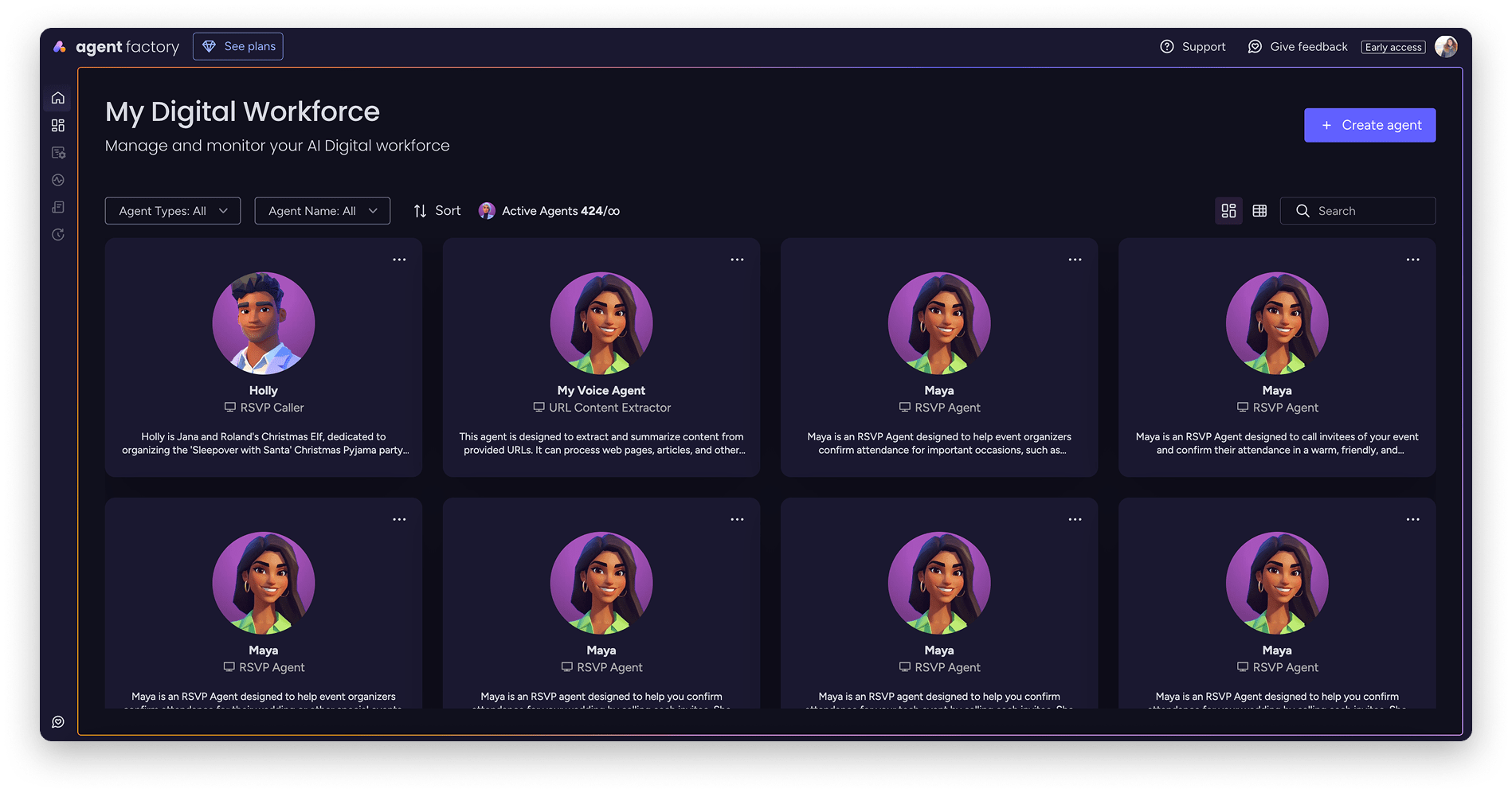
AI Blocks, Digital Workforce, and portfolio risk insights
monday.com’s AI Work Platform uses AI to actively manage work, not just track it. AI Blocks are configurable AI actions you can add to any workflow without coding. They categorize data by urgency, extract information from PDFs, summarize updates, and detect text sentiment.
The Digital Workforce introduces specialized AI workers that handle specific functions autonomously:
- Project Analyzer: Monitors real-time bottlenecks and flags risks before they escalate
- Campaign Manager: Tracks marketing performance across active campaigns
- Onboarding Helper: Guides new employees through structured onboarding workflows
Integrations and ecosystem compared
Integrations show whether a platform fits your existing tech stack or forces workarounds. Trello integrates through Power-Ups. Each Power-Up works as a separate add-on. Some plans limit active Power-Ups, so teams need multiple add-ons to replicate capabilities that other platforms offer natively.
monday.com’s AI Work Platform integrates with over 200 apps natively through its integration center. These integrations trigger automations. Status updates in external apps automatically sync to project items. Common enterprise connections include:
- Microsoft Teams: Sync conversations and board updates directly within channels
- Slack: Turn messages into actionable items and receive board notifications
- Gmail: Convert emails into tasks and automate outbound replies
- Jira: Create two-way sync between development issues and project boards
- Salesforce: Automatically generate project workflows when deals close
- Google Drive: Attach and preview files directly within project items
Native integrations cut setup time and don’t add cost or configuration per platform.
Pricing, plans, and total cost of ownership
Total cost goes beyond the sticker price, as it’s crucial to factor in Power-Up dependencies, seat minimums, and feature tier requirements. What looks affordable upfront often changes once teams add the capabilities they actually need to run their work.
Trello pricing tiers
Teams typically upgrade because the free plan limits Power-Ups and views. Timeline and dashboard views require Premium or above.
| Tier | Monthly price per user | Key features | Limitations |
|---|---|---|---|
| Free | $0 | Unlimited cards, up to 10 boards | No timeline view, limited automations |
| Standard | $5 | Unlimited boards, advanced checklists | No dashboard or calendar views |
| Premium | $10 | Multiple views, admin security features | No organization-wide permissions |
| Enterprise | $17.50 | SSO, organization-wide controls | Requires 50 user minimum |
monday.com’s AI Work Platform pricing tiers
Most team features — including automations, integrations, and dashboards — become available at Standard tier and above.
| Tier | Monthly price per user (billed annually) | Minimum seats | Key features |
|---|---|---|---|
| Free | $0 | Up to 2 seats | Up to 3 boards, basic templates |
| Basic | $9 | 3 seats | Unlimited items, 5 GB storage |
| Standard | $12 | 3 seats | Timeline/Gantt views, automations, integrations |
| Pro | $19.00 | 3 seats | Time tracking, formula column, private boards |
| Enterprise | Custom pricing | Custom | Advanced security, portfolio management, SSO |
Hidden costs and Power-Up dependencies
Advertised prices don’t always reflect actual costs once teams add the features they need. Factor these into total cost:
- Trello Power-Up costs: Some Power-Ups require paid third-party subscriptions. Teams needing timeline views, reporting, or advanced automations often upgrade to Premium or pay for additional Power-Ups.
- monday.com’s AI Work Platform seat minimums: Paid plans require a minimum of 3 seats, which affects entry cost for very small teams.
- Guest and external collaborator access: Both platforms handle external access differently, impacting how guest seats are billed.
Ease of use, setup, and time to value
Time to value is how quickly teams go from signing up to running real work on the platform. Trello and monday.com’s AI Work Platform take different approaches. The right fit depends on how complex your workflows are from day one.
Trello boards are fast to create with an immediately familiar Kanban interface. New users become productive within minutes. But as teams add Power-Ups and configure complex workflows, the experience gets less intuitive.
monday.com’s AI Work Platform offers a template center with pre-built boards for common use cases, reducing setup time significantly. The interface has a steeper learning curve than Trello, but the platform supports over 200 use cases across 190 industries. Templates let teams deploy proven structures immediately.
How monday.com's AI Work Platform and Trello scale with your team
Scalability shows which platform serves your team as it grows. The answer depends on team size and workflow complexity.
1 to 15 users
Trello fits small teams needing simple Kanban-based task tracking with minimal setup. monday.com’s AI Work Platform paid plans start at a 3-seat minimum, though small teams with cross-functional workflows benefit from multi-board structure and dashboard capabilities from day one.
15 to 100 users
This is where the biggest differences show up. Teams at this size manage multiple concurrent projects and need cross-team visibility and automations to cut manual coordination.
- Trello: The board-per-project structure gets messy without native portfolio views across 20+ boards.
- monday.com’s AI Work Platform: Dashboards, cross-board automations, and portfolio views handle this complexity. The Workload View is essential when managing 15 or more people across multiple projects.
100+ users and enterprise
At enterprise scale, governance, security, and organizational alignment matter most. Trello’s Enterprise plan adds SSO, advanced permissions, and admin controls, but the core architecture stays the same.
AI Work Platform supports cross-departmental workflows, portfolio management across business units, and goal alignment from executive OKRs down to individual tasks. Multi-level permissions, enterprise-grade security, and standardized workflows across departments let you scale without heavy IT involvement.
Get startedSecurity, permissions, and enterprise governance
Security and permissions control data access and compliance requirements. For organizations managing sensitive work across multiple departments, these differences matter.
monday.com’s AI Work Platform offers multi-level permissions. Admins control access at workspace, board, and column level. Enterprise-grade security meets strict standards and keeps work and data safe.
| Security feature | Trello | monday.com's AI Work Platform |
|---|---|---|
| SSO (single sign-on) | Enterprise plan only | Enterprise plan only |
| Two-factor authentication | Yes | Yes |
| Board-level permissions | Basic visibility controls | Granular column and board permissions |
| Guest/external access controls | Multi-board guests (Premium/Enterprise) | Advanced guest access and tracking |
| Admin controls | Enterprise plan only | Workspace and account-level controls |
| Data residency options | Enterprise plan only | EU, US, and AU data regions available |
| Compliance certifications | SOC2, ISO 27001 | SOC2, ISO 27001, HIPAA (Enterprise) |
Customer support and service levels
Support quality affects productivity when platforms have issues or teams need configuration help. Knowing what’s available (and when) helps teams plan for adoption and ongoing success.
Trello relies on community forums, help center documentation, and email support. Premium and Enterprise plans include priority support. Lower tiers don’t offer 24/7 live support.
monday.com’s AI Work Platform offers 24/7 customer support across plans. Enterprise customers receive dedicated customer success management, and the platform features a certification program, community forum, and template center for self-service onboarding.
5 steps to migrate from Trello to monday.com's AI Work Platform
Migration is manageable with a phased, structured approach that cuts risk and keeps the transition smooth. Here are five steps to move your workflows without losing momentum.
Step 1: Map your current workflows and boards
Audit what you’re actually using in Trello before importing anything. Identify active boards, abandoned projects, and workflows genuinely followed by your team.
Document the following for each active board:
- The purpose of the board
- Columns or lists currently in use
- Types of cards and how they’re structured
- Any active Power-Ups
This mapping is your blueprint for structuring boards on AI Work Platform.
Step 2: Define success metrics and a phased rollout
Successful migration means teams work more effectively on the new platform within a defined timeframe. Before migrating, define two to three success metrics, such as:
- Reduction in status update meetings
- Time saved on reporting
- Number of automations replacing manual tasks
Start with one team or project type, validate the setup, then expand.
Step 3: Import Trello boards into monday.com’s AI Work Platform
monday.com’s AI Work Platform supports direct import of Trello boards. Cards become items, lists become groups, and labels and due dates carry over automatically.
The platform’s import wizard makes this step straightforward. Follow these steps to bring your Trello data onto AI Work Platform:
- Navigate to the import center
- Select Trello as the source
- Authenticate your Trello account
- Select the boards to import
Note that some Trello-specific elements (like Power-Up data and Butler automations) require reconfiguration after import.
Step 4: Configure automations, dashboards, and integrations
This step turns a data transfer into a real workflow improvement. Use the following approach:
- Automations: Rebuild key automations using monday.com’s automation center with pre-built templates
- Dashboards: Set up dashboards pulling data from newly imported boards for high-level portfolio views
- Integrations: Reconnect Slack, Gmail, and Microsoft Teams through the integration center
Cross-board automation is an immediate upgrade over Trello’s Butler from day one.
Step 5: Train champions and expand across teams
Identify 2 to 3 champions per team who learn the platform deeply and support colleagues during rollout. Use monday.com’s certification program and help center for champion training.
Run a two-week pilot with the first team before expanding. This structured rollout helps teams get the most from the platform before scaling adoption organization-wide.
When to choose Trello vs monday.com's AI Work Platform
The right choice depends on team size, workflow complexity, and where you’re headed. This framework matches specific situations to the right platform so you can make the call with confidence.
Choose Trello if you want simple Kanban for a small team
Trello works well for straightforward task management in these scenarios:
- Small teams: Groups under 15 people with simple, linear workflows get up and running fast
- Kanban-only needs: Teams needing only Kanban view without cross-project reporting find Trello perfectly suited
- Solo users: Individuals or freelancers managing personal projects operate entirely on the free tier
- Budget constraints: Teams with limited budget needing a functional platform immediately can start without financial commitment
- Atlassian ecosystem: Organizations deep in Jira and Confluence experience seamless integration with Trello
Choose monday.com’s AI Work Platform if you want a scalable work OS
AI Work Platform fits when teams outgrow Trello’s simplicity and start comparing Notion vs Trello vs monday.com. Strong fit indicators include:
- Concurrent projects: Teams managing three or more concurrent projects need cross-board visibility to prevent bottlenecks
- Cross-departmental alignment: Organizations with multiple departments need a shared workspace to break down silos
- Portfolio reporting: PMO, marketing, operations, HR, or IT teams require portfolio-level reporting for executive visibility
- No-code automation: Teams wanting to automate recurring workflows without writing code save hours weekly
- Scaling headcount: Organizations planning to grow need platforms that scale structurally and securely

Run strategy to execution on monday.com's AI Work Platform
AI Work Platform connects daily work to business goals across the entire organization. The platform’s architecture supports a hierarchy Trello doesn’t have: goals and OKRs at the top, portfolios in the middle, and individual projects and items at the bottom.
This connected structure enables organizations to align execution with strategy through:
- Goals and OKRs: Set company and team-level goals, create action plans using workdocs, and track progress toward strategic objectives
- Portfolio management: Pull data from all projects across departments into a single high-level view to detect bottlenecks
- Project management: Use Gantt charts, timelines, milestones, and dependencies to manage scope and schedule
- Process management: Standardize and automate recurring business processes like request intake and onboarding
- Resource management: View each team member’s assigned work relative to capacity to rebalance workloads in real time
Automate operations with AI built into your workflows
monday.com’s AI Work Platform features comprehensive AI that represents a fundamentally different approach to work management. AI Blocks categorize data by urgency, extract information from PDFs, detect sentiment, summarize updates, translate content, and generate automations from custom prompts.
The Digital Workforce introduces specialized AI workers that handle tasks proactively:
- Project Analyzer: Predicts delays and surfaces risks before they impact delivery
- Campaign Manager: Tracks marketing metrics across active campaigns
- Onboarding Helper: Guides new employees through structured onboarding workflows
These AI capabilities give teams more time to focus on execution — and less time managing status updates manually.
Making the right call for your team's future
Both platforms serve real needs — the question is whether your team’s needs are growing beyond what Trello was built to handle. For small teams with simple, linear workflows, Trello delivers fast setup and immediate visibility. For organizations managing multiple projects, departments, and stakeholders, the structural limitations become a real constraint on execution speed.
monday.com’s AI Work Platform is built for teams that need more than a simple list manager. Portfolio visibility, cross-board automations, resource management, and AI-powered insights give organizations the infrastructure to connect day-to-day work with strategic goals — without heavy IT involvement or complex configuration.
If your team is ready to move from tracking work to running it, monday.com’s AI Work Platform gives you the structure, flexibility, and scale to do exactly that.
Get startedFrequently asked questions
What's the main difference between Trello and monday.com's AI Work Platform?
Trello is a board-based task tracking platform focused on simple Kanban workflows. monday.com's AI Work Platform is a comprehensive work operating system that connects strategy to execution with portfolio management, resource allocation, and cross-departmental coordination capabilities.
Is Trello or monday.com most effective for portfolio management and executive reporting?
monday.com's AI Work Platform provides native portfolio dashboards, the Battery widget for project health visualization, and cross-board reporting that executives need. Trello lacks native portfolio views and requires multiple Power-Ups to approximate similar functionality.
Is monday.com's AI Work Platform worth the price difference compared to Trello?
When evaluating if monday.com's AI Work Platform is worth the price difference, it's important to consider the total cost of ownership. While Trello starts at $5/user, teams quickly discover that timeline views, advanced automations, and reporting require paid Power-Ups pushing costs to $12–15/user. monday.com's AI Work Platform includes these capabilities natively, often delivering more comprehensive value at scale.
Which platform is easier to adopt and customize?
Trello offers faster initial setup with its simple Kanban interface. monday.com's AI Work Platform provides deeper customization through templates, no-code building blocks, and 15+ native views that teams configure without IT involvement.
How do the platforms compare for resource management and workload balancing?
monday.com's AI Work Platform offers a dedicated Workload View, capacity planning, and skills-based assignment capabilities. Trello only supports manual card assignment with no native workload visibility across boards.
What AI capabilities does each platform offer?
monday.com's AI Work Platform features AI Blocks for data categorization and summarization, Project Analyzer for risk detection, and Digital Workers that monitor projects autonomously. Trello currently offers no native AI capabilities.
 Get started