

Every team hits that familiar wall: projects slip deadlines, meetings drain energy, and collaboration feels harder than it should. One person wants every detail nailed down before acting; another pushes forward before decisions are fully formed. It’s not chaos, it’s working styles showing up in real time.
These patterns shape how people think, communicate, and contribute under pressure. When teams recognize these differences, frustration turns into understanding, and individual preferences become strengths.
Below, we break down six distinct working styles, explain how to identify your own, and share practical ways to bring diverse thinkers together so work flows better and teams deliver stronger results.
Key takeaways
- Recognize and leverage working styles: Identifying whether team members are Analytical, Driver, Expressive, Amiable, Adaptive, or Visionary allows managers to align tasks with strengths and improve overall performance.
- Complementary styles enhance team output: Pairing different working styles strategically, such as Driver + Amiable or Analytical + Expressive, balances speed with accuracy and creativity with feasibility.
- Tailor workflows to individual preferences: Flexible work management systems, like monday.com, allow team members to engage with projects in ways that match their natural style, increasing productivity and engagement.
- Adapt communication methods for hybrid environments: Combining synchronous and asynchronous interactions ensures each working style can process information effectively and contribute meaningfully.
- AI amplifies strengths without replacing human judgment: Professionals can focus on high-value tasks while AI supports repetitive or data-heavy processes, enabling teams to maintain both efficiency and creativity.
L
Heading: What are working styles?
Working styles are the consistent ways people approach tasks, make decisions, and collaborate with others. Unlike personality traits, which describe who someone is, working styles reveal how work actually gets done. Some focus on details, others move fast, and some thrive on keeping the team connected.
Think of a working style as a professional operating system. When deadlines loom, one person may triple-check every detail while another accelerates decision-making to meet the schedule. During feedback sessions, some respond best to bullet-point critiques, while others prefer context-rich, conversational guidance.
These behaviors aren’t quirks; they’re patterns that shape team efficiency and project success. When organizations recognize working styles, they can assign tasks more smartly, leverage strengths, and streamline collaboration across departments.
Learn more: Work personality types

Heading: Why working styles matter for high-performing teams?
When working styles clash, progress slows, and resources get wasted. Teams stall when members misread each other’s approaches, and productivity suffers if people are assigned tasks that don’t match their strengths.
In distributed teams, these mismatches are even more pronounced. What works in person often breaks down across time zones and digital communication channels. Data shows that 33% of U.S. employees worked from home at least part of their schedule in 2026, making intentional working style management essential.
Teams that acknowledge these patterns see tangible benefits. Collaboration improves when everyone recognizes why colleagues act a certain way, operational friction drops, and productivity rises as projects align with complementary strengths rather than just job titles.
6 working styles every professional should know
Most people have one dominant style but can adapt depending on the situation. Recognizing these six working styles helps improve communication, boost performance, and strengthen team leadership.
Analytical working style
Analytical workers are systematic and logic-first. They build quality control into everything, choosing accuracy over speed every time. They need complete information before making decisions and rarely take risks without data backing them up.
Key characteristics:
- Decision-making: Deliberate and evidence-based, rarely relying on gut feeling.
- Communication: Prefers written, detailed formats like email and reports over impromptu meetings.
- Work approach: Methodical and linear, breaking complex problems into sequential parts.
- Workplace scenario: During a crisis, they audit the situation, identify root causes through data, and propose solutions that prevent recurrence.
Driver working style
Drivers focus on results and momentum. They act fast, cut through noise, and keep teams moving even with incomplete information.
Key characteristics:
- Decision-making: Rapid and decisive, comfortable with 80% information if it maintains velocity.
- Communication: Direct and actionable, preferring bullet points to paragraphs.
- Work approach: Goal-oriented and autonomous, thriving with defined objectives and freedom to determine the path.
- Workplace scenario: When projects fall behind, they take command, cut non-essential scope, reassign resources, and push teams across the finish line.
Expressive working style
Expressive workers bring energy and creativity. They’re the ones who light up meetings and rally teams. They thrive on interaction and big-picture ideas, often serving as the team’s morale boost. When things get tough, they’re often the ones keeping everyone connected.
Key characteristics:
- Decision-making: Intuitive and collaborative, talking through decisions while considering people and cultural impact.
- Communication: Verbal and visual, preferring brainstorming sessions and face-to-face interaction.
- Work approach: Fluid and dynamic, excelling at ideation and launching initiatives.
- Workplace scenario: During product launches, they generate marketing hooks, rally internal teams, and create narratives that sell the vision.
Amiable working style
Amiable workers stabilize teams, build trust, and maintain harmony. They excel at long-term relationships and steady progress.
Key characteristics:
- Decision-making: Consensus-driven and cautious, ensuring all stakeholders are heard.
- Communication: Empathetic and personal, valuing rapport-building and one-on-one conversations.
- Work approach: Cooperative and consistent, excelling in patience and long-term relationship management.
- Workplace scenario: When departments clash, they mediate to find common ground and strengthen working relationships.
Adaptive working style
Adaptive workers adjust to the needs of projects and teams. They bridge gaps between styles and departments, keeping collaboration smooth.
Key characteristics:
- Decision-making: Context-dependent, switching between decisive and deliberate based on stakes.
- Communication: Chameleon-like, naturally matching the style of their conversation partner.
- Work approach: Flexible and resilient, comfortable with ambiguity and change.
- Workplace scenario: In cross-functional teams, they produce detailed specs for engineers and compelling pitches for sales, keeping projects aligned.
Visionary working style
Visionaries focus on long-term goals. They inspire teams by connecting daily work to bigger organizational objectives.
Key characteristics:
- Decision-making: Strategic and future-focused, prioritizing long-term potential over short-term optimization.
- Communication: Inspirational and conceptual, using metaphors and stories for complex ideas.
- Work approach: Abstract and high-level, identifying market shifts and setting organizational direction.
- Workplace scenario: While teams worry about quarterly targets, they identify technologies that will make current products obsolete and pivot strategy accordingly.

“monday.com has been a life-changer. It gives us transparency, accountability, and a centralized place to manage projects across the globe".
Kendra Seier | Project Manager
“monday.com is the link that holds our business together — connecting our support office and stores with the visibility to move fast, stay consistent, and understand the impact on revenue.”
Duncan McHugh | Chief Operations Officer5 steps to identify your working style
Discovering your dominant style starts with observing behavior, not perception. How someone reacts to stress, deadlines, and collaboration reveals their natural tendencies.
Step 1: evaluate your communication preferences
Analyze how information is sent and received. Patterns in emails, messages, or meetings indicate styles.
Communication patterns to analyze:
- Email style: Long, detailed emails suggest Analytical tendencies. Quick messages or 5-minute stand-ups indicate Driver or Expressive styles.
- Response timing: Immediate responders often prioritize connection (Amiable/Expressive) or efficiency (Driver), while those who draft and edit prioritize accuracy (Analytical).
- Meeting participation: Do you speak to think or think before speaking? This reveals processing preferences.
Step 2: analyze your decision-making approach
Decision speed and risk tolerance reveal key insights. How you handle blocked decisions provides further insight:
- Meeting-focused response: Indicates Expressive style.
- Independent research approach: Suggests Analytical tendencies.
- Quick pivot strategies: Points to Driver or Adaptive styles.
Step 3: assess your work management methods
How tasks are organized shows a natural workflow.
Additional indicators:
- Deadline response: Anxiety and immediate remediation versus calm renegotiation reveal whether you lean toward rigid or flexible approaches.
- Planning horizon: Short-term focus versus long-term strategic thinking.
- Task breakdown: Detailed steps versus high-level milestones.
Step 4: review your collaboration patterns
Observe behavior in meetings and conflict resolution.
Conflict response patterns:
- Withdrawal to avoid tension: Suggests Amiable style.
- Direct engagement for quick resolution: Indicates Driver tendencies.
- Mediation and consensus-building: Points to Amiable or Adaptive styles.
- Data-driven problem-solving: Reveals Analytical preferences.
Step 5: complete a working style assessment
Self-reflection helps, but outside feedback confirms insights.
Validation strategies:
- Ask colleagues what slows work down or when performance is strongest.
- Compare feedback with self-observations.
- Look for patterns across multiple perspectives to create a confirmed profile.
What others see often contradicts what you think about yourself, which is why outside feedback matters.
When you intentionally combine different working styles, you get built-in checks and balances that spark creativity and reduce risk.
How do different working styles create powerful teams?
Teams where everyone thinks the same way often miss critical details. They fall into groupthink, struggle with problem-solving, and can’t fully innovate. When you intentionally combine different working styles, you get built-in checks and balances that spark creativity and reduce risk.
Pair complementary styles thoughtfully, and you create teams that tackle challenges far beyond what single-style teams can handle. Below is an overview of some powerful style pairings, their benefits, and potential challenges:
| Style combination | Strategic advantage | Potential challenge |
|---|---|---|
| Driver + Amiable | Speed balanced with stability; Driver pushes results while Amiable prevents burnout | Driver may see Amiable as slow; Amiable may see Driver as aggressive |
| Analytical + Expressive | Innovation grounded in reality; Expressive generates ideas while Analytical validates feasibility | Analytical may view ideas as fluff; Expressive may see data as blocking |
| Visionary + Adaptive | Strategic agility; Visionary sets destination while Adaptive navigates the changing road | Visionary may lack detail; Adaptive may lack consistency without direction |
Making analytical and expressive styles work
Analytical and Expressive styles often clash, yet when managed well, they create remarkable outcomes. Structured brainstorming sessions allow Expressive ideas to flow freely before Analytical validation ensures feasibility.
This approach ensures creativity isn’t stifled by data and decisions remain grounded in reality. Expressives excel in launches and storytelling, while Analyticals take ownership of project plans and quality checks. Together, they balance imagination and precision.
Learn more: Brainstorming software
Harmonizing driver and amiable approaches
Drivers push for speed, while Amiables ensure the team stays steady and engaged. Role clarity is key: drivers focus on the “what” and “when,” and Amiables focus on the “who” and “how.” Time-boxed discussions let Amiables voice concerns without slowing Driver momentum. The result is projects delivered on time with high adoption and minimal friction.
Maximizing adaptive and visionary partnerships
Visionaries focus on long-term goals, while Adaptives manage daily execution. Clear milestones make this pairing effective: Visionaries set quarterly themes, and Adaptives handle weekly sprints, adjusting to roadblocks without losing sight of overall objectives. This dynamic thrives in innovation labs and R&D teams where outcomes are defined, but paths remain flexible.
5 strategies for managing working styles in hybrid teams
heading: 5 strategies for managing working styles in hybrid teams
Hybrid work amplifies style differences. Quick messages from Drivers may feel abrupt, while Amiables’ quiet approach can seem disengaged. To reduce friction, leaders need flexible workflows and structured communication that align with each style.
1. Create flexible workflows for all style types
One-size-fits-all processes don’t work. Different styles need different approaches to reach the same goal. Leaders must design workflows focusing on outcomes rather than methods.
Implementation approach:
- Standards with flexibility: Establish defined deadlines and quality standards (satisfying Drivers and Analyticals) while allowing execution flexibility (empowering Expressives and Adaptives).
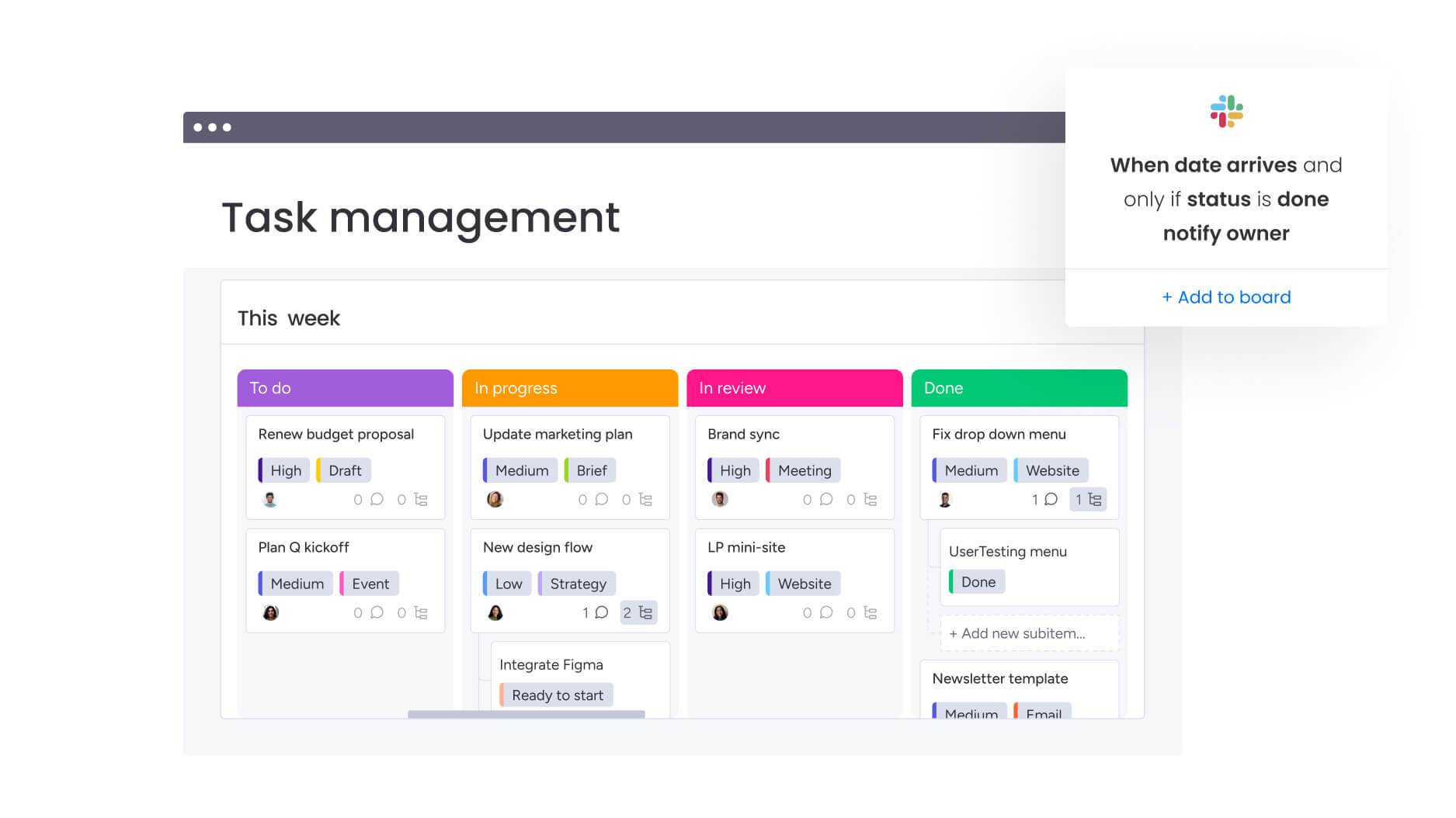
- Multiple interaction modes: Teams using monday.com can offer different views of the same data, calendars for planners, Kanban boards for visual thinkers, and lists for detail-oriented executors.
- Style-native interfaces: Each style interacts with projects in their native language while staying aligned with team goals.
2. Adapt communication for remote collaboration
In remote work, you need clear rules about which channels to use for what; otherwise, styles clash, and messages get lost. Status updates belong in project management platforms for Analytical/Driver tracking. Brainstorming happens on video for Expressive connection. Sensitive feedback occurs one-on-one for Amiable safety.
This prevents burnout from constant notifications while making sure people get information in formats that work for them. Organizations streamline this by centralizing updates on monday.com while integrating preferred communication channels.
3. Balance synchronous and asynchronous work
Real-time meetings work well for Expressives and Drivers, while Analyticals and Visionaries thrive with asynchronous time to process.
Balanced hybrid strategies:
- Core collaboration hours: Designated time for meetings and real-time interaction.
- Deep work blocks: Protected time where messaging is silenced for focused work.
- Style-specific scheduling: This structure enables quick decisions without sacrificing the thoughtful work required for complex problem-solving.
4. Build inclusive meeting structures
Quiet styles often get drowned out. Send agendas in advance, define clear goals, and use round-robin or polling methods to ensure everyone participates. This approach guarantees input from all perspectives, improving decisions and buy-in.
5. Leverage technology for style diversity
The right platform levels the field for all styles. Visual boards benefit Expressives, dashboards provide Analyticals with real-time insights, and automated reminders keep Visionaries focused on long-term goals. Centralized workspaces make diverse styles feel supported rather than constrained.
Working styles meet AI
AI makes working styles stronger by handling weaknesses and boosting strengths. The best professionals use AI to support their working style, not replace what makes them human. This partnership unlocks new ways to work faster and collaborate more seamlessly across different teams.
How does each style leverage AI capabilities?
Each style uses AI differently, depending on what comes naturally to them. When you know these connections, you get more from AI without losing what you’re naturally good at.
Style-specific AI applications:
- Analytical: Uses AI for massive data processing and pattern recognition, reaching certainty faster without manual analysis.
- Driver: Leverages AI for automated reporting and prioritization, removing administrative friction to focus on decisions.
- Expressive: Utilizes generative AI to brainstorm concepts and visualize ideas instantly, maintaining creative momentum.
- Amiable: Uses sentiment analysis and communication assistants to draft empathetic responses and monitor team pulse.
- Adaptive: Relies on AI for workflow optimization and resource allocation, pivoting more quickly based on real-time changes.
- Visionary: Employs AI for trend analysis and scenario modeling, testing long-term hypotheses against market data instantly.
Human-AI partnerships
AI works best when it handles tedious tasks while professionals focus on uniquely human skills. Drivers make judgment calls, Analyticals verify AI findings, and teams use AI to amplify what they do best without losing control. Platforms integrate AI into workflows, summarizing information and freeing users to focus on impact-driven work.
Preparing for tomorrow's workplace
Transactional tasks will increasingly shift to AI, so professionals must double down on what makes their style human. Drivers focus on leadership, Amiables on stakeholder relations, and Visionaries on strategy. AI complements these strengths, allowing teams to excel in creativity, decision-making, and problem-solving.
monday.com lets entire organizations collaborate on one platform while giving everyone views and workflows that match how they work.
How monday.com support every working style?
You need platforms that flex to how people work, not the other way around. monday.com lets entire organizations collaborate on one platform while giving everyone views and workflows that match how they work. This flexibility turns style diversity from a problem into an advantage.
Customizable workflows match your natural style
The platform’s building blocks let you customize everything based on how different styles work. This adaptability ensures every team member can operate at peak effectiveness while maintaining organizational alignment.
Style-specific customizations:
- Drivers: Set up boards with strict automations that remove manual steps and increase speed.
- Analytical users: Build workflows rich with data columns, formula fields, and dependency tracking for absolute precision.
- Expressive teams: Use WorkCanvas to brainstorm visually before converting ideas into actionable items.
- Amiable users: Utilize the Updates sections for contextual, supportive communication that stays attached to work items.
Visual options support different thinking patterns
The same project data can be viewed in over 15 different ways instantly, supporting how each style processes information and makes decisions:
| View type | Use case style | Why it works |
|---|---|---|
| Dashboards | Analytical | High-level metrics and drill-down capabilities for data-driven decisions |
| Kanban view | Expressive, Adaptive | Visual flow of work, easy drag-and-drop as priorities shift |
| Gantt charts | Driver, Visionary | Timeline view tracking critical paths and long-term milestones |
| Workload view | Amiable | Ensures no team member is overburdened, supporting team well-being |
| Calendar view | Adaptive | Time-based organization that shifts with changing schedules |
AI and automation enhance individual strengths
AI features integrated into monday.com serve specific style needs without adding complexity. This targeted approach ensures each user gets maximum value from automation while maintaining their preferred work patterns.
AI applications by style:
- Drivers: AI Blocks summarize complex information for quick bottom-line insights.
- Analytical users: AI categorizes thousands of feedback items to find trends and patterns.
- Visionaries: Digital Workers handle repetitive handoffs that frustrate strategic thinkers.
- Adaptive users: Product Power-ups instantly generate new project structures when scope changes.
Every user spends less time on draining work and more time where they excel. The platform ensures style diversity becomes an asset, not a management challenge.
Scale diverse working styles across your organization
Organizations can support style diversity at scale while maintaining alignment. Permissions and portfolio features ensure teams see the data they need without compromising workflow integrity. This approach makes style diversity an advantage rather than a management challenge.
Use monday.com to make the most of team working styles
High-performing teams face real challenges when working styles collide, misaligned communication, stalled projects, and uneven productivity can quietly undermine results. monday.com helps organizations bridge these gaps, turning style diversity into a strategic advantage while connecting daily work to broader business goals.
Key features and benefits:
- Flexible workflows tailored to individual styles: enables team members to manage tasks in ways that match their natural approach, increasing engagement and reducing friction.
- Customizable views for diverse thinkers: dashboards, Kanban boards, Gantt charts, and calendars allow each style to process information effectively without losing alignment.
- AI and automation support: streamlines repetitive tasks and enhances each style’s strengths, freeing professionals to focus on high-value, impact-driven work.
- Inclusive collaboration tools: structured communication and meeting protocols ensure every team member contributes meaningfully, preventing bottlenecks and overlooked perspectives.
- Alignment with strategic objectives: centralizing tasks and milestones ensures that individual work connects to larger organizational goals, maintaining both speed and precision.
By leveraging these capabilities, teams gain efficiency, maintain alignment across diverse styles, and achieve measurable strategic impact, without adding complexity to daily operations.
[faq id="shortcode"]

 Get started