

Even well-defined strategies can stall once delivery begins. Budgets are approved. Timelines look realistic. Stakeholders feel aligned. Then dependencies surface, reporting fragments, and teams discover constraints that were never fully evaluated.
Most delivery breakdowns begin long before execution. They start when work is approved without pressure-testing readiness.
A SWOT analysis in project management provides that pressure test. It gives teams a consistent way to evaluate strengths, weaknesses, opportunities, and threats before committing meaningful budget or capacity. Instead of relying on momentum or urgency, teams assess exposure, readiness, and potential return with discipline.
When 20, 30, or even 50 initiatives compete for shared capacity, informal evaluation breaks down. A repeatable SWOT process introduces alignment, structured risk awareness, and stronger investment decisions across the portfolio.
When those insights remain visible inside daily workflows, SWOT becomes more than a planning artifact. It becomes part of how work is prioritized, funded, and adjusted over time.
Key takeaways
- A SWOT analysis evaluates internal and external factors before committing funding and capacity.
- Teams operating at scale use SWOT to align initiatives, surface risk early, and compare investments consistently.
- Embedding SWOT outputs into monday work management strengthens accountability, reporting quality, and portfolio governance.
What is SWOT analysis in project management?
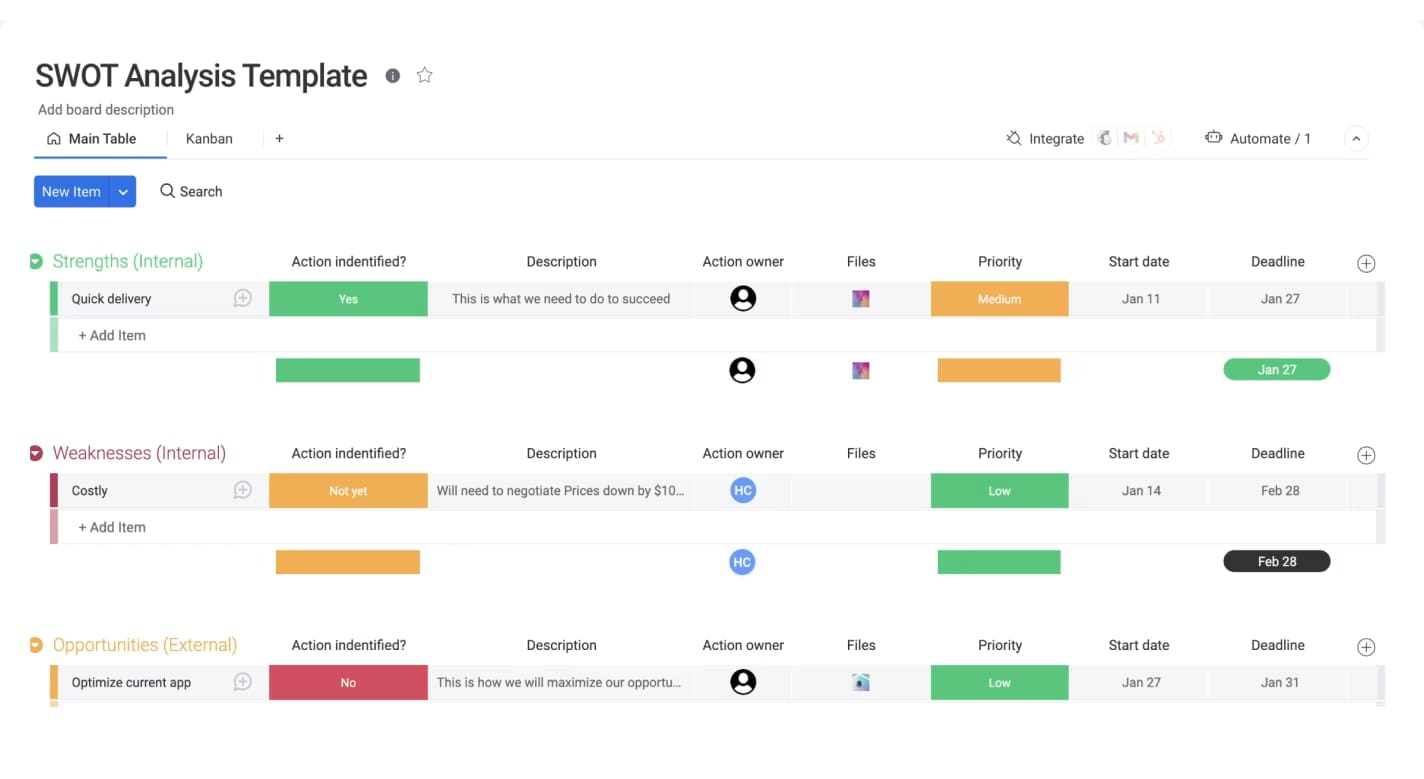
A SWOT analysis in project management evaluates a proposed or active project, program, or portfolio investment across 4 categories:
- Strengths: Internal advantages that increase the likelihood of success
- Weaknesses: Internal constraints that may slow progress or introduce risk
- Opportunities: External conditions that could increase value or impact
- Threats: External risks that may disrupt timelines, budgets, or outcomes
Teams apply this framework at different levels:
- Project level: Assessing a single initiative before launch or during delivery
- Program level: Evaluating a coordinated set of related efforts
- Portfolio level: Comparing investment tradeoffs across the organization
Unlike an organizational SWOT, which evaluates the business as a whole, a project-level SWOT focuses on a defined scope and delivery model. It pushes practical questions to the surface:
- Do we have the capability and capacity required?
- Where are approval or technical bottlenecks likely to occur?
- What external shifts could change the value of this work midstream?
Standardized scoring makes this analysis actionable. When teams apply a consistent impact and probability model across initiatives, leaders can compare projects side by side instead of relying on urgency or anecdotal support.
Why does SWOT analysis matter for enterprise project management?
Large portfolios require disciplined tradeoffs. Every initiative competes for funding, specialized talent, and executive attention. Swot introduces a shared evaluation model that strengthens project portfolio management by making investment comparisons more consistent across initiatives.
Align initiatives to corporate objectives
Before approving funding, verify that the work advances core priorities and builds on existing capabilities.
Ask:
- Does this initiative build on proven capability?
- Are we stretching into areas without operational maturity?
- What measurable objective does this project directly support?
Resolving these questions early prevents misaligned investment and improves ownership once work begins.
Surface risks before launch
Delivery challenges are far easier to address before timelines tighten.
Common issues uncovered during SWOT analysis include:
- Capacity gaps in specialized roles
- Vendor or system dependencies
- Compliance exposure
- Budget sensitivity tied to market shifts
Put constraints on the table while maintaining flexibility. Adjust scope, staffing, or sequencing before pressure builds.
Allocate resources with discipline
Shared talent pools make tradeoffs unavoidable. Capacity strain often appears after multiple projects are underway.
SWOT surfaces those conflicts earlier, supporting stronger resource planning strategies before teams become overextended and timelines are impacted.
Once teams align on why a project matters, the next step is evaluating what could accelerate or disrupt delivery. SWOT creates structure around those conversations so internal capability and external uncertainty remain clearly defined.
Evaluate strengths, weaknesses, opportunities, and threats
SWOT analysis works because it separates signal from noise. Instead of blending internal capability gaps with market uncertainty, it organizes decision inputs into four clear categories that influence delivery and return.
At its core, SWOT distinguishes between internal and external factors. Internal factors include strengths and weaknesses — the capabilities and constraints that exist within your organization. External factors include opportunities and threats — the market forces and conditions that sit outside direct control but still shape outcomes.
Strengths and opportunities represent positive forces that can accelerate progress. Weaknesses and threats highlight areas that may slow delivery or increase exposure.
This distinction is especially important in large portfolios. Some risks can be addressed directly through staffing, process changes, or investment. Others require monitoring and strategic adjustment. Separating what you can influence from what you must respond to keeps evaluation grounded in reality and strengthens decision-making across the portfolio.
Strengths
Strengths represent internal advantages already in place that materially improve the likelihood of success. They should be specific and verifiable, not broad characterizations.
In enterprise environments, strengths often include:
- A named executive sponsor with decision authority
- A proven cross-functional delivery model
- Mature analytics and reporting capabilities
- Infrastructure that scales without major rework
- Established vendor relationships that reduce ramp time
Documenting strengths clarifies where momentum already exists. It also reveals whether the initiative builds on proven capability or requires new investment.
Weaknesses
Weaknesses expose internal constraints that could slow progress or increase delivery risk. In complex organizations, these constraints are often structural.
Common examples include:
- Capacity gaps in specialized roles
- Lengthy approval processes
- Technical debt that increases instability
- Disconnected reporting systems
- Competing departmental priorities
Identifying these issues early allows teams to adjust staffing, simplify governance, or re-sequence work while flexibility still exists.
Opportunities
Opportunities capture external conditions that increase upside or improve timing.
Examples include:
- Expansion into new markets
- Regulatory changes that shift competitive positioning
- Competitor delays
- Emerging technologies that improve efficiency
- Strategic partnerships that extend reach
Evaluating opportunity clarifies why the work matters now and strengthens the business case for investment.
Threats
Threats represent external conditions that introduce uncertainty.
They may include:
- Supply chain instability
- Budget contraction
- Market volatility
- Leadership turnover
- New compliance requirements
Documenting threats creates a foundation for contingency planning. Teams can define monitoring triggers and mitigation steps before disruption affects delivery.
When applied consistently, these four categories create a comprehensive view of both readiness and exposure. That perspective strengthens decision quality across the portfolio.
How to conduct a SWOT analysis for a project
SWOT drives value when it leads to decisions. Treat it as a focused evaluation session with clear outputs — not an open-ended brainstorm.
In most enterprise environments, a structured 60–120 minute session is sufficient when the right stakeholders are present.
1. Define scope and strategic objective
Start by clarifying exactly what is being evaluated.
- What initiative are you evaluating?
- What problem does it solve?
- How does it support organizational goals or key priorities?
- What is explicitly out of scope?
Clear boundaries prevent scope drift and keep the discussion tied to decision-making. Without this step, SWOT quickly turns into a general strategy debate.
2. Bring the right stakeholders into the room
Risk, capacity, and opportunity rarely live in one function. Include the people who can validate assumptions and surface constraints:
- The project manager is responsible for delivery
- Functional leads who own impacted teams
- A finance partner who understands budget implications
- Risk or compliance representatives, when applicable
- An executive sponsor who can provide strategic direction
Cross-functional input strengthens realism. What appears feasible operationally may expose financial or regulatory complexity once reviewed broadly.
3. Ground the conversation in evidence
Anchor discussion in data rather than intuition. Pull from:
- Performance data from similar initiatives
- Capacity and workload analysis
- Market intelligence and competitive research
- Regulatory and compliance reviews
Document each factor with enough detail to support later prioritization. Avoid vague statements. Specificity improves scoring accuracy.
4. Prioritize using impact and probability
Not all factors carry equal weight. Apply a consistent impact × probability scale to rank risks and opportunities. Use the same scoring criteria across initiatives so leaders can compare exposure objectively.
Clear prioritization strengthens portfolio governance and keeps attention on material risks.
5. Translate insights into owned actions
The highest-priority items must translate into concrete actions:
- Assign clear ownership
- Set timelines for mitigation or leverage
- Link tasks to the project roadmap or portfolio view
- Document dependencies and escalation paths
Insight without ownership doesn’t improve outcomes. Once actions are tracked, SWOT shifts from documentation to delivery discipline.
When should you run a SWOT analysis during a project life cycle?
SWOT analysis is most effective when applied at multiple points across the project life cycle. Enterprise initiatives evolve over time, and reassessment strengthens control.
During initiation
Early-stage evaluation supports feasibility validation and investment decisions.
Use SWOT analysis to:
- Inform go or no-go decisions
- Clarify risk exposure before funding
- Assess alignment with strategic priorities
Leadership gains a realistic view of whether the initiative warrants resource allocation.
During planning
As scope and timelines become clearer, SWOT insights can refine execution strategy.
At this stage, teams can:
- Feed identified threats into the risk register
- Adjust resource planning based on weaknesses
- Revisit opportunity assumptions using updated data
Structured evaluation strengthens governance before work accelerates.
During execution
When scope or priorities shift, a structured change management process helps reassess threats and adjust mitigation plans before disruption compounds.
SWOT analysis during execution can:
- Surface new risks tied to shifting market conditions
- Highlight emerging strengths such as improved team performance
- Identify threats triggered by external events
Trigger-based reassessment is also valuable when significant scope or leadership changes occur.
During post-project review
After completion, SWOT analysis supports organizational learning.
Teams can examine:
- Which strengths contributed most to success
- Which weaknesses created delays or cost overruns
- Patterns across similar initiatives within the portfolio
Portfolio-level pattern detection strengthens future prioritization and improves enterprise project management maturity over time.
Consistent application across the life cycle turns SWOT analysis into a living management practice rather than a one-time planning exercise.
Common mistakes in SWOT analysis project management
SWOT analysis is simple in structure, which makes it easy to execute incorrectly. Enterprise teams often complete the framework but fail to extract meaningful value from it. These gaps directly impact execution.
Confusing organizational SWOT with project SWOT
An organizational SWOT evaluates company-wide positioning. A project SWOT examines a defined initiative with specific scope, timeline, and stakeholders.
Blending the two results in broad discussion that rarely clarifies viability. Project-level analysis requires precision.
Listing vague strengths
Statements like “strong team” or “good leadership support” don’t inform decisions.
Effective strengths are specific and verifiable:
- Named executive sponsor
- Documented cross-functional delivery model
- Measured performance in similar initiatives
- Confirmed access to required infrastructure
Vague inputs create false confidence. Clear definitions allow leadership to assess whether strengths are sufficient to support the initiative.
Failing to prioritize
Long, unranked lists dilute focus. Enterprise environments involve dozens of competing risks and opportunities.
Without impact-based prioritization, minor concerns receive equal attention as material exposure. Delayed mitigation often follows.
Treating SWOT as a one-time exercise
Completing SWOT analysis during kickoff and never revisiting it limits its usefulness. Market conditions change. Leadership priorities shift. Resource availability fluctuates.
Projects that operate in dynamic environments require reassessment at key milestones. Static evaluation increases the likelihood of reactive risk management instead of proactive control.
Leaving insights disconnected from execution
SWOT analysis produces insight. Execution requires ownership.
When strengths, weaknesses, opportunities, and threats are documented without clear follow-up, execution gaps appear:
- Risks remain unassigned
- Mitigation plans are undefined
- Opportunities are not leveraged
- Progress isn’t tracked
These mistakes contribute to strategy failure. Initiatives stall, budgets increase, and leadership confidence declines. Structured follow-through closes the gap between analysis and results.
Most of these mistakes share a common pattern. The analysis happens once, then lives in a slide deck instead of the system where work is managed. The real value appears when those insights stay visible during delivery.
How to connect SWOT analysis to strategy execution
SWOT analysis often ends in documentation. Teams circulate summaries, align briefly, and move back into execution. Over time, the original evaluation fades from view.
When insights are disconnected from daily workflows, problems emerge:
- Mitigation tasks lack clear ownership
- Monitoring is inconsistent
- Reporting requires manual consolidation
- Decision-makers lose line of sight into evolving risk
Keep SWOT relevant by embedding its outputs into the same system used to manage projects and portfolios. That means:
- Translating high-priority risks into tracked tasks
- Connecting mitigation steps to the roadmap
- Maintaining portfolio-level reporting that reflects exposure and progress
- Reassessing scoring as conditions change
When evaluation and delivery operate inside the same environment, leaders maintain stronger oversight and can adjust priorities based on current data instead of static summaries.
SWOT analysis vs other project evaluation frameworks
SWOT analysis works best when used alongside complementary tools rather than in isolation. Each framework serves a different purpose in the project life cycle.
SWOT vs PESTLE
PESTLE focuses exclusively on external macro-environmental factors: political, economic, social, technological, legal, and environmental forces. It helps organizations understand broad market conditions.
SWOT incorporates external factors as well, but it also evaluates internal strengths and weaknesses. This makes it more actionable at the project level, where internal capability is as important as market context.
Use PESTLE when analyzing industry-wide forces. Use SWOT when evaluating whether a specific initiative is viable given both internal readiness and external conditions.
SWOT vs risk register
A risk register documents identified risks, assigns owners, and tracks mitigation plans. It typically focuses on threats that may affect delivery.
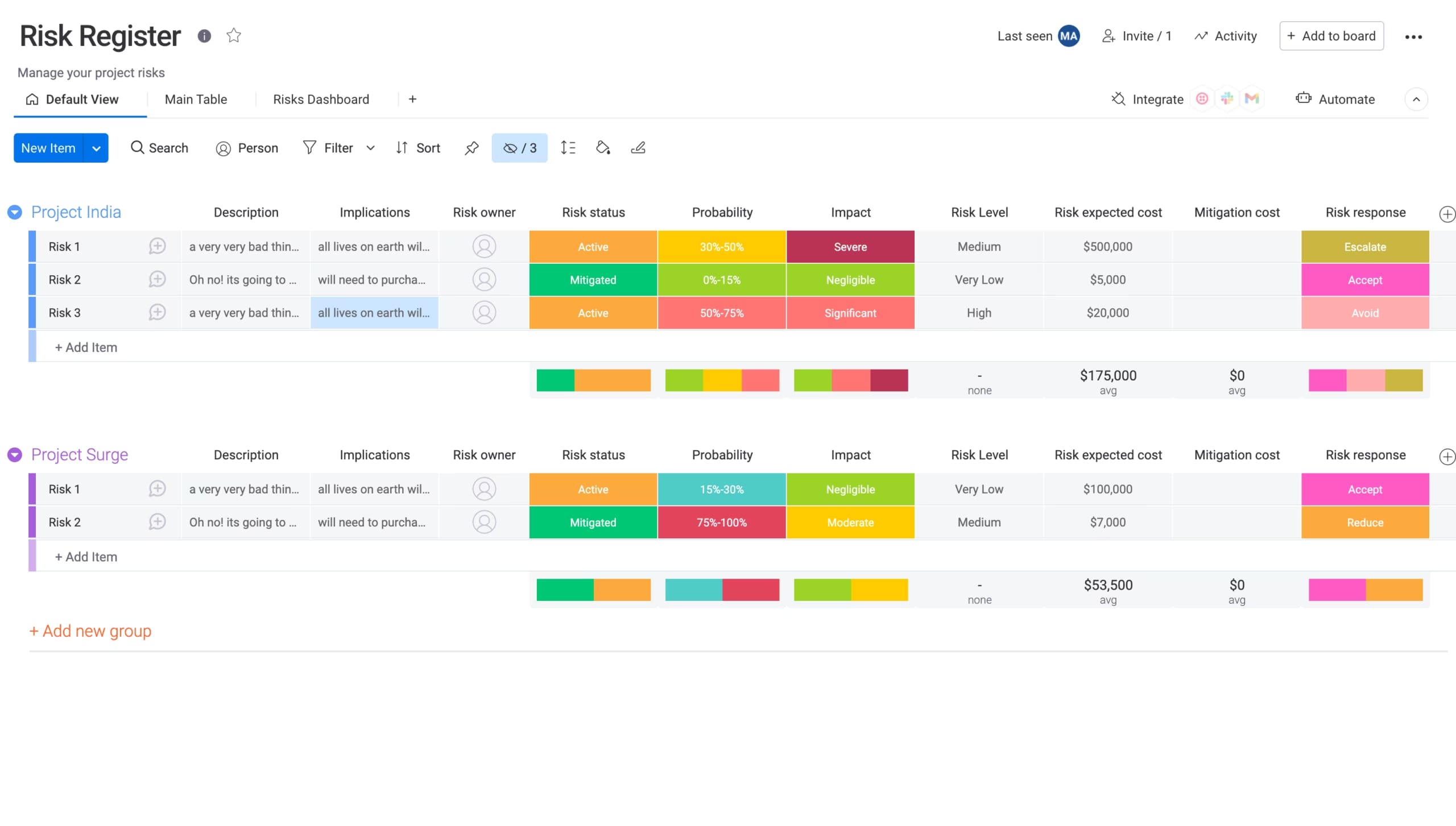
SWOT has a broader lens. It evaluates both positive and negative factors, internal and external. can feed directly into a risk register template that tracks ownership, mitigation steps, and ongoing monitoring during execution.
Use SWOT early to shape risk identification. Use a risk register to manage risks during execution.
Check out our risk register template to get started.
SWOT vs feasibility study
A feasibility study examines whether a project is technically, financially, and operationally viable. It often includes financial modeling and resource analysis.
SWOT complements feasibility analysis by structuring qualitative insights around capability and risk exposure. It adds perspective beyond financial projections.
Use a feasibility study for detailed validation. Use SWOT to frame strategic considerations before deeper analysis begins.
SWOT vs TOWS matrix
The TOWS matrix builds on SWOT by pairing internal and external factors to generate strategic options. It’s a decision-making extension of SWOT.
SWOT identifies factors. TOWS helps translate them into strategic alternatives.
Use SWOT to structure evaluation. Use TOWS when you need to generate formal response strategies.
When is SWOT most useful?
SWOT analysis is particularly effective in:
- Early-stage evaluation: Clarifying viability before allocating significant budget
- Strategic pivot decisions: Reassessing initiatives when market conditions or leadership priorities shift
- Portfolio prioritization: Comparing initiatives based on strategic fit and risk exposure
In enterprise environments where multiple initiatives compete for funding, SWOT analysis creates a common evaluation framework that supports more disciplined decision-making.
Turn SWOT insights into portfolio oversight with monday work management
SWOT defines readiness and exposure. Sustaining those insights requires visibility inside the system where work is managed.
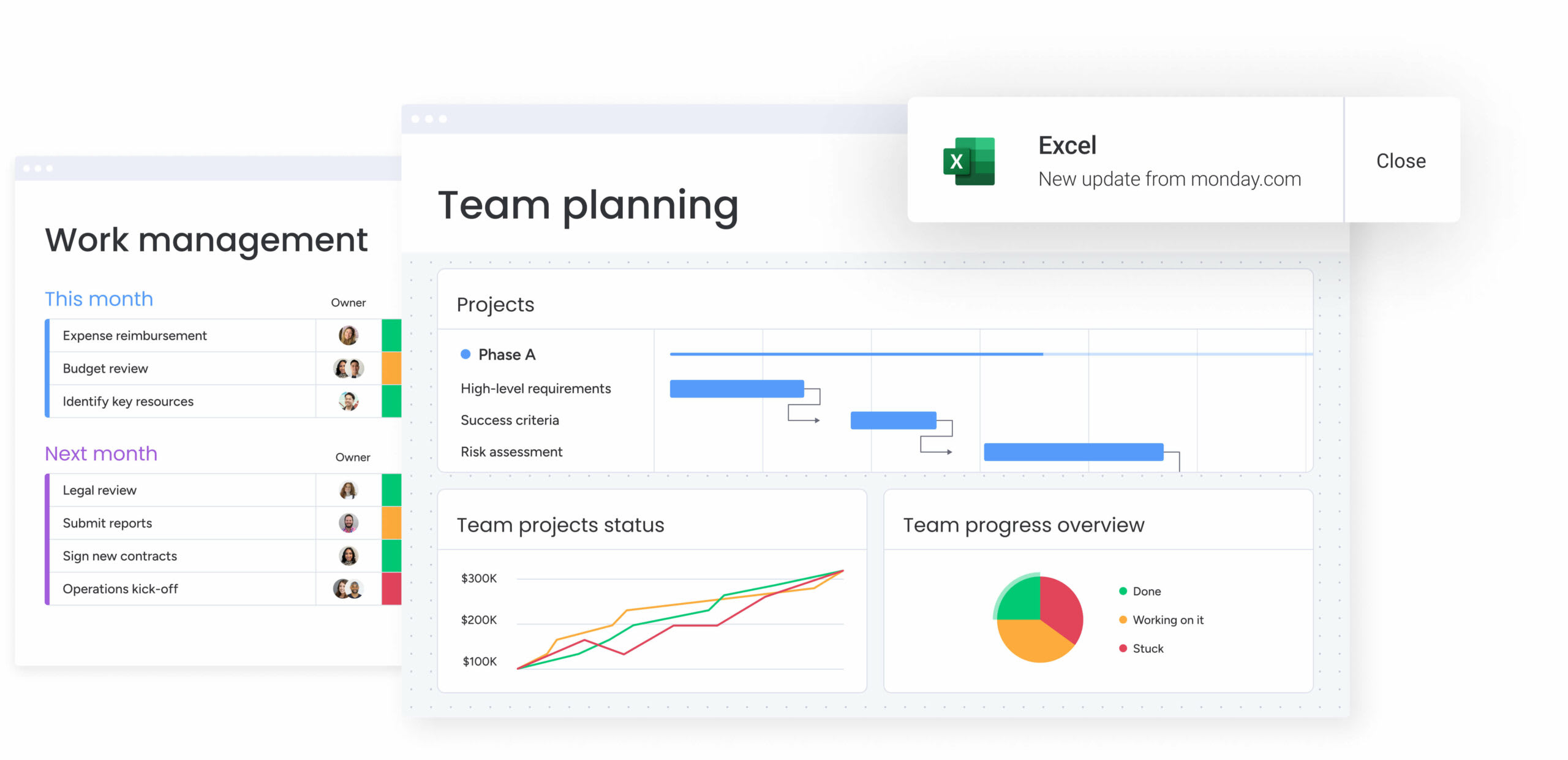
monday work management connects evaluation directly to planning, reporting, and resource allocation so SWOT outputs remain active throughout the project life cycle.
Align initiatives to goals and OKRs
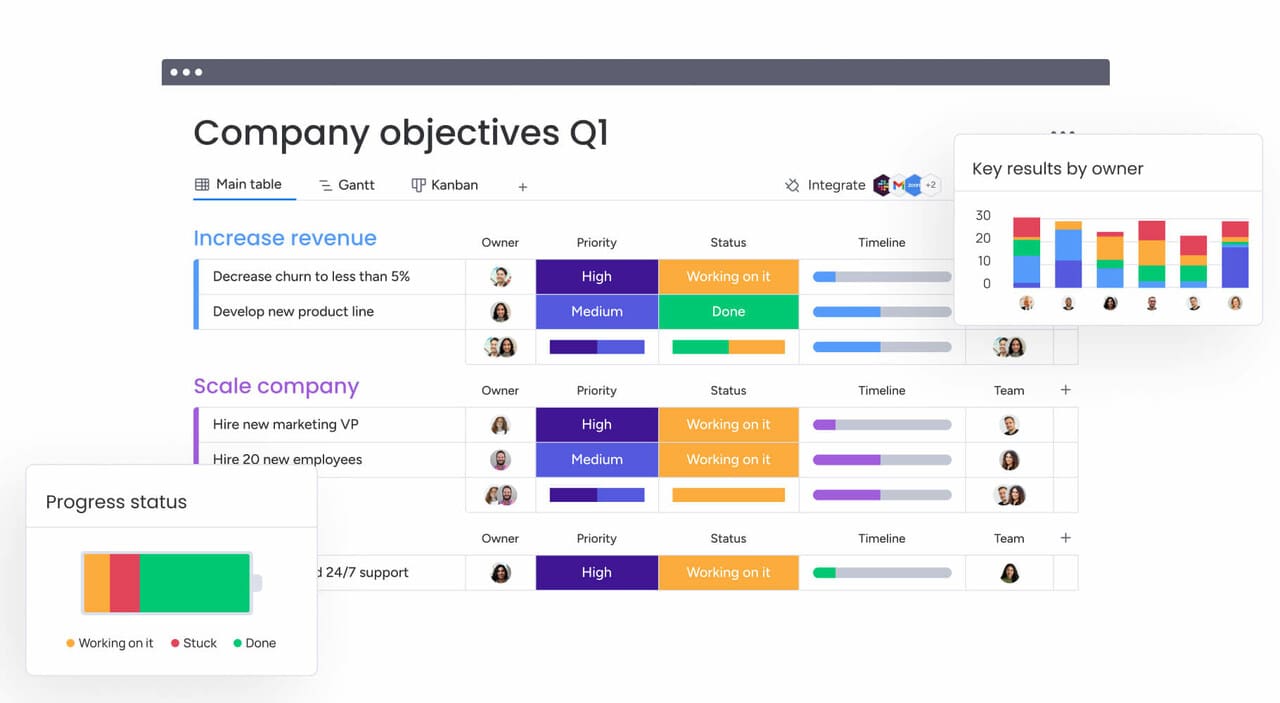
Tie each project to measurable objectives inside a shared workspace. Leaders can see how work contributes to portfolio priorities without requesting separate reports.
Ownership, milestones, and dependencies remain transparent across departments.
Monitor portfolio health in real time
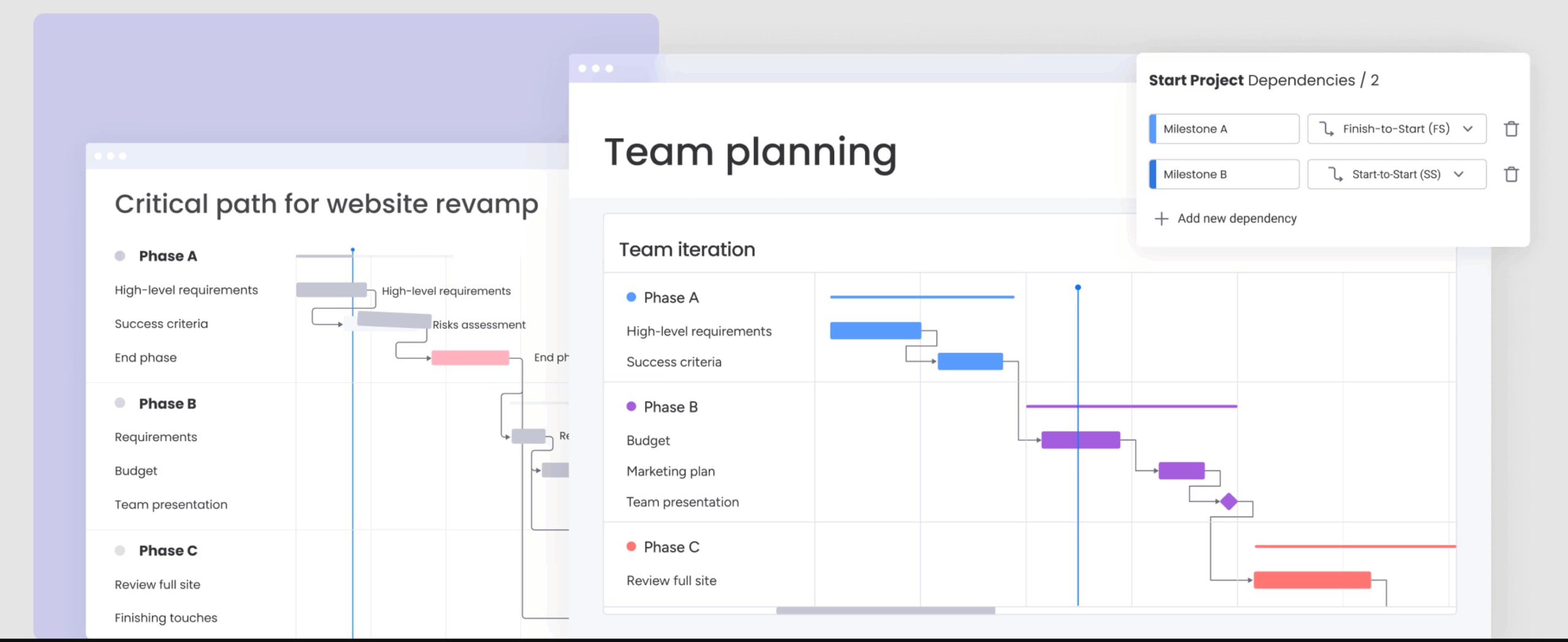
Dashboards provide live visibility into timelines, risk indicators, and cross-project dependencies.
Executives can move from a portfolio view into individual workstreams to understand root causes without waiting for status updates.
Standardize workflows across teams
Managed templates and configurable workflows bring consistency to intake and approvals while maintaining governance standards.
Automations route requests and notifications to reduce coordination overhead.
Detect risk patterns with AI capabilities
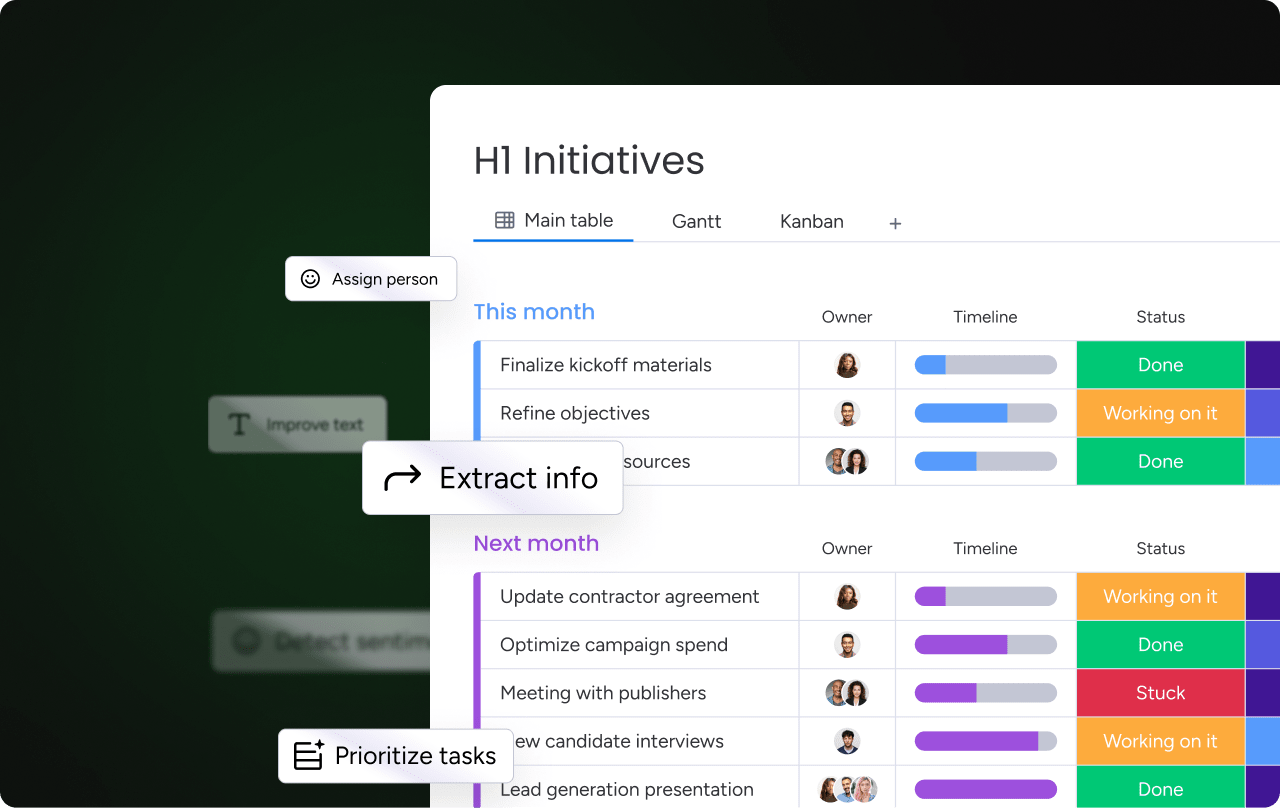
monday AI analyzes signals across projects and flags emerging issues based on defined thresholds.
At-risk initiatives surface earlier. Stakeholders receive timely notifications and can intervene before disruption compounds.
Balance workload with resource views
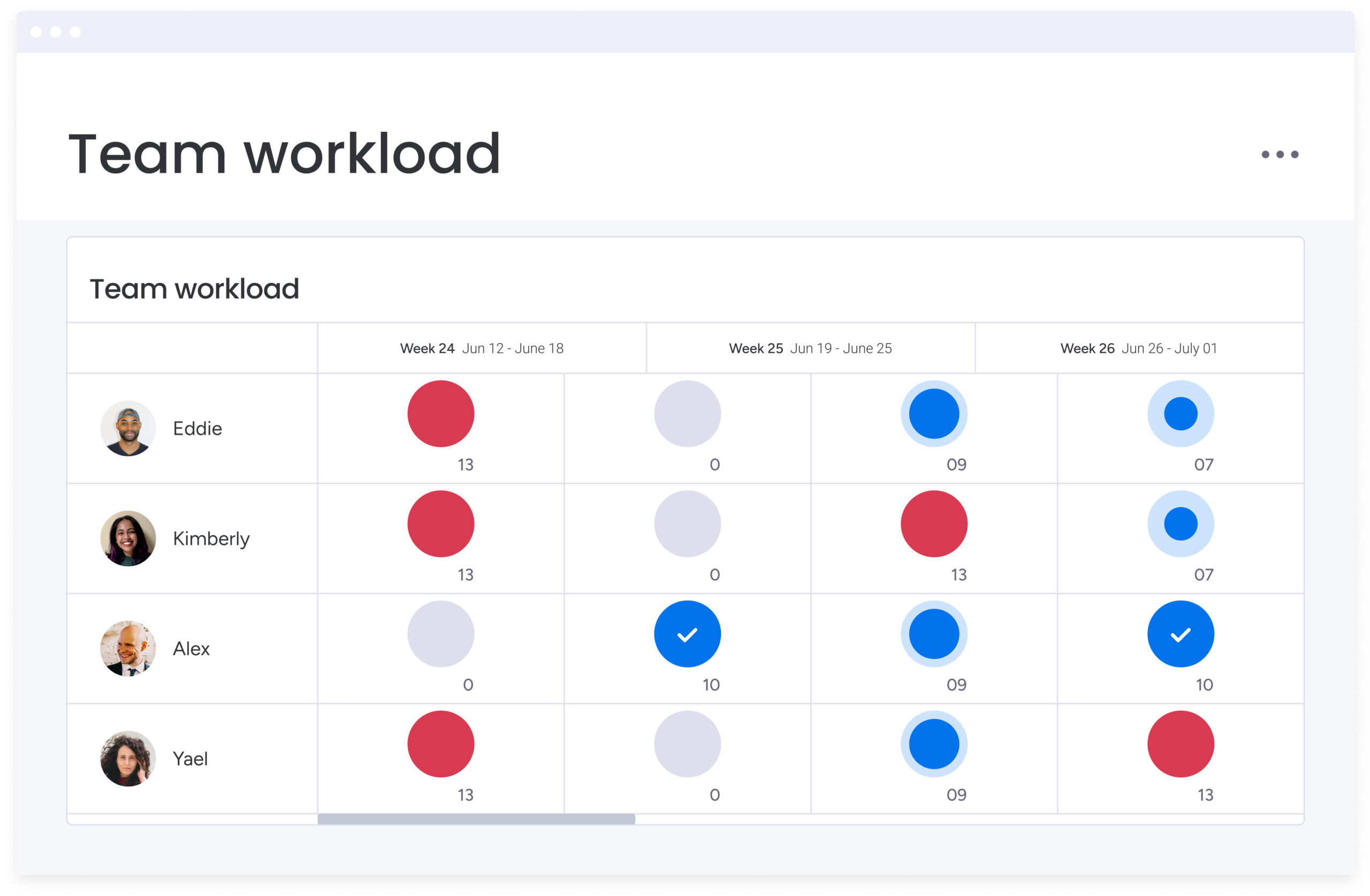
Workload and resource planning views connect identified weaknesses to real capacity data.
Leaders can identify overextension early and adjust staffing plans accordingly. Portfolio tradeoffs become grounded in current data rather than assumptions.
Embedding SWOT insights directly into monday work management strengthens accountability and supports more informed portfolio decisions over time.
Strengthen portfolio discipline before delivery pressure builds
As portfolios expand, informal evaluation becomes a risk factor. Decisions made without consistent comparison increase exposure and strain shared resources.
SWOT analysis introduces a repeatable framework for evaluating readiness, risk, and opportunity before funding is finalized. Applied consistently, it improves prioritization and reduces mid-cycle disruption.
monday work management keeps those insights visible throughout delivery. Teams track mitigation steps, monitor exposure, and adjust priorities inside the same environment used to manage daily work.
Replace assumption-driven approvals with portfolio decisions grounded in evidence, capacity data, and real-time reporting.
FAQs
What is the main purpose of SWOT analysis in project management?
The main purpose is to evaluate internal and external factors that could influence a project’s success before or during execution.
How does SWOT analysis differ from a risk assessment?
A risk assessment focuses on identifying and mitigating potential threats. SWOT analysis evaluates strengths, weaknesses, opportunities, and threats, providing a broader strategic view.
Who should participate in a project SWOT analysis?
Key stakeholders typically include the project manager, functional leads, finance partners, risk or compliance representatives, and an executive sponsor.
How often should SWOT analysis be updated?
It should be revisited at major project milestones or when significant internal or external changes occur.
Can SWOT analysis be used for portfolio management?
Yes. It can help compare initiatives based on strategic fit, internal capability, and risk exposure to support prioritization decisions.

 Get started