


What if you could spot project risks before they derail your timeline, budget, or team? A risk register template transforms uncertainty into opportunity by giving you a centralized system to identify threats, assess their impact, and assign clear ownership—turning reactive firefighting into proactive control.
This guide shows you how to build and automate a risk register that integrates seamlessly into your workflow. You’ll discover practical steps for consistent tracking, real-time monitoring, and smart automation that keep your team prepared and productive from day one.
Key takeaways
- A risk register shifts teams from reacting to issues toward anticipating and managing them before they escalate.
- Use the “If … then” format for each risk statement and assign specific owners to ensure accountability and consistent follow-through.
- monday AI Workspace streamlines risk monitoring with real-time dashboards, smart notifications, Portfolio Risk Insights, and AI-powered risk scoring to reduce manual work and keep teams focused.
- Focus on the 7 most common project risks — schedule delays, budget overruns, resource availability, technical issues, stakeholder communication, compliance, and external market changes.
- Conduct weekly updates during active phases and set up automated review cycles to keep your risk register accurate, relevant, and actionable.
What is a risk register and why do you need a template?
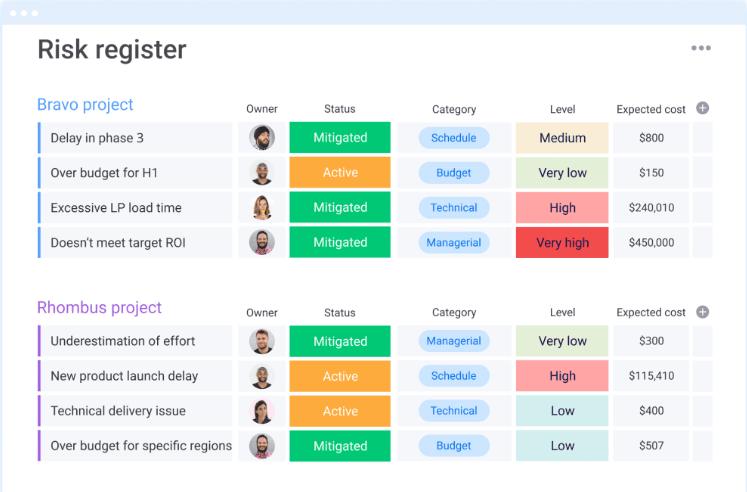
A risk register is a centralized document where you identify, assess, and track potential risks throughout your project. It’s your early warning system — a place where you document what could go wrong, how likely it is to happen, and what you’ll do about it. According to PMI’s 2026 Pulse of the Profession, roughly one-third of complex projects fail to meet their objectives, making systematic risk tracking essential.
A risk register template brings structure to this process by providing standardized fields for capturing risk information consistently. Instead of starting from scratch each time, the template ensures you account for every critical detail — whether you’re managing a single project or coordinating risks across an entire portfolio.
The real benefit? Templates turn reactive problem-solving into proactive project control. By documenting potential risks in a structured way, teams can identify issues early and take steps to prevent costly setbacks. Each risk includes a clear owner, defined mitigation actions, and a regular review cadence — ensuring that risks discussed in meetings are tracked through to resolution rather than lost in follow-up conversations.
A risk register is a centralized document for identifying, assessing, and tracking uncertainties that could affect a project, including potential threats and opportunities.
Risk register vs. risk log
Understanding the difference between a risk register and a risk log helps teams manage uncertainty with consistency. Some teams use “risk register” and “risk log” interchangeably, while others use “risk log” for a simpler day-to-day view of the full register.
Check out our guide on risk vs. issue to understand the difference.
Risk register template
Use this risk register template as a starting point for documenting and managing project risks. Each entry captures the information teams need to assess a risk, assign ownership, plan a response, and track it through resolution.
| Risk register field | Example |
|---|---|
| Risk ID | R-001 |
| Risk description | If the supplier misses the delivery date, then the project schedule may be delayed |
| Category | External |
| Probability | 4/5 |
| Impact | 4/5 |
| Risk score | 16 |
| Risk owner | Procurement lead |
| Mitigation action | Confirm backup supplier availability |
| Contingency plan | Switch to approved secondary supplier |
| Status | Open |
| Review date | Sept. 15 |
A complete risk register repeats these fields for each identified risk. Teams can add or remove fields depending on project complexity, reporting requirements, and the level of detail they need.
Essential components of a risk register template
A practical risk register brings structure and consistency to every project. It turns risk management from a checklist exercise into an ongoing process that supports smarter decision-making. By capturing the right details in one place, teams can perform accurate risk assessment, assign clear ownership, and keep potential issues visible before they escalate.
The sections below outline the key elements that make a risk register effective and easy to maintain in day-to-day work.
Risk identification and description
Every risk needs a unique ID and a description that anyone can understand. Use the “If … then” format to create precise risk statements.
For example: “If the key supplier fails to deliver materials on time, then the project schedule will be delayed by 2 weeks.”
Risk categories help ensure comprehensive coverage. Common categories include:
- Technical risks: System failures, integration issues
- Resource risks: Staff availability, skill gaps
- External risks: Supplier delays, regulatory changes
- Financial risks: Budget overruns, currency fluctuations
Risk assessment matrix
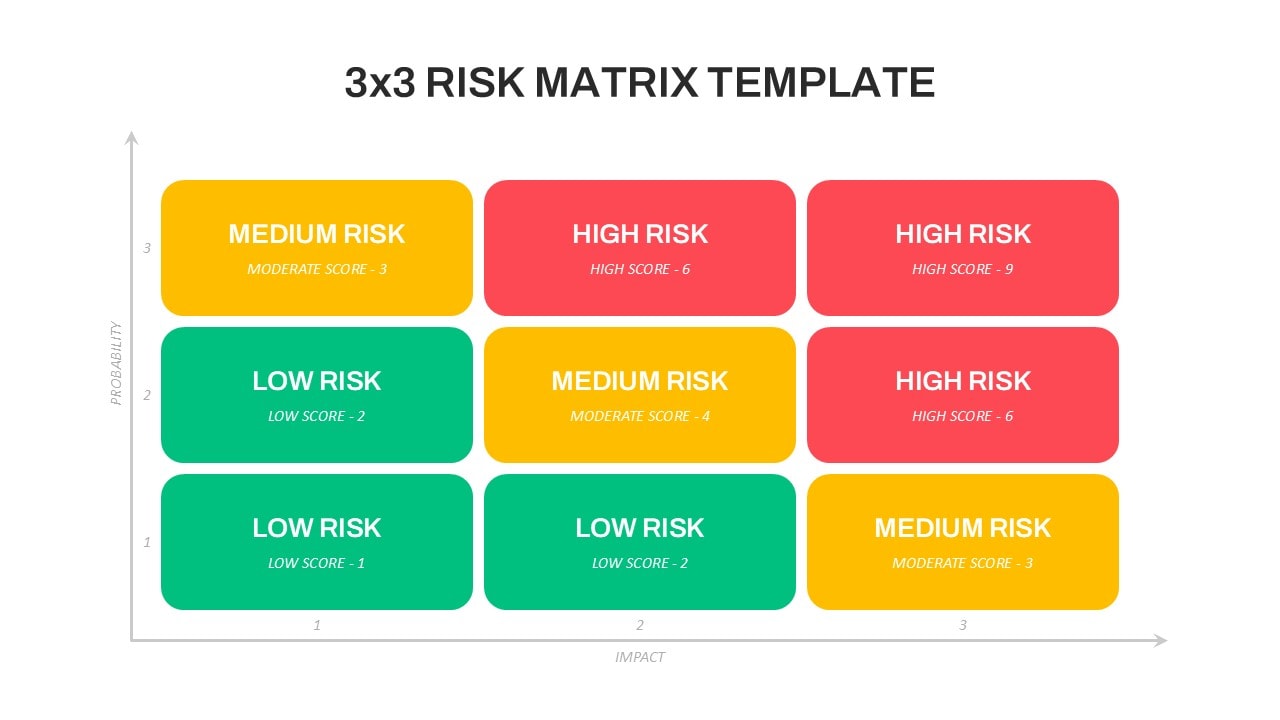
(Source)
Quantifying risks enables prioritization. Most teams use probability and impact scoring on a scale of 1 to 5 or 1 to 3. A basic 3-by-3 risk matrix can further help to provide visual prioritization. Low probability, low impact risks might just need monitoring. On the other hand, high probability, high impact risks demand immediate attention and detailed mitigation plans.
This systematic approach prevents teams from wasting time on minor risks while missing critical threats.
Risk owner assignment
Clear ownership ensures action by making accountability visible and measurable. Every identified risk should have a designated risk owner who is responsible for monitoring progress and implementing mitigation steps.
The risk owner serves as the main point of contact, coordinating updates and ensuring the right people stay informed without managing every task alone.
Mitigation planning fields
Effective risk management requires a detailed action plan for every significant threat. To ensure a comprehensive response, your template should include fields for the following components:
- Mitigation strategy: Avoid, mitigate, transfer, or accept
- Specific actions: What exactly will be done
- Target dates: When actions must be complete
- Contingency plans: What to do if the risk occurs
Document both preventive actions and contingency plans. Prevention reduces probability, while contingency minimizes impact if the risk materializes.
Monitoring status indicators
Risk status tracking shows current state and mitigation progress. Common statuses include Open, In Progress, Mitigated, and Closed. Regular updates keep the register current and actionable. Automated tracking reduces manual maintenance while improving accuracy.
Get Started
How to choose the right risk register format
Not every project needs the same level of risk documentation. The right risk register template depends on your project’s complexity, industry requirements, and team size. Choosing a format that matches your context keeps the register useful without creating unnecessary overhead.
By project complexity
Simple projects with small teams and short timelines work well with a lightweight register. Five or 6 core fields — probability, impact, owner, status, mitigation action, and review date — are enough to keep risks visible without slowing anyone down.
Complex projects that span multiple departments or phases need a fuller approach. Include mitigation plans, contingency actions, escalation paths, and review cadences. A thorough risk assessment framework becomes essential when dozens of interdependent workstreams are in motion.
By industry
Different industries face different risk profiles, so your register should reflect that reality. Here’s how the focus shifts across sectors:
| Industry | Risks to track |
|---|---|
| Construction | Safety risks, weather dependencies, subcontractor reliability, and permit timelines |
| IT and cybersecurity | System vulnerabilities, data breaches, integration failures, and compliance requirements |
| Finance and compliance | Regulatory changes, audit requirements, reporting obligations, and financial exposure |
| Agile and software | Sprint dependencies, technical debt, changing requirements, resource constraints, and release risks |
By team size
Small teams often share a single register with one owner and review it during weekly stand-ups. This keeps things simple and avoids process bloat. Enterprise organizations need a centralized portfolio view with role-based access and automated escalation.
Get Started
5 steps to create and use your risk register
Building an effective risk register requires a systematic approach that we’ve outlined in the steps below. Remember, the goal is creating a living document that guides decisions and keeps teams focused on what matters most.
Step 1: Set up your risk categories
Start by defining categories that reflect your project’s scope and challenges. IT teams might include cybersecurity and system integration, while construction projects focus on safety and weather. Marketing teams often consider brand reputation and market trends.
Consistent categories make risk identification more structured and complete. They also give teams a shared framework for discussion and planning.
Step 2: Document and assess each risk
Combine multiple techniques for effective risk identification:
- Brainstorming sessions: Involve diverse stakeholders.
- Historical review: Learn from similar past projects.
- Stakeholder interviews: Uncover individual concerns.
Write specific risk statements using “If … then” format. Vague descriptions don’t provide enough information for effective management.
Step 3: Assign ownership and accountability
Select risk owners based on expertise, authority, and capacity to drive action. The ideal owner understands the risk area and has influence over mitigation activities.
Establish clear expectations including review frequency and escalation criteria. Automated reminders help maintain engagement without creating administrative burden.
Step 4: Build mitigation strategies
Develop specific, measurable actions for each significant risk. Define concrete steps with clear timelines and success criteria. Balance prevention and contingency planning. Both approaches complement each other in a comprehensive risk management process.
Step 5: Implement automated monitoring
Regular reviews keep your risk register current and useful. Match the review cycle to your project’s pace — weekly for fast-moving initiatives or monthly for longer programs.
Automation makes it easier to stay consistent without adding manual effort. monday AI Workspace’s Portfolio Risk Insights can:
- Schedule recurring reviews: Send reminders automatically so nothing slips.
- Generate real-time risk reports: Highlight trends or emerging issues before they escalate.
- Notify stakeholders: Alert the right people when statuses, deadlines, or ownership details change.
These capabilities keep teams aligned and ensure the risk register remains a living, actionable resource throughout the project.
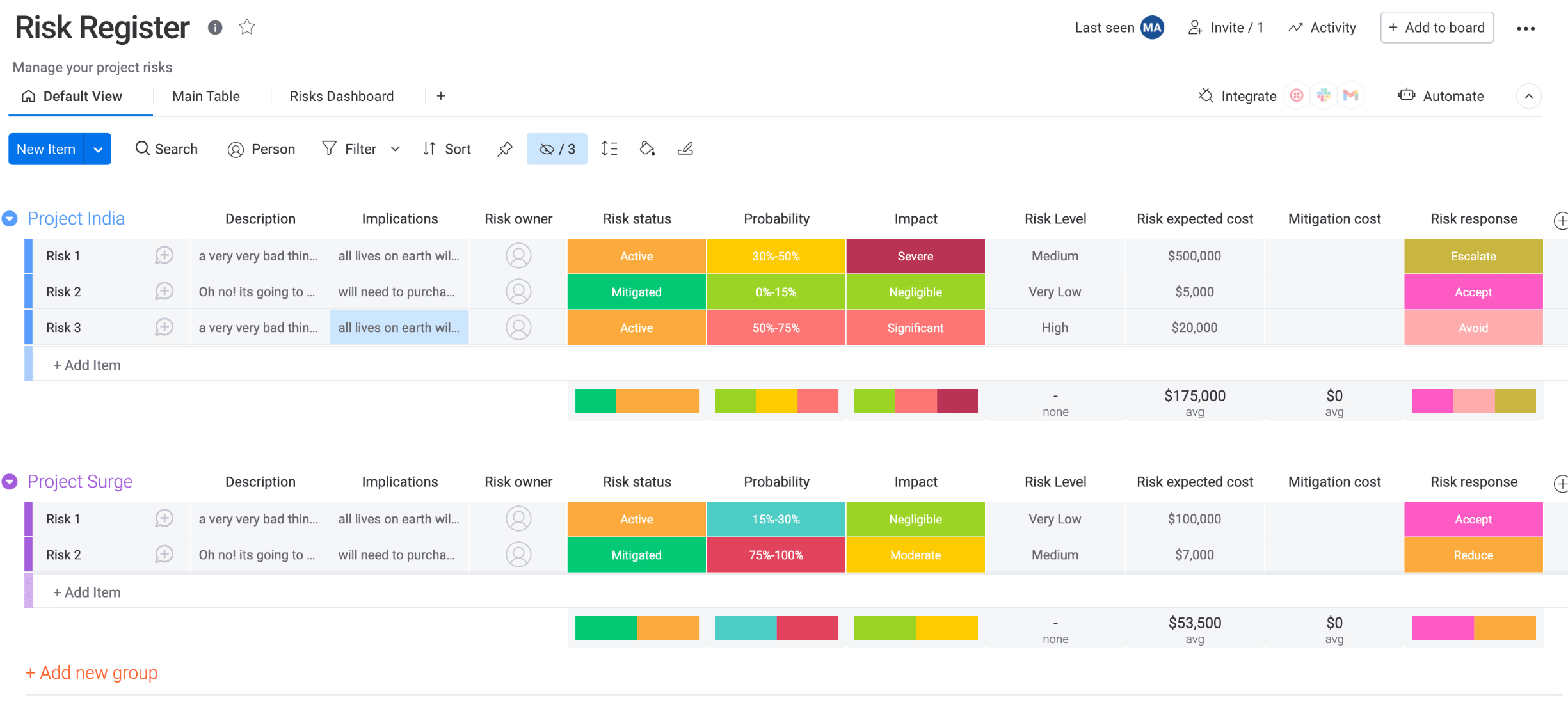
7 common project risks to include in your register
Understanding common risk categories helps teams build comprehensive registers. Here are the most frequent risks every project manager should monitor:
1. Schedule and timeline risks
Timeline pressures affect virtually every project. Common causes include scope creep, resource delays, and unrealistic estimates. Risk mitigation involves building realistic schedules with buffers, defining scope boundaries, and establishing change control processes.
2. Budget and cost overruns
Financial risks can quickly impact project viability. Common causes include inaccurate estimates, scope changes, or unexpected increases in resource costs.
Mitigate these risks through careful planning and consistent oversight by building in contingency funds, conducting regular budget reviews, and comparing actual costs against forecasts.
3. Resource availability risks
Key team members might become unavailable. Critical equipment might fail when needed most. Mitigation strategies include cross-training, backup identification, and knowledge documentation.
4. Technical and quality risks
Technology failures and integration challenges can derail projects, and these risks often have a high impact. For example, cybercrime damages now exceed $10.5 trillion annually, which affects fundamental project assumptions around data security and system reliability.
Early technical validation helps with risk identification when they’re easier to address. Include proof-of-concept development and thorough testing protocols.
5. Stakeholder and communication risks
Poor communication leads to misunderstood requirements and missed expectations. These “soft” risks are often project killers. Regular communication, clear expectation setting, and proactive engagement throughout the project lifecycle help manage stakeholder risks effectively.
6. Compliance and regulatory risks
Non-compliance can result in fines, delays, or project cancellation. This is particularly critical in healthcare, finance, and manufacturing. Stay informed about regulatory developments and build compliance into project planning from the start.
7. External market risks
Market conditions, competitive threats, and supplier issues represent risks beyond direct control. While you can’t eliminate them, you can manage their impact. Be sure to monitor conditions regularly and develop flexible approaches that adapt to changing circumstances.
Get Started
Risk register best practices
Modern enterprise risk management demands approaches that match today’s fast-paced environment. Here’s what separates effective risk management from administrative overhead.
Prioritize risks using an impact-probability matrix
Move beyond simple high-medium-low categories. Use quantitative scoring and consider both immediate and long-term impacts.
Some risks have low immediate impact but significant cumulative effects. This broader assessment helps focus resources on risks that truly matter.
Establish clear escalation pathways
Set clear criteria for when a risk needs to move beyond the project team’s control. Escalation helps ensure timely decisions and prevents critical issues from being overlooked. Common triggers include:
- Impact thresholds: Risks that exceed predefined severity or cost limits
- Time triggers: Risks that remain unresolved after a set review period
- Resource needs: Situations requiring authority or support beyond the project team
Schedule regular risk reviews
Establish review cadences matching project pace. High-risk projects need weekly reviews. Stable projects might need only monthly assessments.
Structure reviews for actionable decisions rather than status reporting. Focus on risks requiring immediate attention and effectiveness of current mitigation.
Integrate risk management with project workflows
Embed risk considerations into routine activities. Include a risk breakdown structure in planning, incorporate reviews into team meetings, and link mitigation actions to project schedules.
When risk management integrates seamlessly into existing workflows, it becomes part of how teams naturally work.
Use AI to surface risks proactively
AI-powered risk identification catches patterns that manual reviews miss. Instead of relying on periodic check-ins, teams can use machine learning to scan project data continuously and flag emerging threats based on historical patterns.
monday AI Workspace’s Portfolio Risk Insights scans all project boards and flags risks by severity, giving project leaders a real-time view of where attention is needed most. This shifts risk management from a scheduled activity to an always-on capability — so you’re responding to signals, not surprises.
How monday AI Workspace simplifies risk tracking
Following best practices is one thing; having a platform that enforces them automatically is another. Manual tracking rarely keeps up with the pace of modern projects. As priorities shift and new challenges emerge, relying on spreadsheets or static documents can leave critical risks unnoticed.
monday AI Workspace combines automation and visibility to simplify complex risk management processes — helping teams monitor evolving risks, coordinate responses, and maintain accountability across every project stage. From real-time dashboards to AI-powered insights, the platform turns risk tracking from a periodic check-in into an always-on capability that keeps teams prepared and productive.
Here are the key capabilities that strengthen your risk management approach:
- Real-time risk dashboards: Automated dashboards provide instant visibility across multiple projects, aggregating risk data to show distribution, mitigation progress, and emerging threats. Executive-ready AI reports highlight trends and project health without manual compilation.
- Automated risk alerts and notifications: Smart notification systems ensure timely updates about status changes and escalation triggers. Automation rules trigger based on predefined conditions so critical risks get immediate alerts while routine updates are batched to avoid notification fatigue.
- AI-powered risk categorization: AI capabilities automatically categorize and prioritize risks based on historical patterns. Portfolio Risk Insights scans all project boards, flagging potential risks by severity. Specialized AI agents like the Project Analyzer identify scheduling conflicts and workload imbalances before they become problems.
- Cross-team risk collaboration: monday AI Workspace enables seamless information sharing while maintaining access controls and clear ownership. monday MCP connects your workspace to external AI assistants, and with monday vibe, teams can build custom risk management apps in minutes.
- Enterprise-grade risk governance: monday AI Workspace provides the governance structure that enterprise programs demand, with managed templates for standardization across departments. When every team follows the same risk documentation structure, leadership gets reliable portfolio-level visibility.
These capabilities work together to shift risk management from manual assessment to intelligent, continuous monitoring. With a G2 Ease of Use score of 9.1, adoption across departments happens faster — and teams can focus on managing risks instead of managing spreadsheets.
Motorola reported a 346% ROI using monday AI Workspace for enterprise project management in a Forrester Total Economic Impact study, demonstrating the tangible impact of moving from reactive tracking to proactive risk intelligence.
Turn risk awareness into competitive advantage
Effective risk management transforms uncertainty into a strategic asset. Organizations that systematically identify and mitigate risksdon’t just avoid problems — they deliver more consistently, build stronger stakeholder confidence, and turn proactive planning into a competitive advantage.A well-maintained risk register template is the foundation of that discipline.
monday AI Workspace provides the automation and intelligence modern teams need to manage risks at scale. From Portfolio Risk Insights and real-time dashboards to smart notifications and collaborative workflows, the platform helps you shift from reactive firefighting to proactive control — so you can focus on delivering results instead of managing spreadsheets.
Get Started
FAQs
How often should I update my project risk register?
Update your project risk register as often as your project pace demands. For most teams, weekly updates work best during active phases, supported by formal reviews each month or at major milestones. Projects with rapid changes or higher uncertainty benefit from more frequent check-ins, while stable initiatives may only need periodic updates to stay current.
What risk register format works best for managing multiple projects?
Standardized templates with consistent fields enable easier comparison and reporting across projects. Use the same categories, scoring scales, and status definitions while allowing project-specific customization. monday AI Workspace’s portfolio view lets you aggregate risk data across all projects in a single dashboard, making cross-project risk management straightforward.
Can a risk register template help meet compliance requirements?
Yes, properly maintained risk registers demonstrate due diligence in risk management. Properly maintained risk registers can support compliance by documenting how risks are identified, assessed, assigned, and addressed.
How do you measure if risk mitigation strategies are working?
Track risk closure rates, mitigation timeline adherence, and impact reduction. Compare actual outcomes to initial assessments to validate your processes and improve future risk management.
Should small projects use risk registers?
Every project benefits from risk management, but the level of detail should match project complexity. Small projects might use simplified registers focusing on the most critical risks, with just 5 or 6 core fields to keep the process lightweight. Even understanding the difference between a risk vs. issue can make a meaningful difference on smaller initiatives.
How does monday AI Workspace help automate risk tracking?
monday AI Workspace uses Portfolio Risk Insights to scan project boards and flag risks by severity automatically. AI-powered categorization, automated alerts, and real-time dashboards reduce manual tracking and keep stakeholders informed without constant check-ins.

 Get started