


Procurement is what keeps your projects moving and your budget on track. But when your team is stuck chasing down email threads or updating spreadsheets, delays and surprise costs start to pile up. The best procurement software brings everything together in one place, giving you clear oversight, faster approvals, and the confidence to make smart purchasing decisions.
This guide breaks down what procurement software does, the features and benefits that matter most, and 15 procurement solutions worth evaluating. You’ll also find practical adoption steps, a look at how AI is reshaping procurement, and how monday.com’s AI Work Platform brings all of these capabilities together on one flexible platform.
Key takeaways
- Centralized procurement workflows: Procurement software consolidates purchasing, approvals, and supplier management into a single automated workflow, replacing scattered spreadsheets and email threads.
- Essential features to prioritize: The most impactful features to evaluate include automated approval workflows, spend analytics, supplier management, and ERP integrations.
- AI adoption is accelerating: AI-powered procurement is accelerating fast, with 86% of procurement teams now using AI and organizations reporting up to 15% cost reductions from AI-driven contract management.
- Structured implementation matters: A structured 5-step adoption process, from workflow mapping to continuous optimization, dramatically improves implementation success.
- Complete platform capabilities: monday.com’s AI Work Platform combines AI agents, no-code app building, and 200+ integrations to support procurement workflows from vendor research to spend reporting.
What is procurement software?
Procurement software functions as a central platform for every organizational purchase. It consolidates the entire buying process, from initial request to final payment, into a single, transparent, and automated workflow.
Procurement systems replace scattered spreadsheets and endless email threads with a definitive source of truth.
By digitizing the process, the software eliminates manual chaos. Chasing approvals or hunting for payment statuses disappears as automation handles the tedious work that previously slowed teams down. It establishes a defined, compliant path for every purchase, providing built-in checkpoints that allow teams to proceed with confidence.
This unified platform connects every stage of the procurement cycle, from requisitions and approvals to invoicing and payments. With all components working in sync, procurement transforms from a complex bottleneck into a strategic advantage, offering complete visibility into spending to drive smarter, faster business decisions.
Types of procurement software
Procurement software falls into several categories, each addressing different stages of the purchasing lifecycle. Understanding these types helps you match the right solution to your organization’s needs:
- Procure-to-pay (P2P): Manages the operational cycle from purchase requisition through invoice matching and final payment. P2P platforms focus on transactional efficiency and compliance.
- Source-to-pay (S2P): Covers the full strategic and operational cycle, adding supplier sourcing, contract negotiation, and vendor onboarding on top of P2P transactional capabilities.
- e-Procurement: Focuses on creating digital requisitions, browsing supplier catalogs, and generating purchase orders through a centralized online portal.
- Contract lifecycle management (CLM): Specializes in creating, negotiating, executing, and tracking contracts with suppliers to reduce risk and maintain compliance.
- Spend analysis: Collects and analyzes purchasing data across the organization to identify savings opportunities, monitor budget adherence, and support strategic sourcing decisions.
Does your organization need procurement software?
If your team still manages purchasing through email chains, shared spreadsheets, or disconnected point solutions, procurement software can deliver immediate value. Organizations typically see the strongest returns when they process more than 50 purchase orders per month, manage relationships with 20+ suppliers, or need audit-ready compliance documentation. Even smaller teams benefit from the spend visibility and approval automation that dedicated procurement platforms provide.
What challenges does procurement software address?
Procurement teams face a consistent set of operational roadblocks that manual processes amplify. Dedicated software tackles each of these head-on, turning reactive firefighting into proactive management.
Manual processes and approval bottlenecks
Paper-based or email-driven approvals create delays at every stage. Purchase requests sit in inboxes, invoices get lost between departments, and stakeholders lack visibility into where a request stands. Procurement software routes approvals automatically based on spend thresholds and organizational rules, cutting cycle times from days to hours.
Lack of spend visibility
When purchasing data lives in disconnected spreadsheets, finance teams can’t answer basic questions about where money is going or identify spending patterns that signal risk. Centralized spend analytics dashboards solve this by aggregating data across departments, vendors, and categories in real time, giving leaders the visibility they need to make informed decisions.
Maverick spending and compliance gaps
Without enforced purchasing policies, employees buy outside approved channels, resulting in missed volume discounts and compliance violations. Procurement platforms enforce buying policies through guided purchasing workflows, preferred vendor lists, and automated budget checks that flag exceptions before they’re approved.
Supplier risk and fragmented data
Managing vendor relationships through scattered files and individual inboxes makes it nearly impossible to track performance, contract terms, or risk exposure across the supply chain. A unified supplier management system consolidates vendor records, monitors delivery performance, and surfaces renewal dates before contracts lapse. Consolidating those records inside a dedicated AI-powered contract management platform makes renewal dates and risk exposure visible automatically, rather than depending on someone remembering to check a spreadsheet.
What are the main benefits of procurement solutions?
Organizations that move from manual purchasing to dedicated procurement software consistently report measurable improvements across four key areas.
Real-time spend visibility and analytics
Procurement platforms aggregate purchasing data across every department, contract, and vendor into live dashboards. Finance teams can track budget consumption by category, identify cost-saving opportunities, and generate audit-ready reports without manual data compilation. According to Grand View Research, the procurement software market reached $10.06 billion in 2025, driven largely by demand for this kind of analytical capability.
Faster approvals and reduced cycle times
Automated approval routing eliminates the back-and-forth emails that slow purchasing to a crawl. Rules-based workflows send requests to the right approver based on spend amount, category, and department. Organizations using automated P2P workflows report approval cycles dropping from days to hours.
Stronger supplier collaboration
Centralizing vendor communication, contract documents, and performance metrics on one platform strengthens relationships and gives both sides more transparency. Procurement teams can evaluate suppliers on pricing, delivery reliability, and quality using standardized scorecards rather than scattered notes.
Built-in compliance and audit trails
Every purchase request, approval, and payment is logged automatically, creating a complete audit trail. Budget thresholds, preferred vendor lists, and category restrictions are enforced systematically, reducing compliance risk without adding manual oversight steps.
What features to look for in procurement software
Not every procurement platform covers the same ground. Prioritizing these six capabilities during evaluation helps you select a solution that matches your organization’s complexity and growth trajectory.
Automation and approval workflows
Look for no-code automation that routes purchase requests, triggers notifications, and escalates overdue approvals without manual intervention. The strongest platforms let you build custom approval chains based on spend thresholds, departments, and vendor categories.
Purchase order management
End-to-end PO management covers creation, approval, dispatch to vendors, goods receipt tracking, and three-way matching against invoices. Automated PO workflows reduce processing errors and accelerate the procure-to-pay cycle.
Supplier management and collaboration
A centralized vendor directory with performance tracking, contract management, and communication history eliminates the need to search through email threads for supplier details. Self-service portals let vendors update their own information, submit bids, and track order status.
Spend analytics and reporting
Real-time dashboards that break down spending by category, department, vendor, and time period provide the visibility finance leaders need to make data-driven decisions. Advanced platforms include anomaly detection that flags unusual spending patterns before they become problems.
Integration flexibility
Your procurement software needs to connect with ERP systems (SAP, Oracle, NetSuite), accounting platforms (QuickBooks, Xero), and collaboration software (Slack, Microsoft Teams) without custom development. Native integrations and open APIs ensure your procurement data flows seamlessly across your technology stack.
Compliance and audit trail
Built-in compliance features include automated policy enforcement, role-based access controls, and complete transaction logging. For regulated industries, look for platforms that support SOC 2, ISO 27001, GDPR, and HIPAA requirements.
Which teams benefit from procurement solutions?
Procurement software impacts more than just the purchasing department. Multiple teams across an organization gain operational advantages when procurement moves from fragmented manual processes to a centralized platform.
- Procurement and purchasing teams: Automate requisitions, standardize vendor evaluation, and eliminate manual PO processing so buyers can focus on strategic sourcing and supplier negotiations.
- Finance and accounts payable: Gain real-time budget visibility, automate invoice matching, and maintain audit-ready records without end-of-month scrambles.
- Operations and supply chain: Track delivery timelines, manage inventory replenishment triggers, and coordinate cross-functional purchasing needs from a single source of truth.
- IT: Oversee system integrations, manage user access and permissions, and ensure procurement data flows securely between platforms.
- Executive leadership: Access portfolio-level spending dashboards, monitor procurement KPIs, and make faster strategic decisions backed by accurate, real-time data.
Why procurement software is essential today
Procurement has evolved from a back-office function into a strategic driver of business growth. When teams aren’t bogged down chasing approvals or reconciling spreadsheets, they can focus on building supplier relationships and identifying cost-saving opportunities. This shift is what keeps organizations agile and competitive.
The numbers reinforce the urgency. According to the Chartered Institute of Procurement & Supply, 69% of procurement leaders manage annual spend exceeding $50 million. At that scale, even a 0.5% efficiency gain through software translates to $250,000 or more in annual savings. Meanwhile, procurement workloads are increasing 10% year-over-year while budgets grow by just 1%, creating a widening efficiency gap that only automation can close.
AI-powered procurement software addresses this gap directly. Automated workflows handle repetitive processes, predictive analytics surface risks before they materialize, and intelligent spend categorization replaces hours of manual data work. When you compare options, review the AI platforms built for research that surface vendor risks and organize spend data. The organizations pulling ahead are the ones that treat procurement technology as infrastructure, not overhead.
15 top procurement software options for purchasing efficiency
Choosing the right procurement software means empowering your team with the right platform to make smarter, faster purchasing decisions that actually move the business forward. Look for a platform that’s intuitive from day one, scales effortlessly as you grow, and brings every stakeholder together for truly seamless, strategic buying.
Want a quick snapshot before you dive into the full list? Check out the table below for a side-by-side comparison of standout procurement solutions, covering applications, free plan availability, must-have features, and starting prices.
| Platform | Use case | Free plan? | Notable feature | Starting price |
|---|---|---|---|---|
| monday.com's AI Work Platform | Custom procurement workflows and team visibility | Yes | No-code automation & visual dashboards | $9/user/month |
| Precoro | SMBs needing centralized spend management | No | AI-powered invoice processing | $499/month |
| GEP SMART | Enterprise source-to-pay automation | No | Low-code AI workflow customization | Custom (from ~$500k/yr) |
| Spendwise | SMBs transitioning from manual to digital | Yes | User-friendly PO workflows | $9/user/month |
| OpenGov Procurement | Government & public sector compliance | No | AI-guided RFP builder | Custom |
| SAP Ariba | Large enterprises needing global source-to-pay solutions | No | Largest B2B supplier network | Custom (blocks of users, contact sales) |
| Coupa | Business spend management for large organizations | No | Community intelligence and benchmarking | Custom (contact sales) |
| Procurify | Mid-market spend management with proactive controls | No | Mobile-first approvals & spend cards | Custom (contact sales) |
| Oracle Procurement Cloud | Enterprises seeking deep ERP and finance integration | No | AI-powered supplier recommendations | Custom (contact Oracle) |
| Jaggaer | Enterprise source-to-pay for complex, regulated industries | No | JAI AI assistant with anomaly detection | Custom (contact sales) |
| Ivalua | Large organizations with complex, configurable needs | No | Unified S2P with external workforce management | Custom (contact sales) |
| Team Procure | Growing businesses needing collaborative procurement | 14-day free trial | Custom approval workflows & e-auctions | $250/month (3 users) |
| NetSuite Procurement | Integrated procurement for finance and inventory | No | Three-way matching & vendor portal | Custom (annual subscription, contact sales) |
| Zoho Procurements | SMBs wanting affordable, connected procurement | No | Automated requisitions & vendor portal | Custom (contact Zoho) |
| Proactis | Organizations seeking source-to-contract automation | No | Spend analysis & supplier risk tools | Custom (contact sales) |
| Basware | Organizations seeking source-to-contract automation | No | Spend analysis & supplier risk capabilities | Custom (contact sales) |
Ready to see which platform fits your team best? Let’s break down the top options for smarter, more strategic purchasing.
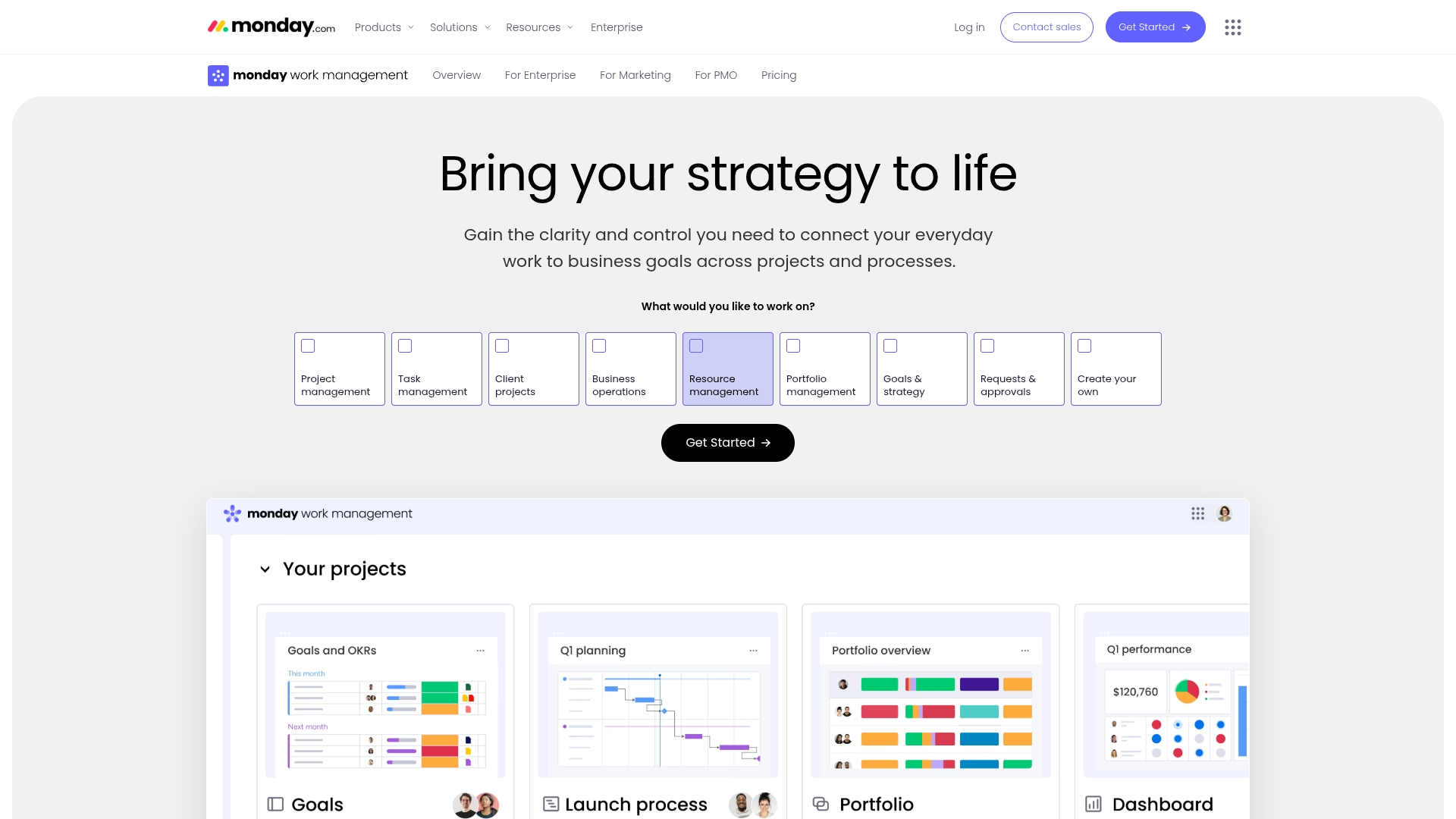
1. monday.com’s AI Work Platform
Best for: Teams seeking flexible, visual procurement workflows with AI-powered automation and real-time spend visibility
Best for: Teams seeking flexible, visual procurement workflows with AI-powered automation and real-time spend visibility
The AI Work Platform transforms procurement into a streamlined, visual process by connecting purchasing workflows directly to your organization’s bigger goals. With customizable, no-code workflows, the platform brings visibility and automation to purchasing workflows, helping procurement teams track spending, streamline vendor management, and eliminate approval bottlenecks.
Key features
- Customizable procurement workflows that adapt to any purchasing process without coding
- Visual dashboards for real-time spend tracking and supplier performance monitoring
- AI agents including Vendor Researcher, Process Automator, and Risk Analyzer for autonomous procurement work
Pricing
Free forever plan for up to 2 seats. Paid plans start at $9/seat/month (Basic), $12/seat/month (Standard), $19/seat/month (Pro), plus custom Enterprise pricing.
Considerations
- Broader work management platform rather than procurement-only solution
- Maximum value requires integration with existing ERP and accounting systems
2. Precoro
Best for: SMBs needing centralized spend management with AI-powered automation
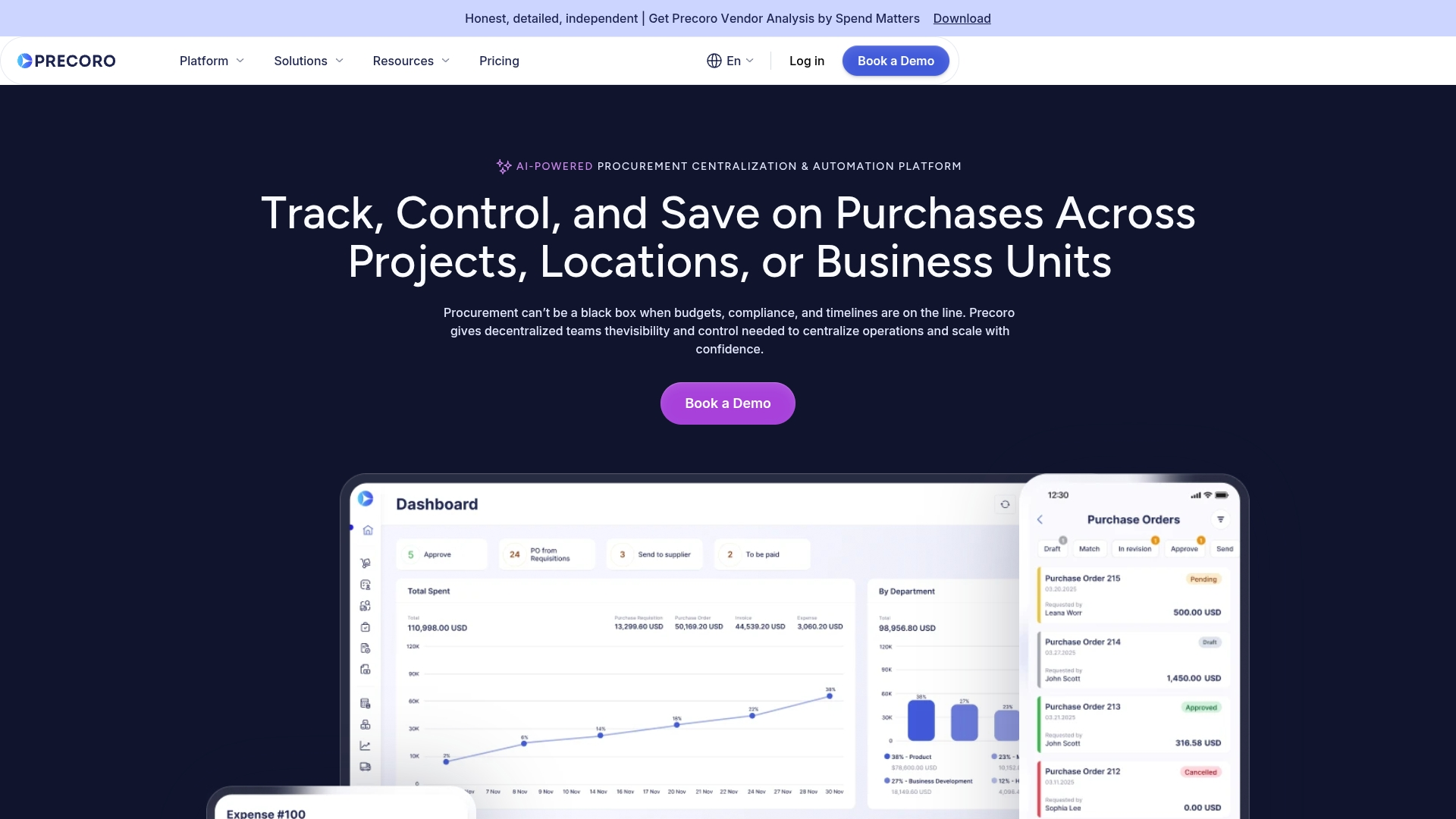
Precoro provides a dedicated spend management platform designed for purchasing centralization. The platform specializes in AI-powered automation and multi-level approval workflows, accelerating the procure-to-pay cycle by at least 38% while reducing manual data entry by 80%.
Key features
- AI-powered invoice processing with 95% OCR accuracy and automated 3-way matching
- Customizable approval workflows with real-time notifications and mobile approvals
- Comprehensive budget tracking with real-time spend visibility across departments and projects
Pricing
Core plan at $499/month (billed annually), Automation plan at $999/month (billed annually), plus custom enterprise pricing.
Considerations
- Limited native ERP integrations compared to larger procurement software providers
- Some users report the interface can feel visually cluttered, and the mobile app experience needs improvement
3. GEP SMART
Best for: Enterprise source-to-pay automation for Fortune 500 companies
Built on Microsoft Azure, GEP SMART is a unified, AI-powered procurement platform that helps enterprises manage their entire source-to-pay process. This cloud-native solution targets large corporations seeking to eliminate procurement silos and streamline complex supply chain management.
Key features
- AI-powered workflow automation with low-code customization capabilities
- Advanced supplier management with real-time scorecards and collaboration capabilities
- Mobile-native platform enabling procurement management from anywhere
Pricing
Custom pricing with implementation starting around $500,000 annually. Additional costs may apply for consulting and managed services.
Considerations
- High implementation costs may be prohibitive for smaller organizations
- Steep learning curve reported by users despite intuitive interface design
4. Spendwise
Best for: SMBs transitioning from manual to digital procurement processes
Spendwise offers an affordable and user-friendly procurement solution focused on streamlining the transition from manual, paper-based systems to digital workflows. The platform focuses on essential procurement features without overwhelming complexity, helping businesses centralize and automate their entire procure-to-pay process.
Key features
- Streamlined purchase order creation, approval, and tracking workflows
- Budget management with real-time spending visibility against allocated amounts
- Electronic bill and expense management with customizable approval processes
Pricing
Basic at $9/user/month (1-5 users, 10 transactions monthly), Pro at $19/user/month (5-50 users, unlimited transactions), plus custom Enterprise pricing.
Considerations
- Limited customization options for reporting and analytics compared to enterprise-level procurement platforms
- Some users report wanting more advanced features like supplier performance metrics and spend cards
5. OpenGov Procurement
Best for: Government and public sector compliance
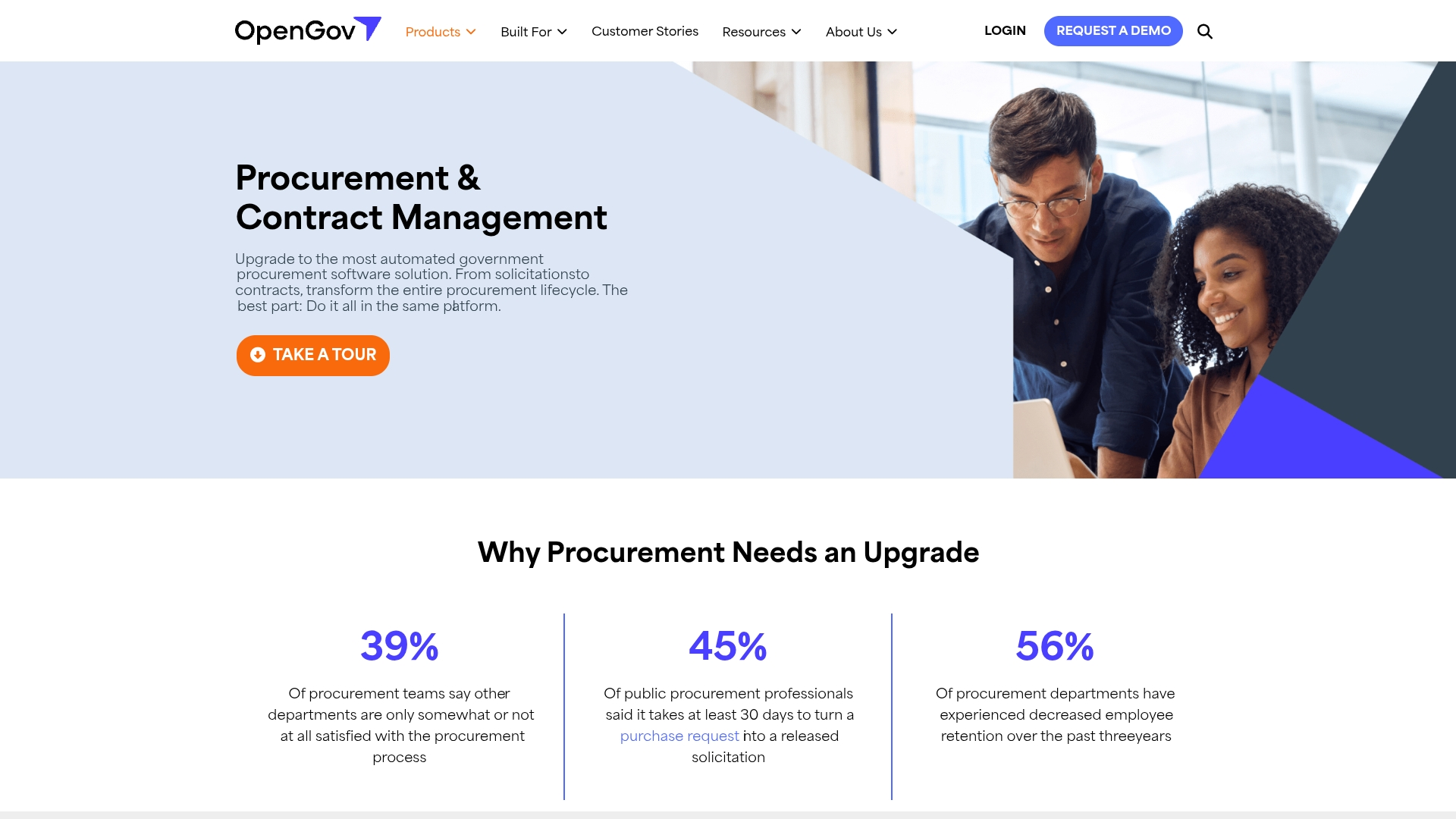
OpenGov Procurement is a specialized software designed to modernize purchasing processes for government entities, aligning well with project management for government. The platform focuses exclusively on government compliance and transparency requirements, making it ideal for cities, counties, state agencies, and special districts.
Key features
- AI-powered solicitation builder that guides users through RFP creation with automated templates and legal language
- Collaborative evaluation platform allowing committees to review and score proposals online with real-time tabulation
- Centralized contract management with automated reminders for renewals and key dates
Pricing
Custom pricing available upon request
Considerations
- Some users report declining customer support quality following company acquisitions
- Limited pricing transparency may create barriers for smaller government entities during initial evaluation
6. SAP Ariba
Best for: Large enterprises needing global source-to-pay solutions
Leveraging the world’s largest B2B trading network, SAP Ariba provides an enterprise-grade procurement solution that connects millions of buyers and suppliers. The platform specializes in comprehensive source-to-pay solutions, enabling large enterprises to digitize their entire procurement lifecycle while leveraging a massive global supplier network.
Key features
- Strategic sourcing and supplier collaboration through the world’s largest B2B network
- End-to-end procure-to-pay automation with advanced analytics and spend visibility
- Deep integration with SAP S/4HANA for unified enterprise resource planning
Pricing
Base edition sold in blocks of 10 users per year with 12-60 month contracts. Standard edition sold in blocks of 1 user per year with minimum 5 licensed users. Contact SAP for detailed pricing.
Considerations
- Implementation complexity can be significant for organizations not already using SAP systems
- High licensing and implementation costs may be prohibitive for smaller businesses
7. Coupa
Best for: Business spend management for large organizations
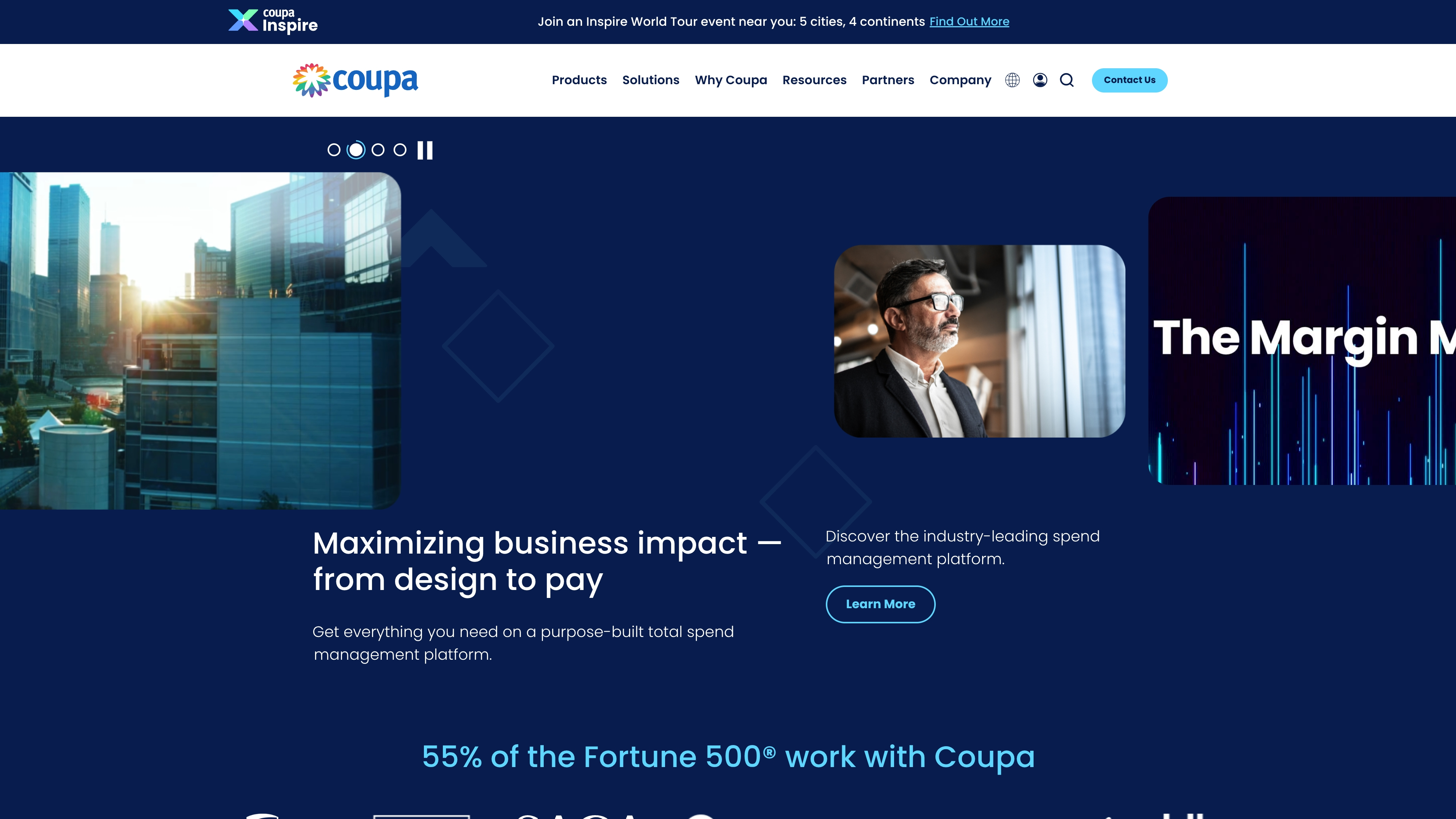
Coupa offers a comprehensive business spend management platform that unifies procurement processes through powerful visibility and community-powered AI insights. With over $1 billion in annual revenue and 3,000+ customers worldwide, Coupa provides end-to-end business spend management that gives organizations complete visibility and control over procurement, invoicing, and payments.
Key features
- Community intelligence and benchmarking that leverages trillions of dollars in anonymized spend data to provide prescriptive insights
- Unified platform approach that integrates procurement, contingent workforce management, invoicing, and payments
- AI-driven spend analytics and automated compliance checks for streamlined procurement processes
Pricing
Custom pricing available upon request. Contact sales for a quote.
Considerations
- Higher cost compared to competitors may be difficult to justify for smaller businesses with less complex procurement needs
- While comprehensive, companies only needing specific functionalities may end up paying for features they don’t use
8. Procurify
Best for: Mid-market spend management with proactive controls
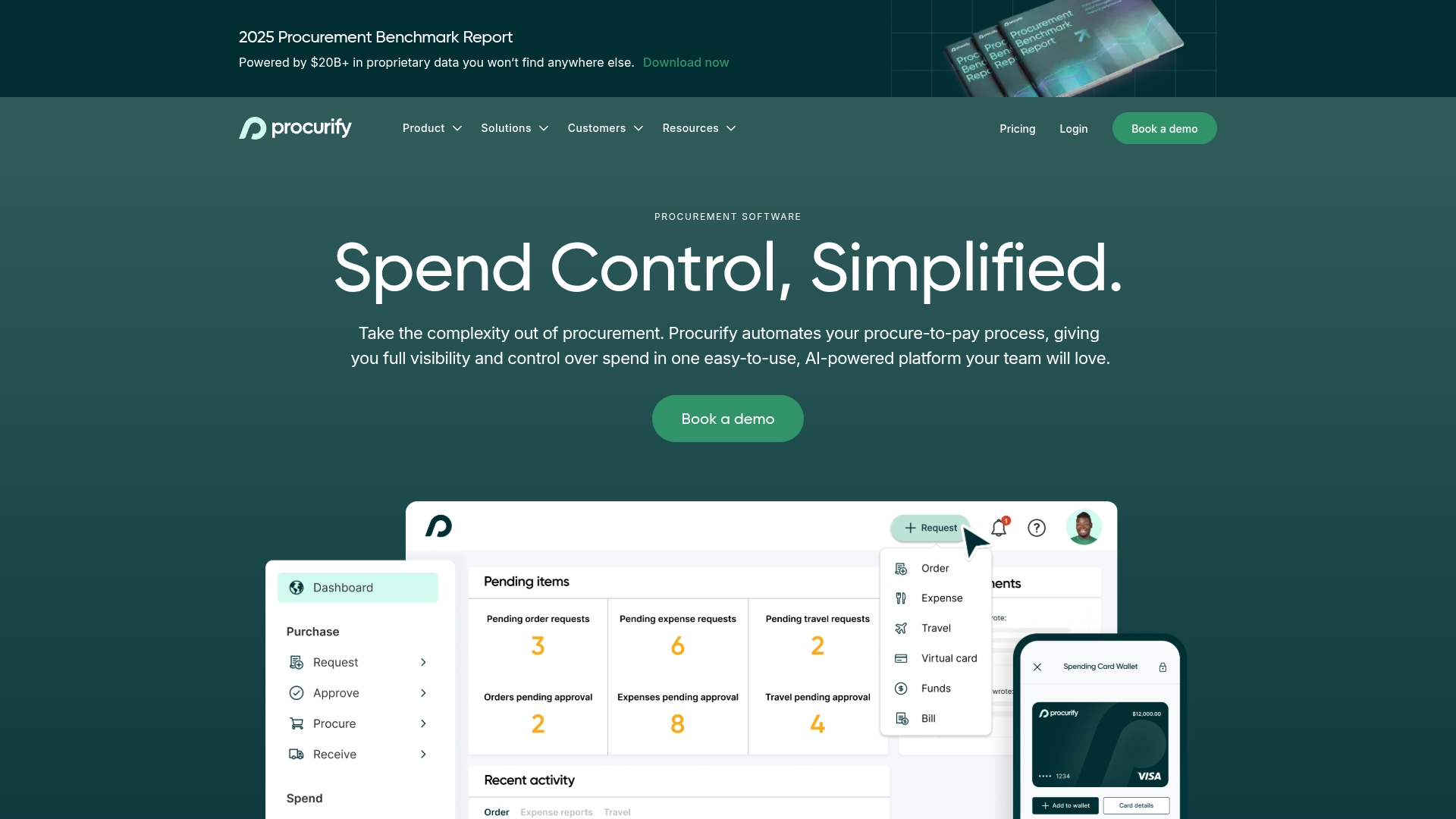
Procurify provides an intelligent spend management system engineered to create a proactive “spend culture” for mid-market companies. The platform specializes in end-to-end visibility, making it ideal for organizations with 50-1000 employees who need comprehensive procurement capabilities without enterprise-level complexity.
Key features
- Customizable approval workflows that route purchase requests based on dollar amounts, departments, and locations
- AI-powered accounts payable automation with OCR invoice processing and 3-way matching
- Mobile apps for iOS and Android enabling on-the-go purchase approvals and expense management
Pricing
Custom pricing based on selected modules. Modular platform starting with Procurify Platform plus Purchasing. Additional modules available: Accounts Payable, Contracts, and Expense & Card. One-time implementation fee varies based on applications and integrations.
Considerations
- Limited to procurement workflows rather than general project management capabilities
- Spending card feature designed specifically for organizations with US entities, potentially limiting international usage
9. Oracle Procurement Cloud
Best for: Enterprises seeking deep ERP and finance integration
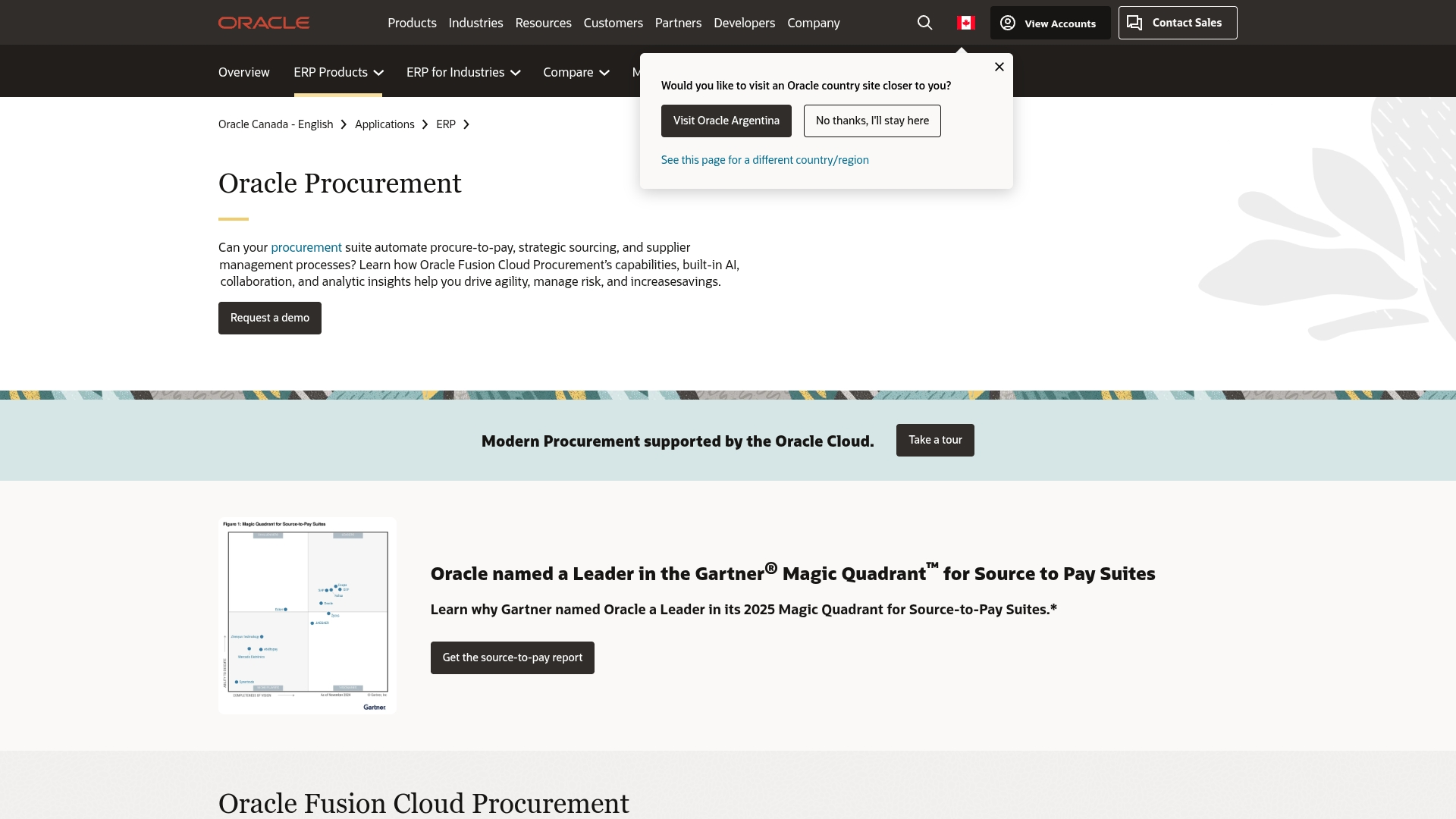
As part of Oracle’s broader ERP ecosystem, the Procurement Cloud offers comprehensive source-to-settle automation for enterprises with complex procurement operations. The platform specializes in AI-powered procurement workflows and deep ERP integration, streamlining end-to-end procurement processes through intelligent automation and unified data management.
Key features
- AI-powered supplier recommendations and contract analysis with automated negotiation summaries
- Centralized work management platform with embedded social collaboration capabilities and approval workflows
- Project-based procurement capabilities that align material acquisition with specific project goals and budgets
Pricing
Custom pricing available upon request. Contact Oracle for a quote.
Considerations
- Complex implementation process requiring specialized technical expertise and significant upfront investment
- User interface can feel outdated despite recent Redwood experience improvements, with occasional inconsistencies across different platform sections
10. Jaggaer
Best for: Enterprise source-to-pay for complex, regulated industries
Jaggaer addresses complex procurement challenges with streamlined, automated workflows that drive real business value. The platform specializes in comprehensive source-to-pay solutions for industries like manufacturing, healthcare, and education, delivering end-to-end procurement automation through its unified JAGGAER ONE platform.
Key features
- Complete source-to-pay capabilities covering eProcurement, contract lifecycle management, and supplier relationship management
- AI-powered JAI assistant that automates routine processes, detects invoice anomalies, and provides intelligent procurement insights
- Industry-specific solutions with deep compliance capabilities for regulated sectors like healthcare and education
Pricing
Custom pricing available upon request. Subscription-based model with costs varying by selected modules and customization level. Implementation and integration services included in enterprise packages.
Considerations
- Complex platform may present a steep learning curve for teams without adequate training and support
- Comprehensive feature set might represent higher costs for smaller organizations with straightforward procurement needs
11. Ivalua
Best for: Large organizations with complex, configurable needs
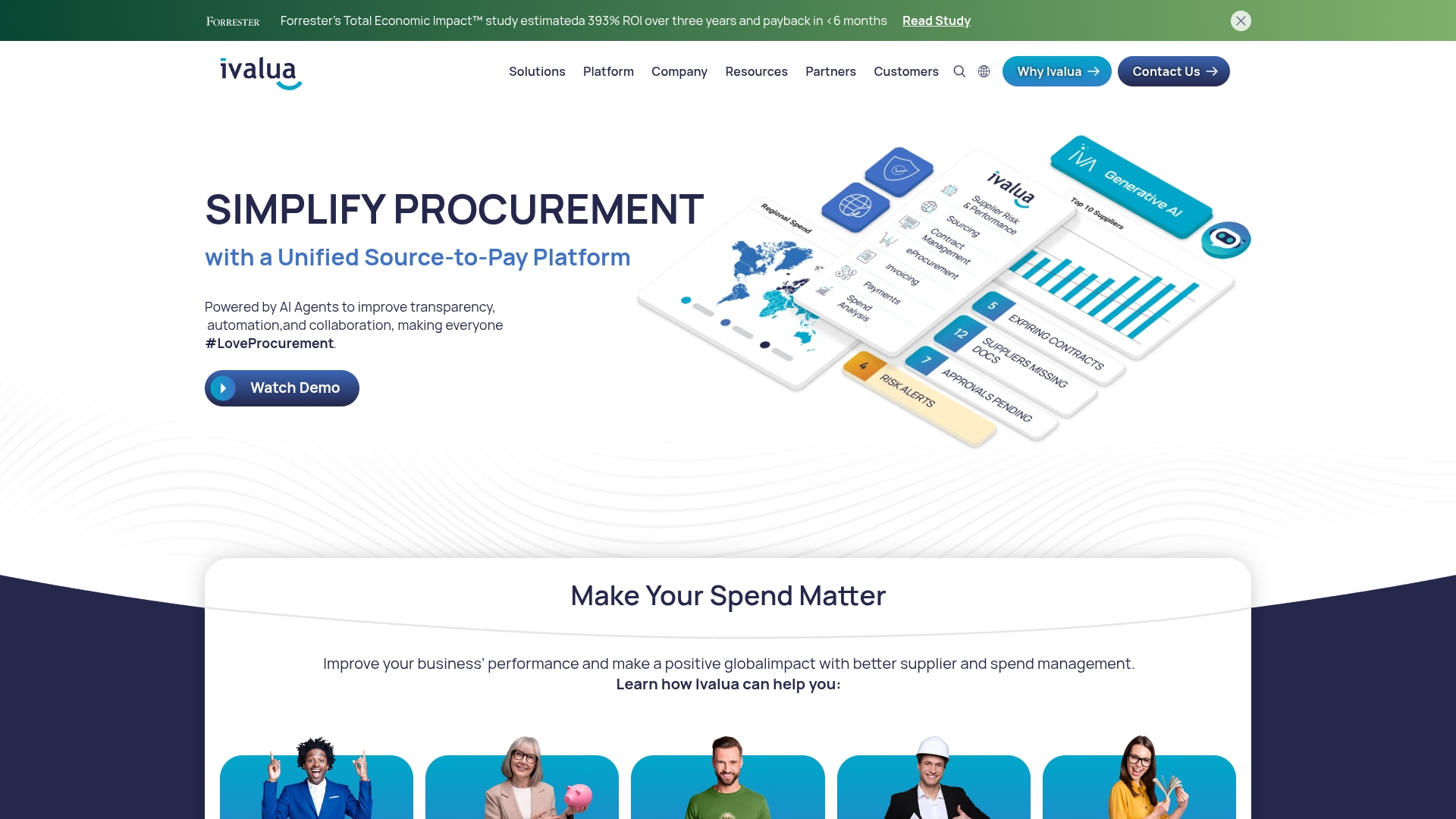
Ivalua’s unified source-to-pay platform is built for large organizations with complex procurement requirements, offering highly configurable workflows to manage both direct and indirect materials. The platform excels at managing complex procurement projects and external workforce investments through a single, highly adaptable platform that scales with enterprise needs.
Key features
- Procurement project management workbench for handling complex sourcing activities and direct materials purchasing
- External workforce management solution for controlling contingent worker costs, performance, and compliance risks
- Unified platform architecture with single codebase ensuring consistent data and seamless integration across all procurement modules
Pricing
Custom pricing available upon request. Contact Ivalua for a quote.
Considerations
- Extensive feature set creates a steep learning curve that requires significant training and dedicated support for implementation
- Platform complexity may overwhelm smaller organizations looking for simpler procurement software solutions
12. Team Procure
Best for: Growing businesses needing collaborative procurement
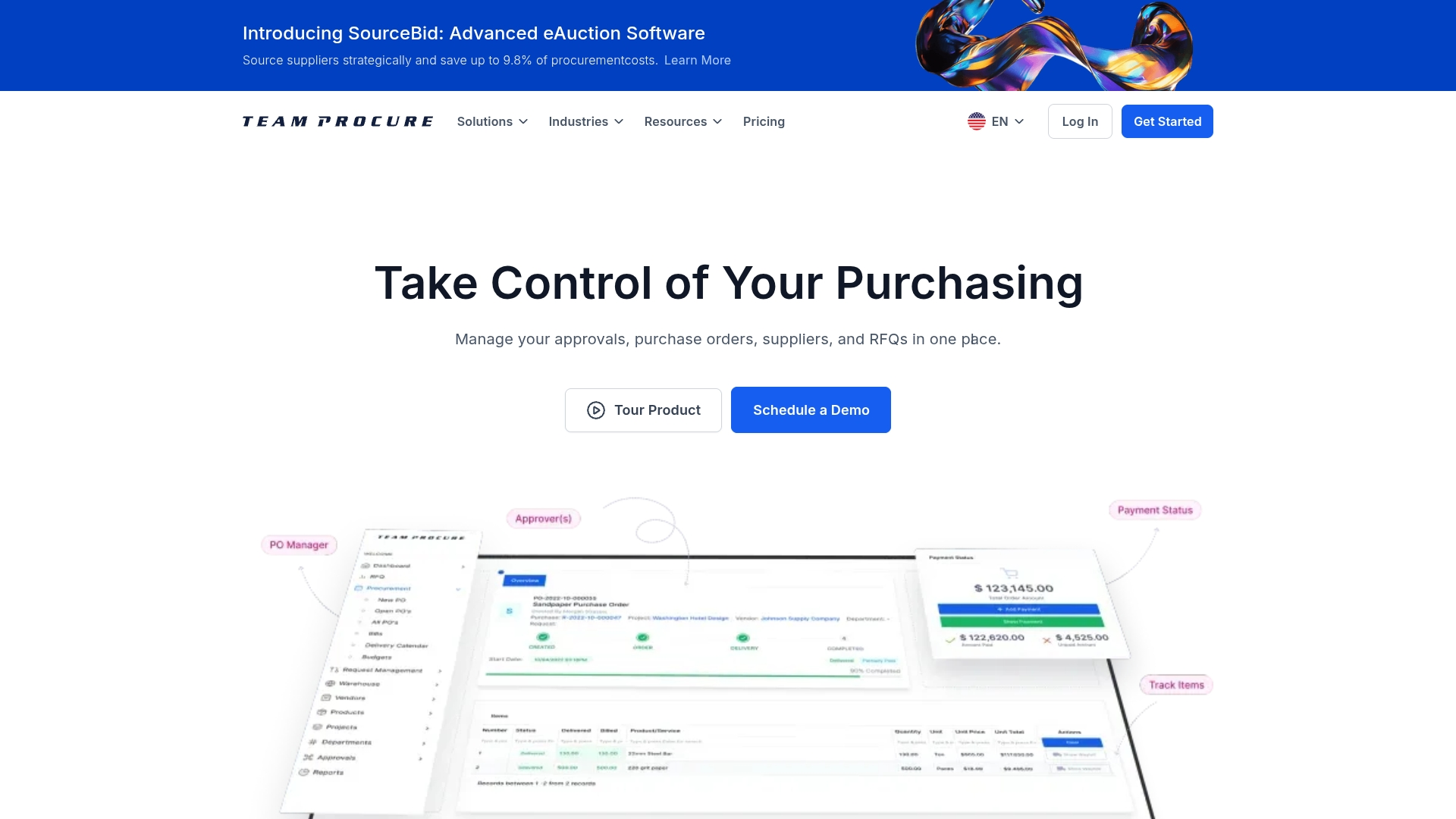
Team Procure offers a comprehensive software solution that emphasizes collaborative workflows and intuitive automation to mature procurement processes. The platform centralizes procurement processes from purchase requests to inventory management, helping organizations gain visibility and control over their entire supply chain while reducing approval times by up to 75%.
Key features
- Custom approval workflows with built-in flowchart editor to match organizational needs
- Advanced e-sourcing capabilities including RFQ management and e-auction software for strategic supplier negotiations
- AI-powered Enigma reporting engine that generates procurement analytics using plain English queries
Pricing
Procurement Suite at $250/month for 3 users. Enterprise Procurement with custom pricing available upon request. 14-day free trial available with no long-term contracts required.
Considerations
- Automation workflows can be somewhat clunky according to user feedback
- Dashboard functionality may not match the comprehensive capabilities of larger enterprise platforms like Salesforce
13. NetSuite Procurement
Best for: Integrated procurement for finance and inventory
Integrated directly within Oracle’s comprehensivebusiness management software solutions, NetSuite Procurement centralizes purchasing activities to streamline the entire procure-to-pay process. This cloud-native platform targets growing businesses that need seamless integration between procurement, financials, and inventory management.
Key features
- 3-way matching automatically compares purchase orders, receipts, and invoices to flag discrepancies and ensure compliance
- SuiteProcurement enables buyers to shop directly from supplier catalogs with automated purchase request creation and approval routing
- Integrated vendor portal facilitates real-time collaboration between buyers and suppliers for improved relationship management
Pricing
Annual subscription model with 3 components: core platform, optional modules, and user count. One-time implementation fee for initial setup. Custom pricing based on selected modules and company size. Contact NetSuite for specific quotes.
Considerations
- Complex initial setup and configuration may require assistance from NetSuite partners or specialized consultants
- Higher cost investment compared to standalone procurement platforms, particularly for smaller businesses evaluating cost-to-benefit ratios
14. Zoho Procurements
Best for: SMBs wanting affordable, connected procurement
Drawing power from Zoho’s extensive application ecosystem, Zoho Procurements provides an affordable, integrated solution for small to medium-sized businesses to automate the procure-to-pay lifecycle. The platform excels at automating purchase requisitions, vendor management, and budget tracking while integrating seamlessly with other business functions like finance and project management.
Key features
- Automated purchase requisition workflows with multilevel approval processes that ensure compliance and accountability
- Centralized vendor portal enabling streamlined supplier relationship management and performance tracking
- Real-time budget monitoring with proactive alerts and comprehensive analytics for procurement optimization
Pricing
Custom pricing available upon request from Zoho. Integration with other Zoho applications is available through the Zoho One bundle.
Considerations
- Advanced sourcing capabilities may be limited compared to specialized enterprise procurement platforms
- Mobile app functionality lacks some of the comprehensive features available in the web version
15. Basware
Best for: Organizations seeking source-to-contract automation
Basware specializes in AP automation and procure-to-pay workflows, processing over $200 billion in business transactions annually. The platform uses AI-powered invoice capture and matching to reduce manual data entry, and its supplier portal gives vendors self-service access to track payment status and submit invoices electronically.
Key features
- AI-powered invoice processing with automatic three-way matching
- Spend analysis with category-level visibility and supplier risk capabilities
- Global supplier network connecting over 1 million businesses
Pricing
Custom pricing based on transaction volume. Contact sales for a quote.
Considerations
- Strongest for AP-heavy workflows rather than full source-to-pay
- Enterprise-focused pricing may be prohibitive for smaller teams
5 steps to successfully adopt procurement software
Implementing new procurement software is a strategic move that can redefine your team’s efficiency. A successful transition translates to less time spent on manual work and greater control over the entire purchasing process, from request to payment.
Adhering to a structured implementation plan is crucial for a smooth rollout that empowers your team to make smarter, faster decisions. Here’s how:
1. Map your current workflow to spot the gaps
Before you can improve your process, you need to see the full picture. Lay out every step from request to approval to find the bottlenecks and manual work slowing everyone down. This gives you a baseline to set measurable goals, like cutting approval delays in half.
With a visual workflow management platform like monday.com’s AI Work Platform, you can easily map your existing workflow. This creates a single source of truth that helps your whole team see what needs to change.
2. Find the right platform for your team
Focus on software that fits how your team actually works. The right platform should be intuitive and easy to use from day one, not require weeks of training. Prioritize platforms that integrate seamlessly with the systems you already use and can scale as your team grows.
3. Run a small-scale pilot to learn and adjust
Before going all-in, test the software with a small group or a single process. This controlled test run lets you gather real-world feedback and work out any kinks without disrupting the entire organization. A flexible platform is key here, allowing you to quickly adjust workflows based on what you learn.
4. Empower your team with the right training
Great adoption starts with great training. Show your team how the new software and integrations make their jobs easier, not more complicated. When people understand the ‘why’ behind the change and see the benefits firsthand, they’ll be excited to get on board.
5. Track your wins and keep improving
Once you’re up and running, keep an eye on what matters most — like cycle times, cost savings, and team satisfaction. Use real-time dashboards to track your progress and share the wins with your stakeholders. This data isn’t just for reports; it’s your guide to continuously refining your process and building on your success.
How AI is transforming procurement management
Your team’s time is best spent on strategy, not sifting through spreadsheets and chasing approvals. AI helps you reclaim those hours by turning complex manual work into AI workflow automation. This shift allows your team to focus on what truly matters: building strategic partnerships and delivering more value.
Here’s how AI gives your team a competitive edge:
- Pinpoint savings instantly: AI flags spending anomalies and opportunities you might have missed.
- Select suppliers with confidence: Automatically evaluate vendor performance and risk factors without the manual overhead.
- Master your contracts: Let AI extract key terms, dates, and obligations from dense legal documents in seconds.
- Forecast needs accurately: Predict purchasing demands using historical data and market trends to stay ahead of the curve.
Here’s a quick look at how AI is reshaping every stage of procurement compared to traditional methods:
With the AI Work Platform, AI isn’t a separate add-on. By automating routine processes, the platform gives your team the data and breathing room to negotiate more favorable deals. You get to move from being reactive to proactive, making faster, smarter decisions with complete confidence.
The data confirms this transformation is accelerating. According to Tropic’s 2026 procurement predictions, 86% of procurement teams now use AI in some capacity, and organizations that optimize negotiation timing with AI save 39% more than those relying on manual approaches. AI-powered contract management alone reduces procurement costs by up to 15%, according to recent industry analysis.
The defining trend of 2026 is agentic AI: autonomous AI agents that don’t just analyze data but actively execute procurement processes. These agents handle vendor research, run preliminary sourcing events, draft RFP responses, and monitor contract compliance around the clock. Unlike traditional automation that follows rigid rules, agentic AI adapts to context and learns from outcomes.
| Capability | Traditional procurement | AI-powered procurement |
|---|---|---|
| Vendor research | Manual web searches, phone calls, reference checks | AI agents scan databases, compile vendor profiles, and rank suppliers automatically |
| Spend analysis | Monthly spreadsheet reviews | Real-time anomaly detection and category recommendations |
| Contract management | Calendar reminders for renewals | AI flags risky clauses, tracks obligations, and alerts teams before deadlines |
| Invoice processing | Manual three-way matching | AI extracts data, matches automatically, flags discrepancies |
| Supplier risk | Periodic manual reviews | Continuous monitoring with proactive risk alerts |
With the AI Work Platform, AI isn’t a separate layer added on top of procurement workflows. AI Blocks, intelligent automations, and built-in agents work directly within the boards and workflows teams already use, turning procurement data into action without switching contexts or platforms.
Learn more: AI workflow automation software
Manage procurement workflows with monday.com's AI Work Platform
The AI Work Platform brings procurement management, AI-powered automation, and cross-team collaboration into one flexible workspace. Rather than stitching together separate purchasing, vendor management, and analytics platforms, teams build their entire procurement operation on a single foundation that adapts to how they actually work.
AI-powered procurement features
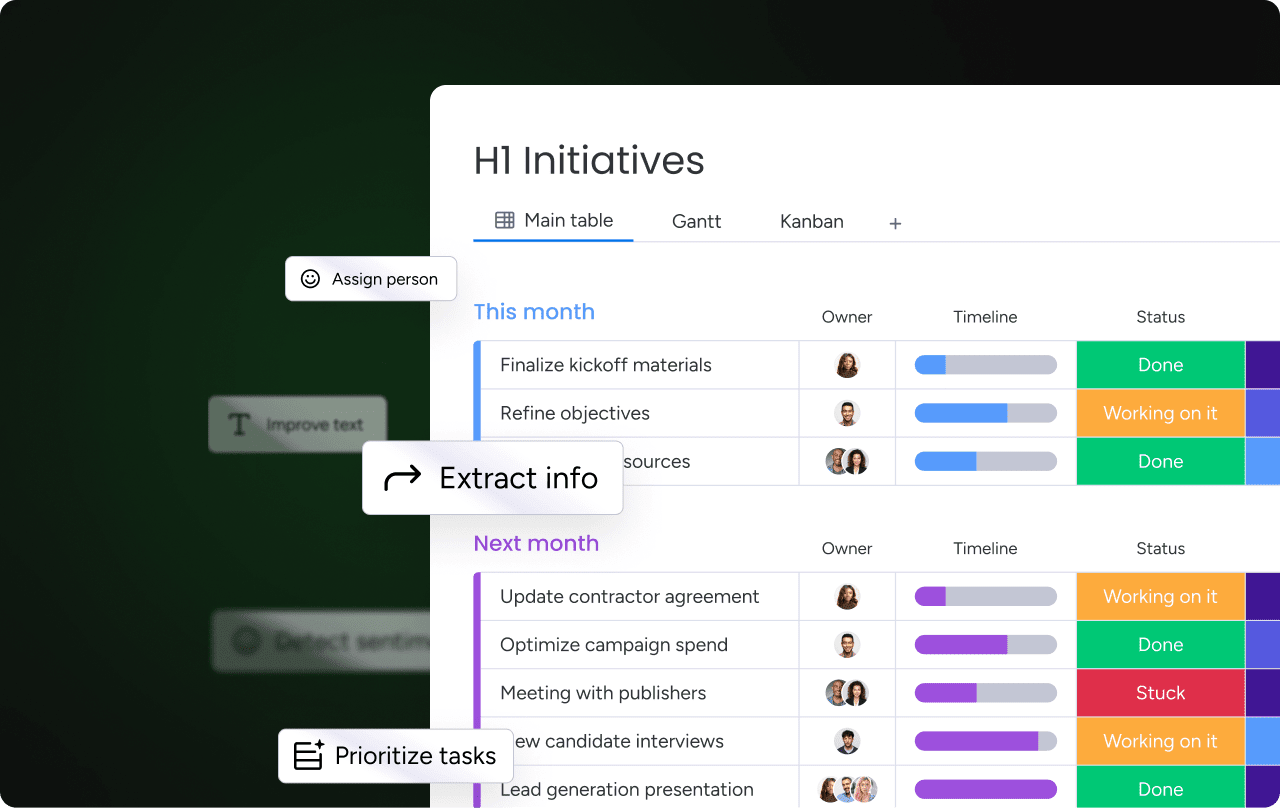
AI Blocks let teams add pre-built AI functions directly into procurement workflows without writing code. These blocks can:
- Categorize incoming requests: Automatically sort purchase requisitions by type, urgency, department, and budget category as they arrive
- Extract data from documents: Pull key details from invoices, contracts, and vendor proposals into structured board columns
- Summarize vendor communications: Generate concise summaries of supplier correspondence and meeting notes for faster decision-making
monday agents for procurement
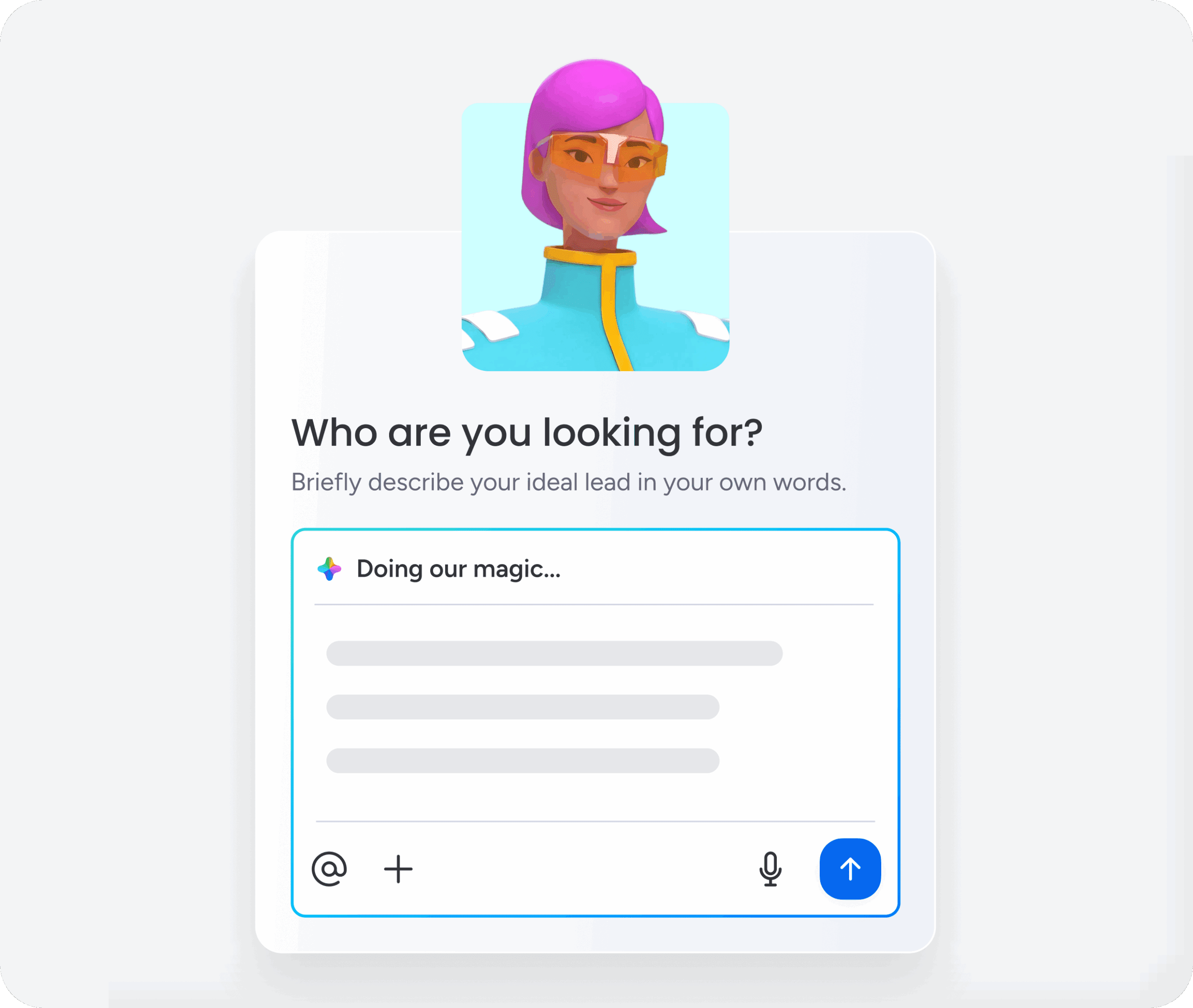
monday agents are purpose-built AI agents that execute work autonomously within your procurement workflows. Three agents are especially relevant for procurement teams:
- Vendor Researcher: Gathers vendor details including pricing, security credentials, reviews, and contract terms. Builds structured vendor summaries and flags missing information that needs follow-up.
- Process Automator: Identifies repetitive processes across procurement workflows and proactively suggests automations to streamline operations.
- Risk Analyzer: Detects schedule, dependency, and workload risks across procurement projects in real time, then recommends corrective actions before issues escalate.
Build custom procurement apps with monday vibe
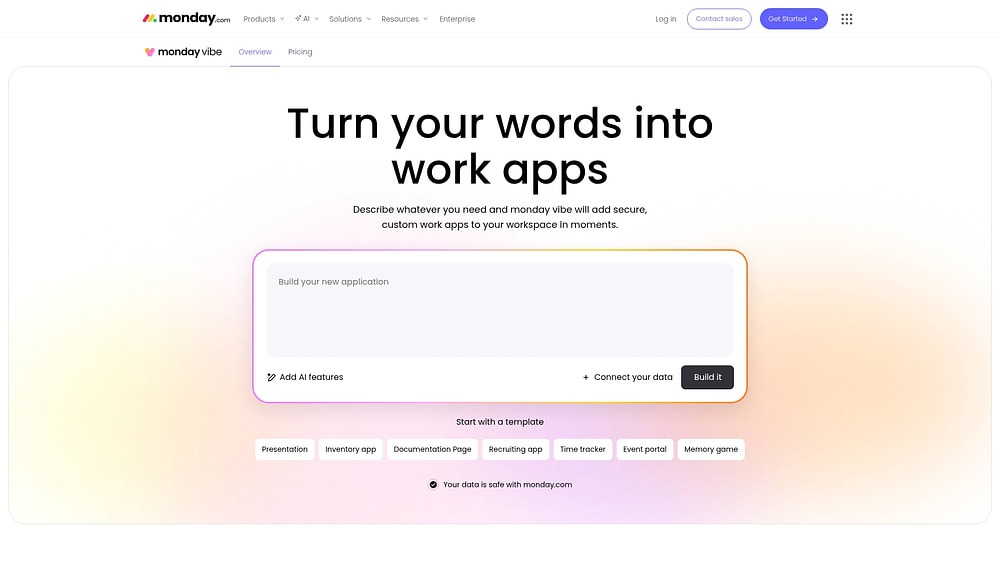
monday vibe is an AI-powered no-code builder that turns plain-language descriptions into fully functional business applications. Procurement teams can describe what they need and get a working app in minutes, including supply chain trackers, approval workflow dashboards, vendor scorecards, and budget monitoring portals. Every app runs on monday.com’s enterprise-grade infrastructure with built-in permissions and security.
Connect procurement data with monday MCP
The Model Context Protocol (MCP) connects your monday.com workspace to external AI assistants like ChatGPT, Claude, and Copilot Studio. Procurement teams can ask natural-language questions across their boards (“Which vendors have overdue invoices?” or “Show me all purchase orders above $10,000 pending approval”) and get instant, context-aware answers. All connections are secured through OAuth with granular permission controls.
Enterprise-grade integrations and security
monday.com’s AI Work Platform connects with 200+ business applications, including ERP systems (SAP, Oracle, NetSuite), accounting platforms (QuickBooks, Xero), and collaboration channels (Slack, Microsoft Teams). Security certifications include SOC 2 Type II, ISO 27001, GDPR compliance, and HIPAA support. The Guardian add-on provides tenant-level encryption, bring-your-own-key (BYOK), and data loss prevention.

“monday.com has been a life-changer. It gives us transparency, accountability, and a centralized place to manage projects across the globe".
Kendra Seier | Project Manager
“monday.com is the link that holds our business together — connecting our support office and stores with the visibility to move fast, stay consistent, and understand the impact on revenue.”
Duncan McHugh | Chief Operations OfficerBuild a smarter procurement process today
Procurement solutions have moved far beyond basic purchase order tracking. The right platform automates approvals, surfaces spending insights in real time, and connects every team involved in the purchasing lifecycle on a single source of truth. With AI agents now handling vendor research, contract analysis, and risk detection autonomously, procurement teams can shift their focus from administrative overhead to strategic sourcing and supplier development.
monday.com’s AI Work Platform gives procurement teams the flexibility to build any workflow, the AI capabilities to automate repetitive processes, and the visibility leaders need to make confident spending decisions. Whether you’re managing 50 purchase orders a month or 5,000, the platform scales with your operations and connects seamlessly with the ERP, accounting, and collaboration systems you already rely on.
FAQs
What are the different types of procurement software?
Procurement software types include procure-to-pay (P2P) for transactional purchasing, source-to-pay (S2P) for end-to-end strategic sourcing through payment, e-procurement for digital requisitioning, contract lifecycle management (CLM), and spend analysis platforms. Many platforms today combine multiple types into a single suite.
What is S2P vs P2P?
Source-to-pay (S2P) covers the entire procurement cycle from strategic sourcing and supplier selection through invoicing and payment. Procure-to-pay (P2P) focuses on the operational transaction from purchase request to final payment, without the upstream sourcing and contract negotiation components.
Is ERP a procurement software?
An enterprise resource planning (ERP) system typically includes a procurement module, but ERP is a broader category. ERP procurement modules handle purchasing within the larger context of finance, inventory, and operations management. Standalone procurement software often provides deeper functionality for sourcing, vendor management, and spend analytics.
How much does procurement software cost?
Procurement software pricing ranges from $9 per user per month for basic platforms to custom enterprise pricing that can exceed $100,000 annually for large organizations. Costs depend on user count, transaction volume, integrations needed, and the scope of functionality (P2P vs. full S2P). Most vendors offer free trials or demo periods.
How does monday.com's AI Work Platform support procurement?
The AI Work Platform supports procurement through customizable boards for PO tracking, automated approval workflows, AI agents (including a dedicated Vendor Researcher), spend analytics dashboards, and 200+ integrations with ERP and accounting systems. Teams can also build custom procurement apps using monday vibe without any coding.
How can AI help reduce costs in procurement?
AI reduces procurement costs by automating invoice processing, identifying spending anomalies, optimizing negotiation timing, and managing contracts proactively. Organizations using AI-powered contract management report up to 15% cost reductions, and AI-optimized negotiation timing saves 39% more than manual approaches.

 Get started