


A strong performer steps into a leadership role, ready to make an impact, and quickly realizes the job feels very different. Days fill with meetings, approvals, and constant follow ups, while the team quietly waits for direction. What once felt like progress starts to feel like managing noise instead of leading people.
This tension sits at the center of how modern organizations operate. Middle managers are expected to turn big ideas into real outcomes, yet they are often pulled in every direction at once. Expectations keep growing, but time and clarity do not, and that gap shows up in slower decisions, stalled work, and frustrated teams.
There is a better way to approach this role. In the sections below, this practical posts uncovers why middle management feels more demanding today and what separates effective managers from those stuck in the loop. This article will also guide you through how to refocus on the work that actually drives progress and keeps teams moving.
Key takeaways
- Middle managers are the critical link between strategy and execution: They translate high-level goals into actionable plans, ensuring that daily work aligns with long-term business objectives.
- Administrative overload limits their impact: Many middle managers spend up to 75% of their time on low-value tasks, reducing their ability to focus on leadership, decision-making, and team development.
- People development is a core responsibility: Effective middle managers drive engagement, retention, and performance by coaching employees, building trust, and creating strong team environments.
- AI and automation unlock higher-value work: Tools like monday work management help reduce manual tasks through automation and AI-driven insights, allowing managers to focus on strategy and collaboration.
- Success requires a modern skill set: Strong middle managers combine strategic thinking, data literacy, emotional intelligence, and adaptability to lead teams effectively in complex, hybrid environments.

What is a middle manager?
A middle manager sits between senior leadership and front line employees, turning big ideas into work that actually gets done. You are responsible for leading your team while still aligning with executive direction. At the same time, you report upward and guide your department toward clear business outcomes.
The role has shifted over time. In times gone by it focused more on supervision and control. Now, you are expected to shape workflows and create environments where teams can perform at their best.
Success is no longer about watching activity, it is about delivering results.
Defining middle management in modern organizations
Middle management connects vision to execution in a practical way. Senior leaders define the goals, while front line employees handle the daily tasks. You step in to map out the path that connects the two.
In most cases, you manage teams ranging from five to fifty people. Your decisions directly influence how work moves forward and how resources are used. This makes your role both strategic and operational at the same time.
Here are the key areas you typically manage:
- Resource allocation: You decide how budgets are distributed and how people are assigned to projects, ensuring the right balance between priorities and capacity.
- Hiring decisions: You shape your team by selecting the right talent and building a structure that supports long term goals.
- Operational tactics: You define how work gets done day to day, making adjustments as needed to keep progress steady.
Today, your role goes beyond traditional hierarchies. You work across teams, support change, and help people adopt new ways of working. While executives think in years and employees focus on daily tasks, you operate somewhere in between, making sure everything stays aligned.
Try monday work managementWhere middle managers fit in the 3 levels of management
To understand your impact, it helps to see how middle management fits into the broader structure. Organizations typically operate across three levels, each with a distinct focus and time horizon.
The table below breaks down how these levels differ:
| Management level | Primary focus | Time horizon | Key responsibilities | Typical titles |
|---|---|---|---|---|
| Senior management | Strategy and vision | 3–5+ years | Setting organizational direction, major capital allocation, defining culture | C-suite (CEO, CTO), VP, director |
| Middle management | Tactics and execution | 1–3 years | Translating strategy into plans, managing departments, resource optimization | Department head, regional manager, general manager |
| Front-line management | Operations and daily work | Days to months | Direct supervision of individual contributors, quality control, daily workflows | Team lead, supervisor, office manager |
How the role has evolved beyond traditional supervision
Work environments have changed, and your responsibilities have shifted with them. Technology, remote work, and flatter structures mean you spend less time monitoring and more time enabling progress.
Instead of tracking attendance, you now focus on removing blockers and helping teams collaborate effectively. You also rely on digital platforms to understand team performance and engagement, especially in hybrid setups.
At the same time, you often deal with matrix structures where people report to multiple leaders. This requires strong communication and influence, not just authority. As a result, your ability to guide without direct control has become more important than ever.
Middle management examples and job titles
Middle management roles look different across industries, yet they all share a common thread. You are responsible for a specific function or region, but you do not control the entire organization.
Understanding these roles gives you a clearer picture of how responsibilities vary in practice.
Department heads and team leaders
These roles represent traditional middle management within specific functions. You oversee both performance and team culture, while also meeting targets set by leadership.
For example:
- Marketing directors: You manage brand strategy, oversee campaigns, and coordinate with external partners while staying within budget.
- Engineering managers: You balance technical improvements with product delivery, guiding developers and QA teams.
- Customer success managers: You lead support teams, focusing on retention and customer satisfaction metrics.
- Operations supervisors: You manage production or logistics, ensuring efficiency while maintaining safety standards.
Typically, you lead teams of ten to thirty people and are accountable for clear outcomes.
Operations and project managers
These roles focus on coordination and execution across teams. You often work with people who do not report directly to you, which makes communication and alignment critical.
For instance, program managers oversee related initiatives and ensure they support business goals. Project directors handle large efforts with defined timelines. Process improvement managers identify inefficiencies and introduce better ways of working.
In each case, you manage timelines, resources, and expectations, even without formal authority over every contributor.
Regional and district managers
If you manage across locations, your focus shifts to consistency and adaptability. You ensure each location meets company standards while still responding to local needs.
Examples include regional sales managers tracking performance across territories, and district managers maintaining operational consistency. Area directors often act as the link between headquarters and field teams.
Because of this, you spend time traveling and maintaining relationships remotely, keeping teams connected despite distance.
Functional specialists who bridge teams
Some middle management roles require deep expertise along with coordination skills. These positions focus on enabling teams rather than directing them.
For example, scrum masters guide agile processes and remove obstacles. Product owners prioritize work based on business needs. Digital transformation managers help teams adopt new technologies and workflows.
In these roles, your influence comes from knowledge and collaboration rather than hierarchy.
Why middle managers are essential to organizational success
Middle managers sit at the center of how work actually gets done. You connect leadership’s intent with what teams deliver every day, making sure plans don’t stay abstract. Because of this, your role directly shapes whether strategy turns into results.
When this layer is missing, things quickly fall apart. Teams lose clarity, priorities drift, and leadership becomes disconnected from what is really happening. You close that gap and keep everything moving in the same direction.
The critical link between strategy and execution
Strategy only works when it becomes clear, actionable work. You take broad goals and turn them into plans your team can actually follow. That means defining priorities, setting timelines, and making sure resources are used where they matter most.
At the same time, you give your team context. They understand not just what they are doing, but why it matters. Because of this, work feels purposeful instead of reactive, and progress becomes measurable.
Without this translation, even strong ideas stall. You make sure strategy shows up in daily work, not just in presentations.
Driving team performance and employee engagement
Your impact on performance goes beyond tracking results. You shape the environment your team works in every day. When people feel supported and challenged at the same time, they tend to perform better and stay longer.
You also spot strengths early and help people grow. Through regular coaching and honest feedback, you guide individuals toward better outcomes. In addition, you address issues before they turn into bigger problems.
Because of this, strong middle management often leads to better retention and more consistent output.
Building organizational resilience through change
Change is where your role becomes even more visible. You help teams understand what is happening and why, which reduces confusion and resistance. At the same time, you keep work moving so momentum is not lost.
You also act as a bridge back to leadership. You share what is working, what is not, and how people are responding. Because of this, decisions can be adjusted before problems grow.
Whether it is a merger, a new platform rollout, or a shift in direction, you keep teams steady while things evolve.
Try monday work management
5 core middle management responsibilities
To understand where you create the most value, it helps to look at the key responsibilities that shape your day to day work. Each one plays a role in keeping teams aligned, productive, and focused.
- Translating executive vision into team action: You break down high level goals into clear tasks and priorities, helping your team see how their work connects to bigger objectives.
- Developing talent and building capabilities: You identify potential, support growth, and guide people through their career paths while balancing immediate team needs.
- Managing resources across competing priorities: You decide where time, budget, and people should go, making trade offs that keep critical work moving.
- Facilitating cross functional collaboration: You work across teams to remove blockers, align efforts, and keep communication flowing.
- Monitoring performance and ensuring accountability: You track progress, identify risks early, and make sure everyone is responsible for their part of the plan.

The 75% problem that middle managers face
Many middle managers spend about 75% of their time on administrative work. That leaves only 25% for leadership and strategic thinking. This imbalance is not a personal failure, it points to poor role design and inefficient processes.
Because of this, your ability to focus on what matters most is often limited by how work is structured around you.
Understanding administrative overload
Administrative overload shows up in everyday tasks that quietly consume your time. For example, compiling reports, scheduling meetings, approving requests, and updating multiple systems. In many cases, you become the link between disconnected processes, manually moving information from one place to another.
As a result, your attention gets pulled away from coaching and planning. The work you are meant to lead gets replaced by tasks that add little long term value.
The true cost of meeting marathons and bureaucracy
Too many meetings and layers of approval slow everything down. When your calendar is packed, decisions take longer and teams wait for direction. This delay affects both speed and morale.
At the same time, constant context switching makes it harder to focus on meaningful work. Because of this, productivity drops even when effort stays high.
Reclaiming time for people leadership
The real value of middle managers lies in how they support people and guide collaboration. However, that work requires uninterrupted time and focus. Without it, coaching, one on ones, and strategic planning get pushed aside.
To fix this, organizations need to reduce administrative load at the system level. That means simplifying workflows, improving platform integration, and removing unnecessary steps. Only then can managers focus on developing their teams and driving meaningful outcomes.
Too many meetings and layers of approval slow everything down. When your calendar is packed, decisions take longer and teams wait for direction. This delay affects both speed and morale.
Essential middle manager skills for success
To succeed in this role, you need a mix of technical understanding and people focused abilities. These skills help you move beyond task management and step into true leadership.
- Strategic thinking and business acumen: You need to understand how your decisions connect to broader business goals. This helps you align your team’s work with company priorities and communicate clearly with senior leadership.
- Data fluency and analytics: You should be comfortable reading dashboards and identifying patterns in performance. This allows you to turn numbers into clear actions that improve results.
- AI and digital technology skills: You need to know how to use AI to reduce manual work and support decision making. In addition, you help your team adopt new ways of working that keep them efficient.
- Emotional intelligence and coaching: You must understand how people think and respond in different situations. This helps you guide your team, resolve conflicts, and build trust over time.
- Cross cultural communication: You need to communicate clearly across locations and backgrounds. This becomes even more important in remote and hybrid environments where clarity prevents confusion.
- Change leadership and adaptability: You should be comfortable navigating uncertainty and guiding your team through it. Because of this, you help people adjust without losing focus or confidence.
- Complex problem solving: You will often face issues without clear answers. In those moments, you need to break problems down, weigh tradeoffs, and find balanced solutions that work for multiple stakeholders.
You need to know how to use AI to reduce manual work and support decision making. In addition, you help your team adopt new ways of working that keep them efficient.
How AI is transforming middle management
Artificial intelligence is helping close what many call the seventy five percent gap, where managers spend most of their time on low value tasks. By taking over routine work and supporting better decisions, AI allows you to move from constant coordination to focused leadership. As a result, your role shifts toward guiding outcomes instead of managing tasks.
At the same time, this change is not just about efficiency. It also redefines how you support your team, how you prioritize work, and how you make decisions day to day. That is where the real impact begins to show.
Automating administrative work that drains time
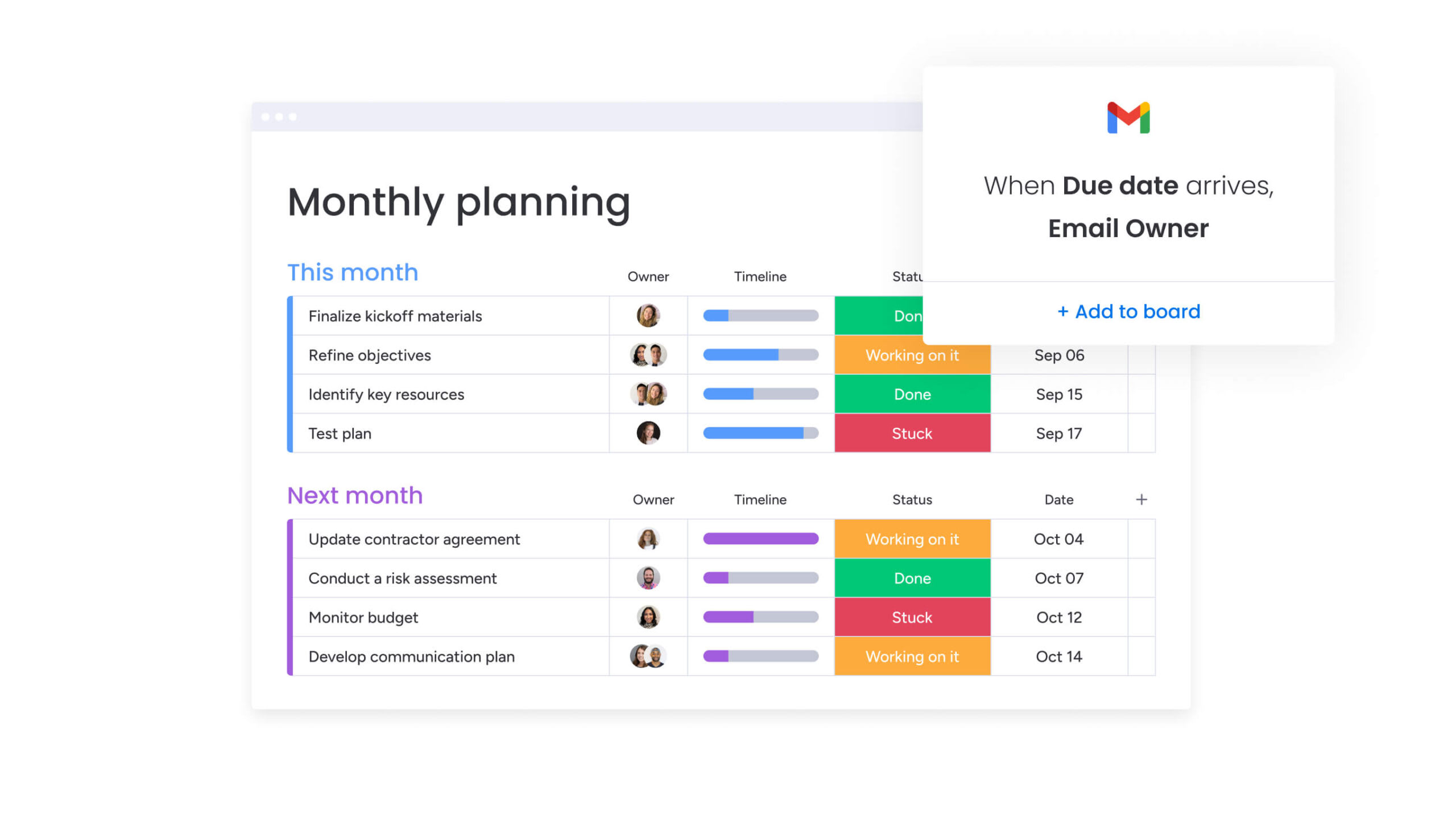
Administrative work has always pulled managers away from meaningful priorities. Tasks like sorting requests, writing summaries, and extracting details from documents often take up hours without adding much value. Now, AI handles these tasks quickly and consistently.
With features like AI Blocks in monday work management, incoming requests are categorized automatically, long discussions are turned into clear action items, and key data is pulled from files without manual effort. Because of this, you can spend less time organizing information and more time acting on it.
Orchestrating human and AI teams together
Teams are no longer made up of just people. You now work with a mix of human contributors and AI driven processes, which changes how work gets assigned and completed. Your role becomes more about coordination than direct control.
You decide which tasks need creativity, judgment, or empathy, and which ones can be handled by AI. At the same time, you ensure that work flows smoothly between both. This requires clear thinking around inputs, outputs, and how responsibilities are shared.
Using AI powered insights for smarter decisions
Decision making used to depend heavily on past reports and manual analysis. That often meant reacting to problems after they appeared. With AI, you can spot patterns earlier and prepare for what is coming next.
For example, Portfolio Risk Insights in monday work management scans active work, highlights risks, and shows where attention is needed most. Instead of digging through multiple sources, you get a clear view of priorities, which helps you act faster and with more confidence.
Scaling your impact without adding headcount
Managing larger teams or more projects used to require adding more layers. That approach often slowed things down and increased complexity. AI changes this by helping you oversee more without losing quality.
With automated tracking and AI generated recommendations, you can support more people and handle more work streams at once. As a result, your influence grows without increasing overhead, which is critical for organizations looking to scale efficiently.
Decision making used to depend heavily on past reports and manual analysis. That often meant reacting to problems after they appeared. With AI, you can spot patterns earlier and prepare for what is coming next.
Strategies to maximize middle management impact
Improving performance at this level is not just about working harder. It requires intentional changes in how work is structured and supported. The ideas below focus on helping you reclaim time and stay focused on meaningful outcomes.
- Design smart workflow automation: Start by reviewing your weekly routines and identifying repetitive tasks. Automating updates, approvals, and reporting reduces unnecessary back and forth. As a result, work moves forward without constant manual intervention.
- Establish decision rights: Clearly define who owns which decisions. This removes confusion and prevents delays caused by constant escalations. In addition, it allows you to focus only on decisions that truly require your input.
- Build continuous learning into daily work: Learning should not feel separate from execution. Encourage knowledge sharing within teams and make resources available when they are needed. That way, people adapt quickly without waiting for formal training sessions.
- Create feedback systems that actually work: Regular check ins should go beyond status updates. Focus on growth, improvement, and open communication. When feedback flows in all directions, accountability becomes part of the culture.
- Implement sustainable work practices: Long term performance depends on balanced workloads. Use visibility into team capacity to adjust priorities and avoid burnout. This helps maintain steady output without exhausting your team.
How to build a strong middle management operating model
For managers to succeed consistently, organizations need to provide structure, not just expectations. Without clear systems in place, performance depends too much on individual effort. The areas below create a stronger foundation for long term success.
- Setting role expectations: Define responsibilities clearly so you know where to focus. When expectations align with business goals, it becomes easier to prioritize the right work.
- Measuring performance that matters: Move beyond simple output metrics. Include factors like team development, retention, and collaboration to get a fuller picture of impact.
- Creating dual career pathways: Not everyone needs to manage people to grow. Offering separate paths ensures leadership roles are filled by those who actually want them.
- Enabling innovation at team level: Give managers room to test ideas and improve processes. Because you are closest to daily work, your insights often lead to practical improvements.

“monday.com has been a life-changer. It gives us transparency, accountability, and a centralized place to manage projects across the globe".
Kendra Seier | Project Manager
“monday.com is the link that holds our business together — connecting our support office and stores with the visibility to move fast, stay consistent, and understand the impact on revenue.”
Duncan McHugh | Chief Operations OfficerEnable more confident leadership with monday work management
Middle managers are expected to keep teams aligned, move work forward, and connect daily execution to broader business goals. That becomes much harder when updates live in different places, priorities keep shifting, and too much time goes into coordination instead of leadership.
The intuitive monday work management solution helps reduce that friction by bringing work, communication, and visibility into one platform. As a result, you can spend less time chasing information and more time guiding priorities, supporting your team, and keeping execution tied to strategy.
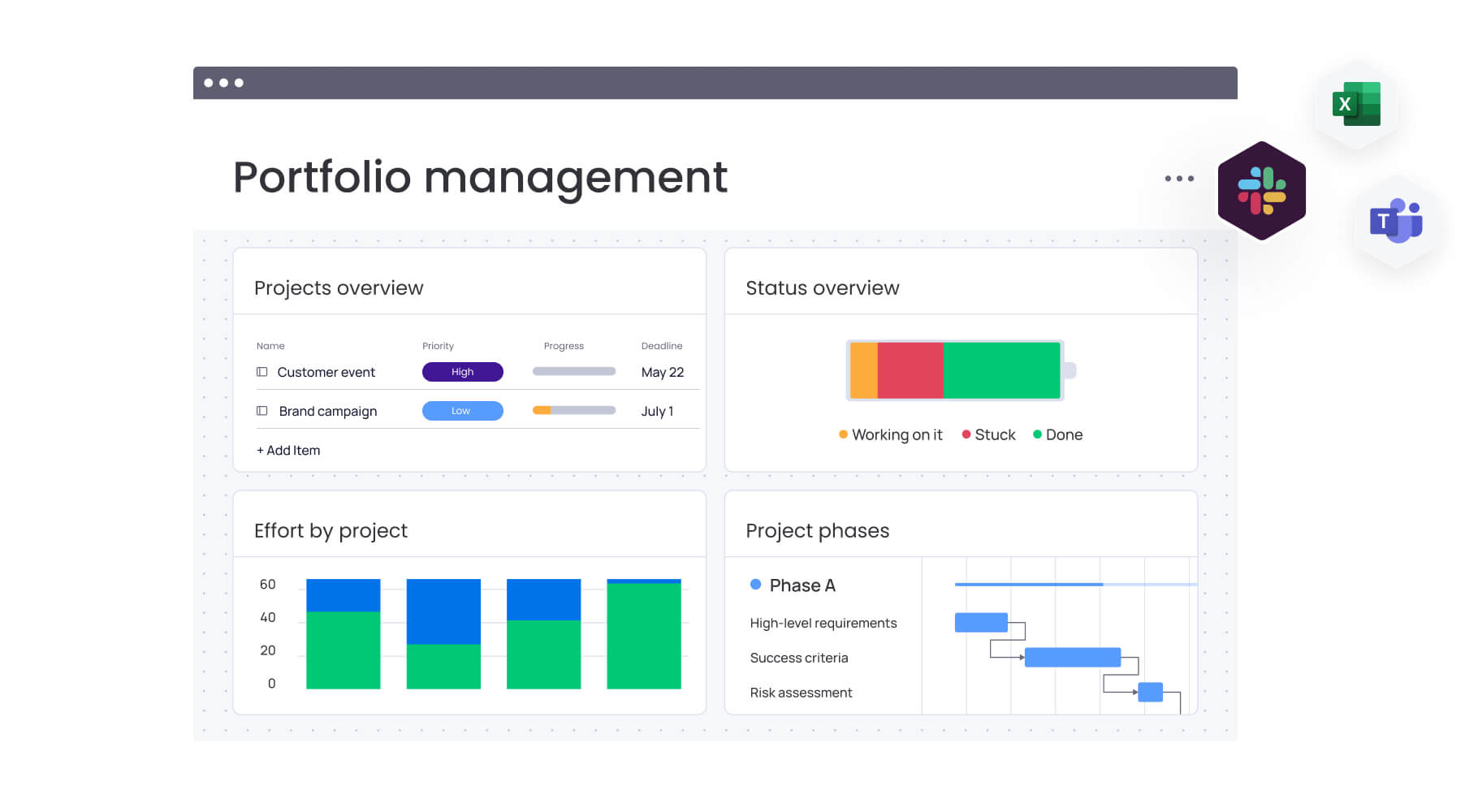
- Centralized visibility: Teams can track projects, workloads, risks, and timelines in one place, which makes it easier to spot gaps early and keep everyone aligned on current priorities.
- Clearer prioritization: Shared boards, dashboards, and status tracking help managers see what needs attention first, so decisions are based on real progress instead of scattered updates.
- Stronger accountability: Ownership stays visible across tasks, handoffs, and approvals, which helps teams follow through consistently and reduces delays caused by unclear responsibilities.
- Better cross functional coordination: Teams working across departments can manage dependencies, updates, and next steps in a connected workflow, which cuts down on manual follow ups and missed communication.
- Closer connection to business goals: Managers can link day to day work to larger objectives, which helps teams understand why their work matters and keeps execution focused on measurable outcomes.
When managers have clearer visibility, stronger alignment, and fewer manual coordination tasks, teams can work with more consistency and less confusion. That leads to better execution, faster decisions, and greater strategic impact, without adding unnecessary complexity.
Try monday work managementFrequently asked questions
What is the difference between middle management and senior management?
The difference between middle management and senior management lies in focus and scope. Middle managers focus on translating strategy into execution and managing teams of five to 50 people, while senior managers set organizational strategy and make major business decisions with longer time horizons and broader decision-making authority.
Can you be a middle manager without direct reports?
Yes, you can be a middle manager without direct reports. Some middle management roles like project managers or business analysts coordinate work across teams without formal authority over people, relying on influence and expertise rather than hierarchical authority.
How much do middle managers typically earn?
Middle managers typically earn between $75,000 to $150,000 annually, depending on industry, company size, and geographic location. Compensation often includes bonuses tied to team performance.
What percentage of the workforce are middle managers?
Middle managers typically represent ten to 15% of an organization's workforce, though this varies significantly by industry and company structure.
How do you transition from individual contributor to middle manager?
The transition from individual contributor to middle manager requires developing team management skills, learning to delegate effectively, and shifting focus from personal productivity to team outcomes. This happens through mentoring, management training, and gradually taking on leadership responsibilities.
What industries have the most middle managers?
Professional services, technology, healthcare, and financial services typically have the highest concentrations of middle managers due to complex organizational structures and knowledge work requirements.

 Get started