

Marketing campaigns today span email, social, paid ads, influencer partnerships, and content programs, often running simultaneously across multiple regions. Each channel has its own timeline, approval chain, and creative requirements. When these moving parts live in separate spreadsheets, chat threads, and disconnected apps, coordination breaks down quickly — deadlines slip, budgets balloon, and teams spend more time chasing updates than driving results.
The right marketing project management platform changes this. It consolidates campaign planning, creative production, approvals, and reporting into a single workspace, providing visibility across departments, real-time insights, and workflow automation. With everything connected, teams can execute multi-channel campaigns efficiently, monitor progress against business goals, and scale operations without losing control.
In this indepth post, we compare marketing project management platforms for 2026, covering features, pricing, and AI capabilities. We will also detail what each platform excels at, explore potential limitations, and discover which teams will benefit most from each solution.
Key takeaways
- Marketing project management software centralizes workflows: specialized platforms unify campaign planning, creative approvals, and multi-channel execution in a single system.
- AI and automation enhance efficiency: AI features streamline repetitive tasks, categorize content, summarize documents, and provide predictive insights to support strategic decision-making.
- Real-time visibility improves resource management: dashboards and workload tracking allow teams to balance capacity, prevent bottlenecks, and optimize assignments across projects.
- Integration with the marketing tech stack is essential: platforms that connect with CRM, analytics, and design tools reduce silos and ensure data consistency.
- monday.com connects work to strategic goals: by linking campaigns, approvals, and cross-departmental collaboration, it provides a unified view that aligns daily execution with business objectives.
Best marketing project management software for teams
Great marketing requires more than clever ideas. Teams must execute campaigns, manage content, and coordinate channels flawlessly while showing the impact on business objectives. Fragmented workflows slow coordination and make it difficult to link marketing efforts to revenue due to common project management challenges.
The right platform goes beyond tracking individual processes. It unifies marketing operations through comprehensive work management, connecting strategy to delivery. But which solution meets your team’s specific needs?
Read on below as we dive into our top platform comparison, highlighting what each does best, pricing info, and standout capabilities.
| Software | Starting price | Best for | Standout strength |
|---|---|---|---|
| monday work management | $9/user/month | Scalable marketing operations across teams, regions, and channels | AI-powered workflows that connect campaigns, resources, and goals in one system |
| Hive | Free (paid from $5/user/month) | Flexible project views with built-in collaboration | Native chat, notes, and email combined with multiple project views |
| Scoro | $19.90/user/month | Agencies and services teams managing projects and finances together | End-to-end quote-to-cash with real-time profitability tracking |
| Screendragon | Custom pricing | Enterprise marketing and agency orchestration | AI agent–driven workflows with strong brand governance and compliance |
| Adobe Workfront | Custom pricing | Enterprise teams embedded in Adobe Creative Cloud | Deep integration across the Adobe content supply chain |
| Float | $7/user/month | Resource planning and capacity management | Intuitive visual scheduling to prevent over- or under-allocation |
| Bonsai Agency Software | $9/user/month | Freelancers and small agencies | Client management, projects, and invoicing in one lightweight platform |
1. monday.com
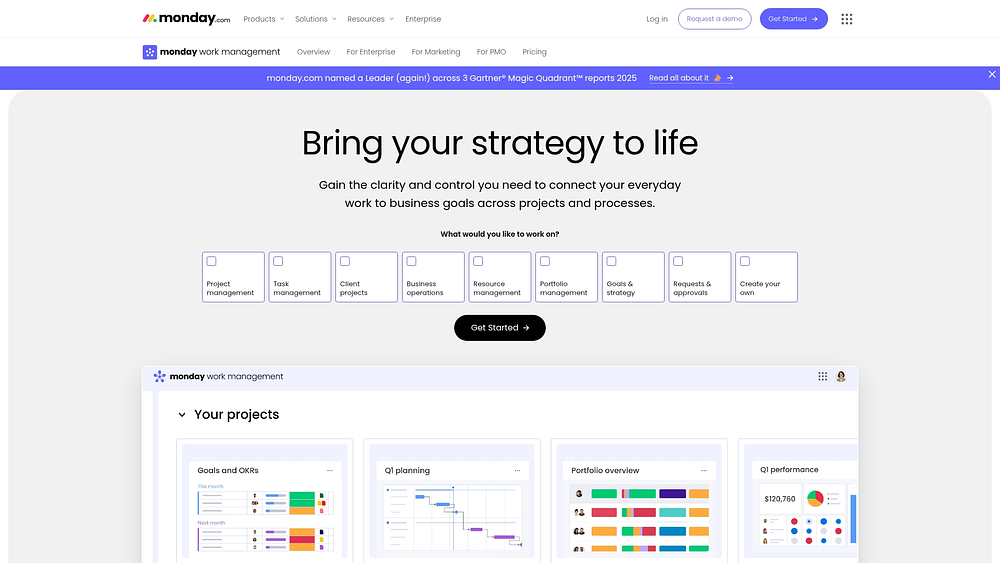
Modern platforms like monday.com transform marketing operations by linking daily activities to business results. Designed for teams managing work across channels, regions, and stakeholders, it ensures handoffs have clear ownership and campaigns launch on time.
Rather than separating plans, approvals, and updates, marketing teams work in a single environment with customizable boards, over fifteen views (including Kanban, Gantt charts, Calendar, Timeline, and Workload), and live dashboards aggregating progress across all campaigns.
Use case:
Marketing teams can streamline campaign planning, creative workflows, and approvals while maintaining visibility into performance metrics and resource allocation. For instance, a campaign intake flow can automatically assign requests to the correct owners, while leadership tracks launches via a portfolio dashboard. This answers key questions: who is waiting on legal? Which region is over capacity? What is ready to ship this week?
Key features:
- Campaign planning and content calendars: utilize Calendar, Timeline, and Gantt chart views to map launch dates, milestones, and dependencies, keeping handoffs predictable.
- Creative request management and approval workflows: standardize briefs with WorkForms, collaborate on feedback within monday docs, and link decisions directly to work through item updates.
- Real-time dashboards and marketing analytics: build dashboards with 10+ widgets to track dates, workload, status breakdowns, and rollups across boards for executive reporting.
Advanced AI features:
AI is integrated directly into workflows, helping teams manage high volumes of work efficiently:
- AI-powered workflow automation: handle repetitive processes such as summarizing text, refining copy, translating content, or extracting information.
- Content categorization and insights: leverage AI Blocks to categorize, summarize, detect sentiment, translate, and extract data from text and files.
- Planning support for fast-moving work: generate detailed project plans with suggested tasks and phases for new campaigns.
Automations:
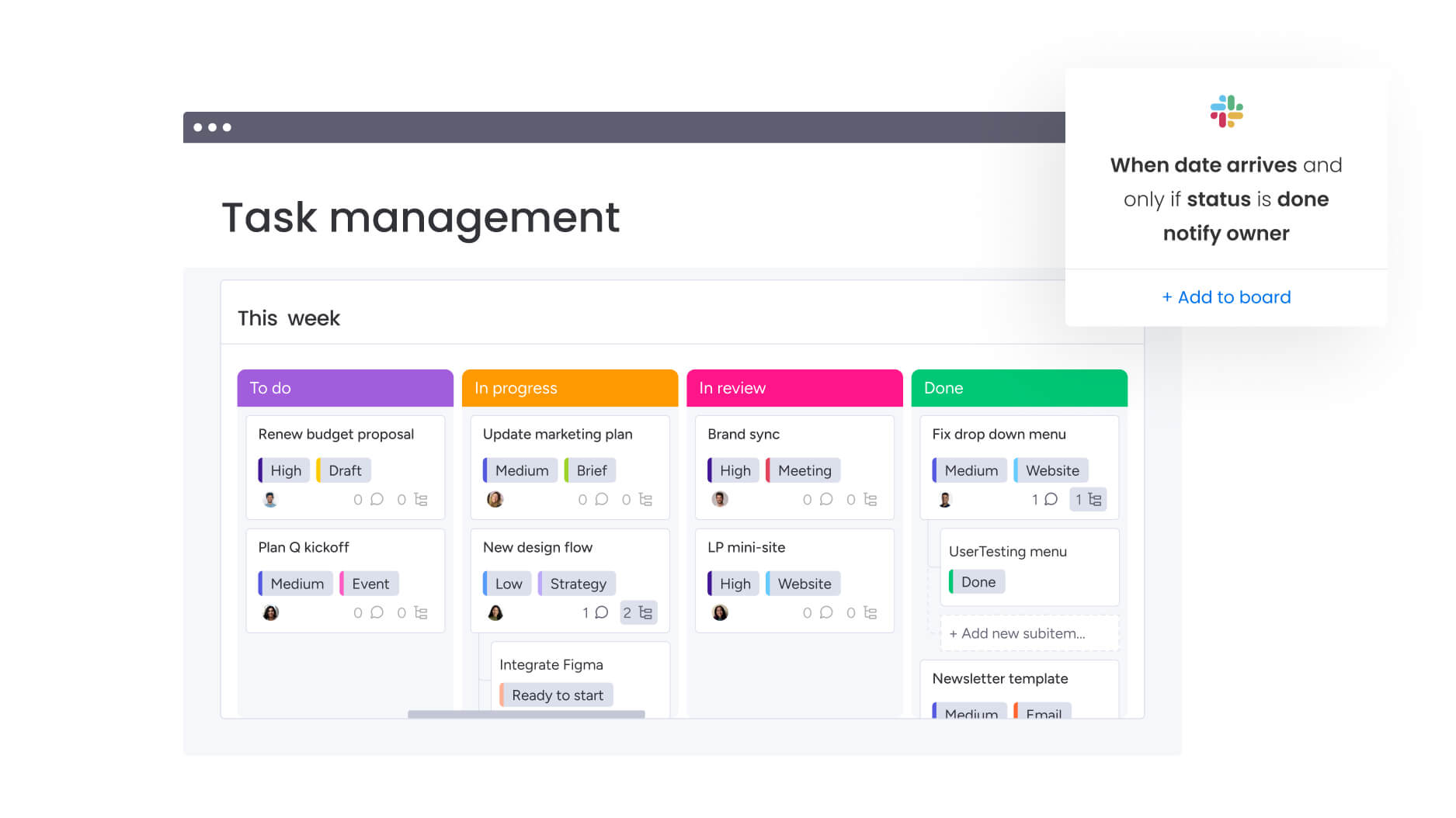
Consistency is vital for multi-stakeholder work. monday.com offers no-code automations to standardize handoffs, reminders, and approvals.
- No-code automation templates: begin with prebuilt templates and customize them to campaign stages, owners, and review steps.
- Approval-ready notifications: alert reviewers when items need review and notify owners of status changes.
- Reliable execution at scale: combine templated boards with automations to launch repeatable campaigns across regions, products, or units.
Integrations:
Marketing teams rely on multiple systems, and updates should travel with the work. monday.com connects with over 200 apps:
- Native integrations: link Slack, Microsoft Teams, Google Drive, Gmail, and Outlook.
- Project and delivery connections: use Jira Cloud for two-way syncing when campaigns depend on engineering dates.
- Open API: develop custom integrations for specific processes.
Marketing project management software features:
Marketing work touches every department. monday.com helps teams coordinate execution while maintaining governance:
- Cross-departmental collaboration: share boards and reports with stakeholders using live dashboards and automated updates.
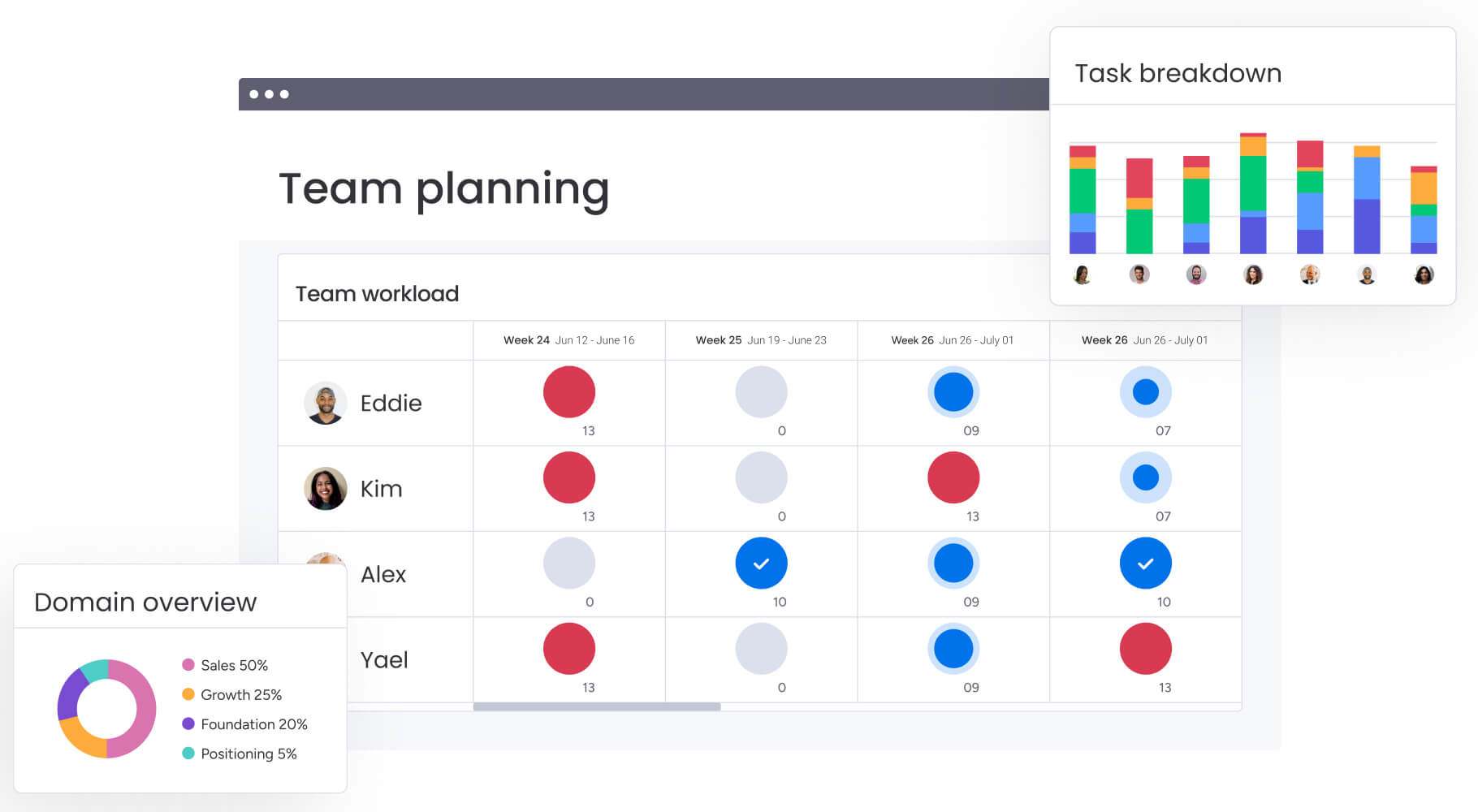
- Resource and workload management: visualize capacity with Workload View and Workload Widget to balance assignments.
- On-time delivery: leverage dependencies, milestones, critical path, and baseline features to maintain realistic schedules.
Pricing:
- Free: $0 for up to two users
- Basic: $9/user/month (billed annually)
- Standard: $12/user/month (billed annually)
- Pro: $19/user/month (billed annually)
- Enterprise: custom pricing with dedicated support and enhanced security
Annual billing saves 18%. AI usage includes 500 free credits per month; additional credits are available.
Why it stands out:
- Connects work to goals: track Goals & OKRs alongside campaigns to see progress against strategic priorities.
- Adoption drives accuracy: when teams enjoy using the platform, reporting and plans remain current.
- Fast time to value: launch quickly with templates and refine workflows as needs evolve.
2. Hive
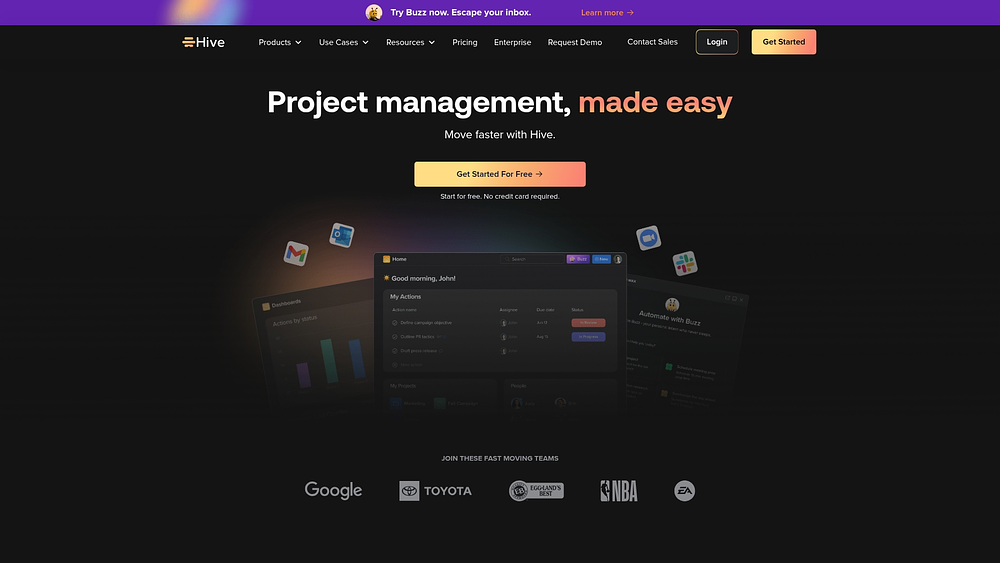
Hive evolves based on user feedback and offers unified collaboration with project management, native chat, notes, and email integration. Its flexibility supports multiple project views and automation, adapting to team preferences.
Use case:
Marketing teams valuing flexible views and basic automation benefit from Hive’s Gantt charts, Kanban boards, calendar, and portfolio views. Teams needing deeper AI support may prefer platforms with AI Blocks.
Key features:
- Multiple project views: Gantt charts, Kanban boards, calendar, and portfolio views to suit team preferences.
- Native collaboration suite: integrated chat, notes, and email functionality within the platform.
- Proofing and approvals workflow: built-in review processes for creative content.
Pricing:
- Free: $0/month (up to 10 members, 200MB storage, unlimited tasks)
- Starter: $5/user/month (annual) or $7/user/month (monthly) with unlimited storage and up to 10 projects
- Teams: $12/user/month (annual) or $18/user/month (monthly) with unlimited members and workflows
- Enterprise: custom pricing with all add-ons and dedicated customer success manager
- Add-ons: $5/user/month for proofing, timesheets, resourcing, dashboards, and automations
- Buzz AI assistant: $8/month workspace add-on
Considerations:
- Premium capabilities like proofing, dashboards, and enterprise security may require separate add-ons, increasing total costs.
- Native integrations are more limited, often relying on third-party connectors like Zapier.
3. Scoro
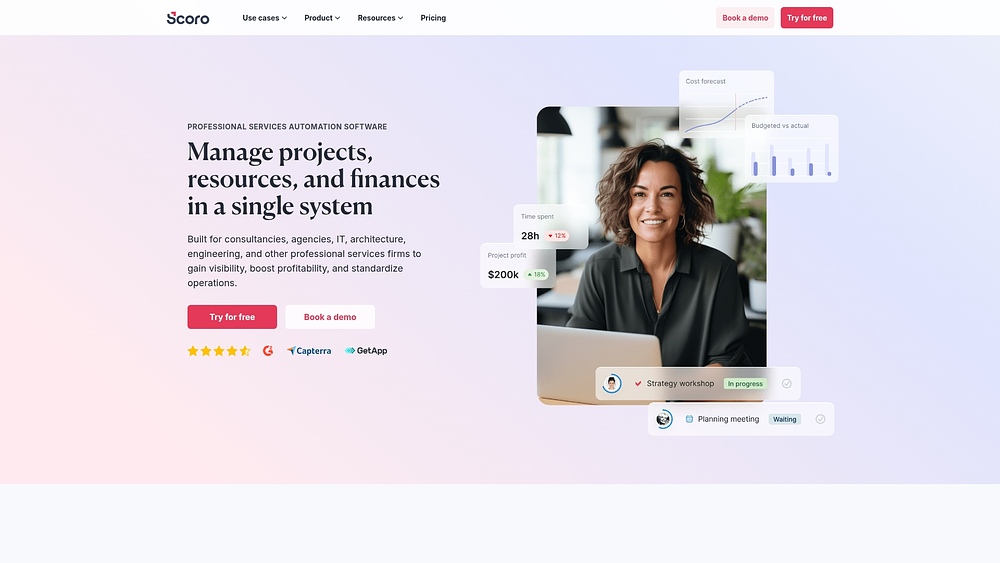
Scoro combines project delivery with financial operations, creating an all-in-one business management platform. It suits professional services and agencies that require quote-to-cash workflows, revenue tracking, and operational visibility.
Use case:
Marketing teams and agencies seeking unified project work and financial management gain visibility into billing, margins, and profitability.
Key features:
- End-to-end quote-to-cash workflow: integrated invoicing and revenue recognition.
- Resource planning: utilization forecasting and capacity management.
- Real-time financial tracking: budgets, margins, and profitability reporting.
Pricing:
- Core: $19.90/user/month (annual) or $23.90/month (monthly)
- Growth: $32.90/user/month (annual) or $38.90/month (monthly)
- Performance: $49.90/user/month (annual) or $59.90/month (monthly)
- Enterprise: custom pricing
- Annual commitments save up to 16%, with a minimum of five seats required.
- ELI AI insights: paid add-on with limited prompts in higher tiers.
Considerations:
- Five-seat minimum may exclude smaller teams.
- Platform configuration requires careful onboarding to realize full value.
4. Screendragon
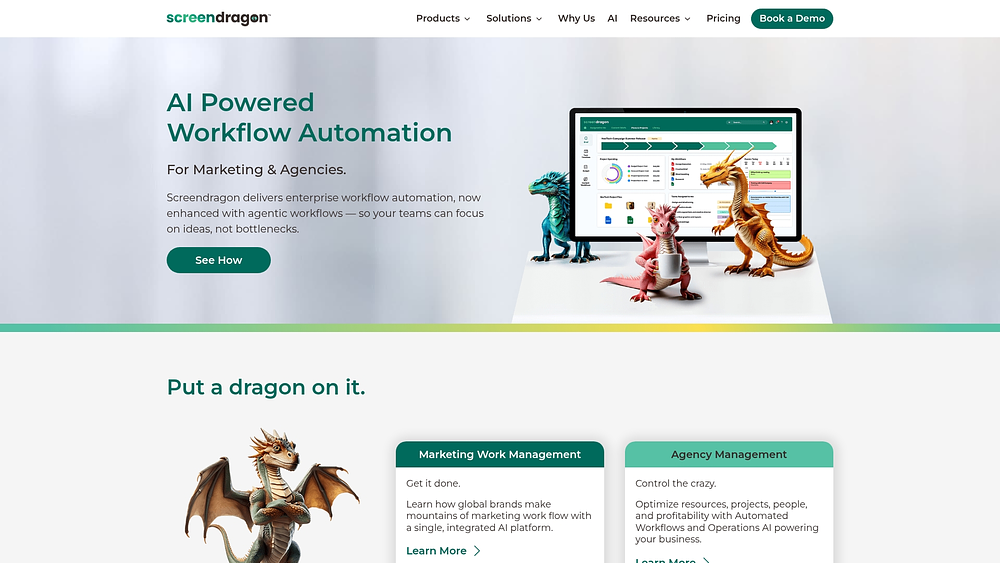
Orchestrating complex enterprise marketing operations is the core focus of Screendragon. The platform delivers AI-powered workflows built for agency management, brand governance, and compliance oversight. With experience supporting major global brands, Screendragon offers a purpose-built solution for organizations that need to manage external agency relationships while maintaining financial transparency.
Use case:
Enterprise marketing departments and agencies needing sophisticated workflow orchestration, brand compliance, and integrated financial governance across multi-regional campaigns.
Key features:
- AI agent suite: specialized agents for briefing, scoping, proofing, compliance, and resource allocation integrated into structured workflows.
- External agency management: comprehensive visibility into spend, budget controls, and ERP integrations for financial transparency.
- Marketing workflow automation: brand governance, content operations, approval processes, and localization workflows optimized for enterprise teams.
Pricing:
- Custom pricing: quote-based per-user monthly fee plus one-time implementation and training costs.
- Minimum deployment: designed for organizations with 30+ users.
- Enterprise focus: pricing discussions available after submitting company details and requirements.
Considerations:
- Learning curve: workflow complexity may require substantial onboarding for teams moving from simpler project management platforms.
- Quote-only pricing: implementation fees and custom quotes may reduce transparency compared to self-serve alternatives, reflecting the platform’s enterprise-grade customization.
5. Adobe Workfront
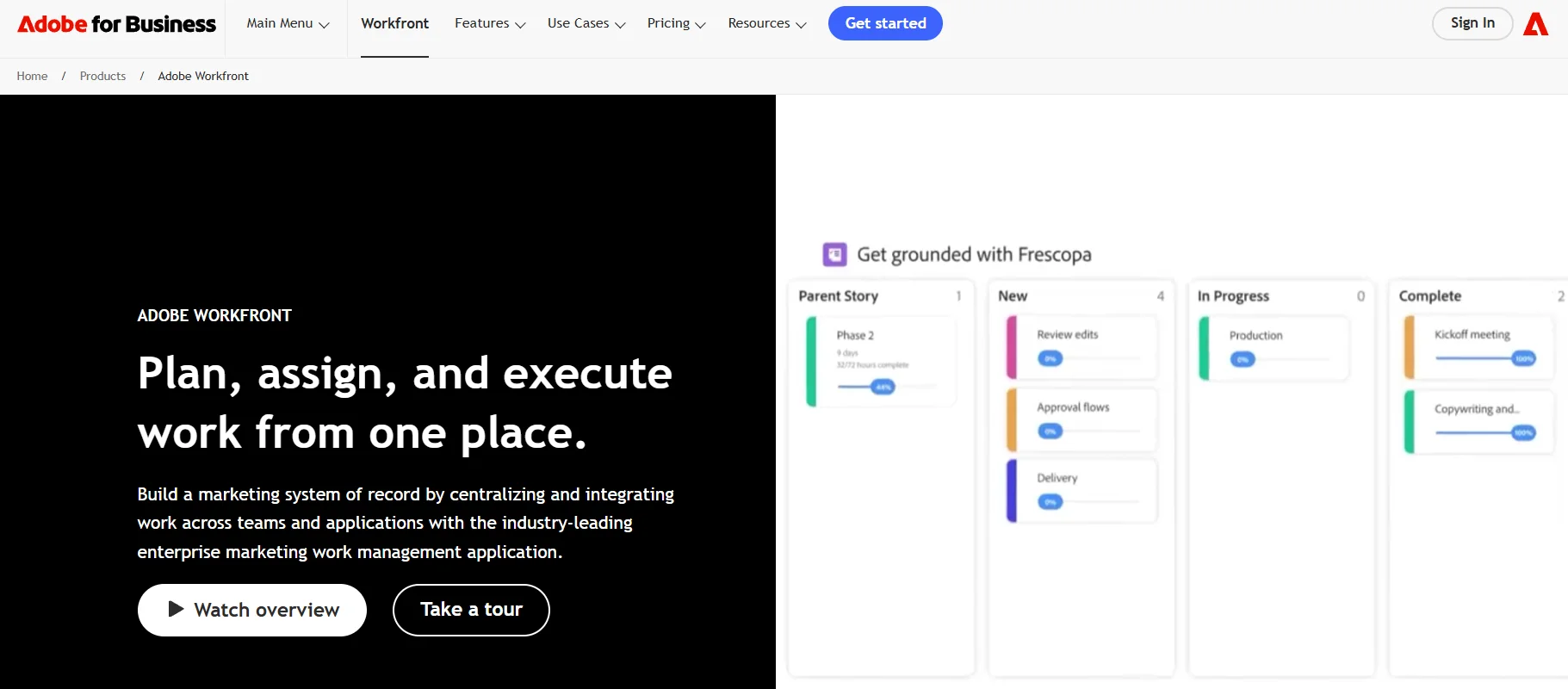
Deeply connected to Adobe Creative Cloud, Workfront provides enterprise work management for marketing operations. The platform links strategic planning with creative execution, allowing organizations to streamline workflows and connect creative production directly to project management.
Use case:
Enterprise marketing teams relying on Adobe Creative Suite benefit from seamless workflow integration between creative production and project management.
Key features:
- Content supply chain integration: native connections to Adobe Experience Manager Assets and Frame.io synchronize assets, metadata, and approvals across workflows.
- Marketing system of record: the Planning module links strategic briefs and campaigns to execution with AI-assisted record creation.
- Enterprise automation: templates, blueprints, and multi-stage approval workflows reduce manual handoffs and accelerate delivery.
Pricing:
- Select, Prime, Ultimate: quote-only pricing with custom enterprise packages.
- Add-ons: separate licensing for Planning, Fusion integrations, Data Connect, and Scenario Planner.
- Enterprise options: HIPAA-ready packaging and Bring Your Own Key (BYOK) encryption available.
Considerations:
- Implementation complexity: typical of enterprise-focused platforms with a steep learning curve.
- Cost transparency: quote-only pricing and multiple add-ons may increase total cost compared with platforms offering clear pricing models.
Compare: Workfront alternatives
6. Float
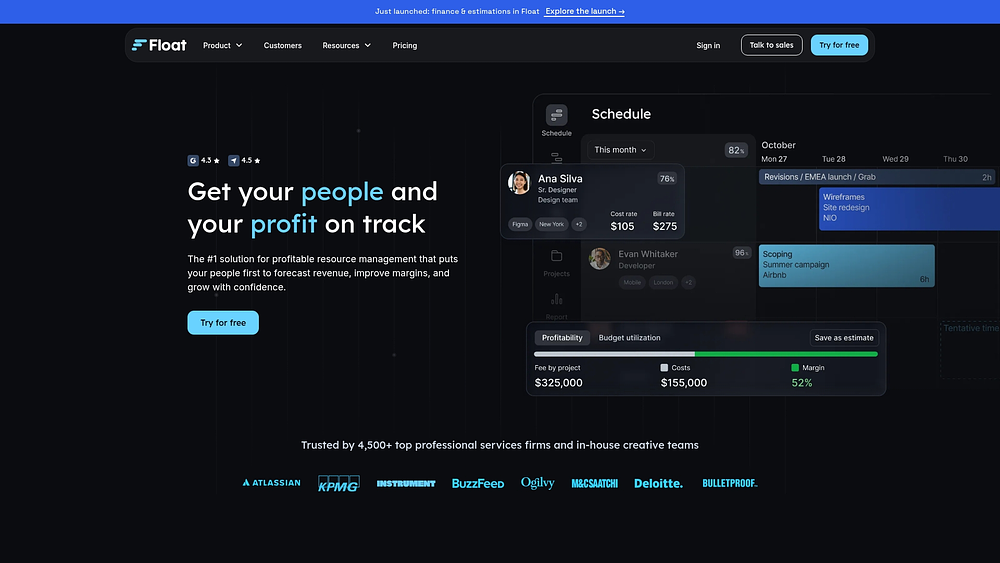
Float specializes in visual resource scheduling, enabling professional services teams to manage capacity and prevent burnout. Its intuitive drag-and-drop interface supports precise workload management, helping agencies and consultancies balance multiple client projects efficiently.
Use case:
Marketing teams and agencies that prioritize resource management and require real-time visibility into team capacity benefit most from Float.
Key features:
- Visual scheduling: drag-and-drop allocations by hours or percentage.
- Real-time capacity tracking: integrates time-off and monitors availability.
- Pre-filled timesheets: sync directly from scheduled allocations to streamline tracking.
Pricing:
- Starter: $7/month per scheduled person (annual billing).
- Pro: $12/month per scheduled person (annual billing).
- Enterprise: custom pricing with tailored commercial terms.
- Trial: 30-day free trial for all plans.
- Guests: unlimited guest seats at no additional cost.
Considerations:
- Mobile functionality: limited advanced features with read-only offline access.
- Reporting: customization options may not meet complex analytics needs for large marketing operations.
7. Bonsai Agency Software
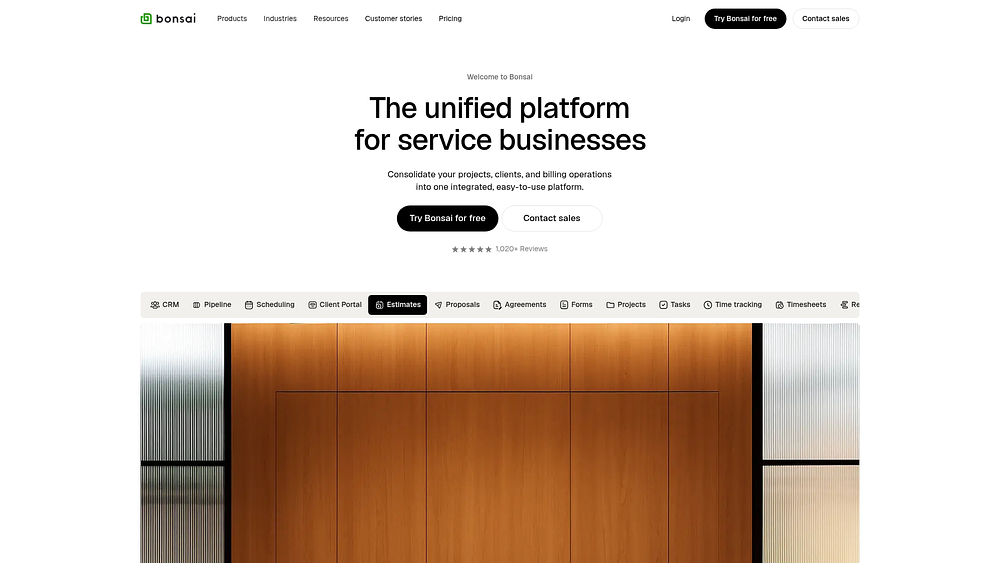
Bonsai Agency Software unifies client management, project execution, and billing for freelancers and small agencies. By consolidating CRM, project management, time tracking, and invoicing, the platform streamlines the entire client lifecycle from lead to payment.
Use case:
Freelancers and small agencies managing client contracts, project delivery, and invoicing benefit from a single platform that consolidates business operations.
Key features:
- Project management views: List, Kanban, Calendar, and Gantt views with visual resource allocation and capacity planning.
- Integrated time tracking: automated invoice generation and live budget monitoring maintain project profitability.
- Client portal: white-labeled interface with automated workflows that trigger client actions such as form submissions and meeting scheduling.
Pricing:
- Basic: $9/month per user (annual billing).
- Essentials: $19/month per user (annual billing).
- Premium: $29/month per user (annual billing).
- Elite: $49/month per user (annual billing, three-seat minimum).
- Annual billing: up to four months free.
- Volume discounts: available for teams with 30+ users.
Considerations:
- Governance features: advanced permissions and timesheet locking restricted to higher tiers, limiting scalability.
- Payment fees: 2.9% + $0.30 per card transaction, 1% per ACH, which can increase costs for high-volume agencies.
Why marketing teams need specialized project management platforms
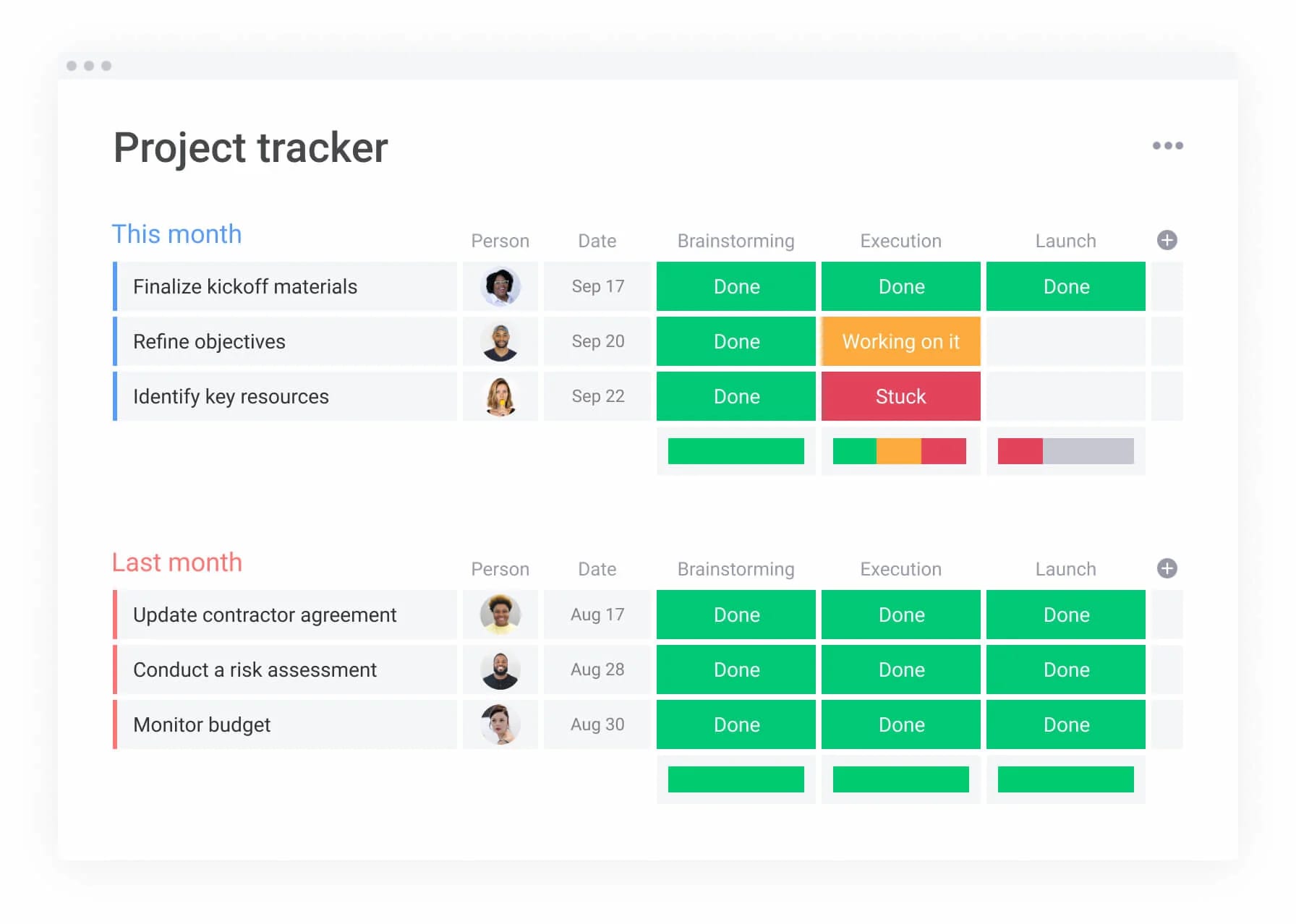
Generic platforms often cannot keep up with the pace and complexity of marketing work. Managing campaigns, creative production, and multi-channel execution through a one-size-fits-all platform creates bottlenecks and slows momentum. Marketing workflows differ from other departments, and forcing them into standard templates can overlook what makes these processes unique.
Consider this scenario: one campaign runs across email, social, and paid ads, each with its own timeline and approval chain. Generic tools require manually connecting these pieces, risking customer experience. Marketing teams benefit from platforms designed specifically to manage their workflows efficiently.
Manage multi-channel campaign complexity
Launching a new product while handling evergreen content, seasonal promotions, and daily social posts can quickly become chaotic without a unified overview. Conflicts in resources and missed deadlines are common when initiatives are not coordinated. Teams need visibility into how each channel, timeline, and dependency interacts to maintain a consistent brand presence.
Specialized platforms provide visual campaign roadmaps that consolidate all activities in one place. Centralizing initiatives and channels allows teams to identify overlaps, coordinate tactics, and ensure every component aligns to deliver meaningful impact.
Gain real-time resource visibility
Marketing teams often include strategists, designers, freelancers, and agency partners, making resource management critical. Without clear insight into who is available or overloaded, teams face bottlenecks and burnout.
Real-time resource visibility allows leaders to shift from reactive problem-solving to proactive management. Dashboards that display current assignments help balance workloads, forecast capacity, and make informed decisions that keep teams productive and motivated.
Streamline marketing-specific approvals
Handling parallel approval streams for creative reviews, legal checks, and executive sign-offs using email and spreadsheets leads to confusion. Version control issues and repeated status updates are frequent challenges in this setup.
Marketing-specific workflows provide clarity and structure. Platforms allow teams to create custom approval flows that automatically route deliverables and track progress. This ensures oversight, eliminates guesswork, and makes it easy to know where each asset stands.
Essential features of marketing project management software
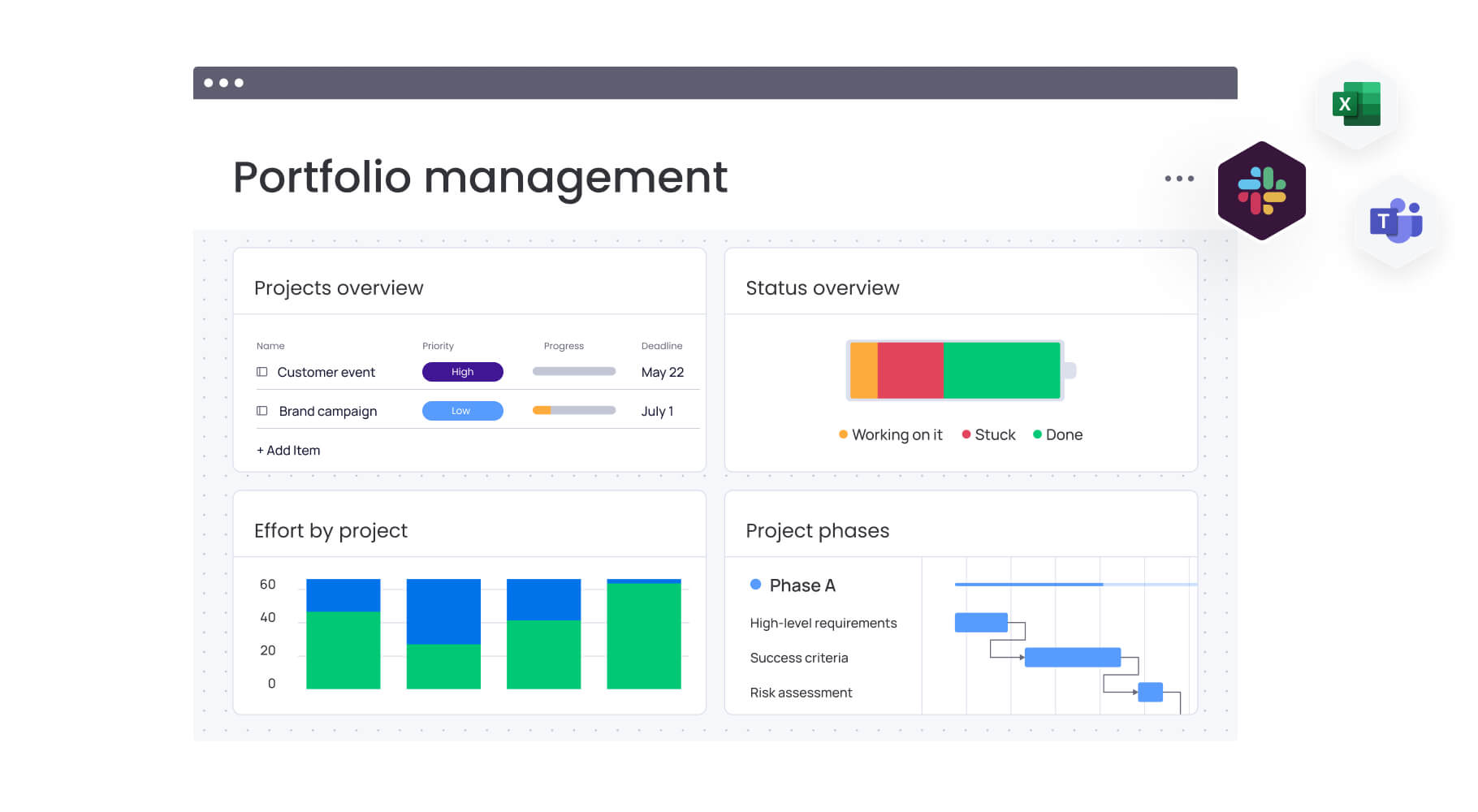
Marketing teams operate differently from other departments, blending creative sprints with strict deadlines and data-driven campaigns. Generic platforms rarely meet these needs. The ideal solution speaks the language of marketing, transforming scattered efforts into a coordinated engine of execution.
Campaign planning and content calendars
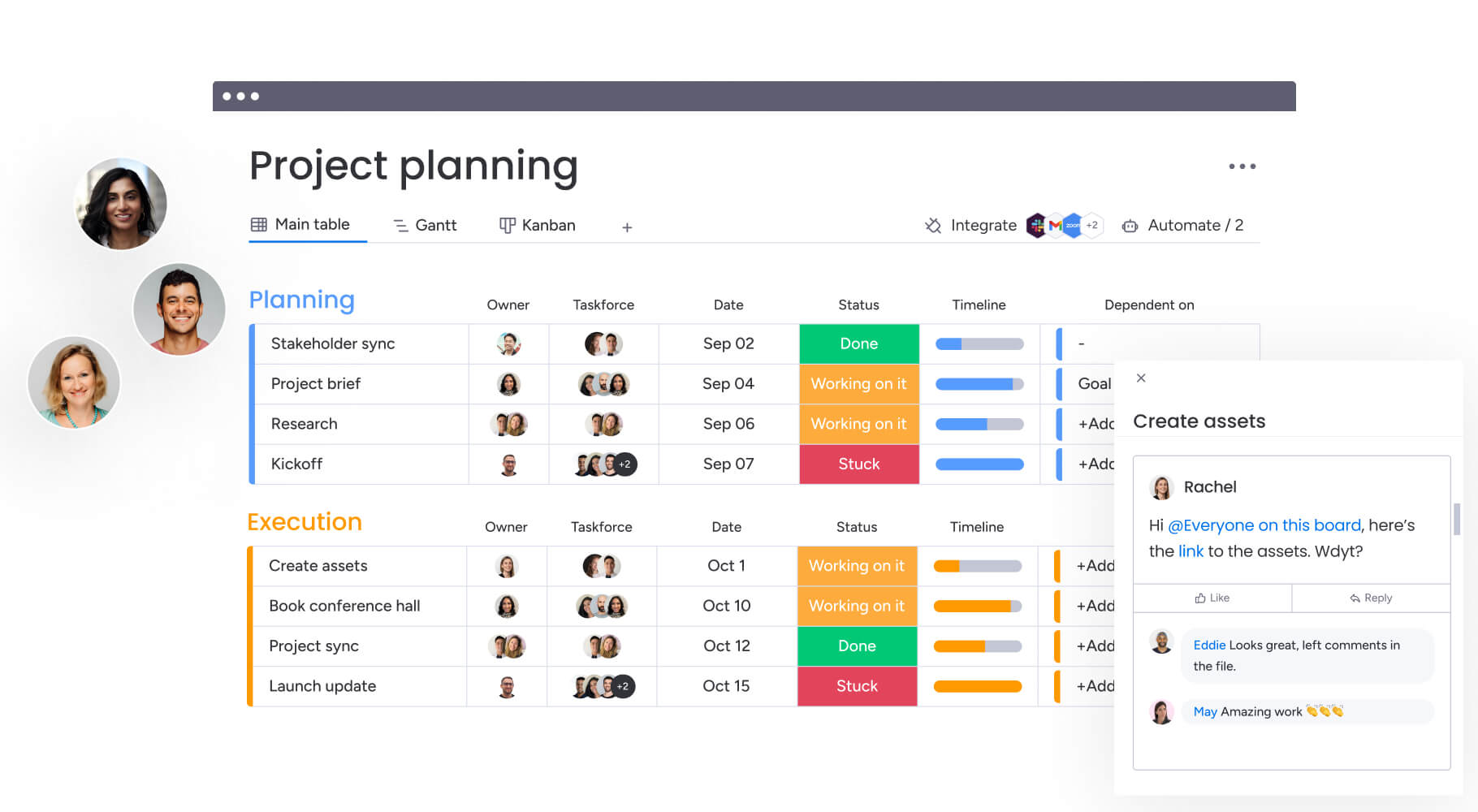
A strong idea requires execution to succeed. Dynamic calendars offer a single source of truth for launches, posts, and promotions, keeping content organized without constant check-ins.
- Visualize timelines: align blog posts, social content, and email sequences across channels.
- Coordinate schedules: maintain consistent messaging and avoid competing campaigns.
- Clarify ownership: assign assets clearly and connect tasks to campaign goals.
Creative asset management systems
Creative work needs a central location, not scattered drives. Built-in asset management ensures brand consistency and keeps teams efficient. Finding the right logo or file should never slow down progress.
- Centralize assets: organize everything from brand guidelines to campaign videos in one library.
- Control versions: maintain a history of iterations while ensuring teams use approved files.
- Find files instantly: locate assets quickly using smart tags and categories.
AI-powered workflow automation
Platforms that automate routine tasks help marketing teams reclaim valuable time. Automation shifts focus from operational drag to strategic work, enabling more creativity and campaign optimization.
- Automate assignments: match tasks to team members based on skills and availability.
- Generate content: draft emails, summarize documents, and create campaign briefs instantly.
- Identify risks: analyze project data to flag delays or budget concerns early.
Real-time analytics and dashboards
Reports should guide decisions rather than simply summarize past actions. Real-time dashboards replace manual reporting, giving leaders immediate insight into performance and enabling faster, informed action.
- Track campaign performance: monitor KPIs across active initiatives to evaluate impact.
- Manage budgets: oversee spending in real time to avoid overruns.
- Measure team productivity: understand workloads and keep projects on track.
Marketing technology stack integration
A project management platform must integrate with the marketing tech stack to provide operational control. Connecting CRM, design tools, and marketing automation consolidates data and supports collaboration.
- Align with sales: link campaigns to CRM to track influence on pipelines.
- Sync marketing automation: ensure email and nurture programs match strategic plans.
- Unify data: consolidate performance metrics across systems into one dashboard.
Effective marketing management requires a platform designed for the unique challenges of creative, multi-channel work. Modern platforms like monday.com centralize campaigns, resources, approvals, and analytics, creating a connected environment where strategy and execution stay aligned.
Try monday.comHow to select the right marketing project management software
Choosing the right marketing project management platform is not about checking off features—it is about finding a solution that enhances your team’s workflow. The goal is to remove friction rather than add complexity. A successful selection process starts with understanding your team’s specific challenges.
Mapping out your entire campaign process from ideation to reporting is essential. This ensures the platform you choose addresses real problems instead of offering features that remain unused.
Step 1: define your marketing workflow requirements
Understanding current workflows is the first step. Identifying where briefs stall, how approvals create bottlenecks, and which handoffs cause delays reveals what your new platform must solve.
Key areas to define include:
- Campaign management: determine if your team needs Gantt charts for complex launches or flexible Kanban boards for agile content creation.
- Creative operations: account for how creative reviews are handled, including guest access and version control when working with agencies.
- Approval cycles: document feedback collection and implementation processes to identify needs for clear routing and centralized communication.
Step 2: evaluate AI and automation capabilities
AI can do much more than send reminders. From the start, it should organize content, extract key insights, and flag potential issues before they escalate.
Look for platforms with intelligent workflow features—ones that summarize campaign performance, mine historical data for patterns, and suggest who should focus on specific tasks. This is where project management becomes strategic planning.
Step 3: assess cross-team collaboration features
Alignment across departments is critical for marketing success. Your platform should give sales visibility into campaigns, help product teams coordinate launches, and provide executives with updates without additional meetings.
Collaboration also extends to external partners. Consider whether the platform supports guest access or shared boards to replace cumbersome email threads. The aim is to reduce coordination overhead rather than create another communication channel.
Step 4: review data integration and consolidation
Marketing workflows connect to broader ecosystems, including CRMs and analytics tools. Disconnected platforms create data silos. Your solution should integrate with your existing tech stack to provide a single source of truth.
Prioritize platforms with native integrations to key systems. This ensures data stays current without custom API development. Modern platforms like monday.com link marketing activity to broader business outcomes, providing leaders with unified visibility while empowering teams to execute efficiently.
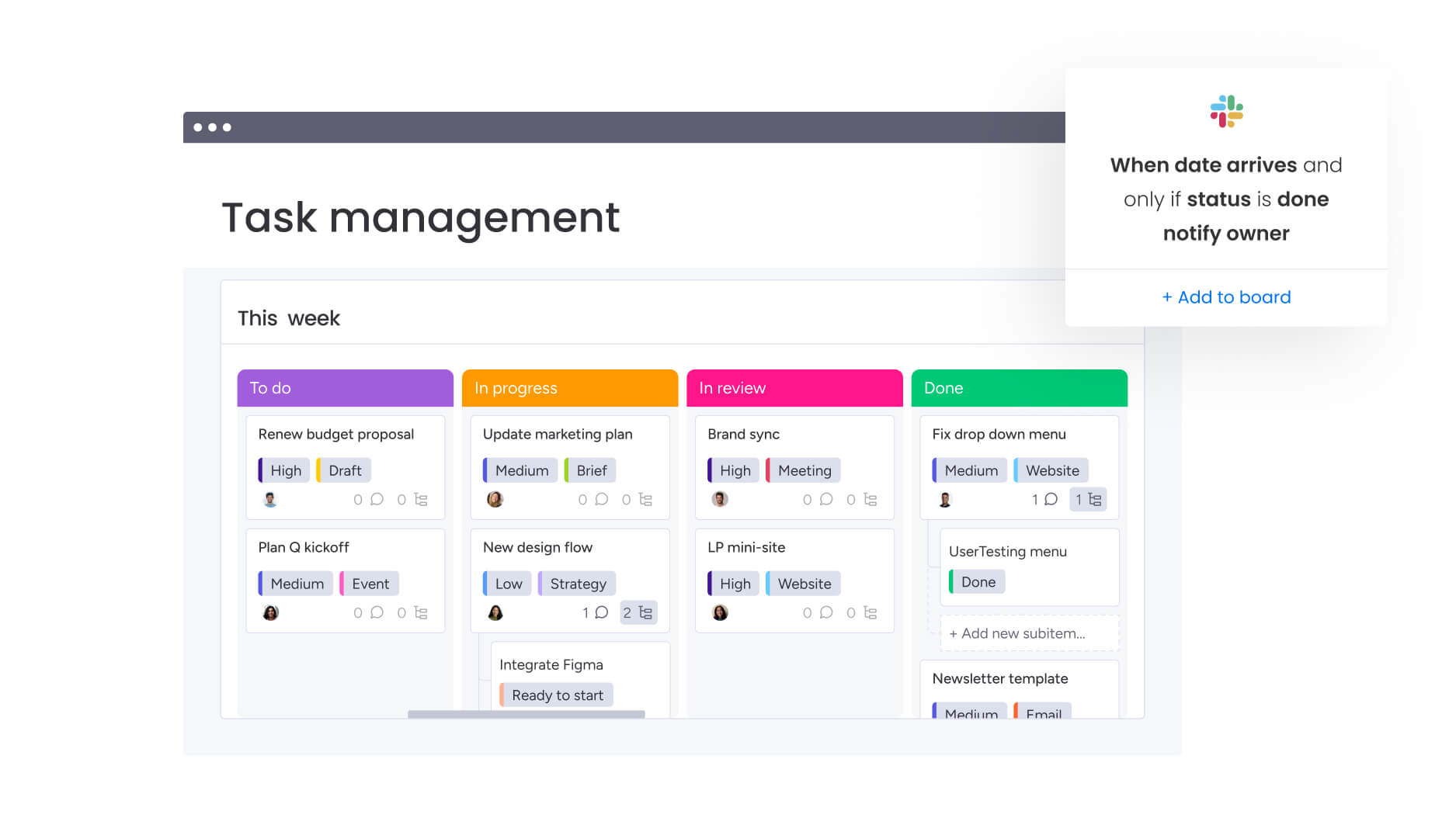
AI transforming marketing project management
AI gives marketing teams a real advantage by uncovering insights that may otherwise be missed and enabling teams to scale faster. It allows teams to plan proactively instead of reacting to daily fires.
By reducing operational overhead, teams can focus on creativity and growth. The right platform transforms complex data into actionable ideas.
Automate marketing workflows with AI
AI can plug directly into workflows without coding. Pre-built features manage common processes, organize assets, and analyze sentiment automatically.
These capabilities save time and deliver faster insights:
- Content categorization: AI analyzes and tags materials, keeping libraries organized automatically.
- Sentiment analysis: AI evaluates customer feedback and social comments to assess emotional tone.
- Document summarization: AI extracts critical insights from lengthy briefs, providing highlights instantly.
Get ahead of campaign outcomes with predictive analytics
Predictive analytics uses historical data to forecast outcomes, giving teams insights before launch. This enables proactive optimization instead of reactive adjustments.
Leaders can leverage these insights to:
- Predict performance: forecast results based on audience, channel mix, and budget.
- Identify risks: flag potential issues such as delays or budget overruns early.
- Get optimization recommendations: receive guidance on channel combinations and messaging.
Support your team with a digital workforce
Digital workers act as virtual team members, handling operational processes autonomously. They monitor progress and coordinate tasks, allowing marketers to focus on high-impact work.
AI agents ensure workflows run smoothly by tracking performance and identifying bottlenecks. On modern platforms like monday.com, tasks can be routed intelligently based on skills and availability, helping teams scale their impact.
Try monday.com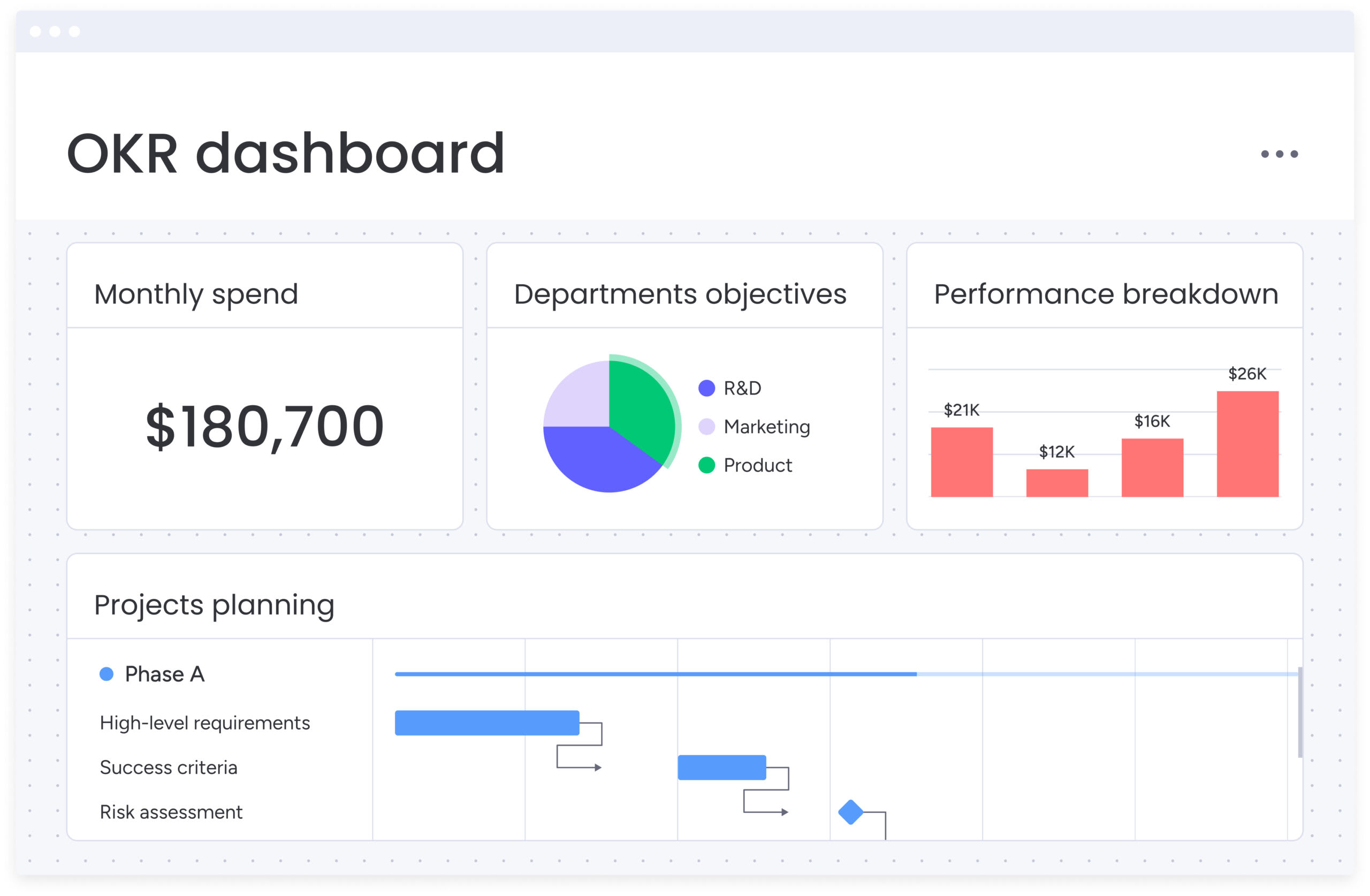
Marketing project management software pricing comparison
Do not focus solely on the monthly cost. Consider how expenses will change as your team grows, which features are restricted at higher tiers, and where additional charges may appear.
Starter prices may look attractive, but as your team expands, more automations or added team members can quickly increase costs. Evaluating total investment against value is critical. Here is how leading platforms approach pricing:
| Platform | Entry price | Mid-tier price | Enterprise price | Key pricing considerations |
|---|---|---|---|---|
| monday work management | $9/user/month | $19/user/month | Custom | AI features and advanced automations included in Pro tier, scales cleanly from teams to enterprise |
| Hive | Free or $5/user/month | $12/user/month | Custom | Proofing, dashboards, automations, and AI require paid add-ons, increasing total cost |
| Scoro | $19.90/user/month | $32.90/user/month | Custom | Five-seat minimum and financial depth require careful onboarding to realize ROI |
| Screendragon | Custom | Custom | Custom | Enterprise-only pricing with implementation fees and 30+ user focus |
| Adobe Workfront | Custom | Custom | Custom | Multiple add-ons (Planning, Fusion, Data Connect) significantly affect total cost |
| Float | $7/user/month | $12/user/month | Custom | Pricing is per scheduled person, not per full user; limited analytics depth |
| Bonsai Agency Software | $9/user/month | $29/user/month | $49/user/month | Advanced governance and permissions gated to higher tiers; transaction fees apply |
The real cost of a free platform
Free platforms often impose limits that reduce productivity. Restrictions on team size, storage, and automations can hinder campaign execution.
Capped user counts force teams to decide who gets access, fragmenting work and creating silos. Limited reporting and integration options often require manual effort, making free platforms less cost-effective in the long run.
Why enterprise platforms are a strategic investment
Enterprise teams need advanced security, dedicated support, and scalability. Enterprise pricing reflects the infrastructure required for high-volume operations.
Security features like advanced permissions and compliance certifications protect data and brand reputation. Dedicated support ensures teams maximize value and continually optimize workflows.
How to measure the ROI of your marketing platform
ROI comes from time saved, improved campaign performance, and strategic visibility. Catching issues early and optimizing using real-time data produces measurable results that outweigh costs.
Coordinating marketing operations on modern platforms like monday.com saves significant time for every team member. Even small improvements in campaign outcomes can justify the investment, creating a cycle of efficiency.
4 steps to a successful marketing software rollout
Rolling out marketing software is more than installing a platform: it’s about changing how your team works. Doing it right drives adoption, improves processes, and delivers measurable results.
Step 1: map your current marketing workflows
Charting current workflows helps identify bottlenecks and handoff failures. Understanding how work gets done now highlights areas where a new platform can drive the most impact.
Documenting operations across key areas creates a comprehensive view of your marketing processes:
- Campaign processes: trace campaigns from idea to launch, noting approval gates.
- Creative production: follow design requests to identify where revisions slow progress.
- Cross-team collaboration: map interactions with sales and product teams to uncover communication gaps.
Step 2: plan your data migration and integration
A clear data strategy ensures a smooth transition and maintains context across teams. Planning migration and integrations in advance prevents data loss and sets up a workspace for success.
Focus on these elements for a seamless rollout:
- Data migration: decide which assets and historical data to move.
- Priority integrations: identify systems that need to connect and sync.
- Workflow design: define board structures and templates for organized processes.
Step 3: execute a phased team rollout
Rolling out in phases builds adoption momentum. Launching first with a core group of power users creates advocates and allows for testing before broader implementation.
Expand the rollout function by function and provide role-specific training. This ensures team members understand the features relevant to their work and reduces overwhelm while stabilizing adoption.
Step 4: establish continuous optimization
The rollout marks the beginning of platform-driven improvement. Treat the system as a living workspace, refining processes based on feedback and usage insights.
Collect feedback to uncover pain points and surface underutilized features. Analytics on monday.com track workflow efficiency, allowing teams to turn insights into actionable improvements.
How monday.com transforms marketing operations
Marketing teams face tight deadlines and high expectations, making unified systems essential for competitive advantage. Platforms like monday.com connect campaign planning, creative workflows, and strategic goals, providing a single source of truth that drives business impact.
monday.com connects campaign planning, creative workflows, and strategic goals, providing a single source of truth that drives business impact.
Let AI handle the heavy lifting
AI capabilities reduce manual effort by automating categorization, summarizing documents, and extracting insights. Digital workers monitor progress and flag bottlenecks proactively, freeing teams to focus on strategy and creative execution.
Unify work across departments
Cross-departmental collaboration is critical for marketing success. Shared boards and automated updates keep marketing, sales, and product teams aligned. Real-time dashboards provide leaders with visibility into ongoing projects and performance.
Build scalable marketing automation
As marketing volume increases, manual coordination quickly becomes the bottleneck. Scalable automation ensures campaigns move forward consistently without adding operational overhead.
With monday.com, automation is built directly into campaign workflows. Intake requests can route work to the right owners automatically, approval steps trigger at the correct stages, and status changes update timelines and dashboards in real time. This keeps execution predictable even as teams manage more channels, regions, and stakeholders.
Because automations are tied to boards, templates, and ownership, teams scale without losing visibility or governance. Every campaign follows a proven structure, handoffs stay clear, and leaders gain confidence that work is progressing without constant check-ins.
Turn your marketing operations into a growth engine today
A robust digital workspace transforms marketing from fragmented tasks into a strategic engine for growth. It enables teams to execute confidently and achieve measurable results.
Teams can leverage the platform to:
- Build any workflow: design planning and coordination processes without coding.
- Automate with purpose: remove manual updates to focus on creative strategy.
- Unify cross-departmental work: connect initiatives across teams for synchronized execution.
Platforms like monday.com provide visibility and alignment, connecting strategy to execution and surfacing actionable insights for smarter decisions.
Try monday.comFrequently asked questions
What is the difference between marketing project management software and general platforms?
The difference between marketing project management software and general platforms is that specialized marketing platforms provide features for campaign planning, creative approvals, and martech integrations, which general platforms do not include.
Can marketing project management software integrate with my existing tech stack?
Yes, marketing project management software can integrate with your existing tech stack. Leading platforms connect with CRMs, analytics platforms, and other systems through native connections or APIs to ensure seamless data flow across tools.
How long does it take to implement marketing project management software?
Implementation timelines for marketing project management software can range from a few weeks for smaller teams to several months for enterprise organizations, depending on workflow complexity and the scope of data migration.
Do marketing teams need technical skills to use project management software?
No, marketing teams do not need technical skills for daily use, as a well-designed platform offers intuitive, no-code interfaces for core activities like campaign planning and reporting.
How does marketing project management software support distributed teams?
Marketing project management software supports distributed teams through a central, cloud-based platform that enables real-time collaboration, shared visibility, and asynchronous approvals from any location.
What security standards should marketing project management software meet?
A marketing project management platform should meet enterprise-grade security standards such as SOC 2 Type II, ISO 27001, and GDPR to protect sensitive campaign and customer data.
How does monday.com support marketing campaign management?
Modern platforms like monday.com support marketing campaigns with visual planning boards, content calendars, and powerful automations that connect strategy to execution, providing real-time visibility across all channels.
Can the AI features on monday.com help with marketing content?
Yes, AI capabilities on monday.com help with content by automating categorization and summarizing performance reports, freeing your team to focus on creative strategy and campaign optimization.

 Get started