

Projects stall when a particular problem blocks the flow of tasks from moving forward. There’s an issue, large or small. And you can’t progress the work until you’ve identified and resolved what that issue is.
Enter issue logs to manage the current realities demanding your attention. To help you document them, an issue log template captures, tracks, and resolves any type of problem breaking your projects today.
This guide explores how to build issue logs that fix problems instead of just writing them down. You’ll learn which fields matter most, how to build tracking workflows in 5 steps, and how work management platforms like monday.com pivot chaotic problem-solving into organized action.
Try monday.comKey takeaways
- Move from firefighting to fixing problems systematically: Build issue logs with defined owners, escalation paths, and regular reviews so scattered problems become actionable fixes.
- Track the data that helps you decide what to fix first: Include priority levels, business impact, assigned owners, and target dates so leadership knows where to send help.
- Upgrade from static spreadsheets to dynamic workflows: monday.com categorizes issues automatically, routes them to the right teams, and lets people collaborate right inside each issue.
- Know the difference between problems happening now and risks that might hit later: Use issue logs for problems you’re fixing today. Use risk registers for threats you’re trying to prevent tomorrow.
- Manage issues across multiple projects: Use consistent categories and shared dashboards to spot patterns across projects and move help from stable teams to those hitting critical blockers.
What is an issue log template?
An issue log template is a framework for tracking and fixing problems that are hitting your projects right now.
The job is simple: admit problems exist and commit to fixing them. This structure prevents the “bystander effect” where team members assume someone else is handling a critical blocker. When you collect data the same way every time, you can spot patterns and know where to focus your team’s energy.
How much time does your team waste digging through emails for project status updates? A good issue log captures every blocker, assigns an owner, and tracks progress until it’s fixed. This turns scattered complaints into an organized list of problems that need fixing.
Essential fields every issue log must include
Your issue log is only as good as the data you capture. Missing key details makes your log useless — leadership can’t make decisions or understand what’s really happening. Here’s what your issue log needs to keep your team accountable and moving toward fixes.
Core information fields
These fields give each issue a clear identity so anyone can find it, understand it, and reference it:
- Issue ID: A unique ID (like ISS-001) makes it easy to reference in meetings and reports
- Title and description: A specific headline plus a detailed explanation gives everyone the context they need.
- Date reported: Shows how long it takes to fix problems
- Reporter: Shows who found the issue in case you need more details
- Current status: Tracks where things stand (Open, In Progress, Blocked, Resolved)
Priority and impact assessment fields
Teams need clear criteria for deciding what to fix first. These fields zoom in on any problems threatening your business:
- Priority level: Standard rankings (High, Medium, Low) show what to tackle first
- Impact assessment: Explains what happens if you don’t fix it — budget overruns, missed deadlines, etc.
- Urgency rating: Shows how fast you need to act, which isn’t always the same as how important it is
- Business impact: Translates technical problems into business language stakeholders understand
Resolution and tracking fields
These fields move issues from discovery to done and keep people accountable:
- Assigned owner: One person responsible for getting it fixed
- Target resolution date: Creates a deadline and helps you catch delays early
- Actual resolution date: Records when it was fixed so you can learn from it later
- Actions taken: Captures what you did to fix it so you can reference it later

Issue log vs risk register: understanding the difference
Project management docs can confuse newcomers, but knowing the difference between issues and risks matters. Each document has a different job, as follows:
| Feature | Issue log | Risk register |
|---|---|---|
| Time horizon | Present (happening now) | Future (might happen) |
| Primary action | Resolve/fix | Mitigate/prevent |
| Focus | Obstacles and defects | Uncertainties and threats |
| Key question | How do we fix this? | What if this happens? |
| Status examples | Open, Resolved, Blocked | High Probability, Low Impact |
When to use an issue log
Use an issue log for problems that are happening right now. It’s how you react to problems in the moment.
Server crashes, team members quitting, damaged shipments — these are all issues you can’t ignore. Your job is to fix them fast and keep the project on track.
When to use a risk register
Risk registers help you plan for things that might happen. Things like vendor bankruptcy or weather delays go in the risk register.
Risks get scored on probability and impact. You manage risks by reducing the chance they’ll happen or planning how you’ll respond if they do. When risks become reality, they’re issues.
How to create an effective issue log in 5 steps
A functional issue log takes more than just opening a spreadsheet. You need smart data structure and team processes that people will use and that give you insights worth acting on. These 5 steps help you build a system that fixes problems instead of just listing them.
Step 1: Define issue categories and types
Start by creating standard categories for your issues. Standard categories make it easy to filter and report on issues later. If your project consistently faces “Vendor” issues, leadership can address the procurement strategy directly.
Make sure categories don’t overlap:
- Technical issues: Code, hardware, or system-related problems
- Process issues: Workflow bottlenecks or procedural gaps
- Resource issues: Staffing, budget, or equipment constraints
- External issues: Vendor, client, or regulatory challenges
Stick to 5-7 broad categories so you don’t overthink it but still get useful detail.
Step 2: Build your issue tracking framework
The platform you choose determines how accessible and useful your log will be. Small teams can start with shared spreadsheets, but growing organizations need platforms that support multiple users and send automated alerts.
Everyone should be able to see the log, but only authorized people should edit it. Look for:
- File attachment capabilities: Store relevant documents and screenshots
- Integration with communication tools: Connect to email and messaging platforms
- Report generation: Create automated status updates for leadership
- Custom field options: Adapt to your specific project requirements
Teams using monday.com can customize boards — remove what you don’t need, add what you do — so the interface helps instead of getting in the way.
Step 3: Assign ownership and accountability
Every issue requires a single owner who ensures progress is made and status gets updated, with critical resolution choices documented in a decision log for future reference. The owner might not do the technical work, but they’re responsible for making sure someone gets the job done.
Assign owners based on who has the authority and expertise — not just who’s free. Notify the owner as soon as you assign them and make sure they acknowledge it. When you assign ownership on monday.com, the platform sends instant notifications so the handoff is immediate and documented.
Try monday.comStep 4: Design smart escalation workflows
When issues sit too long, they turn into risks. Clear escalation paths make sure blockers reach the right managers before they derail projects.
Escalate issues when:
- Time thresholds: High Priority issues open for 48 hours
- Impact levels: Budget variance exceeding 10%
- Status changes: Issues marked as “Blocked” for more than 24 hours
Your protocol should say who gets escalations and what info to include. This removes hesitation about “bothering” leadership with critical issues.
Step 5: Schedule regular review cycles
Regular reviews keep your issue log useful. Build reviews into your existing meetings to keep data current:
- Daily standups: Focus on immediate blockers and status updates
- Weekly meetings: Review the full log for stalled items
- Monthly reviews: Analyze trends to identify systemic improvements
Regular reviews keep logs fresh and show the team that reporting issues actually leads to fixes.
Best practices for successful issue management
Getting people to use an issue log is just as hard as building one. Success means building a culture where people report problems early and fix them consistently. The following practices help teams develop habits that transform your issue log into something valuable instead of yet another checkbox exercise.
Embed issue tracking in daily workflows
Logging issues needs to be easy if you want people to do it properly. Integrate logs into daily standups and sprint planning, and maintain a decision log for key choices made during these sessions. If reporting issues is complicated, people will just send an email or Slack message instead.
Standardize naming and categorization
Searchable titles prevent duplicates and help you find problems fast. A format like “[Category] – [Component] – [Brief Description]” allows anyone to understand problems at a glance.
For example: “UX – Login Screen – Submit button unresponsive” immediately conveys the issue’s nature, affected system, and specific problem.
Track business value and impact
Document business impact (like “$5k cost avoided” or “2-day schedule recovery”) to justify resources spent on issue management to stakeholders. This transforms issue tracking from administrative overhead into a strategic capability.
Automate alerts and escalations
Automation keeps critical information flowing without manual intervention. Systems trigger alerts when deadlines approach or high-severity issues get logged, so human judgment applies where it matters most.
Set up notifications for status changes, approaching deadlines, and escalation triggers to keep all stakeholders informed without overwhelming them.
Analyze patterns for prevention
Regular log analysis reveals systemic weaknesses. If 40% of issues are “Requirements Gaps,” your upstream planning process needs revision. This turns logs into mechanisms for continuous organizational improvement.
Monthly pattern analysis identifies root causes and prevents recurring problems across future projects.
Foster team accountability
A “blameless” culture encourages reporting. Focus on fixing processes and problems, not punishing messengers. When leaders model this behavior, issue logs become support systems rather than surveillance tools.
Celebrate teams that highlight issues early and reward proactive problem identification alongside resolution efforts.
Managing issues across multiple projects
Scaling issue management from single teams to enterprise portfolios introduces complexity regarding visibility and resource contention. Portfolio managers need aggregate risk views across the organization, not just individual project health. This section explores strategies for maintaining visibility and control as your issue management scales across departments and initiatives.
Portfolio-level tracking strategies
Managing portfolios requires unified taxonomy. When Project A uses “Urgent” and Project B uses “P1,” aggregation becomes impossible. Establishing shared language for priority and category allows PMOs to triage issues enterprise-wide.
Resources can then be dynamically reallocated from stable projects to those facing high-priority issues. This management level often requires centralized platforms like monday.com that roll up data from individual project boards into master views.
Spotting cross-project patterns
Systemic problems often hide in individual log details. Centralized approaches reveal when multiple projects struggle with the same vendor, legacy code base, or regulatory hurdle.
Identifying these patterns allows leadership to solve root causes once through:
- Contract renegotiation: Address vendor performance issues affecting multiple projects
- Infrastructure upgrades: Eliminate technical debt causing widespread problems
- Process improvements: Fix workflow bottlenecks impacting multiple teams
This prevents every project team from applying individual fixes to the same underlying problem.
Building unified dashboards
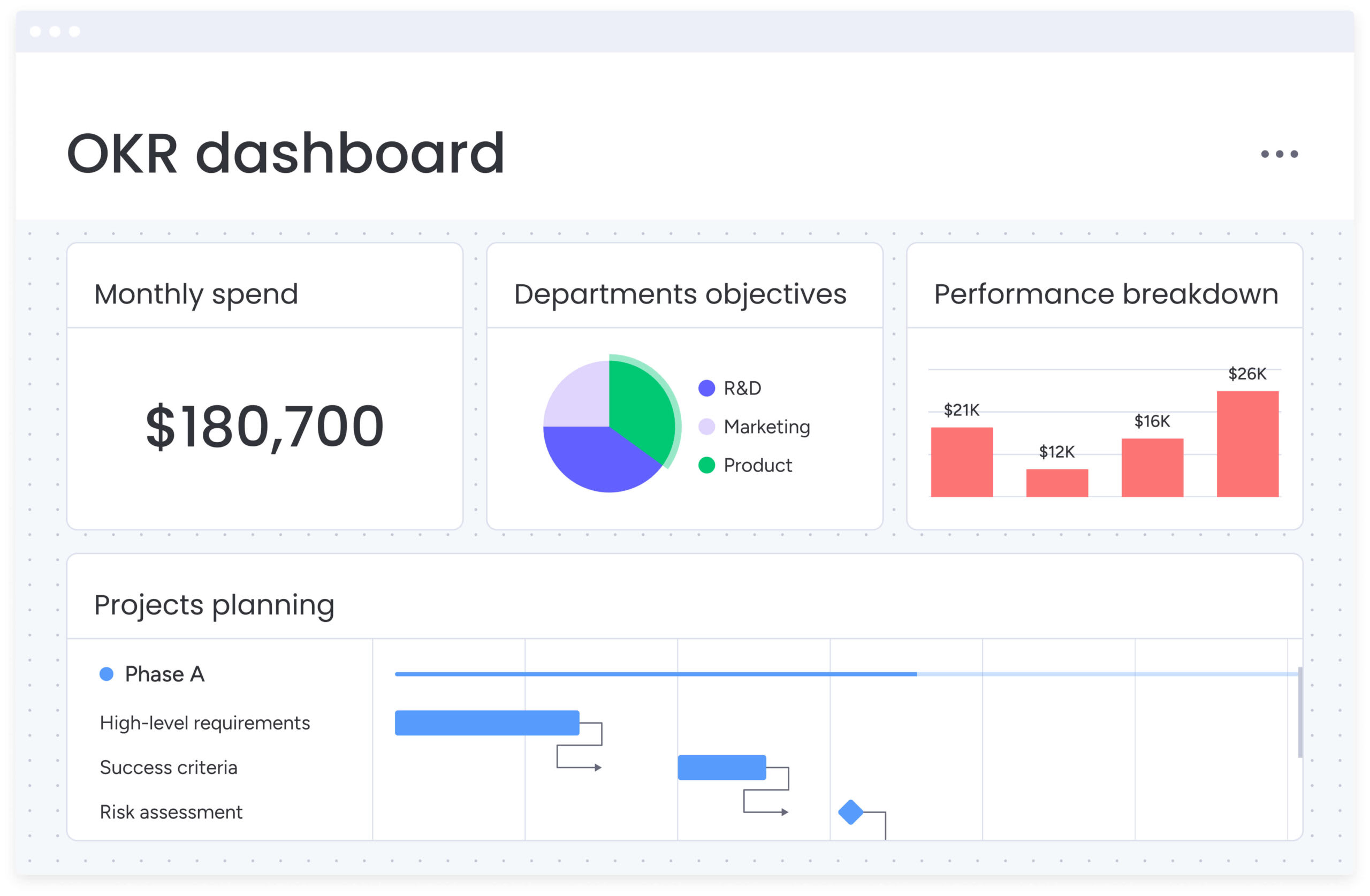
Executives need trend lines, not individual issue descriptions. Unified dashboards visualize metrics like “Average Time to Resolution,” “Open Issues by Department,” and “High Priority Volume over Time.”
These visualizations highlight hotspots instantly. Spikes in issues from specific regions or departments prompt targeted executive support. Teams using monday.com can drag and drop widgets to create custom views tracking resolution velocity, workload distribution, and issue aging.
Transform issue management with monday.com
Static templates fail because they’re disconnected from actual work. monday.com transforms issue logs from passive records into active, intelligent systems. Our collaborative platform unifies issue tracking with project execution, making problem resolution seamless with your workflow rather than an additional administrative burden.
Beyond spreadsheets to intelligent workflows
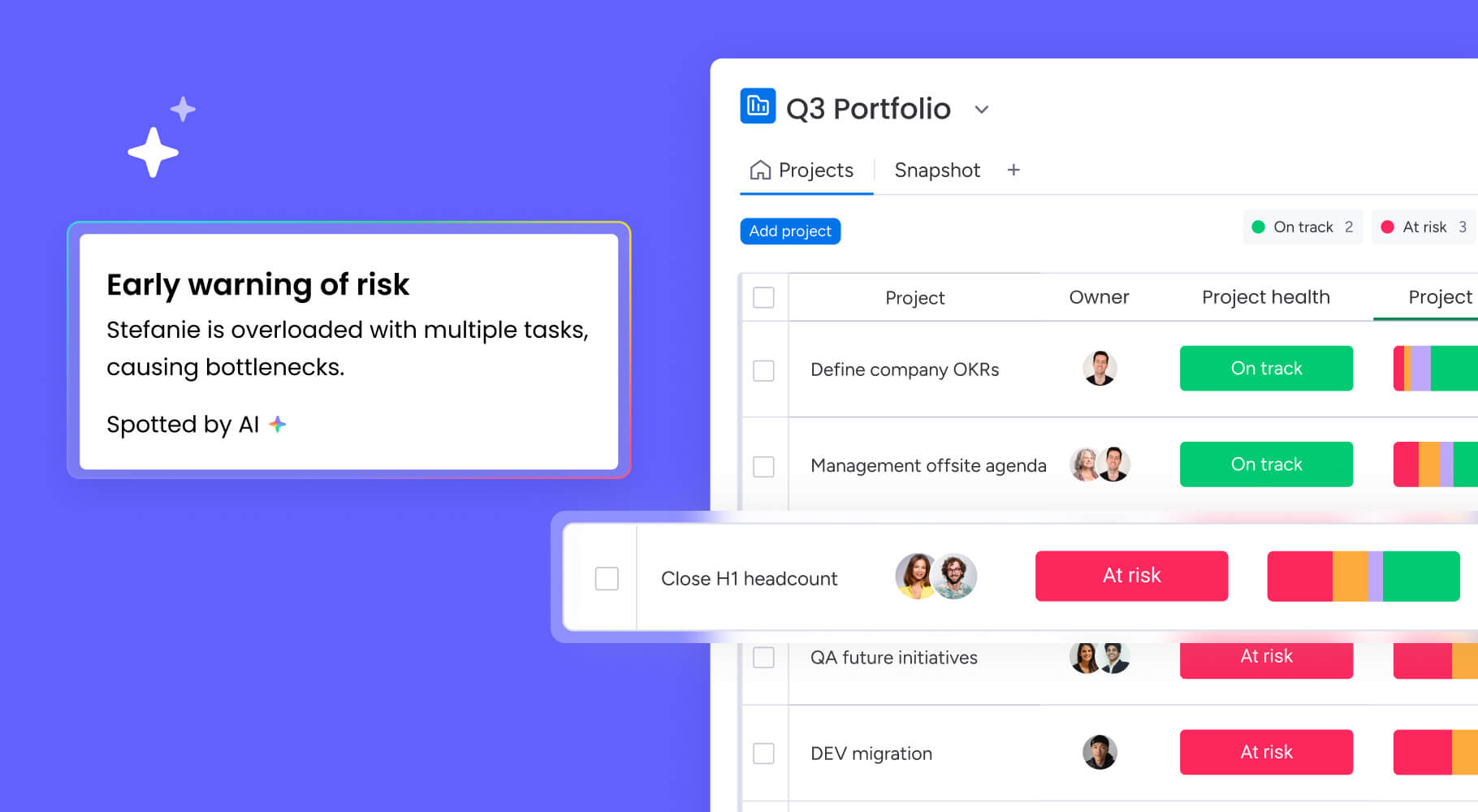
Spreadsheets are isolated data islands. monday.com replaces them with dynamic boards where issues become actionable items connected to timelines, dependencies, and resources.
Teams build custom workflows that automatically route issues to correct departments based on category. When issues are marked “Legal,” the board notifies the legal team and sets due dates, removing manual administrative burden and reducing latency.
AI-powered detection and categorization
Manual data entry creates errors and inconsistency. The platform’s AI capabilities streamline this process significantly:
- Assign labels with AI Block: Analyzes issue descriptions and automatically categorizes them by type, urgency, or sentiment, ensuring consistent reporting data
- Extract info from files capability: Pulls relevant details directly from attached incident reports or emails, populating logs instantly
- Portfolio Risk Insights: Scans across multiple projects, identifying potential risks and issues before escalation
- Agentic AI capabilities: Autonomous agents work in the background to monitor issue patterns, suggest resolutions based on historical data, and proactively flag dependencies that might turn into blockers
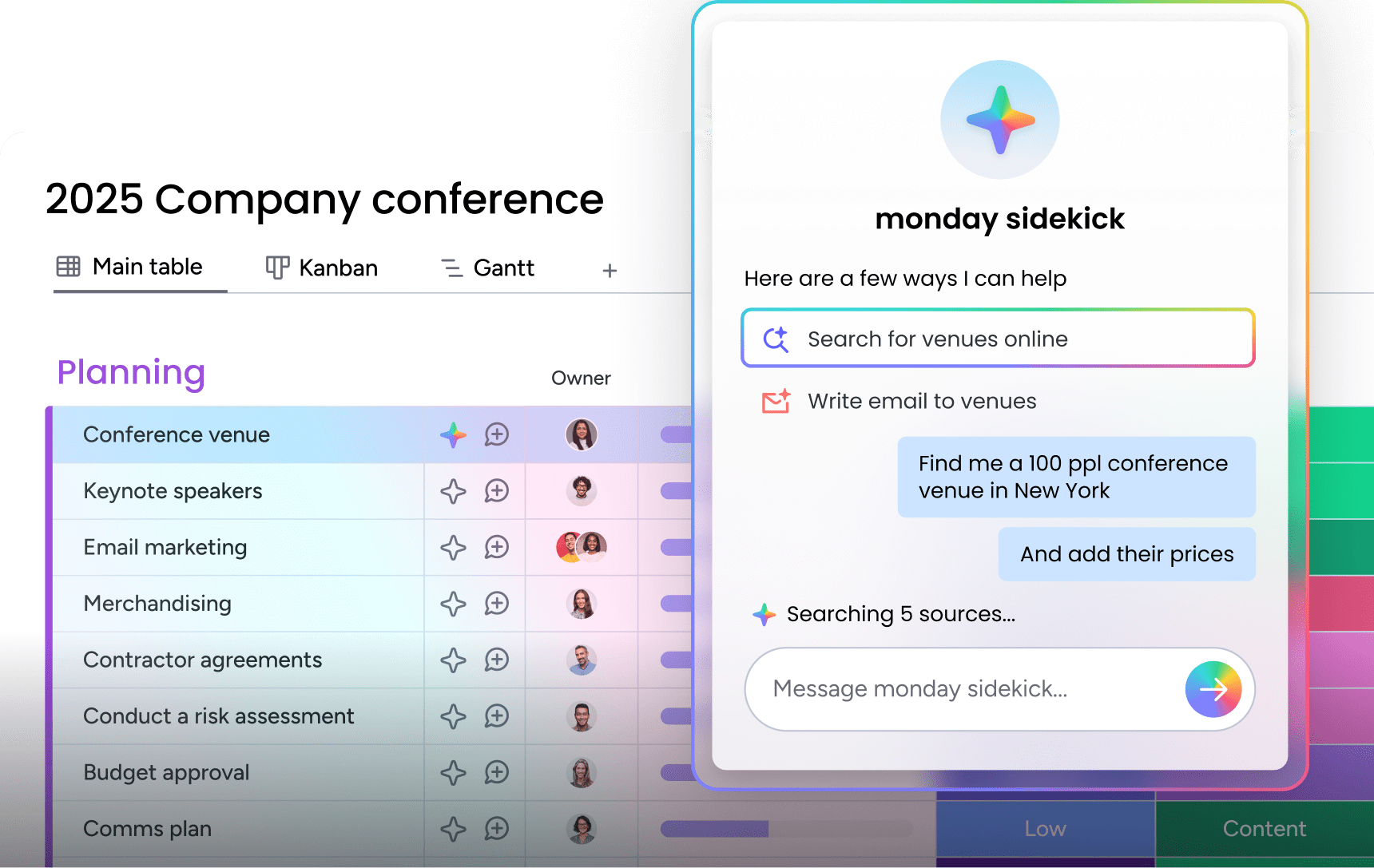
- monday sidekick: Your AI assistant answers questions about issue status, generates summaries of open blockers, and helps you find related problems across projects — all through simple conversation
This automation retains data quality while reducing the administrative overhead that often kills issue tracking adoption.
Real-time team collaboration
Resolution requires conversation. Instead of switching to email or chat apps, teams collaborate directly within issue items on the platform. Updates, files, and decisions get recorded in context, creating permanent audit trails that can be formalized in a decision log.
@mentions bring experts into conversations instantly, while board permissions allow external partners or clients to view relevant issues without accessing sensitive internal data.
Automated reporting and insights
Visibility drives action. The platform’s dashboards provide real-time insights into project health. Managers drag and drop widgets to create custom views tracking resolution velocity, workload distribution, and issue aging.
These automated reports eliminate manual status compilation, giving leadership instant access to data needed for resource allocation decisions.
Build resilient projects through proactive issue management
Effective issue management transforms how teams handle problems, moving from reactive firefighting to systematic resolution. When you implement structured logging with clear ownership, escalation paths, and regular review cycles, issues become manageable obstacles rather than project derailers.
The key is creating systems that make problem reporting effortless while givign every issue gets the attention it deserves. Teams that master this balance see faster resolution times, improved project predictability, and stronger stakeholder confidence.
Ready to transform scattered problem-solving into organized execution? Start building issue logs in monday.com that drive action for your business. .
Try monday.comFrequently asked questions
What is the difference between an issue log and a risk register?
The difference between an issue log and a risk register is their time horizon and purpose. An issue log tracks problems currently happening that require fixes, while a risk register documents potential future events that might happen and require mitigation strategies. Issues are certainties needing immediate action; risks are possibilities requiring preventive planning.
How often should teams update their issue logs?
Teams should update their issue logs daily for active issues and review the entire log weekly. Active issue statuses should be updated daily to reflect real-time progress. Comprehensive reviews of the full log should occur weekly to ensure nothing has stalled and to maintain data accuracy.
Who should have access to the project issue log?
All project team members require read access to maintain transparency. Edit permissions should be restricted to issue owners and project managers to prevent accidental data loss or unauthorized changes while maintaining accountability.
Can one issue log template work for multiple projects?
Yes, a standardized master template provides consistent baseline across organizations. Individual projects often customize specific category dropdowns or fields to match their unique technical or operational requirements while maintaining core structure.
How do you ensure team adoption of issue tracking?
Adoption increases when the process is frictionless and valuable. Integrating logs into existing workflows and demonstrating how it helps remove blockers for teams is more effective than mandating compliance through policy alone.
Should resolved issues stay in the issue log?
Resolved issues should remain in the log but be filtered out of active views. Preserving them provides critical historical data for post-project analysis and helps identify recurring systemic problems across multiple projects.
What information should be included when escalating an issue?
Issue escalations should include the original problem description, steps already taken to resolve it, business impact assessment, resources needed for resolution, and recommended timeline for action. This gives leadership complete context for decision-making.
How do you handle issues that span multiple departments?
Cross-departmental issues require a primary owner who coordinates resolution across teams. Use clear communication channels, shared documentation, and regular status updates to ensure all departments stay aligned on progress and next steps.

 Get started