


Every missed deadline starts the same way: someone updates a spreadsheet, forgets to tell the team, and three departments plan around outdated dates. An interactive calendar eliminates that gap by turning static schedules into shared, real-time coordination systems where every change is instantly visible.
Project teams today juggle overlapping timelines, distributed contributors, and constant shifts in priorities. Traditional calendars weren’t designed for this level of complexity. They display dates, but they don’t connect work, people, and decisions. Interactive calendars do, syncing schedules across platforms, automating dependency updates, and giving every stakeholder a single source of truth.
This guide covers what makes a calendar truly interactive, the features that matter most for project teams, and how to build one that fits your workflow. You’ll also see how monday AI Workspace brings calendar scheduling, AI-powered insights, and cross-team collaboration into one connected workspace.
Key takeaways
- Real-time collaboration drives efficiency: Multiple team members can edit, comment, and share calendar entries simultaneously, eliminating email chains and reducing coordination delays
- Automation reduces manual workload: Repetitive scheduling, dependency updates, and notifications can run automatically to prevent conflicts and free teams for strategic work
- AI-driven insights sharpen planning: Predictive analytics and intelligent scheduling suggestions help prevent resource overloading, optimize meeting times, and maintain balanced workloads across projects
- Flexible views support every decision: Timeline, workload, Gantt, multi-calendar overlay, and dashboard views let teams analyze schedules from different perspectives and manage complex workflows effectively
- Integration with monday AI Workspace creates unified workflows: Connecting interactive calendars to a platform like monday AI Workspace aligns project timelines, resources, and team activities seamlessly
What makes a calendar truly interactive for teams in 2026?

An interactive calendar is a dynamic collaboration platform where teams coordinate work in real time, moving beyond static scheduling to create a living workflow system. Unlike traditional calendars that simply display dates and appointments, interactive calendars automatically update, allow simultaneous editing by multiple stakeholders, and connect directly to your broader work management ecosystem.
These platforms bridge the gap between planning and execution. Every calendar entry becomes a collaborative workspace where context, files, and conversations live alongside scheduling information.
What separates a truly interactive calendar from a basic shared schedule? It comes down to three core capabilities that transform how teams tackle complex work across departments and time zones.
Real-time collaboration across departments
Multiple team members can simultaneously view, edit, and comment on calendar entries without creating version conflicts or duplicate work. When a marketing manager adjusts a campaign launch date, the design team sees the change instantly in their workflow view. The content team then receives automatic notifications about the timeline shift, eliminating the email chains and meeting cycles traditionally required to coordinate schedule changes across departments.
The collaborative layer extends beyond simple viewing permissions:
- Mention capabilities: Team members can tag colleagues directly within calendar entries
- File attachment: Attach relevant documents to specific dates
- Threaded conversations: Maintain discussions about scheduling decisions in context
A product launch calendar becomes a central coordination point where engineering, marketing, and sales teams align their activities without switching between multiple platforms or losing critical context. Research from the Harvard Business Review shows that teams with shared real-time visibility into schedules reduce coordination delays by up to 30%.
Dynamic updates that sync everywhere
Changes made in one view or system automatically propagate across all connected platforms and team workspaces. When a project manager extends a deadline in the main shared calendar, that adjustment flows to individual team calendars, executive dashboards, and any integrated external systems.
The synchronization preserves relationships between connected items:
- Dependency management: Moving a milestone date automatically adjusts dependent workflows
- Resource allocation updates: Changes trigger updates to resource allocation schedules
- Workflow automation: Calendar changes activate relevant workflow automations
Calendar views become dynamic lenses into the broader work management system, where scheduling, project management, and team collaboration exist as interconnected layers.
Smart automation beyond basic reminders
Automation in interactive calendars goes far beyond basic notifications. These systems analyze team behavior, workload distribution, and historical data to proactively suggest optimal scheduling decisions.
When a team member’s calendar shows overload, the system flags the conflict, suggests redistribution, and proposes alternative timelines based on capacity and project priorities. The platform also learns from past trends, highlighting patterns that could cause scheduling issues before they occur.
For example, if marketing campaigns typically require two weeks of design work but are scheduled for ten days, the system warns stakeholders about potential delays.
Benefits of using an interactive calendar
How many meetings could your team eliminate with a single, shared view of every deadline? Interactive calendars deliver measurable advantages that compound as teams scale. Research consistently shows that organizations with structured scheduling practices complete significantly more projects on time compared to teams that rely on ad hoc coordination. When everyone works from the same real-time calendar, miscommunication drops, deadline visibility increases, and teams spend less time in status meetings and more time executing.
Here’s what teams consistently gain when they move from static to interactive project management calendar systems:
- Fewer scheduling errors: Automatic dependency tracking and conflict detection catch overlaps before they derail timelines
- Improved cross-team visibility: Every stakeholder sees the same real-time view, eliminating the “I didn’t know about that change” problem
- Faster decision-making: With live data and multiple views, managers can evaluate trade-offs and reallocate resources in minutes instead of days
- Optimized resource allocation: Workload indicators prevent overallocation by surfacing capacity gaps across the team
- A single source of truth: Calendars connected to workflows, documents, and communications keep everyone aligned without manual status updates
- Reduced meeting overhead: When schedules are transparent, teams spend less time in sync meetings and more time executing
Must-have features of interactive business calendars
What features should a project calendar have? The most effective interactive calendars solve real coordination headaches that teams face every day. The following capabilities represent the essential building blocks for any organization moving beyond basic scheduling toward true workflow coordination.
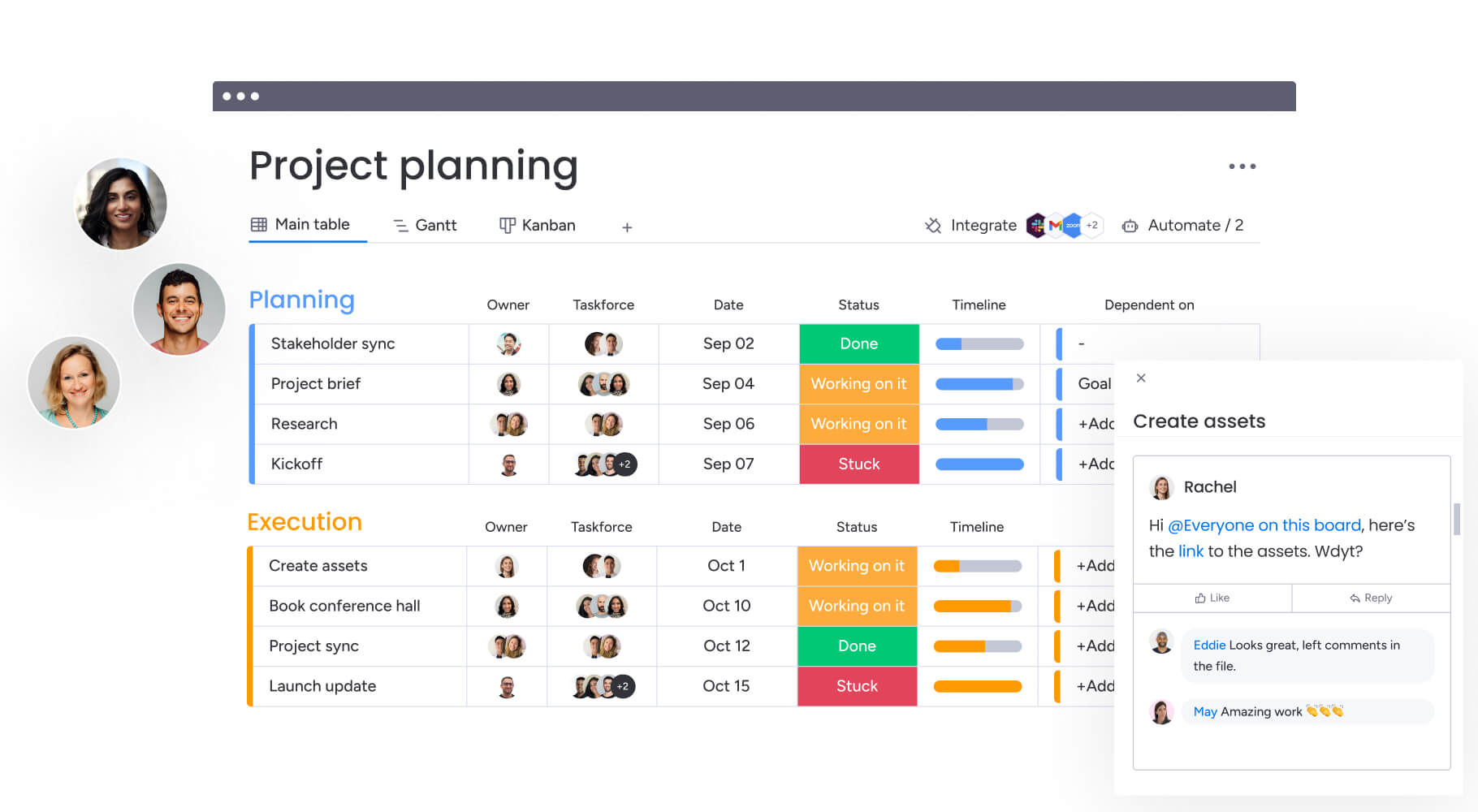
1. Drag-and-drop work scheduling
Teams can visually reorganize work by clicking and moving calendar entries to new dates or time slots. The system automatically updates all connected workflows, dependencies, and resource allocations. When a product manager drags a feature release from March 15th to March 22nd, the system instantly recalculates the entire project timeline, adjusts dependent QA testing schedules, and notifies affected stakeholders.
2. Visual workload management
Color-coded capacity indicators show at a glance which team members are overallocated, which have available capacity, and where resource bottlenecks threaten project timelines. A creative director reviewing the team calendar immediately sees that two designers are scheduled for 60 hours of work next week, while another has only 20 hours allocated. This visibility enables proactive rebalancing before deadlines slip.
3. Custom fields for project data
Teams can attach relevant business information directly to calendar entries beyond standard date and time fields. An operations team managing facility maintenance schedules can add equipment serial numbers, maintenance type categories, and vendor contact information directly to each scheduled service appointment.
4. Cross-platform mobile access
Team members can view, edit, and collaborate on calendar workflows from any device with full functionality. A field service technician can update appointment statuses, add notes about equipment conditions, and reschedule follow-up visits directly from their phone while on-site.
5. Integration APIs for your tech stack
Open API architecture allows the calendar system to connect with existing business applications and exchange data bi-directionally. A professional services firm connects its interactive calendar to its CRM system, accounting software, and communication platform, so client meetings scheduled in the calendar automatically create time tracking entries and billing records.
6. AI-powered scheduling suggestions
Machine learning algorithms analyze historical project data, team availability patterns, and workload trends to recommend optimal scheduling decisions. When planning a new marketing campaign, the system suggests launch dates that avoid periods when the creative team has historically been highly utilized.
How do these capabilities compare to what most teams currently use? The following table breaks it down:
| Capability | Interactive calendar platform | Traditional calendar app | Spreadsheet |
|---|---|---|---|
| Real-time collaboration | Native multi-user editing | View-only sharing | Manual version control |
| Automation | Visual workflow builders | Basic reminders | Formula-based |
| Integrations | Open APIs, 200+ connectors | Email and basic apps | Manual import/export |
| AI scheduling | Predictive conflict resolution | None | None |
| Mobile access | Full-featured app | Basic mobile view | Limited |
How to build your first interactive calendar online
Creating an effective interactive calendar workflow requires careful planning and configuration that aligns technology capabilities with actual business processes.
This step-by-step approach ensures your calendar becomes a true workflow coordination system rather than just another scheduling display. Each phase builds on the previous one to create a comprehensive solution.
Step 1: Select the right calendar platform
Choose your platform carefully. It’ll make or break how well your calendar workflow scales and performs over time. The right platform balances immediate functional needs with future growth requirements, integration capabilities with existing systems, and ease of use with advanced features.
| Evaluation dimension | Collaboration-first platforms (e.g., monday AI Work Platform) | Traditional calendar applications | Spreadsheet-based systems |
|---|---|---|---|
| Real-time collaboration | Native multi-user editing with conflict resolution | Limited to view-only sharing or sequential editing | Manual version control required |
| Integration ecosystem | Open APIs with pre-built connectors to major business applications | Primarily email and basic productivity apps | Manual data import/export only |
| Customization options | Flexible field types, views, and workflow configurations | Fixed calendar structure with minimal customization | Unlimited but requires manual formula building |
| Automation capabilities | Visual workflow builders with conditional logic | Basic reminders and recurring events | Formula-based automation requiring technical expertise |
Look for platforms that transform your calendar into a collaborative workspace rather than a static schedule.
Step 2: Map your workflow requirements
Before building, map out how work moves across your team, including both formal handoffs and informal check-ins. Identify all points where scheduling affects project delivery, resource allocation, or cross-department coordination.
For example, a marketing team planning a campaign calendar may need visibility into:
- Creative asset deadlines: When design work must be completed
- Content approval gates: Review and approval timelines
- Media buying windows: Optimal timing for ad placements
- Launch coordination: Cross-channel synchronization requirements
The calendar needs to show when the campaign launches and when each prerequisite must complete to keep the launch date achievable.
Step 3: Configure automation rules
Automation transforms your calendar from a static display into a workflow management system. Start with simple rules that address repetitive patterns, status updates, and conflict resolution.
Examples of automation you can set up right away:
- Status progression: When a status changes to “completed,” automatically move dependent items from “waiting” to “active” status
- Team notifications: Notify assigned team members when their work becomes available
- Timeline adjustments: Automatically adjust dependent deadlines when prerequisites shift
Step 4: Enable team collaboration features
Collaboration features transform the calendar from a coordination display into a communication platform. Configure commenting and mention capabilities so team members can discuss scheduling decisions directly within calendar entries.
Establish notification preferences that balance keeping team members informed with avoiding notification overload:
- Immediate alerts: For changes to directly assigned work
- Daily summaries: For broader project timeline shifts
- Weekly digests: For portfolio-level updates
A developer might want immediate alerts when their assigned work changes dates, but only daily summaries of broader project timeline shifts.
Five interactive calendar views that boost productivity
Different views provide different insights. Interactive calendar platforms offer multiple perspectives, helping teams see scheduling relationships and make actionable decisions.
1. Timeline view for project planning
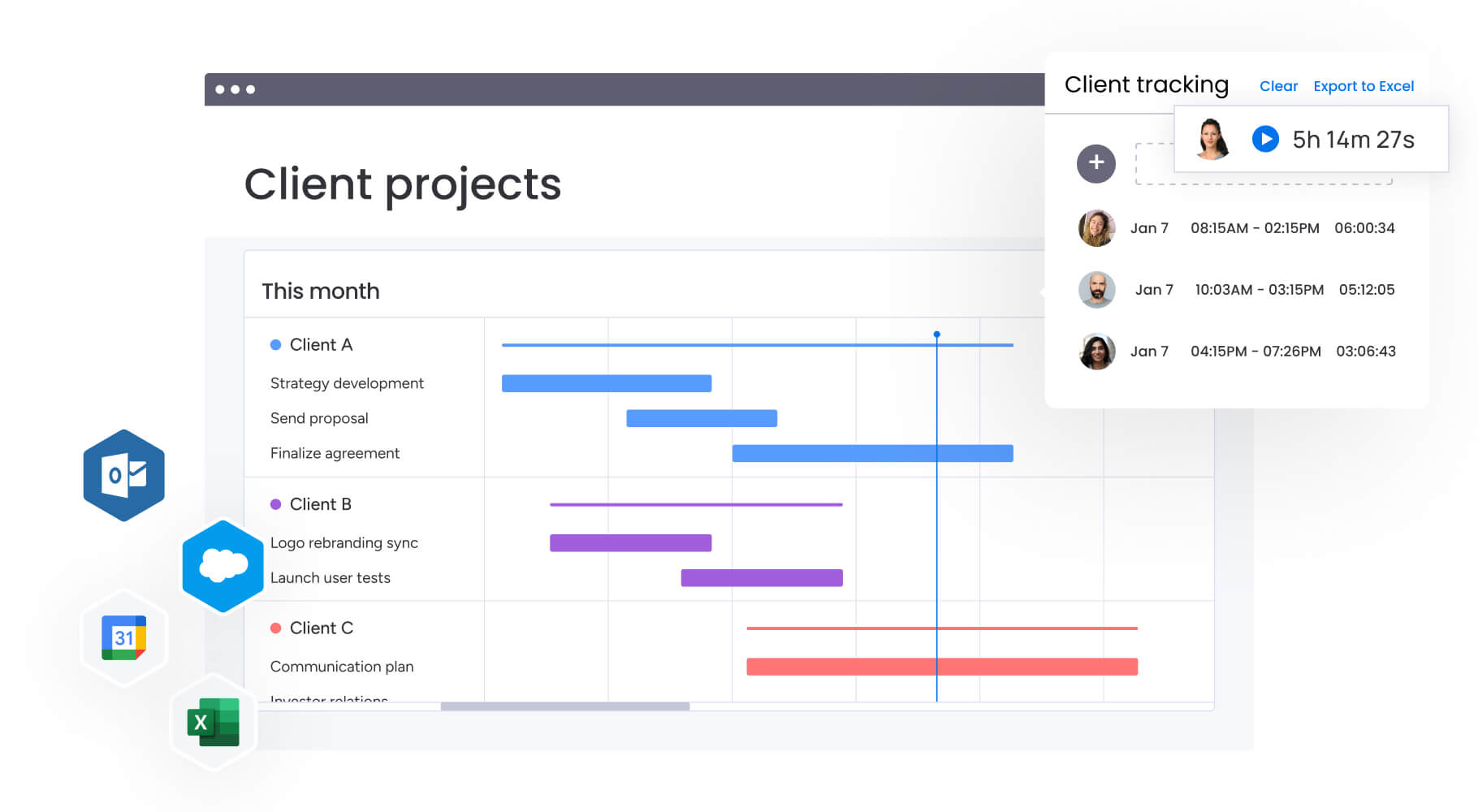
Timeline view displays work as horizontal bars spanning across dates, making project duration, sequence, and schedule density immediately visible. Project managers use this view to identify where multiple initiatives compete for the same resources during the same time period. The timeline perspective excels at revealing the relationship between strategic planning and tactical execution.
2. Workload view for resource management
Workload view aggregates all scheduled work by team member or resource, displaying capacity utilization as visual indicators that immediately flag overallocation and underutilization. A creative director reviewing the design team’s workload view sees that one designer has 45 hours scheduled next week while another has only 15 hours, a gap that’s invisible in a standard calendar. This view transforms resource management from reactive problem-solving to proactive capacity optimization.
3. Gantt charts for dependencies
Gantt charts show items as bars, with connecting lines indicating dependencies. Delays in prerequisites automatically reveal impacts on downstream work, enabling teams to identify critical paths and detect resource conflicts. This view supports strategic prioritization across connected workflows.
4. Multi-calendar overlays
Multi-calendar overlay view combines schedules from different teams, projects, or departments into a single unified display. A product launch coordinator overlays the engineering release calendar, marketing campaign calendar, and sales enablement calendar to identify where activities must synchronize.
5. Dashboard views for executives
Dashboard view aggregates calendar data into high-level metrics and status indicators. Instead of reviewing individual timelines, a CEO sees that 73% of Q1 initiatives are on track, 18% are at risk due to resource constraints, and 9% have already missed key milestones. Dashboards turn raw scheduling data into executive-ready insights for faster portfolio decisions.
What high-performing project calendars have in common
Is your team spending more time updating the calendar than acting on it? The most effective interactive calendars share a set of foundational practices. Five practices that separate high-performing calendar workflows from the rest:
- Connect the calendar to your work ecosystem: Calendars linked to project boards, communication platforms, and document repositories keep every scheduling decision flowing into (and from) your broader work system
- Use multiple views for different stakeholders: Assign timeline views for project managers, workload views for team leads, and Gantt views for executives. Each stakeholder gets the perspective they need without visual noise
- Automate status changes and dependency shifts: Even basic automations (like moving dependent items when a predecessor completes) dramatically improve accuracy and keep calendars current without manual effort
- Pair calendar views with capacity data: Checking team availability before committing to dates prevents overallocation. Always verify workload capacity alongside your scheduling decisions
- Establish naming conventions and permissions early: Consistent naming standards for projects, milestones, and recurring events keep calendars organized as your team scales
Industry-specific interactive calendar templates
Different industries face unique scheduling challenges shaped by regulatory requirements, operational constraints, and workflow patterns. Purpose-built calendar templates address these industry-specific needs by providing preconfigured fields, views, and automation rules.
Marketing campaign coordination
Marketing teams coordinate complex multi-channel campaigns where creative development, content production, media buying, and launch activities must synchronize precisely. A single missed handoff between creative and media buying can delay an entire launch, so the events calendar template has to enforce sequencing automatically.
A campaign calendar template includes fields for:
- Campaign objectives: Strategic goals and success metrics
- Target audiences: Demographic and behavioral targeting parameters
- Budget allocation: Spend distribution across channels and activities
- Channel mix: Platform-specific timing and content requirements
- Performance metrics: KPIs and measurement frameworks
HR training and onboarding schedules
Human resources teams manage complex scheduling for employee onboarding, training programs, performance review cycles, and compliance certifications. When a new cohort of 20 hires starts on the same day, an HR calendar template ensures every orientation session, system access request, and manager introduction lands on the right date without manual coordination.
An HR calendar template tracks:
- New hire start dates: Onboarding timeline coordination
- Training session schedules: Skills development programming
- Manager check-ins: Performance and development conversations
- Certification renewal deadlines: Compliance requirement tracking
Operations resource planning
Operations teams coordinate physical resources, equipment, facilities, and personnel across multiple locations and shifts. A missed maintenance window or double-booked facility can cascade into production delays, making the calendar the operational backbone of day-to-day execution.
An operations calendar template tracks:
- Equipment maintenance windows: Preventive maintenance scheduling
- Facility reservations: Space allocation and utilization
- Shift schedules: Personnel coverage and rotation planning
- Supply deliveries: Inventory management and logistics coordination
How monday AI Workspace transforms calendar workflows
When priorities shift (and they always do), how quickly can your schedule adapt? Static calendars and disconnected spreadsheets force teams into manual update cycles that consume hours every week. monday AI Workspace replaces that friction with a connected workspace where scheduling, collaboration, and execution live in one place.
Calendar and scheduling features
The platform’s calendar view lets teams see deadlines, milestones, and dependencies on a single board. Drag items to reschedule, and connected workflows update automatically. With 15+ board views, including Timeline, Gantt, Workload, and Kanban, every stakeholder accesses the perspective they need without duplicating data.
Dashboards aggregate calendar data from multiple boards into live, high-level views. Executives track portfolio health with drag-and-drop widgets while team leads drill into individual project timelines.
AI capabilities that set it apart
monday agents, including the Project Analyzer and Risk Analyzer, scan your boards around the clock, flagging potential scheduling risks by severity before they become delays. monday sidekick, the platform’s AI assistant, helps with scheduling suggestions, meeting preparation, and workload analysis directly within your workspace.
For teams that want even deeper customization, monday vibe lets you build fully custom calendar applications using simple prompts, with no coding required. Need a social media content calendar or a custom resource planner? Describe what you want, and vibe generates a working app connected to your existing boards.
With the monday MCP protocol, you can also connect external AI assistants like Claude, ChatGPT, and Copilot directly to your monday.com data for enhanced project reporting and smart scheduling. The protocol uses secure OAuth, respects your account permissions, and comes at no additional cost on any plan.
Integrations that connect your entire stack
The platform connects to Google Calendar, Outlook, Slack, Microsoft Teams, Jira, Salesforce, Gmail, and 200+ additional applications. Bi-directional sync ensures changes made in any connected system propagate everywhere, so your calendar view always reflects reality.
A CRM integration means sales meetings scheduled on monday.com automatically update customer records, while Slack notifications keep distributed teams aligned without tab-switching.
monday AI Workspace vs. traditional scheduling approaches
Can you use Google Calendar or a spreadsheet for project management? Technically, yes. But here’s how the experience compares:
| Capability | Interactive calendar platform | Traditional calendar app | Spreadsheet |
|---|---|---|---|
| Real-time collaboration | Native multi-user editing | View-only sharing | Manual version control |
| Automation | Visual workflow builders | Basic reminders | Formula-based |
| Integrations | Open APIs, 200+ connectors | Email and basic apps | Manual import/export |
| AI scheduling | Predictive conflict resolution | None | None |
| Mobile access | Full-featured app | Basic mobile view | Limited |
Start building your interactive calendar today
Moving from static scheduling to interactive calendar management multiplies your team’s productivity. Real-time visibility and automated dependency tracking eliminate the manual coordination that drags down workflows. AI-powered insights take it further by flagging conflicts before they cause delays.
Whether you’re managing a five-person marketing team or coordinating cross-departmental projects across an enterprise, the right interactive calendar transforms scattered schedules into a connected system where every update, dependency, and decision lives in one place.
monday AI Workspace gives you everything covered in this guide: flexible calendar views, intelligent scheduling, seamless integrations, and a workspace that connects planning to execution. Ready to see what your team can accomplish when your interactive calendar actually works as hard as you do?
The content in this article is provided for informational purposes only and, to the best of monday.com’s knowledge, the information provided in this article is accurate and up-to-date at the time of publication. That said, monday.com encourages readers to verify all information directly.
Frequently asked questions
What's the difference between interactive and static calendars?
The difference between an interactive and a static calendar comes down to collaboration and automation. Interactive calendars support real-time editing, automatic dependency updates, and integration with other platforms. Static calendars are read-only displays that require manual data entry for every change.
Can I use Google Calendar or a spreadsheet for project management?
You can use Google Calendar or spreadsheets for basic scheduling, but they lack automation, dependency tracking, workload views, and AI-powered insights that project teams need to manage complex, multi-stakeholder workflows.
What features should I look for in an interactive calendar platform?
An interactive calendar platform should include drag-and-drop scheduling, real-time collaboration, automated dependency management, multiple views (timeline, Gantt, workload), integration APIs, and AI-powered scheduling suggestions.
How does monday AI Workspace handle calendar scheduling?
monday AI Workspace handles calendar scheduling through 15+ board views, drag-and-drop rescheduling, automated dependency updates, AI-powered risk analysis via monday agents, and real-time collaboration across teams, all within a single connected workspace.
What integrations does monday AI Workspace support for calendars?
monday AI Workspace supports 200+ integrations for calendars, including Google Calendar, Outlook, Slack, Microsoft Teams, Jira, Salesforce, and Gmail, with bi-directional sync that keeps all connected systems up to date automatically.
What makes a project calendar effective?
An effective project calendar integrates with your broader work ecosystem, provides multiple views for different stakeholders, automates dependency updates, pairs scheduling with capacity data, and uses consistent naming conventions from day one.

 Get started