

Most teams struggle not with setting goals, but with assessing if they are making progress. As organizations grow, goals often drift away from day-to-day work. Leadership tracks objectives in decks and OKR documents, while execution lives in project tools, spreadsheets, and inboxes.
Goal tracking software closes that gap. The right platform connects strategic objectives directly to the work that drives them, updates progress automatically, and gives leaders real-time visibility into what is on track, what is at risk, and where to adjust.
Choosing a platform for your team requires knowledge. Therefore we’ve compared five goal-tracking platforms teams are using in 2026. You will learn how each tool approaches goal alignment, automation, AI-driven insights, and scalability and find out which platforms work best for enterprise teams, which are better suited for individual focus, and what to look for when evaluating ROI beyond basic checklists.
Key takeaways
- Connect strategy to execution in one workspace: tracking goals in isolation from daily work creates blind spots that turn ambitious targets into guesswork and outdated reports.
- Automate progress tracking to reclaim strategic time: manual updates drain hours that teams could spend driving results instead of chasing status reports across disconnected systems.
- Leverage AI to shift from reactive to proactive: intelligent platforms like monday work management surface risks before they derail objectives, giving leaders the foresight to act decisively rather than scramble after problems emerge.
- Align resources with your most important goals: strategy without capacity is just a wish; visibility into workload ensures critical objectives get the support they need to succeed.
- Choose platforms that scale with your ambition: a system that works for 50 people must adapt to support 500 without introducing friction, fragmentation, or a ceiling on what you can achieve.

Why do teams need goal tracking software beyond spreadsheets?
Strategic objectives are typically documented in presentation decks, while execution occurs across disparate systems. As leadership establishes ambitious targets, teams often execute workflows in isolated platforms, creating a fundamental disconnect between high-level strategy and operational execution.
The core challenge
Organizations lack visibility into whether daily activities genuinely advance business objectives. Without a unified system, several issues emerge:
- Inadequate scaling: spreadsheets and manual tracking methods cannot maintain pace with growth.
- Outdated reporting: progress measurement devolves into estimation as reports quickly become obsolete.
- Loss of clarity: teams lose sight of how their contributions align with strategic priorities.
- Administrative overhead: manual tracking displaces productive work with tedious status updates.
The strategic advantage
Goal tracking software establishes direct connections between daily operations and company objectives. This integration transforms how an organization functions:
- Automated milestones: milestones update automatically as work reaches completion, eliminating manual data entry.
- Focused impact: teams redirect their energy from status reporting to meaningful work.
- Real-time visibility: leadership gains immediate insight into organizational progress.
- Sustained alignment: accelerated decision-making ensures the entire company remains cross-functionally aligned.

“monday.com has been a life-changer. It gives us transparency, accountability, and a centralized place to manage projects across the globe".
Kendra Seier | Project Manager
“monday.com is the link that holds our business together — connecting our support office and stores with the visibility to move fast, stay consistent, and understand the impact on revenue.”
Duncan McHugh | Chief Operations Officer5 goal tracking platforms to turn ambition into results
Personal checklists are insufficient for driving company-wide impact. The most effective goal trackers do more than simply list objectives. They connect every workflow, project, and team to the company’s strategic priorities.
These platforms provide a centralized workspace where all goal-related information resides, ensuring alignment across the organization and making progress transparent to all stakeholders.
Pick the platform that fits how your team actually works. The following options represent distinct approaches to collaborative achievement, ranging from strict OKR frameworks to holistic work management ecosystems.
- monday work management: a unified ecosystem where strategy meets execution. Unlike standalone trackers, it integrates workflows, projects, and resources into one view, ensuring updates reflect real-time progress rather than manual spreadsheet data. With live dashboards, standardized templates, and 200+ integrations, it streamlines everything from high-level portfolio oversight to daily request and approval cycles.
- Asana Goals: a specialized feature for teams already utilizing Asana for project management. It establishes a direct link between company objectives and existing projects, allowing progress bars to update automatically as tasks are completed within a familiar interface.
- Weekdone: a dedicated platform built specifically for the OKR (Objectives and Key Results) methodology. It enforces a rigid framework of quarterly goal setting and weekly check-ins, supported by built-in coaching to help teams new to the OKR process maintain discipline.
- Lattice Goals: a people-centric solution that connects performance management with goal achievement. By integrating tracking directly into performance reviews, it creates a cascading structure that links individual growth and team results to overarching company targets.
- ClickUp Goals: a highly customizable platform that combines flexible tracking with project management. While it allows teams to define specialized goal types and link them to diverse workflows, its high degree of flexibility typically requires a more significant initial setup time to configure correctly.
1. monday work management
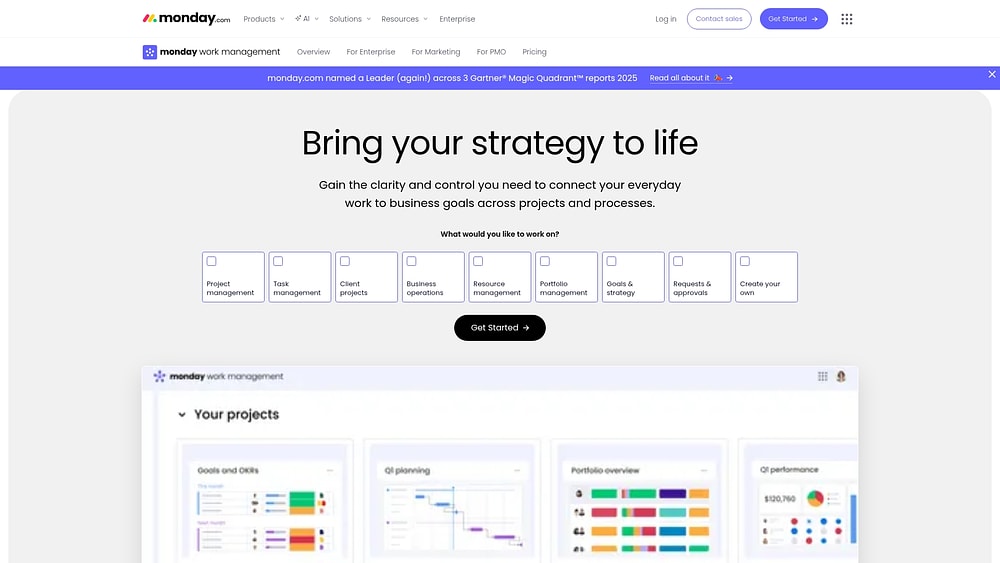
Goal tracking transforms from a passive activity into connected execution across the enterprise with monday work management. Rather than isolating objectives in a siloed system, teams plan and deliver work in the exact environment where goals are defined and monitored.
Executives see the full portfolio, managers get live risk alerts, and teams own their daily work, all in one unified workspace.
Example:
Observe how daily work connects to goals in real time. Strategic priorities remain aligned with team deliverables.
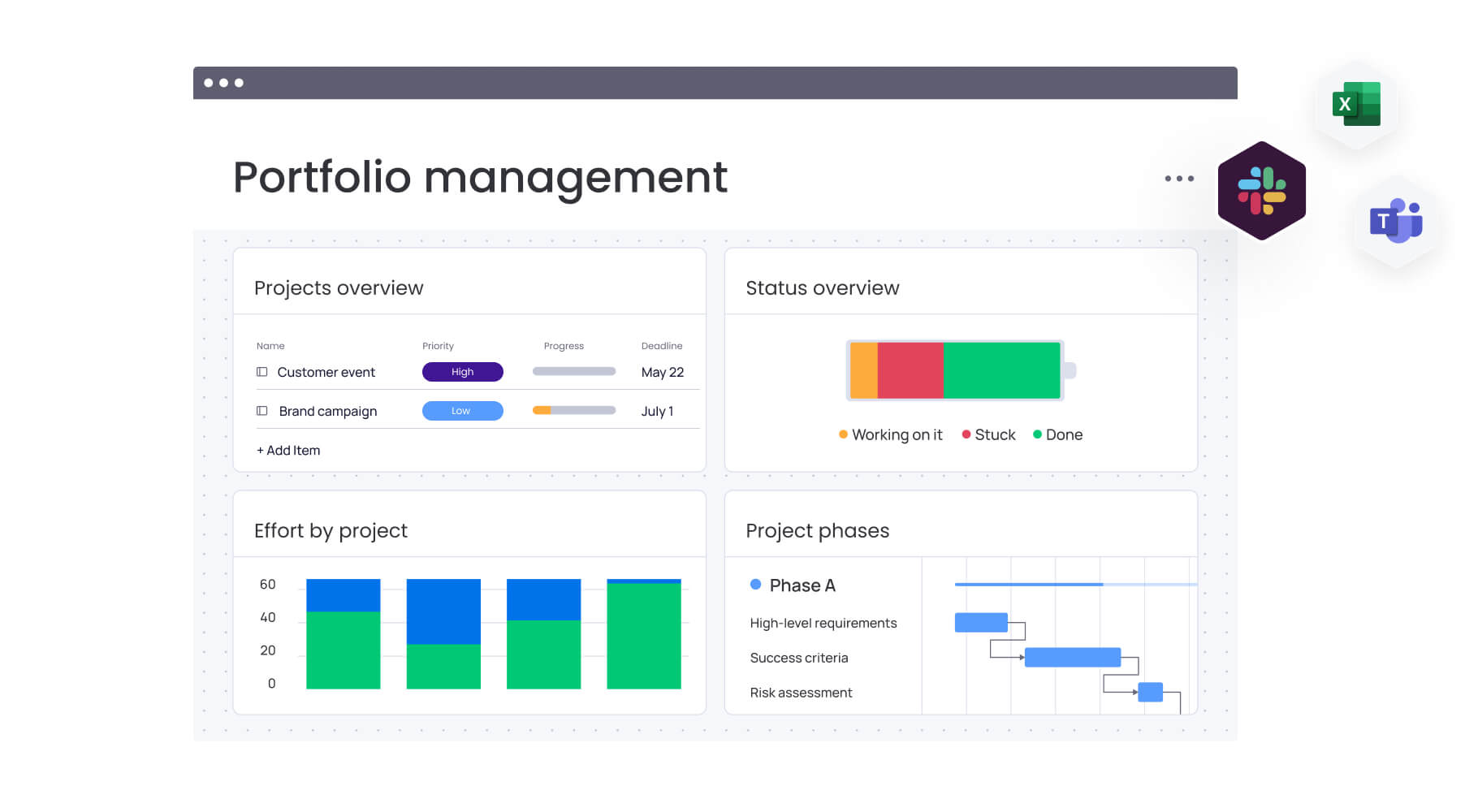
For example, a PMO can establish company-level Goals & OKRs and subsequently manage the supporting program work — including dependencies, milestones, and timelines — through comprehensive portfolio management.
Key features:
- Goals & OKRs: set high-level objectives and track how projects drive results.
- Portfolio management: link projects across the organization to optimize dependencies, manage resources, and identify risks early.
- Dashboards & reporting: build live reports stakeholders can actually use with real-time data for confident decision-making.
- Views for execution teams: plan and monitor delivery using diverse views, including Gantt, Kanban, Timeline, Calendar, and Workload.
- Requests & approvals: use forms to standardize requests and manage approvals so new work comes in with the context you need.
- monday workdocs: work on strategy and execution in one place by dropping live boards and dashboards right into your docs.
Pricing:
- Free: up to two seats with template-based goal tracking (excludes advanced widgets and portfolio features).
- Basic: $9/seat/month (billed annually) for small teams initiating goal management.
- Standard: $12/seat/month (billed annually) featuring enhanced dashboards and automation capabilities.
- Pro: $19/seat/month (billed annually) including advanced widgets and higher automation quotas.
- Enterprise: custom pricing offering 99.9% SLA, advanced security, and portfolio-level AI insights.
Advanced AI features:
- AI blocks in columns and automations: use ready-made AI actions (Categorize, Summarize, Extract, Detect sentiment, Translate) to handle reporting at scale.
- AI Automations (Pro and Enterprise): AI blocks cut manual updates and keep workflows moving.
- Digital Workforce (coming soon): digital Workers run 24/7. The Project Analyzer watches projects in real time, flags bottlenecks, and surfaces insights before problems hit.
Automations:
- Automations and templates: automate reminders and notifications. Launch standardized boards so execution stays consistent.
- Workflow consistency for leaders: ensure reporting consistency. Use the same automations across programs so updates follow the same rules everywhere.
Integrations:
- Popular integrations supported: Slack, Microsoft Teams, Jira Cloud, Outlook, Gmail, Google Drive, Zoom, Excel, and Salesforce.
- Open API: build custom integrations when the standard ones don’t cover your tech stack.
Goal tracker features:
- Portfolio-level visibility: see multiple programs and projects at once, track dependencies, and check health.
- Resource visibility: utilize Workload View to gauge team capacity and adjust assignments as priorities evolve.
- Timeline governance: monitor schedules and track milestones using Gantt charts, baseline comparisons, and critical path analysis.
Why it stands out:
- Strategy-to-execution in one workspace: goals & OKRs are linked to the exact workflows teams use for projects, processes, and requests.
- Adoption that sustains reporting: an engaging user interface ensures updates remain current, keeping leadership reporting trustworthy.
- Built for cross-department operating rhythm: standardize intake, approvals, delivery, and reporting across the business without complex coding.
- Recognized for collaborative work management: the platform is recognized as a Leader in the 2025 Gartner® Magic Quadrant™ for Collaborative Work Management and the 2025 Gartner® Magic Quadrant™ for Adaptive Project Management and Reporting.
2. Be Focused
By integrating the Pomodoro technique, Be Focused connects time investment directly to goal progress. It is particularly effective for individual contributors who need to maintain focus on personal objectives and measure productivity. With a user base exceeding five million across Apple devices, the app caters specifically to those requiring structured work sessions tied to tangible outcomes.
Example:
Individual contributors managing personal development goals or focus-intensive work who require time-tracking integrated with goal achievement.
Key features:
- Daily interval goals: track progress across customizable reporting periods (day, week, or custom timeframes).
- Work management: estimation accuracy tracking, tags, filters, and due dates for organized goal pursuit.
- Cross-device sync: seamless sync across iPhone, iPad, Mac, and Apple Watch, supported by native Shortcuts automation and distraction blocking.
Pricing:
- Free: basic timer functionality with ads.
- Monthly: $2.99/month.
- Yearly: $12.99/year with 7-day trial.
- Lifetime: $24.99 one-time purchase.
- Setapp: also available through Setapp subscription.
Considerations:
- Apple ecosystem only: restricted to iOS, iPadOS, macOS, and watchOS with no support for Android or Windows.
- Individual focus: best suited for personal use, as it does not include shared dashboards for strategic coordination across departments.
3. MindNode
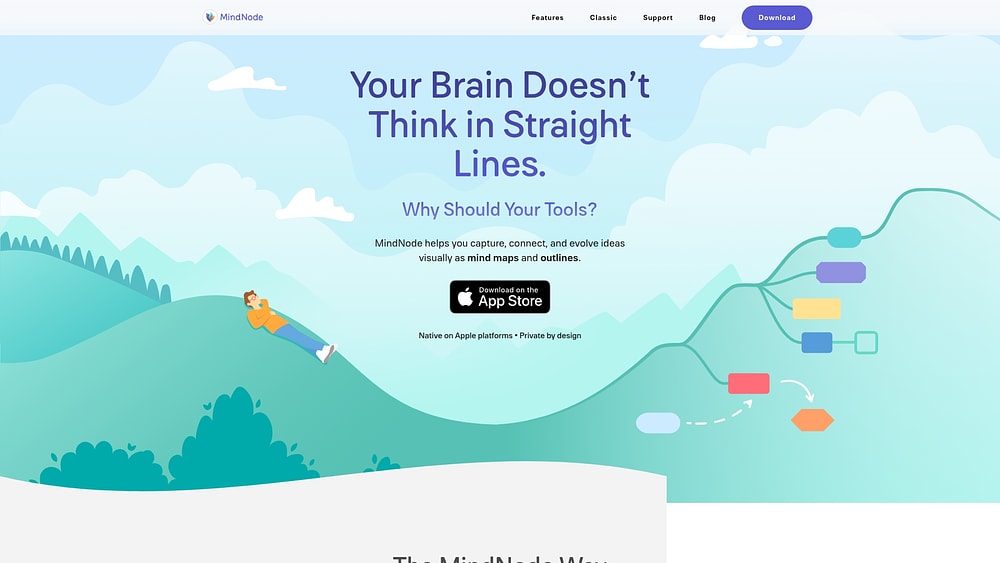
Visual thinkers often find standard lists stifling; MindNode addresses this by transforming abstract goals into interactive mind maps. The platform is deeply integrated into the Apple ecosystem, with native apps for Mac, iPhone, iPad, and Vision Pro. It serves teams that need to visualize the big picture and map out complex relationships and dependencies before diving into execution.
Example:
Teams in the early stages of goal planning or organizations with visual-first cultures that need to map goal relationships prior to execution.
Key features:
- Visual goal mapping: hierarchical progress roll-ups aggregate completion percentages from child nodes to parent objectives.
- Native Apple Reminders integration: deep linking syncs task status bidirectionally while preserving context.
- Focus Mode and Visual Tags: filter goals by priority or category, minimizing distractions during work phases.
Pricing:
- Free Editor: basic editing, import/export, and viewing capabilities.
- MindNode Plus: $2.99/month or $24.99/year including Tasks, Notes, Visual Tags, Focus Mode, collaboration, and AI features.
- Annual savings: approximately 30% compared to monthly billing.
- Family Sharing: up to five family members can share a Plus subscription.
Considerations:
- Apple-exclusive platform: limits adoption in mixed-device environments or Windows-based companies.
- Task restrictions: tasks are limited to leaf nodes, preventing higher-level objectives from being marked as actionable items directly.
4. 2Do
Users who prefer building their own systems rather than adhering to rigid templates will appreciate 2Do. It offers a flexible, GTD-style approach to personal goal tracking through customizable projects and smart filtering. This makes it a strong contender for professionals who need a robust, self-configured goal management system.

Example:
Individuals managing personal goals who require powerful task organization without the need for team collaboration.
Key features:
- Projects and checklists: deconstruct multi-step goals into actionable sub-items with hierarchical organization.
- Smart Lists with advanced search: generate dynamic views based on tags, dates, and priority filters to track progress.
- Focus filtering and Smart Scheduling: hide irrelevant tasks and surface only current priorities to maintain momentum.
Pricing:
- iOS/iPadOS/watchOS: €9.99 one-time purchase.
- macOS (single-user): $34.99 perpetual license (up to five personal Macs).
- macOS (multi-user): $104.99 perpetual license (five users, up to four Macs each).
- Email to 2Do: optional in-app purchase for iOS.
- Free trial: 21-day trial available for Mac.
Considerations:
- Lacks dedicated goal analytics: no progress visualization, relying instead on user-configured Smart Lists and tags.
- Limited to the Apple ecosystem: Android app discontinued, restricting cross-platform accessibility.
5. Structured
Chaos becomes order through Structured’s approach to visual time-blocking and energy-aware scheduling. The platform excels at converting abstract goals into actionable daily schedules, serving individuals who rely on disciplined planning to maintain consistent progress toward personal objectives.
Example:
Individuals seeking to align daily activities with personal goals through structured time-blocking and energy-conscious planning.
Key features:
- Visual timeline: merge tasks, calendar events, routines, and habits into a single daily view.
- Energy Monitor: assign energy points to tasks and compare daily load to personalized limits.
- AI-assisted planning: convert written goals or screenshots into actionable, scheduled tasks.
Pricing:
- Free plan: core planning features including tasks, timeline, inbox, and basic notifications.
- Structured Pro: monthly, yearly, or lifetime purchase options with region-based pricing.
- 3-day free trial: available for Pro features before purchase.
- Scholarship program: one-year Pro access for qualifying users.
Considerations:
- No native goal tracking: lacks measurable targets, analytics dashboards, or progress visualization.
- Limited team collaboration: unsuitable for cross-functional goal alignment or shared accountability.
How to choose the right goal tracking software for your team?
Selecting a goal tracking platform requires careful consideration beyond basic progress monitoring. The objective is to identify a system that connects your company’s strategic priorities directly to operational execution.
Your decision depends primarily on organizational scope: whether you are tracking individual milestones or aligning multiple departments toward shared strategic objectives.
Evaluate your current tech stack integration needs
A goal tracking platform should unify your work rather than creating another data silo. If goals are set in one environment but work occurs in another, fragmentation is inevitable. The ideal solution connects to your existing systems, transforming business data into real-time goal progress.
Interoperability is non-negotiable. Before committing, verify the platform’s ability to establish a single source of truth. Essential integrations should enable you to:
- Connect sales and revenue: automatically update revenue targets when Salesforce opportunities close.
- Align product and development: reflect development progress as Jira tickets reach completion.
- Sync communication: identify goal risks based on discussions within Slack or Microsoft Teams.
While simple apps may suffice for personal use, they often lack the connectivity complex organizations require. Leaders utilize modern platforms like monday work management to aggregate data from over 200 applications, providing a comprehensive view of goal attainment without the need for manual reporting.
Assess team size and collaboration requirements
Scaling introduces complexity to goal ownership. A basic app might handle one person’s development plan, but it will likely fail when goals depend on cross-functional teamwork.
True alignment demands a platform engineered for collective visibility. Your evaluation must look beyond basic sharing capabilities.
- Can teams comment on goals: real-time collaboration keeps everyone aligned without endless meetings.
- Can you assign ownership across departments: clear accountability ensures nothing falls through the cracks.
- Can you track dependencies in one place: visibility into how work connects prevents bottlenecks before they happen.
Passive progress monitoring falls short when connecting strategy to coordinated execution across the business. Within solutions like monday work management, teams visualize exactly how their daily tasks contribute to high-level objectives. This visibility provides a real-time view and a shared sense of purpose, converting individual efforts into collective victories.
Consider AI and automation capabilities
Is your software merely observing, or is it actively contributing? While basic automation handles reminders, intelligent systems powered by AI can predict outcomes and spot risks before they evolve into roadblocks. This distinction separates simple monitoring from strategic management.
Manually analyzing progress across dozens of interdependent goals becomes impossible at scale. But an intelligent platform offers a strategic edge by:
- Analyzing patterns: pinpointing drivers of success.
- Recommending actions: proactively improving performance.
- Working smarter: allowing teams to focus on impact rather than administration.
With platforms like monday work management, AI instantly summarizes progress from connected projects, categorizes goal-related data, and suggests automations based on team behavior. It adapts to your workflow, offering insights that drive superior results.
Calculate total cost of ownership and ROI
Sticker price is deceptive, as the true cost of a platform includes the hidden expenses of workarounds and parallel systems that accumulate when functionality is limited.
An effective platform delivers value exceeding its subscription fee. To calculate potential ROI, consider:
- Time saved: the reduction in hours spent on manual tracking.
- Achievement rates: the impact of higher goal completion.
- Productivity gains: the quantifiable value of integrated workflows.
By linking goals directly to work, advanced solutions like monday work management returns the most valuable resource to teams: time. Minimizing manual reporting allows for more focus on activities that propel the business forward, delivering a measurable return on investment.
4 steps to implementing goal tracking software
Implementing new software requires a structured, phased approach rather than rapid deployment. Organizations that follow a strategic implementation methodology achieve significantly higher adoption rates. The objective is to establish a new organizational capability through the deployment of a robust platform.
Step 1: build a strong foundation
Your first week involves critical decisions regarding permissions, integrations, and goal structures. Whether you organize by department, strategic pillar, or timeline, these choices define visibility and reporting for the entire organization.
Data migration demands a thoughtful strategy; transfer active goals and recent history, but leave behind archived data that creates clutter.
Within platforms like monday work management, guided setup and pre-built templates transform complex migration into a series of clear decisions, getting teams operational in days. Start with a simple framework and add complexity as confidence grows.
Step 2: inspire adoption with early wins
Adoption hinges on perceived value. Training should focus on impact rather than features, demonstrating how automated updates save time and how connected workflows reduce the need for constant check-ins. When users see the platform improving their daily lives, usage follows naturally.
To build momentum:
- Identify champions: recruit users who can demonstrate value to their peers.
- Celebrate quick wins: spotlight successes, such as automating a tedious reporting process.
While the intuitive design of solutions like monday work management aids adoption, true momentum arises from showing teams how it resolves their specific workflow bottlenecks.
Step 3: refine and optimize in real time
Treat the initial month as a sandbox. Usage patterns will quickly expose what is effective and what requires adjustment, allowing for on-the-fly refinements. There is no need to wait for a quarterly review to improve workflows.
Common areas for rapid improvement include:
- Automation rules: pinpoint repetitive tasks that can be automated to free up strategic time.
- Dashboard views: tailor dashboards so executives see high-level summaries while team leads access detailed data.
- Goal structures: modify hierarchies and groupings as teams determine the best fit for their projects.
Step 4: scale with confidence as you grow
Growth demands flexibility. Therefore, a system effective for 50 people must adapt to support 500 without introducing friction. Ensuring your approach remains effective at scale is crucial.
As maturity increases, you will require granular permissions and multi-level reporting where team goals roll up to company-wide initiatives.
Flexible platforms like monday work management scale alongside you, allowing the addition of advanced capabilities without hitting a ceiling. This ensures investment in a platform that supports future vision, not just current needs.
Change your team's goal achievement with monday work management
Setting ambitious goals is common; connecting them to the daily work that moves the needle is the real challenge. When objectives remain trapped in spreadsheets and slide decks, isolated from team workflows, progress becomes reactive and opaque.
Imagine if goals were not just tracked, but actively driven forward by daily work.
By embedding objectives directly into operational workflows, monday work management makes achievement a natural byproduct of execution. It establishes a single source of truth where strategy and daily tasks converge, providing leaders with visibility and teams with the context needed to make an impact.
Go from reactive to proactive with AI
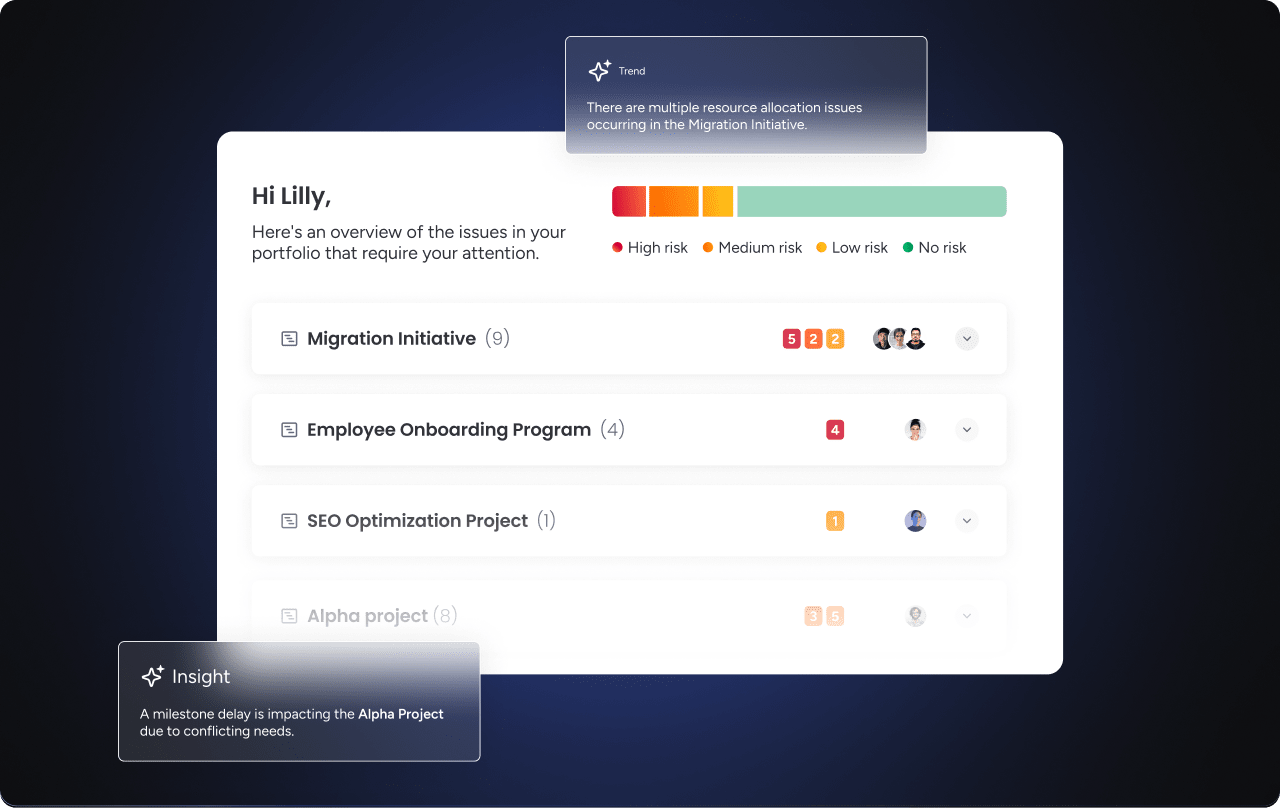
Predictive capabilities allow you to intercept risks before they derail critical objectives. Leveraging AI, monday work management shifts goal management from passive observation to intelligent, proactive execution, providing the foresight to act decisively.
- Make sense of complexity: automatically categorize and link hundreds of projects to strategic goals, surfacing insights on high-impact activities.
- Get instant progress reports: generate comprehensive summaries from all related work, highlighting achievements and flagging blockers without manual compilation.
- Build goal-specific automations: deploy specialized automations that adapt to the unique needs of each goal, from revenue targets to customer satisfaction.
Connect daily work directly to goal progress

Manual updates are a productivity killer. Goal tracking is automated in monday work management because it is tethered directly to the platforms where work occurs. When a project milestone is reached, the corresponding goal updates instantly.
This automation transforms reporting from a burden into a strategic asset. Teams remain focused on execution while leadership accesses a real-time view of progress through live dashboards. With over 200 automation recipes, the platform manages routine updates, alerts owners to risks, and keeps everyone aligned without extra effort.
Align every team around a single source of truth
Unified teams move faster. Portfolio management views and shared dashboards in monday work management dismantle barriers and foster genuine cross-functional alignment.
Dependencies become visible and manageable. If marketing’s launch goals rely on a product feature, that connection is explicit, enabling proactive coordination. Teams visualize how their work contributes to company-wide initiatives, fostering a shared sense of purpose and accountability.
Put your resources behind your most important goals
Strategy without capacity is just a wish. The platform’s workload and capacity planning features ensure team effort aligns with top strategic priorities. You can visualize availability and guarantee critical goals receive the necessary support.
| Feature | monday work management | Be Focused | MindNode | 2Do | Structured |
|---|---|---|---|---|---|
| Team collaboration | Unified workflows for cross-team execution | Individual focus without team coordination | Limited sharing for visual planning only | Personal use without collaboration features | Individual planning without team visibility |
| Work integration | Connects goals directly to the work that drives them | Time tracking only, isolated from broader workflows | Planning only, no execution tracking | Task lists without project or goal integration | Scheduling only, no work management |
| AI-powered insights | Predictive insights and intelligent automation | No AI features | Basic suggestions without intelligence | No AI capabilities | No AI features |
| Enterprise scalability | Scales from single teams to the entire enterprise | Individual use only | Small team focus | Personal use only | Individual use only |
| Automation | Code-free automations to track progress effortlessly | Basic timers without workflow automation | No automation capabilities | Limited task automation | No automation features |
| Reporting & analytics | Real-time, customizable dashboards for executive visibility | Basic time reports | No analytics capabilities | Basic task tracking only | No reporting features |
| Integration ecosystem | Integrates with your existing tech stack | Minimal integrations | Limited export options | Basic calendar sync | Minimal integrations |
| Resource management | Aligns team capacity with strategic priorities | No resource management | No resource features | No resource management | No resource feature |
This connects resource allocation directly to strategic intent, making trade-offs visible and intentional. This allows you to plan ahead, prioritize effectively, and ensure goals are properly resourced for success.
Achieve strategic alignment with connected goals today
While individual productivity apps excel at personal lists, they falter when goals depend on cross-functional teamwork. Organizations require more than a checklist; they need a connected system where strategy and execution converge. When goals reside in one place and work happens in another, alignment fractures.
For growing organizations, this disconnect creates drag, slows initiatives, and obscures progress. A true goal-tracking platform unifies this entire process, from setting objectives to delivering the work that achieves them. Instead of merely monitoring outcomes, monday work management creates the conditions for success by linking strategic goals directly to daily execution.
With automated progress tracking and seamless integrations, leaders gain a real-time view of performance, empowering teams to drive results rather than just report on them. To move forward, evaluate your current tech stack and identify where the gaps between strategy and execution exist today.
Frequently asked questions
What is the difference between a goal tracker and project management software?
The difference between a goal tracker and project management software is that a goal tracker measures progress toward strategic outcomes, while project management software organizes the workflows and timelines required to achieve them. A unified platform connects daily execution to overarching goals, ensuring complete alignment.
How long does it take to implement goal tracking software?
The time to implement goal tracking software can range from a few days for small teams to several weeks for complex, enterprise-wide deployments. Platforms with intuitive interfaces and pre-built templates can be operational almost immediately.
Can goal tracking apps integrate with our existing tools like Slack and Microsoft Teams?
Yes, goal tracking platforms can integrate with existing systems like Slack and Microsoft Teams. Enterprise-grade platforms offer extensive native integrations, allowing you to connect goals directly to your team's existing communication and work management workflows.
What is the ROI of switching from spreadsheets to goal tracking software?
The ROI for switching from spreadsheets includes significant time saved on manual reporting and improved goal completion rates due to real-time visibility. This empowers leaders to make faster, data-driven decisions and allocate resources more effectively.
Should teams use OKRs or SMART goals in their goal tracking app?
The choice between OKRs and SMART goals depends on your strategic approach; OKRs are ideal for ambitious outcomes, while SMART goals suit specific, defined initiatives. A flexible platform will support both frameworks.
How do we get our team to actually use goal tracking software?
To ensure team adoption, the software must integrate into existing workflows and solve an immediate pain point, like automating manual reports. High adoption occurs when the platform simplifies daily work, not adds to it.

 Get started