


Gathering budget requests, project details, and employee feedback should be straightforward. Yet, it often becomes a challenge of scattered emails and version conflicts, turning simple data collection into a complex undertaking.
Excel form templates address this challenge. These pre-built spreadsheets include dropdowns and checkboxes that guide users through each field. Instead of working with blank workbooks where inconsistent data entry is common, teams capture consistent, accurate information that’s ready for analysis. This leads to faster decisions and significantly reduced data cleanup.
We’ll walk you through twelve essential Excel form templates every team needs, where to find quality downloads, and how to build custom forms that actually work. You’ll also learn when spreadsheets stop working and what alternatives help growing teams run real business processes instead of just managing files.
Key takeaways
- Transform chaotic data collection into structured workflows: Excel form templates with dropdowns, validation rules, and checkboxes eliminate inconsistent entries and ensure your team captures clean, analyzable data every time.
- Recognize when spreadsheets hold your team back: Version conflicts, manual approval bottlenecks, and offline limitations signal it’s time to upgrade from Excel to platforms like monday.com built for real-time collaboration.
- Connect forms directly to automated workflows: Skip the manual data entry and email chains — form submissions can automatically trigger notifications, update project boards, and route approvals without human intervention.
- Start with proven templates to accelerate deployment: Microsoft’s gallery and community libraries offer pre-built forms for project intake, budget tracking, and employee requests that you can customize immediately.
- Enable real-time collaboration through cloud hosting: OneDrive and SharePoint eliminate the “final_vtwo_updated” file chaos by allowing simultaneous editing and automatic syncing across your entire team.
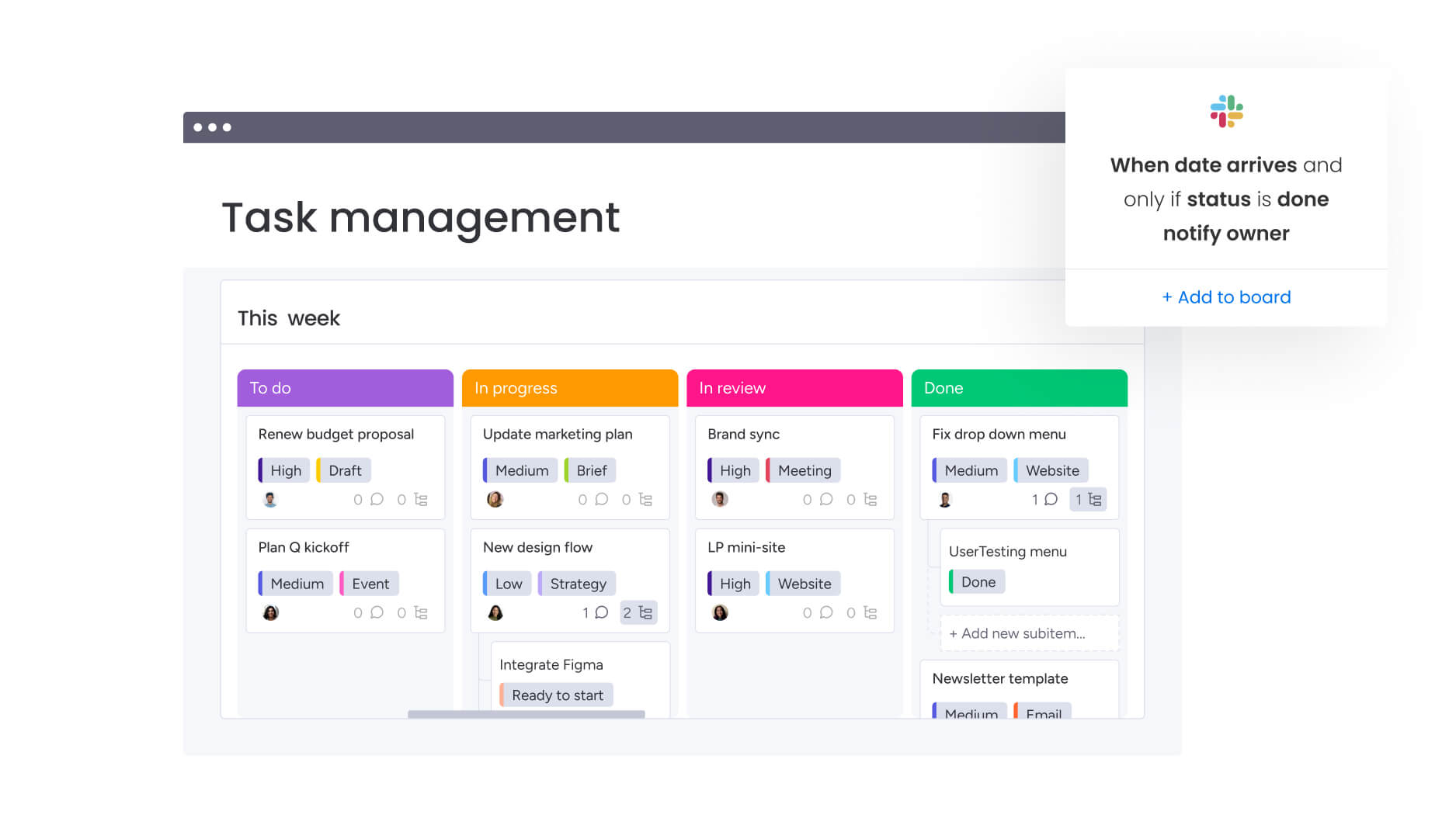
Header: What are Excel form templates?
Excel form templates are pre-built spreadsheets with interactive controls like dropdown menus, checkboxes, and validation rules that standardize how teams collect information. Instead of blank workbooks where anyone types whatever they want, form templates guide users through specific fields. This keeps your data clean and ready to analyze.
The Developer tab houses Form Controls and ActiveX Controls that make this transformation possible.
Each control serves a specific purpose:
- Dropdown menus: Force users to select from pre-defined lists, eliminating spelling errors and ensuring consistent categorization.
- Checkboxes and radio buttons: Provide binary or exclusive choices that speed up data entry and prevent ambiguous answers.
- Input masks: Guide users to enter data in specific formats like phone numbers or dates, reducing manual cleanup.
Excel forms vs Microsoft Forms
Excel forms and Microsoft Forms work differently. Excel forms give you deep customization and work offline, while Microsoft Forms are easier to use, but you need the cloud. The table below breaks down the key differences:
| Feature | Excel form templates | Microsoft forms |
|---|---|---|
| Primary environment | Desktop application (offline capable) | Cloud-based (browser required) |
| Data logic | Advanced formulas and VBA macros | Basic branching logic |
| Layout control | Pixel-perfect customization | Rigid, linear structure |
| Data storage | Stored within the workbook file | Automatically exports to Excel/SharePoint |
| Complexity | High (supports complex calculations) | Low (surveys and simple quizzes) |
Built-in collaboration features
Excel lets multiple people view and edit shared workbooks. Track Changes logs who edited what, and threaded comments let teams discuss data right in the spreadsheet.
Shared workbooks break down when multiple people try editing structural elements or macros simultaneously. This friction grows as teams scale and workflows become more complex. It reflects a broader trend, as a 2026 McKinsey report found that 79% of operating‑model redesigns were implemented to meet objectives through process standardization.
12 Excel form templates every team needs
The right templates turn chaotic email threads and hallway conversations into clean data you can actually use. These templates fix the most common workflow problems teams run into. Each handles specific processes and keeps things consistent across departments.
Project intake templates
Project intake templates bring order to the chaos of new requests flooding your team. Instead of fielding random Slack messages and hallway pitches, these forms capture everything you need to evaluate and prioritize work before it starts.
- Project Request Form: Collects the “why” and “how” of new initiatives. It requires stakeholders to define scope, budget, and strategic alignment before the PMO reviews the proposal.
- Creative Brief: Standardizes inputs for marketing and design teams. It forces stakeholders to define the audience, deliverables, and deadlines upfront, effectively stopping scope creep before it starts.
Employee request forms
HR teams use uniform frameworks to manage employee requests, freeing them to focus on high-impact initiatives. These templates keep data collection consistent across your org:
- Time-off request tracker: Calculates remaining leave balances automatically using built-in formulas while providing standardized layout for dates and reasons.
- Expense reimbursement report: Includes categorized dropdowns for expense types and automatically sums totals for mathematically accurate claims.
- Equipment requisition form: Tracks hardware and software requests while validating that requested items match approved vendor lists and budget codes.
Budget tracking spreadsheets
Financial oversight requires templates that connect day-to-day transactions to quarterly targets and annual strategic objectives. These spreadsheets bridge the gap between individual expense entries and departmental performance metrics, ensuring every dollar spent aligns with broader business priorities:
- Departmental budget planners: Allow managers to forecast quarterly spend against actuals, using conditional formatting to flag overages immediately. This structured approach aligns with current finance trends, as 44% of CFOs now use generative AI for more than five finance use cases, requiring standardized data inputs for automation success.
- Event budget trackers: Break down costs by category — venue, catering, AV — and aggregate estimated versus actual costs to calculate ROI per attendee.
Customer feedback surveys
Customer feedback templates turn raw sentiment into insights you can act on. Instead of sifting through unstructured comments and scattered responses, these templates organize feedback into analyzable data that drives product decisions.
- Net Promoter Score (NPS) calculators: Collect customer sentiment scores and categorize them into Promoters, Passives, and Detractors. Built-in formulas automatically calculate the final NPS score, giving you a clear metric for customer loyalty.
- Product feedback logs: Aggregate user feature requests and bug reports, using priority ranking fields to help product managers sort feedback by impact and urgency.
Approval workflow templates
Approval templates track who approved what and when, creating a clear audit trail that eliminates confusion and ensures accountability. These forms standardize decision-making processes across your organization.
- Purchase order generators: Standardize the procurement process by generating unique PO numbers and including signature fields for authorization.
- Document sign-off sheets: Track which team members have reviewed and accepted new protocols, ensuring organizational accountability for compliance and policy updates.
- Change request forms: Manage modifications to a project’s scope, timeline, or budget. This ensures that every shift is documented, justified, and formally approved before work begins, preventing unmanaged scope creep
Where to download free Excel templates
Starting with pre-built templates gets you up and running faster with best practices already built in. You can find quality templates from Microsoft, community sites, and industry-specific libraries. Pick your source based on your industry and how much customization you need.
Microsoft’s template gallery
The most direct source for reliable templates is the Microsoft Create platform and the in-app New menu within Excel. These templates guarantee compatibility with the latest Excel features and often include professional design elements. The gallery covers vast categories from Gantt charts to inventory trackers, all optimized for the Microsoft ecosystem.
Community template libraries
Third-party platforms offer specialized templates often created by industry experts. Vertex42 is known for high-precision calculation templates, particularly for financial and project management needs. Template.net offers design-focused templates that prioritize visual presentation alongside data collection.
Industry-specific collections
Specialized sectors often require unique data structures. Professional organizations in healthcare, construction, and education frequently provide member-exclusive templates:
- Construction management associations: Offer estimation forms with built-in material cost databases.
- Educational bodies: Provide grading and attendance trackers compliant with academic standards.
- Healthcare organizations: Supply patient intake forms with HIPAA-compliant data handling.
How Excel forms improve team data collection
Good form design isn’t just about looks. It uses Excel’s features to keep your data clean. This makes forms easier to fill out and keeps data accurate, consistent, and ready to analyze.
Data validation for accuracy
Data validation ensures you collect accurate information from the start. It restricts what users can type, stopping errors that would break your formulas.
The validation types that fix the most common data problems:
- Type restrictions: Forms reject non-numeric characters in budget fields or ensure dates fall within the current fiscal year.
- Logic checks: Validation rules prevent Project End Date from being earlier than Project Start Date.
- Format enforcement: Rules ensure email addresses contain @ symbols or that inventory codes match specific alphanumeric patterns.
Dropdown menus for consistency
Dropdown lists keep things standardized. By limiting input to pre-defined options like “Not Started,” “In Progress,” or “Done,” teams ensure status updates stay uniform. This consistency allows for accurate pivot tables and charts later, since there are no variations like “in-progress” versus “In Progress” to skew data.
Formula-based automation
Add formulas and Excel forms turn into real applications. Auto-calculations instantly compute tax, shipping, and grand totals on purchase orders as items are added. IF statements automatically flag project status as “At Risk” if deadlines pass, or highlight budget variances in red without manual intervention.
Furthermore, VLOOKUP or XLOOKUP functions auto-populate product prices or employee details based on single ID entry, saving time and reducing transcription errors.
5 steps to build team-ready Excel forms
Building solid Excel forms means balancing technical features with ease of use. This turns basic sheets into protected, interactive forms. Follow these steps to build forms that are easy to use and technically solid.
Step 1: enable developer tools
The Developer tab has the controls you need for forms, but it’s hidden by default. Access it by navigating to File > Options > Customize Ribbon and checking the Developer box. This lets you insert form controls, write macros, and manage XML maps.
Step 2: add interactive controls
With the Developer tab active, enhance the interface with Form Controls. Insert dropdowns (Combo Boxes) to offer selection lists that are easier to navigate than standard data validation lists. Add option buttons grouped to allow users to select only one choice from a set. Use spin buttons to allow users to increment numbers by clicking up/down arrows, preventing invalid text entry.
Step 3: create data connections
Controls need to connect to your spreadsheet data. Therefore, link each form control to specific cell references. For example, a dropdown menu selecting a product must link to a cell that outputs the product’s ID, which then drives VLOOKUP formulas to populate price and description fields elsewhere in the form.
Step 4: set protection rules
Protect your worksheet so users can’t break the form’s structure. Unlock only specific data entry cells (input fields), then protect the entire sheet with a password. Users can fill in the boxes but can’t accidentally delete formulas, resize columns, or move labels.
Step 5: share with team members
Consider version compatibility when you share forms. Save files as Excel Templates (.xltx) to ensure when users open them, fresh copies are created, leaving the original master template untouched. Distribute these files via SharePoint, OneDrive, or shared network drives to ensure everyone accesses the latest version.
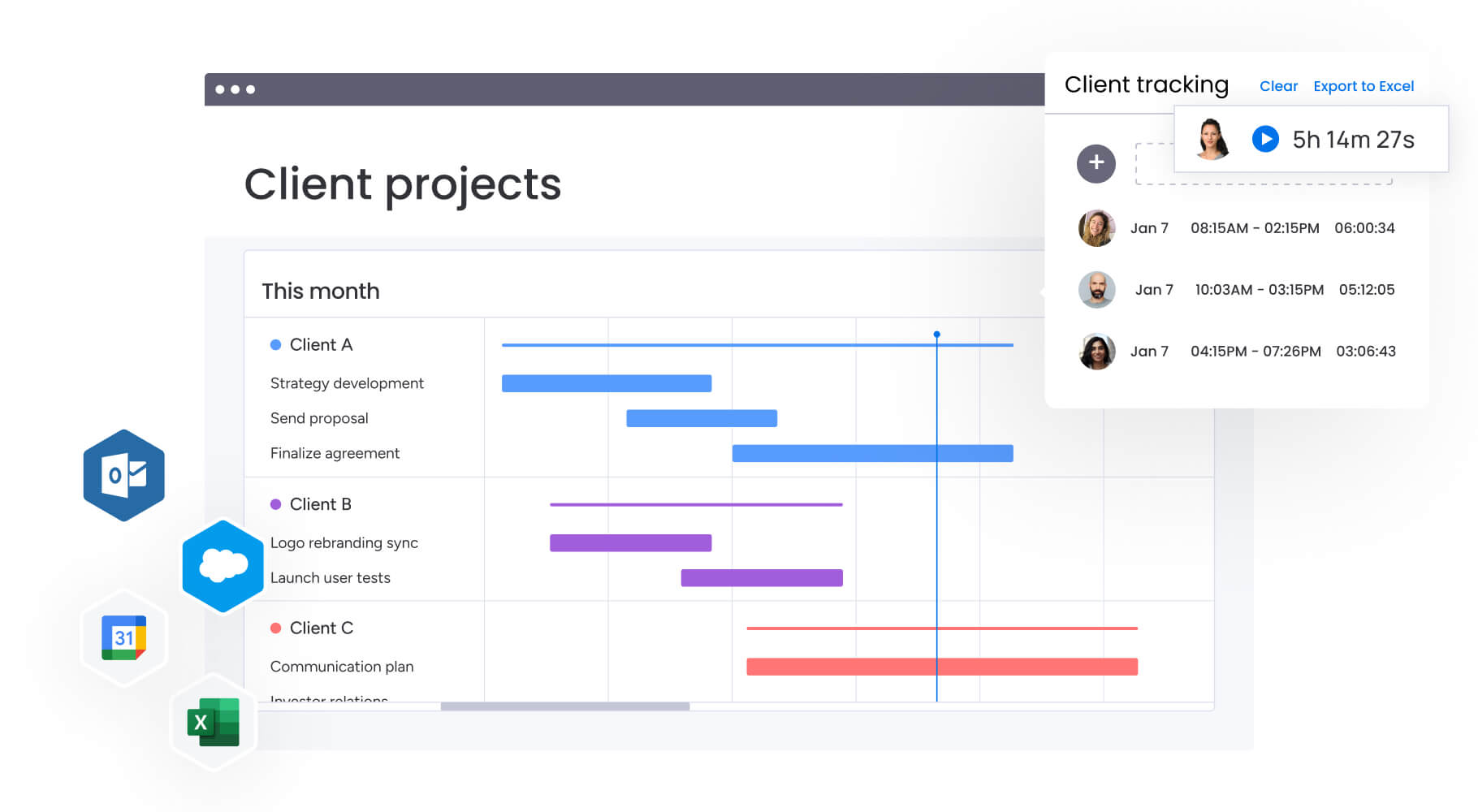
Header: Excel templates with real-time sync
Excel’s offline setup makes collaboration harder, while Microsoft’s tools offer near real-time syncing, reducing data silos. These integrations keep data consistent without changing Excel’s familiar interface.
Microsoft Forms integration
For pure data collection, Microsoft Forms acts as a front-end that feeds directly into Excel workbooks hosted on SharePoint or OneDrive. As users submit responses via web browser, the Excel file updates automatically. This setup separates the data entry interface from the database, preventing users from ever touching the master spreadsheet.
OneDrive live updates
Hosting Excel templates on OneDrive enables Co-authoring. This feature allows multiple users to open workbooks simultaneously in desktop apps or web browsers. Changes save automatically in seconds, and colored cursors indicate where other team members are working, reducing the likelihood of overwriting someone else’s input.
SharePoint collaboration features
SharePoint adds governance layers to Excel collaboration. It provides Check-out/Check-in functionality, which locks files for single users when deep structural changes are needed. SharePoint maintains robust version history, allowing teams to revert workbooks to previous states if templates break or data becomes corrupted.
3 ways to distribute Excel form templates
The method you choose for distributing forms directly impacts workflow efficiency. Select an approach based on team size, security requirements, and usage frequency. Each distribution method presents distinct advantages and limitations that influence collaboration effectiveness and data quality.
1. Email attachment method
The traditional method involves emailing .xltx files to teams. This approach is simple, requires no infrastructure, and works for external partners. However, it creates immediate version control chaos.
As soon as five people open attachments, five distinct versions of truth exist. Consolidating this data requires manually opening each returned file and copying data into master sheets.
2. Cloud storage sharing
Storing master templates in shared folders on Google Drive, Dropbox, or OneDrive maintains single sources of truth. Permissions can be set to View Only for template files, forcing users to download copies or fill them out without altering structures.
The downside is this requires reliable internet access. If users download files to work offline, sync conflicts can occur when they attempt to re-upload.
3. Network drive distribution
For enterprise environments, templates are placed in read-only folders on company intranets or LANs. This offers high security and speed within office networks. IT can strictly control who has write access to update master templates.
However, this approach is difficult to access for remote or traveling employees without VPN connections and doesn’t support real-time co-authoring features found in cloud solutions.

“monday.com has been a life-changer. It gives us transparency, accountability, and a centralized place to manage projects across the globe".
Kendra Seier | Project Manager
“monday.com is the link that holds our business together — connecting our support office and stores with the visibility to move fast, stay consistent, and understand the impact on revenue.”
Duncan McHugh | Chief Operations OfficerWhy teams choose Excel templates
Excel still dominates despite newer SaaS platforms. It sticks around because of four practical advantages that work for any size team. These benefits explain why most teams start with Excel before looking at alternatives.
Universal software availability
Excel is ubiquitous. It’s pre-installed on virtually every corporate computer, meaning there are no additional licensing costs, procurement cycles, or security vetting processes required to deploy new forms. If teams need solutions today, Excel is already there.
Minimal training requirements
The language of rows and columns is universal business skill. Most employees already possess baseline literacy required to navigate spreadsheets, enter data, and save files. This familiarity eliminates onboarding curves associated with learning new, complex software interfaces.
Complete customization freedom
Excel offers an open sandbox environment. Unlike rigid software with fixed fields, Excel templates can be altered down to the pixel. Teams can build complex, bespoke calculations, conditional logic, and layouts that exactly match their specific internal processes without waiting for vendor roadmap updates.
Offline access capability
For field teams, construction sites, or regions with unstable internet, Excel’s ability to function fully offline is critical. Users can input data, run calculations, and save their work without connections, syncing files only when they return to connected environments.
This offline capability remains relevant given that approximately 92% of people in a U.S. county have access to fixed terrestrial broadband at 100/20 Mbps or higher, while connectivity gaps still exist in certain areas.
Excel form limitations for growing teams
Excel hits a ceiling as organizations scale. The flexibility that makes Excel attractive at first becomes a problem as things get more complex. Watch for these warning signs — they tell you when it’s time for something more robust.
What signs indicate your organization has outgrown spreadsheet-based workflows?
Version control challenges
The “Final_vtwo_UPDATED_REAL.xlsx” phenomenon is a hallmark of Excel collaboration. Without centralized databases, teams struggle to identify which file contains the most current data. This confusion leads to decisions based on outdated information and wasted time reconciling conflicting spreadsheets.
Simultaneous editing conflicts
Excel was originally designed as single-player application. Even with co-authoring, heavy usage by multiple team members often leads to locked file errors or sync conflicts. When two users attempt to sort or filter shared sheets simultaneously, the view changes for everyone, forcing team members to stop what they’re doing and wait.
Manual workflow bottlenecks
Excel is passive. It waits for input. It cannot automatically route purchase orders to managers for approval, send reminders when deadlines approach, or trigger workflows in other departments. These actions rely on humans remembering to email files to the next person, creating significant delays.
Enterprise scaling issues
As row counts grow into thousands, performance degrades. Excel lacks granular permission controls. You generally share whole workbooks or nothing. This makes it difficult to hide sensitive salary data in budget sheets while still allowing managers to input expense requests.
Excel hits a ceiling as organizations scale. The flexibility that makes Excel attractive at first becomes a problem as things get more complex.
Alternatives to Excel forms
When spreadsheets start holding teams back, they switch to platforms built for data collection and automated workflows. These alternatives fix Excel’s weak spots without sacrificing ease of use. Purpose-built platforms provide real-time collaboration, integrated automation, and greater scalability.
Cloud-based form platforms
Platforms like Google Forms, Typeform, and JotForm prioritize user experience. They offer mobile-responsive designs that are easy to fill out on any device. These platforms handle backend database management automatically, aggregating responses into structured tables without any risk of users breaking form structures.
AI-powered data collection
Data platforms now leverage artificial intelligence to reduce manual entry. These systems scan uploaded PDFs or images like receipts and extract relevant text into structured fields. They use natural language processing to categorize open-ended feedback automatically, saving hours of human intervention.
Automated workflow systems
Dedicated workflow platforms move beyond simple data collection to manage entire lifecycles of requests. When forms are submitted, these systems automatically assign work, send Slack/Teams notifications, update CRM records, and generate documents, creating closed-loop systems that Excel cannot replicate.
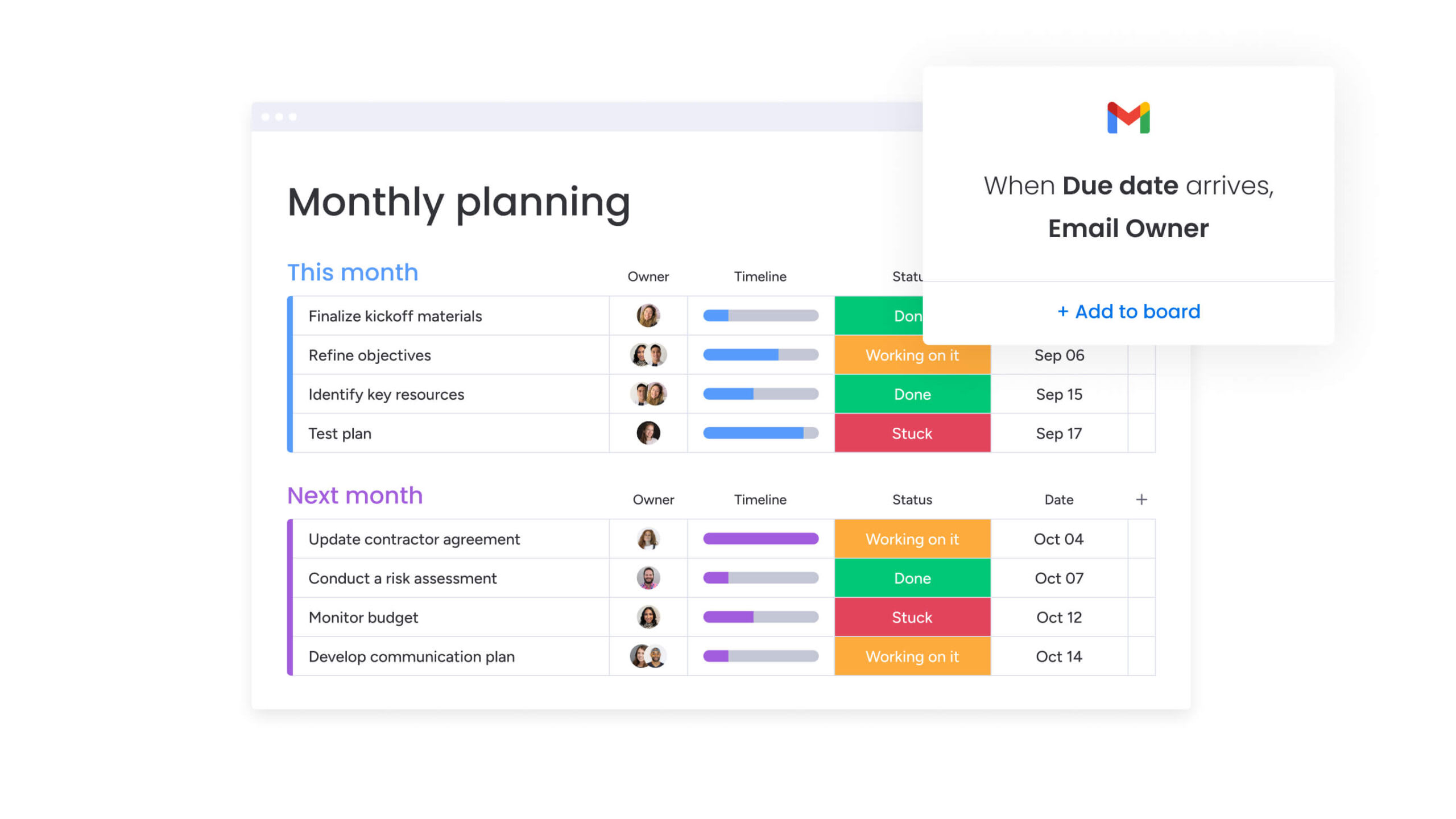
Header: Scale beyond spreadsheets with monday.com
Teams ready to stop managing files and start running their business find monday.com offers a unified Work OS. It keeps the familiar grid view but fixes spreadsheet problems. The platform links data collection to execution — every form submission triggers real action.
| Feature | Excel form templates | monday work management |
|---|---|---|
| Collaboration | File-based, prone to version conflicts | Real-time, database-driven, simultaneous editing |
| Data collection | Static input, manual consolidation | WorkForms by monday work management feed directly into actionable project boards |
| Automation | Limited to formulas and macros | Native automations trigger emails, status changes, and assignments |
| Scalability | Performance lags with large datasets | Built to handle enterprise-grade portfolios and workflows |
| Security | Password protection (easily broken) | Enterprise-grade permissions, SSO, and audit logs |
| Integration | Isolated file | Connects with 200+ applications (Jira, Salesforce, Slack) |
AI-powered form processing
Teams using monday.com utilize AI blocks to transform raw data into structured insights immediately upon submission. The Categorize block analyzes incoming requests and automatically tags them by department or urgency.
Furthermore, Extract Info pulls critical dates and deliverables from unstructured text descriptions and Sentiment Analysis scores customer feedback forms instantly for tone, allowing support teams to prioritize unhappy clients.
Automated approval workflows
Unlike Excel, where approvals require emailing files, monday.com automates the routing. An employee submits a time-off request via a form. The system automatically notifies their manager.
Upon approval, the status updates, the employee is notified, and dates are blocked on the team calendar — all without manual intervention.
Real-time team dashboards
Data collected through forms feeds directly into live executive dashboards. Instead of manually building charts at month’s end, leaders have real-time views of budget burn rates, project intake volumes, and resource capacity.
Portfolio Risk Insights use this live data to proactively flag initiatives trending off-track before they miss deadlines.
200+ integration options
The platform eliminates the need to copy-paste data between applications. Form submissions can create Jira tickets for developers, update Salesforce opportunities for sales teams, or send Slack messages to project channels.
This connectivity ensures forms are just the starting point of connected, cross-functional workflows.
Enterprise security standards
Organizations gain the governance that Excel lacks with monday.com. Admins set granular permissions down to column level, ensuring sensitive budget data is visible only to finance while project statuses remain open to whole teams.
Comprehensive audit logs track every change, providing accountability required for compliance.
“monday.com has been a life-changer. It gives us transparency, accountability, and a centralized place to manage projects across the globe".
Kendra Seier | Project Manager
“monday.com is the link that holds our business together — connecting our support office and stores with the visibility to move fast, stay consistent, and understand the impact on revenue.”
Duncan McHugh | Chief Operations OfficerBuild forms that drive business outcomes
Excel form templates solve the immediate problem: they turn chaotic data collection into something structured and usable. But standardized spreadsheets are just the starting point. As your team grows, you’ll hit the limits of file-based workflows — version conflicts, manual approval chains, and disconnected systems that force you to copy-paste data between tools.
The real question isn’t whether Excel forms work. It’s whether they’re holding your team back from what comes next. When form submissions need to trigger automated workflows, route approvals instantly, and update project boards in real time, spreadsheets stop being solutions and start being obstacles.
The right platform doesn’t just collect data — it connects that data directly to execution, turning every intake request, budget submission, and feedback form into coordinated action across your entire organization.
Frequently asked questions
How do I create forms in Excel?
Creating forms in Excel involves enabling the Developer tab in your settings, which unlocks the ability to insert interactive controls like dropdowns, checkboxes, and option buttons directly onto your spreadsheet canvas.
Where is the form template in Excel?
You can find form templates by opening Excel, selecting File > New, and typing "form" into the search bar, which reveals a library of pre-built options for invoices, trackers, and surveys.
Can multiple users fill out Excel forms simultaneously?
Standard Excel files struggle with simultaneous editing. For true real-time collaboration without sync errors, teams must host workbooks on OneDrive or SharePoint or switch to cloud-native platforms.
What is the fifty-thirty-twenty rule in Excel?
The 50 30 20 rule is a budgeting framework where 50% of income goes to needs, 30% to wants, and 20% to savings. Excel templates can automate this split by applying simple multiplication formulas to your total income input.
How do I make Excel forms mobile-friendly?
Excel forms are difficult to optimize for mobile screens due to their grid structure. For mobile data collection, it's more effective to use responsive web-based form builders that feed data into Excel.
What are the best alternatives to Excel forms for teams?
Teams often upgrade to platforms like monday.com, Google Forms, or Typeform, which offer superior real-time collaboration, automated notifications, and mobile accessibility compared to static spreadsheets.

 Get started