


Corporate social responsibility often sounds clear at the top, until execution begins. Sustainability targets get announced, impact campaigns take shape, and expectations rise across the board. Yet internally, efforts start to scatter. Teams move in different directions, priorities compete, and it becomes difficult to see how all the pieces connect or what progress actually looks like.
At the same time, pressure around CSR keeps building. Regulators demand transparency, investors expect accountability, and customers notice the gap between promises and action. What once felt like a side initiative now sits at the center of business strategy. In the sections below, we break down how organizations can bring structure to CSR, connect everyday work to larger goals, and turn intention into measurable, consistent impact.
Key takeaways
- Build CSR around what matters most to your business: Start with a double materiality assessment to identify which social and environmental issues actually impact your operations and stakeholders.
- Connect CSR goals to real business outcomes: Set specific, measurable targets like “reduce emissions by 40% by 2026” instead of vague promises, then track progress with automated dashboards and alerts.
- Coordinate CSR across every department seamlessly: Coordinate CSR across every department seamlessly by unifying environmental, social, and governance initiatives in shared workspaces where teams collaborate on sustainability goals while maintaining focus on business priorities.
- Turn compliance into competitive advantage: Proactive CSR programs help you stay ahead of regulations like CSRD while building stakeholder trust that drives customer loyalty and attracts top talent.
- Measure what matters with real-time visibility: Track environmental metrics, social impact, and governance performance through integrated dashboards that connect daily work to strategic sustainability objectives.
Heading: What is corporate social responsibility?
Corporate social responsibility (CSR) means weaving social, environmental, ethical, and economic accountability into how you run your business and interact with stakeholders. In practice, this means going beyond legal requirements to create real impact for society while building long-term value for your business.
At its core, CSR is guided by four key principles that shape how decisions are made and how businesses engage with stakeholders. These principles keep efforts grounded and consistent across teams and functions:
- Accountability: Taking ownership of the company’s impact on society and the environment, and addressing issues when they arise.
- Transparency: Communicating openly about progress, challenges, and outcomes through clear and accessible reporting.
- Ethical behavior: Operating with honesty and fairness across all business activities and relationships.
- Stakeholder engagement: Balancing the expectations of employees, customers, communities, and shareholders in decision-making.
Over time, CSR has become far more structured and demanding. Regulations such as the Corporate Sustainability Reporting Directive (CSRD), along with evolving ESG standards, now require companies to handle non-financial data with the same discipline as financial reporting.
As a result, organizations increasingly rely on connected work management platforms to coordinate complex initiatives across departments and maintain consistency.
4 types of corporate social responsibility
To understand how CSR works in practice, it helps to break it down into four core areas. These categories build on each other, starting with financial responsibility and expanding into broader social impact.
The table below outlines how each type contributes to overall CSR performance:
| Csr type | Primary focus | Stakeholder impact | Measurement approach |
|---|---|---|---|
| Environmental | Ecological footprint reduction | Communities, future generations | Carbon emissions, waste diversion rates |
| Ethical | Moral fairness and rights | Employees, suppliers, customers | Compliance audits, incident reports |
| Philanthropic | Societal contribution | Local communities, nonprofits | Donation value, volunteer hours |
| Economic | Sustainable profitability | Shareholders, employees | Revenue growth, ROI, cost savings |
1. Environmental responsibility
Environmental responsibility means minimizing your ecological footprint through sustainable practices. It’s about preserving natural resources and reducing climate risks without sacrificing efficiency.
If you’re pursuing environmental responsibility, you’ll coordinate efforts across facilities, procurement, and operations. The most common focus areas include:
- Carbon footprint reduction: Implementing energy efficiency measures, transitioning to renewable energy sources, and tracking Scope one, two, and three emissions.
- Waste management: Adopting circular economy principles, optimizing packaging, and establishing recycling programs.
- Resource conservation: Reducing water usage, protecting biodiversity, and sourcing materials sustainably.
- Supply chain sustainability: Collaborating with suppliers who adhere to environmental standards.
2. Ethical responsibility
Ethical responsibility means doing business in a way that’s morally right and fair, often going beyond what the law requires. It’s your moral compass for how you operate and make decisions.
These ethical commitments touch everything, from how you treat employees to how you communicate with customers. These practices require ongoing monitoring and cross-functional coordination:
- Fair labor practices: Ensuring safe working conditions, providing living wages, and enforcing diversity policies.
- Anti-corruption measures: Maintaining transparent business dealings and enforcing anti-bribery policies.
- Data privacy and security: Protecting customer and employee data as a fundamental right.
- Honest marketing: Using truthful advertising and transparent pricing.
3. Philanthropic responsibility
Philanthropic responsibility covers voluntary contributions to society that go beyond your core business. There’s a difference between strategic philanthropy (aligned with business goals) and traditional charity.
The best companies connect their giving to what they know and what they value. Common approaches include:
- Community investment: Supporting local infrastructure, education, and healthcare initiatives.
- Employee volunteer programs: Offering paid time off for volunteering and skills-based volunteering.
- Charitable giving: Providing direct financial donations and in-kind contributions.
- Social impact partnerships: Collaborating with nonprofits to address systemic social issues.
4. Economic responsibility
Economic responsibility sits at the base of the pyramid. You need to be profitable to sustain everything else. But that profit needs to come from sustainable methods that consider all stakeholders.
Economic responsibility extends beyond simple profitability to encompass:
- Sustainable profitability: Maintaining financial health through long-term planning.
- Fair stakeholder value: Balancing shareholder returns with employee compensation and community support.
- Economic development: Contributing to the broader economy through job creation and tax payments.
- Innovation and efficiency: Investing in R&D that solves social or environmental problems.

“monday.com has been a life-changer. It gives us transparency, accountability, and a centralized place to manage projects across the globe".
Kendra Seier | Project Manager
“monday.com is the link that holds our business together — connecting our support office and stores with the visibility to move fast, stay consistent, and understand the impact on revenue.”
Duncan McHugh | Chief Operations OfficerWhy CSR matters for business success?
CSR is no longer a side initiative; it has become central to how businesses operate and grow. As expectations rise from regulators, investors, and customers, companies need structured approaches to manage their impact and demonstrate accountability.
Three key drivers explain why CSR plays such a critical role in business performance today:
Meeting regulatory requirements and compliance
Regulatory expectations around sustainability continue to expand. Frameworks like CSRD and ESRS in Europe, along with climate disclosure rules in the US, require detailed and accurate reporting across multiple areas.
Because of this, companies need clear processes to collect, manage, and validate data. When CSR is handled systematically, teams can stay ahead of compliance requirements, reduce legal risks, and maintain accurate documentation. Platforms like monday work management support this by centralizing information and keeping teams aligned on the latest updates.
Building stakeholder trust and engagement
Trust has become a deciding factor in how businesses are perceived. Customers increasingly support brands that reflect their values, while employees are more engaged when their work connects to a larger purpose.
At the same time, investors rely on ESG performance to assess long-term stability. By actively engaging with stakeholders and maintaining transparency, organizations can strengthen relationships and build lasting credibility across all groups.
Creating competitive advantage through sustainability
CSR also creates opportunities for growth and differentiation. When companies rethink processes through a sustainability lens, they often uncover efficiencies and new revenue streams.
In addition, strong CSR practices reduce operational and reputational risks, making the business more resilient. Verified sustainability efforts can also open doors to new markets and partnerships, especially in industries where responsible sourcing and environmental impact are key considerations.
CSR also creates opportunities for growth and differentiation. When companies rethink processes through a sustainability lens, they often uncover efficiencies and new revenue streams.
5 key benefits of corporate social responsibility
Strong CSR programs deliver measurable value across your business. More importantly, these benefits build on each other over time, creating advantages that go well beyond short-term financial gains.
1. Stronger brand reputation and market position
A genuine commitment to social and environmental responsibility strengthens how people perceive your brand. Over time, this builds trust and goodwill, which becomes especially valuable during challenging periods.
Additionally, companies known for ethical practices often stand out in crowded markets. As a result, they can justify premium pricing while also building deeper, long-term customer loyalty.
2. Increased access to capital and investment
Strong CSR performance attracts money from ESG-focused funds and impact investors, even as retail investors expect ESG investments to underperform by 2.1% points annually, highlighting the importance of transparent communication about CSR value creation.
High sustainability ratings and ESG scores now matter in investment decisions, often lowering your cost of capital. Companies with strong CSR programs can access green bonds, sustainability-linked loans, and long-term institutional investors.
3. Operational efficiency and cost reduction
CSR initiatives often uncover inefficiencies that would otherwise go unnoticed. For example, improving energy usage lowers utility costs, while waste reduction minimizes both disposal expenses and material consumption.
In addition, sustainable supply chain practices can highlight gaps in sourcing and logistics. Because of this, you not only reduce costs but also improve overall operational performance.
4. Enhanced talent acquisition and retention
Today, people want more than just a paycheck; they want meaningful work. Companies with strong CSR commitments are more likely to attract individuals who value purpose and impact.
Furthermore, employees tend to stay longer when they feel aligned with company values. This leads to higher engagement, better productivity, and reduced turnover over time.
5. Improved risk management and resilience
CSR helps you identify risks that traditional financial analysis might overlook. These can include environmental challenges, reputational threats, or regulatory changes that could impact operations.
Because of this, you’re better prepared to respond to uncertainty. Over time, this builds resilience and allows your business to adapt more confidently to shifting conditions.

Heading: 5 steps to implement CSR programs successfully
To make CSR work in practice, you need a clear and structured approach. The steps below outline how you can move from intention to consistent, measurable impact:
Step 1: conduct a double materiality assessment
Start by identifying what truly matters, from both a business and societal perspective. This means evaluating financial impact alongside environmental and social effects.
Next, map your stakeholders and assess potential risks and opportunities. As a result, you can prioritize the areas that deserve the most attention and resources.
Step 2: define CSR goals and measurable targets
Once priorities are clear, translate them into specific and measurable goals. Instead of vague intentions, focus on targets like reducing emissions by a defined percentage within a set timeline.
Additionally, aligning these goals with business strategy ensures they remain practical. This also helps teams stay focused and accountable.
Step 3: build cross-functional CSR teams
CSR cannot sit within a single department. You need collaboration across leadership, operations, HR, and beyond.
Therefore, establish clear roles and responsibilities early on. This not only improves coordination but also ensures accountability across the organization.
Step 4: design implementation workflows
Standardized workflows keep CSR initiatives consistent. These workflows cover initiative planning, approval gates, execution, and monitoring checkpoints.
For community partnerships, your workflow should cover proposals, budget reviews, partner vetting, and impact reporting. Work management platforms visualize these processes, assign responsibilities, and track progress across decentralized teams.
Step 5: deploy monitoring and reporting systems
Real-time monitoring is critical for management and compliance. You need automated data collection that gathers metrics from utility bills, HR systems, and supply chain audits.
Performance dashboards give you immediate visibility into metrics so teams can course-correct quickly. This data feeds automated reporting systems that generate disclosures for internal updates and regulatory filings.

Heading: Measuring and tracking CSR performance
To manage CSR effectively, you need a strong measurement approach. This includes tracking both quantitative metrics and qualitative outcomes across your organization.
Essential CSR metrics and KPIs
To stay accountable, you should track performance across four key areas: environmental, social, governance, and economic.
The table below outlines common metrics and their data sources:
| Category | Key metrics | Data sources |
|---|---|---|
| Environmental | Scope 1, 2, 3 emissions (tCO2e), energy consumption (kWh), water usage, waste diversion % | Utility bills, facility audits, supply chain reports |
| Social | Employee satisfaction scores, diversity stats, volunteer hours, safety incident rates | HR systems, surveys, safety logs |
| Governance | Ethics training completion %, whistleblower reports, board diversity, supplier compliance | LMS, legal records, procurement audits |
| Economic | Revenue from sustainable products, cost savings, total CSR investment, ROI | Financial systems, project accounting |
Real-time dashboards for continuous monitoring
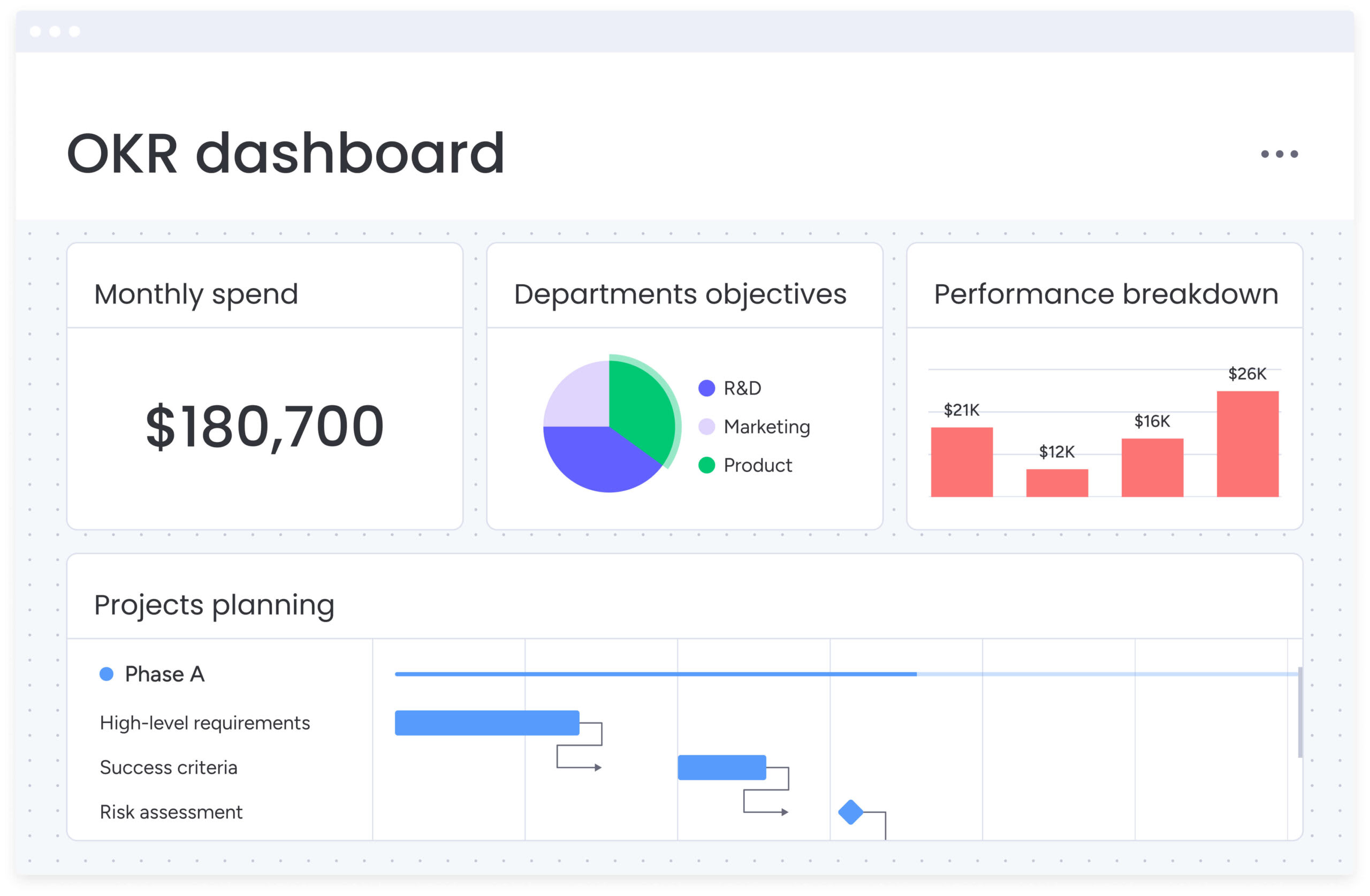
Static reports aren’t enough for CSR management. Real-time dashboards give you immediate visibility so you can make proactive decisions. These dashboards offer user-specific views: executives see high-level progress while facility managers access detailed energy data.
Automated alert systems notify teams when metrics deviate from targets. Drill-down capabilities allow users to investigate root causes of performance trends. monday work management dashboards automatically display live project data for insights on budget, goals, schedules, and resources.
Meeting CSRD and ESRS reporting standards
The CSRD and European Sustainability Reporting Standards (ESRS) set the new compliance benchmark. These standards require double materiality assessment, standardized metrics for environmental and social topics, and third-party data assurance.
Reporting must be digital and machine-readable. Compliance necessitates shifting from spreadsheet-based tracking to integrated management systems aggregating data from the entire value chain.
7 common CSR challenges and how to solve them
Even with a solid plan, CSR implementation comes with challenges. Recognizing these early helps you stay on track and maintain momentum.
1. Resource and budget limitations
Resource constraints are a common barrier to entry. Organizations maximize impact by adopting phased implementation, starting with high-impact, low-cost initiatives like energy conservation.
Key strategies include:
- Leveraging employee engagement: Volunteer programs and green teams extend reach without significant capital outlay.
- Forming nonprofit partnerships: Collaborative initiatives share costs while amplifying impact.
- Focusing on efficiency gains: Energy and waste reduction programs often pay for themselves.
2.Cross-department coordination
CSR initiatives often stall due to misaligned departmental priorities. Success requires governance structures with shared objectives linking CSR goals to departmental performance metrics.
Solutions include:
- Regular cross-functional meetings: Integrated planning sessions ensure alignment across teams.
- Shared performance metrics: Connecting CSR outcomes to departmental KPIs drives accountability.
- Unified project management: monday work management provides a single source of truth where teams visualize dependencies and collaborate on shared outcomes.
3. Data collection and management
Gathering consistent data from disparate sources proves complex and error-prone. Solutions involve implementing standardized collection procedures and utilizing automated systems, reducing manual entry.
Best practices include:
- Establishing data governance policies: Quality control ensures accuracy and consistency.
- Integration platforms: Connect siloed systems into unified reporting structures.
- Automated collection workflows: Reduce manual errors and improve data reliability.
4.Regulatory complexity
CSR regulations are constantly evolving. Keeping up requires ongoing monitoring and, in many cases, expert guidance.
Participating in industry groups can also provide early insights into upcoming changes.
5. Stakeholder engagement
Meaningful engagement goes beyond basic communication. You need to actively involve stakeholders and reflect their feedback in decisions. This builds trust and strengthens long-term relationships.
6. Demonstrating CSR ROI and impact
Measuring CSR impact isn’t always straightforward. While financial returns matter, non-financial outcomes also play a role.
By connecting CSR activities to business results, such as employee retention, you can better demonstrate value.
7. Sustaining long-term commitment
Maintaining momentum can be difficult, especially during leadership changes or economic shifts.
That said, embedding CSR into the core strategy ensures continuity. When leadership is accountable and progress is visible, initiatives are more likely to last.
Turning CSR plans into consistent execution with monday work management
Managing CSR at scale often feels fragmented. Teams work in silos, data lives in different places, and progress becomes difficult to track. As expectations grow, this lack of coordination can slow down both impact and decision-making.
This is where a structured, connected approach makes a difference. monday work management helps you align daily activities with broader CSR goals while keeping visibility and accountability intact across teams.
- Lack of alignment across departments: CSR initiatives often lose momentum when teams operate independently, but shared workspaces bring everyone onto the same page with clear ownership and timelines.
- Limited visibility into progress and performance: Without real-time insights, tracking impact becomes reactive, whereas centralized dashboards provide a clear view of goals, metrics, and ongoing initiatives.
- Manual and inconsistent data collection: Gathering CSR data from multiple sources can be time-consuming and error-prone, so automated workflows ensure consistent, accurate reporting across functions.
- Complex compliance and reporting requirements: Keeping up with evolving regulations can be challenging, yet organized documentation and structured processes simplify audits and maintain readiness.
- Difficulty connecting strategy to execution: CSR strategies often stay high-level, but linking tasks, timelines, and outcomes ensures that daily work contributes directly to long-term objectives.
Ultimately, monday work management brings structure to complexity. It helps your teams stay aligned, improve efficiency, and deliver measurable CSR impact, without adding unnecessary operational overhead.
Frequently asked questions
What is the difference between CSR and ESG?
CSR refers to a company's voluntary initiatives addressing social and environmental issues, while ESG represents measurable criteria investors use to evaluate sustainability performance and risk management.
What are the CSR reporting requirements?
Major CSR reporting requirements include the EU's Corporate Sustainability Reporting Directive (CSRD) for large companies, SEC climate disclosure rules in the US, and various supply chain due diligence laws mandating transparency.
How much should companies budget for CSR programs?
CSR budgets typically range from 1-3% of annual revenue for established programs, though companies can start with smaller investments focused on high-impact, low-cost initiatives.
Can small businesses implement CSR effectively?
Small businesses can implement effective CSR programs by focusing on local community engagement, sustainable business practices, and employee-driven initiatives aligning with their values and capabilities.
How do you measure the ROI of CSR initiatives?
CSR ROI is measured by tracking financial benefits alongside non-financial outcomes like employee engagement, brand reputation, and customer loyalty contributing to long-term value creation.
How does monday work management support CSR program coordination?
monday work management centralizes CSR initiatives across departments, automates sustainability workflows and reporting, and provides real-time dashboards for tracking impact while enabling seamless collaboration between internal teams and external stakeholders.

 Get started