


Media production moves quickly, and risks often move even faster. Talent becomes unavailable, licensing approvals lag, creative notes reshuffle timelines, and one delayed deliverable can ripple through an entire campaign. When risks sit in scattered spreadsheets or surface too late in meetings, project managers lose the visibility they need to keep production on track.
Risk management software gives media teams the clarity they’re missing. It connects risks to real project timelines, highlights early warning signs, and helps teams act before issues turn into costly delays. Instead of reacting to problems after they appear, you gain a system that monitors your campaigns in real time and makes risks impossible to overlook.
In this easy-to-follow article, you’ll learn which software capabilities matter most for media teams, how leading organizations use connected risk tracking to stay ahead of production challenges, and practical steps for building a risk management workflow that scales with your campaigns.
Key takeaways
The right risk management software transforms how media teams handle uncertainty. Instead of discovering issues during post-production or missing licensing deadlines, you can identify threats early, automate escalations, and maintain control across multiple campaigns.
Here’s the core points for media professionals to keep in mind:
- Stop managing risks in spreadsheets and status meetings: media projects need real-time visibility across creative workflows, talent schedules, and distribution deadlines to prevent costly surprises.
- Catch problems before they derail campaigns: AI-powered detection automatically scans portfolios for budget overruns, timeline delays, and resource conflicts that manual reviews miss.
- Connect risk tracking to daily work: monday work management embeds risk management directly into project boards, so teams see threats alongside tasks without switching between tools.
- Automate escalations to save time: configure alerts for budget thresholds, overdue approvals, and resource conflicts so critical issues reach stakeholders immediately without manual follow-up.
- Transform reactive firefighting into proactive prevention: organizations save 60 hours per employee yearly by identifying risks early and addressing them before they impact delivery.
What makes project managers choose monday work management for media risk management?
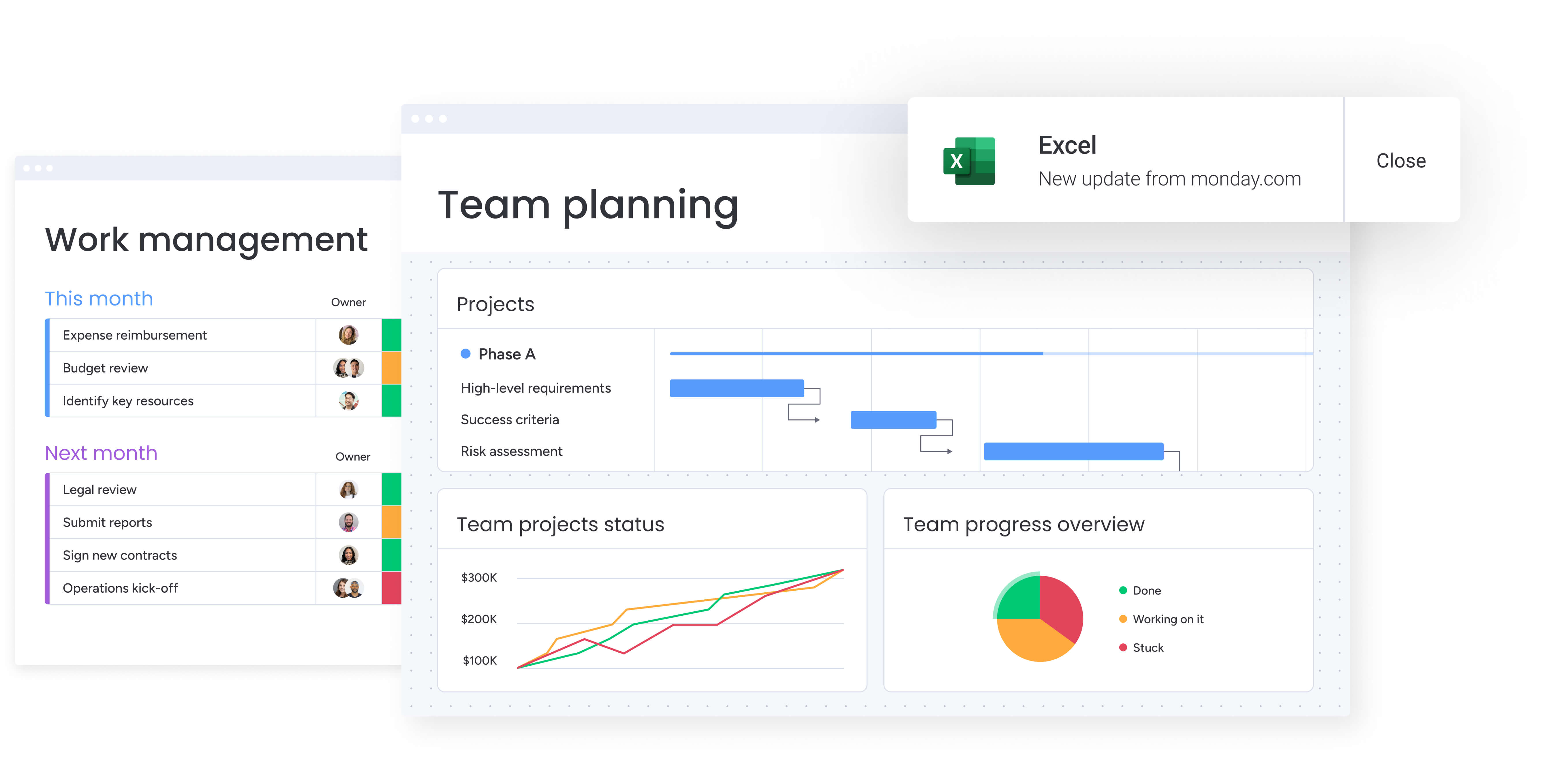
Project managers in media face a unique challenge: coordinating creative teams, technical resources, and distribution partners while managing constant change. This underscores the importance of understanding work management vs project management principles for effective collaboration.
Intelligent platforms monday work management are developed to addresse this by unifying project risk management with project execution. Rather than switching between risk registers and project plans, you see everything in one view. Creative approvals, talent availability, and technical dependencies all connect, revealing how delays in one area impact the entire production timeline.
What makes the platform powerful? It puts risk management in everyone’s hands. Creative directors flag content issues, production managers spot resource conflicts, and executives track portfolio health — no special training needed. This democratized approach means risks surface faster because more eyes are watching.
SPH Media demonstrates this impact at scale. Their Content Lab manages hundreds of campaigns across 40+ brands with 130+ people working on monday work management. By centralizing risk visibility, they track workloads accurately, identify overallocation before it causes delays, and maintain precise performance metrics across their entire operation.
Top features for managing media project risks
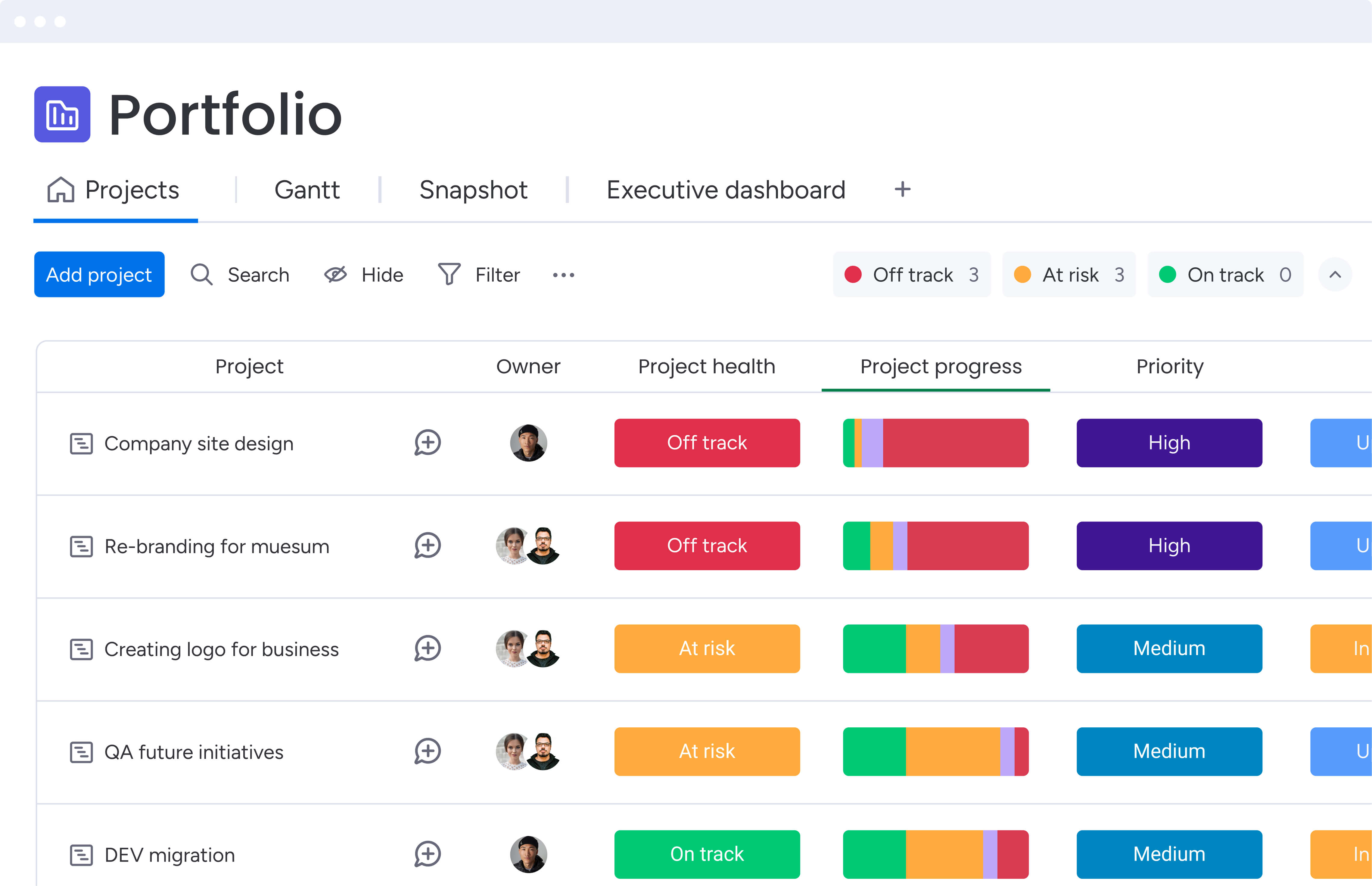
Media teams need specialized capabilities to handle the unique risks of creative production. monday work management delivers five core features that transform how project managers identify, track, and mitigate risks across campaigns.
Risk and issue tracking integrated into workflows
Teams hate switching tools. That’s why monday work management puts risk tracking right inside your project boards, connecting your risk register with the tasks people actually do every day.
Create detailed risk cards that capture probability, impact, mitigation strategies, and ownership, effectively serving as a risk register that teams can easily access. These cards stay visible alongside tasks and deadlines, ensuring risk awareness during every project decision. Media-specific categories help you track licensing issues, talent conflicts, and approval delays with precision.
The integration means immediate context. When a licensing risk emerges, you instantly see affected tasks, adjust timelines through dependencies, and notify stakeholders — all in one workflow. This connected approach transforms risk management from a separate exercise into part of natural project flow.
AI-powered risk identification across portfolios
AI gives media project managers a broader, faster, and more reliable way to spot issues before they escalate. Instead of reviewing projects one at a time, monday work management analyzes patterns across your entire portfolio and highlights risks the moment they appear.
Here’s how AI strengthens risk detection:
- Monitors project health continuously: identifies tasks trending toward delays, budget pressures, and resource overload without manual review.
- Surfaces risks automatically: sends smart notifications when something requires attention, so potential blockers never stay hidden.
- Highlights dependencies you might miss: spots how timeline shifts or stalled approvals affect downstream work.
- Prioritizes requests by risk level: categorizes new work so high-impact or high-urgency items receive faster oversight.
Visual timeline management with critical path analysis
Gantt charts in monday work management go beyond basic scheduling. They provide critical path analysis and baseline tracking essential for complex media productions.
The critical path overlay shows which tasks must complete on time to prevent project delays. This focus helps project managers concentrate mitigation efforts where they matter most. When talent availability threatens the production schedule, you can immediately see the impact and explore alternatives.
Baseline comparison reveals how risks affect timelines over time. By comparing current schedules against original plans, you demonstrate to stakeholders exactly how issues impact delivery. This transparency supports data-driven conversations about scope adjustments and deadline negotiations.
Automated alerts and escalation workflows
Risk management fails when critical issues go unnoticed. monday work management’s automation engine creates custom rules that trigger alerts based on your specific criteria.
Configure notifications for various scenarios:
- Budget thresholds: alert finance when campaigns approach spending limits.
- Timeline risks: notify creative directors about overdue approvals.
- Resource conflicts: escalate to leadership when multiple projects compete for the same talent.
Automated alerts ensure the right people get the right information at the right time, freeing you up for more strategic work. The system sends alerts on its own, making sure the right people know about problems while there’s still time to fix them.
Real-time dashboards for portfolio visibility
Executives want the big picture, fast. monday work management’s dashboards turn complex risk data into visual reports they can actually use to make decisions.
Create customized displays showing risk distribution by severity, project health scores, and budget variance — all updating in real-time. This transparency builds stakeholder confidence and accelerates decision-making. When executives ask about Q2 content launches, you can immediately show which projects face talent issues and what mitigation strategies are underway.
Dashboards also monitor team capacity, revealing resource-related risks before they impact delivery. Visualize team allocation, identify competing projects, and spot where additional resources might prevent bottlenecks. This comprehensive view enables proactive resource management alongside risk mitigation.
Benefits for project managers in media
Project managers using monday work management for risk management report significant operational improvements. The platform delivers measurable impact across time savings, cost control, and team productivity that directly affects project outcomes.
- Time savings through automation: organizations save 60 hours per employee yearly with integrated risk management. By eliminating manual updates across multiple systems, project managers reclaim time for strategic planning and stakeholder engagement.
- Enhanced cost control: centralized risk visibility prevents the budget overruns common in media projects. Real-time cost tracking and automated calculations help catch financial risks early, enabling adjustments before overruns occur.
- Improved compliance tracking: media projects navigate complex regulations around content, licensing, and distribution rights. The platform’s audit trails and automated documentation maintain records needed for compliance reviews while reducing information silos that lead to regulatory issues.
- Increased team productivity: effective resource allocation saves teams 3,564 hours yearly. Optimized workload distribution reduces conflicts and prevents the burnout that occurs when risks aren’t managed proactively.
- Higher quality outputs: early risk identification lets creative teams focus on quality rather than crisis management. When risks are addressed proactively, teams deliver more creative output with fewer last-minute compromises.
How to implement risk management for media projects
Ready to get started? Here are six practical steps to set up monday work management for your media projects — without disrupting how your team already works.
Step 1: configure media-specific risk categories
Start by defining risk types unique to media production. Create categories for talent availability, licensing issues, content approval delays, technical production risks, and distribution dependencies.
Use customizable fields to capture attributes specific to each risk type, ensuring comprehensive tracking from project inception. This foundation enables accurate risk assessment and targeted mitigation strategies.
Step 2: build risk-aware project templates
Develop standardized templates for common media workflows like video production, podcast series, and digital campaigns. Include pre-populated risk register template fields at critical phases and dependencies between creative, production, and post-production tasks.
These templates ensure risk impacts are automatically visible when timelines shift. Teams can launch new projects with proven risk management structures already in place.
Step 3: set up automated risk monitoring
Configure automation rules for proactive risk management. Create alerts for critical path delays, budget threshold approaches, and unaddressed high-priority risks.
Establish escalation workflows that automatically route critical issues to senior stakeholders based on severity and time sensitivity. This automation prevents risks from falling through the cracks during busy production periods.
Step 4: create risk review rhythms
Schedule regular risk assessments at project and portfolio levels. Use dashboard views during reviews to identify new threats, conduct a risk assessment of existing risks, and verify mitigation progress.
These structured reviews ensure continuous risk awareness across all active projects. Regular assessment prevents small issues from becoming major problems.
Step 5: connect creative production tools
Integrate monday work management with your existing creative stack — Adobe Creative Cloud, Slack, Google Drive, and other specialized media applications. This integration ensures risk data flows automatically between systems, eliminating manual updates and reducing oversight gaps.
Connected tools provide complete visibility into how creative work affects project timelines and risk exposure.
Step 6: enable team-wide adoption
Onboard creative and production teams to the platform’s intuitive interface. Demonstrate how centralized risk tracking benefits their daily work by providing upstream visibility and preventing last-minute surprises.
Show production teams how dependency tracking eliminates unexpected bottlenecks. Successful adoption requires showing teams how risk management improves their work experience.
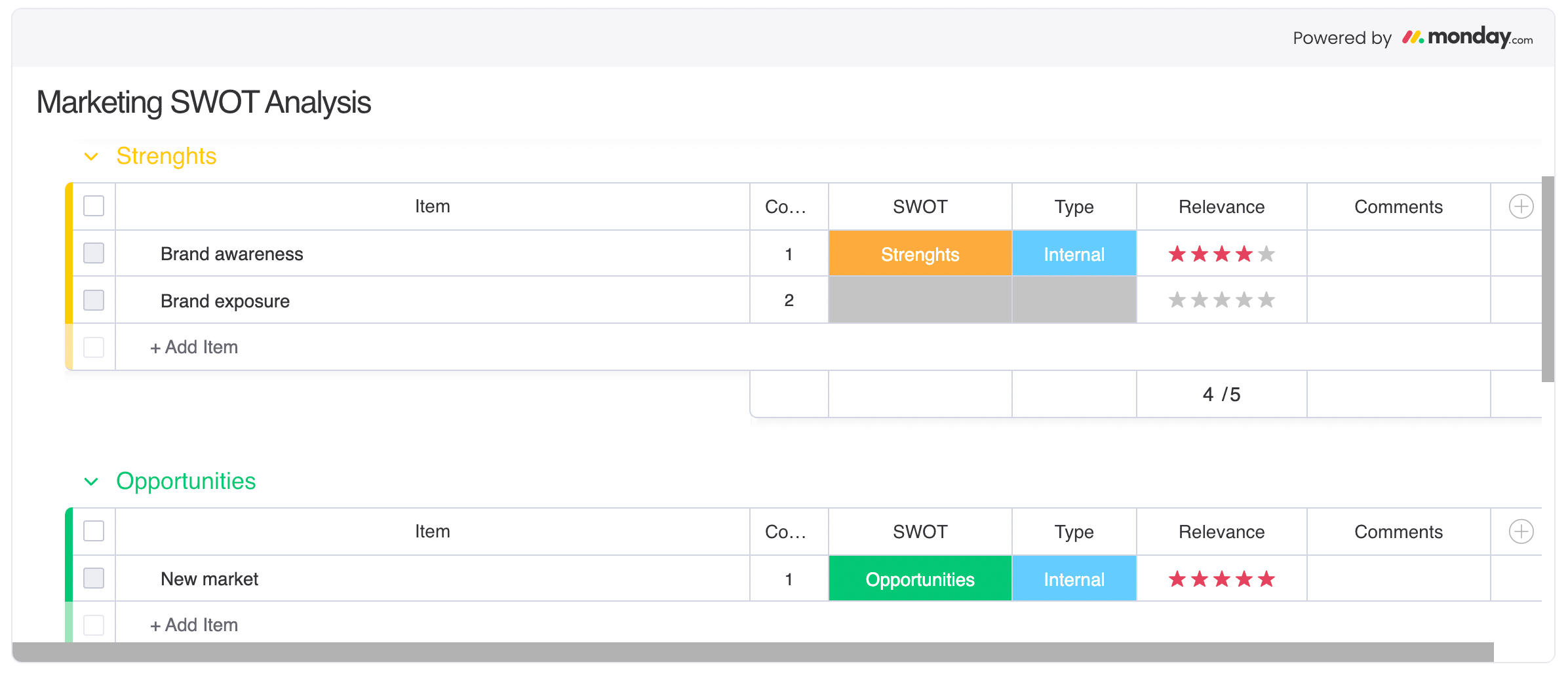
Comparing risk management platforms for media teams
Different platforms offer varying capabilities for media project risk management. Understanding these differences (outlined below) helps you choose the solution that best fits your team’s needs and workflow requirements.
| Feature | monday work management | Wrike | StandardFusion |
|---|---|---|---|
| Visual risk register | ✓ Dedicated Risk View with customizable cards | ✓ Custom fields in project boards | ✓ Dedicated risk module |
| Automated risk alerts | ✓ No-code automation with custom triggers | ✓ Automated notifications | ✓ Automated risk workflows |
| Mobile risk reporting | ✓ Full-featured mobile app | ✓ Mobile app available | ✓ Limited mobile functionality |
| Real-time dashboards | ✓ Customizable with live data | ✓ Dashboard reporting | ✓ Pre-built risk dashboards |
| Integration with retail systems | ✓ 200+ integrations + open API | ✓ 400+ integrations | ✓ Limited integrations |
| Project + risk in one platform | ✓ Unified work management | ✓ Unified platform | ✗ Risk-focused, limited PM features |
| Ease of use for non-specialists | ✓ Intuitive, visual interface | ◐ Moderate learning curve | ◐ Requires risk management expertise |
| Price per user/month | From $10 (billed annually) | From $10 (billed annually) | Pricing upon request |
| Implementation time | 2-4 weeks typical | 4-8 weeks typical | 8-12 weeks typical |
| G2 rating | 4.7/5 (12,000+ reviews) | 4.2/5 (3,500+ reviews) | 4.8/5 (limited reviews) |
After looking at this comparison it’s clear that monday work management has a clear advantage in AI-powered risk detection and proven media industry success. While other platforms offer basic risk tracking, the sophisticated platform provides the comprehensive capabilities media teams need for proactive risk management.
SPH Media's risk management transformation
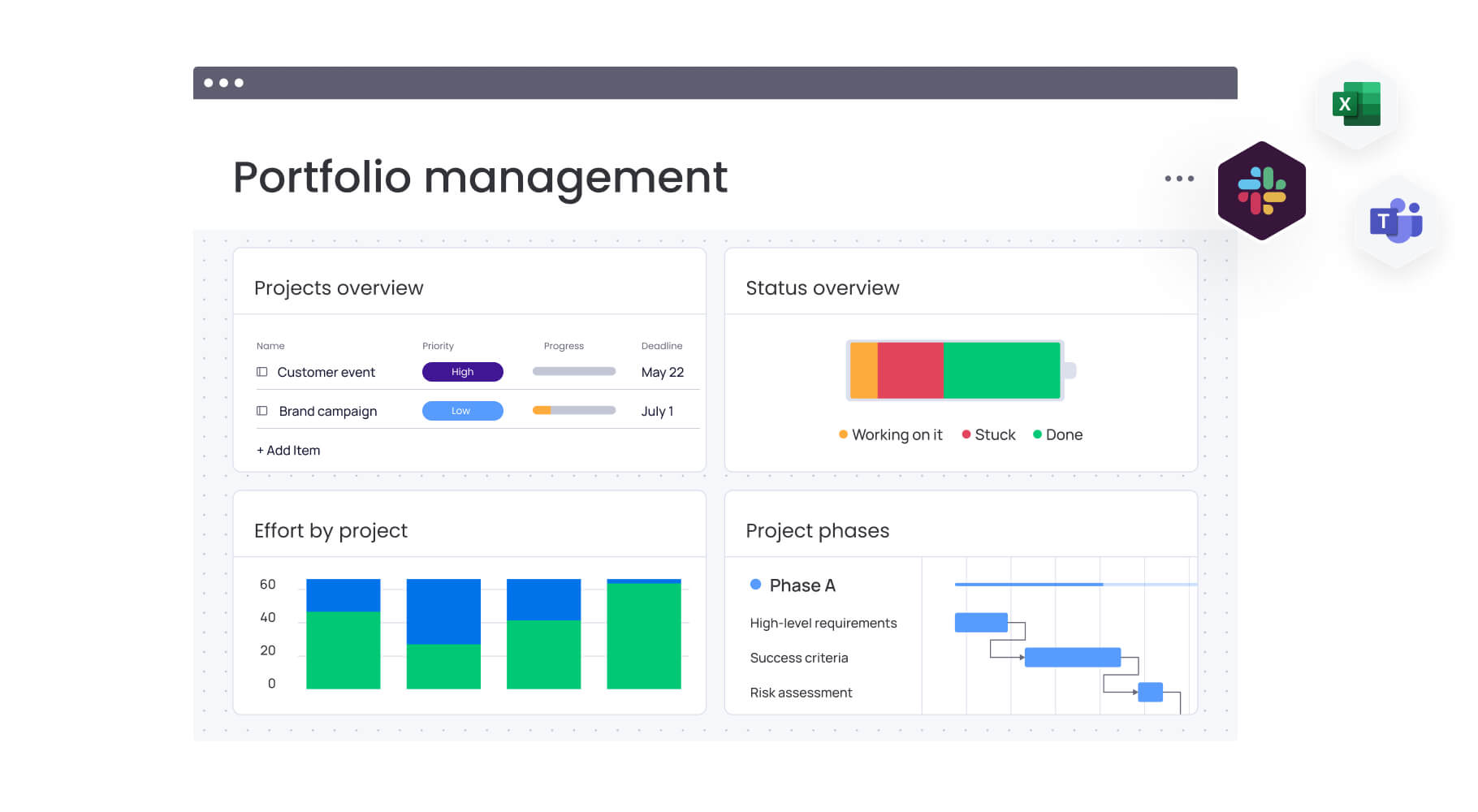
SPH Media’s Content Lab shows how centralizing risk management can completely reshape media operations at scale. Their shift from fragmented processes to unified, real-time visibility reveals what becomes possible when risks, timelines, and production work all live in one connected system.
The challenge: growing complexity across 40+ brands
The Content Lab managed campaigns spanning multiple formats, channels, and stakeholder groups. With work and communication spread across different tools, risks surfaced late, deadlines slipped, and teams struggled to maintain alignment as priorities shifted.
The solution: one platform for campaigns, risks, and communication
By implementing monday work management, SPH Media connected risk tracking directly to campaign execution. Key improvements included:
- Advertiser bookings: synced automatically into creative workflows to eliminate manual data transfer.
- Alerts at every phase: surfaced risks before they affected deadlines.
- Centralized communication: removed silos that previously caused delays.
- Consistent templates: reduced variability across 40+ brands.
- Workload tracking: highlighted resource risks before they escalated.
The results: scalable, predictable delivery
The Content Lab now manages hundreds of campaigns with 130+ team members working in one shared platform. Stakeholders see status instantly, and risks are identified early enough to prevent disruptions.
Additional achievements include:
- Productivity gains: driven by standard templates and automated reporting.
- Faster coordination: using timeline views to understand progress and constraints.
- Stronger alignment: with clearer visibility across creative, content, sales, and operations teams.
This transformation proves that centralized risk management helps media organizations scale confidently without sacrificing quality or control.
Transform your media risk management approach today
Media projects will always involve uncertainty. Talent schedules shift, creative visions evolve, and technical challenges emerge. The difference between successful delivery and costly delays lies in how you identify and respond to these risks, which is why a risk management plan is essential for proactive mitigation.
Centralize your risk management in a single, collaborative platform. monday work management gives you everything in one place: smart risk detection, clear visibility, and workflows that do the heavy lifting — right where your team already collaborates.
The benefits extend beyond risk mitigation too: teams save thousands of hours annually through automation, maintain better cost control through real-time tracking, and deliver higher quality outputs when risks are addressed proactively. Organizations like SPH Media prove that comprehensive enterprise risk management scales with growth while improving operational efficiency.
Join the media organizations already using monday work management to deliver projects with confidence. Experience how unified risk management improves visibility, reduces manual work, and keeps campaigns on track.
The content in this article is provided for informational purposes only and, to the best of monday.com’s knowledge, the information provided in this article is accurate and up-to-date at the time of publication. That said, monday.com encourages readers to verify all information directly.
Frequently asked questions
What should small media teams look for in risk management software?
The best risk management software for small media teams balances comprehensive features with affordability and ease of use. monday work management offers a free plan for up to two users, with paid plans starting at $10/user/month. Small teams get full access to risk tracking, Gantt charts, dependencies, and automation — features often reserved for enterprise tiers elsewhere.
How much does risk management software cost for media companies?
Risk management software for media companies typically costs $10 to $75 per user monthly, depending on features and team size. monday work management starts at $10/user/month for Basic, $12 for Standard, and $20 for Pro plans with advanced risk features. Enterprise pricing provides custom solutions with dedicated support, advanced security, and tailored onboarding based on organizational needs.
Can risk management software integrate with creative production tools?
Risk management software can integrate with creative production tools to maintain workflow continuity. monday work management connects with 200+ applications including Adobe Creative Cloud, Frame.io, Slack, and Google Drive. These integrations ensure risk data flows seamlessly between creative environments and project management, eliminating manual updates that create visibility gaps.
How long does implementation take for media organizations?
Implementation for media organizations typically ranges from days to weeks, depending on complexity and team size. monday work management's pre-built templates accelerate setup, while the intuitive interface enables immediate use of basic features. Teams can start with core functionality and gradually configure advanced automation and integrations as comfort grows.
What are the most common risks in media project management?
The most common risks in media project management include talent availability conflicts, licensing clearance delays, content approval bottlenecks, technical production issues, and budget overruns from scope changes. monday work management addresses these through centralized tracking, automated approval alerts, dependency visualization, and real-time budget monitoring that flags issues before they become critical.
How does monday work management handle remote media production risks?
monday work management handles remote media production risks through cloud-based accessibility and real-time collaboration features. The platform tracks time zone conflicts, communication delays, and distributed resource availability in one system. Mobile apps enable on-location teams to update risk status instantly, while automated notifications keep everyone informed regardless of location.

 Get started