


The biggest risks businesses face aren’t always dramatic events. More often, they’re the small issues hidden in spreadsheets or siloed chats that grow over time. Without visibility, teams are left reacting instead of planning, which slows progress and hurts confidence. Risk management software gives organizations a central place to identify, track, and resolve risks before they escalate.
This guide explains what risk management software does, why it matters, and which 25 platforms are leading the way in 2026. You’ll also learn the key features to look for when evaluating solutions for your team.
Get StartedWhat risk management software does
Risk management software provides a framework to identify, assess, and address potential disruptions. It helps teams evaluate risks by likelihood and impact, assign ownership, and monitor them in real time. By capturing risks in one system, organizations can move from reactive responses to proactive planning.
Instead of managing scattered spreadsheets or disconnected updates, risk management platforms create a single view of potential threats and the actions needed to mitigate them. This clarity turns risk management into a repeatable process that supports smarter, faster decisions across projects and business functions.
Why teams need risk management solutions
When risks are tracked in isolation, whether in email threads, spreadsheets, or team chats, critical information is easy to miss. That makes a thorough risk assessment nearly impossible and leaves teams in a defensive posture. Centralizing risk management solves this by making risks visible, measurable, and actionable.
Here are some specific, industry-based examples of how risk mitigation software can help:
Marketing and campaign launches
A product launch or seasonal campaign touches a dozen moving parts — creative approvals, paid media budgets, vendor deadlines, legal sign-off — and a missed dependency can push a launch date or trigger a compliance issue nobody saw coming. Marketing teams don’t need a dedicated GRC platform to catch this; they need visibility into where things stand.
In this kind of situations, a monday.com risk register can sit right next to the campaign board, flagging a blocked approval or an overdue vendor asset before it becomes a delay. Dashboards give leadership a real-time view of launch readiness without anyone compiling a status deck. This is where The AI Work Platform earns its name: the same workspace that plans the campaign also tracks what could derail it.
Software and product development
Sprint risk rarely looks like enterprise risk — it’s a dependency that’s slipping, a flaky test suite, a scope change that threatens a release date. Dedicated IT-GRC tools are built for audit trails and regulatory frameworks, which is more structure than most product teams need day-to-day.
monday.com lets teams track these risks directly against the sprint board, using formula columns to score impact and likelihood, and automations to flag a risk the moment a linked task slips its deadline. AI agents can help by surfacing the risks most likely to affect a release, so the team’s attention goes to what actually matters — the team still makes the call.
Professional services and agency client delivery
Client-facing teams carry risk that’s specific to each engagement: scope creep, a resourcing gap, a deliverable that depends on a client’s own timeline. These risks are numerous but rarely need enterprise-grade compliance tooling; they need to be visible to the account lead and escalated before a client notices.
For example, a monday.com risk register can live inside each client’s project board, with automations that alert an account manager when a risk’s status changes or a mitigation task is overdue. For agencies juggling many concurrent engagements, dashboards that roll risk data up across projects give leadership the same “is anything about to go wrong” view that a large enterprise gets from a dedicated RMIS — without the implementation timeline or price tag.
Key features of enterprise risk management software
Enterprise risk management software connects data points across the organization to build a complete picture of risk. The most effective platforms include:
- Centralized risk registers that make ownership, status, and next steps clear.
- Real-time dashboards that track metrics and highlight issues early.
- Automation for alerts, escalations, and recurring reviews.
- Compliance tools that simplify audits and vendor oversight.
- Integrations with core business systems for finance, operations, and security.
- AI support that summarizes risks, predicts impact, or suggests next actions.
These capabilities replace manual reporting with dynamic insights and streamline collaboration across teams. The result is faster decisions, stronger compliance, and a culture of prevention rather than reaction.
12 best risk management software tools
The most effective teams don’t leave risk management to chance. They use structured processes and software that provide visibility, accountability, and foresight. The right platform brings risks into the workflow, making them trackable items instead of hidden issues. This clarity gives teams the information they need to act early and keep projects moving.
Our review highlights 25 leading risk management solutions for 2026. Some are all-in-one work management platforms, while others specialize in areas like compliance, audits, or IT risk. The common thread is helping teams see the full picture, act with confidence, and reduce the impact of uncertainty.
1. monday.com
monday.com is a flexible platform that teams can shape into a central workspace for risk. It brings risk data into one place so you can spot, track, and resolve issues before they disrupt projects.
Its visual interface makes risk status easy to understand at a glance, while collaborative features keep everyone aligned on mitigation steps. The platform is designed for teams that need adaptability without added complexity, with risk management built directly into existing workflows.
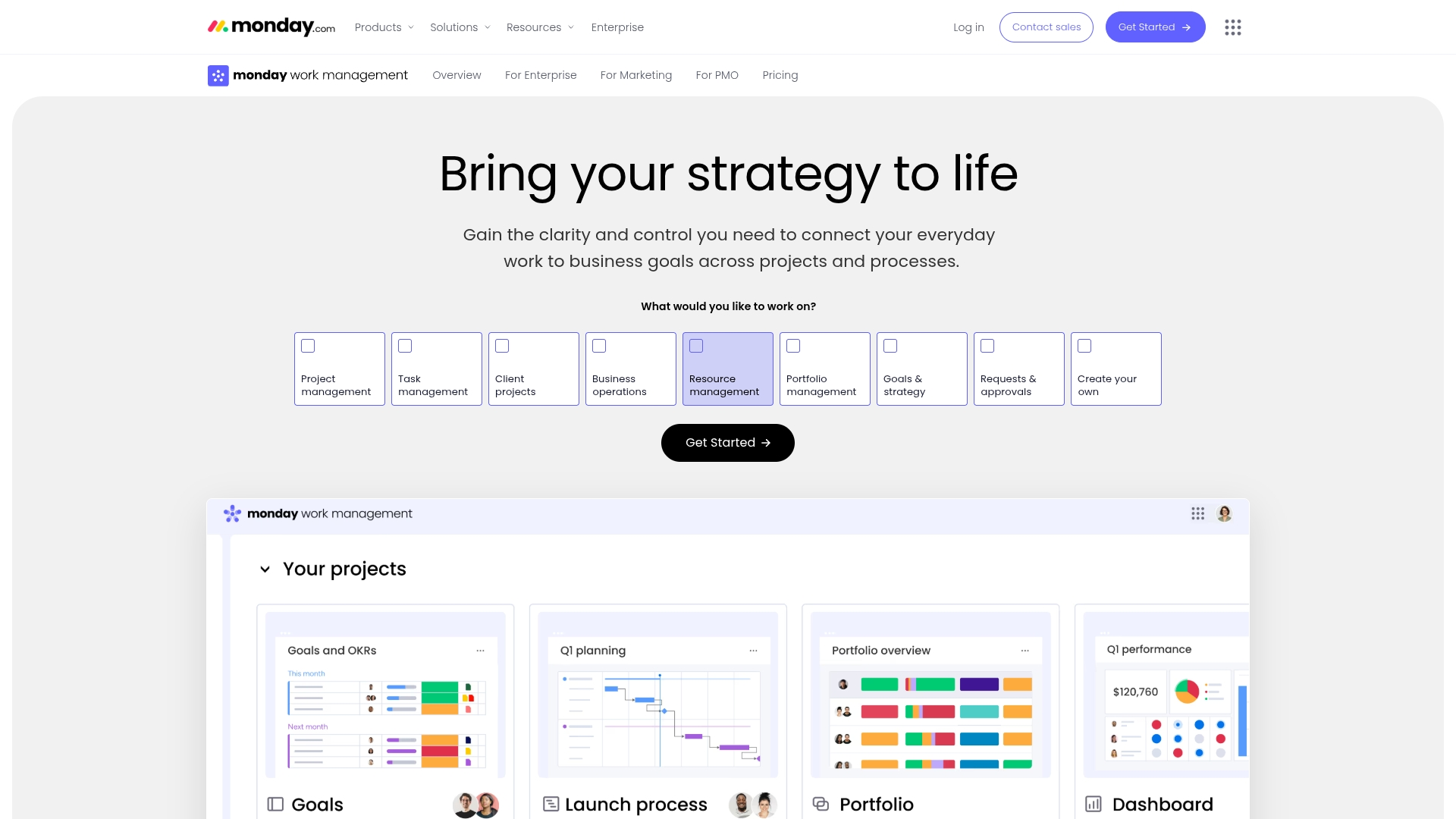
Best for: Teams that want flexible work management and risk tracking in one platform.
Key features:
- Customizable digital risk register with formula columns for user-configured calculations (like impact x probability) and real-time status tracking
- No-code automation that triggers alerts when risk thresholds are crossed or responsibilities change
- Real-time dashboards that pull data from multiple boards, with 200+ app integrations to create a central view of risk across key business tools
Pricing: All paid plans are billed annually and require a minimum of 3 seats.
- Free: $0 forever (up to 2 seats, 3 boards, basic features)
- Basic: $9/seat/month (unlimited viewers, 5GB storage, prioritized support, dashboards combine 1 board)
- Standard: $12/seat/month (Timeline & Gantt views, guest access, 250 automations & integrations actions/month, dashboards combine 5 boards)
- Pro: $19/seat/month (private boards, time tracking, formula columns, 25,000 automations & integrations actions/month, dashboards combine 20 boards)
- Enterprise: Custom pricing (advanced security, enterprise support, 250,000 automations & integrations actions/month, dashboards combine 50 boards)
Why it stands out:
- The visual interface makes risk status immediately clear to all stakeholders, eliminating confusion about threat levels.
- Deep integration capabilities connect risk data from your favorite tools, helping you create a single source of truth for decision-making.
- Its flexibility allows teams to build risk workflows that match their specific processes without heavy technical requirements, with more advanced capabilities available on higher-tier plans.
monday.com connects with more than 200 business tools, creating one view of risk across your ecosystem. Pull in security data, financial metrics, and compliance updates without leaving your dashboard. These integrations reduce blind spots and give your team the complete context needed for confident decisions.
The platform’s no-code automations shift risk management from manual tracking to proactive monitoring. Create workflows that escalate risks when thresholds are met, assign tasks automatically, and trigger approvals when status changes. These automations keep work moving and free your team to focus on strategy instead of administration.
monday AI helps teams act faster by turning risk data into clear, actionable insights. It can analyze historical patterns to score new risks, draft descriptions with minimal input, and recommend tailored mitigation steps. When reviewing registers, monday AI highlights the most critical threats and suggests next actions, so priorities stay clear and manageable.
Get Started2. LogicManager
LogicManager provides a unified enterprise risk management platform that connects every department and decision, transforming scattered data into a coherent strategy. Specializing in breaking down organizational silos with AI-powered taxonomy technology, the platform is ideal for heavily regulated industries that require comprehensive risk visibility. Their dedicated advisory support model ensures organizations don’t just implement software—they build mature risk management programs.
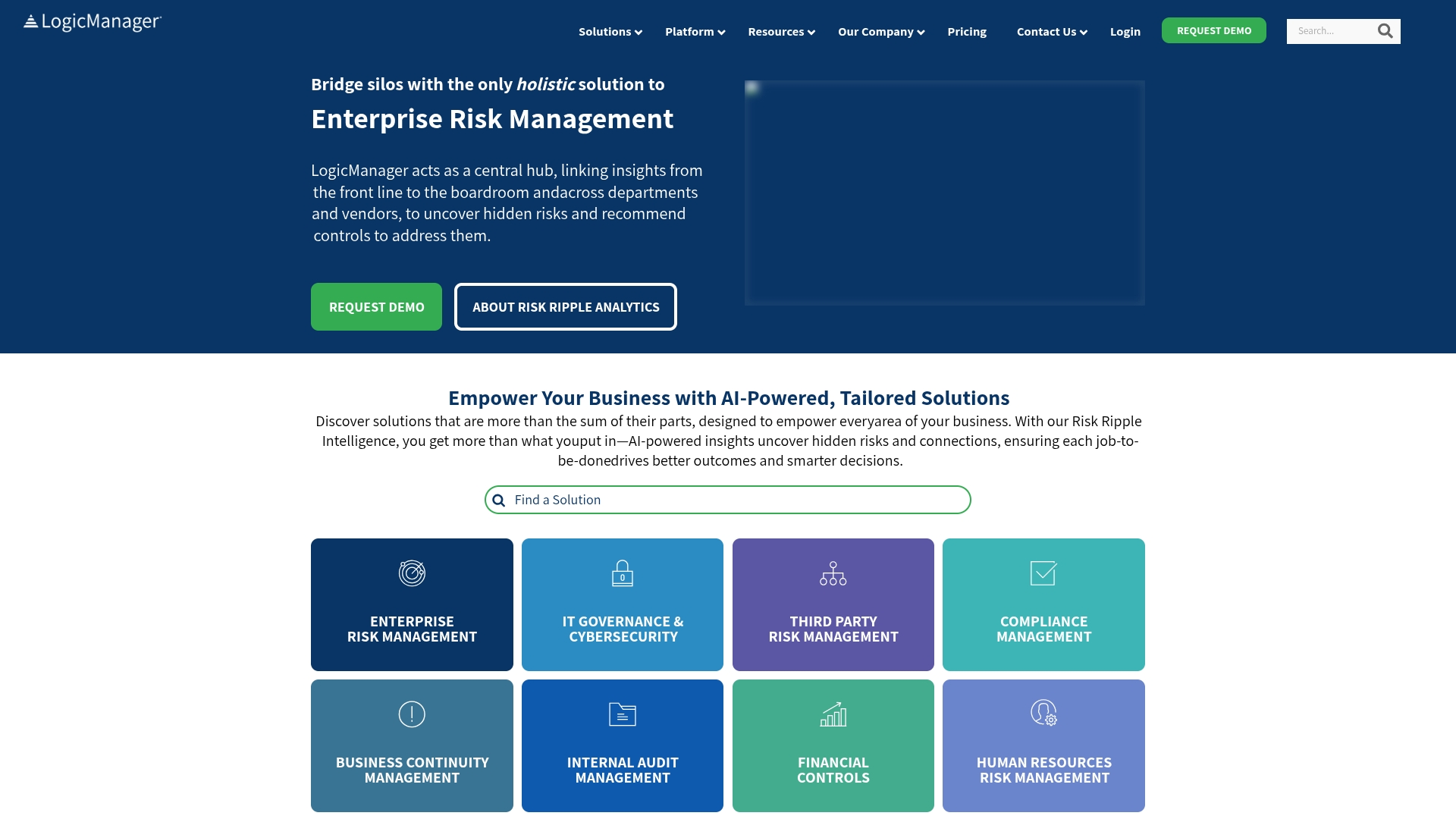
Use case: Organizations in regulated industries that need to connect risk management across departments while receiving ongoing advisory support to mature their enterprise risk management programs.
Key features:
- Taxonomy-driven platform that reveals interconnected risks across departments and business units
- AI-powered Risk-Based Analyzer that extracts risk information from documents and connects it to organizational frameworks
- Automated workflows with built-in business intelligence for configurable reporting to stakeholders and board members
Pricing:
- Custom pricing: Starting at $10,000 annually with value-based, job-to-be-done pricing model
- Unlimited users: No per-seat limitations for internal and external stakeholders
- All-inclusive package: Fixed pricing covers licensing, advisory services, implementation, training, and lifetime support
- Bundle discounts: Available when engaging multiple risk management solutions
Considerations:
- Higher starting price point may be prohibitive for smaller organizations with limited risk management budgets
- Some users report navigation challenges and limited customization flexibility for highly complex or unique business requirements
3. Riskonnect
By integrating both insurable and non-insurable risks into a single command center, Riskonnect gives enterprise leaders complete visibility across their entire risk landscape. This makes it the go-to choice for large organizations managing complex supply chains and regulatory environments. With over 2,500 customers across six continents, Riskonnect has established itself as the largest Risk Management Information Systems (RMIS) provider in the market.
Use case: Large enterprises seeking comprehensive risk management enterprise software that consolidates all risk types into a single, integrated platform for complete organizational visibility.
Key features:
- Comprehensive RMIS capabilities for managing claims, insurance policies, and risk-related data across the enterprise
- Advanced GRC modules covering compliance management, policy administration, internal audits, and third-party risk assessments
- AI-powered “Intelligent Risk” platform that automates routine tasks and uncovers hidden risk correlations for proactive decision-making
Pricing: Contact Riskonnect directly for custom pricing based on organizational size and requirements
Considerations:
- High implementation costs may put it out of reach for smaller organizations with limited risk management budgets
- The comprehensive feature set can create complexity that overwhelms teams without mature risk management programs
4. AuditBoard
AuditBoard delivers a connected risk platform that unifies audit, risk, and compliance management in one powerful solution. The platform specializes in SOX compliance and internal controls, making it ideal for Fortune 500 companies seeking integrated risk oversight across their entire organization.
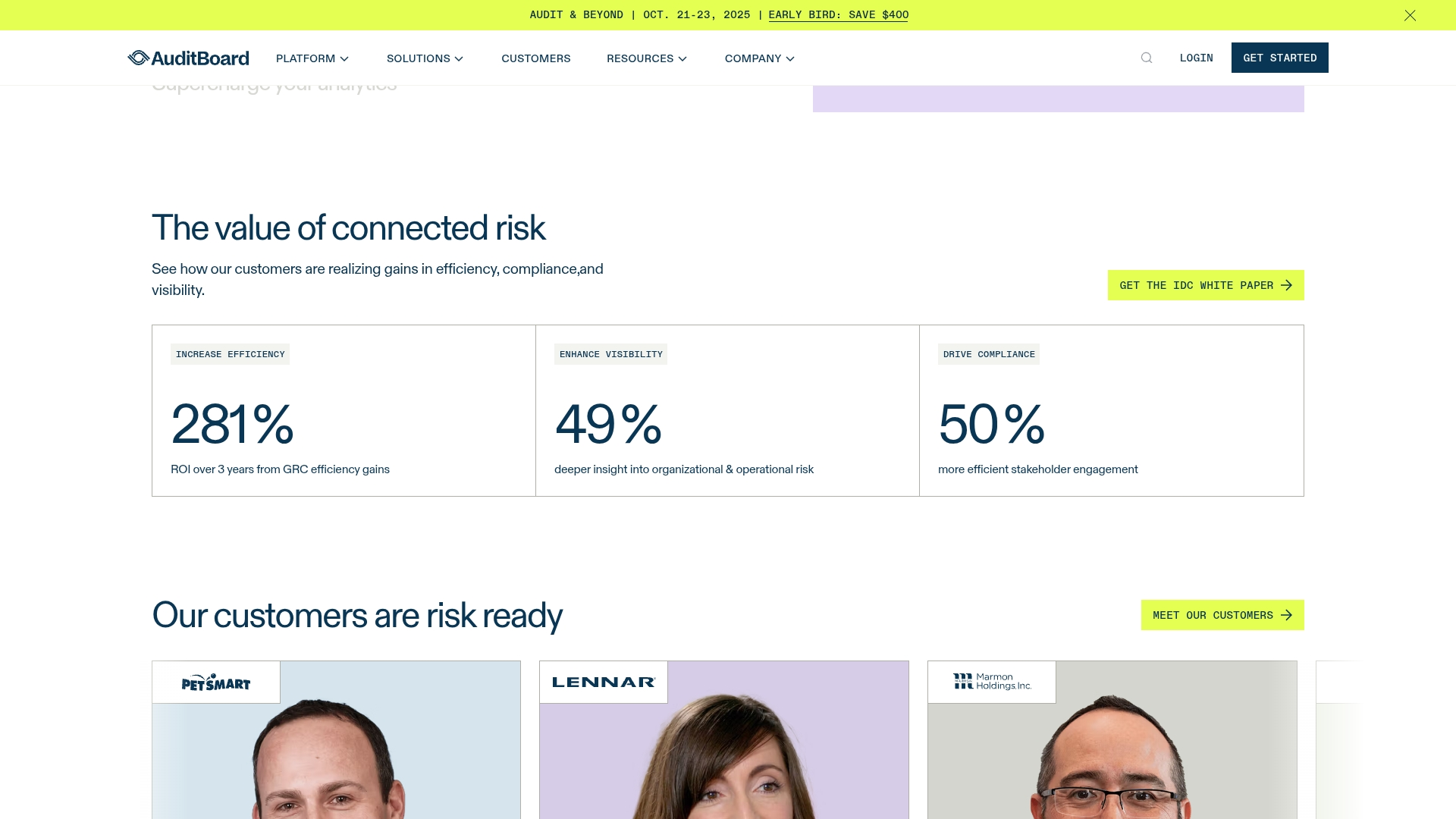
Use case: Large enterprises with complex audit and compliance needs who want to break down silos between risk, audit, and compliance functions.
Key features:
- Centralized risk register that unifies all risks, controls, policies, and frameworks in one location
- AI-powered automation for risk assessments, vendor evaluations, and content generation
- Real-time dashboards and reporting with risk heatmaps and trend visualization
Pricing:
- Annual subscription: $20,091 to $88,282 per year
- Median buyer cost: $42,775 per year
- Average discount: 16% savings available
- Multi-year commitments may qualify for additional discounts
Considerations:
- Learning curve can be steep for users outside core audit and risk teams
- Pricing may feel overwhelming for smaller businesses with simpler compliance needs
5. Archer
With over two decades of GRC expertise, Archer provides comprehensive integrated risk management solutions that redefine how enterprises address governance, risk, and compliance challenges. The platform serves large organizations seeking a unified approach to managing operational resilience across multiple risk domains. Its extensive template library and deep configuration capabilities make complex enterprise risk scenarios manageable and trackable.

Use case: Large enterprises with mature risk management programs requiring a comprehensive, configurable platform to manage multiple dimensions of risk from a single location.
Key features:
- Enterprise and operational risk management with centralized risk aggregation and program oversight
- IT and security risk management covering cyberattacks, data breaches, and technical vulnerabilities
- Third-party governance and vendor risk management with extended ecosystem oversight
Pricing: Pricing information is not publicly available and requires contacting Archer directly for custom enterprise quotes.
Considerations:
- User interface feels outdated compared to modern risk management platforms, creating potential adoption challenges
- Implementation complexity often requires paid consultants and extended timelines, increasing total cost of ownership
6. ServiceNow GRC
By embedding risk management directly into automated workflows, ServiceNow GRC creates a unified enterprise platform connected to your IT operations. This specialization makes it ideal for organizations that need to manage both operational and technology-related risks from a single, cohesive system.
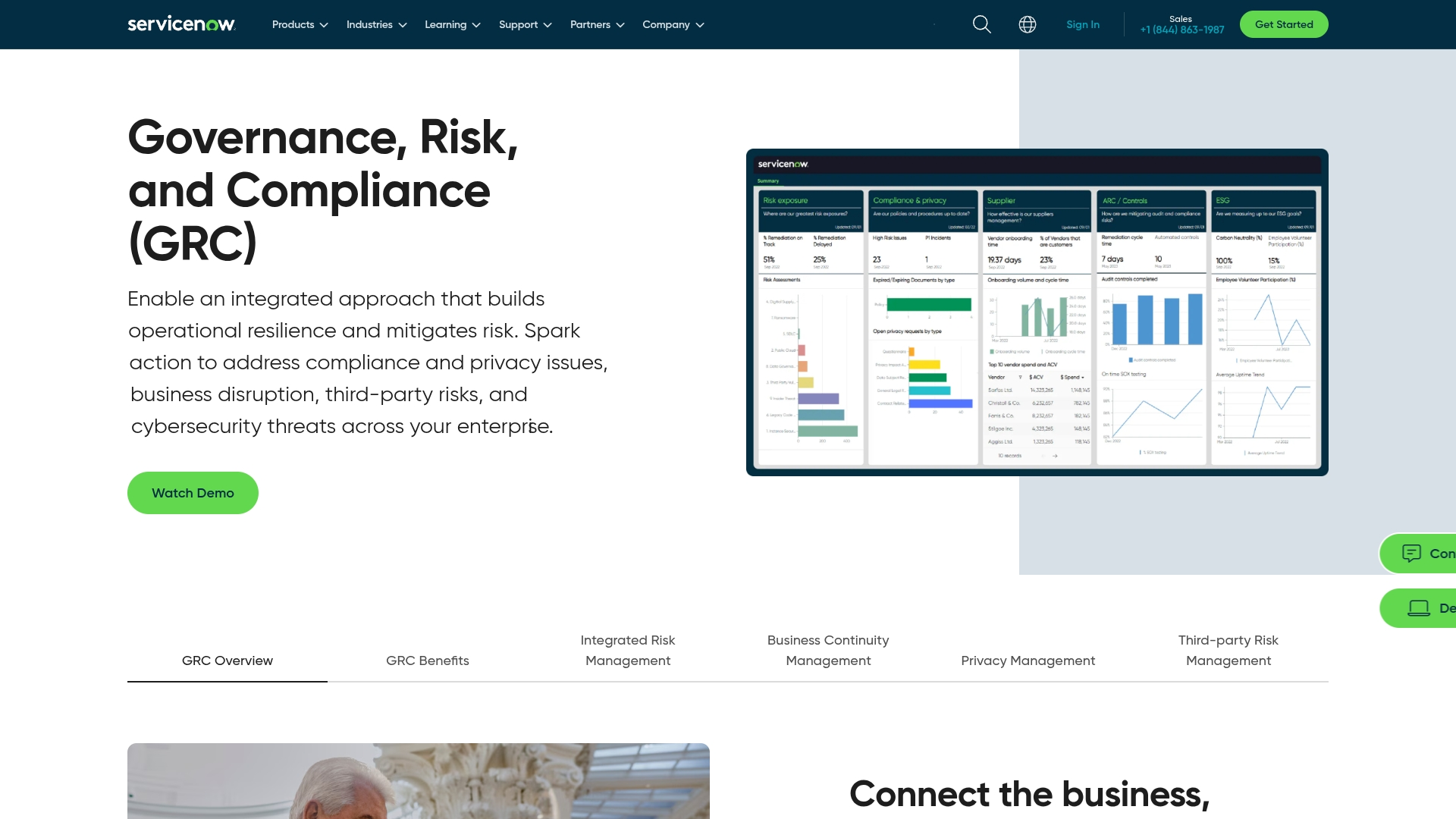
Use case: Organizations seeking to integrate risk management with IT service management for comprehensive visibility into technology and operational risks.
Key features:
- Continuous risk monitoring with key risk indicators that detect failing controls between assessments
- AI-powered smart issue management that assigns, groups, and suggests remediation actions automatically
- Real-time executive dashboards with role-based information for communicating risk posture across the organization
Pricing:
- Custom pricing based on organizational needs and requirements
- Contact ServiceNow for personalized quotes tailored to your business size and complexity
Considerations:
- The platform’s extensive capabilities can lead to complexity in deployment and management, requiring significant implementation effort
- Users report the GRC module can be less intuitive compared to purpose-built risk management software solutions, especially for teams not familiar with the ServiceNow ecosystem
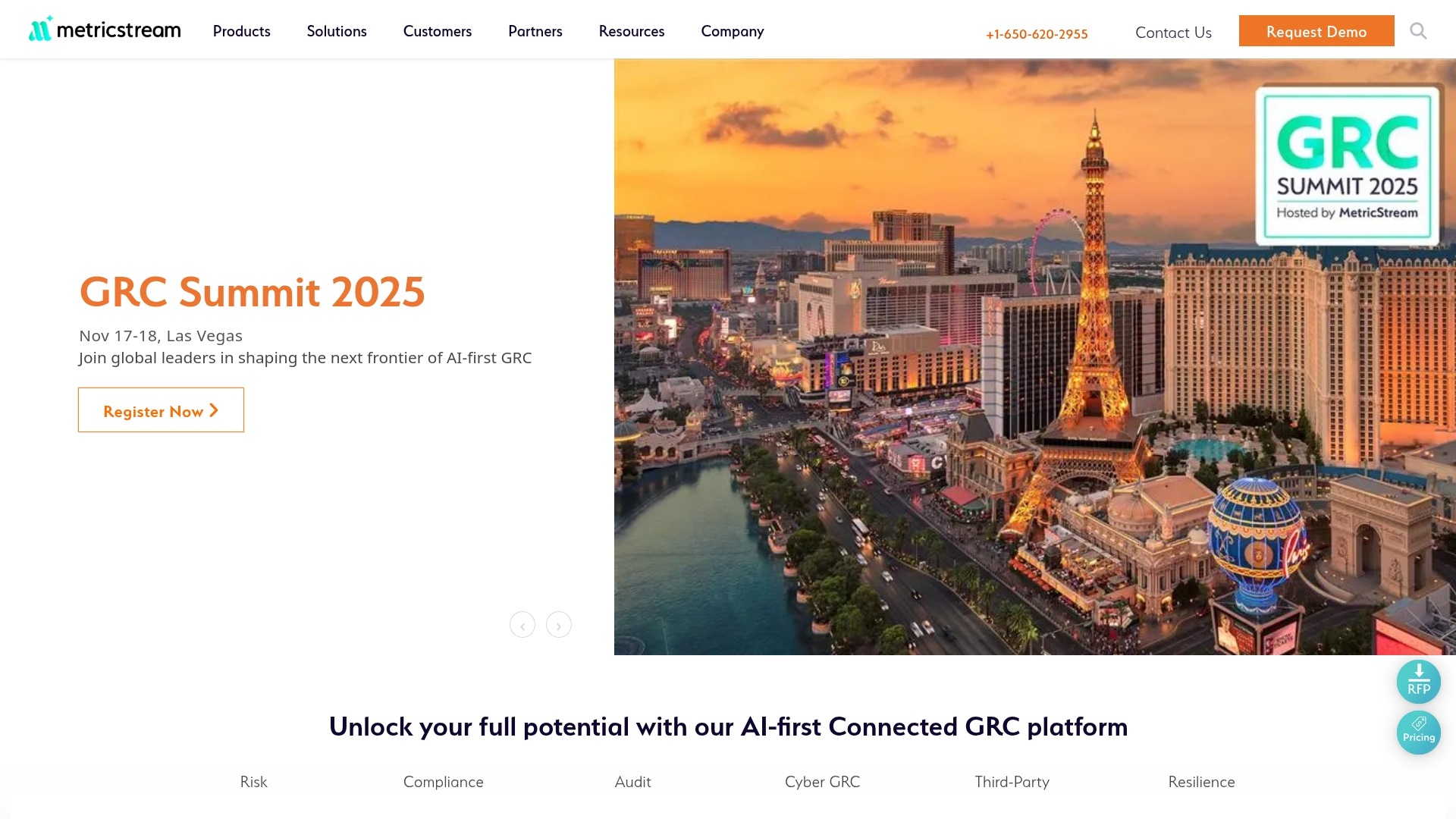
7. MetricStream
MetricStream provides enterprise-grade risk management software that converts scattered risk data into unified, actionable intelligence. The platform’s specialization in AI-powered risk analytics and comprehensive governance, risk, and compliance (GRC) capabilities makes it ideal for large organizations managing complex risk landscapes across multiple business lines.
Use case: Large enterprises seeking a comprehensive enterprise risk management platform with advanced AI capabilities and native risk quantification features.
Key features:
- AI-powered risk intelligence with predictive analytics and automated risk assessment recommendations
- Native risk quantification and Monte Carlo simulation for enterprise and cyber risk scenarios
- Integrated data model connecting business objectives, processes, risks, and controls across the organization
Pricing:
- Custom pricing based on organizational needs and requirements
- Contact MetricStream directly for detailed pricing information
- Enterprise-level costs can exceed $1 million annually for large implementations
Considerations:
- Complex platform with a steep learning curve that may overwhelm users new to enterprise risk management software
- High total cost of ownership, especially when factoring in customizations, support, and ongoing maintenance requirements
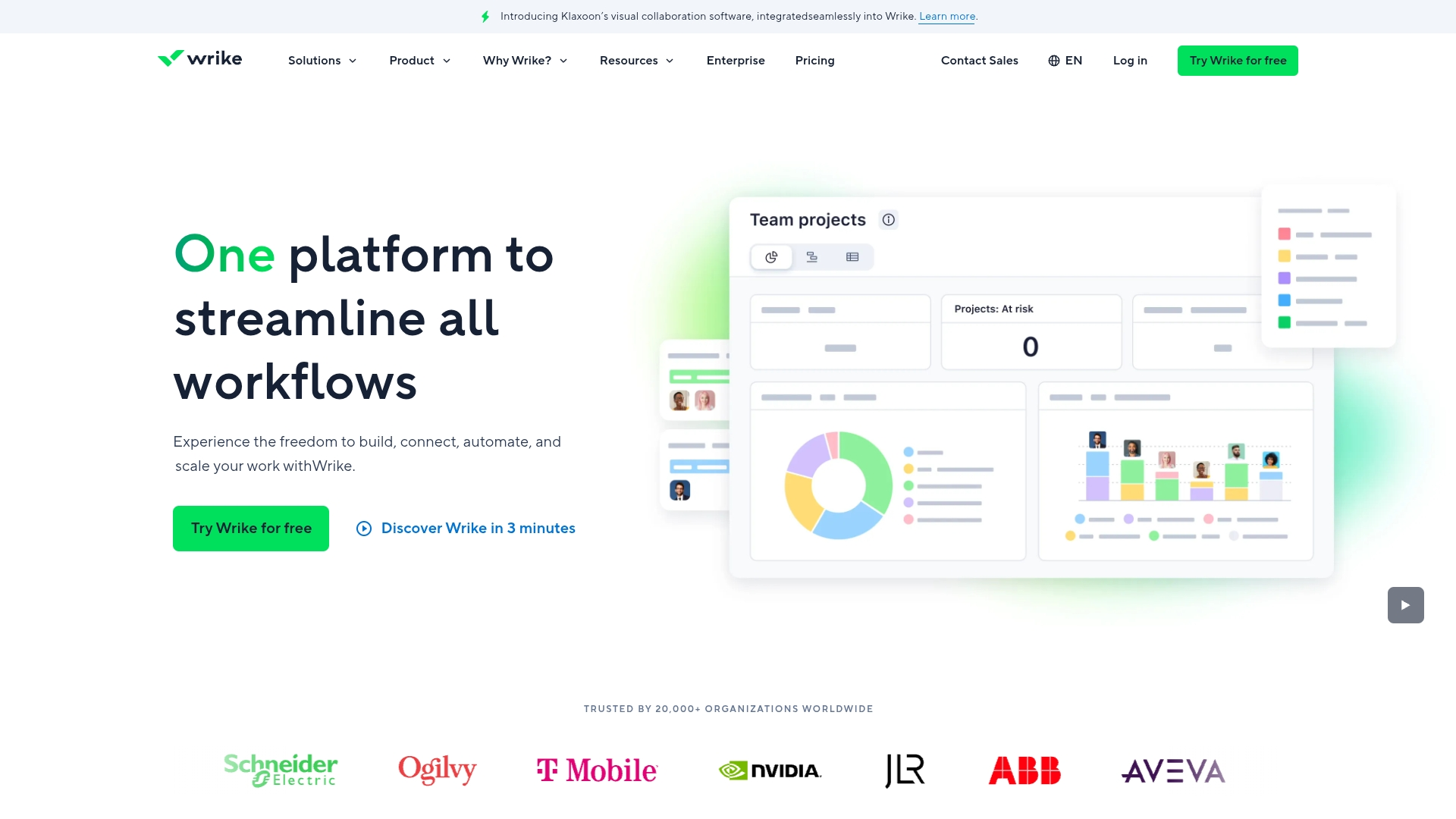
8. Wrike
Through AI-powered features, Wrike offers project risk management that changes how teams predict and prevent costly delays. The platform specializes in machine learning-driven risk alerts and customizable workflows, making it ideal for organizations juggling multiple complex projects simultaneously.
Use case: Organizations managing multiple projects that need predictive risk insights and highly customizable workflows to prevent delays before they impact budgets or timelines.
Key features:
- AI-powered Work Intelligence® that predicts project delays and sends automated risk alerts
- Pre-built risk management templates including RAID logs and IT risk assessments
- Customizable dashboards and Gantt charts for visualizing risk impact across project portfolios
Pricing:
- Free: $0/month (limited features for small teams getting started)
- Team: $10/month per user (billed annually, 2-15 users)
- Business: $25/month per user (billed annually, 5-200 users, includes AI risk prediction)
- Enterprise: Custom pricing (5+ users, includes advanced security features)
- Pinnacle: Custom pricing (5+ users, includes advanced reporting and budgeting tools)
Considerations:
- Steep learning curve due to extensive feature set that can overwhelm new users
- Higher-tier plans required for advanced AI risk management features, making it expensive for larger teams
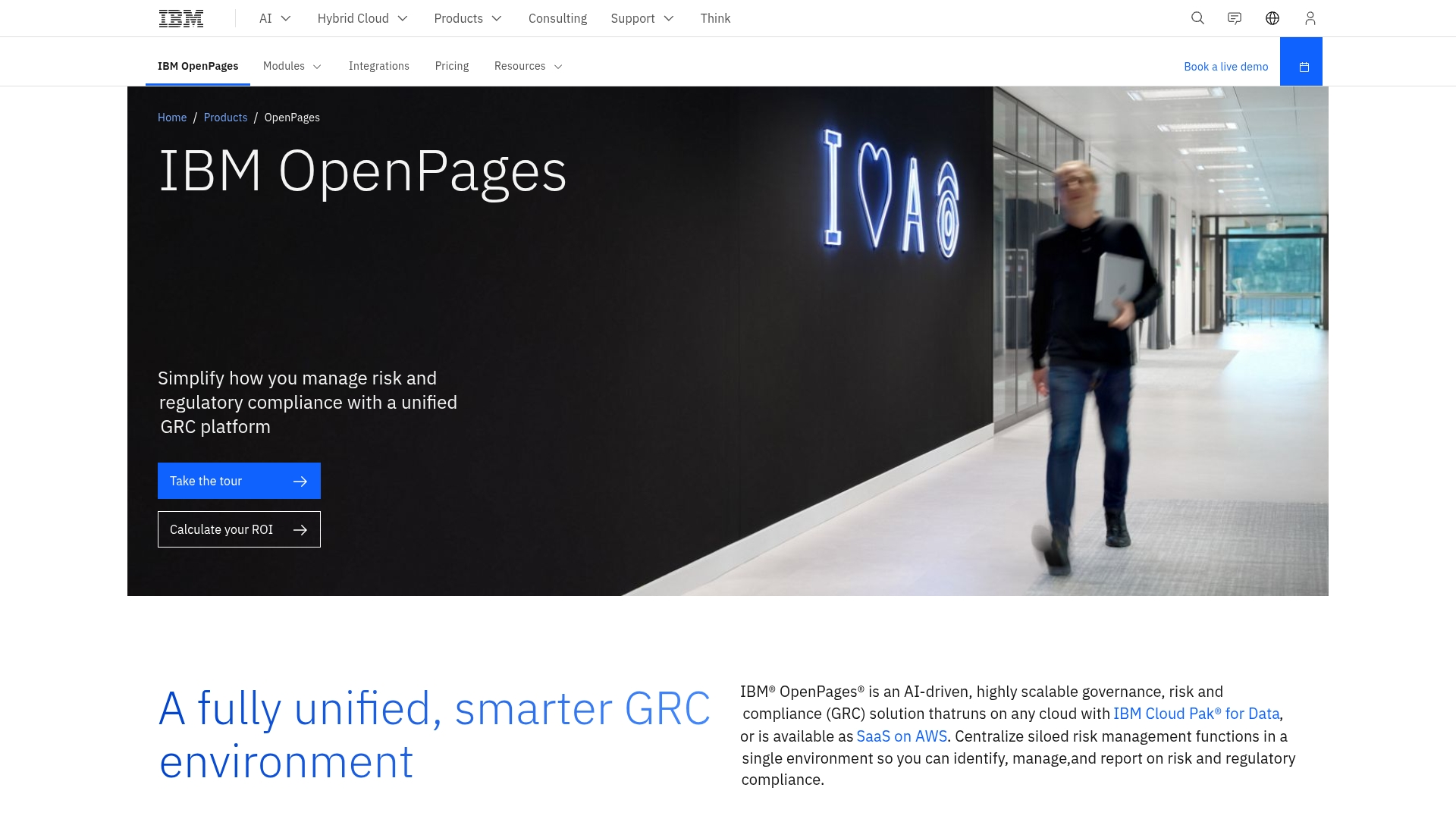
9. IBM OpenPages
IBM OpenPages elevates enterprise risk management with AI-powered insights that turn reactive compliance into predictive risk intelligence. The platform specializes in comprehensive governance, risk, and compliance (GRC) solutions for large enterprises, making it particularly valuable for financial services organizations managing complex regulatory environments.
Use case: Large enterprises seeking an integrated risk management platform that combines AI-driven analytics with comprehensive compliance capabilities across multiple business domains.
Key features:
- Operational risk management with automated risk and control self-assessments, loss event tracking, and scenario analysis
- AI-powered insights through IBM Watson integration for predictive risk analysis and automated compliance workflows
- Unified GRC platform supporting financial controls, third-party risk management, and regulatory compliance across enterprise operations
Pricing:
- Pricing information available through IBM’s custom quote process
Considerations:
- High implementation costs and complexity may be prohibitive for smaller organizations
- Steep learning curve due to the platform’s extensive functionality and enterprise-focused design
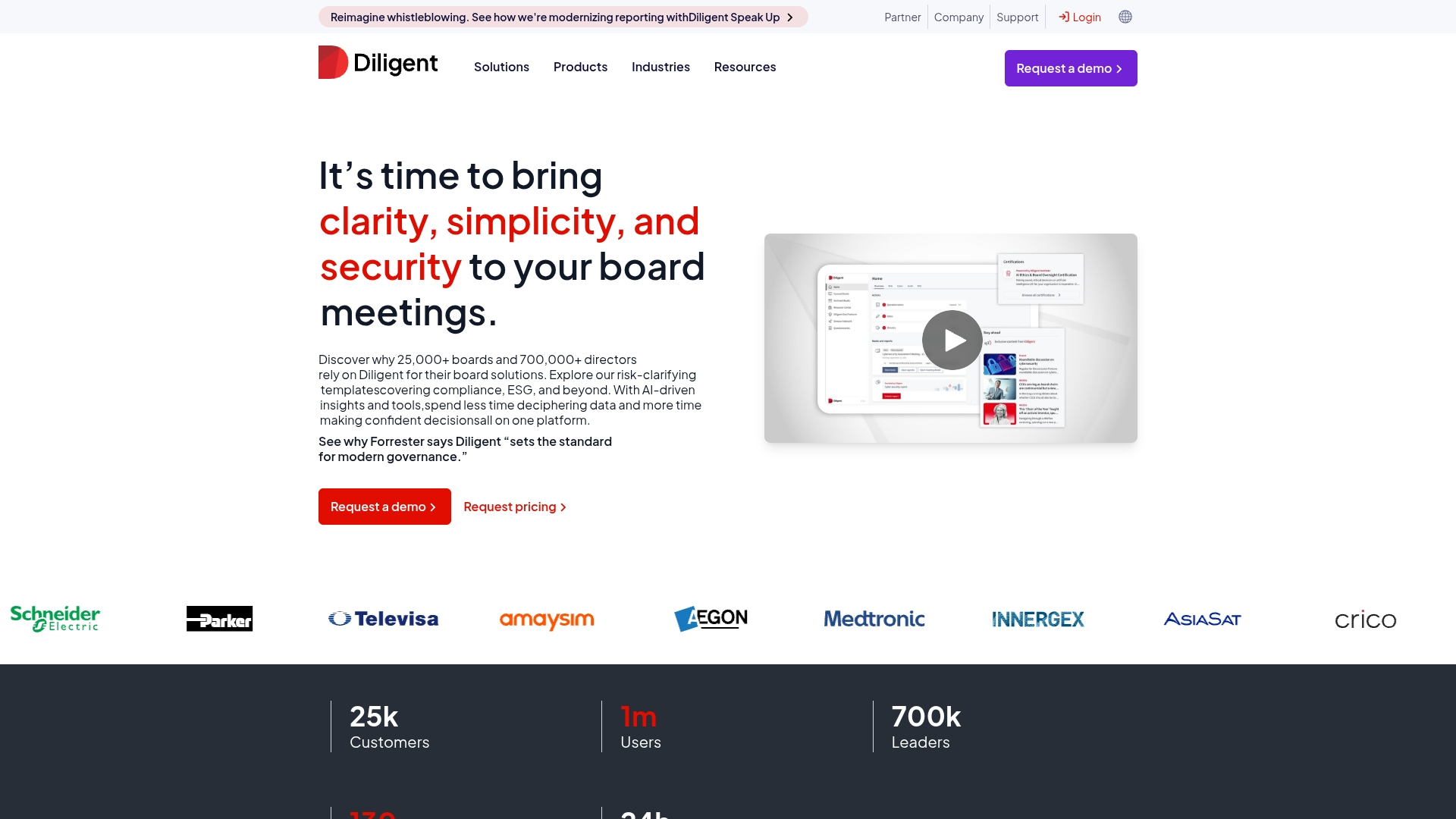
10. Diligent
Diligent provides comprehensive governance, risk, and compliance (GRC) software that connects boardroom oversight with operational risk management. The platform specializes in integrating enterprise risk management with board-level governance, making it ideal for large organizations in highly regulated industries that need to align risk strategy from the C-suite down to daily operations.
Use case: Organizations seeking to transform enterprise risk management into a strategic advantage by connecting operational risks directly to board-level decision making.
Key features:
- AI-powered risk identification using benchmarking data from over 120,000 SEC 10-K filings
- Integrated third-party risk management with supplier risk scores powered by Moody’s credit data
- Real-time risk reporting and executive dashboards that provide board-ready insights
Pricing:
- Custom pricing based on organizational needs and feature requirements
- Annual costs typically range from $2,500 to $420,000 depending on company size and modules
- Average implementation cost around $43,000 annually
- Contact Diligent directly for detailed pricing quotes
Considerations:
- High implementation costs may be prohibitive for smaller organizations that don’t utilize the full feature set
- Steep learning curve due to extensive functionality requires significant training investment for teams
11. Resolver Inc.
Resolver Inc. helps turn complex risk data into clear, actionable business intelligence, so your team can move from just reacting to risks to planning ahead with confidence. This platform is a powerhouse for unified risk intelligence, making it a fantastic choice for organizations looking to bring all their governance, risk, and compliance (GRC) operations under one roof. With its AI-powered automation and super-flexible workflows, it’s already helping over 1,000 global companies in fields like financial services, healthcare, and manufacturing.
Use case: Teams that need a comprehensive, customizable platform to transform scattered risk data into strategic insights across enterprise risk, compliance, and security.
Key features:
- AI-powered incident management with automated triage and remediation workflows
- A unified risk intelligence platform that connects the dots between compliance, audit, and security data
- Customizable risk assessment frameworks, complete with handy heat maps and scoring
Pricing:
- Enterprise solution: Kicks off at $10,000 annually
- Custom pricing is available to fit your organization’s size and needs
- Implementation and support services are available separately
Considerations:
- The initial setup can be a bit complex, so be prepared for a project that might take some time and resources.
- Its reporting features are powerful and highly customizable, which is great, but you’ll likely want to set aside some time for training to get the most out of them.
12. Microsoft Project for risk control
Microsoft Project provides a centralized control system for project risks that integrates seamlessly with the existing Microsoft ecosystem. The platform specializes in linking risk management directly to project schedules and timelines, making it ideal for organizations already invested in Microsoft tools who need comprehensive risk visibility within their project plans.
Use case: Organizations seeking risk management system software that integrates deeply with Microsoft Office tools and provides robust project scheduling capabilities.
Key features:
- Custom risk registers with tailored fields for probability, impact, and mitigation tracking
- PERT analysis for schedule uncertainty assessment using optimistic, pessimistic, and likely scenarios
- Direct risk-to-task linking that visualizes potential impacts on project timelines
Pricing:
- Pricing information was not available in the provided research
Considerations:
- Requires significant manual setup and customization to create comprehensive risk management processes
- Advanced quantitative risk analysis features like Monte Carlo simulations require third-party add-ins, increasing overall costs
How to choose the right risk management platform
Choosing a risk management platform comes down to how well it helps your team work together. The right solution connects risk-related data in one place and makes it easy to act on. That connection shifts teams from fragmented efforts to a consistent, proactive approach.
Look for platforms that integrate with the tools you already use and maintain enterprise-grade security without adding extra friction. The goal is a connected environment where risk data sits alongside projects and day-to-day work.
Adoption is the most important measure of success. A platform should be simple and adaptable enough that your team relies on it naturally. When it fits into existing workflows, risk management becomes a shared process instead of an added burden.
How to strengthen risk mitigation
Effective risk management starts with transparency. Teams work best when potential issues are flagged early and treated as useful signals rather than interruptions.
A platform like monday.com captures these conversations in project boards, keeping accountability clear and next steps defined. This creates shared ownership and prevents risks from slipping through the cracks.
Dynamic dashboards and AI-driven insights make patterns easier to spot and give teams the chance to address problems before they escalate. This shift builds resilience and keeps organizations focused on progress instead of reaction.
Building resilience with proactive risk management
Moving from reactive firefighting to proactive planning is essential for long-term success. The strongest organizations identify risks early and create strategies to handle them with confidence.
monday.com supports this approach with a single view of risks across the organization. Teams can collaborate in real time, monitor changes, and act before challenges grow into larger issues.
Ready to create a risk management process built for the pace of your business? Explore how monday.com helps you design workflows that strengthen agility and resilience.
Get StartedFAQs
What is the fastest way to evaluate a risk management platform?
The fastest way to evaluate a risk management platform is to run a live project in the platform. This shows right away if it can handle your team’s real needs instead of relying on a demo.
Can risk management software integrate with existing project tools?
Yes. Leading platforms integrate with the tools you already use, keeping risk data visible alongside project work.
How do AI features help with risk mitigation?
AI surfaces patterns in data and flags potential issues early. This gives your team more time to plan and act before risks escalate.
Which software works best for smaller teams?
Smaller teams benefit from flexible platforms that are easy to adopt and expand as needs grow. monday.com is one option that supports both starting small and scaling over time.
How do I measure ROI from risk management software?
ROI is measured in fewer costly incidents and time saved from automation. The biggest impact comes from the major disruptions you prevent.
Is there a free trial to test integrations?
Yes. Most platforms offer a free trial so you can connect core tools and confirm everything works as expected.

 Get started