


When someone hands in their notice, you have a golden opportunity to capture years of knowledge, relationships, and expertise before they walk out the door. A transition plan template transforms this moment into a structured handoff that protects your operations and sets successors up for success.
In this guide, you’ll discover how to build effective transition plan templates for many scenarios. We’ll show you the essential components every plan needs, walk through real-world examples for different scenarios, and reveal how the right work management system turns static checklists into dynamic workflows that keep your team moving forward.
Get the template in monday.comKey takeaways
- Start transition planning immediately when someone gives notice, using every day of the notice period for knowledge transfer instead of scrambling at the last minute.
- Capture relationship dynamics, client preferences, and the “why” behind decisions that departing employees carry in their heads.
- Build comprehensive plans with 5 core components, including clear objectives, realistic timelines, role matrices, knowledge documentation, and measurable success metrics for every transition.
- Develop standardized frameworks for employee departures, project handoffs, business changes, and executive succession to streamline future transitions.
- Transform static checklists into dynamic workflows with monday.com and convert transition plans into interactive boards with real-time tracking, automated notifications, and centralized collaboration.
What is a transition plan?
A transition plan transfers responsibilities, knowledge, and active work from 1 person or team to another. It captures documented knowledge like procedures and credentials, plus the unwritten stuff — stakeholder preferences, project context, and relationship dynamics. Think of it as a living workflow that ensures business continuity when someone changes roles, leaves the organization, or hands off a project.
Unlike a static document, an effective transition plan in your project management software works like a live system. It tracks progress, assigns ownership, and keeps everyone accountable during the handoff, protecting what your team knows while keeping work moving.
Who benefits from transition plans
Transition plans help everyone in the organization. Everyone benefits when handoffs go smoothly.
- Departing employees leave on professional terms, ensuring their legacy is preserved and colleagues are set up for success. It protects their professional reputation and network.
- Incoming team members receive a structured roadmap that accelerates their time-to-value. They get context, relationships, and operational knowledge — no need to start from zero.
- Managers and executives gain visibility into the transfer process, allowing them to resource effectively and monitor risks. They can keep strategic projects on track.
- External partners and clients experience seamless service delivery, often unaware that a transition has occurred due to the consistency of communication and execution.
Why every business needs a transition plan
Reactive approaches to personnel changes result in operational drag. Remaining team members scramble to locate files or decipher incomplete project histories. Implementing a standardized transition planning process shifts organizations from reactive to proactive, protecting intellectual capital while ensuring workforce mobility doesn’t compromise performance.
Minimize knowledge loss during critical changes
The cost of losing a tenured employee extends beyond recruitment fees. Lost institutional knowledge represents a significant operational setback that compounds over time. According to research from Robert Half, the top succession challenge for 53% of leaders is knowledge transfer.
Transition plans address this by:
- Preserving tacit expertise: Capturing the nuance of a role, like why specific vendors are preferred or the history behind client negotiations
- Protecting process integrity: Documenting shortcuts and undocumented optimizations to prevent successors from reverting to less efficient methods
- Retaining relationship intelligence: Collecting detailed notes on stakeholder dynamics to ensure hard-won trust transfers rather than resets
Ensure seamless business continuity
Operational momentum is difficult to regain once lost. Continuity becomes the primary goal of any transition — maintaining velocity when a key contributor exits.
Structured handoffs ensure:
- Sustained client confidence: Preventing perception of instability by establishing consistent deliverables and communication standards
- Maintained project velocity: Mapping outstanding items and deadlines to prevent projects from stalling between departure and replacement
- Stabilized team productivity: Precise responsibility reallocation to prevent remaining team members from being overburdened with undefined work
When transitions are managed as workflows rather than documents, teams maintain momentum through clear visibility and automated progress tracking.
Reduce costly transition risks and delays
Poorly managed transitions introduce risks with tangible financial and legal implications. Proactive planning addresses these vulnerabilities before they impact operations.
Critical risk areas include:
- Compliance gaps: Ensuring ownership of compliance work like data privacy audits transfers formally
- Access bottlenecks: Systematically transferring ownership of software accounts and digital assets
- Productivity losses: Shortening the learning curve for successors
Each risk avoided translates directly to protected revenue, maintained compliance, and sustained team performance.
5 essential components of every transition plan
Effective transition plans share a common framework regardless of role or industry. These 5 components work together to create a comprehensive and accountable view of all responsibilities being transferred during the handoff process.
1. Defined objectives and specific scope
A transition plan begins by establishing boundaries to prevent scope creep and ensure focus. Without defined objectives, teams waste time on low-priority items while missing critical handoffs.
Essential elements include:
- Specific goals: Articulating exactly what constitutes successful transition completion
- Scope definition: Listing which projects are being handed over, closed out, or paused
- Exclusions: Stating what is not part of the transition to manage expectations
This clarity helps stakeholders understand priorities and allocate resources effectively.
2. Realistic timeline with key milestones
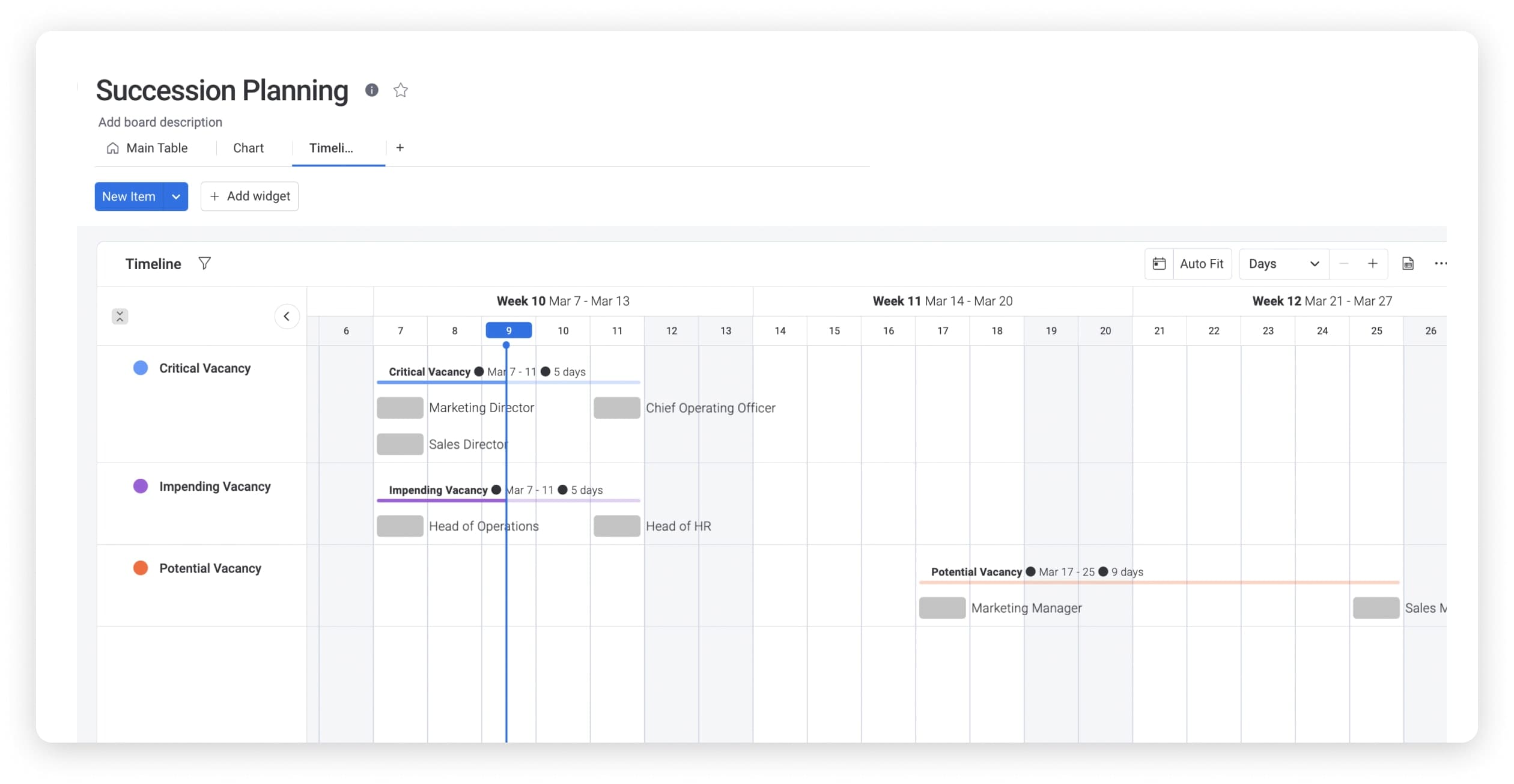
A structured timeline transforms a list of items into a manageable schedule. Breaking the transition into phases ensures logical progression of activities.
Timeline components include:
- Phased approach: Distinct phases like knowledge capture, shadowing, and final handoff
- Critical milestones: Key dates serving as checkpoints to measure progress
- Buffer time: Contingency periods for unexpected questions or technical issues
Effective timelines balance urgency with thoroughness, ensuring complete knowledge transfer without rushing critical elements.
3. Detailed roles and responsibilities matrix
Accountability during transitions is vital when authority may be shifting. A roles matrix eliminates confusion about ownership.
The matrix should identify:
- Role mapping: Who takes over each specific duty, whether permanent or interim
- Accountability structure: Who approves transition completion and serves as escalation point
- Support network: Subject matter experts who can assist after departure
Defined ownership ensures all work items are accounted for during the handover period.
4. Comprehensive knowledge transfer documentation
This component serves as the central repository for all information required to perform the role effectively.
Documentation categories include:
- Explicit knowledge: Tangible assets like credentials, file paths, contact lists, and platform links
- Tacit knowledge: Context on team dynamics, client preferences, and strategic decisions
- Format variety: Written guides, video walkthroughs, and annotated project boards
Comprehensive documentation ensures successors have everything needed to maintain operational standards.
5. Measurable success metrics and monitoring systems
Transition effectiveness requires mechanisms for tracking progress and validating knowledge acquisition. Without metrics, organizations cannot distinguish between completed and abandoned transitions.
Success measurement includes:
- Quantitative metrics: Percentage of items completed, client introductions made, or successful test executions
- Qualitative indicators: Successor confidence levels and manager feedback on operational smoothness
- Review cadence: Scheduled check-ins ensuring plan adherence with real-time adjustments
These metrics provide accountability and enable continuous improvement of the transition process.

7 types of transition plan templates
While core components remain consistent, transition plan application varies by context. Understanding different types helps organizations choose the right approach based on their specific needs and circumstances.
Here are examples of 7 types of transition plans to have templated and ready to use:
| Template type | Best for | Key focus areas | Typical timeline |
|---|---|---|---|
| Employee transition plan | Individual role departures | Daily responsibilities, stakeholder relationships, digital asset transfer | 2–4 weeks |
| Project management transition | Project manager handoffs | Project health, roadmaps, risk registers, sprint status | 2–4 weeks |
| Business transition plan | Mergers, restructuring, department changes | Workflow alignment, technology integration, cultural changes | 3–6 months |
| Executive director transition | Leadership and C-suite changes | Board relationships, strategic initiatives, partner management | 3–6 months |
| Work transition plan | Project shifts between teams | Deliverable status, critical path items, action item tracking | 1–3 weeks |
| Manager transition plan | Management role changes | Team assessments, budget oversight, strategic context | 4–8 weeks |
| Job role transition plan | Internal promotions and lateral moves | Gradual responsibility shifts, skill development, phased handoffs | 4–12 weeks |
1. Employee transition plan example
An employee departure plan focuses on tactical transfer of daily responsibilities. For a senior marketing manager, this would detail campaign status, social media account access, and agency relationships.
The plan includes:
- Stakeholder introduction schedules for key client relationships
- Digital asset transfer checklists covering passwords and platform access
- Campaign status updates with performance metrics and next steps
Timeline typically spans 2 to 4 weeks, prioritizing critical items first.
2. Project management transition plan
Project manager transitions require focus on project health and resource allocation. For a software development project, this covers sprint status, backlog priorities, and technical debt.
Key elements include:
- Shadowing meetings where the incoming PM observes stand-ups and reviews
- Project roadmap transfer with detailed milestone explanations
- Risk register handoff documenting current issues and mitigation strategies
Key deliverables include transferring the project roadmap, risk register, and communication logs.
3. Business transition plan template
Organizational transitions like mergers or restructuring require plans addressing cultural and systemic changes. For departments merging, the plan focuses on workflow alignment, technology integration, and role harmonization, functioning as a comprehensive change management guide.
This serves as a change management guide with:
- Communication strategies for announcing changes to stakeholders
- Training schedules for new processes and systems
- Extended timelines spanning months for gradual integration
4. Executive director transition plan
Leadership transitions involve strategic stakes and complex stakeholder management. For an outgoing executive director, the plan emphasizes board relationships, investor communications, and partner management.
It includes:
- Strategic initiative briefings with context on long-term goals
- Culture preservation guidelines to maintain organizational values
- Pending commitment reviews covering contracts and agreements
Timeline often extends months for gradual authority transfer.
5. Work transition plan template
Focused on work rather than person, this template suits shifting projects between teams. It emphasizes deliverable status, action items, and deadlines.
Key features include:
- Deliverable tracking with completion status and quality standards
- Critical path prioritization to maintain project momentum
- Handoff checklists for systematic transfer of responsibilities
The structure prioritizes critical path items to maintain project momentum during handoffs, making it effective for coverage situations.
6. Manager transition plan template
This comprehensive template addresses leadership role complexities. It includes team member profiles with strengths and growth areas, performance review status, and budget oversight sections.
Management-specific elements:
- Team member assessments with development notes and performance history
- Budget and resource oversight including approval authorities
- Strategic context documentation explaining decision rationale
A strategic context section documents reasoning behind goals and initiatives for new manager understanding.

7. Job role transition plan template
Designed for internal mobility within the same company, this template focuses on gradual responsibility shifts. It highlights skill development for new roles and phased offboarding from old roles.
Internal transition features:
- Gradual responsibility transfer with overlapping periods
- Skill development tracking for role preparation
- Flexible timelines accommodating continued accessibility
The fluid timeline accommodates employees remaining accessible after formal transition.
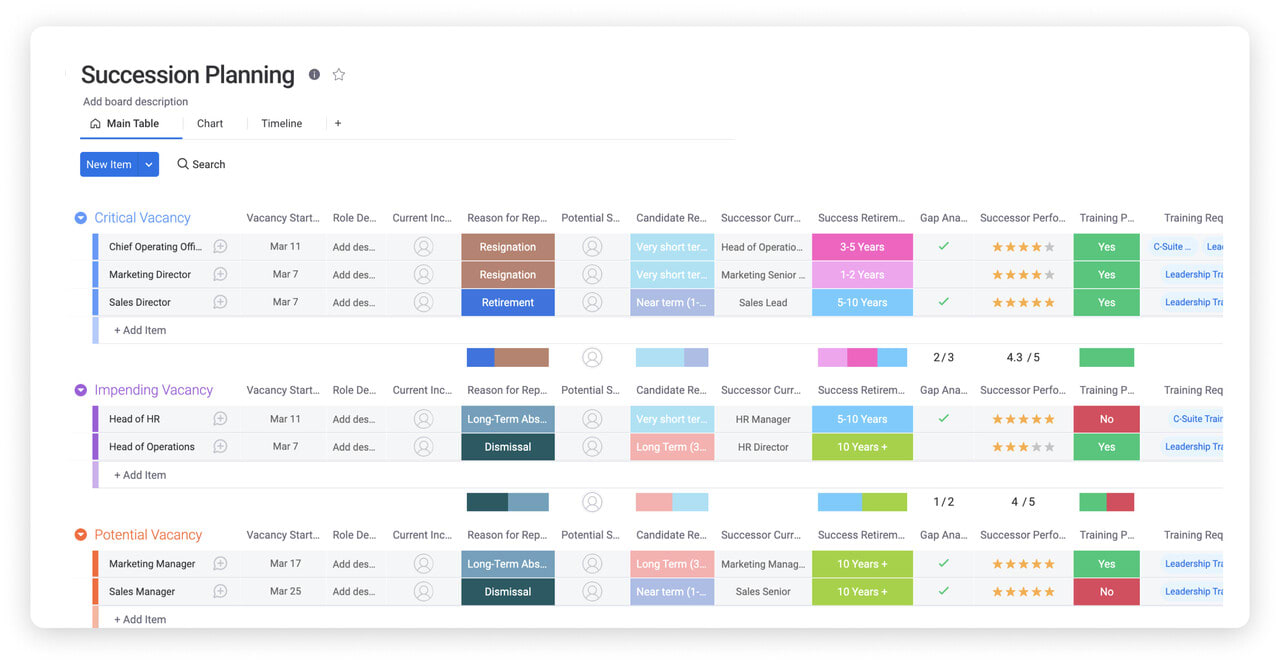
Looking for a ready-to-use template? There is a customizable succession planning template available in monday.com.
7 steps to create your transition plan
Creating a transition plan requires sequential progression from assessment to execution. Following this structured path ensures no critical element is overlooked and provides a repeatable framework for future transitions.
Step 1: Assess your current state and resources
Begin with a comprehensive audit of the departing role’s responsibilities. Review job descriptions against actual daily activities to identify shadow work not formally documented.
Key assessment areas:
- Role responsibility gaps between official duties and actual work
- Successor availability and readiness levels
- Immediate risk factors like approaching deadlines during transition
Step 2: Define transition objectives
Convert broad handover goals into specific, actionable targets aligned with business priorities. Rather than vague goals, create objectives like “Complete Q4 financial audit before departure” that provide measurable outcomes.
Objective criteria should be:
- Specific and measurable with clear completion indicators
- Time-bound with realistic deadlines
- Business-aligned supporting organizational priorities
Step 3: Map all key stakeholders

Identify everyone impacted by the transition, categorizing them into primary groups (managers, successors), secondary groups (team members, peers), and external groups (clients, vendors). Understanding each group’s needs allows tailored communication and relationship handoffs.
Stakeholder categories include:
- Internal stakeholders requiring operational continuity
- External partners needing relationship maintenance
- Support teams like IT and HR with access management needs
Step 4: Build your timeline and milestones
Work backward from the departure date to schedule necessary activities. Estimate duration for knowledge transfer sessions, documentation, and training.
Timeline elements include:
- Activity sequencing based on dependencies and priorities
- Contingency buffers for unexpected demands
- Formal ownership switch points with clear handoff dates
Step 5: Capture critical knowledge and processes
Create transfer materials using appropriate mediums — screen recordings for software tutorials, written documents for policies, and meetings for relationship context. Organize information in a centralized location for long-term accessibility.
Knowledge capture methods:
- Documentation formats matching content type and user needs
- Centralized storage for easy access and updates
- Version control to maintain accuracy over time
Teams using monday.com embed documentation directly within project boards, keeping knowledge connected to work.
Step 6: Design your communication strategy
Dictate announcement timing and messaging for different audiences to control narrative and maintain confidence. Outline announcement sequences starting with leadership before moving to wider organization and external partners.
Communication planning includes:
- Audience-specific messaging tailored to stakeholder concerns
- Timing coordination to prevent information gaps
- Key talking points for consistent messaging across channels
Step 7: Implement monitoring and adaptation systems
Establish feedback loops to track execution through regular check-ins between departing employees and managers. Create mechanisms for successors to flag preparation gaps, allowing real-time plan adjustments before final departure.
Monitoring systems include:
- Progress tracking with regular status updates
- Feedback mechanisms for identifying issues early
- Adaptation protocols for adjusting plans based on new information
Best practices for successful transitions
Successful transitions require proactive management and structure. These practices reduce friction and turn potential disruption into process improvement opportunities that strengthen organizational resilience.
Start your transition planning early
Organizations maintaining living transition documents like updated SOPs and role guides are always prepared. When transition events occur, planning should begin immediately, utilizing every notice period day for knowledge transfer.
Early planning benefits:
- Maximum knowledge transfer time using full notice periods effectively
- Reduces stress for all parties involved in the transition
- Better successor preparation with adequate training time
Maintain transparent communication throughout
Uncertainty breeds anxiety and productivity loss. Transparency regarding timelines, succession plans, and team impact builds trust.
Communication strategies include:
- Regular updates on transition progress and milestones
- Open channels for questions and concerns
- Proactive messaging to prevent misinformation
Establishing open communication channels allows stakeholders to express concerns, preventing misinformation from filling voids — a core principle of effective change management.
Leverage technology for real-time tracking
Static documents become outdated immediately. Digital work management platforms allow real-time tracking of transition items with automated reminders and centralized knowledge storage.
Technology advantages:
- Real-time visibility into transition progress for all stakeholders
- Automated notifications ensuring nothing falls through cracks
- Centralized documentation accessible to current and future team members
On monday.com, teams convert checklists into interactive boards with status columns and automated notifications, ensuring accountability.
Build flexibility into your plans
Transitions rarely follow exact scripts. Unexpected work, illness, or learning curve variations alter timelines.
Flexibility mechanisms include:
- Modular plan components allowing re-prioritization based on changing needs
- Contingency scenarios with alternative approaches for common disruptions
- Escalation procedures for handling unexpected complications
Effective plans use modular components for re-prioritization. If departure dates accelerate, plans pivot to mission-critical items only.
Document lessons for future transitions
Every transition provides organizational resilience data. Brief retrospectives after completion identify successes and failures.
Learning capture includes:
- Success factor identification for replicating effective practices
- Challenge documentation with solutions for future reference
- Process refinement based on real-world experience
Documenting insights refines templates and processes, building organizational change memory.
Transform transitions with monday.com
The difference between chaotic handoffs and seamless ones often depends on the management system used. Traditional document-based approaches create silos and version control issues, while workflow-based platforms like monday.com enable real-time collaboration and automated tracking.
| Feature | Traditional methods like documents or spreadsheets | monday work management |
|---|---|---|
| Collaboration | Siloed, email-based, version control issues | Real-time, in-context communication, shared workspaces |
| Tracking | Manual updates, static status | Automated progress bars, visual dashboards, real-time status |
| Knowledge | Disconnected files, hard to find | Centralized repository, searchable, linked directly to items |
| Scalability | Hard to replicate, manual setup | Templated workflows, scalable across departments |
| Visibility | Limited to document owner | Customizable views (Gantt, Kanban) for all stakeholders |
Turn static templates into dynamic workflows
Import static checklists and converts them into interactive boards on monday.com. Columns track status, priority, owners, and due dates.
Unlike spreadsheets, these boards are live — when items are marked stuck, notifications trigger immediately. This transforms transition plans from filed documents into daily management systems driving processes forward.
Enable real-time collaboration across teams

Transitions involve multiple parties needing synchronization. The platform facilitates this through shared workspaces where departing employees, successors, and managers collaborate directly on items. Updates sections within items allow context, questions, and files to be added directly to relevant work, eliminating email chains.
Automate progress tracking and notifications
Automation recipes reduce administrative burden. The platform automatically notifies managers when milestones are reached, alerts IT when access revocation dates arrive, or reminds successors of pending training. These automations ensure consistency without manual oversight.
Integrate seamlessly with your tech stack

Transition planning connects to broader systems, because monday.com integrates with Slack, Microsoft Teams, Gmail, and Outlook, ensuring transition communications flow naturally into daily workflow. Files from Google Drive or Dropbox embed directly into transition boards, creating unified workspaces.
Monitor transitions with AI-powered insights
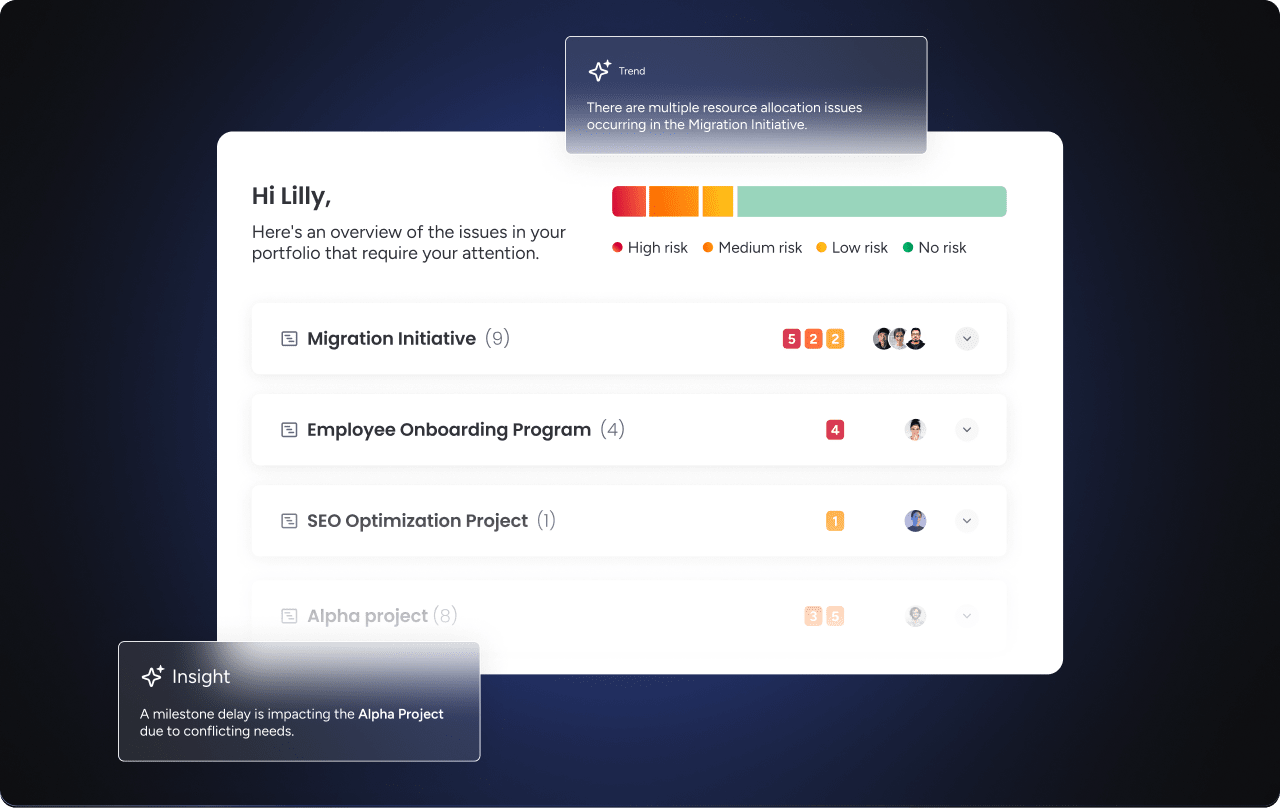
For organizations managing multiple transitions, AI capabilities provide intelligence layers. AI features help categorize unstructured information into actionable items, identify risks through timeline analysis, and summarize documentation into concise notes. This assists in processing large information volumes during transitions.
Build transition resilience into your organization
Effective transition planning transforms potential disruption into organizational strength. When transitions become systematic processes rather than reactive scrambles, organizations protect their most valuable asset — institutional knowledge — while maintaining operational momentum.
The shift from document-based handoffs to workflow-driven transitions represents more than a technology upgrade. It’s a strategic investment in organizational resilience that pays dividends every time someone changes roles, takes on new responsibilities, or moves to new opportunities.
Organizations that master strategic transition planning create competitive advantages through knowledge retention, relationship continuity, and operational stability. By managing these processes on a flexible platform like monday.com, they turn workforce mobility from a risk into a catalyst for growth and improvement.
Try monday.comFAQs
When should you start creating a transition plan?
You should start creating a transition plan immediately upon notice of a departure, which is typically 2–4 weeks before the exit date. For planned executive successions, the process often starts 3–6 months in advance to ensure strategic continuity and thorough knowledge transfer.
What is the difference between a transition plan and a succession plan?
A transition plan focuses on the immediate, tactical transfer of duties from a departing employee to a successor over a short period. A succession plan is a long-term strategic process for identifying and developing internal talent to fill key leadership roles in the future.
How long does a typical transition period last?
A typical transition period lasts between 2 to 4 weeks for standard employee transitions, aligning with the notice period. Executive or complex technical roles may require transition periods ranging from 1 to 3 months to fully transfer relationships and strategic context.
Who should be involved in creating a transition plan?
The primary creators of a transition plan are the departing employee and their direct manager, who define scope and items. The successor, key team members, and HR representatives also play roles in reviewing and executing specific parts of the plan.
What are the risks of not having a transition plan?
Without a transition plan, organizations face loss of critical institutional knowledge, disruption of client relationships, and project delays. It also increases the risk of security gaps due to unrevoked access and decreased productivity for the remaining team.
How does monday.com support transition planning?
monday.com centralizes transition items into collaborative workflows, using automation to track progress and AI to organize knowledge. It provides real-time visibility for all stakeholders, ensuring a seamless and accountable handover process through interactive boards and dashboards.

 Get started