

Growth increases opportunity, but it also increases pressure on shared resources. The same people are requested across multiple projects, budgets stretch across competing priorities, and timelines tighten. Without visibility into capacity, teams commit to work they cannot realistically deliver.
Resource management provides the clarity needed to make confident allocation decisions. It connects strategy with execution, helping leaders assign work based on skills, availability, and business impact rather than urgency alone.
Ahead, this helpful post unpacks the core components of resource management, the strategies that improve allocation outcomes, and the steps teams take to create systems that scale with demand in 2026.
Key takeaways
- Target 80% utilization to protect team resilience: Keep 20% buffer capacity so your team can handle unexpected priorities without burning out or missing deadlines.
- Audit all resources before building your framework: Catalog your people, skills, budgets, and assets to identify gaps and ensure every project is set up for success from the start.
- Use unified dashboards on monday work management for real-time visibility: Track capacity, allocation, and availability across all departments in one place instead of juggling multiple spreadsheets and systems.
- Match work to skills, not just availability: Assign projects based on expertise and experience levels to reduce rework and improve delivery quality.
- Plan proactively but manage dynamically: Create initial resource forecasts but continuously adjust allocations as priorities shift and new information emerges.
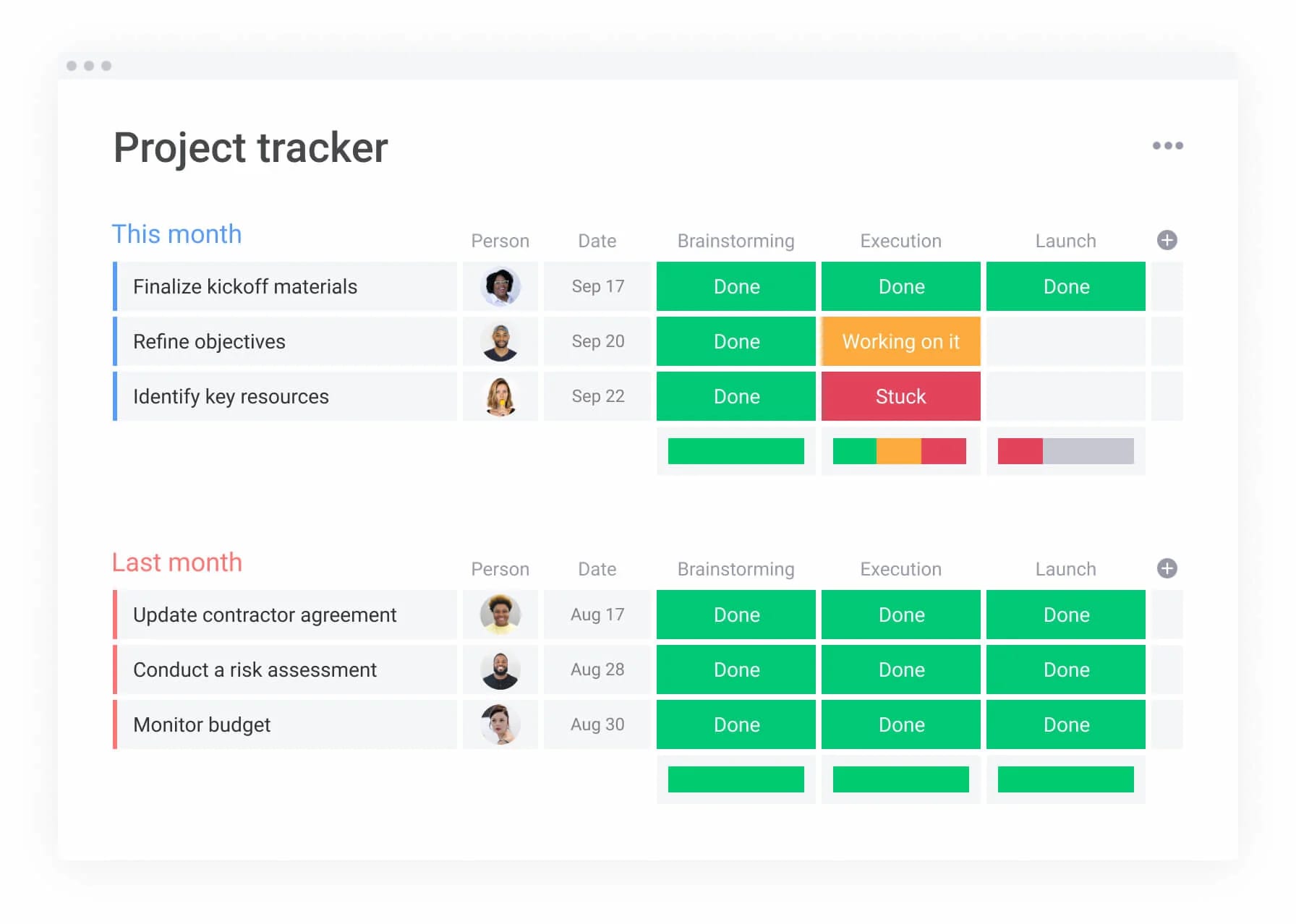
What is resource management?
Resource management is how you decide who works on what, when they work on it, and what they need to get it done. It connects your big-picture goals to what actually gets done each day — making sure people have what they need when they need it.
It’s not just handing out tasks. It’s balancing what needs to get done against what your team can actually handle without crashing. When your team is spread across time zones and departments, you need to see who’s available and what they’re working on — or everything falls apart. Get this right, and you’ll always know the answer to: can we actually pull this off with what we’ve got?
Human resources
Your people are your biggest asset — and the hardest to manage. You need to know what people are good at, when they’re free, and what they want to learn — not just plug them in like batteries.
Do it right, and work gets done well. When you get it right, work gets done exceptionally well. Here’s what actually works:
- Skills assessment: Detailed mapping of technical and soft skills ensures work goes to the most capable team members, reducing error rates and rework.
- Capacity planning: Analyzing total available hours against project demand prevents bottlenecks and protects team morale.
- Talent optimization: Aligning work with career growth goals increases retention and engagement.
Financial resources
Financial resource management is deciding where your money goes — which projects get funded, what operations cost, and what infrastructure you need. It tracks how money moves through your projects so you don’t run out of budget halfway through.
You need to see your budget in real time. Real-time budget visibility ensures financial stability from start to finish. Leaders need to see what has been spent and what will be spent based on current trajectories. Three things matter most:
- Budget allocation: Distributing funds based on strategic priority rather than historical precedent.
- Cost forecasting: Predicting burn rates to prevent mid-project funding freezes.
- ROI analysis: Tracking the financial return of specific resource allocations to inform future investment decisions.
Physical and digital assets
Work needs infrastructure: equipment, facilities, software licenses, cloud capacity — all of it. Proactive teams track their assets to maintain operational continuity.
Track your assets before problems hit, not after. Watch these areas:
- Digital infrastructure: Managing seat licenses and API usage limits ensures teams have uninterrupted access to critical software.
- Hardware availability: Coordinating the distribution of specialized equipment prevents project delays in technical fields.
- Asset utilization: Tracking how often resources are used helps eliminate waste and optimize procurement budgets.
Time as a critical resource
Time is your most finite asset, making how you invest it critical. Need more people? Hire them. Need more budget? Find it. Need more time? You’re out of luck.
Treat time like money you can’t get back. Invest it, don’t waste it. This means:
- Scheduling optimization: Minimizing context switching to protect deep work time.
- Realistic timeline creation: Accounting for dependencies and potential delays upfront.
- Commitment tracking: Identifying overlapping obligations before they derail delivery.
Why is resource management important?
Good resource management makes you more profitable and more nimble — whether you’re a startup or an enterprise. Manage resources well, and projects hit their deadlines without panic or shortcuts. Know the benefits, and you can sell your team on why this matters.
Direct impact on project outcomes
Projects succeed when you have the right people available at the right time. It’s that simple. Put your best people on the most important work, and you’ll hit your deadlines.
For example, ensuring a senior developer is available for the architecture phase of a software build prevents costly restructuring later. When your most experienced team member is allocated to the highest-impact work, projects maintain momentum, quality improves, and deadlines are met.
Cost control and ROI improvement
Smart resource management improves financial performance by aligning capacity with actual demand. When teams understand how people, budgets, and infrastructure are allocated, they reduce unnecessary spending and make better investment decisions.
Instead of reacting to resource shortages with last-minute contractor hiring or excessive overtime, organizations plan ahead and distribute work more sustainably. This protects margins while improving delivery consistency.
The comparison below shows how structured allocation directly influences cost efficiency across common resource categories.
| Cost factor | Impact of poor management | Impact of optimized management |
|---|---|---|
| Overtime | High costs due to reactive scrambles | Reduced costs via balanced scheduling |
| Contractors | Panic hiring at premium rates | Strategic hiring only when necessary |
| Infrastructure | Paying for unused licenses | Lean procurement based on usage data |
| Turnover | High recruitment costs due to burnout | Lower costs due to sustainable workloads |
Strategic alignment across departments
Resource management breaks down walls between departments. Leaders have to pick priorities. You can’t allocate the same person to two projects at once.
Everyone can see whether marketing, product, and engineering are actually working toward the same goals. When a marketing team needs creative resources for a product launch, resource management provides the framework to negotiate that allocation transparently rather than through back-channel conversations.
Projects succeed when you have the right people available at the right time.
What is the difference between resource planning and resource management?
Understanding the difference between planning and managing resources is the key to building a system that delivers results. They do different things and need different tools and thinking.
Resource planning happens before work begins: you forecast demand, estimate capacity, and create initial assignments. It’s static and theoretical: your best guess with what you know now.
Resource management is dynamic and continuous. It involves monitoring actual usage, rebalancing workloads when priorities shift, and responding to unexpected changes. While planning asks “What will we need?”, management asks “How are we actually using what we have?”
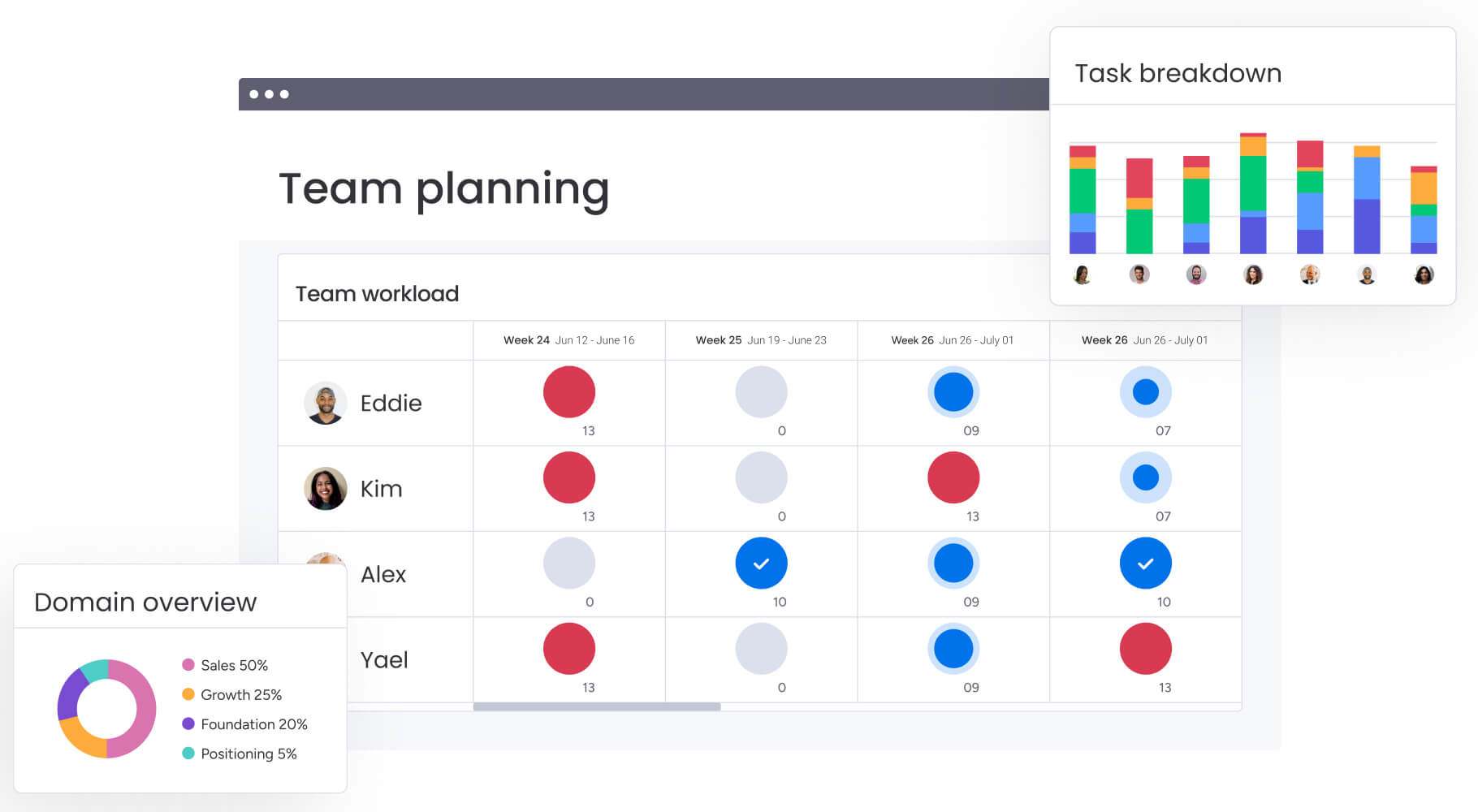
What are the 5 steps for resource management?
Building a resource management system that works means handling both the tech and the people side. These five steps work whether you’re a small team or a massive enterprise — and they’ll actually stick.
Step 1: audit current resources and gaps
Start with a comprehensive inventory. List everything: your people, their skills, your budgets, your assets. You’ll spot gaps fast — like not enough senior engineers or too many software licenses nobody uses.
Document everything in a centralized system:
- Personnel inventory: List each team member’s skills, current allocation, and availability.
- Budget tracking: Monitor commitments and remaining funds across all projects.
- Asset cataloging: Inventory physical and digital assets with their usage patterns.
Now you’ve got a baseline: use it to decide where to invest or move resources.
Step 2: design your resource framework
Turn your assessment into clear rules and processes. Define approval workflows for resource requests, establish utilization targets, and create a taxonomy for skills and roles.
Your framework should specify:
- Request processes: Who can request resources and through what channels.
- Conflict resolution: How competing priorities get resolved and by whom.
- Success metrics: What utilization rates and outcomes define effective allocation.
- Policy guidelines: Clear rules for overtime, contractor usage, and cross-departmental sharing.
Clear structure stops fights and keeps everyone on the same page.
Step 3: select and configure your platform
Spreadsheets fall apart when you’re managing resources across a growing team. You need one platform that handles both project management and resource tracking.
The right platform provides:
- Customizable views: Dashboards tailored to different roles and responsibilities.
- Real-time tracking: Live capacity monitoring that updates as work progresses.
- System integration: Connections with existing tools to eliminate manual data entry.
With monday work management, you can visualize team capacity to ensure balanced workloads, assign work based on skills to improve outcomes, and instantly surface utilization metrics through unified dashboards.
Step 4: train teams and launch
If your team doesn’t use it, it won’t work. Show people how resource management helps them, not just the company. Show teams how proper resource management protects them from burnout while ensuring their skills get utilized effectively.
Implementation best practices include:
- Pilot programs: Start with a willing group to iron out issues before full deployment.
- Documentation: Create quick reference guides and process documentation.
- Regular check-ins: Establish ongoing support to address questions and concerns.
Make it easy to use and worth people’s time, and they’ll actually use it.
Step 5: measure and refine continuously
You’ll refine this as you go. Establish a cadence for reviewing resource metrics and gathering feedback. Track utilization rates, project completion times, and team satisfaction scores.
Key measurement activities:
- Monthly reviews: Refine planning estimates and improve accuracy over time.
- Pattern analysis: Look for trends in overallocation and identify skills gaps.
- Framework evolution: Adjust processes based on what you learn from real usage.
Keep improving, and resource management becomes a competitive edge instead of just another admin task.
Try monday work managementStart with a comprehensive inventory. List everything: your people, their skills, your budgets, your assets. You’ll spot gaps fast — like not enough senior engineers or too many software licenses nobody uses.
Resource management examples
Smart resource management becomes most visible when complexity increases. Competing priorities, limited capacity, and tight timelines quickly expose gaps in planning and coordination. Teams that allocate resources deliberately can anticipate constraints, rebalance workloads early, and keep initiatives moving without disruption.
The following examples illustrate how structured allocation helps organizations prevent bottlenecks, protect delivery quality, and maintain momentum across different industries.
Marketing campaign coordination
A marketing team preparing for a product launch must coordinate designers, writers, analysts, and campaign managers across multiple deliverables. Resource management helps them see who’s available when, which campaigns might conflict, and where bottlenecks could emerge.
By mapping out resource needs weeks in advance, they can identify that their video editor is overbooked during the critical pre-launch period. This visibility allows them to either adjust timelines, bring in freelance support, or redistribute work before it becomes a crisis.
IT infrastructure deployment
An IT department rolling out new security software across the organization needs to coordinate technical staff, training resources, and system downtime windows. Resource management ensures they have the right expertise available at each deployment phase.
They might discover that their security specialists are committed to another project during the planned rollout. With this insight, they can:
- Negotiate priorities: Work with other departments to adjust competing project timelines.
- Adjust schedules: Move the deployment to when specialists are available.
- Cross-train staff: Develop additional expertise to provide coverage during critical periods.
Construction project scheduling
A construction firm managing multiple job sites must coordinate specialized crews, heavy equipment, and materials delivery. Resource management helps them optimize equipment usage across sites and ensure skilled trades are available when needed.
When one project faces weather delays, they can quickly identify which resources can be redeployed to accelerate work at another site. This flexibility reduces idle time for expensive equipment and keeps projects moving despite disruptions.
HR transformation initiative
An HR team implementing a new performance management system needs trainers, change management specialists, and technical support staff. Resource management helps them phase the rollout to match available capacity.
They can see that attempting a company-wide launch would overwhelm their training team. Instead, they plan a departmental rollout that aligns trainer availability with each group’s readiness, ensuring quality support throughout the transition.
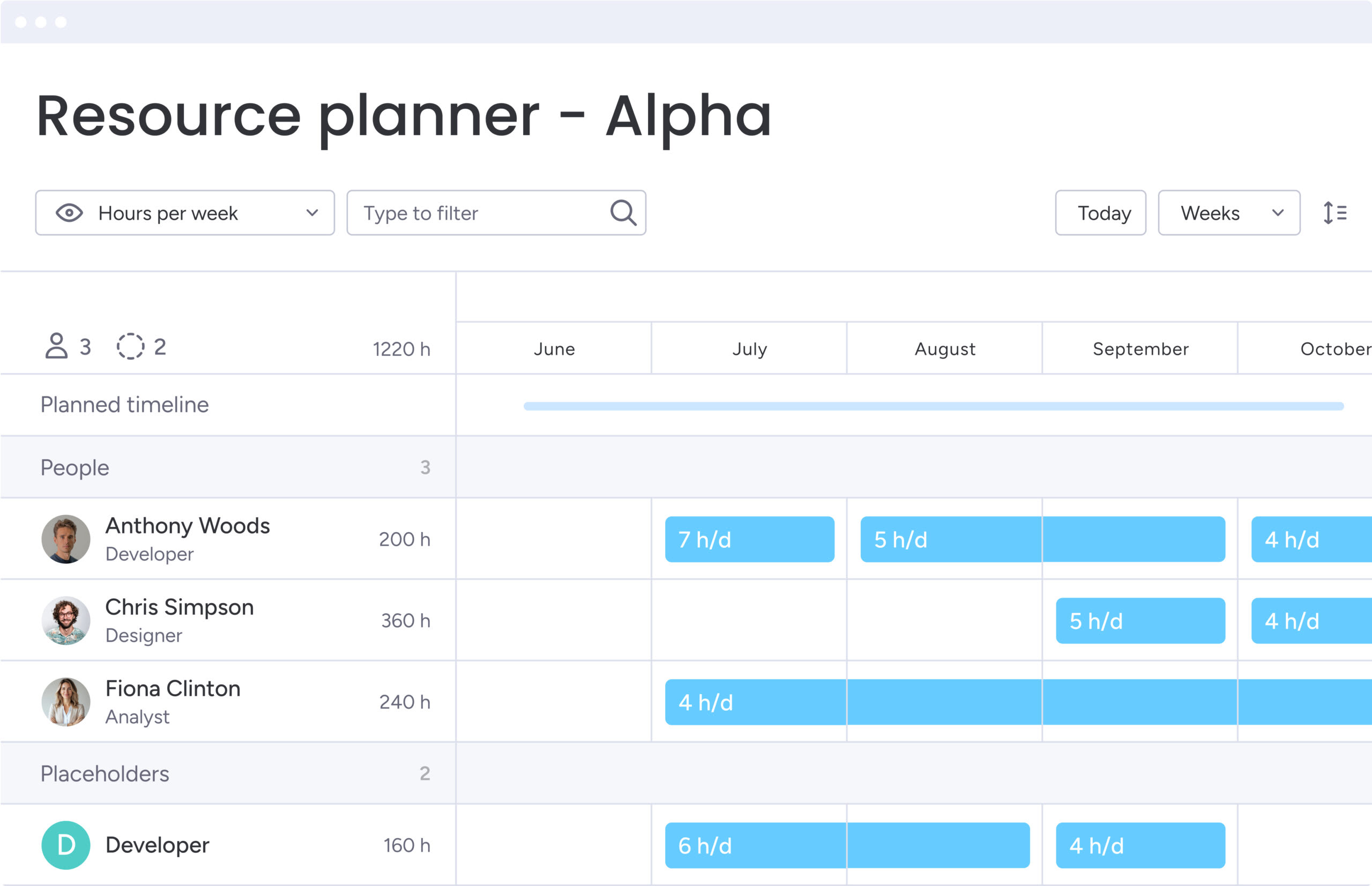
How to overcome common resource management hurdles
Smart resource management often surfaces the same challenges across organizations. Limited visibility, shifting priorities, and inconsistent processes can slow adoption and create friction between teams.
Recognizing these hurdles early makes it easier to address them quickly and build a system teams trust and use consistently.
Fragmented visibility
When resource data lives in multiple systems, managers cannot see the complete picture. Marketing tracks their team in one platform, IT uses another, and finance maintains separate budget spreadsheets. When all your resource data is in one place, sharing resources across teams becomes seamless.
Fix it by putting all your resource data in one place. Advanced solutions such as monday work management provide unified dashboards that aggregate information across departments, giving leaders real-time visibility into capacity, allocation, and availability.
Stale data and manual updates
Weekly or monthly reports? They’re old news by the time anyone sees them. Manual data entry slows you down and creates errors. People stop trusting the system.
Automation eliminates this lag:
- Real-time integration: Platforms that connect with existing tools pull data automatically.
- Live updates: Time tracking, project updates, and capacity changes flow directly into resource views.
- Reduced errors: Automated data collection eliminates transcription mistakes and inconsistencies.
Skill mismatch
Work gets assigned based on availability rather than capability, leading to rework and missed deadlines. Without knowing who’s good at what, managers make bad calls about who should do what.
Building a skills database takes work, but it’s worth it:
- Certification tracking: Monitor formal qualifications and training completion.
- Experience mapping: Document project history and performance ratings.
- Capability matching: Use data to assign work to the right expertise, even if it means adjusting timelines.
Reactive firefighting
Teams keep scrambling to handle urgent requests without thinking about what it costs them long-term. Constant firefighting kills your ability to plan ahead and burns people out.
Planning ahead takes discipline:
- Intake processes: Evaluate new requests against existing commitments before saying yes.
- Capacity visualization: Show the true cost of taking on additional work.
- Early warning systems: Flag overallocation before it becomes critical.
Resistance to change
People who like how things work now might push back on new systems. They see it as more work, not something that’ll make their lives easier.
Show people what’s in it for them:
- Workload protection: Show how resource management prevents last-minute scrambles.
- Priority clarity: Demonstrate how proper allocation provides clearer direction.
- Work-life balance: Highlight how sustainable scheduling protects personal time.
Start with willing early adopters who can demonstrate value to skeptics.
Tool sprawl
Adding another platform can lead to more scattered data. Teams need resource visibility where work already happens.
Pick a platform that handles both resource management and project work. monday work management embeds resource tracking directly into project workflows, eliminating the need for separate systems.
Try monday work managementResource management best practices
Smart resource management improves when teams apply consistent principles that balance performance with sustainability. Clear prioritization, realistic capacity planning, and transparent allocation processes help organizations maximize output without creating unnecessary pressure on teams.
The following best practices help ensure resources are used efficiently, workloads remain manageable, and delivery stays consistent as complexity increases.
Maintain sustainable utilization rates
Target 80% utilization for most team members. That leaves room for surprises, learning, and actual thinking time. Teams at 100% capacity can’t handle it when priorities change or things go wrong.
Track both planned and actual utilization:
- Visual indicators: Use your resource management platform to flag overallocation immediately.
- Regular monitoring: Check utilization weekly to catch problems early.
- Redistribution protocols: Have clear processes for rebalancing work when someone exceeds capacity.
Implement skills-based allocation
Effective resource management assigns work based on capability, not just availability. Matching projects to the right expertise improves quality, reduces rework, and helps teams deliver faster with fewer bottlenecks. Maintaining a clear view of technical skills, experience levels, and career development goals ensures work is distributed where it creates the most impact.
With monday work management, teams can maintain a centralized Resource Directory that maps roles, skills, and availability in one place. This visibility makes it easier to align projects with the right expertise, while AI-powered insights help identify the strongest fit based on workload, experience, and evolving priorities.
Standardize intake and prioritization
Build a standard way for people to request resources. Use forms to capture requirements, timelines, and business justification. Establish clear criteria for prioritization based on strategic alignment, ROI, and risk.
Automated workflows can:
- Route requests: Send resource requests through appropriate approval chains.
- Notify stakeholders: Keep everyone informed of allocation decisions.
- Update plans: Automatically adjust resource schedules when approvals are granted.
Less politics, less confusion about who gets what.
Build in contingency planning
Figure out which resources you can’t live without, then build backup plans. Cross-train team members on essential skills. Maintain relationships with trusted contractors who can provide surge capacity.
Document key processes so work can continue if someone is unavailable:
- Knowledge transfer: Ensure critical information isn’t locked in one person’s head.
- Skill redundancy: Train multiple people on essential capabilities.
- Scenario planning: Understand how different resource constraints would impact delivery.
Foster resource transparency
Let everyone see how resources are allocated. Share dashboards showing current allocation, upcoming availability, and project priorities. Transparency cuts down on fights and helps people work together better.
When people see the constraints, they ask for what’s actually possible and get creative with solutions. It also shows people how their work fits into the bigger picture.
Leverage predictive analytics
Look at what happened before to plan better next time. Analyze how long similar projects actually took versus initial estimates. Identify patterns in resource usage across different project types.
AI-powered forecasting can predict future capacity gaps based on current trends and planned work. monday work management’s AI Blocks can analyze project data to surface insights about resource patterns and risks.
Establish governance without bureaucracy
Build simple processes that keep people accountable without bogging them down. Define clear roles for resource managers, project leads, and department heads. Set thresholds for when additional approval is needed.
Regular resource reviews keep allocation aligned with priorities:
- Monthly check-ins: Rebalance workloads based on current reality.
- Quarterly planning: Anticipate future needs and adjust capacity accordingly.
- Annual reviews: Evolve your resource management framework based on lessons learned.

“monday.com has been a life-changer. It gives us transparency, accountability, and a centralized place to manage projects across the globe".
Kendra Seier | Project Manager
“monday.com is the link that holds our business together — connecting our support office and stores with the visibility to move fast, stay consistent, and understand the impact on revenue.”
Duncan McHugh | Chief Operations OfficerMake resource management a consistent competitive advantage
Resource management brings clarity to competing priorities. When teams understand capacity, skill availability, and workload distribution, they make better decisions about what to commit to and when to adjust plans. The result is fewer bottlenecks, more predictable timelines, and work that progresses without constant firefighting.
Consistency is what creates long-term impact. Clear allocation practices help organizations use budgets intentionally, protect team capacity, and respond faster when priorities shift. Instead of reacting to constraints, teams operate with visibility and control.
monday work management connects resource planning with daily execution, giving teams a real-time view of capacity, skills, and priorities in one place. This shared visibility makes it easier to balance workloads, allocate expertise effectively, and keep projects moving with confidence.
Start managing resources with greater clarity and control today.
Try monday work managementFrequently asked questions
What is meant by resource management?
Resource management is the process of planning, scheduling, and allocating an organization's assets — including people, money, and technology — to maximize efficiency and ensure successful delivery of projects and business goals.
What is an example of resource management in business?
Resource management ensures teams use people, equipment, and budgets efficiently to complete projects on time. For example, a construction company coordinates heavy machinery and specialized crews across multiple job sites so equipment is not sitting idle and skilled workers are available when needed. By aligning schedules with resource availability, projects move forward without delays caused by missing labor or equipment.
What are the 5 essential steps for resource management?
The five essential steps are auditing current resources to understand capacity, designing a governance framework, selecting appropriate management platforms, training the team on processes, and continuously measuring performance to refine the strategy.
What are the main types of resource management?
The main types include human resource management focusing on people and skills, financial resource management covering budgets and costs, physical asset management for equipment and facilities, and time management as a finite resource.
How does resource management differ from project management?
Project management focuses on delivering a specific outcome within scope and time, while resource management focuses on the optimization and allocation of assets required to execute those projects across the entire organization.
Why is resource management important for growing companies?
Resource management provides the structure needed to scale efficiently, preventing burnout among early employees, optimizing limited budgets, and ensuring new hires are deployed immediately to high-value work.

 Get started