

Entrepreneurs don’t have the luxury of focusing on one initiative at a time. Product development, hiring, fundraising, partnerships, and customer delivery all move at once. When priorities live across scattered notes and conversations, progress slows and important details get lost.
Project management (PM) brings clarity without slowing momentum. It creates shared visibility around priorities, ownership, and timelines so execution stays consistent as complexity grows. The goal isn’t process for the sake of process — it’s making sure the right work moves forward at the right time.
This article explores how entrepreneurs approach project management differently from traditional organizations. You’ll learn practical skills for managing competing priorities, simple ways to build a system that evolves with your business, and discover how modern and intelligent work management platforms can support organized execution as your company scales.
Key takeaways
- Build investor confidence through predictable execution: Show systematic milestone tracking and realistic timelines to demonstrate operational maturity that reduces investment risk and validates your roadmap.
- Focus on outcomes over process complexity: Prioritize speed, adaptability, and direct business results like revenue growth rather than rigid documentation that slows decision-making.
- Scale systematically without losing startup agility: Create repeatable templates and automated workflows that maintain quality as you grow from five to 50 team members.
- Transform chaos into competitive advantage with visual management: Use monday work management’s 15+ board views to give teams real-time visibility, enabling faster decisions and eliminating redundant work.
- Master portfolio management across multiple initiatives: Apply prioritization frameworks like RICE to objectively rank projects and set clear boundaries when resources are finite.
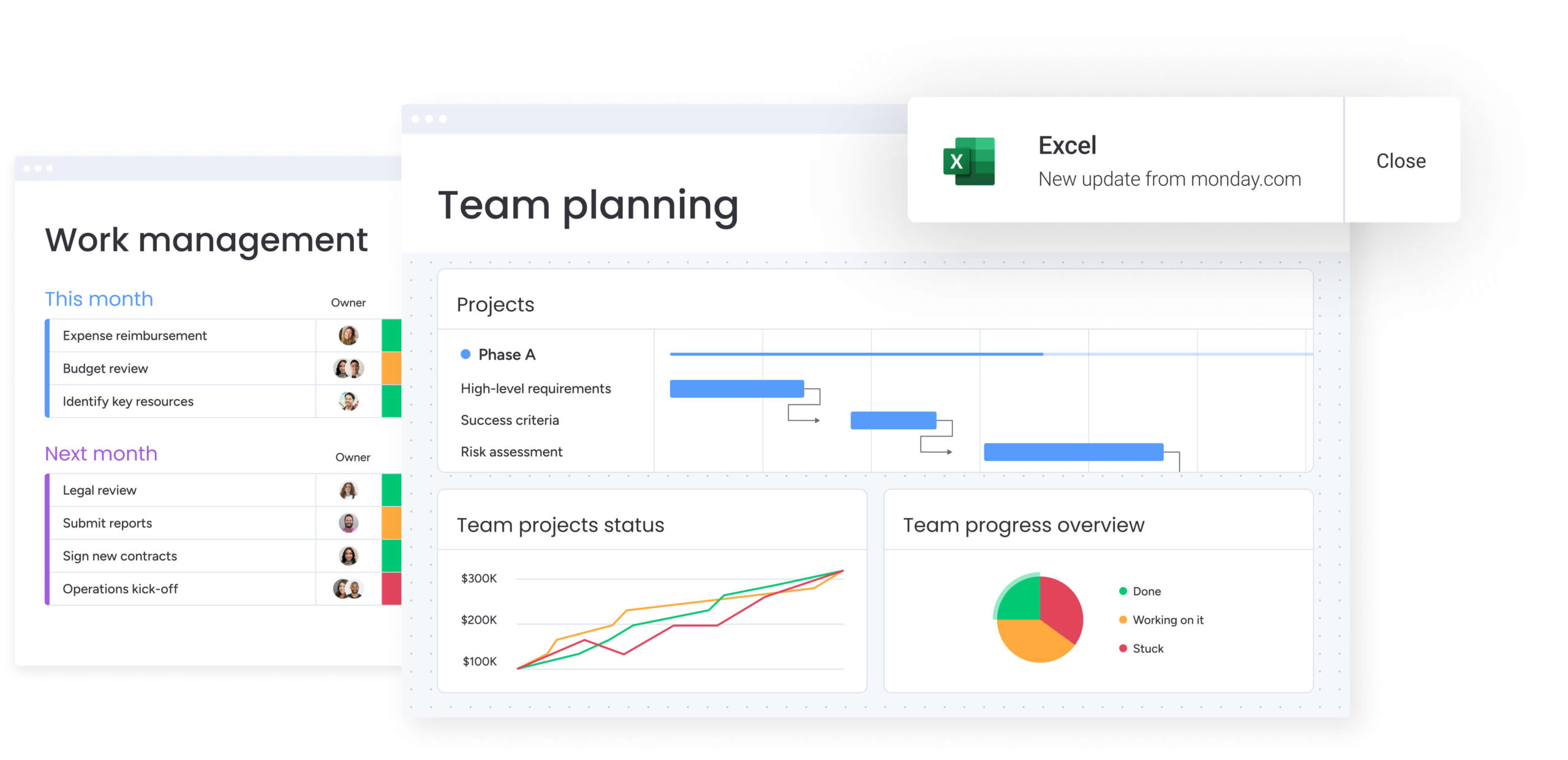
What is project management for entrepreneurs?
Project management for entrepreneurs is how you organize, execute, and scale your business without losing speed or burning through resources. It gives you the structure to turn strategy into results — without the bureaucracy that bogs you down.
This approach sits right between winging it and drowning in corporate red tape. Unlike traditional project management that’s all about compliance and paperwork, entrepreneurial PM is about speed, adaptability, and making every resource count.
Here’s where the differences really matter:
- Agility over rigidity: Systems support quick iteration and pivots based on market feedback — not rigid multi-year plans.
- Resource consciousness: Processes deliver maximum impact with minimum overhead — your time and money go toward growth, not admin work.
- Outcome focus: Every workflow ties directly to business results — revenue, user growth, market share — not just checking boxes.
How startup project management differs from corporate approaches
Risk tolerance and speed are what really set startup project management apart from corporate methods. Corporate PM is all about risk mitigation and detailed docs. Entrepreneurial PM? It’s about learning fast and moving faster.
| Aspect | Startup project management | Corporate project management |
|---|---|---|
| Planning horizon | Weeks to months (adaptive) | Years (fixed) |
| Resource allocation | Fluid and multi-role | Fixed and specialized |
| Risk tolerance | High (calculated bets) | Low (avoidance) |
| Decision speed | Immediate/daily | Slow/committee-based |
| Success metrics | Growth and speed to market | Budget compliance and scope |
You can adopt the discipline of corporate PM — systematic thinking, stakeholder communication — without the bureaucracy that kills speed.
Why every business initiative needs PM structure
Even a little structure speeds things up by cutting out the guesswork. Without it, you’re spending hours compiling investor updates, team members are duplicating work, and critical handoffs are falling through the cracks.
Here’s what structure actually does for growing companies:
- Investor confidence: When you show investors you can execute, you prove your team knows how to use their money wisely.
- Team alignment: Clear frameworks help everyone understand what success looks like and how their work moves the company forward.
- Scalability foundation: Systems you build with five people can scale to fifty without painful overhauls.
How project management drives entrepreneurial success
Execution quality directly shapes how fast a business grows and how confidently it scales. Project management creates the structure that helps entrepreneurs deliver consistently, communicate progress clearly, and make smarter decisions under pressure.
With the right approach, teams hit milestones more predictably, maintain quality as workloads increase, and adapt quickly when priorities change. The following benefits show how structured execution strengthens investor confidence, supports sustainable growth, and helps small teams compete with larger organizations.
Build investor confidence through predictable delivery
Investors look at your ability to execute just as closely as they look at market size. A solid approach to project management shows you’re competent and lowers investment risk. When you hit milestones on time and on budget, you prove your roadmap works.
What investors actually look for when they assess how well you operate:
- Milestone tracking: Showing progress toward major milestones proves you’re reliable.
- Realistic estimation: Data-backed timelines show you understand operations and market timing.
- Proactive risk communication: Spotting potential blockers before they blow up builds trust with your board and stakeholders.
Scale your business without sacrificing quality
Fast growth can tank product quality and wreck company culture. Project management systems are the guardrails that let you move fast without crashing. They make delegation easier by standardizing processes so anyone can execute them.
Here’s how this helps you scale:
- Standardized onboarding: New hires get up to speed faster when they can follow documented workflows.
- Distributed coordination: As teams spread across locations or time zones, a central system keeps client delivery consistent.
- Quality assurance: Clear processes keep quality high even when volume goes up.
Turn chaos into competitive advantage
When speed matters, organized execution lets small teams outmanoeuvre bigger competitors. Good project management cuts decision-making friction and eliminates duplicate work.
Here’s how structure gives you an edge:
- Rapid decision-making: Real-time visibility into project status lets you shift resources instantly when things change.
- Systematic learning: Tracking project outcomes helps you learn from failures and refine strategies systematically.
- Operational agility: With a solid foundation, you can pivot without everything falling apart.
With the right approach, teams hit milestones more predictably, maintain quality as workloads increase, and adapt quickly when priorities change.
5 essential PM skills for entrepreneurial success
Entrepreneurs need specific project management skills that balance tight execution with flexibility. These skills work with tight resources, quick pivots, and complex stakeholder dynamics. Master the following and you’ll execute with more precision than most entrepreneurs.
1. Strategic business acumen
Every project you run should tie directly to your business strategy. Unlike corporate PMs who stick to fixed scope, you’re constantly asking whether projects still serve your goals.
This involves understanding market dynamics, timing, and revenue implications through:
- ROI evaluation: Continually assessing whether resources generate sufficient value or should be redeployed.
- Customer-centric pivoting: Altering project scope immediately based on real-time customer feedback.
- Vision-execution balance: Maintaining long-term vision while managing daily execution.
2. Multi-stakeholder communication
Founders manage complex webs of stakeholders including investors, customers, employees, and partners with often conflicting interests. Effective PM requires tailoring communication while maintaining a single source of truth.
Essential communication skills include:
- Audience tailoring: Translating technical details into financial implications for investors and user benefits for customers.
- Expectation management: Proactively communicating delays or changes to maintain trust.
- Transparency balance: Sharing open team communication while protecting sensitive competitive information.
3. Resource optimization
With limited runway and headcount, entrepreneurs must maximize every asset’s impact. This goes beyond scheduling to making high-stakes trade-offs between speed, cost, and quality.
Critical resource decisions involve:
- Build vs buy analysis: Evaluating when to deploy internal resources versus purchasing external solutions.
- Cross-project utilization: Optimizing team bandwidth across multiple initiatives without burnout.
- Cash flow management: Aligning project milestones with payment schedules and funding tranches.
4. Agile risk management
Risk management for entrepreneurs focuses on survival. It requires distinguishing between manageable setbacks and existential threats.
Key risk management capabilities:
- Existential risk identification: Spotting regulatory, technical, or market risks requiring immediate pivots.
- Incomplete information decisions: Making calculated choices without perfect data using rapid iteration.
- Resilience planning: Building contingency plans that allow businesses to absorb shocks.
5. Technology integration
Leveraging the right technology stack allows small teams to punch above their weight. Selecting, implementing, and integrating project management platforms becomes a core competency.
Technology leverage points include:
- Ecosystem connectivity: Ensuring PM platforms integrate seamlessly with CRM, development, and financial systems.
- Automation leverage: Using automation to handle routine administrative work.
- AI adoption: Utilizing AI for predictive insights and resource optimization.
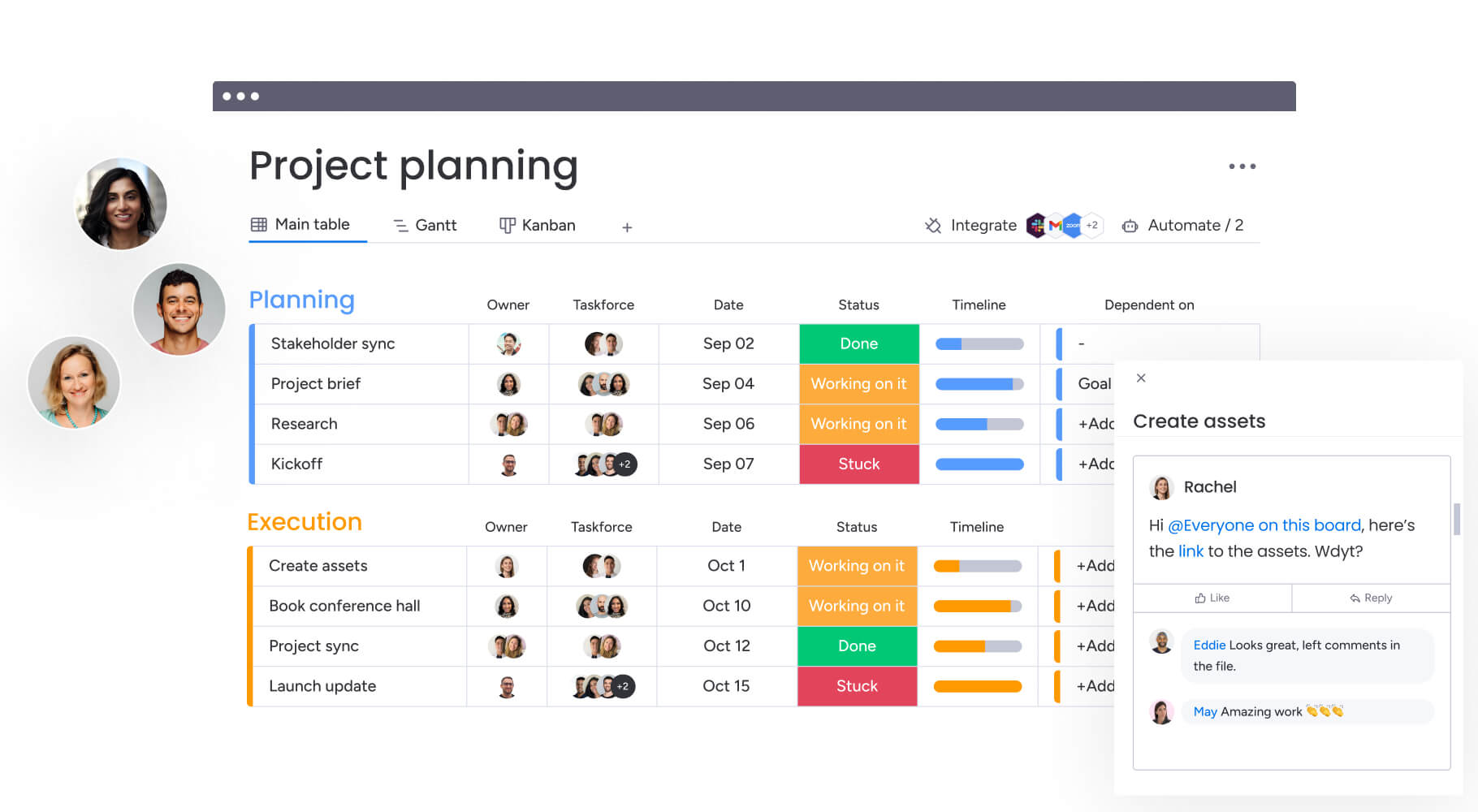
Building your first PM system with limited resources
Early-stage teams don’t need complex frameworks or expensive software to benefit from project management. What matters most is creating simple structure around priorities, ownership, and progress so work moves forward without constant follow-ups or confusion.
A strong starting system should reduce friction, not create it. The focus is on introducing just enough visibility and consistency to support coordination as initiatives multiply. As your business grows, this foundation can evolve into more advanced workflows without requiring a complete reset.
Visual project tracking that actually works
Visual tracking reduces cognitive load and accelerates team comprehension. When work status is visible at a glance, meetings become shorter and email volume drops.
Different visualization methods serve different purposes:
- Kanban for workflow: Ideal for continuous processes like content production or software development.
- Gantt for timelines: Essential for time-bound initiatives like product launches or events.
- Dashboards for overview: Single screens aggregating key metrics across projects.
Teams using powerful solutions like monday work management can visualize data and project plans with 15+ board views, including Kanban and Gantt charts, allowing each team member to see work in formats that make sense for their role.
Automating the repetitive without losing control
Automation scales founder time. By automating routine interactions, systems maintain momentum without constant manual intervention.
High-impact automation opportunities:
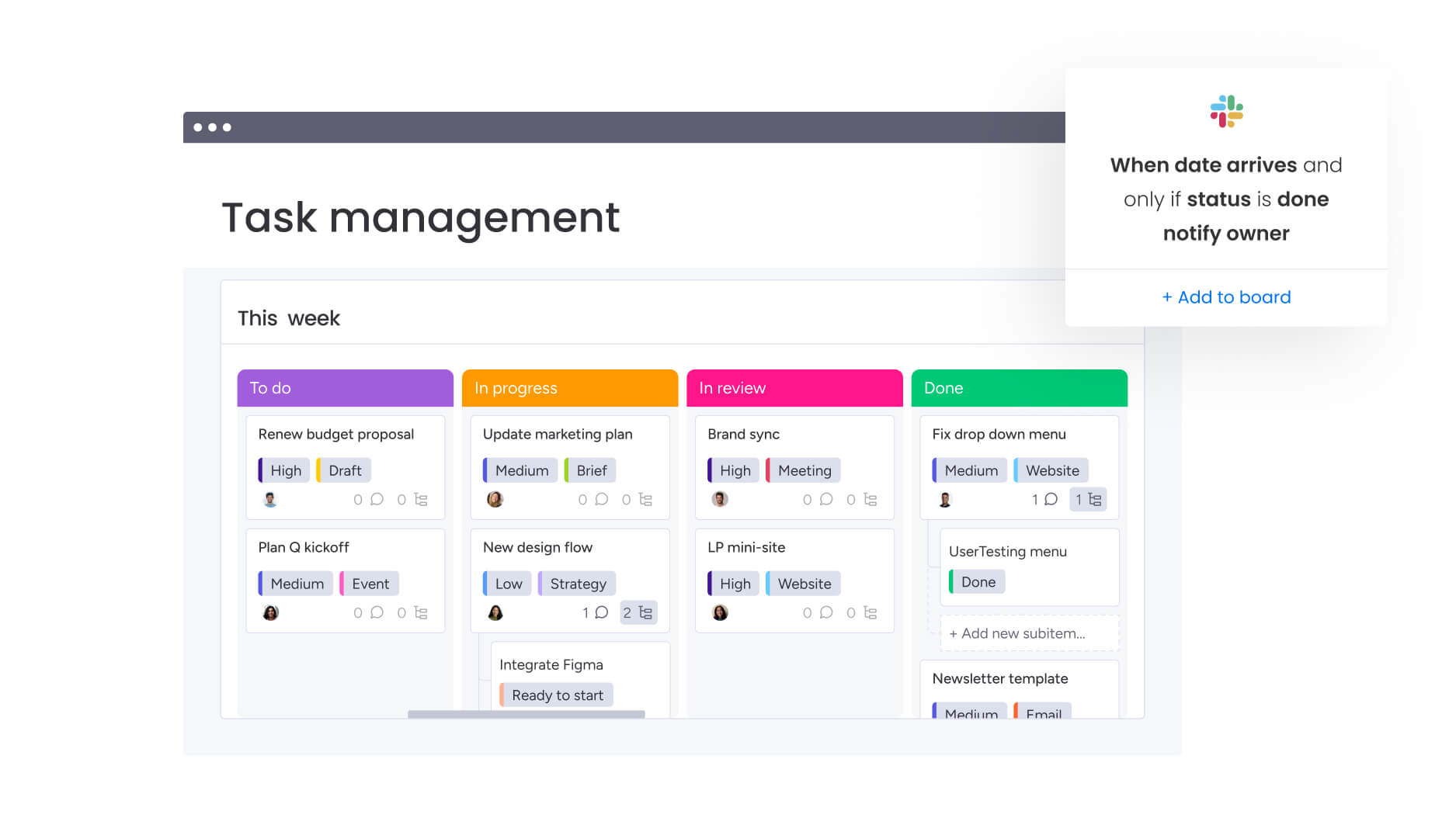
- Status updates: Triggering automatic notifications when task status changes.
- Milestone alerts: Notifying stakeholders when key deliverables complete.
- Reporting workflows: Generating weekly progress reports automatically.
Templates that accelerate your launch cycle
Templates turn one-time successes into repeatable processes. They ensure critical steps are never missed during rapid execution.
Essential template categories:
- Kickoff templates: Standardized agendas and checklists for starting new initiatives.
- Onboarding workflows: Structured plans for new hires or client onboarding.
- Launch checklists: Comprehensive lists for product or feature releases.
A strong starting system should reduce friction, not create it. The focus is on introducing just enough visibility and consistency to support coordination as initiatives multiply. As your business grows, this foundation can evolve into more advanced workflows without requiring a complete reset.
How to implement entrepreneurial project management: 4 steps
Getting started with project management doesn’t require a perfect framework. What matters is putting simple structure in place that immediately reduces confusion and keeps work moving forward.
These four steps focus on practical changes that improve visibility, clarify priorities, and create consistency across initiatives. The approach is intentionally lightweight, allowing you to strengthen execution without slowing the pace your business depends on.
Step 1: audit your current project chaos
Honest assessment reveals where biggest improvement opportunities lie. This involves inventorying all active initiatives and identifying where information gets lost.
Key audit activities:
- Initiative inventory: Listing every project in flight reveals hidden resource drains.
- Bottleneck identification: Pinpointing exactly where workflows stall.
- Communication gaps: Determining what information stakeholders constantly request.
Step 2: design your minimum viable PM system
Apply lean startup principles to the PM system itself. Start with the absolute minimum feature set required to solve pressing problems.
Essential MVP components:
- Centralized visibility: One shared place where all active projects and status are visible.
- Basic tracking: Simple status tracking method everyone agrees to use.
- Essential reporting: One automated report replacing the most time-consuming manual update.
Step 3: create your executive dashboard
The executive dashboard provides high-level view necessary for strategic decision-making without requiring deep dives into every task.
Dashboard essentials include:
- Health indicators: Visual signals showing which projects are on track.
- Resource utilization: Metrics showing who has capacity and who’s overloaded.
- Milestone progress: Timeline view of major company goals and progress.
Organizations using monday work management create dashboards that automatically display live project data for insights on budget, goals, schedules, and resources. Teams customize dashboards with over ten drag-and-drop widgets to view data for faster decisions.
Step 4: establish your weekly success rhythm
Consistency matters more than complexity. Regular review and planning rhythm keeps systems alive and relevant.
Weekly rhythm components:
- Weekly review: Dedicated time to review progress and update statuses.
- Planning sessions: Forward-looking meetings to align on coming priorities.
- Stakeholder updates: Consistent schedule for communicating progress.
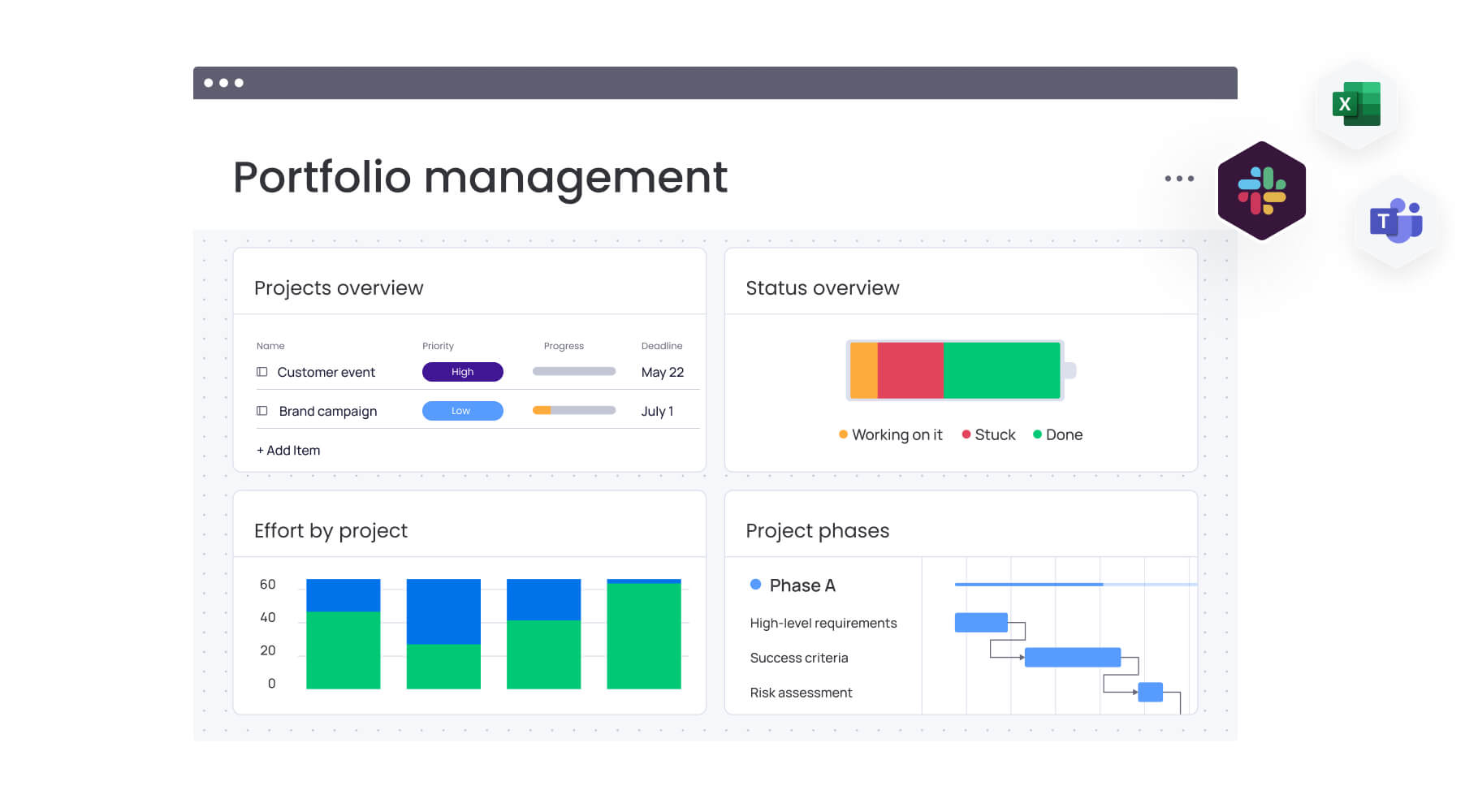
Managing multiple projects like a serial entrepreneur
Entrepreneurs rarely focus on one thing at a time. Managing portfolios of initiatives requires frameworks for prioritization and boundary setting. The challenge lies in maintaining visibility across diverse projects while ensuring each receives appropriate attention and resources.
Master the entrepreneurial portfolio view
Portfolio management involves maintaining visibility across product, marketing, sales, and fundraising initiatives simultaneously.
How do you decide which project gets resources when everything feels urgent?
Systematic prioritization beats gut instinct through:
- Prioritization frameworks: Using models like RICE (Reach, Impact, Confidence, Effort) to objectively rank projects.
- Dependency mapping: Identifying where projects intersect to prevent scheduling conflicts.
- Strategic alignment: Regularly auditing portfolios to ensure every project aligns with evolving strategy.
Set boundaries when everything is priority one
When resources are finite, saying yes to one thing means saying no to another. Effective entrepreneurs use data to make trade-offs explicit.
Boundary-setting strategies include:
- Impact analysis: Evaluating potential return of new opportunities against cost of diverting resources.
- Strategic deferral: Moving good ideas to backlog to ensure great ideas get focus.
- Capacity negotiation: Using resource data to show stakeholders why new requests require timeline adjustments.
Let AI monitor what you cannot
AI extends entrepreneurial oversight by tracking thousands of data points to identify risks humans might miss.
AI monitoring capabilities:
- Risk detection: Algorithms analyze historical data to flag projects trending toward delay.
- Anomaly identification: Automated systems spot unusual patterns like sudden bug report spikes.
- Resource optimization: AI suggests optimal allocation based on skills and availability.
Teams leveraging monday work management use Portfolio Risk Insights to scan project boards and flag potential risks by severity, allowing them to spot critical issues without manually combing through data.
Try monday work managementPortfolio management involves maintaining visibility across product, marketing, sales, and fundraising initiatives simultaneously.
Scale your project management as your startup grows
As companies evolve from garage startup to growth-stage organization, project management approaches must evolve accordingly. The systems that work for five people require adaptation to support fifty. Understanding these transition points helps entrepreneurs prepare for growth challenges before they become bottlenecks.
Evolution from solopreneur to team leader
Transitioning from doing to leading requires mindset shift. Systems become primary mechanisms for delegation and accountability.
Leadership transition elements:
- System-based delegation: Assigning outcomes via PM platform rather than tasks via email.
- Communication scaling: Establishing protocols for where and how communication happens.
- Accountability culture: Using systems to track commitments and foster ownership.
Building PM capability without hiring PMs
Startups need project management discipline before affording dedicated project managers. This gap is bridged by building internal capability and leveraging technology.
Capability-building approaches:
- Distributed responsibility: Training functional leads to manage their own projects.
- Technology leverage: Using platforms with built-in automation and guidance.
- Skill development: Investing in basic PM training for core team members.
Knowing when you need dedicated project leadership
There’s an inflection point where coordination complexity exceeds part-time management capacity. Recognizing this signal is vital for continued growth.
Indicators for dedicated PM hire include:
- Complexity triggers: Cross-functional dependencies become primary source of delay.
- Strategic focus: Founders spend more time coordinating than working on strategy.
- Hiring criteria: Looking for PMs who understand entrepreneurial mindset and adaptability.
How monday work management transforms entrepreneurial execution
monday work management bridges the gap between simple task lists and complex enterprise systems. It offers flexibility entrepreneurs need with power required to scale, all within an intuitive interface facilitating rapid adoption. The platform grows with your business too, adapting to changing needs without forcing you to switch systems.
Visual work management that grows with you
The sophisticated platform adapts to users rather than forcing adaptation. Entrepreneurs start with simple task lists and evolve into complex portfolio management without changing software.
Adaptive capabilities include:
- Multiple views: Single datasets viewed as Kanban boards for dev teams, Gantt charts for project managers, and dashboards for CEOs.
- Instant context switching: Toggle between views instantly for needed perspective.
- Unified data: New workflows plug into existing data structure as business grows.
AI-powered insights for smarter decisions
monday work management integrates AI directly into workflows, acting as force multiplier for small teams.
AI capabilities that transform execution:
- AI Blocks: Automate routine work like categorizing requests, extracting action items from meeting notes, or summarizing documents.
- Product Power-ups: Advanced features assist with risk assessment and resource allocation.
- Digital Workforce: AI agents monitor project health continuously, flagging issues and suggesting optimizations.
From tasks to strategy in one platform
The platform connects daily execution to long-term strategy, ensuring ground-level work aligns with broader company goals.
Strategic alignment features:
- Goal breakdown: High-level goals broken into projects and work items, creating a direct line of sight from strategy to execution.
- Real-time feedback: Operational data feeds strategic dashboards showing strategy effectiveness.
- Integrated workflows: Sales, marketing, product, and operations live in one ecosystem.

“monday.com has been a life-changer. It gives us transparency, accountability, and a centralized place to manage projects across the globe".
Kendra Seier | Project Manager
“monday.com is the link that holds our business together — connecting our support office and stores with the visibility to move fast, stay consistent, and understand the impact on revenue.”
Duncan McHugh | Chief Operations OfficerCreate the execution foundation your business can grow on
Entrepreneurial success depends on more than strong ideas — it depends on the ability to consistently turn priorities into progress. When execution is clear and repeatable, teams move faster, communicate better, and adapt with confidence as opportunities evolve.
Project management gives entrepreneurs the structure to scale without losing agility. It helps ensure that every initiative connects to meaningful outcomes, whether that’s launching new products, securing investment, or expanding into new markets. With the right system in place, growth becomes intentional rather than reactive.
monday work management supports this shift by bringing strategy, workflows, and visibility into one flexible platform. As complexity increases, teams maintain alignment, reduce manual coordination, and keep momentum across multiple initiatives.
Remember, strong execution compounds over time.
Try monday work managementFrequently asked questions
Is project management necessary for solo entrepreneurs?
Project management is essential for solo entrepreneurs because it provides structure needed for prioritization, stakeholder communication, and preparing the business for future scaling.
How do I apply the 80/20 rule to project management?
The 80/20 rule in project management means focusing on the 20% of activities that drive 80% of results, typically stakeholder communication, risk management, and progress tracking.
What is the ideal number of simultaneous projects for entrepreneurs?
Most entrepreneurs can effectively manage 3-5 simultaneous projects, depending on complexity and team support available.
Which project management methodology works Use case startups?
Agile methodologies work Use case startups because they emphasize rapid iteration, customer feedback, and adaptability over comprehensive documentation.
When should entrepreneurs move beyond spreadsheet project tracking?
Entrepreneurs should move beyond spreadsheets when they have multiple team members, external stakeholders requiring updates, or more than 3-5 simultaneous projects.
How can AI enhance entrepreneurial project management?
AI enhances entrepreneurial project management by automating routine tasks, identifying risks and opportunities automatically, and providing insights that would otherwise require significant manual analysis.

 Get started