


Open rates were once a reliable health metric for email campaigns. Now, privacy updates and automated systems inflate these numbers, making it harder than ever to know what a good open rate for email really is and who is actually listening.
This guide will walk you through the new benchmarks for 2026, explaining how to calculate your open rate and what factors influence it. We’ll explore why metrics like click-to-open rate (CTOR) provide a truer measure of engagement and show you how to use AI-powered strategies to improve your results.
Try monday campaignsKey takeaways
- Focus on click-to-open rates (CTOR) instead of just open rates — CTOR shows real engagement and connects directly to business results.
- Aim for 15-25% open rates across most industries, but remember Apple’s privacy changes make these numbers less reliable than before.
- Clean your email list every 3-6 months and segment subscribers based on behavior to dramatically improve open rates and engagement.
- Test subject lines, send times, and personalization consistently — small changes in these areas often lead to significant performance gains.
- Use AI to optimize subject lines, send times, and audience targeting — while connecting email performance to actual sales revenue with monday campaigns.
What is a good email open rate?
A good email open rate typically ranges from 15-25% across most industries. This percentage shows how many delivered emails recipients actually open, but what counts as “good” depends on your specific situation.
Your industry plays a huge role. Nonprofits often see rates above 25% because their audiences actively want updates. Retail brands usually land between 16-20% since they send more promotional content through mass email campaigns. B2B companies hover around 18-22% with their targeted, professional messaging.
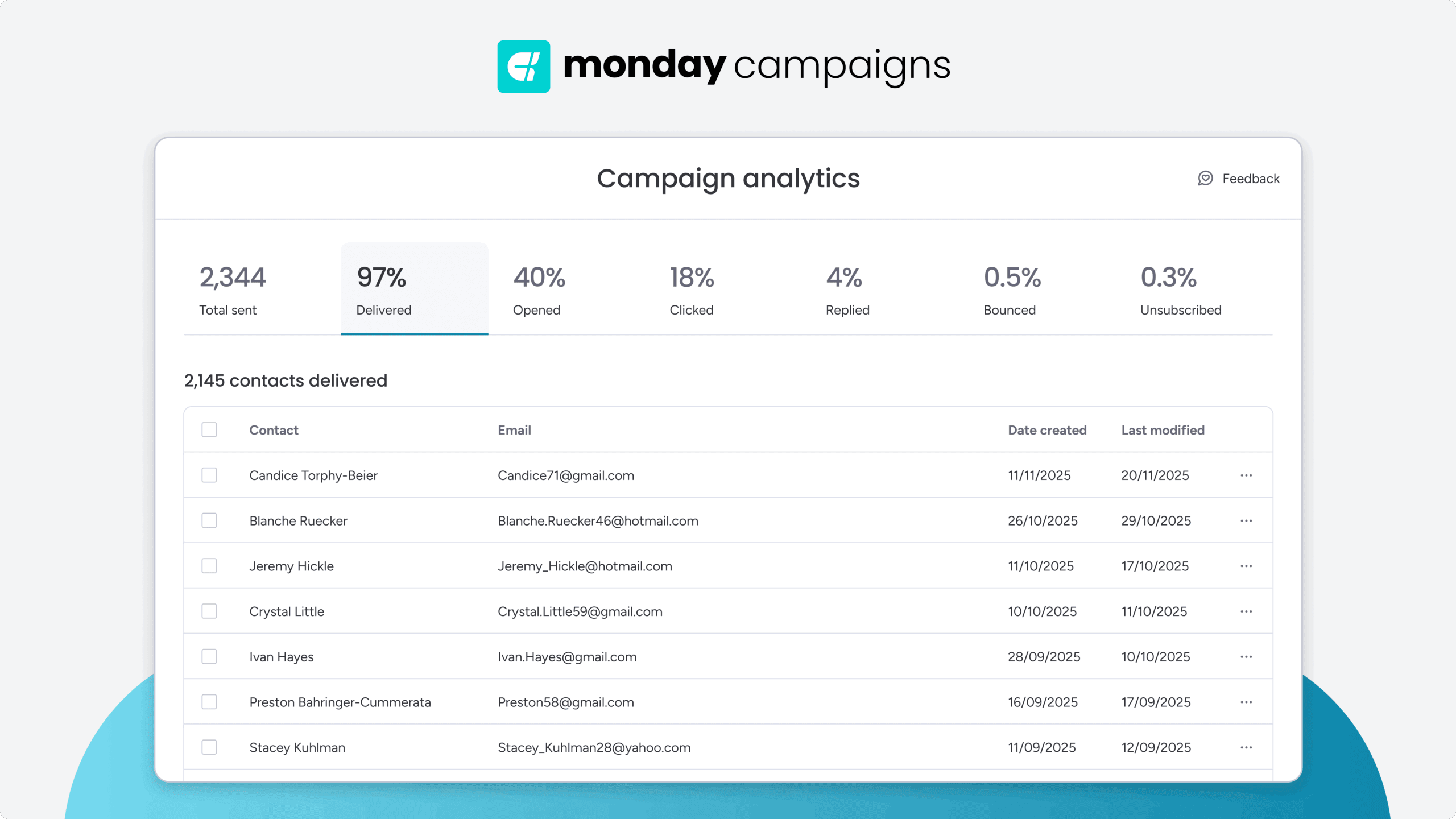
The quick answer to what’s a good email open rate
Most marketers should aim for a 15-25% open rate, which represents solid performance across industries. That said, these ranges provide a quick snapshot of your email performance and signal where you have opportunities to grow:
| Open rate range | Performance level | What it means |
|---|---|---|
| 20–25% | Strong performance | Your audience finds value in your content and trusts your brand |
| 15–20% | Industry average | You’re meeting expectations but have room to grow |
| Below 15% | Needs attention | Review subject lines, list quality, or sending frequency |
Why open rates are becoming less reliable
Beyond privacy updates, several other technical factors can distort your open rate data, making it an unreliable standalone metric. Recognizing these issues is the first step toward focusing on analytics that reflect true subscriber interaction.
- Image blocking: some email clients prevent tracking pixels from loading
- Preview panes: These might count as opens even when recipients don’t fully engage
- Security bots: Automated systems that scan emails for threats can trigger false opens
Smart marketers now focus on metrics that show real engagement. Click-to-open rates, conversions, and revenue tell you more about campaign success than opens alone.
How mailbox privacy features affect open rates today
Mail Privacy Protection preloads images on Apple devices, including the tracking pixel that measures opens — this happens whether someone reads your email or not. That means your reported open rates might look inflated without reflecting real engagement. If you suddenly saw open rates jump without more clicks or sales, Apple’s privacy features are likely why.
How to calculate your email open rate
Calculating open rates helps you understand campaign performance and spot trends. The math is straightforward, but knowing what counts matters more than the formula itself.
Here’s the standard calculation:
(Unique opens ÷ delivered emails) × 100
Let’s say you send 2,500 emails and 500 people open them. Your open rate is 20%. Notice we use “delivered” emails, not “sent” emails. Bounced emails never reach inboxes, so including them would unfairly lower your rate and impact email deliverability metrics.
What actually counts as an email open
Email platforms track opens using an invisible pixel image. When someone’s email client loads this image, it registers as an open. An email “open” isn’t as simple as it sounds, as platforms track engagement in different ways. To interpret your data correctly, it’s important to distinguish between the 2 primary types of opens.
- Unique opens: Individual recipients who open at least once
- Total opens: Every time the email gets opened, including multiple views by the same person
Unique opens matter most because they show your actual reach. Some email clients register opens differently — preview panes might count, or they might not. These variations explain why comparing your performance to benchmarks beats fixating on exact numbers.
Automated tracking vs. manual calculation
Most platforms handle open rate calculations automatically, including monday campaigns, which provides real-time tracking that eliminates manual work and reduces errors. You get instant insights without spreadsheets or guesswork.
Manual calculation means exporting data and doing the math yourself. It’s time-consuming and error-prone. Automated solutions save time while providing context like device types and geographic data for deeper email marketing analytics.
Try monday campaignsAverage email open rates by industry in 2026
Industry benchmarks help you set realistic goals and measure performance. What’s excellent in one industry might be average in another. Understanding these differences helps you evaluate your campaigns accurately.
| Industry | Average open rate | Good open rate | Excellent open rate |
|---|---|---|---|
| B2B services | 18–22% | 22–25% | 25%+ |
| Retail & e-commerce | 16–20% | 20–23% | 23%+ |
| Nonprofit | 20–25% | 25–28% | 28%+ |
| SaaS & technology | 17–21% | 21–24% | 24%+ |
| Education | 19–23% | 23–26% | 26%+ |
| Healthcare | 16–20% | 20–23% | 23%+ |
| Financial services | 17–21% | 21–24% | 24%+ |
B2B services email benchmarks
B2B services see 18-22% average open rates. Professional audiences check email regularly and expect relevant, targeted content. This focus on value drives higher engagement than consumer campaigns.
Retail and e-commerce open rates
Retail averages 16-20% open rates. Frequent promotional mass email campaigns can cause fatigue, but segmented campaigns perform much stronger. Targeting based on purchase history or browsing behavior beats generic mass email sale announcements.
Nonprofit email performance
Nonprofits enjoy 20-25% average open rates. Passionate supporters want mission updates and impact stories. This engaged audience responds well to personalized content that shows how their support makes a difference.
SaaS and technology benchmarks
Technology companies average 17-21% open rates. Regular product updates and educational content keep subscribers engaged. These audiences expect ongoing communication about the platforms they use daily.
Why CTOR is the new gold standard for email marketing
For many teams, the click-to-open rate (CTOR) is now a more reliable benchmark than open rate alone. Open rates can mislead you, and technical factors inflate them without showing real engagement.
CTOR connects directly to business outcomes by measuring actual interaction. It measures the percentage who click through, showing whether your content delivers on your subject line’s promise.
Calculate CTOR with this formula:
(Unique clicks ÷ unique opens) × 100
If 500 people open your email and 75 click, your CTOR is 15%. This tells you that once opened, your email has a 15% chance of driving action.
CTOR benchmarks that actually matter
Good CTOR ranges from 10-15%, and excellent campaigns hit 20% or higher. These numbers reflect content quality and relevance to your audience.
That said, different email types produce different CTORs based on urgency and relevance:
| Email type | CTOR benchmark | Why it performs this way |
|---|---|---|
| Newsletter emails | 8–12% | Informational content drives steady but not urgent clicks |
| Promotional emails | 10–15% | Well-targeted offers generate higher engagement |
| Transactional emails | 15–25% | Immediate relevance (orders, resets, confirmations) |
| Welcome series | 20–30% | New subscribers are highly engaged and exploratory |
What factors influence your email open rates
Several factors within your control impact open rates. Understanding and optimizing these elements systematically improves performance. Small adjustments often lead to significant gains.
Subject lines
Subject lines make or break your open rates. Keep them between 30-50 characters for maximum impact. Your subject line is the single most important factor in getting your email opened. To capture attention in a crowded inbox, focus on a few proven principles that build trust and create intrigue.
- Personalization: Including names or recent activity makes emails feel individual
- Urgency: Time-sensitive language prompts immediate action
- Curiosity: Teasing information without revealing everything sparks interest
- Stated value: Showing the benefit upfront tells recipients why they should open.
Software like monday campaigns uses AI to generate and test subject line variations. Data guides your decisions instead of guesswork.
Sender name
Recipients open emails from senders they recognize and trust. Choose between company names, personal names, or hybrids like “Sarah from Company.” Stay consistent to build familiarity over time.
Sudden sender name changes hurt open rates. If you’ve been using “[email protected],” switching to a personal name causes temporary dips until audiences adjust.
Send time and frequency
Tuesday through Thursday typically see highest open rates. But your specific audience might differ. Test different days and times to find your sweet spot.
Frequency matters too. Most audiences handle 1-3 marketing emails weekly. Too many causes fatigue and unsubscribes. Too few means lost momentum. Monitor engagement to find your ideal cadence.
Email list quality and segmentation
Clean lists drive higher open rates. Remove inactive subscribers every 3-6 months. Segment your audience based on behavior, demographics, or engagement history for more relevant messaging, which improves email deliverability.
Engaged subscribers open emails at much higher rates. Software like monday campaigns enables dynamic segmentation using CRM data, automatically adjusting lists as behavior changes.
Try monday campaigns
AI transforms email optimization from guesswork to data-driven decisions. These strategies help you maximize opens through intelligent automation and continuous learning.
- Predictive subject line generation: AI analyzes past campaigns to suggest high-performing subject lines based on patterns in language and structure that resonate with your audience.
- Optimal send time automation: AI uncovers when each subscriber most likely checks email to suggest ideal send times and adapts as behavior changes.
- Dynamic personalization at scale: AI incorporates behavior, purchase history, and engagement patterns to suggest truly personalized content — staying relevant as interests evolve.
- Continuous A/B testing: AI can test multiple variables simultaneously and identify winners so you can automatically apply the best performers to future campaigns.
- Smart audience segmentation: AI helps you create dynamic segments based on real-time behaviors and enhance targeting with sales and customer data.
- Real-time performance optimization: AI suggests adjustments to campaign elements based on early performance indicators, maximizing results before campaigns finish.
- Intelligent re-engagement campaigns: With AI, you can set up automatic, personalized triggers for win-back sequences based on past interests and behaviors.

Built into monday CRM, monday campaigns approaches email open rates differently by connecting every email to live CRM data, AI-powered optimization, and real customer context. This means higher open rates are a natural outcome, not a guessing game.
Here’s what that looks like in practice:
- Relevance powered by CRM data: Using CRM fields, activity history, and lifecycle stages, monday campaigns ensures every email is sent to the right audience at the right time.
- AI-optimized send timing (not averages): Using AI, monday campaigns recommends optimal send times based on engagement patterns, helping your emails get seen instead of buried.
- Segmentation that goes beyond demographics: Instead of blasting entire lists, you can segment by behavior, deal stage, engagement level, or sales activity — turning one-size-fits-all emails into targeted messages that earn opens.
- One system for marketing and sales alignment: When campaigns live outside your CRM, context gets lost. With monday campaigns, marketing and sales operate from a shared source of truth, so emails reflect real conversations, not assumptions.
- Open rates tied to real outcomes: With monday campaigns, you see how opens connect to clicks, replies, and revenue, helping you move beyond “Is this a good open rate?” to “Is this driving growth?”
If you’re benchmarking your performance and wondering what a good email open rate really is, the answer is simple: It’s one that improves when relevance, timing, and data are working together.
Start improving your email open rates today
Email open rates remain valuable when you understand their limitations and focus on metrics that matter. By combining industry benchmarks with AI-powered optimization, list hygiene, and CRM integration, you can drive real engagement that translates to revenue. The key is moving beyond vanity metrics to measure what actually impacts your business.
monday campaigns gives you the tools to make this shift effortlessly. With AI-driven subject lines, smart segmentation, and unified customer data, you’ll spend less time guessing and more time growing. Ready to transform your email marketing performance?
Try monday campaignsFAQs
How often should I clean my email list to maintain good open rates?
Clean your email list every 3-6 months by removing subscribers who haven't engaged in 6 months or longer to maintain compliance and deliverability. Regular list hygiene prevents unengaged contacts from dragging down your open rates and improves overall deliverability.
Do emojis in subject lines hurt email open rates?
Emojis in subject lines do not necessarily hurt open rates and can even boost them when used sparingly — typically 1 or 2 per subject line maximum. Test emojis with your specific audience to determine whether they enhance engagement or feel out of place for your brand.
What day of the week gets the highest email open rates?
The days of the week that get the highest email open rates are typically Tuesday through Thursday, with Tuesday and Thursday often performing slightly better than Wednesday. Your optimal send day depends on your specific audience and industry, making testing essential.
How many marketing emails per week is too many for open rates?
To avoid hurting your open rates, the ideal frequency is typically 1 to 3 marketing emails per week, as most audiences tolerate this without fatigue. The ideal frequency depends on your content value and subscriber expectations — monitor unsubscribe rates to find your sweet spot.
Should I segment email sends by time zone for better open rates?
Yes, you should segment email sends by time zone for better open rates, as this strategy ensures emails arrive during optimal hours for each recipient. This strategy particularly benefits global audiences or campaigns targeting multiple regions simultaneously.
Is 30% a good open rate for email campaigns?
Yes, 30% is a good open rate for email campaigns. It exceeds industry averages significantly and indicates exceptional audience engagement and an effective email strategy. Consistently achieving 30% or higher suggests strong subscriber relationships — just ensure clicks and conversions match this engagement level.

 Get started