


The insurance agents who retain more clients and spot cross-sell opportunities early aren’t making more phone calls — they’re turning CRM data into consistent, targeted email outreach. Policy types, renewal dates, life events, and coverage gaps become a structured system that keeps you top-of-mind at every stage of the client relationship.
This guide walks you through building that system from scratch in 7 steps. You’ll learn which email types drive the most impact, how to segment your list using real CRM data, and how to set up campaigns that support prospects, policyholders, and renewals automatically.
Key takeaways
- Email marketing supports the entire customer relationship by nurturing leads, retaining policyholders, and driving cross-sell conversations from one channel.
- Segmentation by policy type, renewal date, and life events ensures every message lands at the right moment for the right reason.
- Welcome emails, lead nurture sequences, renewal reminders, cross-sell emails, educational newsletters, and win-back campaigns each serve a distinct purpose in your pipeline.
- Quality beats quantity when it comes to list size — 500 engaged contacts who receive relevant emails will outperform 5,000 who receive generic messages.
- CRM-connected platforms like monday campaigns let segments update automatically, triggers fire based on real policy data, and agents track business outcomes beyond opens and clicks.
What is email marketing for insurance agents?
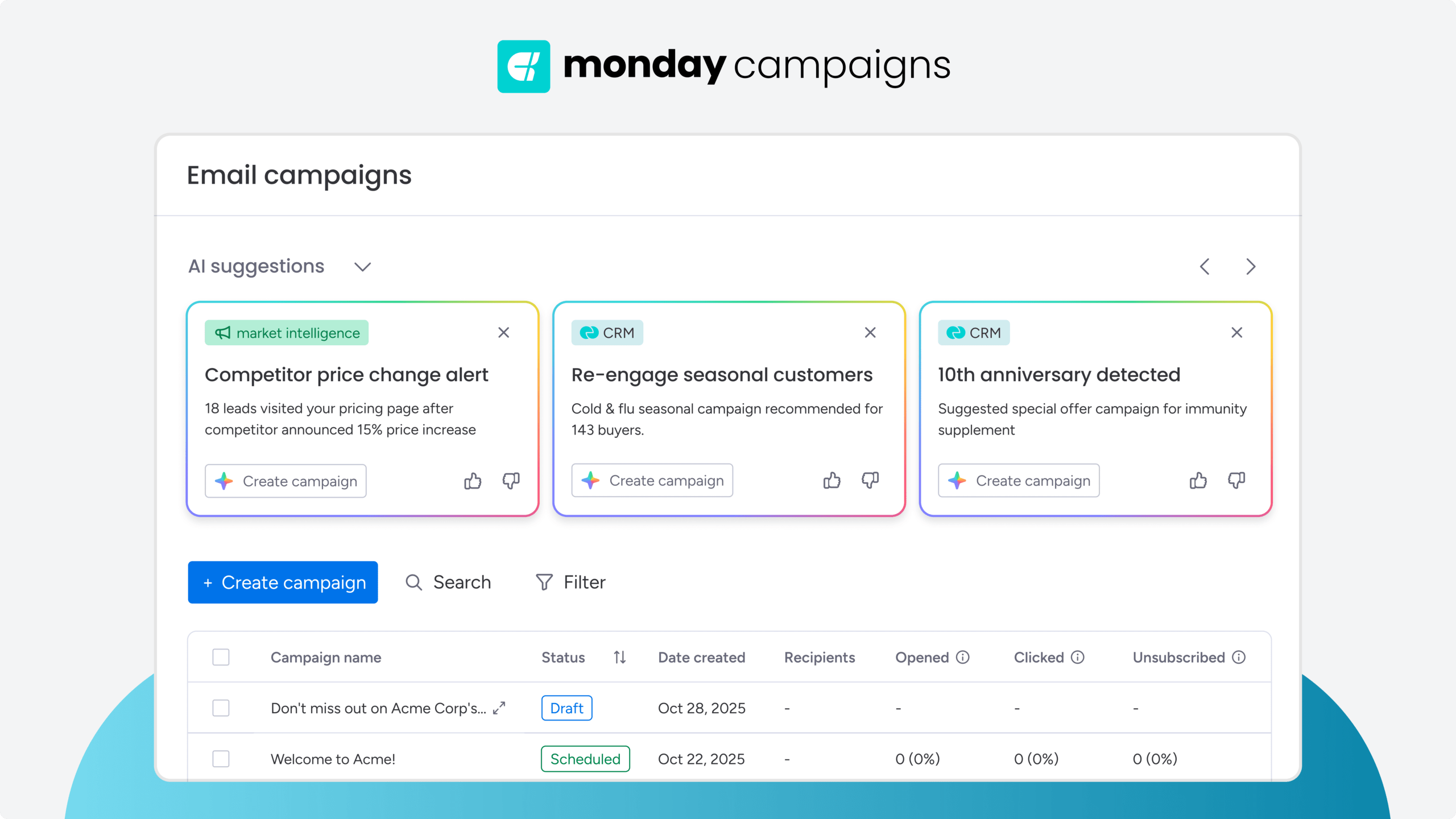
Email marketing for insurance agents means sending targeted messages to prospects, policyholders, and leads at the right time. Unlike general email marketing, insurance email marketing deals with longer sales cycles, trust barriers, and strict compliance rules.
Those challenges include:
- Long sales cycles: Potential customers may research coverage options for months before committing to a policy.
- Trust-building requirements: Prospects need to feel confident before sharing sensitive financial information — especially as 77% of surveyed leaders reported an increase in fraud and phishing, making recognizable, authenticated emails from known agents more important than ever.
- Compliance considerations: Data privacy laws and communication regulations shape how and when agents can reach out.
- Ongoing relationship management: Policyholders need consistent touchpoints across renewals, life events, and coverage changes.
Insurance agents use email marketing to nurture leads who are researching coverage options, educate existing clients about policy changes or coverage gaps, remind policyholders about upcoming renewals, and cross-sell additional products based on life events or changing needs. The channel supports the entire customer lifecycle, from initial quote requests through policy renewals and referrals.
Here’s how different types of insurance agents apply email marketing in practice:
- Property and casualty agents: Send quarterly newsletters with home safety tips and coverage reminders to homeowners, keeping the relationship active between renewal periods.
- Life insurance agents: Follow up with prospects who requested quotes but haven’t yet purchased, providing educational content about term vs. whole life options and coverage calculators.
- Health insurance agents: Send renewal reminders 90 days before policy expiration with options to review coverage, ensuring clients have time to evaluate their options before open enrollment deadlines.
Why email marketing matters for insurance agencies
Email marketing drives retention, cross-sell revenue, and lead conversion for insurance agencies. It directly impacts retention rates, cross-sell revenue, and lead conversion, making it more than just another way to stay in touch. Here’s where email marketing makes the biggest impact.
1. Retention and renewal growth
Keeping policyholders engaged year-round, not just at renewal time, protects your book of business. Regular emails with coverage tips, claims reminders, or seasonal risk alerts keep the relationship active. Policyholders are less likely to shop around when renewal hits.
Retention-focused email strategies work because they keep you in front of clients consistently. Consider these approaches that insurance agents use to keep policyholders engaged:
- Coverage review reminders sent 90 days before renewal: Proactively address coverage gaps and give policyholders time to adjust their protection before expiration.
- Educational content about policy benefits: Highlight features policyholders may not be using, such as roadside assistance, identity theft protection, or claims support services.
- Claims support resources: Reinforce the value of the agent relationship by making it easy for policyholders to understand the claims process and access help when they need it.
2. Cross-sell and coverage gap opportunities
Email marketing helps insurance agents spot and act on cross-sell opportunities by segmenting policyholders based on life events, policy types, and coverage gaps. Agents can use email to educate clients about complementary coverage they may need, like umbrella policies for homeowners, life insurance for new parents, or commercial coverage for clients who start businesses.
Common cross-sell scenarios and how to frame each email include:
| Cross-sell scenario | Target audience | Email content focus |
|---|---|---|
| Renters/homeowners coverage | Auto insurance clients without property coverage | Importance of protecting personal belongings, liability coverage for guests |
| Umbrella liability | Homeowners with high-value properties | Additional protection beyond standard homeowners limits, lawsuit protection |
| Life insurance | Clients who recently married or had children | Family protection, income replacement, education funding |
| Commercial coverage | Clients who started businesses | Business liability, workers' compensation, professional liability |
3. Lead nurture and trust building
Most insurance prospects don’t buy right after requesting a quote. They research options, compare coverage, and evaluate trust before making a decision. Email marketing keeps agents present throughout that process.
How do you stay relevant to a prospect who requested a quote 3 weeks ago but hasn’t responded to your calls? Lead nurture email sequences solve this by staying helpful over time through:
- Post-quote follow-up messages
- Coverage comparison guides
- Client testimonials
- FAQ content that addresses common objections
4. Marketing and sales alignment
When marketing and sales don’t talk, leads get lost. Email marketing creates a shared system where marketing efforts (lead generation, education, brand awareness) directly support sales activities like quote follow-up, renewal conversations, and cross-sell outreach.
This alignment is increasingly data-driven: 57% of CRM users call their CRM “critical”, with email listed among the most important integrated channels for managing customer communications. Email marketing bridges the gap between initial prospect interest and agent conversations by:
- Warming up leads before sales calls
- Providing context that makes conversations more productive
- Ensuring consistent messaging across every stage of the customer journey
6 types of insurance marketing emails to send
Insurance agents need a mix of email types to support different stages of the customer lifecycle, from initial awareness through policy renewal and beyond. Each email type serves a specific purpose based on where the recipient is in their relationship with you. Here are the 6 essential email types every insurance agent should have in their toolkit.
1. Welcome and onboarding emails
Welcome and onboarding emails are the first messages new policyholders receive after purchasing coverage, or new leads receive after requesting information. These emails set expectations, share important info, and kick off the relationship on the right foot.
Welcome emails have high open rates because recipients are expecting to hear from the agent, making them an ideal opportunity to:
- Confirm next steps and what to expect
- Share key contact information and support resources
- Set a positive, professional tone for the relationship ahead
2. Lead nurture and quote follow-up emails
Lead nurture and quote follow-up emails go to prospects who’ve shown interest but haven’t bought yet. These emails keep you top-of-mind, address common objections, and give prospects the info they need to buy with confidence.
3. Renewal reminder emails
Renewal reminder emails go out before a policy expires, prompting policyholders to review coverage and renew. These emails protect retention by giving policyholders time to ask questions, update coverage, and avoid lapses.
4. Cross-sell and coverage gap emails
Cross-sell and coverage gap emails target policyholders who might need additional coverage based on their current policies, life events, or protection gaps. These emails help agents spot client needs early and grow account value.
5. Educational newsletters and market updates
Educational newsletters and market updates share helpful information, industry insights, and timely updates with policyholders and prospects. These emails keep you top-of-mind, build trust, and show the relationship matters beyond policy transactions.
6. Win-back and reactivation emails
Win-back and reactivation emails target former policyholders or inactive leads to bring them back into your book of business. These emails acknowledge the lapsed relationship, offer something useful, and make it easy to reconnect.
How to build and segment an insurance email list

A high-quality, well-segmented email list makes email marketing work for insurance agents. List building isn’t just about collecting as many email addresses as possible. It’s about gathering contact information from people who actually want coverage and organizing it so you can send targeted, relevant messages.
Before diving into segmentation strategies, here’s the rule: insurance agents must follow regulations like CAN-SPAM and make sure recipients have opted in to receive emails. All email addresses should be collected with explicit consent. Never purchase email lists or add contacts without permission.
Opt-in sources for insurance email marketing
Insurance agents can build their email lists through multiple opt-in sources, each capturing people who’ve shown interest in coverage or your services:
- Website forms and quote requests: Website visitors who request quotes, download coverage guides, or sign up for newsletters expect follow-up communication.
- In-person interactions and events: Collect email addresses at community events, networking meetings, or client appreciation events by offering helpful resources or coverage info.
- Referrals and client introductions: Existing clients often refer friends or family who need coverage. Ask referred contacts for permission to send email updates and add them to your nurture sequences.
Segmenting by line of business and policy type
Segmenting by line of business and policy type lets insurance agents send messages that match each recipient’s coverage needs. Agents group contacts based on the types of insurance they have or want, like auto, home, life, health, or commercial coverage.
The table below maps each policy type to the most relevant email content and example topics:
| Policy type | Email content focus | Example topics |
|---|---|---|
| Auto insurance | Safe driving, vehicle maintenance, coverage options | Seasonal driving tips, roadside assistance benefits, liability limit explanations |
| Homeowners | Home safety, seasonal risks, coverage reviews | Wildfire/flood preparedness, home inventory documentation, replacement cost vs. actual cash value |
| Life insurance | Coverage planning, beneficiary updates, policy types | Term vs. whole life comparisons, coverage calculators, beneficiary designation tips |
| Commercial | Business liability, risk management, compliance | Workers' compensation requirements, professional liability, business interruption coverage |
Use CRM data for dynamic segmentation
Dynamic segmentation uses CRM data to update email lists automatically as contact information, policy status, or engagement behavior changes. Instead of manually updating segments, agents set rules that automatically add or remove contacts based on CRM data, keeping segmentation accurate without constant upkeep.
With a CRM with email marketing integration like monday campaigns, this process runs in the background automatically:
- When a prospect requests a quote, they move into your nurture segment.
- When a policyholder enters a 90-day renewal window, they automatically receive renewal reminders.
- When contact information or policy status changes, segments refresh in real time.
This keeps campaigns relevant without constant manual list management.
Learn more: Insurance agent CRM
7 steps to set up your first insurance email campaign

Setting up an email campaign may seem complex, but breaking it down into steps makes the process manageable, even for insurance agents new to email marketing. Follow these 7 steps to launch your first campaign with confidence.
Step 1: Define your campaign goal and audience
Every effective campaign starts with 2 questions: “What do I want this campaign to achieve?” and “Who needs to receive this message?” Defining a clear goal upfront shapes every decision that follows, from content and tone to call to action and success metrics.
Use this framework to get started:
- Goal: Choose one primary objective — retention, lead nurture, cross-sell, or reactivation.
- Audience: Identify the specific segment this campaign will target based on policy type, lifecycle stage, or behavior.
- Success metric: Define what a successful outcome looks like before you send a single email.
Step 2: Set up your sending domain and authentication
Setting up a sending domain and authentication is a technical but essential step that ensures emails are delivered to recipients’ inboxes rather than being flagged as spam — particularly given that AI-driven phishing is now 3X more effective than traditional campaigns.
This makes SPF, DKIM, and DMARC authentication critical for protecting your sender identity and policyholder trust. Agents configure their email marketing platform to send emails from a domain they own and set up authentication protocols to verify the emails are legitimate.
The 3 key authentication protocols to configure are:
- SPF (Sender Policy Framework): Confirms that your sending server is authorized to send email on behalf of your domain
- DKIM (DomainKeys Identified Mail): Adds a digital signature to each email, verifying it hasn’t been tampered with in transit
- DMARC (Domain-based Message Authentication, Reporting, and Conformance): Tells receiving mail servers what to do if SPF or DKIM checks fail, protecting your domain from spoofing
Step 3: Create your segment in your CRM
Creating a segment in the CRM means identifying and organizing the specific contacts who’ll receive the campaign. Getting this step right means your message reaches the right people and no one else.
monday campaigns lets you build segments directly from CRM data, including:
- Policy type and coverage category
- Renewal date and expiration window
- Lifecycle stage and lead status
- Coverage gaps and cross-sell eligibility
- Engagement history and past campaign behavior
Because segments connect directly to your CRM, they refresh automatically as contact information changes, so your campaigns always reach the right audience.
Step 4: Design your email template
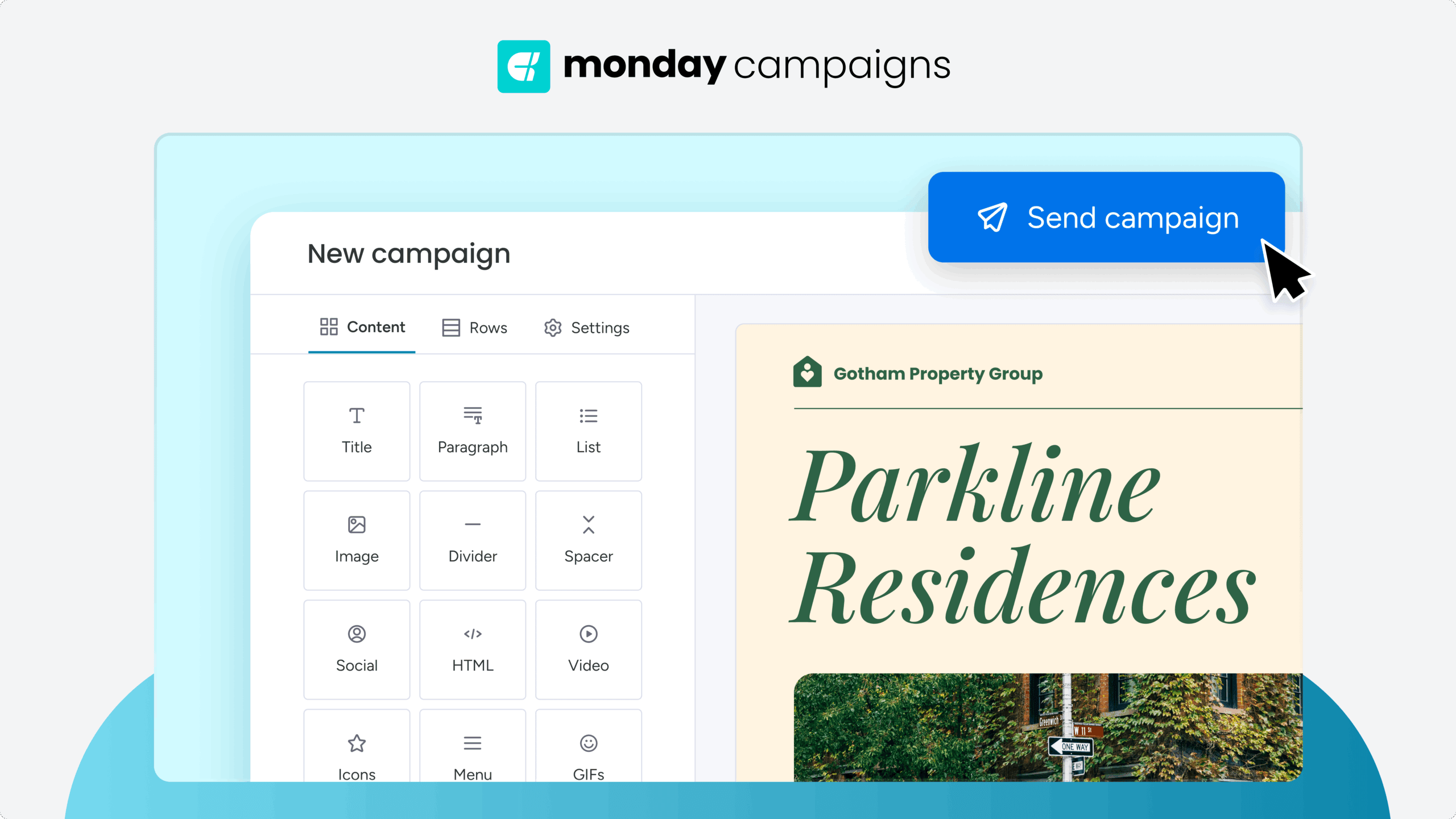
Designing the email template means creating the visual layout and content structure for the campaign. A well-designed template makes your email easy to read, reinforces your agency’s brand, and guides the reader to take action.
The drag-and-drop email editor on monday campaigns makes it easy to build professional emails without any coding. You can add:
- Your agency logo and brand colors
- Policy-specific content blocks
- Dynamic fields like policyholder name and renewal date
- Clear calls to action that stand out visually
Step 5: Write your email copy
Writing the email copy brings the campaign’s message to life. The copy should be relevant and action-oriented, giving the recipient something useful while guiding them to take action.
Follow these principles for insurance email copy that converts:
- Lead with value: Open with something useful to the reader, not a pitch.
- Keep it concise: Respect your reader’s time — say what you need to say, then stop.
- Use plain language: Avoid insurance jargon that confuses rather than informs.
- Include one call to action: Give readers a single, specific next step to take.
AI can also recommend subject lines, optimize send times, and personalize content based on CRM data.
Step 6: Set up automation triggers and timing
Setting up triggers is central to email marketing productivity with automation because it determines when emails are sent and what actions trigger them. With a CRM with email marketing, campaigns fire based on real customer data — not manual scheduling.
monday campaigns can automatically:
- Send renewal reminders when a policy expiration date approaches.
- Launch welcome sequences when a new policy is purchased.
- Start quote follow-up campaigns when a prospect requests a quote.
All of this happens automatically, keeping your outreach timely and consistent.
Step 7: Test, launch, and monitor performance
Testing, launching, and monitoring performance ensures the campaign works correctly and gives you data for ongoing optimization. Before launching, test your email across devices and email clients to make sure formatting, links, and dynamic fields all work.
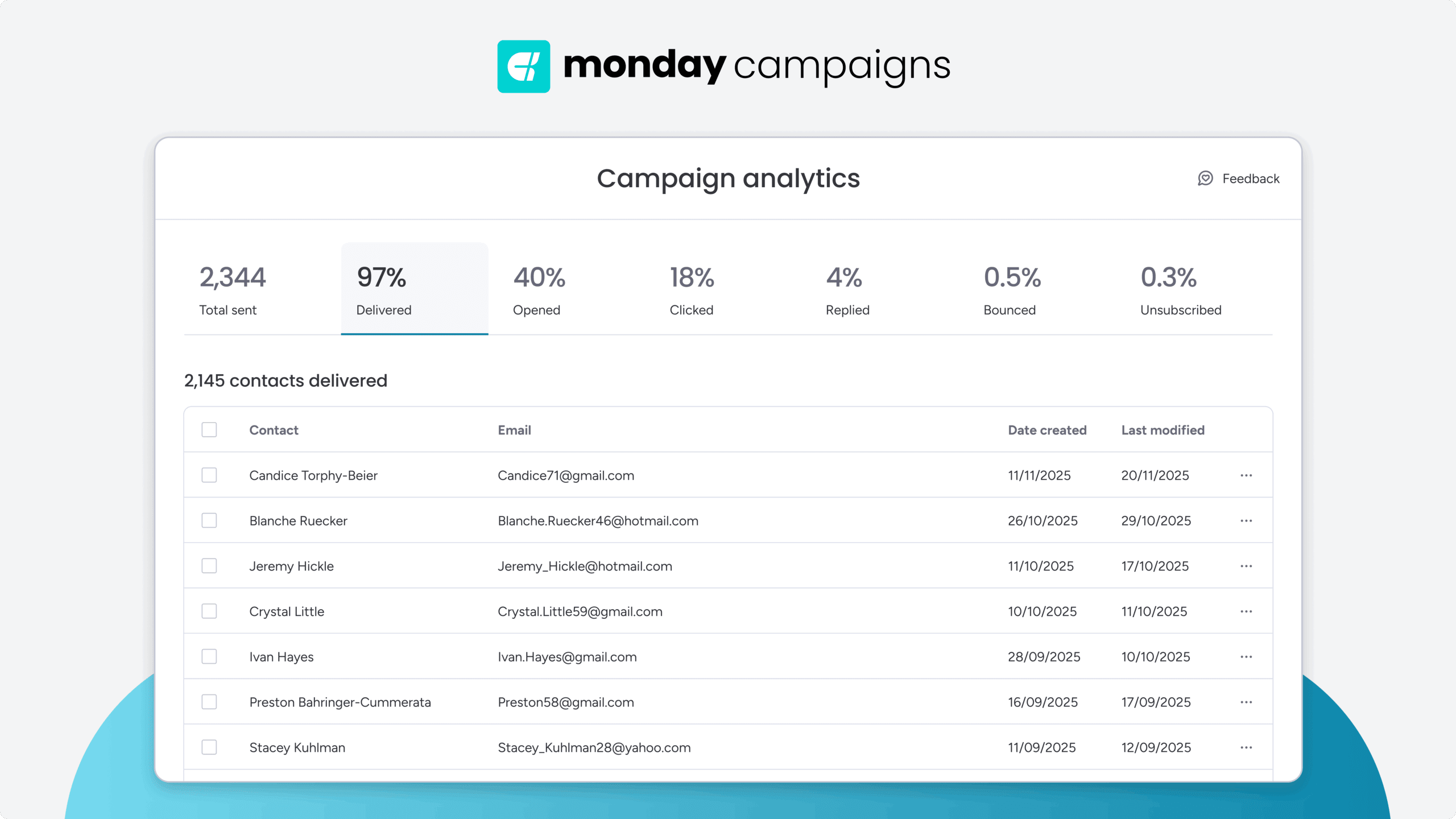
Beyond standard email metrics, CRM-connected platforms like monday campaigns help you track business outcomes, not just opens and clicks. Use these benchmarks to evaluate your campaign performance:
| Metric | What it measures | Benchmark range |
|---|---|---|
| Open rate | Percentage of recipients who opened the email | 20–30% for insurance |
| Click-through rate | Percentage of recipients who clicked a link | 2–5% for insurance |
| Bounce rate | Percentage of emails that couldn't be delivered | Under 2% |
| Unsubscribe rate | Percentage of recipients who unsubscribed | Under 0.5% |
Track which campaigns generate appointments, which renewal reminders improve retention rates, and which cross-sell emails lead to new policies. Then use that data to refine every campaign that follows.
Insurance email benchmarks vary significantly by carrier, agency size, and list quality. Use these as directional benchmarks rather than fixed performance targets.
Why insurance agents choose monday campaigns for email marketing
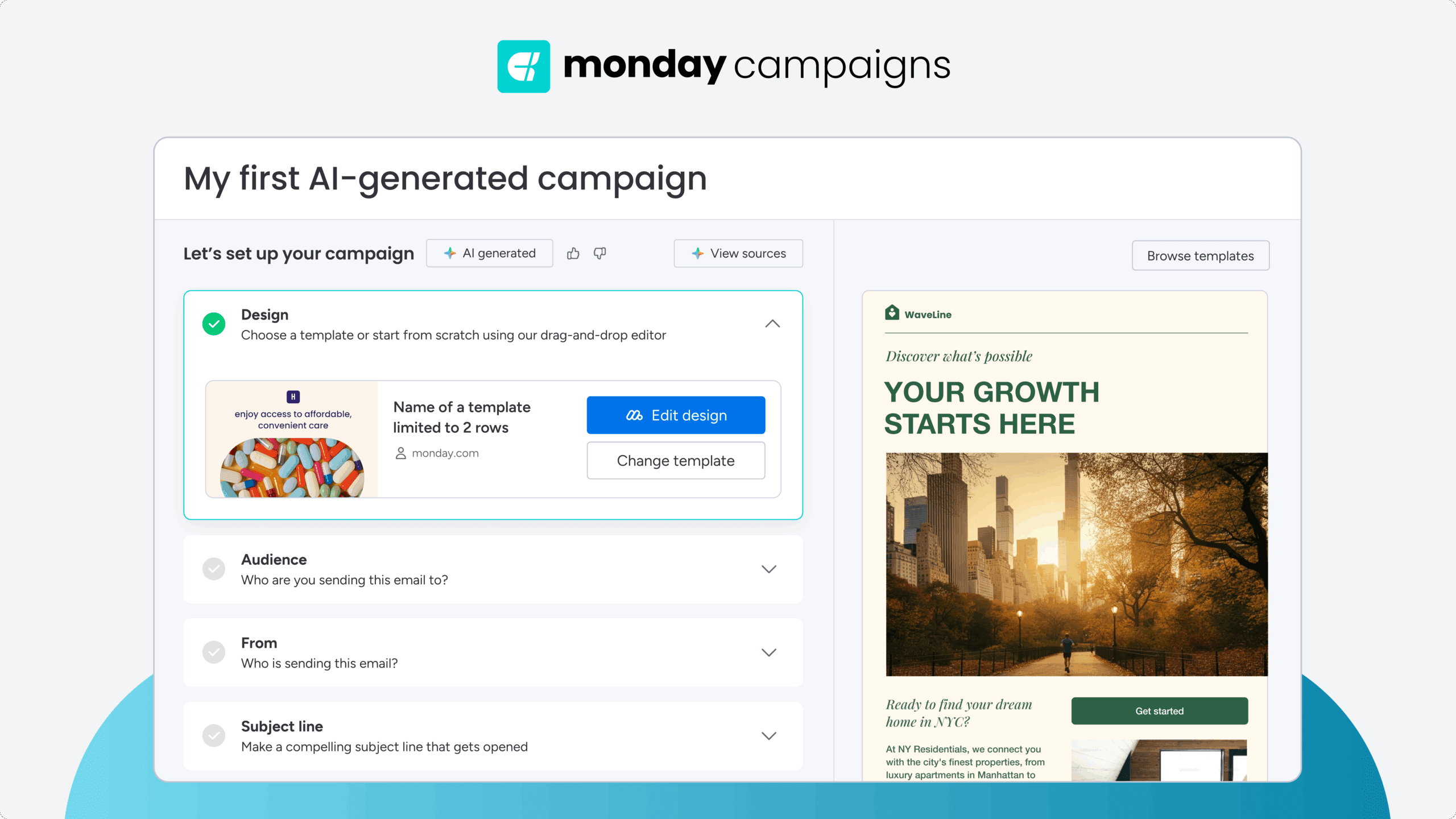
Insurance agents need email marketing that connects directly to policy data, renewal dates, and client lifecycles — not a disconnected tool that requires manual list updates and guesswork. monday campaigns integrates with monday CRM to turn customer data into targeted, automated email campaigns that support every stage of the insurance relationship.
Key features that make monday campaigns work for insurance agents include:
- CRM-connected segmentation: Build email segments directly from policy types, renewal dates, coverage gaps, and lifecycle stages that update automatically as CRM data changes.
- Automated workflows: Trigger renewal reminders, welcome sequences, and cross-sell campaigns based on real policy data without manual intervention.
- Unified platform: Manage leads, policies, and email campaigns from one system, eliminating data silos between marketing and sales.
- AI-powered optimization: Get subject line recommendations, send time optimization, and content personalization based on engagement patterns.
- Performance tracking: Measure business outcomes like quote requests, policy renewals, and cross-sell conversions — not just opens and clicks.
monday campaigns gives insurance agents the tools to build email marketing that drives retention, cross-sell revenue, and lead conversion from a single connected platform.
Turn email into your most reliable growth channel
Email marketing isn’t a set-it-and-forget-it tactic for insurance agents, and the agents who see the strongest results don’t send the most emails. They’re sending the most relevant ones, timed to renewals, life events, and coverage gaps that actually matter to each policyholder. That relevance builds trust, drives retention, and opens the door to cross-sell conversations that feel helpful rather than pushy.
Combine the right email types, a well-segmented list, and CRM-connected automation, and every message you send works harder. If you’re ready to put these strategies into practice, monday campaigns brings marketing and sales together around the same CRM data, making it easy to build personalized campaigns, automate outreach, and measure performance from one connected platform.
Try monday campaignsFAQs
How often should insurance agents email clients and prospects?
Adjust email frequency based on audience type and lifecycle stage. New leads may receive 3–5 emails over 2–3 weeks during active nurture, while existing clients typically receive monthly or quarterly newsletters. Policyholders approaching renewal should receive emails at 90, 60, and 30 days before expiration.
What is the most effective email type for retaining insurance clients?
Renewal reminder emails are the most effective for retention because they hit policyholders right when they're most likely to lapse or switch agents. Educational newsletters that stay helpful between renewals also support retention by keeping the relationship active.
Should insurance agents buy email lists or grow them organically?
Always grow email lists organically. Never purchase them. Purchased lists violate CAN-SPAM regulations, damage sender reputation, and contain contacts who haven't expressed interest in coverage — resulting in low engagement and high unsubscribe rates.
Is email marketing for insurance agents GDPR compliant?
Email marketing can be GDPR compliant when agents collect explicit consent before adding contacts to email lists, provide unsubscribe options in every email, and protect personal data according to privacy regulations. Agents should consult with compliance professionals about specific requirements for their jurisdiction.
Do insurance agents need a large email list to see results?
Insurance agents can achieve strong results with smaller, well-segmented email lists. A list of 500 engaged contacts who receive relevant, targeted messages will outperform a list of 5,000 contacts who receive generic newsletters. Quality and relevance matter more than list size.
How long does it take to see results from insurance email marketing?
Insurance agents typically see initial engagement metrics within 24–48 hours of sending campaigns. Business outcomes like quote requests, policy renewals, and cross-sell conversions may take weeks or months to materialize, depending on the sales cycle length and campaign type.
What should insurance agents include in every marketing email?
Every insurance marketing email should include an unsubscribe link (required by CAN-SPAM), your agency's contact information including physical address, a clear call to action that tells recipients what to do next, and any required compliance disclaimers specific to your state or the insurance products you're promoting. These elements protect your sender reputation, keep you compliant, and make it easy for recipients to take the next step.

 Get started