


Your email list is the most valuable marketing asset you own — a direct line to customers that no algorithm can take away. While social platforms and paid ads have their place, email gives you complete control over your message, timing, and customer relationships.
This guide shows you how to build and optimize email campaigns that drive real revenue for your small business. You’ll learn how to grow your list, create high-converting campaigns from welcome series to win-backs, automate your marketing for consistent results, and connect every email directly to sales for complete visibility into what’s working.
Try monday campaignsKey takeaways
- Email marketing delivers the highest ROI of any marketing channel, generating $36 for every $1 spent while giving you complete ownership of your customer relationships.
- Start with seven essential campaigns: welcome series, promotional emails, abandoned cart recovery, win-back campaigns, post-purchase follow-ups, newsletters, and seasonal campaigns to cover every customer touchpoint.
- Focus on building your email list with irresistible opt-in offers and multiple touchpoints, then use automation to nurture relationships and drive repeat sales without constant manual work.
- Follow the 60/40 rule by providing valuable content 60% of the time and promotional content 40% of the time, sending 4-8 emails monthly to maintain engagement without overwhelming subscribers.
- With monday campaigns, use AI to create professional email campaigns in minutes, automatically segment your audience your audience, and connect directly to your CRM for complete marketing-sales visibility.
What is email marketing for small business?
Email marketing for small businesses is sending targeted messages directly to customers who’ve given you permission to contact them. Unlike social media where your reach depends on ever-changing algorithms, email gives you complete control over your customer relationships. You own the list, decide what to send, when to send it, and who receives it — no platform changes can take that away.
Small business email marketing focuses on building relationships through simple, effective campaigns that drive real results. The key difference from enterprise marketing? You need speed and simplicity. You want platforms that let you create professional emails in minutes, not hours.
How email fits your marketing mix
Email works alongside your other channels to create a complete marketing strategy. Think of it as the reliable foundation that supports everything else you do.
Email acts as the central nervous system for your marketing, amplifying the impact of every other channel. It creates a reliable foundation that supports everything else you do.
Here’s how email marketing strengthens your overall strategy:
- Website traffic: Drive visitors back to your site with product updates and blog posts
- Social amplification: Share your best social content and encourage followers to engage
- Referral power: Make it easy for happy customers to spread the word
- Platform independence: Keep your audience even if social platforms change their rules
Email vs. social media vs. paid ads
Each channel serves a specific purpose in your marketing mix. Understanding these differences helps you allocate resources wisely and maximize impact.
| Channel | Cost structure | Message control | Audience ownership |
|---|---|---|---|
| Low monthly fee, unlimited sends | Full control over content and timing | You own the list | |
| Social Media | Free to post, limited organic reach | Algorithm determines visibility | Platform owns the audience |
| Paid Ads | Pay per click or impression | Control during campaign only | No lasting connection |
Email delivers the highest ROI because you’re building an asset — your list — that grows more valuable over time.
Benefits of email marketing for small businesses
Small businesses see immediate and long-term benefits from email marketing. The combination of low costs, high engagement, and complete control makes it essential for sustainable growth.
- Own your audience: Build a direct line to customers that no platform can take away — you control the list, the message, and the timing
- Reach customers directly: Your messages land in the inbox without algorithmic interference or feed competition
- Generate exceptional ROI: Email delivers $36 for every $1 spent, with AI-powered campaigns increasing revenue by 5–8%
- Enjoy predictable costs: Pay one monthly fee with unlimited sends — no per-email charges
- Automate for scale: Set up campaigns once and profit repeatedly while you focus on other priorities
- Drive repeat purchases: Automated sequences turn single buyers into loyal customers through reorder reminders and cross-sell campaigns
- Build lasting relationships: Deliver personalized experiences to thousands of customers simultaneously
- Create revenue predictability: Plan promotions, forecast sales, and manage cash flow with confidence
- Maintain platform independence: Keep your customer connections regardless of social media algorithm changes or tech trends
How to build an email list from scratch
A quality email list is your most valuable marketing asset. Growing your list requires multiple touchpoints. Implement these strategies to steadily attract quality subscribers:
- Website forms: Place opt-ins on high-traffic pages.
- Checkout additions: Invite customers to subscribe during purchase.
- Social promotion: Share sign-up links across your channels.
- In-person collection: Gather emails at events and in-store.
- Partner collaborations: Cross-promote with complementary businesses.
Create irresistible opt-in offers
Give people a compelling reason to subscribe. Your opt-in offer should provide immediate value while attracting your ideal customers.
Effective opt-in offers include:
- Exclusive discounts: Reward new subscribers with special savings
- Helpful guides: Share expertise through downloadable resources
- Early access: Let subscribers shop sales before everyone else
- Free tools: Provide templates or calculators that solve problems
Stay compliant and deliverable
Following email regulations protects your business and improves results, with violations now carrying penalties of tens of thousands of dollars. Compliance isn’t complicated — just follow these essentials:
The essentials are straightforward: Get explicit permission by only emailing people who opt in, include unsubscribe links to make it easy for people to leave your list, identify yourself clearly by showing your business name in every email, and write honest subject lines that accurately represent your email content.

7 essential email campaigns for small businesses
These seven campaign types cover every stage of the customer journey. Start with one or two, then expand as you grow comfortable with email marketing.
1. Welcome email series
First impressions matter. Welcome emails have the highest open rates and set expectations for future communication.
Your welcome series should include an immediate thank you, valuable content or tips, and a soft introduction to your products. Space these over your first week to maintain engagement without overwhelming new subscribers.
2. Promotional campaigns
Drive sales with targeted offers and product announcements. Balance promotional content with value-driven emails to maintain engagement. Effective promotional campaigns include product launches, seasonal sales, flash deals, and exclusive subscriber offers. Most businesses succeed with 1-2 promotional emails weekly.
3. Abandoned cart recovery
Recover lost sales by reminding customers about items left in their cart. These emails convert exceptionally well because they target high-intent shoppers.
A simple email sequence includes a gentle reminder within hours, urgency messaging after 24 hours, and a final incentive after 48 hours. Include customer service contact information in case they have questions.
4. Customer win-back campaigns
Re-engage inactive subscribers before removing them from your list. Win-back campaigns often surprise you with their effectiveness.
Try these approaches:
- Special comeback offers: Provide exclusive discounts.
- Feedback requests: Ask why they’ve been away.
- Best content roundup: Share your most popular recent posts.
- Preference center: Let them adjust email frequency.
5. Post-purchase follow-ups
Show customers you care after the sale. These emails build trust and encourage repeat purchases.
Your post-purchase sequence should confirm the order immediately, provide shipping updates, share usage tips, and request feedback after delivery. Each touchpoint reinforces your commitment to customer satisfaction.
6. Newsletter campaigns
Keep customers engaged between purchases with valuable content. Newsletters build relationships without being overly promotional.
Include company news, industry insights, customer stories, and helpful tips. Send newsletters consistently — weekly, biweekly, or monthly based on your capacity and target audience preferences.
7. Seasonal and holiday emails
Align campaigns with times when customers are already thinking about purchases. Plan these campaigns in advance for maximum impact. Key seasonal opportunities include major shopping holidays, industry-specific seasons, local events, and customer milestones.
How AI helps streamline email campaign creation
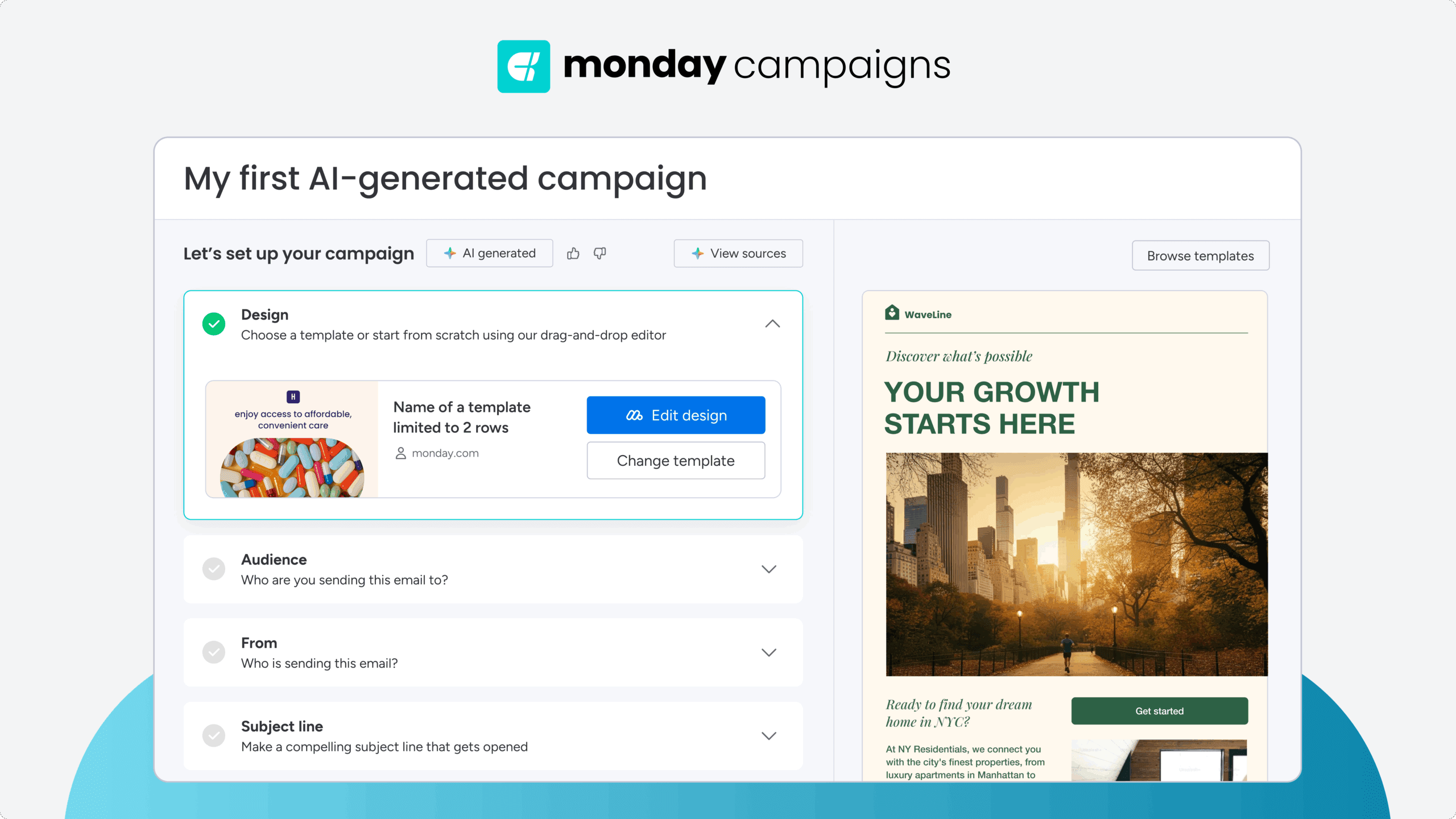
Email campaign software with built-in AI transforms email creation from hours-long projects into minute-long tasks. Even if you’re starting from scratch without customer data, AI gives you the tools to create professional campaigns that rival those from much larger companies.
AI-powered copy generation
Writer’s block disappears when AI helps craft your emails. Generate multiple options for subject lines, body copy, and calls-to-action in seconds — no previous campaign data required.
- Industry-specific templates: Start with proven frameworks tailored to your business type.
- Brand voice matching: Define your tone once and maintain consistency across all emails.
- Instant content variations: Create multiple versions for A/B testing without starting from scratch.
- Smart suggestions: Get recommendations based on industry benchmarks and best practices.
- Tone adjustments: Shift between professional, friendly, or urgent messaging with one click.
Professional design without designers
AI-powered design tools help you create visually appealing emails even without graphic design experience or existing brand assets. Get design assistance with layout, image suggestions, color palette generation, mobile optimization, and more.
Smart audience segmentation
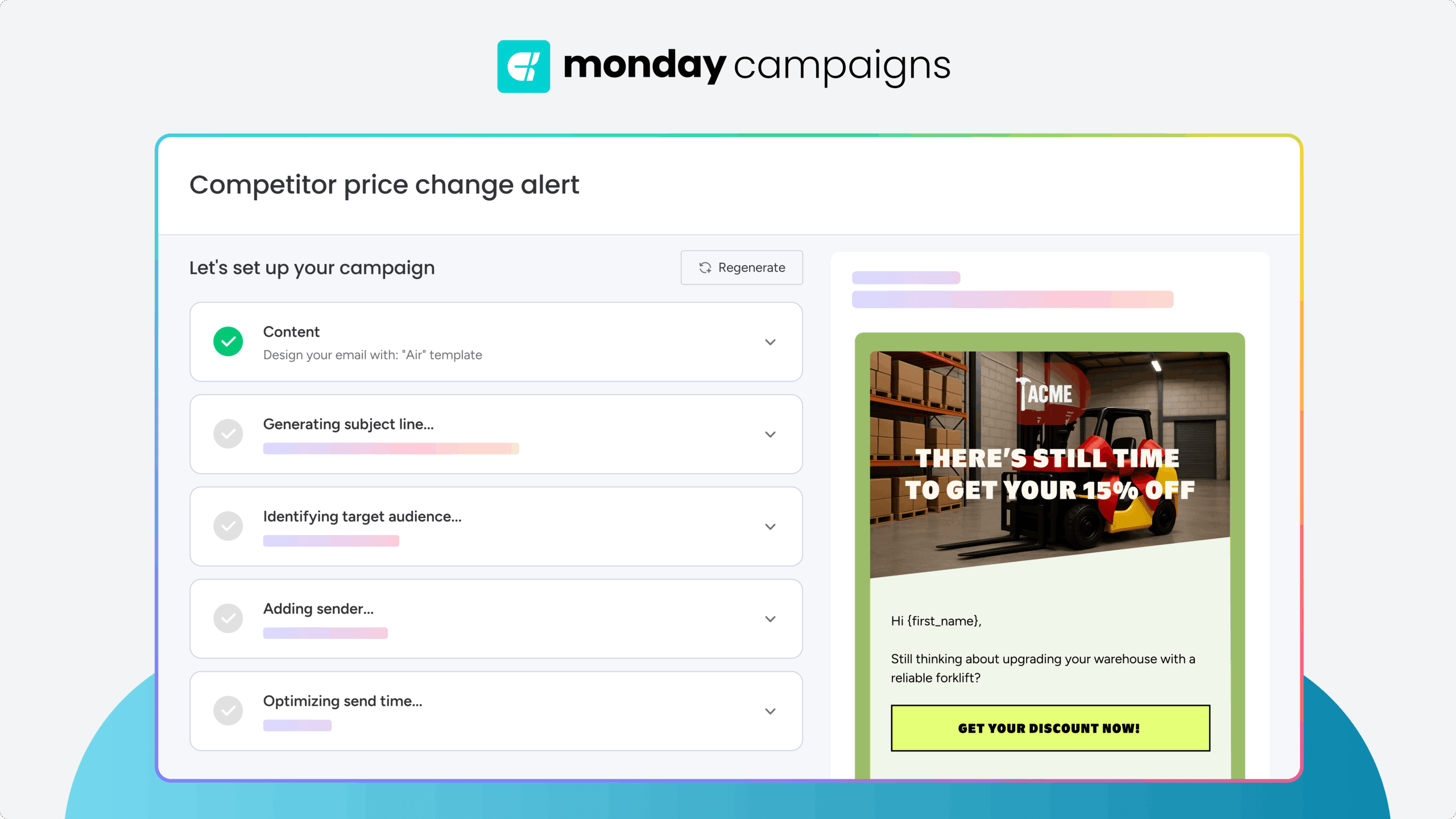
AI helps you segment subscribers intelligently from day one, even before you’ve collected behavioral data. Start with basic information and let AI refine your targeting as your list grows.
As you gather data, AI automatically refines segments based on engagement patterns, purchase behavior, content preferences, and lifecycle stage.
Automated send-time optimization
Stop guessing when to send emails. AI starts with industry benchmarks, then learns from your specific audience to deliver messages when they’re most likely to engage.
This optimization considers time zones, industry best practices, day-of-week patterns, and individual preferences as data becomes available. The result? Higher open rates from your very first campaign, with continuous improvement over time.
Email automation strategies that save time
Automation lets small teams compete with large companies. Set up workflows once, then let them run continuously while you focus on growing your business.
Set up revenue-driving workflows
Create automated sequences that nurture relationships and drive sales. These workflows run 24/7, generating results without daily management.
High-impact workflows include:
- New lead nurturing: Convert prospects into customers
- Customer onboarding: Ensure successful first experiences
- Repeat purchase prompts: Encourage additional sales
- VIP programs: Reward your best customers automatically
Trigger-based campaign logic
Send the right message at the perfect moment using behavioral triggers. When customers take specific actions, your emails respond automatically.
Common triggers that drive results include website visits, email clicks, purchase completion, and milestone dates in outreach email automation.
Scale personalization effortlessly
Deliver individualized experiences to every subscriber without extra work. Dynamic content adapts based on subscriber data.
Personalization options include name insertion, location-based offers, purchase history references, and interest-based content. Each element makes emails feel crafted specifically for the recipient.
Email segmentation for better results
Sending the same message to everyone reduces effectiveness. Segmentation ensures each subscriber receives relevant content that matches their needs and interests. Simple segmentation delivers immediate improvements.
- Begin with foundational groups like customer status, purchase recency, location, or engagement level.
- Track and segment by email engagement, website behavior, purchase patterns, or content preferences.
- Ensure lists update automatically to save time and improve targeting so, as subscriber behavior changes, they move between segments without manual intervention.
Dynamic lists in monday campaigns update based on engagement scores, purchase activity, lifecycle progression, and custom criteria. Set rules once, then let the platform handle ongoing management.
Try monday campaignsSmall business email marketing best practices
Following proven practices ensures strong results while protecting your sender reputation. These guidelines help you maximize every campaign’s impact.
- Design for mobile first: Most emails are opened on smartphones. Design accordingly to ensure your message looks great on any device. Mobile-friendly design requires single-column layouts, easy-to-click buttons, readable text of 14px minimum, and optimized images for fast loading.
- Write subject lines that convert: Your subject line determines whether emails get opened. Make them compelling without being misleading. Create curiosity, add urgency, personalize, and focus on benefits.
- Ensure inbox delivery: Great emails mean nothing if they land in spam. Protect your deliverability by maintaining list hygiene and setting up SPF, DKIM, and DMARC. Avoid spam triggers by skipping excessive caps and exclamation points.
Connect email campaigns to revenue
Proving email marketing ROI requires connecting campaigns to actual sales. This visibility helps you invest in what works and improve what doesn’t.
Track the full customer journey
Follow subscribers from first click to final purchase. Understanding this journey reveals which campaigns drive the most value. Key touchpoints to monitor include email opens, link clicks, website visits, and purchase completion.

Set up revenue attribution
Know exactly which emails generate sales. Attribution models help you understand campaign impact and optimize future sends.
Choose attribution based on your sales cycle:
- First-touch: Credits the initial email interaction
- Last-touch: Recognizes the final email before purchase
- Multi-touch: Distributes credit across all interactions
Use sales data to optimize
Let results guide your strategy. Analyze which campaigns, segments, and content drive the most revenue, then do more of what works.
Focus optimization on high-performing content types, profitable customer segments, successful send times, and winning subject lines. Continuous improvement based on data ensures growing ROI over time.
Try monday campaignsChoosing the right email marketing platform
The right platform makes the difference between struggling with technology and focusing on growth. Small businesses need specific features that balance power with simplicity.
Must-have platform features
Look for capabilities that save time while delivering professional results. These features form the foundation of effective email marketing:
- Visual email builder: Create beautiful emails without coding.
- Mobile optimization: Ensure emails look great on every device.
- List management: Organize subscribers for targeted messaging.
- Automation basics: Set up welcome series and follow-ups.
- Deliverability tools: Keep emails out of spam folders.
- Clear reporting: Understand what’s working and why.
- Native integrations: Connect seamlessly with your customer data.
AI and automation capabilities
Modern platforms use AI to simplify complex tasks, and 71% of organizations report regularly using generative AI in at least one business function.
AI features that matter most:
- Smart subject lines: Generate options proven to increase opens
- Send-time optimization: Reach subscribers when they’re most active
- Content suggestions: Create on-brand copy in seconds
- Automatic segmentation: Group subscribers based on behavior
Why monday campaigns for small business email marketing
Small businesses need email marketing that works without the complexity, and monday campaigns combines powerful features with the simplicity you need to launch professional campaigns fast — no marketing degree or technical expertise required.
- AI-powered campaign creation: Generate professional email copy, subject lines, and designs in minutes instead of hours, even if you’re starting from scratch.
- Native CRM integration: Connect email campaigns directly to your customer data for complete visibility into how marketing drives sales — no complicated integrations or data syncing.
- Visual automation builder: Set up sophisticated workflows with drag-and-drop simplicity, so you can nurture leads and drive repeat purchases automatically.
- Smart segmentation: Target the right people with the right message using AI-powered audience grouping that updates automatically as subscriber behavior changes.
- Mobile-optimized templates: Create emails that look great on every device without design skills or coding knowledge.
- Real-time revenue tracking: See exactly which campaigns generate sales and optimize based on what actually drives results for your business.
The platform handles the technical complexity while you focus on growing your business. Start creating campaigns that convert, build lasting customer relationships, and drive measurable revenue — all from one intuitive platform designed specifically for small business success.

Transform your email marketing today
Email marketing gives small businesses a powerful way to connect with customers, drive sales, and build lasting relationships. The combination of low costs, high returns, and complete control makes it essential for sustainable growth.
With monday campaigns, you can bring everything together — AI-powered creation, native CRM integration, and intuitive automation — in one platform designed for small business success. Start building campaigns that convert, nurture relationships at scale, and drive measurable revenue growth.
Try monday campaignsFAQs
How much time does email marketing require for small businesses?
The time email marketing requires for small businesses is typically 2-4 hours per week, which includes campaign creation, list management, and performance analysis. Using automation and AI-powered platforms like monday campaigns can reduce this time significantly by handling repetitive processes automatically.
What is the best email marketing for a small business?
The best email marketing platform for small businesses combines ease of use, automation capabilities, and CRM integration. Look for platforms that offer drag-and-drop builders, AI-powered features, and native connections to your customer data for seamless campaign management.
What is the 60/40 rule in email?
The 60/40 rule in email marketing suggests that 60% of your content should provide value (educational content, tips, stories) while 40% can be promotional. This balance keeps subscribers engaged while still driving sales for your business.
How much is a 1,000 email list worth?
A 1,000-person email list's worth depends on engagement rates and your average customer value. For small businesses, an engaged list of 1,000 subscribers typically generates more revenue than thousands of social media followers due to higher conversion rates.
What is the 80/20 rule in email marketing?
The 80/20 rule in email marketing means 80% of your results come from 20% of your efforts. Focus on the campaigns, segments, and content types that drive the most engagement and revenue rather than trying to perfect everything.
How many emails should small businesses send monthly to subscribers?
Small businesses should send 4-8 emails monthly to maintain engagement without overwhelming subscribers. The exact frequency depends on your audience preferences and content quality — monitor engagement rates to find your optimal sending schedule.

 Get started