

Most teams use email automation to schedule newsletters. The most effective marketers treat email as one channel inside broader campaign management software, not a siloed tool. They use it to build intelligent conversations that turn first clicks into loyal customers. When your email platform sits in a silo, you lose customer intelligence and struggle to prove revenue impact. Real growth happens when marketing and sales data work together, so every campaign becomes a revenue opportunity.
This guide breaks down what makes a modern email automation platform powerful and compares the 10 top options. You’ll see how to connect every campaign directly to business results, including how monday campaigns approaches CRM-native email automation.
Key takeaways
- Email automation platforms turn manual sends into intelligent, revenue-driving conversations that scale personalized customer journeys without scaling workload.
- The best platforms unify marketing and sales data through native CRM integration, eliminating silos and connecting every campaign to pipeline and closed-won revenue.
- AI-powered features like smart copywriting, dynamic segmentation, and predictive send-time optimization accelerate campaign creation and improve performance without manual guesswork.
- Choose a platform by mapping your real workflows, auditing data sources, and prioritizing tools that support collaboration, scalability, and clear revenue attribution.
- monday campaigns stands out with CRM-native automation, embedded AI assistants and agents, and real-time revenue attribution that keeps marketing and sales aligned on one source of truth.
What is email automation?
Email automation acts as your team’s most dependable player, working 24/7 to send the right message at the perfect moment. It is a system that dispatches emails based on specific triggers or customer actions, evolving beyond manual sends to facilitate instant, relevant communication.
By swapping guesswork for precision, automation ensures your messages are always on point. It enables the creation of personalized journeys for your customers — from a warm welcome to a timely follow-up, which frees your team to concentrate on creative strategy instead of repetitive work.
This is the key to scaling meaningful customer relationships without simultaneously scaling your workload. You can nurture thousands of leads with a personal touch, transforming manual effort into a smart, streamlined engine that drives growth and builds loyalty.
Essential features of top email automation platforms
Finding the right email platform isn’t about the most features, but the right ones that work in concert. Your objective is to build a single, powerful engine that drives revenue, not just a collection of disconnected tools. The best platforms convert scattered efforts into a cohesive strategy.
These core capabilities are what distinguish a simple sending tool from a true growth partner. Understanding what to look for allows you to confidently choose a platform that helps build stronger customer relationships and drive real business impact.
Advanced workflow automation
Workflows are the strategic playbooks running automatically in the background. A superior platform allows you to visually map out entire customer journeys, employing conditional logic to send the perfect message based on specific actions, so every interaction feels personal and timely.
Dynamic segmentation and personalization
Since your audience is not a monolith, your email lists shouldn’t be either. Modern platforms generate dynamic segments that update in real-time according to customer behavior and CRM data. This practice ensures your message reaches the right people at the moment it matters most.
Seamless CRM integration
Your email platform and CRM should function as a single, unified team, creating a complete picture of the customer lifecycle. monday campaigns connects natively with monday CRM and monday.com, giving your sales and marketing teams a shared view of every interaction, from the first click to becoming a loyal advocate.
Real-time analytics and attribution
While opens and clicks provide useful data, revenue is the ultimate metric. You require analytics that connect campaign activity directly to sales outcomes, revealing exactly which emails led to closed deals. This is how you demonstrate marketing ROI and confidently invest in what’s working.
AI-powered optimization
AI should function as your strategic partner, amplifying your team’s creativity and expertise. By using AI to extract customer intelligence, monday campaigns helps you write on-brand copy, identify the perfect send time, and construct smarter campaigns in minutes, freeing you to focus on high-level strategy.
How to select the perfect email automation platform
Instead of comparing platforms feature-by-feature, evaluate them through a practical selection process. Use these steps to confidently choose the right platform for your team:
- Map your real workflows and requirements: Clarify how your team actually plans, builds, approves, and launches campaigns. Identify the bottlenecks you want to eliminate, such as slow reviews, manual segmentation, or lack of CRM visibility. This becomes your baseline for evaluating platforms.
- Audit your data sources and integrations: List the systems your emails rely on: CRM, sales tools, customer activity data, product usage data, lead scoring, and ecommerce platforms. Prioritize platforms that can unify this information so campaigns are always relevant and data-driven.
- Define the key automations you need: Decide which journeys matter most (welcome, abandoned cart, re-engagement, nurture, lifecycle stages). Then look for a platform that can support those flows without workarounds or plug-ins.
- Evaluate ease of use for every role: Your platform should work for marketers, designers, and sales teams, not just one power user. Request trials or demos to see if people can create and launch campaigns quickly without specialist help.
- Check how the platform supports collaboration: Look for shared workspaces, comments, approvals, and visibility for marketing and sales. Smooth collaboration often matters more than individual feature depth.
- Review analytics and revenue reporting: Ensure the platform connects email performance to pipeline, conversions, and revenue, not just engagement metrics. This directly affects budgeting, forecasting, and proving marketing impact.
- Test AI capabilities where they matter most: Focus on whether AI actually accelerates your workflow: writing copy, generating subject lines, segmenting audiences, or suggesting send times. Look for features that reduce manual work, not just novelty.
- Assess scalability and pricing: Factor in future growth: more contacts, more automations, larger campaigns, and team expansion. The right platform should scale smoothly as your needs evolve.
10 top email automation platforms for your business
Choosing an email automation platform shouldn’t feel like decoding a feature matrix. The right platform connects your marketing and sales teams around a single view of the customer journey.
We’ve reviewed the top 10 platforms to help you cut through the noise. Use this comparison table and detailed breakdowns to find the platform that fits your workflow, budget, and growth goals.
| Platform | Use case | Notable feature | Starting price |
|---|---|---|---|
| monday campaigns | Mid-market and enterprise teams that want revenue-connected email automation built on CRM data | Native monday CRM integration with real-time revenue attribution | $50/month |
| HubSpot Marketing Hub | Growing B2B organizations that need an all-in-one inbound marketing and CRM platform | Comprehensive inbound marketing suite with deeply integrated CRM | $20/month |
| ActiveCampaign | Data-driven teams that want advanced, multi-step automation across the customer lifecycle | Powerful visual automation builder with built-in sales CRM | $15/month |
| Mailchimp | Small to mid-sized teams that want a familiar platform with broad integrations | AI-assisted tools and wide range of integrations | $13/month |
| Klaviyo | Ecommerce brands that need personalized email and SMS tied to purchase behavior | Deep ecommerce integrations with real-time customer intelligence | $20/month |
| GetResponse | Online businesses running webinars, funnels, and lead magnets | Conversion funnel builder with webinar hosting included | $15.58/month |
| Brevo | Service and retail businesses that want multi-channel customer communication | Multi-channel communication across email, SMS, WhatsApp, and chat | $8.08/month |
| Zoho Campaigns | Teams invested in the Zoho ecosystem that need tight CRM integration | Deep integration with Zoho CRM and other Zoho apps | $4/month |
| Constant Contact | Local businesses and nonprofits that want beginner-friendly email marketing | Intuitive drag-and-drop editor with hundreds of templates | $12/month |
| AWeber | Bloggers and podcasters that want to turn content into automated campaigns | RSS-to-email automation | $12.50/month |
1. monday campaigns
Best for: Mid-market and enterprise teams that want revenue-connected email automation built on live CRM and work management data.
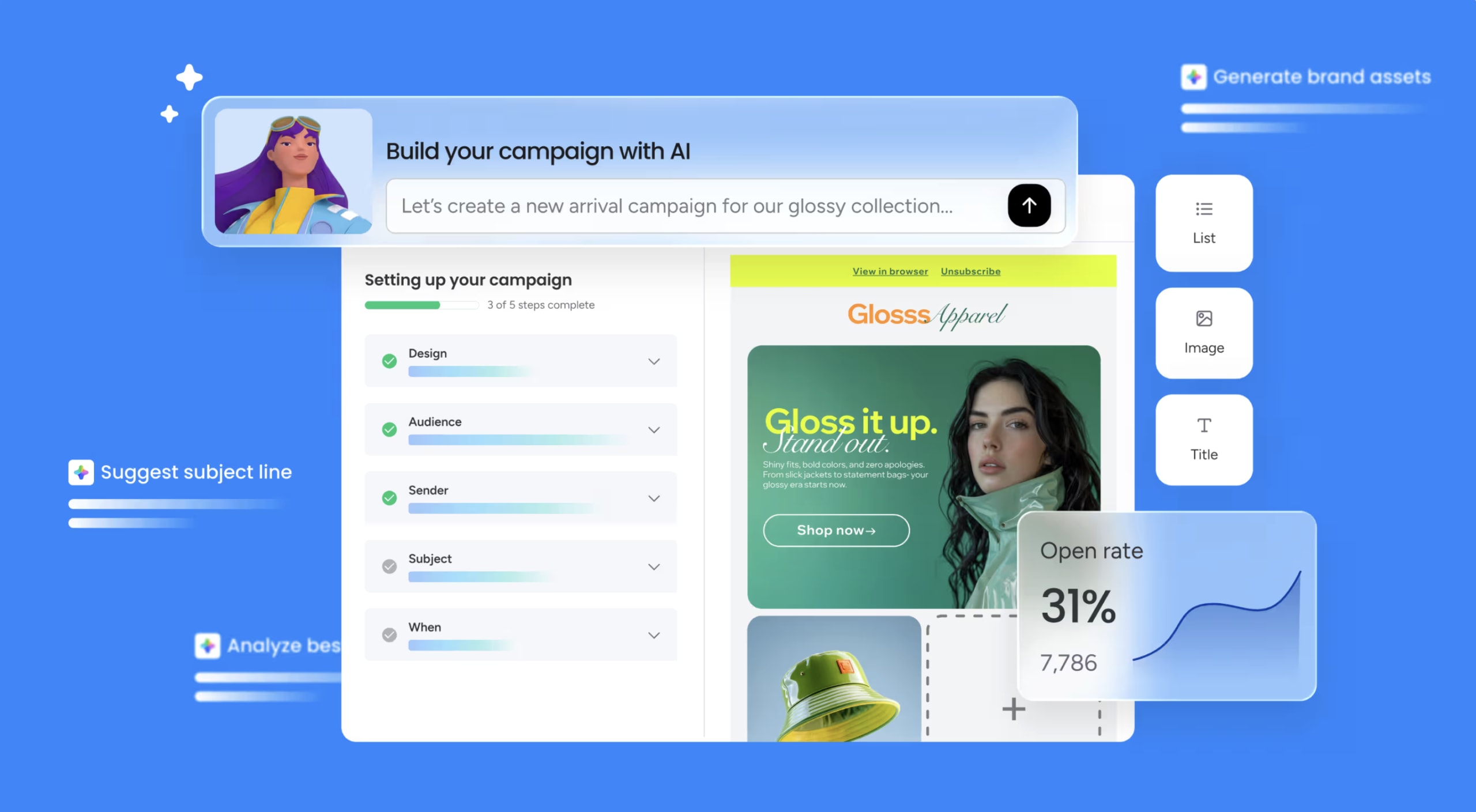
Built directly on the monday.com Work OS, monday campaigns gives marketing and sales teams a shared space to plan, send, and measure email campaigns. Its native CRM integration ties every email to live customer data and pipeline activity, while embedded AI speeds up copy, audience suggestions, and campaign setup.
Use case
Mid-market and enterprise teams that want revenue-connected email automation built on live CRM and work management data.
Key features
- Real-time revenue attribution: Native monday CRM integration connects every email to live customer data and pipeline activity
- AI-assisted campaign creation: Embedded AI speeds up copy, subject lines, and audience segment suggestions
- Drag-and-drop customer journey builder: Enterprise plan includes visual workflow builder with prebuilt automation recipes
Pricing
monday campaigns offers a 14-day free trial with no credit card required. Paid plans start at $50/month (billed annually) for 2,000 contacts on the Pro plan, with Enterprise pricing available on request.
Why it stands out
- Native monday CRM integration keeps marketing and sales on one source of truth for a smooth lead handoff
- Embedded AI drafts content and surfaces high-value segments, so campaigns launch in minutes
- Campaign performance connects directly to pipeline and closed-won revenue
2. HubSpot Marketing Hub
Best for: Growing B2B organizations that need an all-in-one inbound marketing and CRM platform to manage the entire funnel from lead capture to closed-won.
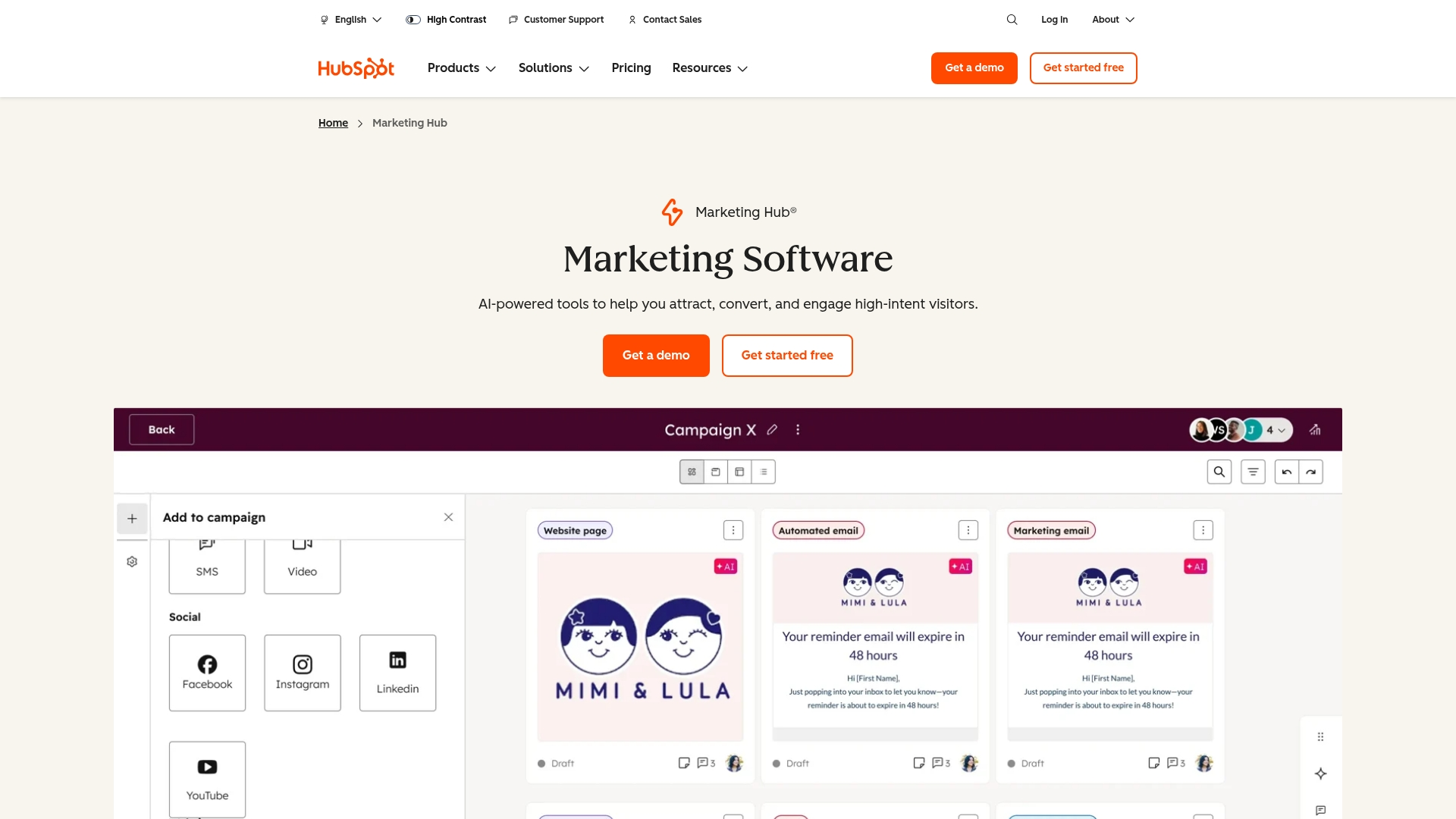 As a comprehensive, all-in-one platform, HubSpot Marketing Hub brings all your marketing efforts together. It is engineered to help you attract the right audience, convert more visitors into customers, and run complete inbound marketing campaigns at scale, all on one powerful, easy-to-use platform.
Use case
Growing B2B organizations that need an all-in-one inbound marketing and CRM platform to manage the entire funnel from lead capture to closed-won.
Key features
- Powerful marketing automation and email tools to create personalized experiences for your audience
- Drag-and-drop builders for landing pages, forms, and emails, so you can create professional campaigns without needing a developer
- Deeply integrated with its CRM, giving your entire company a single, unified view of every customer interaction
Pricing
HubSpot offers a free plan with email marketing, forms, and CRM. Paid plans start at $20/month (billed monthly, per seat) for 1,000 marketing contacts on the Marketing Hub Starter plan, with Professional and Enterprise tiers that scale with contacts and features.
Considerations
- The all-in-one scope can be more than you need if you only want email automation
- Pricing scales quickly as your contact list grows and you add advanced features
3. ActiveCampaign
Best for: Data-driven teams that want advanced, multi-step automation to orchestrate personalized experiences across the entire customer lifecycle.
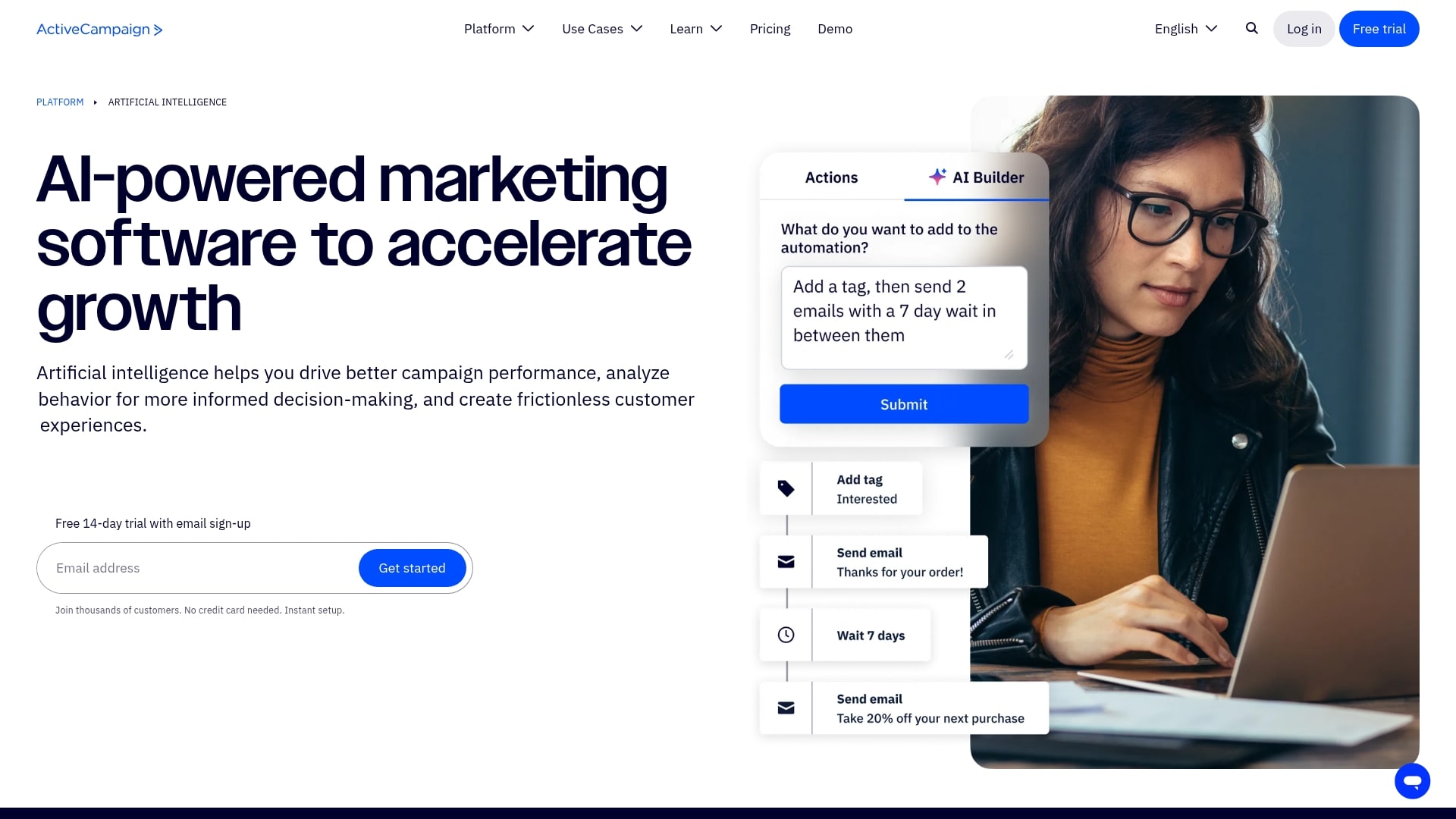
Going beyond traditional email marketing, ActiveCampaign operates as a customer experience automation platform that helps businesses of all sizes create meaningful connections. It combines powerful automation with a built-in sales CRM, giving you a unified view of every customer interaction. This allows for the creation of truly personalized experiences that guide customers through their entire journey.
Use case
Data-driven teams that want advanced, multi-step automation to orchestrate personalized experiences across the entire customer lifecycle.
Key features
- Powerful visual automation builder: Create custom workflows for any scenario with drag-and-drop simplicity
- Built-in sales CRM: Manage contacts, track deals, and align marketing and sales teams in one unified platform
- Advanced segmentation and dynamic content: Personalize messages based on audience behavior, interests, and location
Pricing
ActiveCampaign offers a 14-day free trial. Paid plans start at $15/month (billed annually) for up to 1,000 contacts on the Starter plan, with Plus ($49/month), Pro ($79/month), and Enterprise (quote-only) tiers available.
Considerations
- The visual builder has a learning curve, so expect to invest time upfront to master its advanced features
- Pricing scales quickly as your contact list grows and you add advanced automation
4. Mailchimp
Best for: Small to mid-sized teams that want a familiar, standalone email platform with broad integrations and strong analytics to optimize campaign performance.
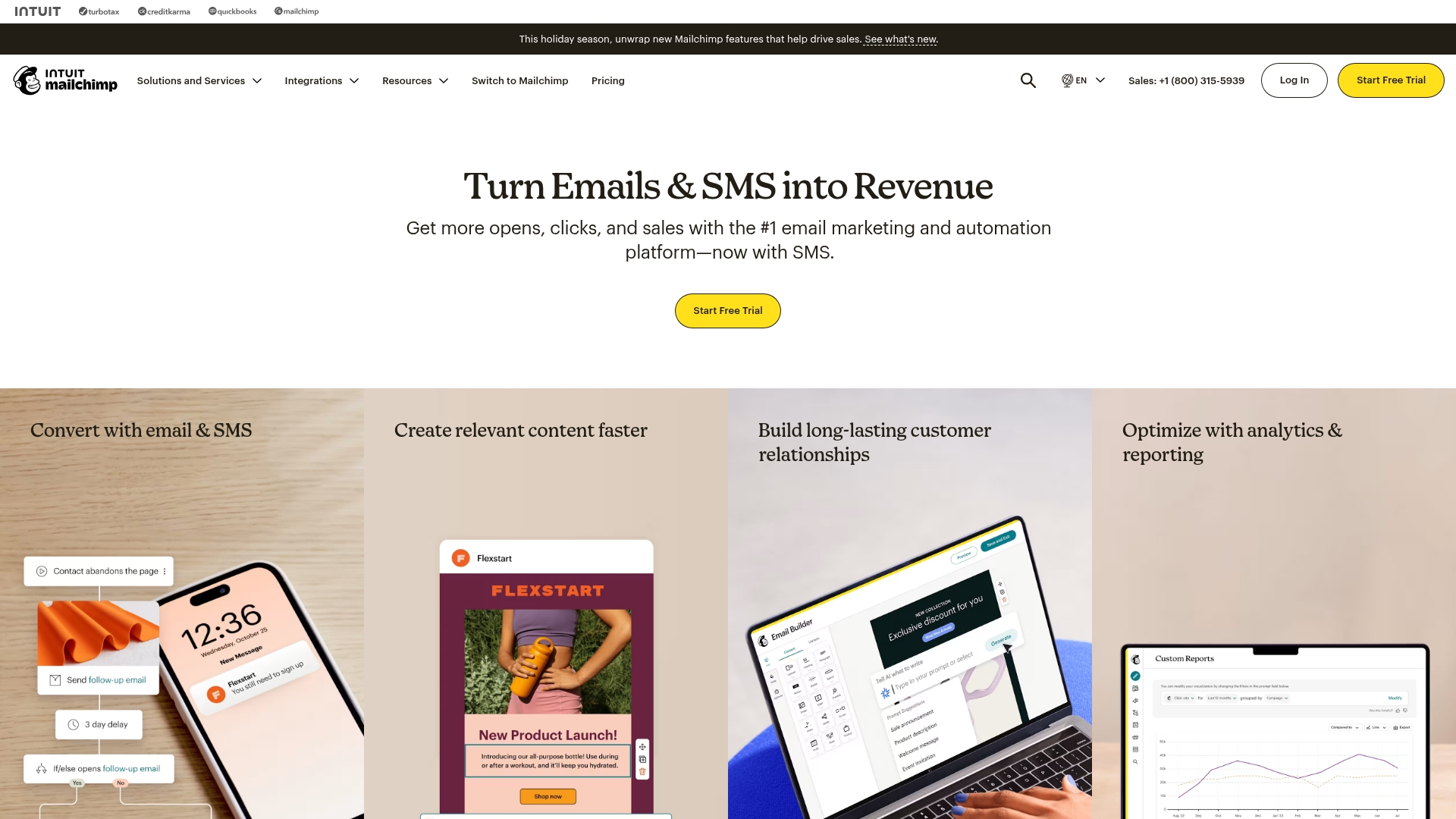 A household name in email marketing, Mailchimp is a popular platform that helps you create, send, and analyze your campaigns. It’s designed to help you connect with your audience, grow your customer base, and boost sales. While it’s a standalone platform, it easily integrates with other platforms, including monday.com, to help you keep your workflows connected.
Use case
Small to mid-sized teams that want a familiar, standalone email platform with broad integrations and strong analytics to optimize campaign performance.
Key features
- AI-assisted tools: Help you write copy, design campaigns, and support send time optimization
- Wide range of integrations: Including with monday.com, to connect your marketing and sales data
- Detailed reports and analytics: Track audience engagement and campaign performance
Pricing
Mailchimp offers a free plan with basic features for those just getting started. Paid plans start at $13/month (billed monthly) for 500 contacts on the Essentials plan, with Standard and Premium tiers that scale with contacts.
Considerations
- Advanced automation sits on higher tiers, and the free plan excludes automations
- It connects through integrations rather than a native CRM, which can create data silos between marketing and sales
5. Klaviyo
Best for: Ecommerce brands that need deeply personalized email and SMS journeys tied directly to store data, purchase behavior, and revenue.
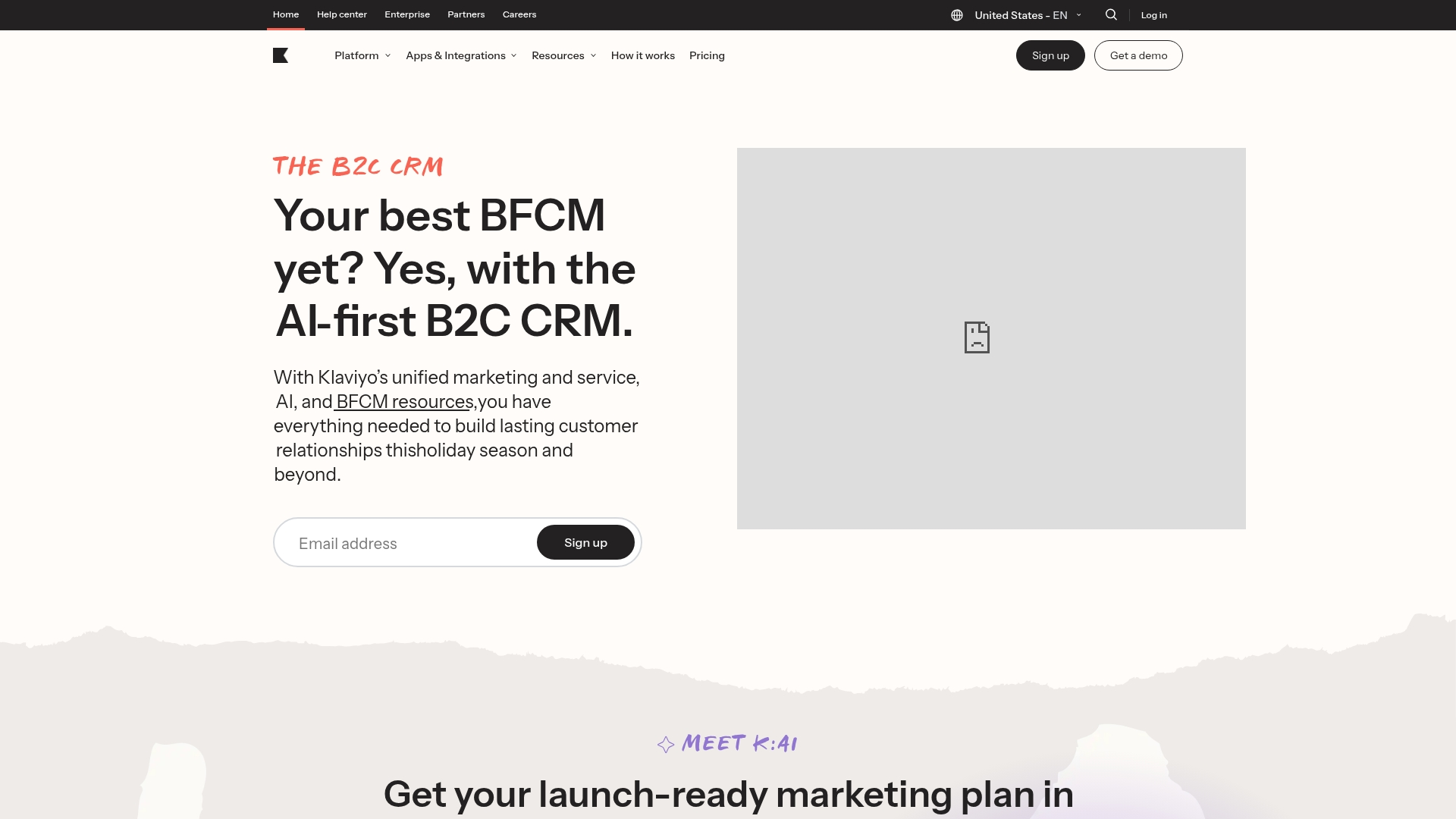 Klaviyo is a smart marketing automation platform that helps ecommerce brands create and optimize campaigns using AI and real-time customer data. Through deep integrations with top ecommerce platforms, it provides a full picture of your customers. This allows you to move beyond generic email blasts and build personalized experiences, like emails and text messages, that drive results.
Use case
Ecommerce brands that need deeply personalized email and SMS journeys tied directly to store data, purchase behavior, and revenue.
Key features
- AI-powered campaign creation: Builds and optimizes email sequences in minutes
- Real-time customer intelligence: Automatically segments audiences based on behavior
- Deep ecommerce integrations: Connects with platforms like Shopify, BigCommerce, and Magento
Pricing
Klaviyo offers a free plan for up to 250 contacts and 500 email sends. Paid plans start at $20/month for 500 contacts on the Email plan, with Email and SMS starting at $45/month.
Considerations
- It’s purpose-built for ecommerce, so it fits B2B and service-based businesses less naturally
- Pricing rises significantly as your contact list and email volume grow
6. GetResponse
Best for: Online businesses running webinars, funnels, and lead magnets that want email automation, landing pages, and webinar hosting in one platform.
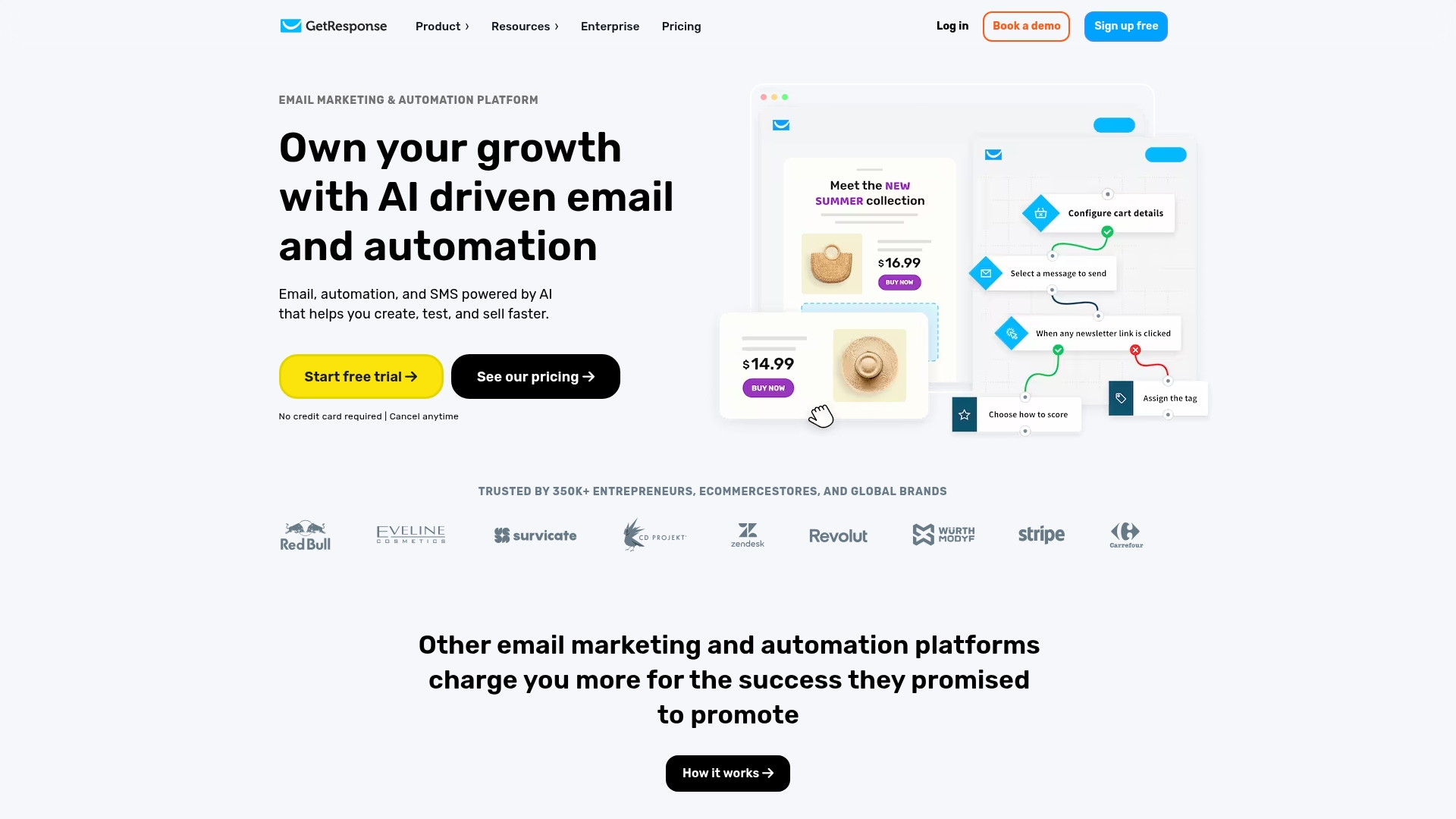 Offering a complete online marketing suite, GetResponse helps you grow your audience, engage with customers, and boost online sales. While it excels at email automation, its true strength is in combining email marketing with landing pages, conversion funnels, and even webinar tools. This makes it an excellent choice for businesses looking for an all-in-one solution to manage their entire marketing funnel from a single dashboard.
Use case
Online businesses running webinars, funnels, and lead magnets that want email automation, landing pages, and webinar hosting in one platform.
Key features
- AI-powered email generator: Creates engaging content and subject lines in seconds
- Visual automation builder: Maps out customer journeys with simple if-then logic
- Conversion funnel builder: Pre-made templates for lead magnets, sales, and webinars
Pricing
GetResponse offers a free plan with limited features for new businesses. Paid plans start at $15.58/month (billed annually) for 1,000 contacts on the Email Marketing plan, with Marketing Automation and Ecommerce tiers available at higher price points.
Considerations
- The broad toolset means you may pay for features you don’t use if you only need email automation
- Advanced automation and funnel features are reserved for higher-tier plans
7. Brevo (formerly Sendinblue)
Best for: Service and retail businesses that want to centralize email, SMS, WhatsApp, and chat outreach in a single multi-channel platform.
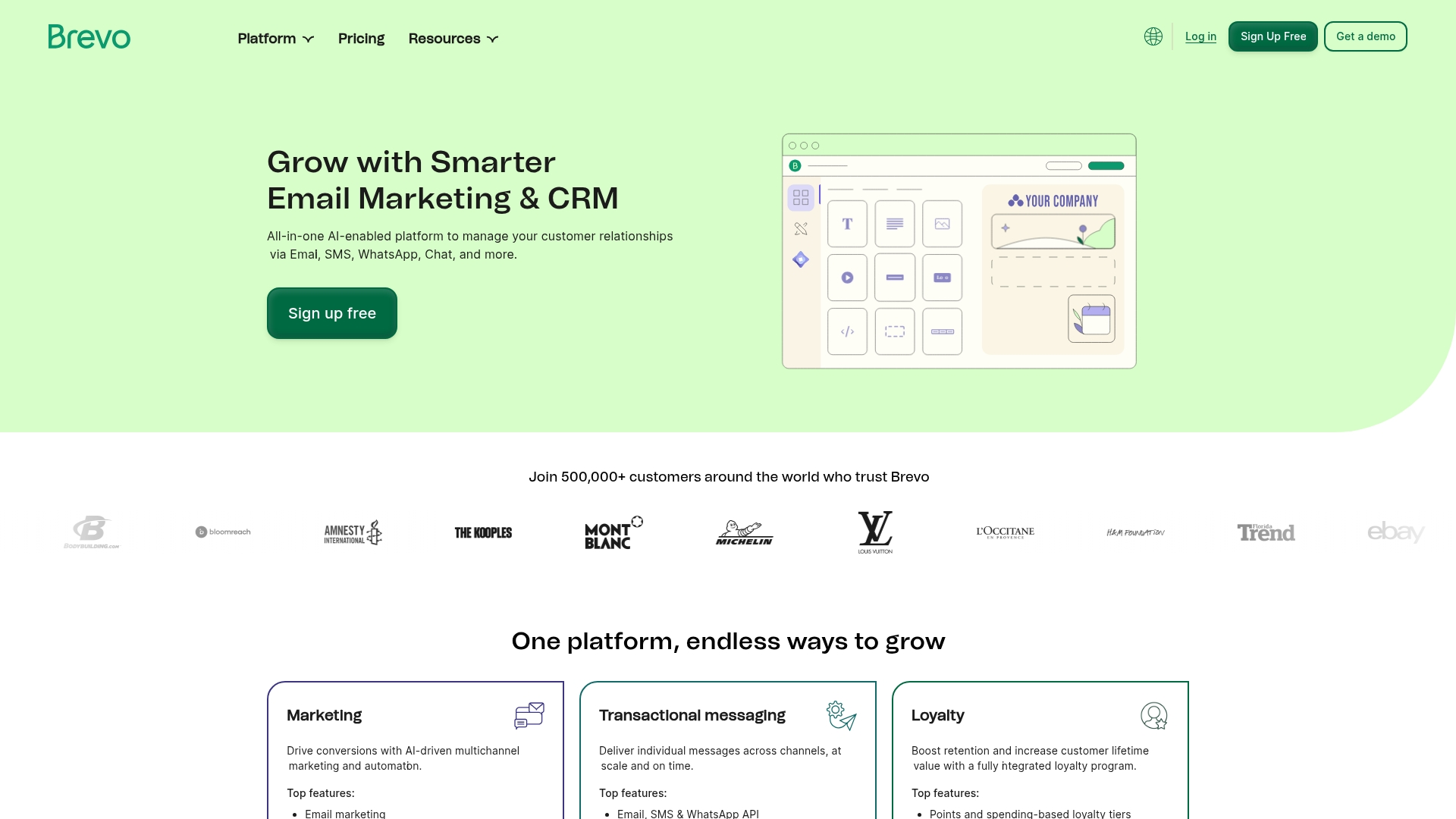 Brevo is the all-in-one platform designed to help you build stronger customer relationships. It expands beyond just email, letting you connect with your audience through SMS, chat, marketing automation, and more, all from a single, easy-to-use platform. It’s a powerful toolkit that helps your business grow without having to juggle a dozen different apps.
Use case
Service and retail businesses that want to centralize email, SMS, WhatsApp, and chat outreach in a single multi-channel platform.
Key features
- Multi-channel communication: Engage customers across email, SMS, WhatsApp, and live chat wherever they are
- Visual workflow builder: Create welcome sequences, abandoned cart recovery, and automated audience segmentation
- Built-in CRM and sales platform: Track customer interactions and manage your pipeline in one place
Pricing
Brevo offers a free plan for up to 300 emails per day with high contact limits. Paid plans start at $8.08/month for 5,000 emails per month on the Starter plan, with Business tier available for advanced automation.
Considerations
- The free plan caps sends at 300 emails per day, which can restrict larger campaigns
- Advanced automation and landing page builders are reserved for higher-tier plans
8. Zoho Campaigns
Best for: Teams invested in the Zoho ecosystem that need tight CRM integration and affordable email automation.
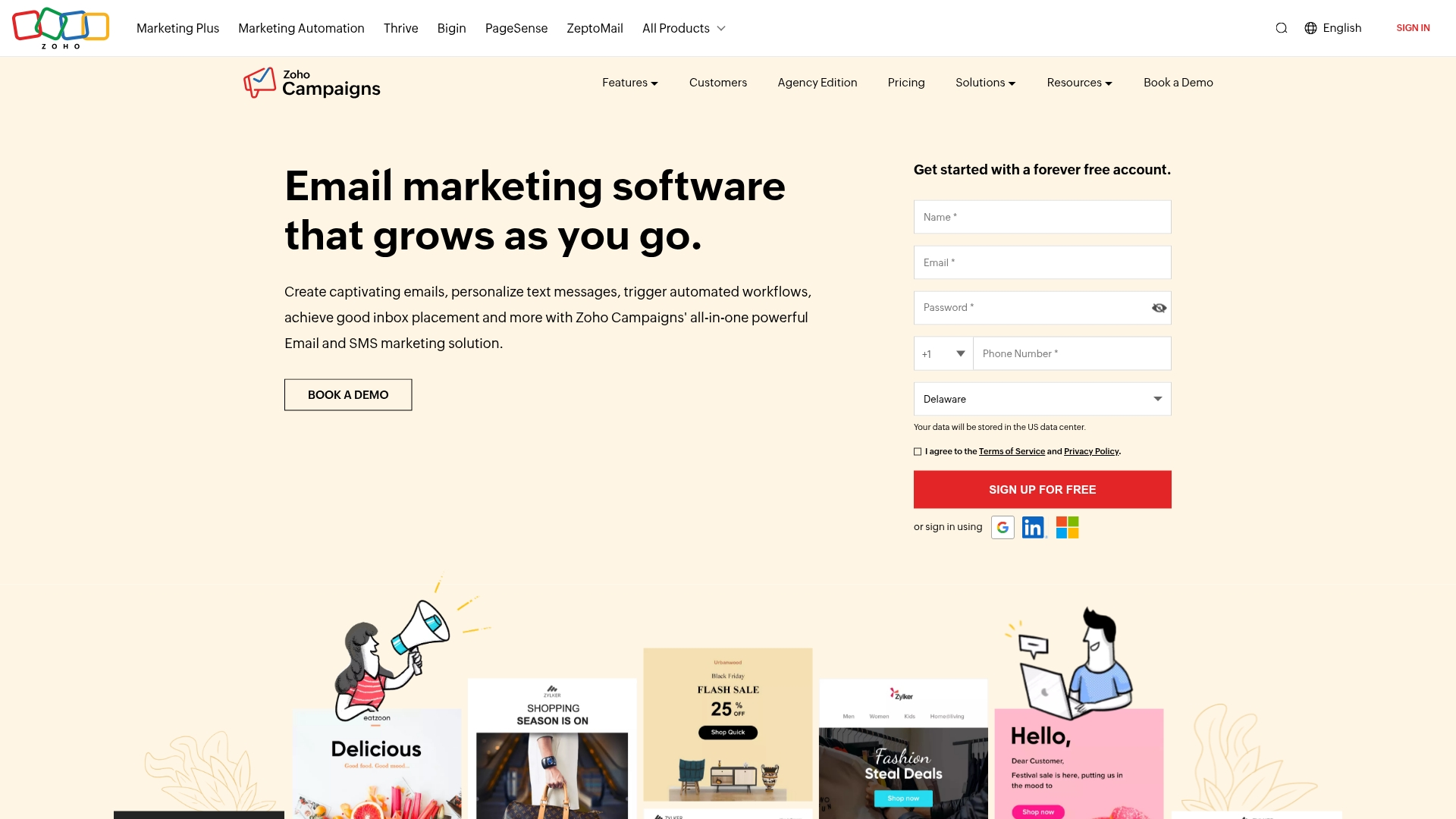 With a focus on the broader Zoho ecosystem, Zoho Campaigns helps you level up your email marketing strategy with powerful automation and analytics. It works hand-in-hand with other Zoho products, especially Zoho CRM, creating a single source of truth that turns customer interactions into smarter, more effective campaigns.
Use case
Teams invested in the Zoho ecosystem that need tight, low-friction email automation integrated with Zoho CRM and other Zoho apps.
Key features
- Deep integration with Zoho CRM: Sync contacts and nurture leads automatically
- Advanced email automation: Send the right message at the right time based on customer actions
- Real-time analytics and A/B testing: Track campaign performance and continuously improve results
Pricing
Zoho Campaigns offers a free plan with limited contacts and emails. Paid plans start at $4/month for 500 contacts with unlimited emails on the Standard plan, with a Professional tier available for advanced features like contact scoring.
Considerations
- The greatest value comes when you also use other Zoho apps
- The interface feels more utilitarian than newer, premium rivals
9. Constant Contact
Best for: Local businesses and nonprofits that want a beginner-friendly platform to grow lists, send newsletters, and run simple automations.
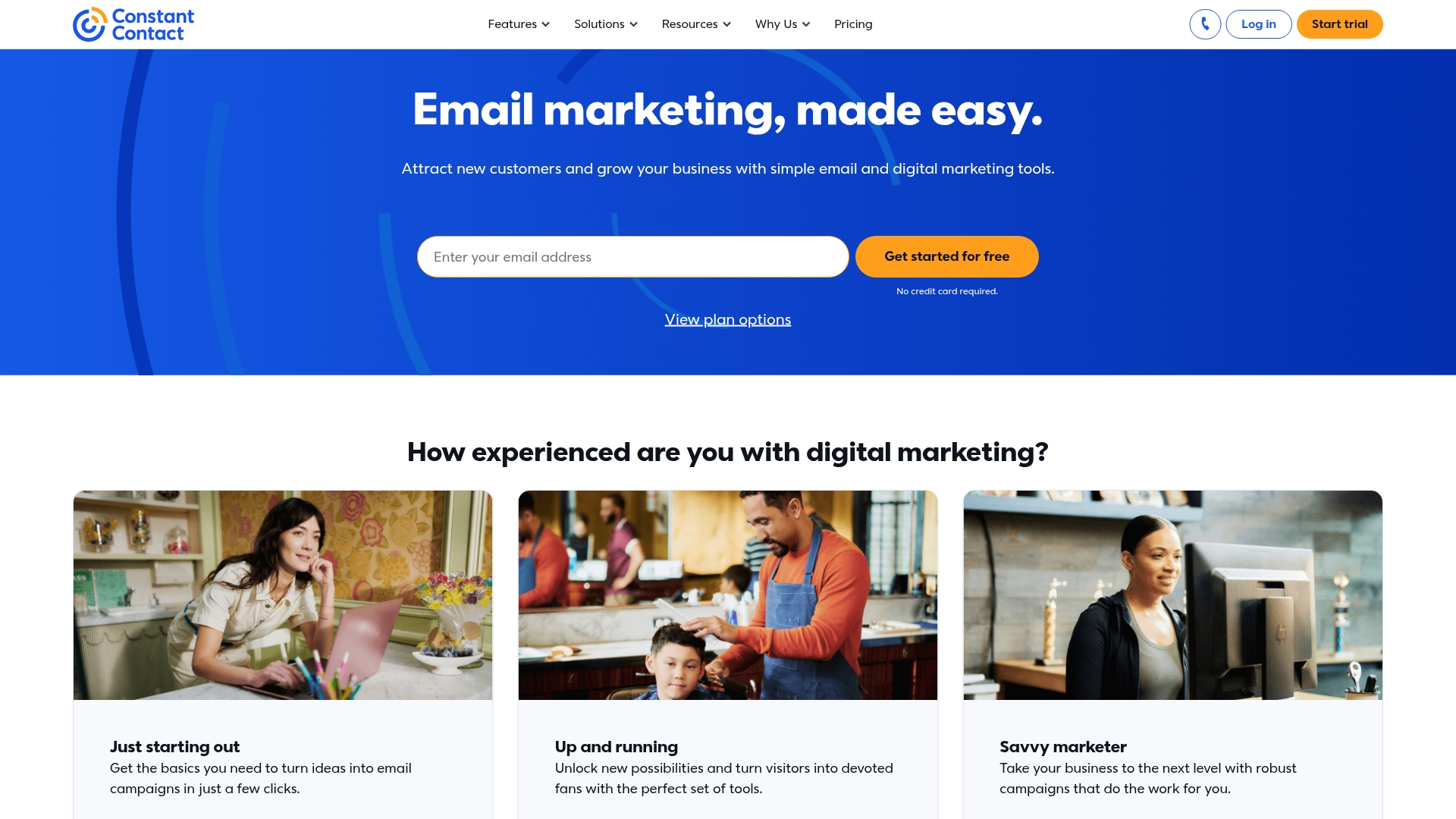 As a trusted name in email marketing, Constant Contact offers a user-friendly platform that helps small businesses and nonprofits connect with their audience. It’s designed for those who want to create professional-looking emails and manage contact lists without a steep learning curve. If you’re looking for a reliable platform to get your email marketing off the ground, Constant Contact is a solid choice.
Use case
Local businesses and nonprofits that want a beginner-friendly platform to grow lists, send newsletters, and run simple automations.
Key features
- Intuitive drag-and-drop editor: Easily customize email layouts
- Hundreds of mobile-responsive templates: For any occasion
- Contact management, list-building, and event tools: Help grow your audience
Pricing
Constant Contact offers a 14-day free trial. Paid plans start at $12/month on the Lite plan, with Standard and Premium tiers available for more advanced automation.
Considerations
- Automation is more basic than platforms like ActiveCampaign or HubSpot for complex workflows
- Pricing rises as your contact list grows
10. AWeber
Best for: Bloggers and podcasters that want to turn content into automated campaigns.
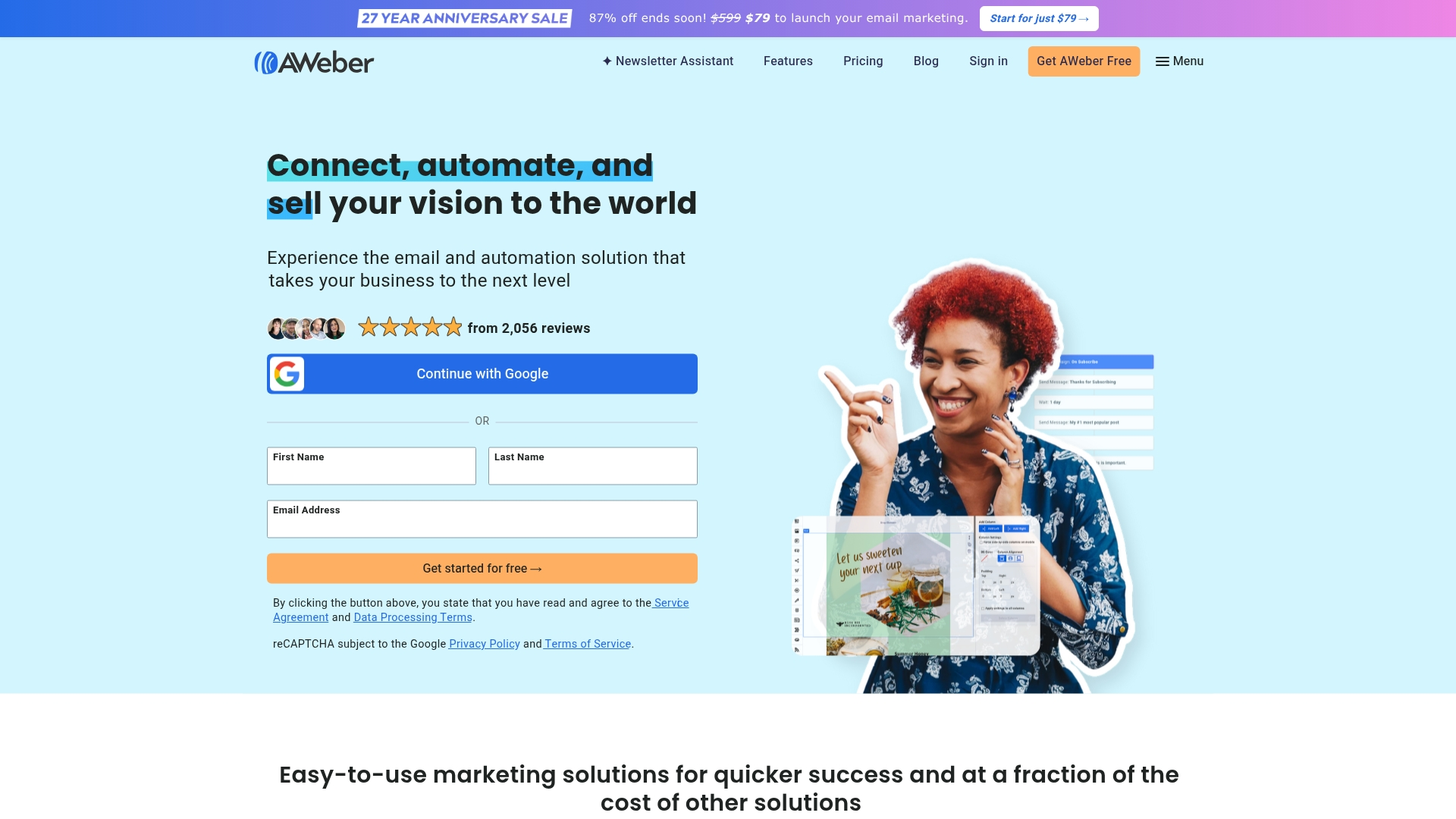 AWeber delivers straightforward email automation that puts creators and small businesses in the driver’s seat. The platform specializes in user-friendly visual workflows and generous free plan features, making it ideal for bloggers, podcasters, and entrepreneurs just starting their email marketing journey.
Use case
Bloggers, podcasters, and newsletter creators who want to automatically turn new content and RSS feeds into consistent email campaigns.
Key features
- Visual drag-and-drop automation builder: Pre-built campaign templates for quick setup
- RSS feed automation: Converts blog posts and videos into email campaigns automatically
- Purchase-based tagging system: Dynamic customer segmentation based on behavior
Pricing
AWeber offers a free plan for up to 500 subscribers. Paid plans start at $12.50/month (billed annually) on the Lite plan, with Plus and Unlimited tiers available for growing lists.
Considerations
- Automation depth trails advanced platforms like ActiveCampaign for complex workflows
- The interface and design feel dated to some teams
Why monday campaigns stands out for email automation
Most email platforms treat campaigns as standalone projects. monday campaigns builds email automation directly into your CRM, so every send draws from the same customer data your sales team uses daily. This CRM-native approach means your marketing segments update automatically as contacts move through the pipeline, keeping every message aligned with where customers are right now, not where they were weeks ago.
That foundation changes how teams work. Marketing and sales operate from one shared workspace, so lead handoffs happen inside the same workflow and campaign performance connects directly to closed deals. When your email platform lives inside your CRM instead of alongside it, you eliminate data silos and turn every campaign into a measurable revenue opportunity.
AI-powered campaign creation
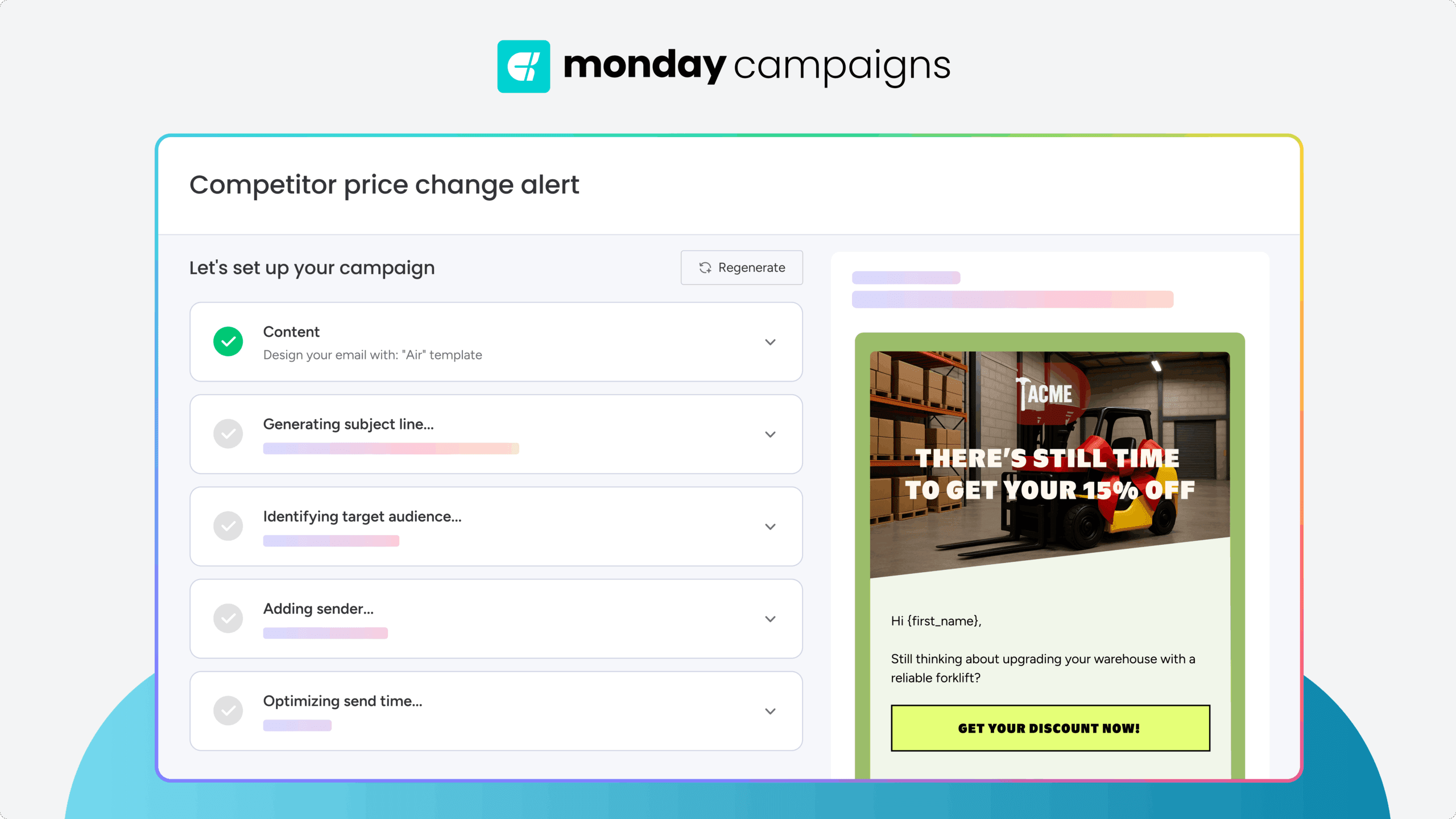
monday campaigns embeds AI across the entire workflow to speed up campaign creation without sacrificing quality. monday sidekick generates on-brand copy and subject lines in seconds, while AI-generated campaigns read sales call notes and CRM data to assemble relevant campaigns automatically. This means your team can launch personalized campaigns faster, using intelligence pulled directly from customer interactions instead of starting from scratch every time.
Intelligent automation with CRM-native workflows

The platform’s no-code workflow builder includes campaign-specific blocks that connect directly to your CRM data, so you can trigger emails based on deal stage changes, contact updates, or custom fields without writing code. These automations run on live customer records, which means your workflows stay accurate as your pipeline evolves. You can build complex nurture sequences, re-engagement campaigns, and lifecycle journeys that respond to real customer behavior in real time.
AI agents that turn metrics into action
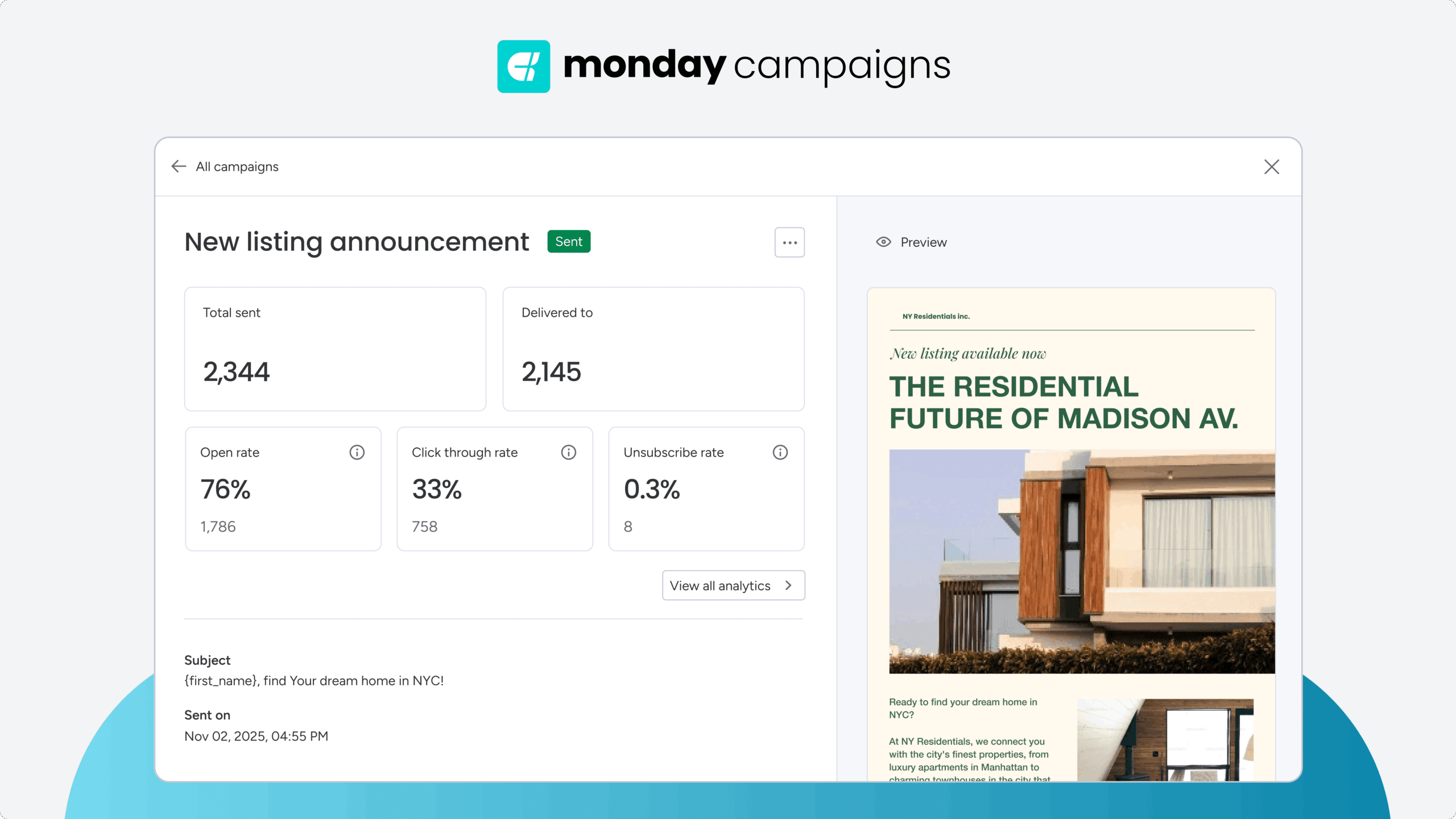
monday agents like the Campaign Manager agent analyze your campaign performance and surface actionable recommendations, turning raw metrics into clear next steps. Instead of manually reviewing dashboards to figure out what’s working, the AI identifies patterns, suggests optimizations, and helps you prioritize high-impact changes. This shifts your team from reactive reporting to proactive strategy, so you spend less time analyzing data and more time acting on it.
Revenue attribution from first touch to closed deal
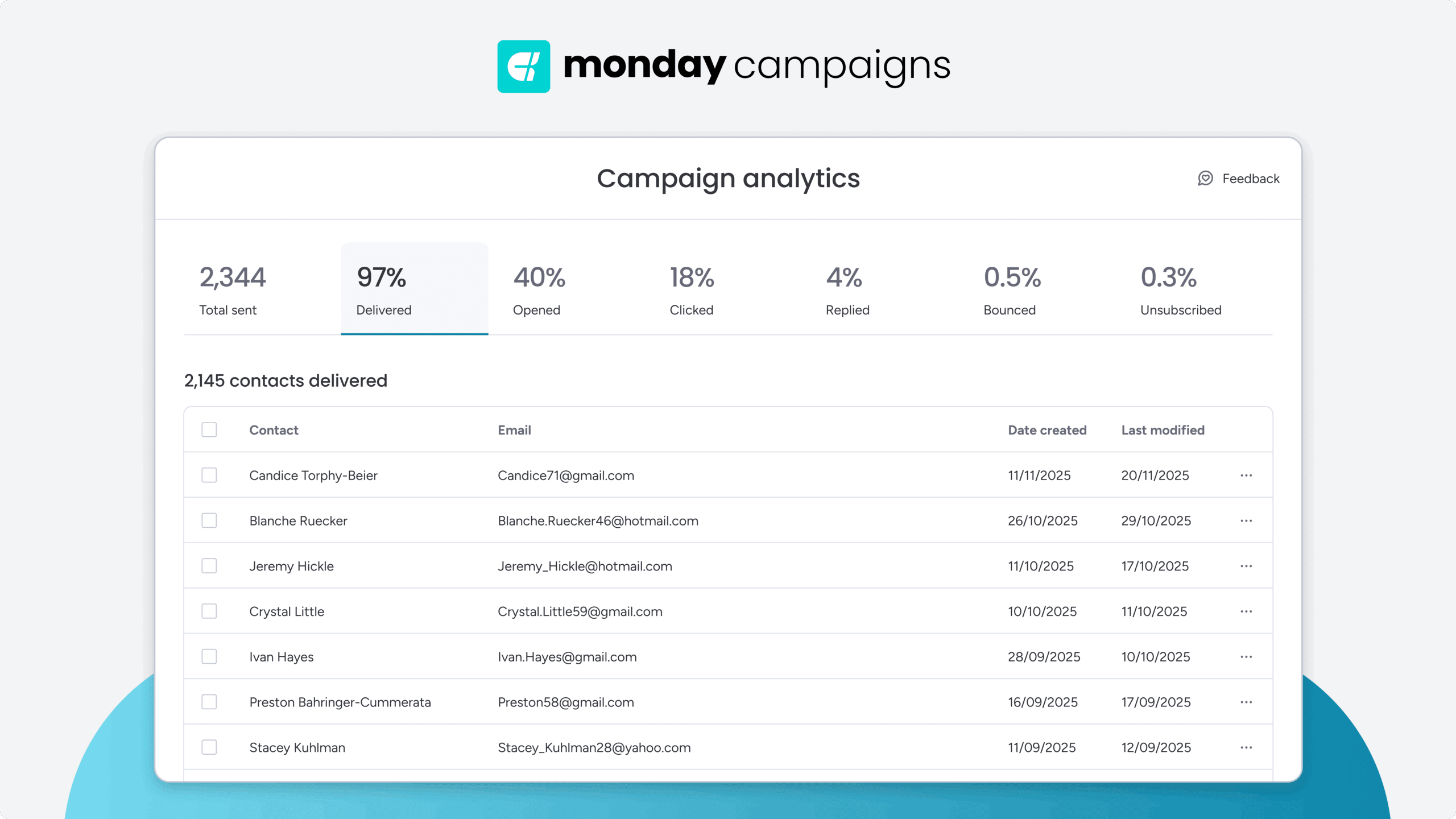
monday campaigns tracks every email from initial engagement through to closed-won revenue, connecting campaign activity directly to pipeline and sales outcomes. You can see which emails influenced deals, how campaigns contribute to revenue, and where marketing efforts drive the most qualified leads. This level of attribution proves marketing ROI and gives your team the data to confidently invest in what actually moves the business forward.

"With monday campaigns, we can launch professional emails in minutes and instantly see who engaged. Our sales team follows up directly with those showing interest - making outreach faster and more effective."
Michael Fitzpatrick | National Workplace Training ManagerChoose the email automation platform that fits your workflow
The right email automation platform turns scattered sends into a connected growth engine. When your campaigns draw on live customer data and tie directly to revenue, marketing shifts from a cost center into a measurable driver of pipeline that leaders can plan around.
Start by identifying the workflows that slow your team down today, then match them to a platform that removes that friction. If marketing-sales alignment and revenue visibility top your list, monday campaigns refreshes CRM-native segments automatically, generates on-brand copy with embedded AI, and attributes every send from first touch to closed-won revenue.
FAQs
How long does email automation platform implementation take?
Implementation time varies by platform and your team's needs. Some platforms offer quick setup that takes just minutes with intuitive drag-and-drop builders and pre-built templates, while more complex systems might require days or weeks. Look for platforms with native integrations to your existing tools, as this can dramatically speed up the process and get you sending campaigns faster.
Can I migrate my email contacts from another platform?
Most modern email automation platforms make contact migration straightforward with built-in import tools that accept CSV files or direct integrations with other platforms. The best platforms also sync with your CRM automatically, enriching your contact data and creating more complete customer profiles from day one.
What's the difference between email automation and marketing automation platforms?
Email automation platforms focus on automating email campaigns like welcome sequences and nurture flows. Marketing automation platforms orchestrate campaigns across multiple channels: email, SMS, social media, and web personalization. The right choice depends on whether you need a specialized email platform or a broader marketing suite.
Do I need coding skills to use email automation platforms?
Not at all. Modern email automation platforms like monday campaigns are built for marketers, not developers. Look for platforms with visual drag-and-drop builders, pre-built templates, and AI assistance that help you create professional campaigns without writing a single line of code.
How do email automation platforms ensure message deliverability?
The best platforms prioritize deliverability through multiple strategies: authentication protocols like SPF and DKIM, dedicated IP addresses for high-volume senders, AI-powered send time optimization, and real-time monitoring of sender reputation. These features work together to maximize inbox placement and keep your messages out of spam folders.
What ROI can I expect from email automation platforms?
ROI varies by industry and how you use the platform, but email consistently delivers one of the strongest returns in digital marketing. The key is choosing a platform that connects your email efforts to actual business outcomes. Look for platforms that track beyond opens and clicks to show how campaigns influence your sales pipeline, generate qualified leads, and drive revenue.
How does monday campaigns approach email automation?
monday campaigns approaches email automation from inside the CRM. It builds on CRM-native segments that refresh automatically, uses AI-generated campaigns that read sales-call notes and CRM data, and attributes every send from first touch to closed-won revenue, so marketing and sales share one view of results.

 Get started