


Imagine connecting every email you send directly to a closed deal. For most marketing teams, that’s the goal, but the reality is a mix of disconnected metrics and manual attribution. Opens and clicks are useful, but they don’t show how campaigns impact revenue, pipeline, or the customer lifecycle. This gap forces a choice between speed and personalization, often leading to generic messages that miss the mark. Instead of relying on intuition and manual processes, AI analyzes subscriber behavior, predicts optimal timing, generates personalized content, and tracks revenue attribution automatically.
Here’s how AI transforms every stage of email marketing, from campaign creation to closed deals. We’ll break down what AI actually does in email marketing, how it improves performance through personalization and automation, and which features deliver real results. You’ll also get a practical framework for implementing AI email marketing that drives real revenue growth with monday campaigns.
Key takeaways
- AI transforms email marketing from guesswork to data-driven results: Replace manual segmentation and batch sends with intelligent automation that personalizes content, timing, and targeting for each subscriber automatically.
- Start with high-impact AI features that deliver immediate value: Focus on natural language generation for content creation, predictive analytics for timing optimization, and automated workflows that adapt based on real-time performance data.
- Scale personalization beyond name tags to drive real revenue: AI analyzes behavior patterns, purchase history, and engagement data to create individualized content recommendations and dynamic segments that update automatically as subscribers change.
- monday campaigns connects AI-powered email marketing directly to your CRM data: Create, optimize, and attribute campaigns that drive measurable revenue results through native integration and intelligent automation that learns from every interaction.
- Implement AI systematically with clear goals and measurable outcomes: Map your current process, set revenue-focused targets, pilot with focused examples, and scale based on proven results rather than trying to use every AI feature at once.
What is AI in email marketing?
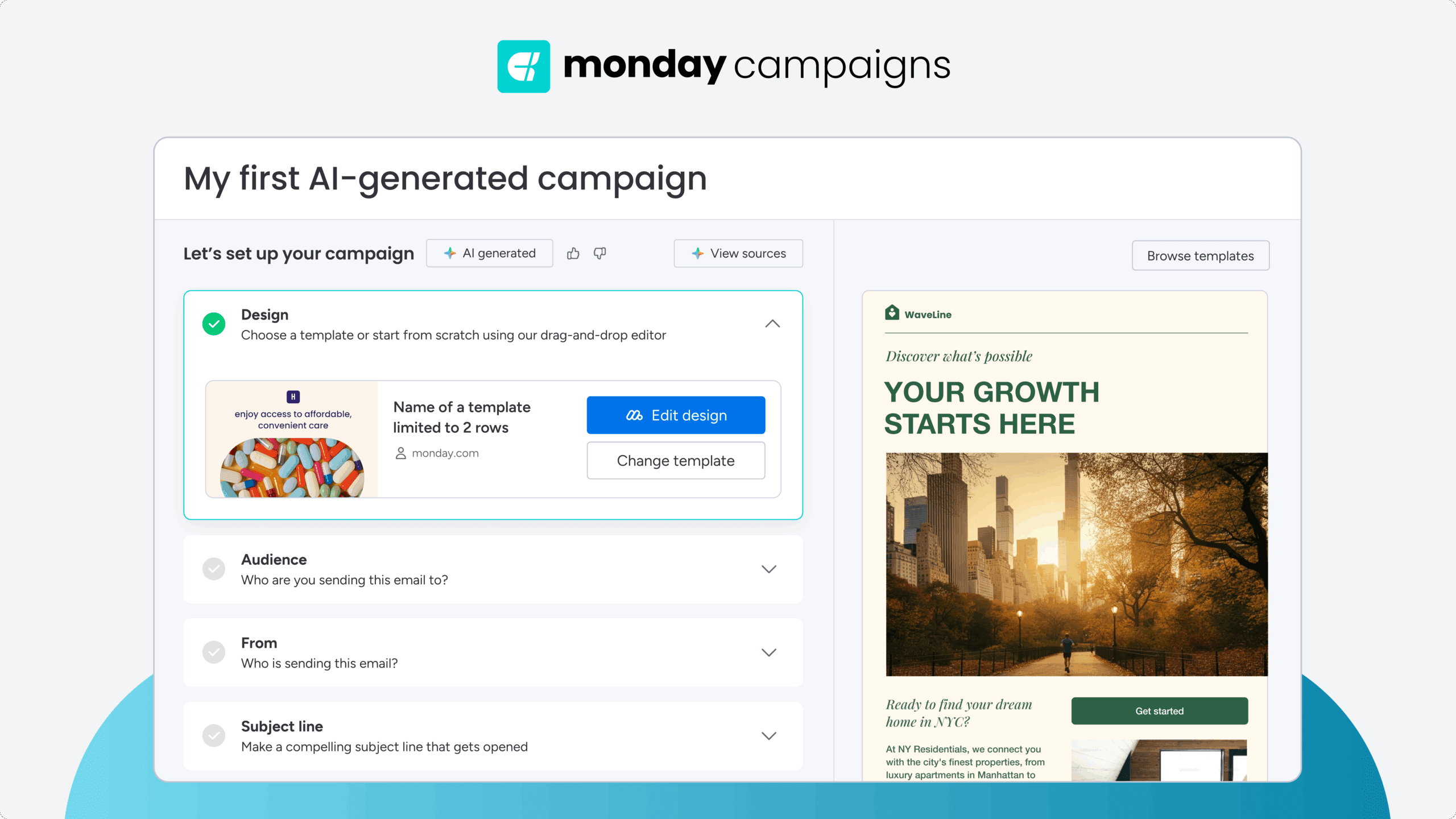
AI in email marketing uses machine learning, natural language processing, and predictive analytics to automate, optimize, and personalize email campaigns at scale.
AI systems analyze subscriber data, behavior patterns, and engagement metrics to make decisions about content, timing, segmentation, and optimization that would take humans weeks to execute manually across large audiences.
AI analyzes past open rates to predict the optimal send time for each individual subscriber, not just the list as a whole. It generates subject line variations, tests them automatically, and shifts volume toward winners in real time. It identifies subscribers showing purchase signals similar to past converters, illustrating how generative AI helps prioritize leads for conversion-focused campaigns.
This shift moves email marketing from intuition-based decisions to data-backed strategy. AI processes millions of data points to spot patterns and opportunities human analysis would miss. This transition is already underway: according to the 2025 CMO Survey, 1 in 6 marketing activities are currently automated or enhanced by AI, with up to half expected to be automated within three years.
How AI works in email marketing
AI works within email marketing platforms through a continuous cycle of learning and optimization. This process allows the system to get smarter with every campaign, turning data into automated actions that drive results. The AI workflow operates through four core stages:
- Data collection: Captures every subscriber interaction
- Pattern analysis: Identifies meaningful trends and correlations
- Prediction engines: Forecast future behavior and outcomes
- Automated actions: Execute optimizations without manual intervention
When a subscriber opens three emails about a specific product category, AI spots the pattern, predicts interest in related products, and automatically includes personalized recommendations in the next campaign. No manual tagging or segmentation required.
Key technologies powering AI email marketing
These four stages create a continuous feedback loop that gets smarter with every campaign you send. But what actually powers this intelligence? Three key AI technologies work together to make these capabilities possible:
- Machine learning: Systems improve campaign performance over time by analyzing results from thousands of sends, identifying what works for different audience segments, and applying those insights to future campaigns automatically.
- Natural language processing: AI understands the context and intent of email content, generates human-quality copy that matches brand voice, and analyzes subscriber responses to gauge sentiment and engagement.
- Predictive analytics: AI forecasts subscriber behavior based on historical patterns and real-time signals, enabling proactive rather than reactive campaign strategies.
These technologies integrate with CRM data to improve email marketing decisions — combining email engagement with sales interactions, purchase history, and customer lifecycle data for a complete picture of each subscriber.
Learn more: Predictive analytics in marketing
The difference between traditional and AI-powered campaigns
Traditional email marketing often relies on manual processes and scheduled sends to broad audience lists. In contrast, AI-powered campaigns run on continuous optimization, individual-level personalization, and decisions backed by data.
| Aspect | Traditional email marketing | AI-powered email marketing |
|---|---|---|
| Segmentation | Manual list building, static criteria | Dynamic, behavior-based, auto-updating |
| Personalization | Merge tags (name, company) | Individualized content, dynamic blocks |
| Send timing | Batch sends at scheduled times | Individual optimal time prediction |
| Testing | Manual A/B tests, periodic | Continuous, real-time optimization |
| Content creation | Manual copywriting, design | AI-assisted generation, brand-consistent |
Traditional campaigns rely on manual list building based on static criteria like job titles, company size, and geographic location. AI-powered campaigns create dynamic, behavior-based segments that update automatically as subscriber actions change, identifying patterns like “engaged with pricing content three times in the past week” that manual segmentation would miss.
AI supports human strategy without replacing it. Marketers still define goals, approve content, and set the direction. AI handles the complex execution work that would otherwise slow you down.
How AI transforms email campaign creation
Campaign creation traditionally required serious time, design skills, and copywriting expertise. A single campaign might take days to go from concept to send. AI removes these barriers by automating the heavy lifting while maintaining quality.
This isn’t just about speed. It’s about changing what’s possible for marketing teams of any size. Three core areas deliver fast, real value that change how campaigns come together.
On-brand content in minutes
AI generates email copy, subject lines, and content recommendations while keeping your brand voice consistent. The technology learns from existing content, style guides, and past campaign performance to create copy that sounds authentically like your brand. This capability reflects a broader shift in how professionals work: 36% of U.S. employees who use AI at work already report using AI writing and editing tools, according to Gallup.
Here’s what AI creates for email campaigns:
- Subject lines: AI generates multiple variations optimized for open rates, each emphasizing different value propositions like urgency, exclusivity, curiosity, or direct benefit statements. Testing happens automatically, with winning patterns shaping future subject lines.
- Email body copy: AI drafts campaign content based on campaign goals, audience segments, and brand guidelines. Input the objective and target audience, and AI creates structured copy with the right tone, length, and message hierarchy.
- Personalized recommendations: AI suggests product recommendations, content blocks, or offers based on subscriber data including browsing history, past purchases, and engagement patterns.
A retail marketer launching a seasonal promotion enters campaign goals and target audience. AI generates five subject line options, three email body variations, and personalized product recommendations for different customer segments, all in under two minutes. The marketer reviews, refines, and approves instead of starting from scratch.
Smart segments with CRM data
AI analyzes CRM data to create dynamic, behavior-based audience segments on autopilot. This changes how precise your targeting can be, and how relevant your campaigns become.
Traditional segmentation relies on manual list building based on static criteria: demographics, job titles, company size, geographic location. These segments need constant maintenance and miss the behavioral signals that actually predict engagement and conversion.
AI-driven segmentation runs on behavioral patterns, engagement history, and predictive signals. The data sources AI uses include:
- Engagement patterns: Open rates and click behavior
- Purchase history: Product preferences and buying cycles
- Website behavior: Pages visited and content consumed
- CRM data: Deal stages, lead scores, and customer lifecycle position
Dynamic segmentation updates automatically as subscriber behavior changes. A subscriber who was “cold” last month but opened three emails this week automatically moves to an “engaged” segment without manual intervention.
Professionally designed emails, no coding needed
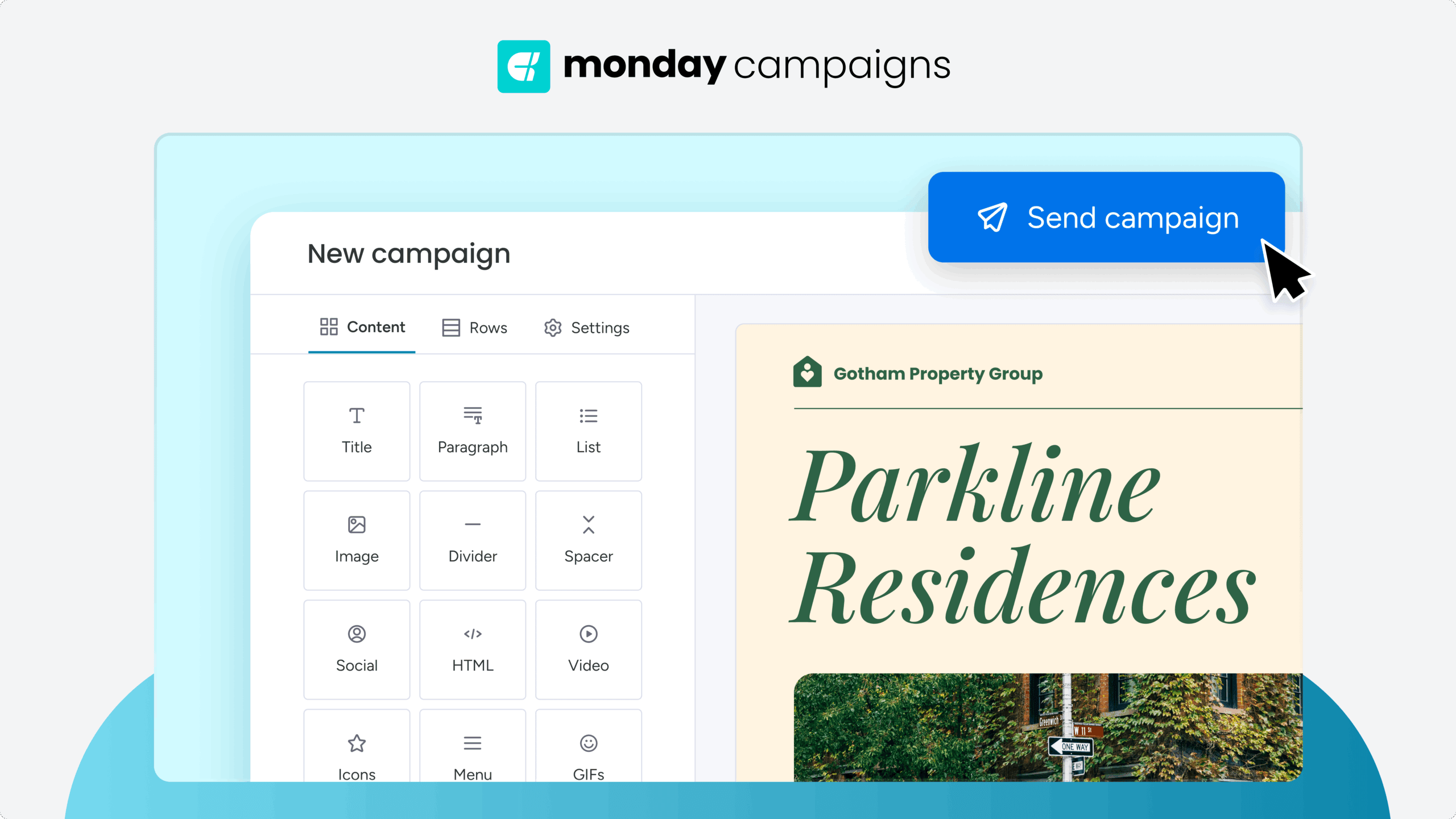
AI-powered email builders remove the need for HTML/CSS knowledge or professional design skills. Marketers create polished, on-brand emails through intuitive interfaces backed by AI recommendations.
Design automation includes three key capabilities:
- Template generation: Creates email layouts based on campaign type, content, and brand guidelines
- Responsive design: Automatically optimizes emails for mobile, tablet, and desktop viewing
- Layout optimization: Suggests structures that maximize engagement based on campaign goals, placing CTAs where they’re most likely to be clicked
A marketer with no design experience can describe their campaign goal, and AI generates a professional, on-brand email template with the right layout, suggested imagery, and mobile-responsive design.
7 ways AI improves email marketing performance
AI’s value goes beyond campaign creation and handles ongoing optimization and performance improvement. Once campaigns are live, AI continuously analyzes results, spots opportunities, and makes adjustments that build on each other over time.
1. Personalization that scales
AI enables real 1:1 personalization across entire subscriber lists. Where traditional personalization stops at “Hi {First Name},” AI-powered personalization tailors every element of the email to each individual subscriber.
Personalization capabilities include:
- Dynamic content blocks: Adjust based on subscriber preferences
- Individualized product recommendations: Match browsing and purchase history
- Personalized send frequency: Based on engagement patterns
Here’s the scalability advantage: AI personalizes for 10,000 subscribers as easily as for 100, with no additional manual effort. With monday campaigns, this level of personalization connects directly to your CRM data, so every email reflects the complete customer picture, from deal stage to past interactions, without manual data pulls or list exports.
2. Optimal timing for every send
AI finds the best send times for individual subscribers instead of using one-size-fits-all batch sending. Sending at the right moment versus the wrong one can mean much higher open rates.
AI analyzes timing factors like:
- Historical open data: When each subscriber typically opens emails
- Time zone optimization: Accounts for geographic location
- Day-of-week patterns: Identifies preferred engagement days
- Device usage patterns: Considers mobile vs. desktop preferences
Instead of sending to all subscribers at 10am Tuesday, AI might send to different groups at different times, each timed for when that subscriber’s most likely to engage.
3. Real-time message optimization
AI tests and optimizes email elements during campaign sends, not just before. Traditional A/B testing requires manual setup, waiting for statistical significance, and applying insights to the next campaign.
AI optimizes during the current campaign:
- Subject line testing: Automatically shifts volume to winning variations
- Content variation testing: Adjusts messaging based on real-time performance
- Deliverability optimization: Modifies send patterns to maintain inbox placement
4. Higher deliverability rates
AI protects and improves email deliverability by tracking sender reputation and engagement signals. Emails that don’t reach inboxes generate zero ROI, no matter how good the content is.
AI deliverability protection:
- Engagement monitoring: Tracks opens, clicks, and spam complaints to identify deliverability issues early
- List hygiene: Identifies and removes inactive subscribers
- Content analysis: Flags content elements that might trigger spam filters
5. Predictive audience insights
AI analyzes subscriber data to predict future behavior, so you can be proactive instead of reactive.
Key predictions include:
- Churn prediction: Identifies subscribers likely to disengage
- Purchase propensity: Forecasts which subscribers are most likely to convert
- Content preference prediction: Anticipates which content types will resonate
monday campaigns uses these predictive insights to automatically update audience segments based on behavioral signals, so your targeting stays relevant without constant manual adjustments.
Try monday campaigns6. Automated testing and learning
AI continuously tests campaign elements and applies learnings automatically, creating a self-improving system that gets smarter with every send.
The learning loop operates continuously:
- AI tests multiple variations
- Measures results in real-time
- Identifies patterns across campaigns
- Applies learnings to future campaigns
- Tests new variations based on insights
7. Revenue attribution
AI connects email marketing activities directly to revenue outcomes, solving the attribution challenge that has historically made email marketing ROI difficult to prove.
Attribution capabilities include:
- Multi-touch attribution: Tracks all email interactions in the customer journey, not just the last click before conversion
- Campaign contribution analysis: Calculates each campaign’s contribution to pipeline and closed revenue
Essential AI features for email marketing success
Not all AI features deliver equal value. Understanding which capabilities provide the foundation for success helps prioritize platform selection and implementation efforts. Here are the essential features for meaningful AI-powered email marketing results:
- Natural language generation: Creates human-quality written content for subject lines, email body copy, and personalized variations
- Predictive analytics: Forecasts engagement likelihood, identifies at-risk subscribers, and determines optimal send times for each individual
- Automated workflows: Executes intelligent email sequences that adapt based on real-time subscriber behavior and performance data
- Native CRM integration: Combines email engagement with sales interactions and customer data for complete personalization and closed-loop attribution
- Dynamic segmentation: Automatically updates audience groups based on behavior changes without manual list maintenance
- A/B testing automation: Continuously tests campaign elements and shifts volume to winning variations in real time
5 steps to implement AI email marketing
Successful AI implementation requires a structured approach that builds capabilities systematically. Jumping in without planning leads to poor results and wasted resources. These five steps provide a proven framework for AI email marketing success.
Step 1: Map your current email process
Document how campaigns are currently planned, created, approved, and launched. This baseline assessment reveals where AI can deliver the most immediate value.
Identify key areas to evaluate:
- Segmentation approaches: How lists are built and maintained
- Personalization capabilities: Current level of message customization
- Testing practices: A/B testing frequency and sophistication
- Pain points: Where the process breaks down or takes too long
Step 2: Set revenue-focused goals
AI should drive business outcomes, not just improve vanity metrics. Connect email goals with broader marketing and revenue targets to ensure AI implementation delivers measurable business value.
Focus on outcomes that matter:
- Revenue: Direct sales attribution from email campaigns
- Pipeline: Qualified leads generated through email engagement
- Conversion: Movement through the customer lifecycle
- Efficiency: Time saved on campaign creation and optimization
Step 3: Select your AI platform
Evaluate AI capabilities that align with your goals and current process gaps. Not all platforms offer the same AI features or integration depth.
Assess these critical capabilities:
- Natural language generation: Quality and brand voice consistency
- Predictive analytics: Accuracy and actionable insights
- Automated workflows: Sophistication and ease of setup
- CRM integration depth: Data sync and attribution capabilities
- Ease of use: Learning curve for your team
- Scalability: Growth accommodation
- Reporting capabilities: Performance measurement and optimization insights
Step 4: Launch your first AI campaign
Start with a focused pilot that proves value quickly. Choose a high-impact use case that demonstrates AI’s potential while minimizing risk.
Design your pilot for success:
- Choose a high-impact use case: Focus on campaigns with clear success metrics
- Define success metrics: Establish baseline performance for comparison
- Start simple: Use 2-3 AI features rather than everything at once
- Compare to a control campaign: Measure lift from AI optimization
Step 5: Scale based on results
Review results from pilot campaigns to identify which AI capabilities delivered the most value. Use these insights to prioritize expansion and optimize your AI strategy.
Scale systematically:
- Identify top-performing AI capabilities: Focus expansion on features that delivered measurable results
- Prioritize expansion: Roll out successful AI features to additional campaign types
- Apply learnings: Use insights from pilots to optimize future AI implementations
- Expand usage: Gradually increase AI usage across segments and channels
Unify your email strategy with monday campaigns
Email marketing shouldn’t exist in a silo. When your campaigns live separately from your CRM data, you’re missing the complete picture of how subscribers engage, convert, and generate revenue. monday campaigns brings AI-powered email marketing directly into your workflow, connecting every send to the customer data that matters. Create personalized campaigns, optimize performance automatically, and track attribution from first touch to closed deal, all in one platform.
The platform combines intelligent automation with native CRM integration, so your email strategy builds on real customer insights instead of guesswork. AI handles the optimization work while you focus on strategy and results.
AI-assisted content creation
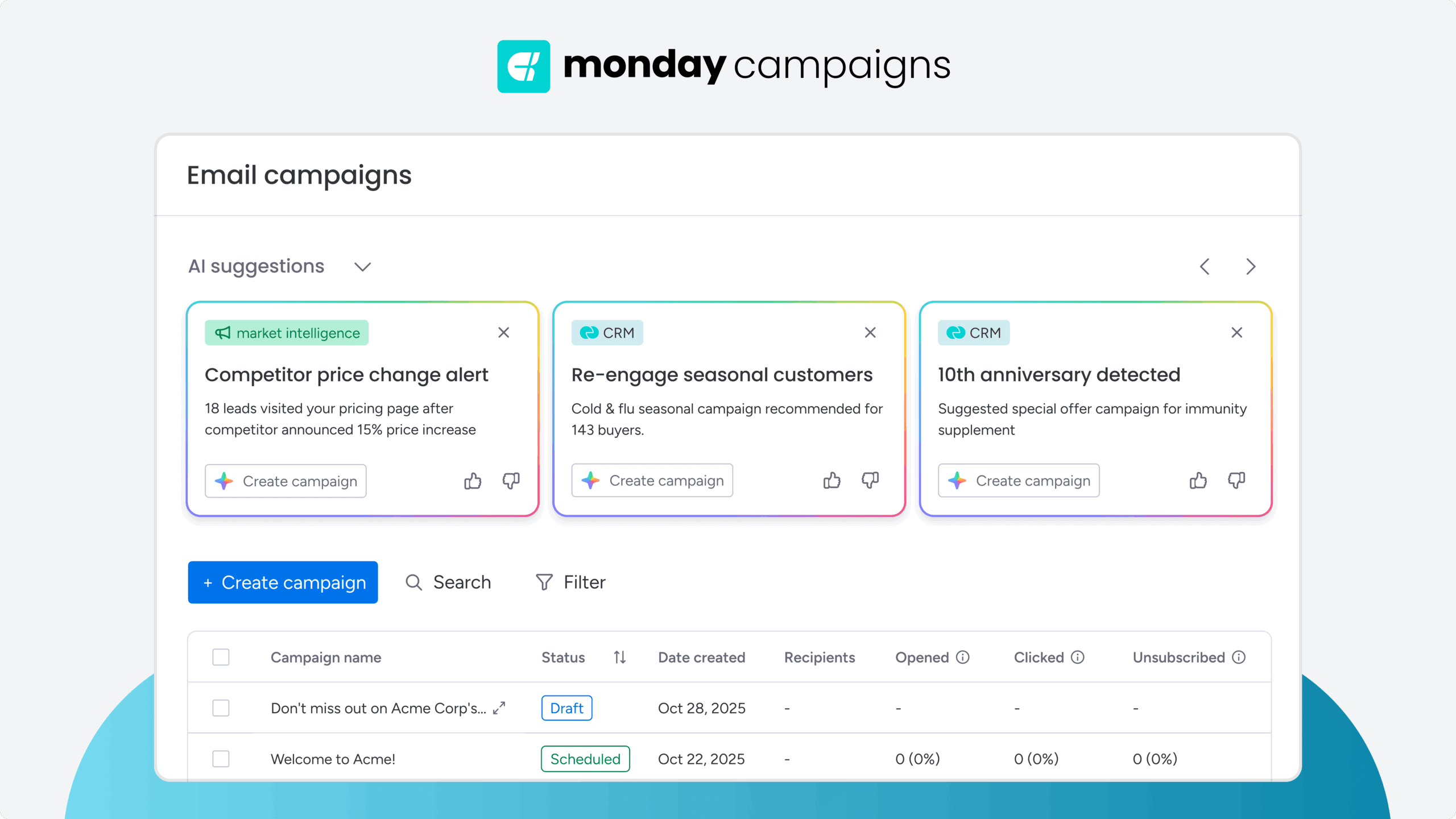
Generate on-brand email copy, subject lines, and campaign content in minutes using AI that learns your brand voice. The AI writing assistant helps you overcome blank-page syndrome and speed up content production while maintaining consistency across campaigns. Input your campaign goals and target audience, and get multiple variations to review, refine, and send.
Dynamic segmentation with CRM data
Build behavior-based audience segments that update automatically as subscriber actions change. AI analyzes engagement patterns, purchase history, and CRM data to create precise targeting without manual list maintenance. Segments adapt in real time, so your campaigns always reach the right people with relevant messages.
Predictive send time optimization
AI determines the optimal send time for each individual subscriber based on their engagement history, time zone, and behavior patterns. Instead of batch sending to everyone at once, campaigns reach subscribers when they’re most likely to open and engage. This individual-level timing optimization happens automatically for every send.
Revenue attribution and analytics
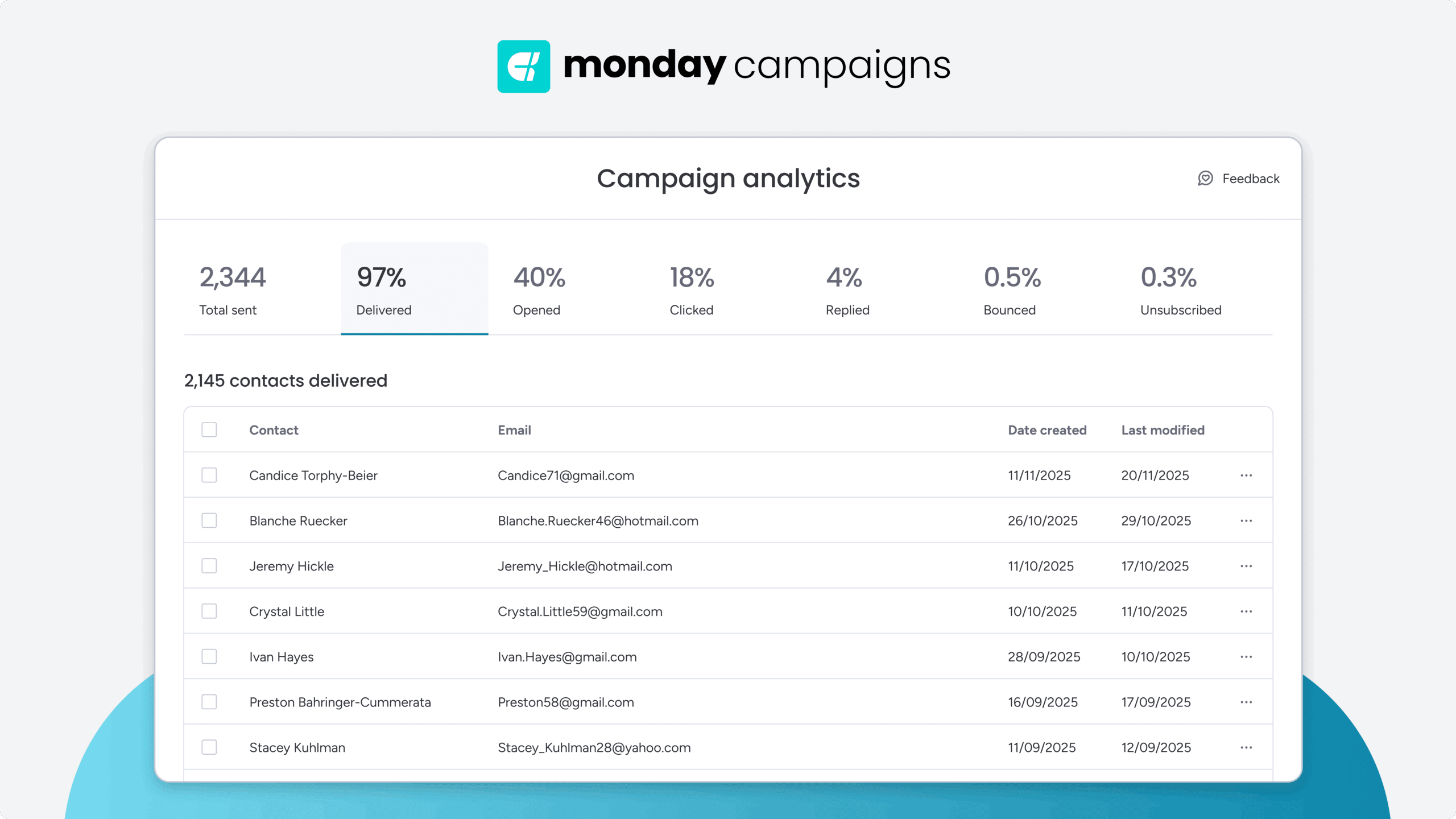
Track how email campaigns contribute to pipeline and closed revenue with multi-touch attribution that connects marketing activities to business outcomes. See which campaigns drive conversions, how email fits into the customer journey, and where to optimize for better results. Attribution data flows directly from your CRM, creating a closed loop from send to sale.
Boost your revenue with AI-powered email marketing
AI transforms email marketing from manual, intuition-based processes to automated, data-driven optimization. The technology delivers measurable improvements in personalization, timing, content quality, and revenue attribution that compound over time. In fact, the generative AI marketing market is projected to reach $22.02 billion by 2033, growing at a 35.1% CAGR, according to Grand View Research.
The most successful implementations start with clear goals, focus on high-impact use cases, and scale based on proven results. By integrating these capabilities directly with your CRM data, monday campaigns provides a single source of truth to connect your marketing efforts directly to business outcomes.
Try monday campaignsFAQs
What is AI used for in marketing?
AI in marketing uses machine learning, natural language processing, and predictive analytics to automate and optimize marketing activities including content creation, audience targeting, personalization, campaign optimization, and performance analytics.
What is generative AI for email marketing?
Generative AI for email marketing refers to AI that creates new content such as email copy, subject lines, and images, as opposed to predictive AI that optimizes send times and segmentation or analytical AI that provides performance insights.
What is an AI email writer?
An AI email writer is a capability that generates email copy, subject lines, and CTAs using natural language processing, helping marketers overcome blank-page syndrome and speed up content production.
Which is the most effective AI email generator?
The most effective AI email generator depends on your specific needs, including CRM integration requirements, ease of use, campaign capabilities beyond writing, analytics depth, and pricing alignment with your budget.
How can I access a free AI email writing capability?
Many email marketing platforms offer free trials or freemium tiers that include AI writing capabilities, though evaluating full capabilities and fit for your workflow matters more than choosing based solely on free features.
Is there an AI for emails?
Yes, AI for email marketing is widely available and mature, with capabilities spanning content generation, audience segmentation, send time optimization, and performance analytics across many email marketing platforms.

 Get started