


Your marketing team launched what looked like a winning campaign, but the conversion numbers fell flat. You’re left wondering what went wrong, and how you could have seen it coming.
Predictive analytics helps teams forecast customer behavior before campaigns launch. Instead of reacting to last month’s data, you can anticipate next week’s opportunities and allocate resources where they’ll drive the highest return.
This article walks through 7 proven applications of predictive analytics that deliver measurable ROI, including lead scoring and churn prediction. You’ll learn how to build a data foundation and coordinate cross-functional teams, turning predictions into action that moves the needle on your marketing goals, all within monday.com.
Try monday.comKey takeaways
- Bridge the gap between predictions and action. Predictive analytics only drives ROI when insights trigger immediate, coordinated responses. This requires seamless collaboration across marketing, sales, and customer success teams.
- Start with lead scoring and churn prediction for quick wins. These two use cases deliver measurable revenue impact within months and require minimal technical complexity to implement.
- Build your data foundation first. Clean, unified customer data from all touchpoints is essential. Predictive models fail when trained on incomplete or inconsistent information.
- Automate predictive workflows with monday.com. Use AI Blocks to route high-scoring leads instantly and trigger cross-functional retention campaigns without manual handoffs.
- Focus on specific business problems, not technology. Define clear objectives like “reduce enterprise churn by 15%” before selecting platforms to avoid analysis paralysis and deliver measurable results.
What is predictive analytics in marketing?
Predictive analytics in marketing uses historical data, statistical algorithms, and machine learning to forecast future customer behavior.
Traditional reporting shows you last quarter’s results but predictive analytic tell you what’s coming next week. This shift allows marketing operations managers to anticipate:
- which leads will convert
- which customers might leave
- which channel mix will deliver the highest return on ad spend.
Example: A predictive model analyzes thousands of data points from past email campaigns to determine the exact time a specific customer segment is most likely to open a message. Another application forecasts customer lifetime value (CLV) at the moment of acquisition, allowing teams to adjust customer acquisition costs dynamically.
These insights require more than data. They demand a connected work environment where predictions trigger coordinated actions across sales, marketing, and customer success teams.
Traditional analytics vs. predictive analytics
Moving from traditional to predictive analytics changes everything about how marketing teams work. Get this distinction right, and you’ll spot exactly where to outmaneuver your competition.
| Aspect | Traditional analytics | Predictive analytics |
|---|---|---|
| Time focus | Reviews historical data to explain past events | Uses historical patterns to forecast future outcomes |
| Purpose | Validates past performance and justifies spend | Guides future decisions to maximize outcomes |
| Decision timing | Teams adjust strategies after reviewing results | Teams adjust strategies before campaigns launch |
| Data usage | Summarizes data into KPIs and reports | Identifies hidden patterns and correlations to model behaviour |
| Business value | Provides insight into past performance and outcomes | Delivers recommendations to improve future ROI and performance |
Why does this matter? Proactive strategies cost less and deliver more. Waiting for a customer to churn before offering a retention incentive is expensive. But expecting the churn risk and intervening early preserves your revenue and strengthens the customer relationship.
Core components of predictive marketing analytics
A predictive analytics engine has several moving parts that turn raw numbers into actionable insights. Here are the key components that power predictive analytics.
- Data foundation: The system relies on clean, structured data from multiple sources, including CRM records, website behavior, transaction history, and third-party market data
- Machine learning models: Algorithms process this data to identify non-obvious patterns, continuously learning and refining their accuracy as new data enters the system
- Statistical analysis: Statistical methods validate the reliability of the models, so a predicted trend becomes a genuine signal rather than random noise
- Integration systems: APIs and connectors pipeline these insights directly into the platforms where work happens, preventing data from being trapped in isolated dashboards
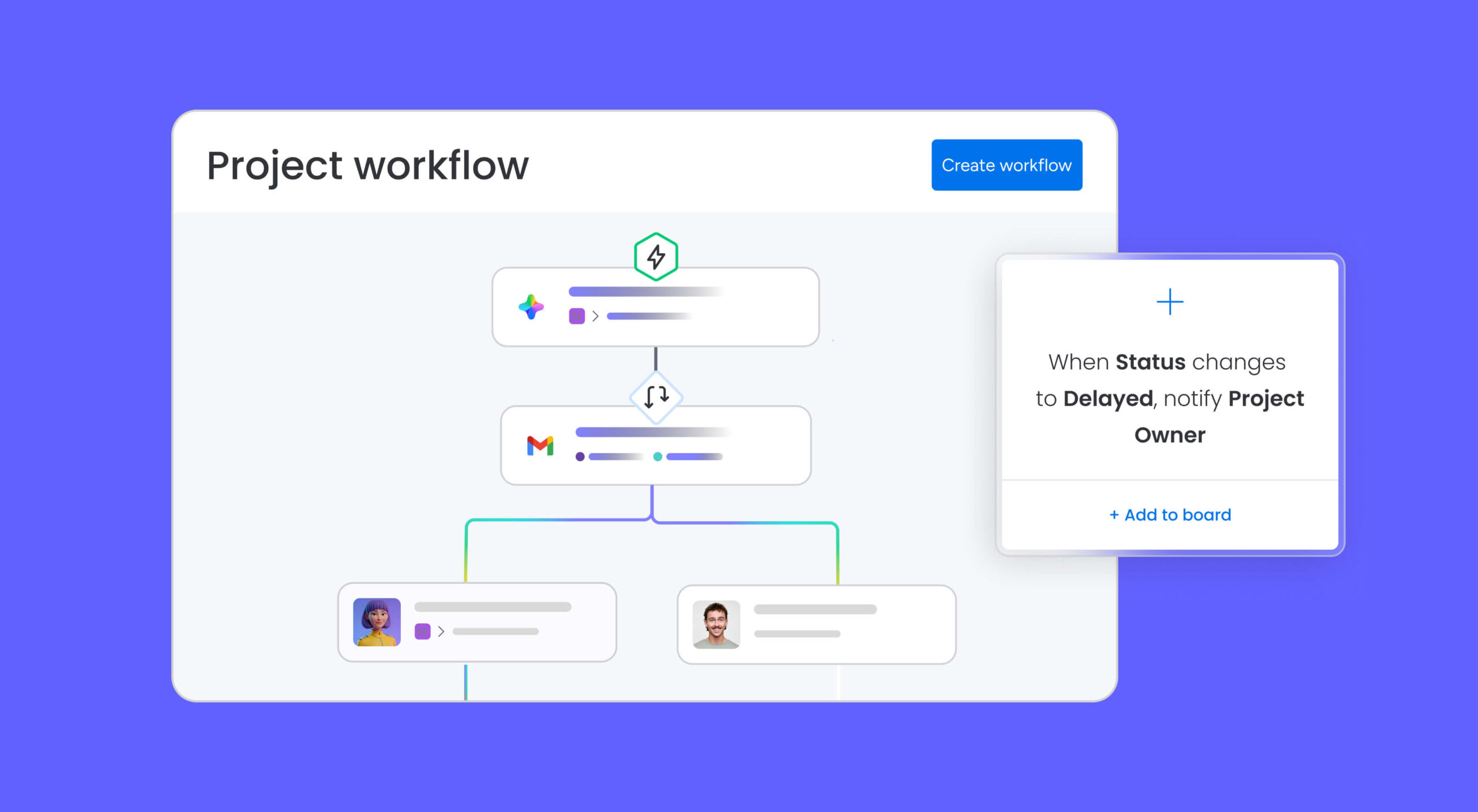
- Action triggers: The final component is the operational layer, where a prediction automatically initiates a workflow, such as assigning a high-value lead to a sales representative
How predictive marketing analytics works
Predictive analytics follows a clear path: raw data goes in, coordinated team action comes out. But there’s a lot happening between those two points. Here’s how the process works.
Data foundation and identity resolution
Your predictions are only as good as your data. The process starts with identity resolution, the method of stitching together disparate data points from email, mobile, social, and web interactions to create a single, unified customer profile. Without it, your system will consider a customer who browses on mobile and buys on desktop to be two different people.
You need three types of data to see the full picture:
- First-party data: Direct interactions, such as website clicks, purchase history, and customer support tickets
- Second-party data: Information shared directly from trusted partners
- Third-party data: Broader demographic and behavioral data purchased from external aggregators
Keep this foundation solid by cleaning your data regularly. Duplicate records, outdated info, or inconsistent formatting will tank your model’s accuracy.
Predictive modeling in marketing
Base your predictive model on what you’re trying to predict.
- Classification models: These predict a “yes” or “no” outcome, such as whether a specific lead belongs in the “likely to buy” category or the “window shopper” category
- Regression models: These forecast specific numbers, such as the estimated dollar value of a customer’s next purchase or the number of days until their next visit
- Time series models: These analyze sequences of data points to predict timing-based trends, such as seasonal spikes in demand or the likely timing of a subscription cancellation
- Clustering models: These group customers based on shared, often subtle characteristics, creating segments for hyper-targeted campaigns that manual segmentation would miss
Automated actions
Predictions mean nothing if they don’t drive action. The final step is connecting your analytical model to your operational stack. When a model flags a customer as “high churn risk,” that data point must trigger a sequence of events across departments.
Marketing automation platforms might send a re-engagement email, while the customer success team receives a high-priority alert to schedule a check-in call. This presents a significant operational challenge for many teams. You need a work management platform that handles these handoffs smoothly.
When data flows directly into a shared project space, your team can act on opportunities right away. But when data triggers a workflow in a shared project space, like monday.com, your team can act right away.
Try monday.com7 predictive analytics use cases that deliver measurable ROI
Predictive analytics delivers the biggest ROI when you apply it to specific, high-impact use cases, like the following.
1. Lead scoring for higher conversion rates
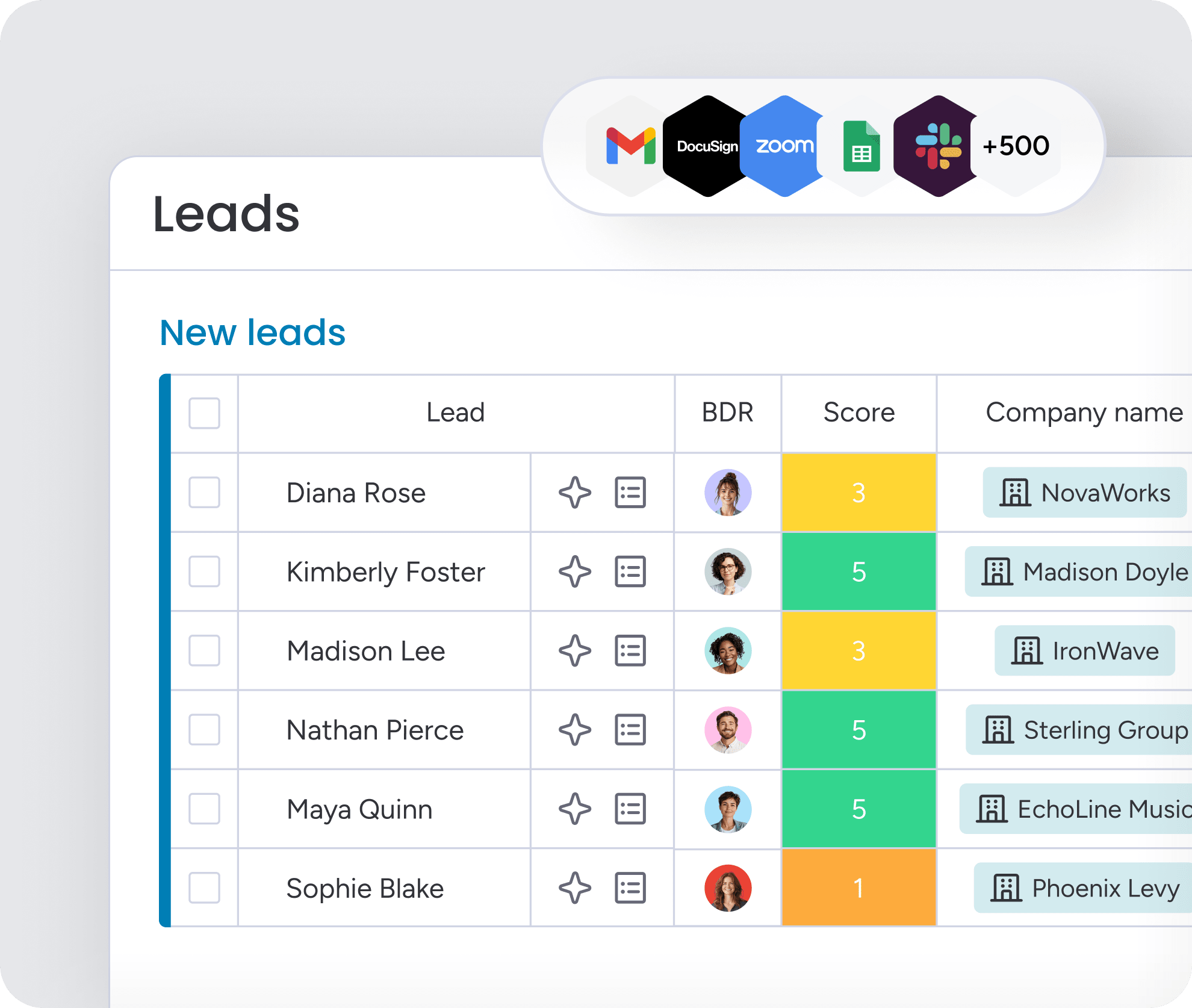
Lead scoring ranks prospects based on their probability of becoming customers. Predictive lead scoring beats traditional methods by analyzing thousands of behavioral signals, such as time on pricing pages, or content downloads, rather than job titles or company size.
Implementation requirements and coordination:
- Business impact: Sales teams can focus their energy on prospects who are ready to buy, which increases conversion rates and shortens the sales cycle.
- Implementation: Marketing and sales must agree on the definition of a qualified lead, with the predictive model requiring integration with the CRM to train on historical closed-won data
- Coordination: Automated workflows route high-scoring leads immediately to sales representatives, while lower-scoring leads enter automated nurturing tracks managed by marketing
2. Churn prediction to boost customer retention
Churn prediction spots customers who are about to cancel or stop buying. Models watch for signals like fewer logins, more support tickets, or shifts in how people use your product.
Key benefits and implementation considerations:
- Revenue impact: Reducing churn directly increases revenue stability and profitability, as retaining an existing customer is significantly cheaper than acquiring a new one
- Data requirements: The model needs access to product usage data, billing history, and support interactions
- Team coordination: Alerts must be routed to the appropriate team. For example, a billing issue might trigger a finance workflow, while a usage drop triggers a customer success manager intervention
3. Campaign optimization for maximum impact
Campaign optimization forecasts how your creative, channels, and messaging will perform before you launch, so you can put your budget in the right place.
Strategic advantages and execution needs:
- Budget efficiency: This allocates your budget to high-performing ads, maximizing return on ad spend (ROAS) from day one.
- Model training: Historical campaign performance data trains the model to recognize which creative elements resonate with specific audiences
- Cross-team application: Creative teams use these insights to guide design choices, while media buyers use forecasts to adjust channel bids and budget caps
4. Hyper-personalization that scales
Hyper-personalization serves up unique content and product recommendations based on what each customer will probably want.
Implementation requirements:
- Customer impact: Personalized experiences drive higher engagement, increased average order value, and stronger brand loyalty
- Technical needs: Real-time data processing is essential — the system must analyze a user’s current session behavior and instantly serve the “next best offer”
- Content strategy: Content teams must produce modular assets that the system can assemble dynamically, while marketing operations make sure the delivery infrastructure creates a seamless experience across email, web, and mobile
5. Marketing mix modeling for smarter budget allocation
Marketing mix modeling (MMM) analyzes the impact of various marketing tactics on sales and forecasts how changes in budget allocation will affect future revenue. It factors in seasonality, what competitors are doing, and broader economic trends.
Executive value and operational requirements:
- Strategic decision-making: Executives can make data-driven decisions about where to invest the next dollar of marketing budget to yield the highest marginal return
- Data aggregation: This requires aggregating spend and performance data from every channel, online and offline, over a significant period
- Cross-functional usage: Finance teams use these forecasts for quarterly planning, while channel managers adjust their tactical spending based on the model’s recommendations
Learn more: Build a marketing mix and structure your 4Ps for competitive advantage
6. Customer lifetime value optimization
Customer lifetime value (CLV) optimization predicts the total profit you’ll make from a customer over your entire relationship. This allows companies to identify their “whales” early in the relationship.
Business applications:
- Resource allocation: Marketing teams can justify higher acquisition costs for high-value segments and tailor VIP experiences to retain them
- Model inputs: The model combines purchase history with demographic and behavioral data to project future spending
- Team prioritization: Sales teams prioritize leads with high predicted CLV, while customer success teams design exclusive onboarding tracks for these high-value accounts
7. Next-best-action orchestration
Next-best-action models figure out the single most effective move you can make with a customer right now. This could be an upsell offer, a tutorial video, or a “happy birthday” message, depending on the context.
Operational complexity and benefits:
- Customer experience: This maximizes the relevance of every interaction, increasing customer satisfaction and cross-sell revenue
- Technical requirements: This requires a centralized decision engine that rules over all customer touchpoints
- Cross-functional execution: This is the ultimate cross-functional workflow — a “next best action” might require execution by sales, support, marketing, or product teams, necessitating a unified platform to manage the work
Measurable benefits of predictive marketing
Predictive analytics delivers measurable improvements in three areas: revenue, efficiency, and strategy. What if you could act on insights before your competitors even spot them? These benefits compound as models learn and teams get better at execution.
Revenue impact improvements:
- Conversion rate optimization: Organizations typically see conversion rate improvements as sales teams focus on high-quality leads
- Churn reduction: Strategies based on early warnings can recover significant at-risk revenue
- Customer acquisition efficiency: Marketing teams reduce customer acquisition costs (CAC) by eliminating spend on low-probability audiences
Operational efficiency gains:
- Automated workflow benefits: Predictions trigger actions automatically, saving hours of manual analysis and list segmentation
- Resource optimization: Teams allocate budget and effort where they’ll have the most impact
- Faster decision-making: Real-time insights enable quick pivots and course corrections
Strategic competitive advantages:
- Market responsiveness: React to market changes before they become obvious trends
- Customer experience: Deliver personalized experiences that competitors can’t match
- Innovation speed: Test and iterate faster with predictive insights guiding experiments
5 steps to implement predictive analytics
Predictive analytics is an operational challenge, but if you follow a clear path, the technology will deliver value. Each of the following steps builds on the last, creating a foundation for long-term success and scale.
Step 1: Build your first-party data foundation
Start by creating a reliable data ecosystem. Audit your existing data sources, like CRM, website analytics, and marketing automation to make sure everything’s accurate and complete.
Focus your data collection on high-quality first-party data from direct customer interactions. IT and marketing need to work together and break down silos so your predictive model can see the full customer picture.
Step 2: Define ROI-focused objectives
Setting specific objectives helps your team maintain focus and momentum. Marketing leaders must identify specific business problems to solve, such as “reduce enterprise churn” or “increase email cross-sell rates.”
Prioritize goals based on potential impact and data availability, and set your success metrics and baselines before you start modeling.
Step 3: Select your predictive analytics platform
Pick the right technology by balancing power with usability. You’ve got options: all-in-one marketing suites with built-in AI, or specialized standalone predictive platforms.
Prioritize integration capabilities when you’re evaluating platforms. Make sure the platform connects smoothly with your existing tech stack and work management systems. If a solution can’t push insights into your team’s daily workflow, it won’t drive action.
Step 4: Create cross-functional analytics teams
Predictive analytics requires a team effort. A successful initiative requires a cross-functional squad including data analysts to build the models, marketing operations to manage the infrastructure, and campaign managers to execute the strategies.
With monday.com, this collaboration becomes seamless by giving everyone a shared space for project tracking, so insights from the data team instantly turn into action items for marketing.
Step 5: Launch controlled pilot campaigns
Start with a pilot to test the model and fine-tune your workflow. Focus your pilot on one use case, like lead scoring, for a specific product line.
A controlled pilot lets you measure results against a control group and tweak the process without risking your entire marketing budget. Document what you learn from the pilot, and you’ll have a blueprint for scaling predictive analytics across the organization.
How to manage risks in AI-powered marketing
Deploying AI and predictive models introduces specific risks that organizations must manage proactively through governance and oversight. Understanding these risks upfront prevents costly mistakes and builds stakeholder confidence in the technology. Effective risk management also ensures compliance with evolving regulations and maintains customer trust.
Prevent model bias and drift
Model drift occurs when a model’s accuracy degrades over time because customer behavior changes. Model bias happens when training data reflects historical inequalities, leading to unfair predictions.
To prevent this, data teams must establish routine monitoring schedules to validate model performance. Regular audits of training data ensure diversity and fairness. When a model’s performance dips below a set threshold, it triggers a workflow for retraining or recalibration.
Prioritize privacy
A commitment to user privacy is fundamental to building trust. Predictive strategies must comply with regulations like GDPR and CCPA. This involves implementing “privacy by design” principles, such as data anonymization and strict consent management.
Marketing teams must only use data for purposes that customers have agreed to. A defined compliance framework protects the brand’s reputation and builds trust with the audience.
Build governance frameworks for marketing AI
A governance framework defines who is responsible for AI decisions. It establishes approval processes for deploying new models and sets standards for data usage.
This framework requires coordination between legal, IT, and marketing leadership. Work management platforms support governance by maintaining an audit trail of approvals, model changes, and campaign executions, ensuring accountability at every step.
Transform predictions into coordinated action with monday.com
The gap between having a prediction and acting on it is where ROI is lost. monday.com bridges this gap by serving as the AI-powered execution layer for predictive marketing. It connects the insights generated by analytics platforms directly to the people and processes responsible for the results.
Automate complex workflows with AI Blocks
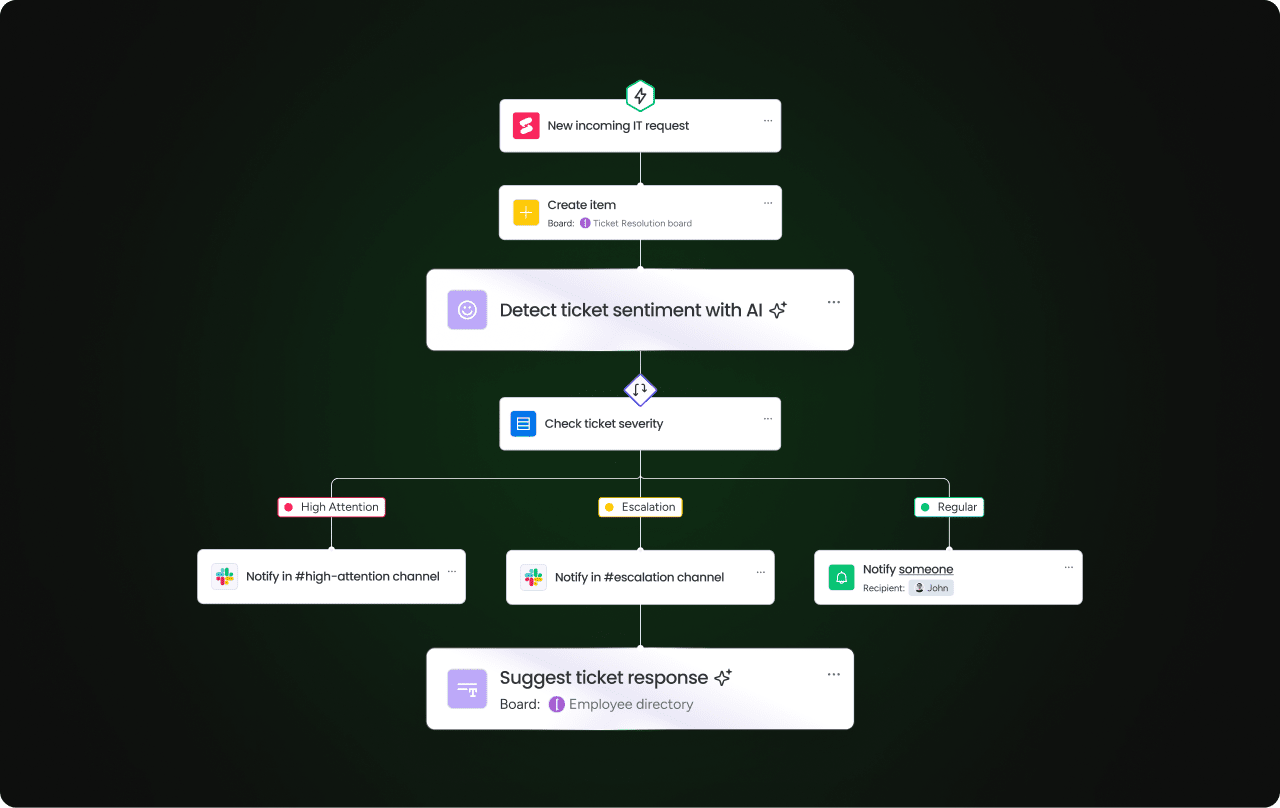
monday.com uses AI Blocks to process incoming data and automate complex workflows. When a predictive model identifies a high-value lead, the Categorize AI block can instantly route that lead to the correct sales region, while the Extract Info block populates the item with relevant customer context. This eliminates manual triage and ensures immediate action.
Turn predictive data into plain-language insights with monday sidekick
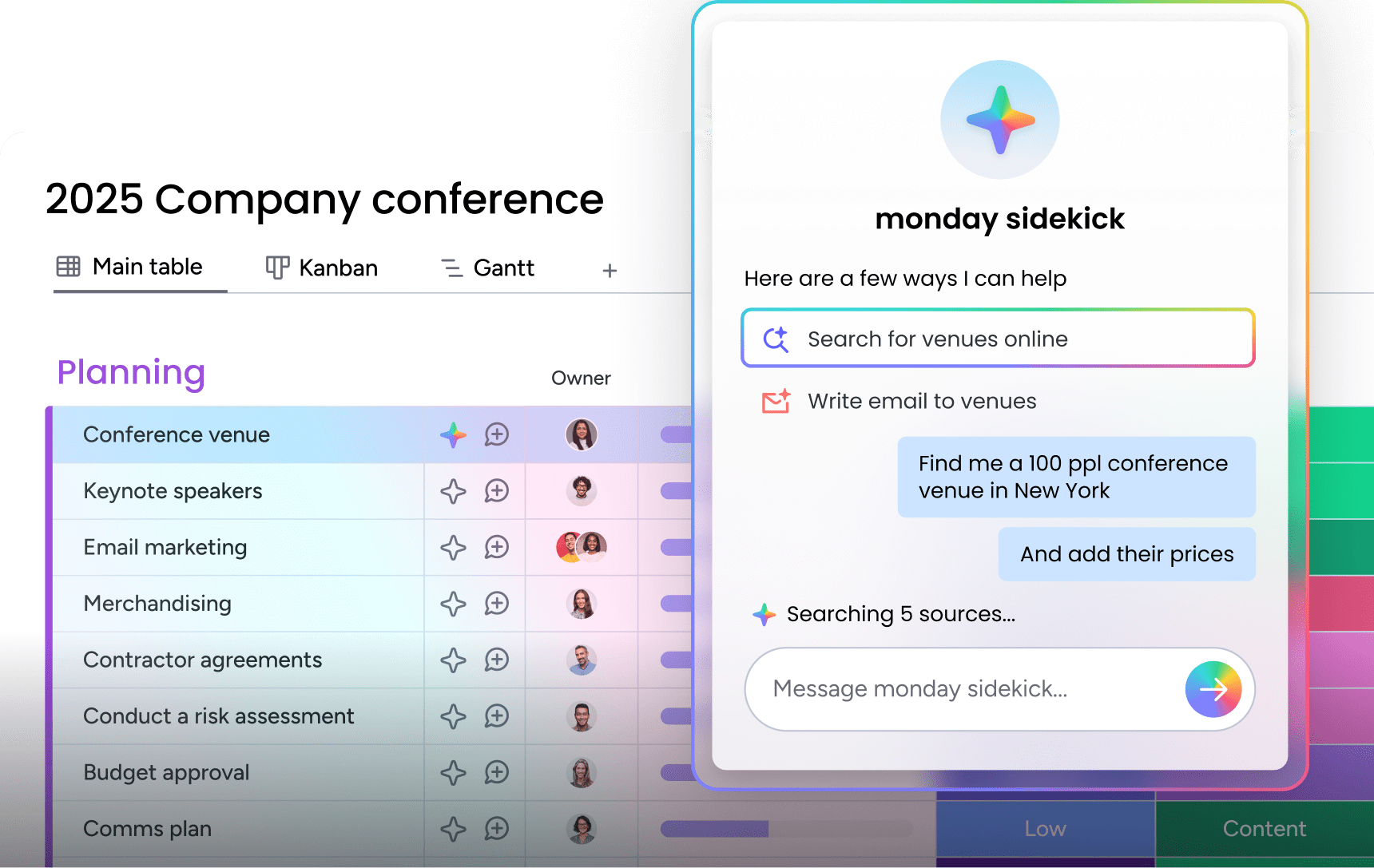
monday sidekick acts as your team’s always-on analytics partner, translating complex predictive data into plain-language recommendations. When you’re reviewing a campaign board, monday sidekick can spot patterns in your predictive metrics and suggest next steps. Ask it “Which leads should we prioritize this week?” and it analyzes your scoring data to provide specific recommendations. This conversational interface makes predictive insights accessible to every team member, not just data specialists.
Get intelligent budget recommendations with Campaign Manager Digital Worker
The platform features specialized AI capabilities like the Campaign Manager Digital Worker. This agent analyzes campaign data and provides intelligent recommendations for budget allocation. If a predictive model forecasts a dip in performance for a specific channel, the Digital Worker can flag this to the team and suggest shifting budget to a higher-performing alternative.
Platform comparison for predictive marketing coordination
| Capability | monday work management | Traditional project management | Marketing automation platforms |
|---|---|---|---|
| Cross-functional coordination | Native workflow management connects marketing, sales, and customer success with AI-powered task assignment | Coordination relies on manual updates and email chains | Workflows are typically limited to the marketing team |
| Predictive insight integration | AI Blocks ingest predictions and trigger automated item creation and status updates | Insights require manual input to translate into project tasks | Triggers are usually limited to simple “if/then” sequences |
| Real-time visibility | Live dashboards show predictive campaign performance alongside project status | Reporting is static and requires manual compilation | Reporting focuses on channel metrics rather than execution status |
| Resource optimization | Workload management allocates resources based on priority and predictive signals | Resource planning is handled manually | Limited or no built-in resource management capabilities |
| Scalability | Supports hundreds of concurrent campaigns with automated governance | Manual processes become difficult to scale as volume increases | Scales message delivery, but not the workflows behind execution |
Scale predictive marketing with coordinated execution
The most successful predictive analytics implementations combine sophisticated modeling with streamlined operations. Teams that can act on predictions immediately gain competitive advantages that compound over time. This requires more than analytics platforms; it demands work management systems that orchestrate cross-functional responses.
monday.com enables this coordination by automating the handoffs between prediction and action. When your models identify opportunities, the platform lets your teams capitalize on them without delay. Sign up for free to get started.
Try monday.comFAQs
What's the difference between predictive analytics and marketing automation?
Predictive analytics uses data to forecast future behavior and determine the best course of action, whereas marketing automation is the software that executes those actions based on pre-set rules.
How long does it take to see ROI from predictive marketing analytics?
Organizations typically begin seeing measurable results within 3 to 6 months of implementation as models learn and workflows stabilize. Quick wins like lead scoring can show impact even sooner, often within the first 30 to 60 days.
Do you need data scientists for predictive marketing?
Whether you need data scientists for predictive marketing depends on your goals. While data science expertise is valuable for building custom models, many platforms offer "no-code" predictive features designed for marketers.
Can small marketing teams use predictive analytics effectively?
Yes, small marketing teams can use predictive analytics effectively. Cloud-based platforms have democratized access to these capabilities, allowing smaller teams to leverage predictive features without enterprise-level infrastructure.
How much data do you need for accurate predictions?
Reliable predictive models generally require at least 6 to 12 months of historical data and hundreds to thousands of customer records to identify significant patterns.
How does monday.com support predictive marketing campaigns?
monday.com integrates with analytics platforms to automatically transform predictive insights into assigned items and cross-functional workflows, using features like AI Blocks and the Campaign Manager Digital Worker.

 Get started