


Your 3-month project just became 6 months with double the budget — and you’re not sure exactly when it happened. One “quick addition” here, a “small tweak” there, and suddenly your focused deliverable has morphed into something unrecognizable, leaving your team scrambling to catch up.
This article breaks down what scope creep actually looks like in practice, why it happens, and gives you 7 proven strategies to prevent it. You’ll learn how to define project boundaries that stick, implement change control processes that work, and maintain focus while still accommodating legitimate business needs.
Try monday.comKey takeaways
- Document exactly what your project includes and excludes upfront to prevent stakeholders from adding “small” requests that derail timelines and budgets.
- Create structured workflows where every scope change gets evaluated for impact before approval, stopping informal additions through emails or hallway conversations.
- Watch for increasing informal requests, expanding backlogs, and timeline slippage patterns that signal scope creep before it becomes a crisis.
- Route change requests through proper approval channels automatically while maintaining real-time visibility into scope boundaries across all stakeholders with automated workflows.
- Get explicit agreement from everyone affected by the project before kickoff to prevent mid-execution requirement additions from parties who weren’t involved in planning.
What is scope creep in project management?
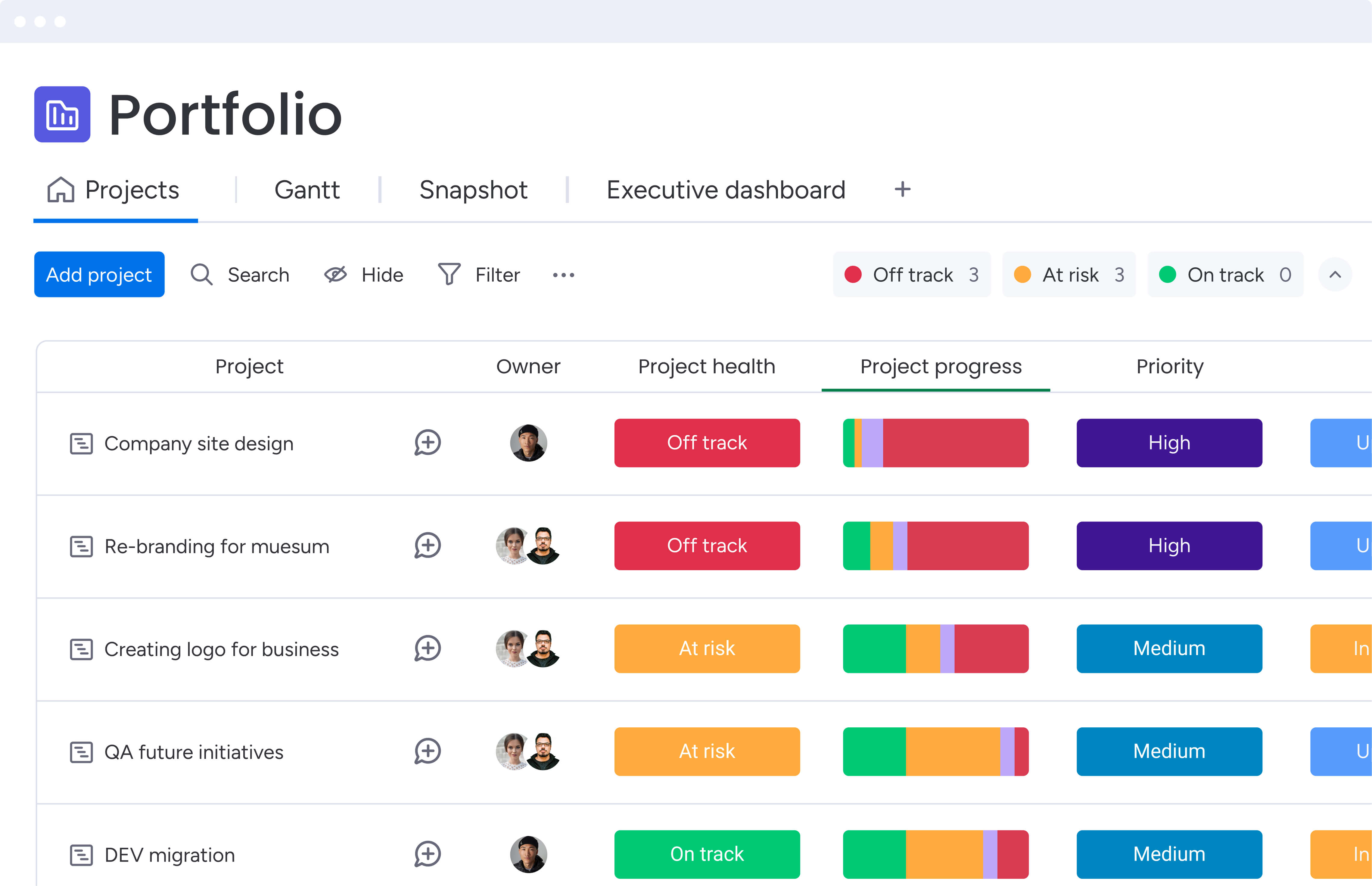
Scope creep is the gradual, unauthorized expansion of project deliverables, requirements, or objectives after project initiation — without corresponding adjustments to timeline, budget, or resources. This expansion typically happens through informal requests, verbal agreements, or assumptions rather than through formal change management processes.
Think of it this way: A stakeholder mentions a “nice-to-have” feature during a status meeting. A team member adds functionality they believe improves the deliverable. A client suggests modifications that seem minor but require substantial rework. Each addition appears manageable individually, but together they transform the project’s scope, complexity, and resource requirements.
Consider a marketing team launching a social media campaign originally scoped for Instagram and Facebook. During execution, stakeholders request TikTok content, then LinkedIn posts, then a YouTube video series. The team accommodates each request without adjusting timelines or budgets.
What began as a focused 2-platform campaign becomes a 5-channel initiative requiring triple the original content production and specialized skills the team lacks — essentially forcing an omnichannel marketing approach without the proper planning or resources to execute it effectively.
In practice, scope creep shows up when work expands beyond agreed boundaries, accumulates gradually, and bypasses formal change control.
Scope creep vs. healthy scope evolution
Let’s be clear: not every scope change is bad. Sometimes your project needs to adapt to shifting market realities, new regulations, or changing business priorities.
| Aspect | Scope creep | Healthy scope evolution |
|---|---|---|
| Change initiation | Informal requests through emails or verbal agreements | Formal change requests with documentation |
| Impact assessment | Changes accepted without evaluating effects | Comprehensive analysis of project parameters |
| Approval process | Verbal agreements without stakeholder sign-off | Documented approvals with accountability |
| Resource allocation | Work absorbed within existing constraints | Resources adjusted proportionally |
| Communication | Changes implemented without updating plans | Documentation updated and stakeholders informed |
Scope changes become beneficial strategic pivots when they respond to genuine business needs, follow disciplined evaluation processes, and receive appropriate resourcing. The key differentiator is intentionality: healthy evolution involves conscious decisions to modify scope based on changing conditions, with full awareness of trade-offs.
3 real-world scope creep examples
Looking at real-world examples across industries helps teams spot scope creep before it derails their projects. These examples illustrate common scenarios where initial requirements seem straightforward, stakeholders request seemingly minor additions during execution, and cumulative impact becomes apparent only when projects significantly exceed original parameters.
1. Technology project scope expansion
In this example, let’s say a financial services company initiates a project to build a basic customer portal for account access and transaction history. The original scope includes secure login, account overview, transaction lists, and document downloads — estimated at 3 months with a 5-person development team.
During the first sprint review, the marketing director requests integration with the email platform. The sales team asks for lead capture forms and CRM integration. Customer service wants live chat functionality. The compliance officer requires 2-factor authentication and audit logging.
Six months into what was planned as a 3-month project, the team has delivered only 60% of the original scope while working on features that weren’t part of initial requirements. The project budget has increased 75% through overtime and contractor support.
2. Marketing campaign scope drift
Consider this: A consumer goods company plans a social media campaign for a new product launch, originally scoped for Instagram and Facebook with 20 pieces of content over 4 weeks. Two weeks before launch, the VP of marketing returns from a conference enthusiastic about TikTok’s reach.
The team adds TikTok content creation. The sales team requests LinkedIn posts. Customer service wants Twitter coverage. The PR team suggests a YouTube video series. What began as 20 content pieces across 2 platforms becomes 50+ pieces across 5 platforms, each with different format requirements and audience expectations.
3. Construction project boundary changes
Let’s say a homeowner contracts a renovation company for a kitchen remodel with defined specifications: new cabinets, countertops, appliances, and flooring within the existing kitchen footprint. The project timeline is 8 weeks with a fixed budget.
During demolition, the homeowner notices the adjacent bathroom looks dated and requests its inclusion. While selecting materials, they upgrade from standard to premium finishes. They decide to expand the kitchen into an adjacent closet, requiring structural modifications. The 8-week project extends to 16 weeks with the final cost exceeding the original budget by 60%.
Try monday.comTop causes of scope creep
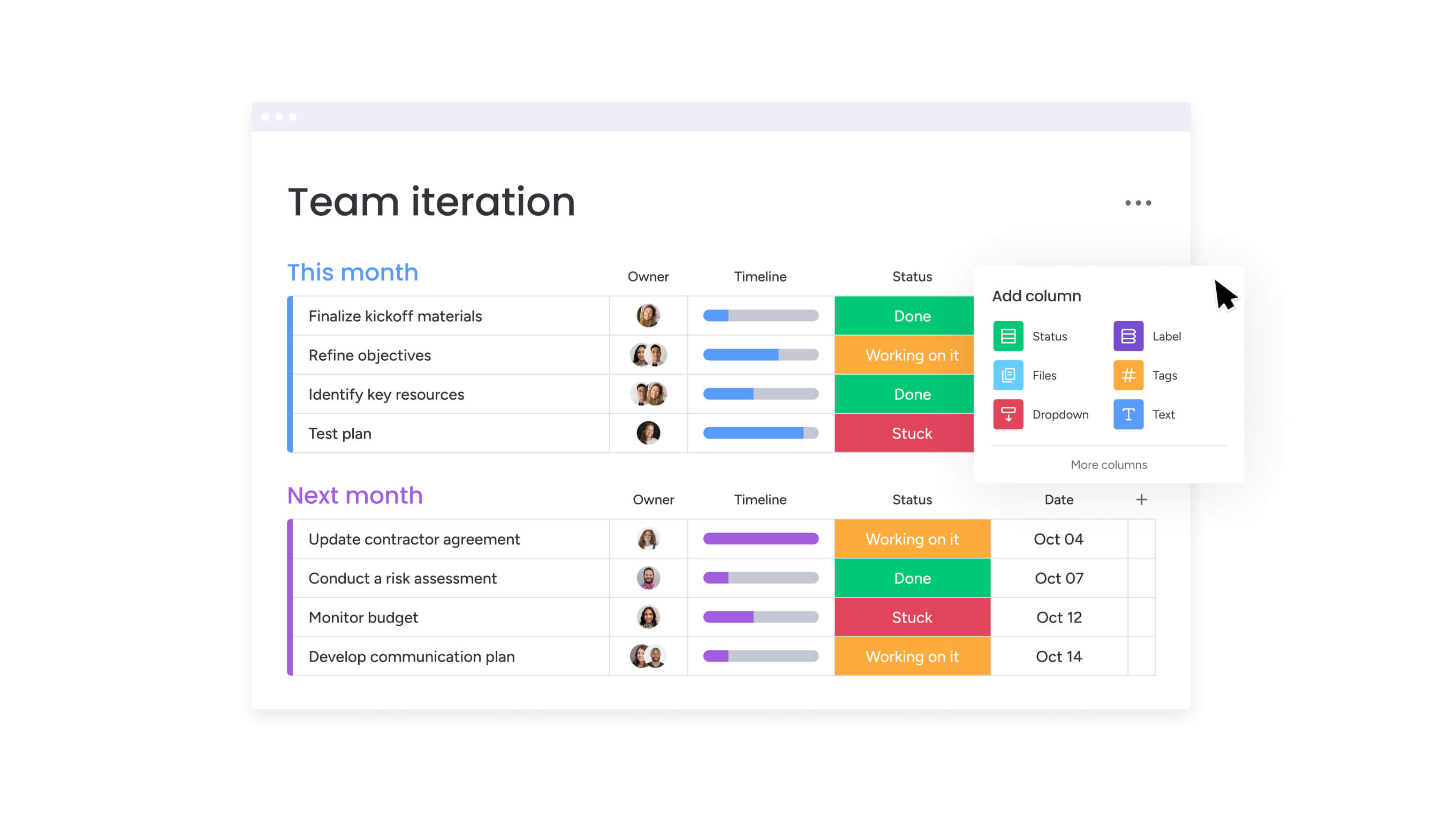
Scope creep rarely results from a single failure point. Instead, it emerges from combinations of organizational, process, and communication weaknesses that create environments where unauthorized scope expansion can flourish. Understanding these root causes enables teams to implement targeted prevention strategies for this and other project management challenges.
Unclear project requirements
Vague or incomplete initial requirements create interpretation gaps that stakeholders fill with their own assumptions and expectations about project scope.
Well-defined requirements in a comprehensive scope document specify measurable acceptance criteria, concrete deliverables, and explicit exclusions that prevent misalignment. Effective teams create standardized requirement templates that capture these details upfront, ensuring everyone starts with the same understanding.
Missing stakeholder buy-in
Projects that begin without comprehensive stakeholder involvement inevitably face mid-project requirement additions when excluded parties finally engage with the work. A software project involving only the IT department during planning will face requests from operations, finance, and customer service teams when they first see the system.
Comprehensive stakeholder management and mapping identifies all individuals and groups affected by or able to influence the project. The platform’s collaborative boards make it easy to involve all stakeholders from day one, creating transparency that reduces surprise requirements.
Weak change management processes
Organizations without formal change control procedures lack mechanisms to evaluate, approve, and resource scope modifications. When project managers can’t point to a defined process for handling change requests, stakeholders bypass informal controls through direct team requests or executive pressure.
The impact of weak change control is significant — government data shows that 62 change-order proposals took more than a year to finalize in a recent fiscal year, demonstrating how uncontrolled scope changes can materially extend project timelines.
Effective change management includes documented procedures for submitting requests, templates for impact assessment, and defined approval authorities. Using monday.com’s automated workflows, you can route change requests through proper channels, ensuring every modification gets evaluated before implementation.
Poor cross-team communication
Communication gaps between departments, teams, or external partners create misaligned expectations that manifest as scope additions. When the development team doesn’t understand operations’ workflow requirements, they build functionality that operations then requests to modify.
Regular cross-functional communication and responsibility matrices prevent these misalignments. Centralized project boards provide visibility across teams, making requirements and progress transparent to all stakeholders.
Extended project timelines
Longer projects face higher scope creep risk because business conditions, stakeholder priorities, and market dynamics evolve during extended execution periods. A twelve-month software implementation will encounter organizational changes, competitive pressures, and regulatory updates that a 3-month project avoids.
This risk is evident in large-scale projects, where 80% cost overruns and 50% schedule delays are common in mega projects, according to a McKinsey review.
Breaking large initiatives into shorter phases with defined deliverables reduces exposure to evolving requirements. Teams can use sprint planning and milestone tracking to maintain focus on current objectives while deferring new requests to future phases.
Early warning signs of scope creep
Catch scope creep early, and you’ll have more options to fix it without blowing your budget. Projects rarely experience sudden scope explosions; instead, scope creep develops through accumulating signals that attentive project managers can identify and address before they compound into major issues.
Several quantitative and qualitative signals reliably predict scope creep before it becomes critical. Monitoring these indicators transforms scope management from reactive crisis response into proactive risk mitigation.
Here are some warning signs to monitor:
- Increasing informal requests: Stakeholders bypassing formal channels through emails or meeting sidebars
- Growing task lists: Team backlogs expanding faster than work completes
- Budget variance trends: Actual spending consistently exceeding planned spending by 5-10%
- Timeline slippage patterns: Milestone dates slipping by small increments
- Team overtime increases: Regular work beyond standard hours without corresponding project crisis
How teams detect scope creep early
Effective scope monitoring combines regular manual reviews with systematic tracking mechanisms. Weekly scope reviews compare current work against baseline requirements, identifying any deliverables not present in original documentation.
How visible is your current project scope to all stakeholders? Organizations using monday.com gain real-time visibility into scope-related metrics through customizable dashboards that track planned vs. actual work, budget allocation, and timeline adherence. The platform’s visual project boards make scope boundaries immediately visible to all stakeholders.
Try monday.com7 proven ways to prevent scope creep
To truly prevent scope creep, you need a multi-layered approach that tackles its root causes and builds scope discipline into your team’s DNA. These 7 approaches work together to create comprehensive protection against unauthorized scope expansion, helping teams maintain project focus while accommodating legitimate business needs.
1. Define crystal-clear project boundaries
Comprehensive scope documentation eliminates the ambiguity that enables scope creep. Effective scope statements specify not only what projects will deliver but explicitly what they won’t include.
A well-defined scope statement for a website redesign might specify: “The project includes redesigning 15 core pages with responsive layouts, implementing a new content management system with training for 3 administrators, and migrating existing content. The project excludes: custom application development, third-party integrations beyond specified CMS plugins, content creation, and SEO optimization services.”
2. Implement change control workflows
Formal change management processes create accountability and ensure proper evaluation of scope modifications. Effective workflows include 5 essential steps:
| Workflow stage | Purpose |
|---|---|
| Request submission | Capture scope changes in a standardized format |
| Impact assessment | Evaluate effects on timeline, budget, and resources |
| Stakeholder review | Review implications with affected parties |
| Approval decision | Grant or reject changes with accountability |
| Implementation planning | Update plans and documentation |
Teams using monday.com configure automated workflows that route change requests to appropriate reviewers based on request characteristics, send notifications when reviews are required, and update project plans when changes are approved.
3. Align stakeholder expectations early
Achieving stakeholder consensus before project initiation prevents mid-project requirement additions from parties who weren’t involved in planning. Comprehensive stakeholder mapping identifies all individuals and groups affected by or able to influence the project.
Effective project kickoffs bring all stakeholders together to review and validate scope, establish communication protocols, and secure explicit agreement on project boundaries. Documentation from these sessions provides reference points when expectations later diverge.
4. Plan resource buffers strategically
Appropriate contingency planning accommodates legitimate uncertainty without encouraging scope creep. Effective buffers distinguish between execution risk (uncertainty in estimating known work) and scope risk (probability of requirement changes).
When communicating buffers to stakeholders, frame them as protection against execution uncertainty within defined project boundaries, not as slack for additional features. Make explicit that buffer consumption requires the same visibility and approval as other resource allocation decisions.
5. Automate approval processes
Digital automation strengthens change control by eliminating informal workarounds and creating comprehensive audit trails. Automated approval workflows route change requests to appropriate reviewers based on request type, impact level, and organizational hierarchy.
Automation capabilities in smart software like monday.com enable sophisticated approval logic: minor changes below defined thresholds might require only project manager approval, while significant modifications trigger multi-level review. Automated alerts can flag scope-related metrics that exceed thresholds, prompting proactive review before issues compound.
6. Monitor progress continuously
Systematic ongoing monitoring identifies scope drift before it becomes critical. Weekly scope reviews compare current work against baseline requirements using a simple checklist.
Are teams working on items in the original scope document? Have any deliverables been added without formal approval? Organizations using the platform gain instant visibility through real-time dashboards that display planned vs. actual work and original vs. projected completion dates.
7. Maintain transparent communication channels
Open communication prevents scope creep by addressing issues before they become change requests. Creating psychological safety around scope discussions encourages team members to raise concerns about expanding requirements without fear of being labeled inflexible.
Documentation practices that make scope visible to all stakeholders reduce misalignment. Shared project boards show current work and upcoming deliverables, enabling stakeholders to identify scope discrepancies early.
3 steps for managing active scope creep
When scope creep has already occurred despite prevention efforts, the goal shifts to damage control: regaining control over project parameters, minimizing further impact, and preserving project value and stakeholder relationships. Quick action can prevent minor scope drift from becoming project failure.
Step 1: Evaluate timeline and budget impact
Comprehensive impact assessment quantifies scope creep’s effects on project parameters. This analysis separates scope creep impact from other project issues like technical challenges or resource constraints.
Present findings objectively using data: “We’ve added 23 items not in the original scope, representing approximately 340 hours of additional work. At current capacity, this extends our completion date by 8 weeks and increases costs by $45,000.”
Step 2: Realign stakeholder priorities
Scope creep recovery requires facilitating conversations about trade-offs between scope, timeline, and budget. Present stakeholders with clear options for moving forward.
Priority alignment options:
- Reduce scope: Return to original timeline and budget by removing additions
- Extend timeline: Increase budget to complete expanded scope
- Find middle ground: Deliver core value within acceptable constraints
Use priority frameworks like MoSCoW (Must have, Should have, Could have, Won’t have) to help stakeholders distinguish essential requirements from nice-to-have additions.
Step 3: Capture improvement opportunities
Extract value from scope creep experiences by improving future project planning and execution. Conduct post-scope-creep reviews that examine how unauthorized changes entered the project, which controls failed, and what early warning signs were missed.
Common improvements include strengthening requirement definition processes, implementing more rigorous change control, improving stakeholder engagement practices, and enhancing project monitoring capabilities.
Prevent scope creep with AI-powered monday.com
Addressing scope creep’s root causes requires integrated capabilities that combine visual project tracking, automated workflows, AI-powered risk detection, and centralized communication. Providing comprehensive scope management capabilities, monday.com helps teams define boundaries, maintain control through formal processes, and detect scope drift before it becomes problematic.
Visual project boundaries and real-time tracking
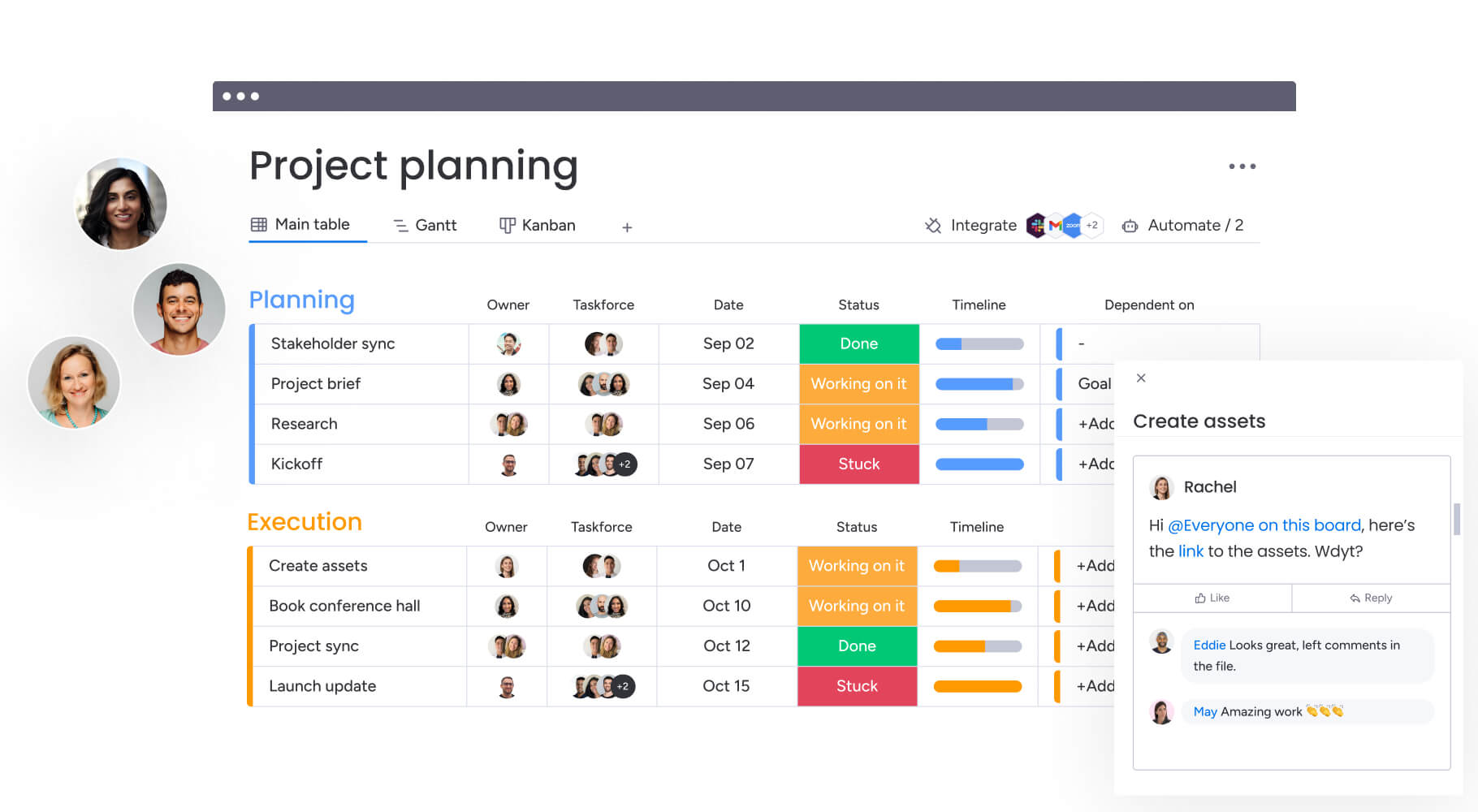
With monday.com’s visual project boards, you can make scope boundaries immediately visible to all stakeholders. Teams create comprehensive project views that display all planned work, deliverables, and milestones in intuitive formats. Custom fields track scope-specific data like requirement source, approval status, and baseline inclusion.
Real-time dashboards provide instant visibility into scope-related metrics. These dashboards alert project managers when metrics exceed defined thresholds, enabling proactive intervention before scope drift compounds.
Automated change control systems
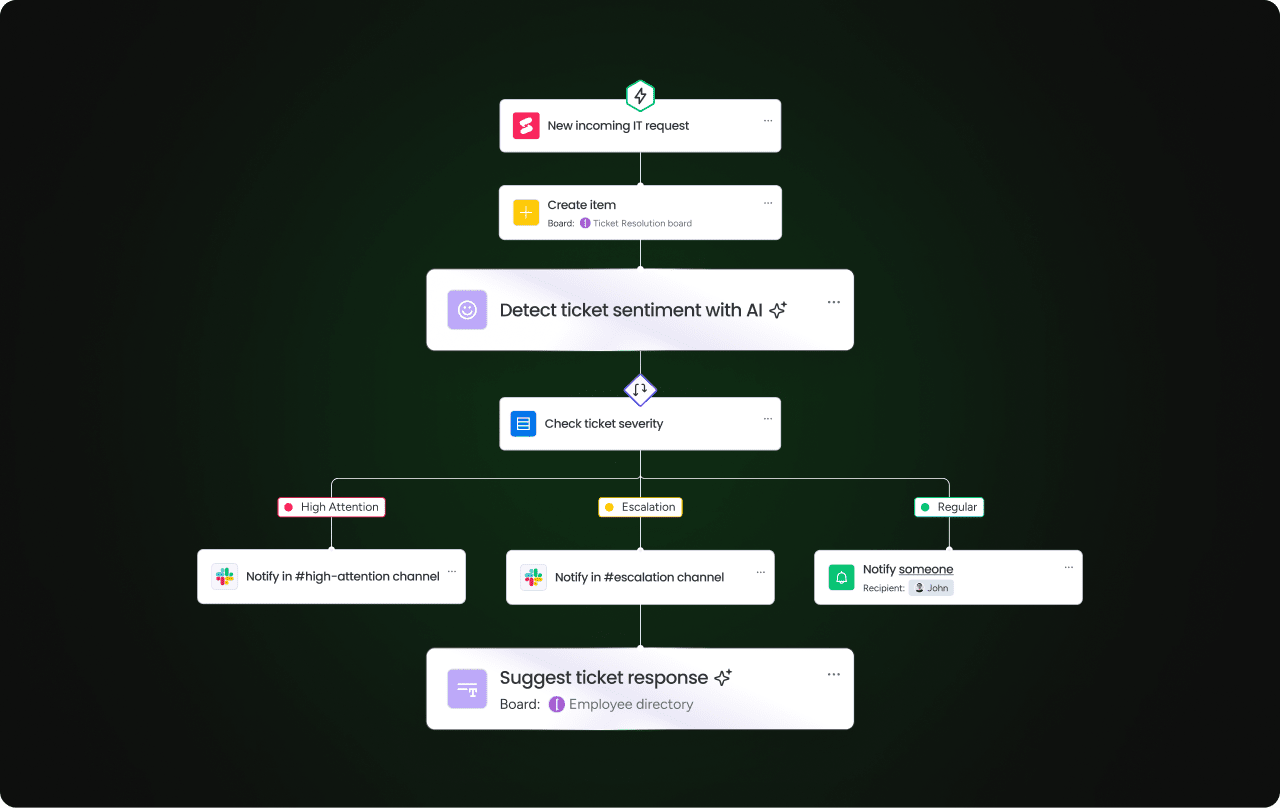
The platform’s automation capabilities streamline change management while maintaining control. Teams configure automated workflows that route change requests to appropriate reviewers, send notifications when reviews are required, and update project plans when changes are approved.
What would happen if every scope change request automatically triggered the right evaluation process? Automation recipes trigger when scope-related changes are proposed, ensuring no change bypasses evaluation processes while reducing administrative burden.
Portfolio-wide scope impact analysis
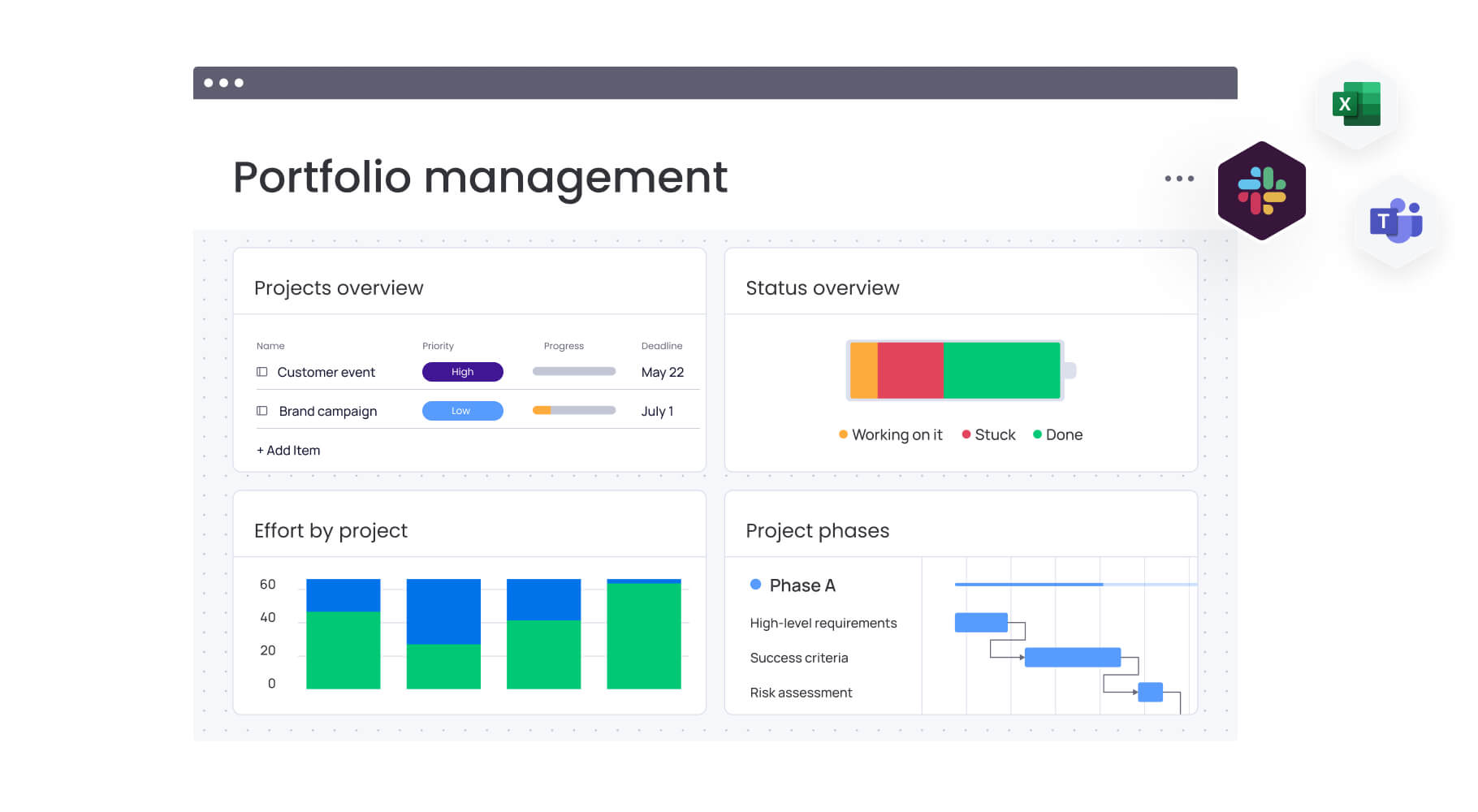 Portfolio management capabilities help organizations understand scope changes across multiple projects. Executive dashboards aggregate scope metrics across project portfolios, revealing patterns and trends that inform organizational improvement.
Proactive risk detection with AI
The platform’s AI capabilities identify scope creep risks before they materialize. Portfolio Risk Insights continuously monitors project health indicators, flagging patterns that historically correlate with scope issues.
AI Blocks like “Categorize” and “Summarize” help teams process change requests and scope-related communications more efficiently. The Categorize block automatically classifies incoming requests by type, priority, and scope impact. The Summarize block distills lengthy stakeholder communications into key points.
Build scope discipline for lasting project success
Scope creep remains one of the most common project management challenges, but it’s also one of the most preventable. Organizations that implement systematic scope management dramatically reduce scope creep incidents and improve project predictability.
The key is recognizing that scope management is a learnable skill that improves with practice and organizational commitment. Start with 1 or 2 strategies rather than attempting to implement everything simultaneously. Many organizations begin by improving scope documentation and implementing basic change control workflows, then progressively add monitoring, automation, and AI-powered risk detection as their capabilities mature.
Remember that the goal isn’t eliminating all scope changes. It’s creating the discipline and processes that enable intentional, well-managed adaptations while preventing chaotic, uncontrolled expansion. Organizations that master this balance gain competitive advantage through their ability to deliver predictable results while remaining strategically flexible.
Try monday.comFAQs
What is scope creep in simple terms?
Scope creep is the gradual expansion of project requirements beyond the original plan without adjusting timeline, budget, or resources accordingly.
Is scope creep always bad for projects?
Scope creep is generally harmful, but controlled scope evolution through proper change management can be beneficial when organizations properly evaluate and resource changes.
What's the most common cause of scope creep?
The most common cause is unclear or incomplete project requirements at the start, creating ambiguity that stakeholders fill with additional requests during execution.
How do you politely decline scope creep requests?
Acknowledge the request's value, reference the original project scope, and offer to evaluate the change through your formal change management process with proper impact assessment.
What is scope creep in Agile methodology?
In Agile, scope creep occurs when new user stories are added to sprints without removing equivalent work, or when story requirements expand beyond original acceptance criteria.
Can scope creep be reversed once it happens?
Yes, scope creep can be reversed through a scope reset exercise where stakeholders agree to remove added requirements and return to original project boundaries.

 Get started