


Revenue teams lose deals when reps spend their time on admin work instead of selling — chasing cold leads, writing follow-up emails from scratch, and updating CRM records. AI fixes this by handling the busywork that keeps reps from selling, so teams can focus on what actually drives revenue.
You’ll find 10 AI strategies that scale revenue, a 5-step roadmap to implement them, and 6 metrics that show whether your AI investment is paying off. Whether you want to tighten your pipeline, cut manual work, or forecast with real confidence, here’s how to do it.
Key takeaways
- AI transforms guesswork into predictable revenue by using behavioral signals, predictive forecasting, and real-time pipeline data to replace gut-feel decisions with outcomes you can actually plan around.
- Automating workflows like lead routing, follow-ups, and handoffs prevents deals from getting lost and keeps reps focused on selling instead of administrative tasks.
- AI enables personalization at scale by tailoring outreach to each prospect’s context and timing without requiring hours of manual research from your team.
- Tracking pipeline velocity, win rate, and forecast accuracy shows whether your AI investment is actually moving the revenue number that matters, not just increasing activity metrics.
- Lead scoring, deal summaries, buying signals, and forecasting capabilities embedded directly in monday CRM eliminate context-switching and keep AI tools where your team already works.
How AI helps drive revenue growth
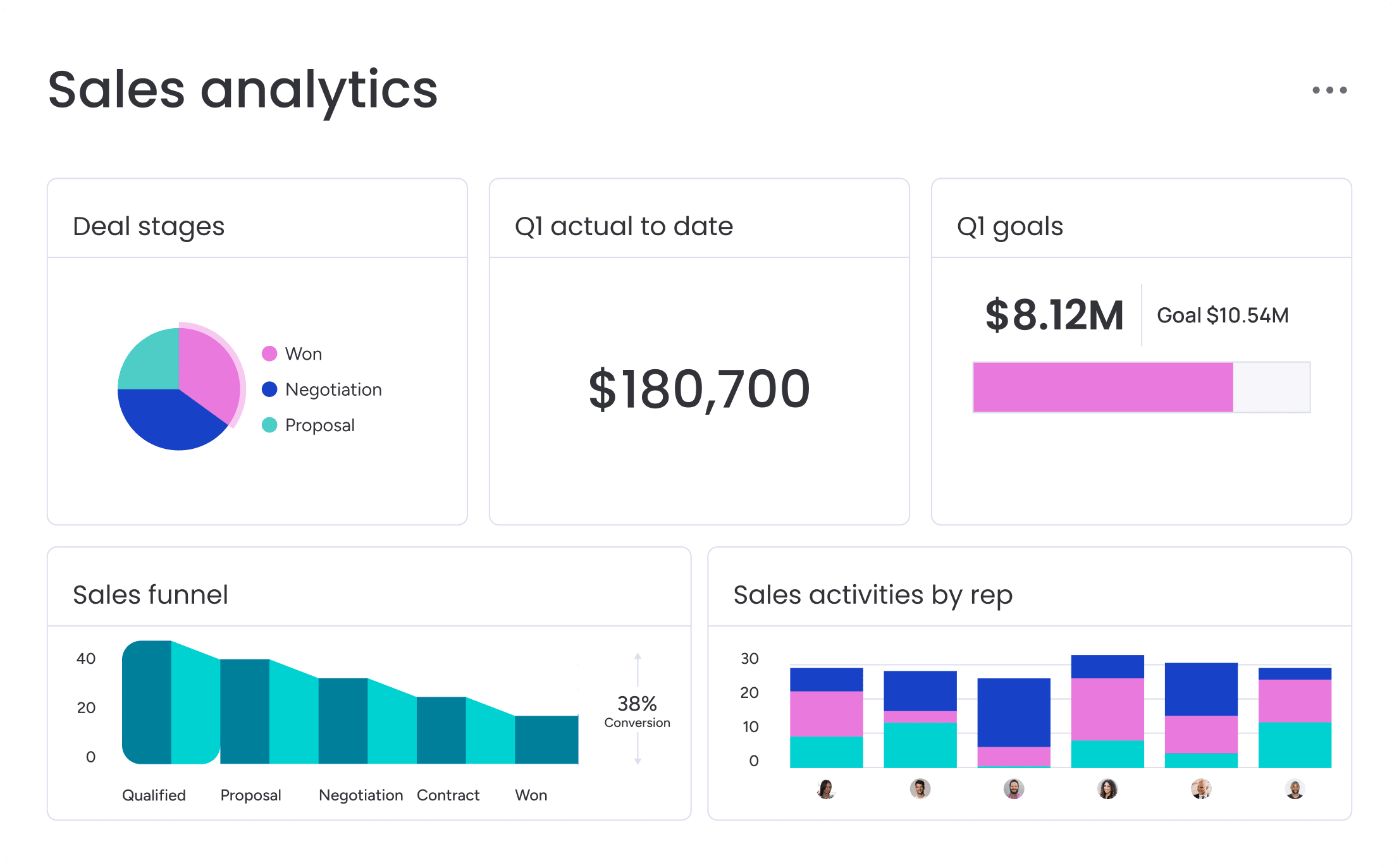
AI connects directly to the metrics revenue leaders care about most: conversion rates, pipeline velocity, forecast accuracy, and revenue per rep. The relationship between AI capabilities and revenue results isn’t theoretical. It’s measurable and immediate.
Revenue teams using AI see outcomes sales leadership actually cares about. AI spots high-intent buyers earlier by analyzing behavioral signals across every interaction. Website visits, content engagement, and email interactions show which prospects are most likely to convert. Reps focus on the prospects who matter instead of working through lists alphabetically.
| AI strategy | Revenue impact | How it works |
|---|---|---|
| Behavioral signal analysis | Higher conversion rates | AI identifies prospects showing buying intent based on engagement patterns |
| Dynamic personalization | Increased reply rates | AI tailors messaging to prospect context without manual customization |
| Predictive forecasting | More accurate revenue projections | AI analyzes deal characteristics and historical data to predict outcomes |
| Workflow automation | More selling time | AI handles administrative work so reps focus on high-value selling activities |
AI account outreach agents make outreach personalized at scale because AI tailors messaging based on prospect data, industry context, and past interactions. Every message feels relevant without hours of manual research. Pipeline outcomes become predictable. AI forecasting models analyze historical patterns, deal velocity, and external factors so leadership can trust their revenue projections.
A staggering 81% of sales leaders are considering replacing their CRM in the next year, according to the state of sales tech report from monday.com.
10 AI strategies to scale revenue faster
These are the most effective ways revenue teams are using AI right now. Each one works for any team size or industry. Some strategies focus on pipeline generation. Others on conversion and retention. Together, they create an AI-powered revenue system where every piece works together.
1. Prioritize the revenue workflows that drive the most pipeline

Not all revenue activities matter equally. Two hours on manual data entry contributes less to quota than 2 hours on discovery calls with qualified prospects. AI shows teams which workflows drive the most revenue, then automates or optimizes them first.
AI analyzes historical data to pinpoint bottlenecks: slow lead response times, deals stalling at specific stages, and handoffs that create gaps in communication. This shows where automation delivers the biggest ROI and keeps teams from investing in AI features that look impressive but don’t move revenue.
AI delivers immediate impact in these high-value workflows:
- Lead-to-opportunity conversion: AI scores and routes leads based on fit and intent signals, ensuring high-potential prospects reach the right rep within minutes
- Deal progression: AI flags at-risk deals based on engagement patterns and suggests next-best actions
- Customer expansion: AI identifies upsell opportunities based on usage patterns and contract milestones
- Renewal management: AI monitors account health indicators and triggers proactive outreach
Teams using monday CRM can map revenue workflows visually and apply AI to the highest-impact stages. No technical expertise needed. The platform shows bottlenecks and recommends where automation delivers the most value.
Learn more: AI account health agent
2. Detect real buying intent using AI-driven behavioral signals
Traditional lead scoring uses static criteria like job title, company size, and industry. Those show fit, not timing. A VP of Sales at a 500-person company might be a perfect fit, but if they just locked into a 3-year contract elsewhere, they’re not buying anytime soon.
AI analyzes behavioral signals that show real buying intent. These signals show which prospects are actively evaluating solutions, not just those who look good on paper.
Buying signals AI can detect include:
- Content engagement: Repeated visits to high-intent pages like pricing and case studies
- Email behavior: Opens and clicks on bottom-of-funnel content
- Social signals: Engagement with company posts or job changes
- Competitor research: Searches related to alternative solutions
monday CRM shows buying signals directly within deal records, so reps see intent data without leaving their workflow. Context shows up where decisions happen, not in a separate dashboard.
3. Automate lead scoring and routing to eliminate rep bias and delays
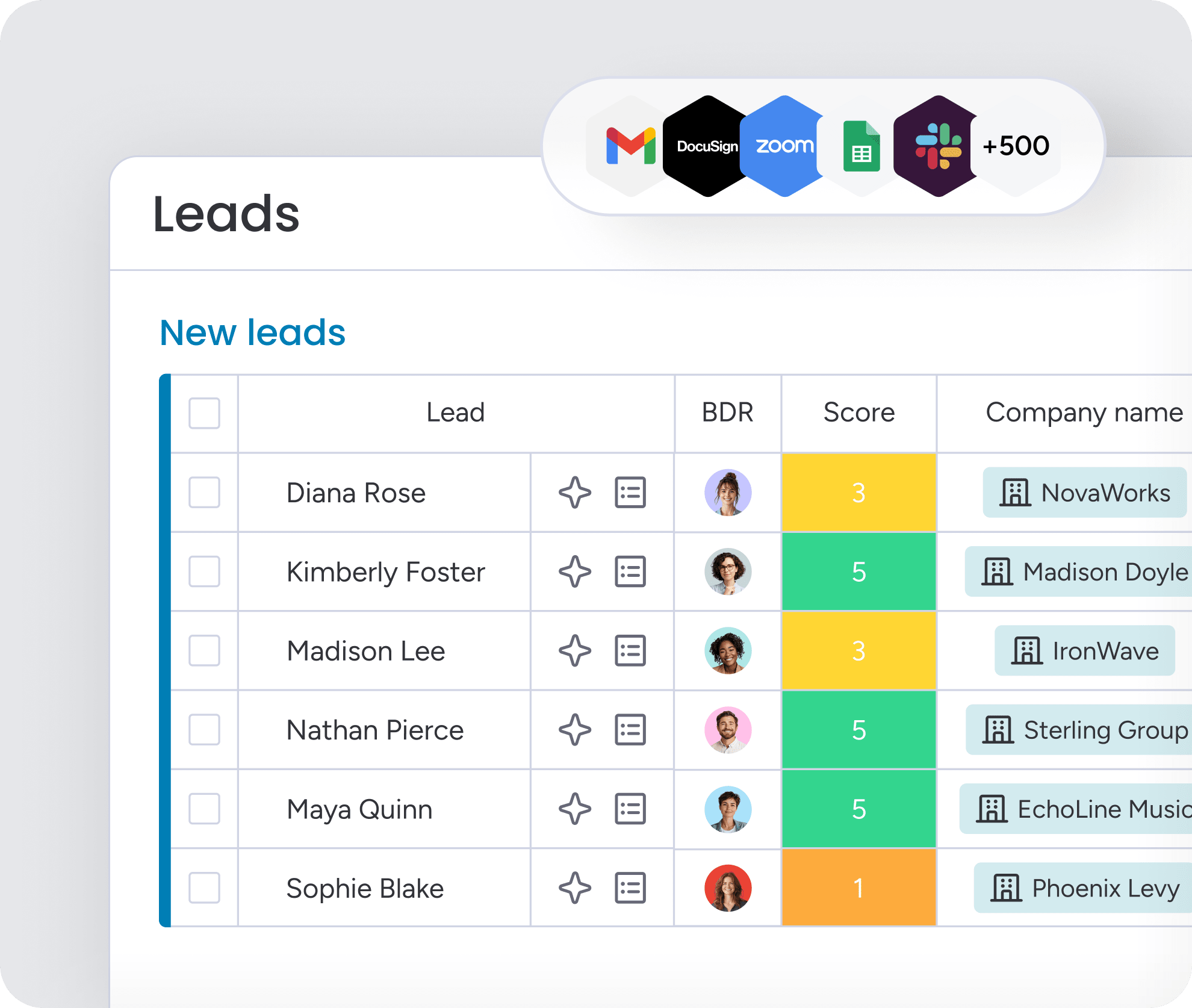
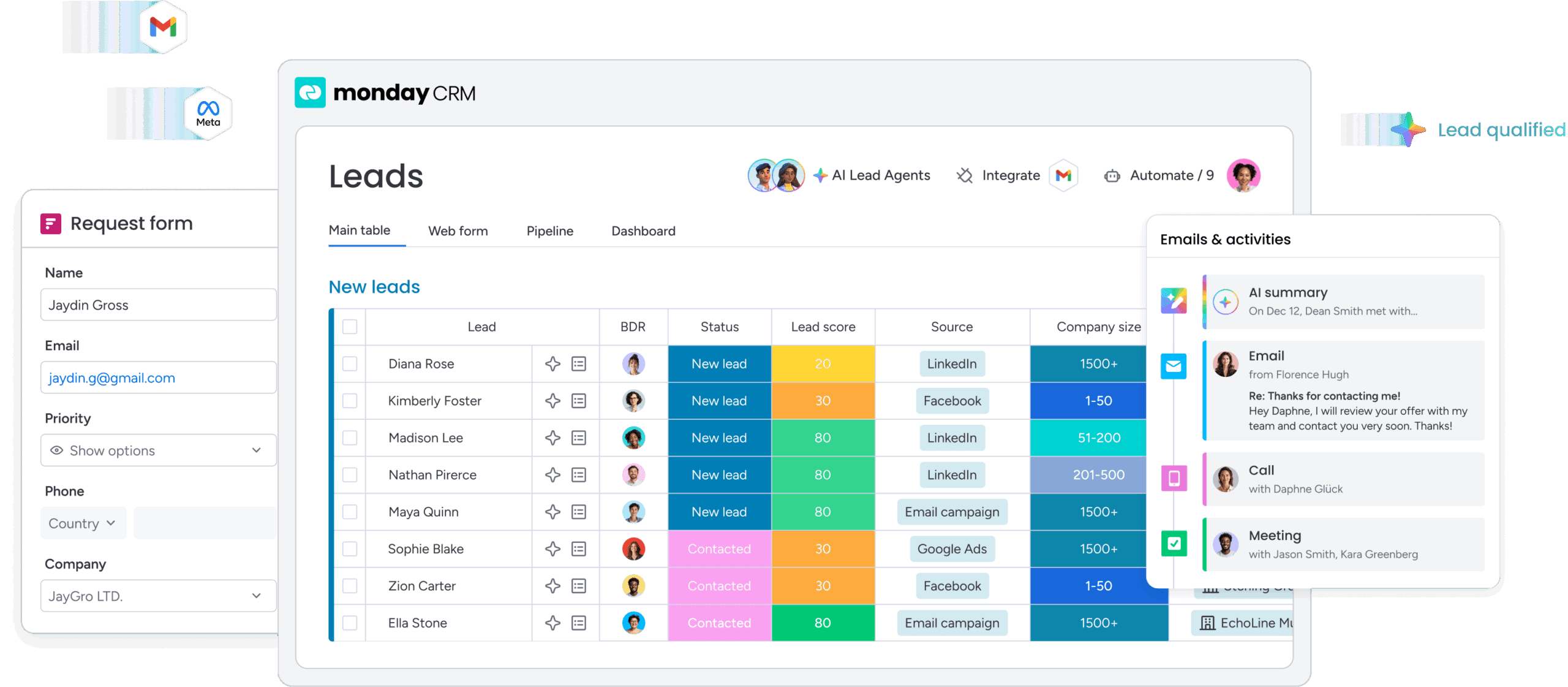
Manual lead scoring is slow, inconsistent, and biased. One rep might prioritize a lead just because the company name sounds familiar. Another might ignore the same lead because they’re busy with existing deals. AI lead management automates lead scoring by analyzing dozens of data points and assigns scores in real time.
AI-powered routing sends high-priority leads to the right rep immediately, based on territory, expertise, or availability. Contacting a lead in 5 minutes versus 2 hours can make the difference between winning and losing the deal.
| Scoring criteria | What AI evaluates | Impact on routing |
|---|---|---|
| Fit signals | Company size, industry, revenue, tech stack | Determines qualification threshold |
| Intent signals | Website visits, content downloads, email engagement | Prioritizes leads showing buying behavior |
| Timing signals | Recent funding, leadership changes, seasonal patterns | Identifies optimal outreach windows |
| Historical patterns | Conversion rates for similar profiles | Predicts likelihood of success |
4. Personalize outreach at scale across marketing and sales
Generic outreach gets deleted. The average B2B buyer gets dozens of sales emails every day. Anything that feels templated gets deleted instantly. AI lets revenue teams personalize messaging by analyzing prospect data and tailoring emails, ads, and sales sequences to match.
AI personalization goes way beyond inserting a first name. It recommends messaging angles based on the prospect’s industry challenges, suggests case studies from similar companies, and adjusts tone based on engagement history.
monday CRM’s AI generates personalized email drafts based on deal context, saving reps time while keeping messages relevant enough to get responses.
5. Get real-time pipeline visibility with AI-powered CRM insights
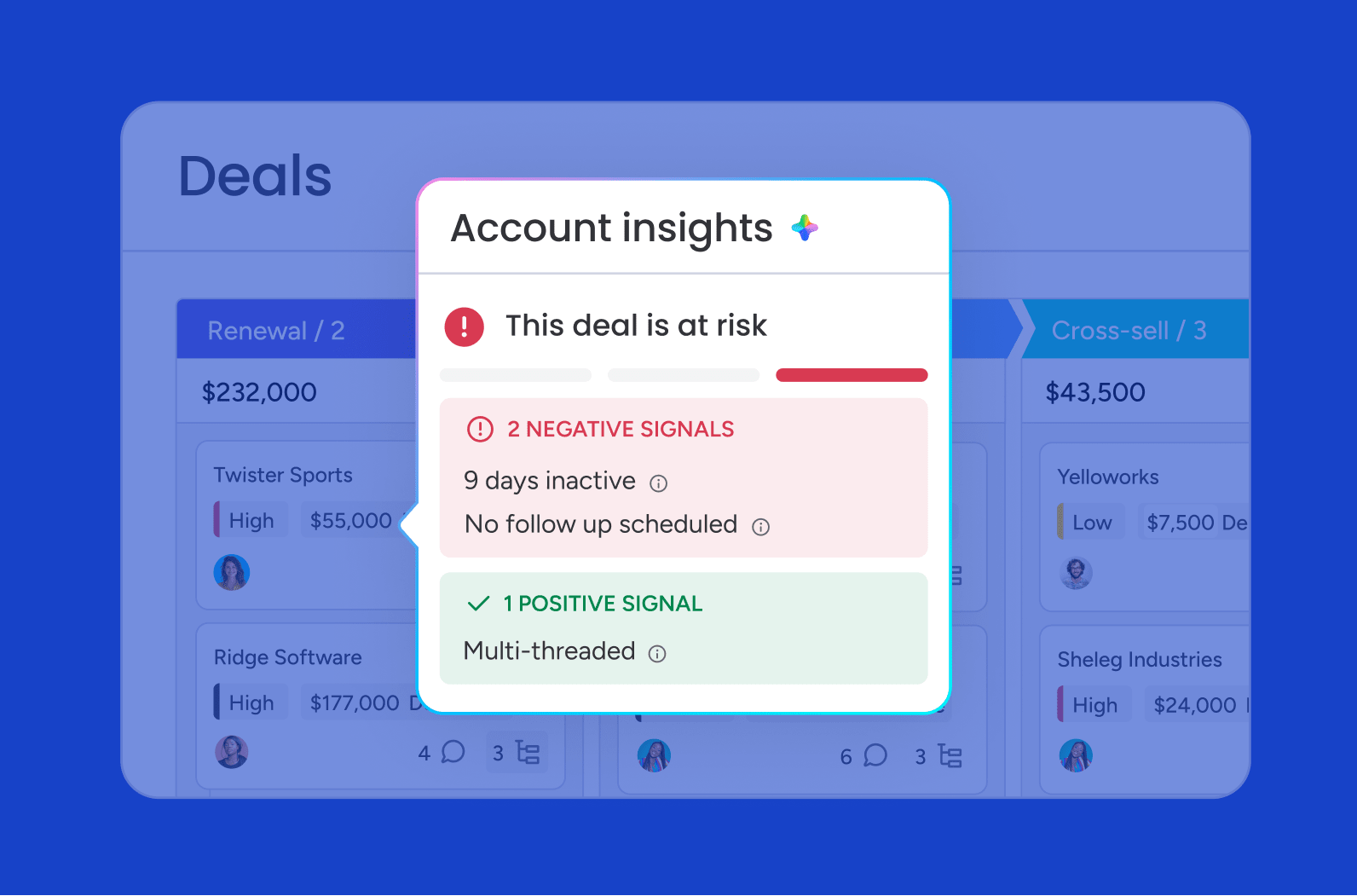
Revenue leaders need to see pipeline health in real time to make smart decisions. Traditional reporting relies on reps updating CRM records accurately and consistently, which rarely happens when they’re focused on closing deals. AI-powered CRMs analyze pipeline data continuously, surfacing insights that manual reporting misses.
AI deal flow management identifies patterns in deal progression that humans overlook: deals that stall at specific stages, industries with longer sales cycles, and engagement patterns that predict wins or losses. This gives revenue leaders confidence in their forecasts and allows them to intervene early when deals show warning signs.
AI-driven pipeline insights include:
- Deal velocity: Movement through pipeline stages becomes visible in real time, with automatic flags for slowdowns
- Risk detection: Deals with low engagement or missing stakeholders surface before they slip
- Win probability: Historical patterns inform likelihood of close for every opportunity
- Revenue forecasting: Pipeline data aggregates automatically to project monthly and quarterly revenue
6. Replace gut-feel forecasting with predictive analytics
Traditional forecasting relies on rep intuition and static spreadsheets. Reps estimate deal close dates based on gut feeling, managers apply arbitrary discounts to account for optimism, and leadership receives projections that miss actual results by significant margins. AI predictive analytics analyze historical data, deal characteristics, and external factors to generate accurate revenue forecasts.
AI continuously updates forecasts as new data arrives. When a deal’s engagement drops or a competitor enters the picture, AI adjusts the forecast automatically. This reduces surprises and enables proactive planning.
Teams discover that monday CRM’s AI forecasting capabilities integrate directly into dashboards, providing real-time revenue projections without requiring manual data entry or spreadsheet manipulation.
7. Automate follow-ups and team handoffs so no deal falls through the cracks
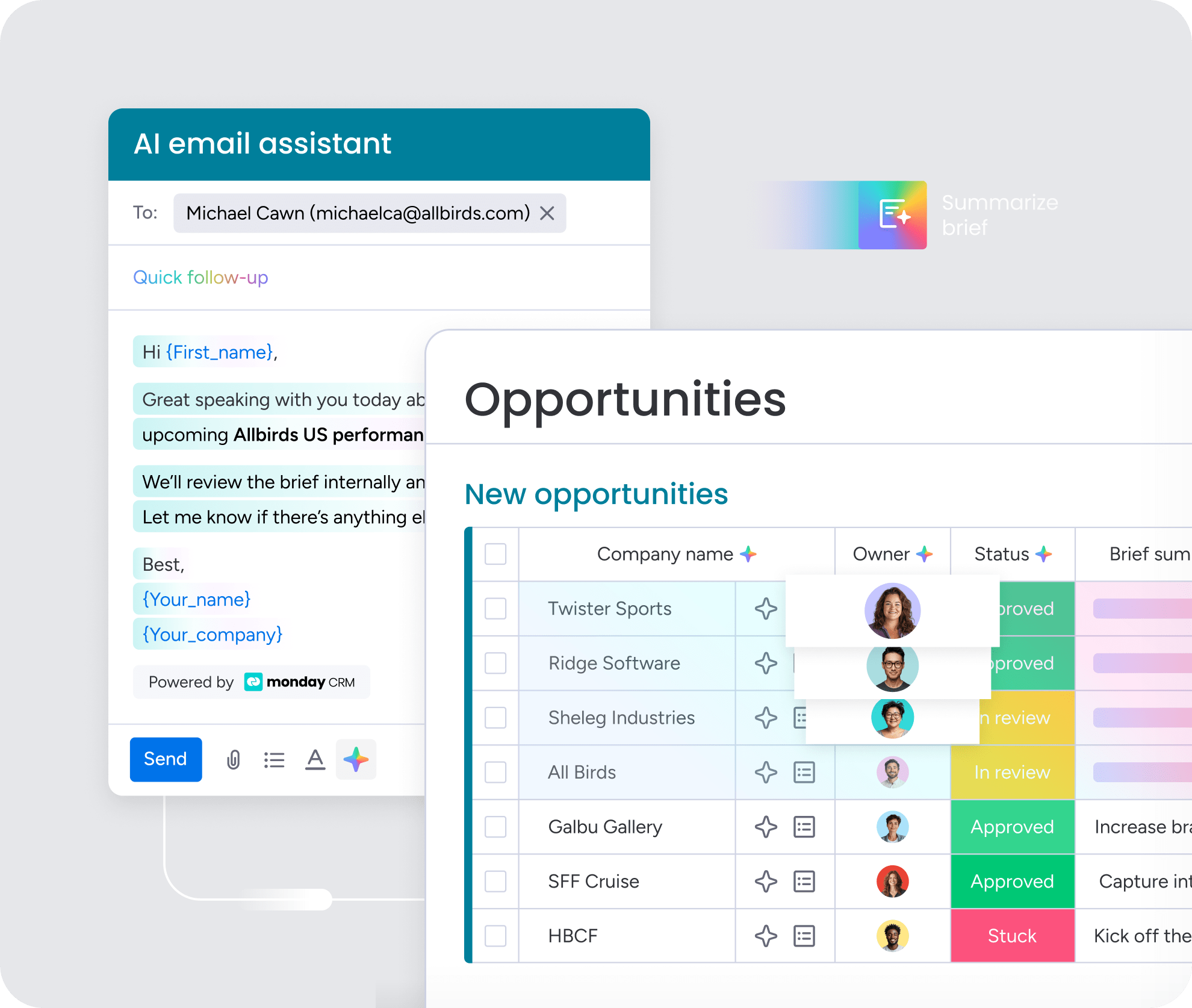
Manual follow-ups and handoffs between teams create delays and missed opportunities. A lead that waits 3 days for sales follow-up after a marketing event has likely moved on. A customer whose onboarding gets delayed because sales didn’t notify customer success has a poor first impression.
AI automates these transitions, ensuring timely communication and seamless handoffs. Follow-up and handoff scenarios AI automates include:
- Post-meeting follow-ups: Sends recap emails and schedules next steps
- Lead-to-sales handoffs: Notifies reps when leads reach qualification thresholds
- Sales-to-success transitions: Triggers onboarding workflows when deals close
- Re-engagement sequences: Identifies dormant leads and initiates nurture campaigns
8. Use AI-generated summaries and coaching signals to develop reps faster
Sales enablement isn’t just about training. It’s about providing reps with real-time guidance, feedback, and insights that improve performance on every call. AI sales enablement strengthens enablement by analyzing call recordings, summarizing meetings, and offering coaching recommendations based on what actually works.
AI transcribes sales calls, identifies successful talk tracks, and flags areas for improvement. AI-generated meeting summaries ensure reps capture key details without manual note-taking, allowing them to focus on the conversation.
Organizations using monday CRM benefit from AI capabilities that generate meeting summaries and surface coaching insights directly within deal records, keeping enablement resources where reps work.
9. Deploy AI agents to handle multi-step revenue workflows autonomously
Agentic AI in sales represents the next evolution beyond simple automation. Unlike rules-based automation that follows predetermined paths, AI agents execute multi-step workflows autonomously, making decisions, adapting to context, and handling complex processes end-to-end.
AI agents can manage tasks like lead qualification, deal progression, and customer onboarding without human intervention at every step. An agent evaluates lead fit, sends personalized outreach, schedules discovery calls, and updates the CRM. It escalates to humans only when judgment is required.
Multi-step workflows AI agents can execute:
- Lead qualification: Evaluates fit, sends outreach, schedules meetings, and updates records
- Deal progression: Monitors engagement, sends follow-ups, flags risks, and suggests next steps
- Customer onboarding: Coordinates tasks across teams and tracks completion
- Renewal management: Identifies at-risk accounts and surfaces expansion opportunities
10. Build custom revenue apps without writing a single line of code
Every revenue team has unique workflows, and off-the-shelf tools often require workarounds. Commission structures vary by company, territory assignments follow different logic, and pipeline stages reflect specific sales processes. No-code AI app builders enable revenue teams to create custom applications tailored to their specific needs.
No-code platforms use AI to translate natural language prompts into functional apps. A sales operations manager can describe what they need and AI builds it — no IT tickets, no development sprints, no waiting.
Teams leverage monday vibe to build custom apps using simple prompts, integrating directly with CRM data and workflows without requiring technical expertise.
Try monday CRM5 steps to implement revenue scaling with AI
Implementing AI for revenue scaling requires a structured approach. These steps provide a roadmap for revenue leaders to adopt AI strategically, ensuring alignment with business goals and measurable outcomes. Getting the sequence right matters — teams that start with metrics before tools see faster, more consistent results.
Step 1: Define your revenue metrics before choosing AI features
AI adoption should start with revenue goals, not technology exploration. Revenue leaders must define which metrics matter most before selecting AI tools. Starting with metrics ensures AI investments align with business priorities rather than chasing features that don’t move the needle.
Focus on pipeline velocity (time from lead to closed deal), win rate (percentage of opportunities that convert), forecast accuracy (variance between projected and actual revenue), and lead response time (speed of initial outreach to qualified leads).
Step 2: Map the full customer journey from lead to renewal
AI delivers the most value when applied to the full customer lifecycle, not isolated stages. Revenue teams should map the entire journey to identify where AI can eliminate friction and where manual handoffs create the most risk. Look at lead generation, where AI identifies high-intent prospects and prioritizes outreach.
Then sales engagement, where AI personalizes messaging and automates follow-ups. During onboarding, AI coordinates tasks across teams and tracks progress. Finally, at expansion and renewal, AI identifies upsell opportunities and flags at-risk accounts.
Step 3: Connect customer data across all revenue teams
AI requires unified data to deliver accurate insights. Siloed data limits AI’s effectiveness — a lead scoring model that can’t see marketing engagement data produces incomplete scores. Connecting data sources gives AI the full picture it needs to surface reliable recommendations.
Data sources teams should connect:
- Marketing automation: Campaign engagement and lead scoring data
- CRM: Deal stages, contact information, and sales activity
- Customer success: Onboarding progress and support tickets
- Product analytics: Feature adoption and user behavior
Revenue teams achieve better results when monday CRM centralizes customer data across marketing, sales, and customer success, enabling AI to operate with full context across the revenue lifecycle.
Step 4: Launch AI workflows with human review before full automation
AI adoption should start with human-AI collaboration to ensure accuracy and build trust. Revenue teams should implement AI workflows in review mode, where AI suggests actions but humans approve before execution. This builds confidence in AI outputs.
Start with lead scoring and routing, where reps validate AI scores before leads are assigned. Have sales managers review AI-generated email drafts. Let revenue leaders approve AI-recommended forecast changes. Make sure managers review AI-flagged at-risk deals before taking action.
Step 5: Refine AI workflows continuously using team feedback
AI models improve over time with continuous feedback. Revenue teams should establish feedback loops where reps, managers, and operations teams share insights on AI performance. Without this input, models stagnate and accuracy drifts. Run regular rep surveys to check on AI tool usability and accuracy.
Analyze AI-driven outcomes against baseline metrics in performance reviews. Update AI algorithms periodically based on new data through model retraining. Create cross-team collaboration channels where sales, marketing, and operations share insights on what’s working and what needs adjustment.
6 ways to measure AI revenue optimization
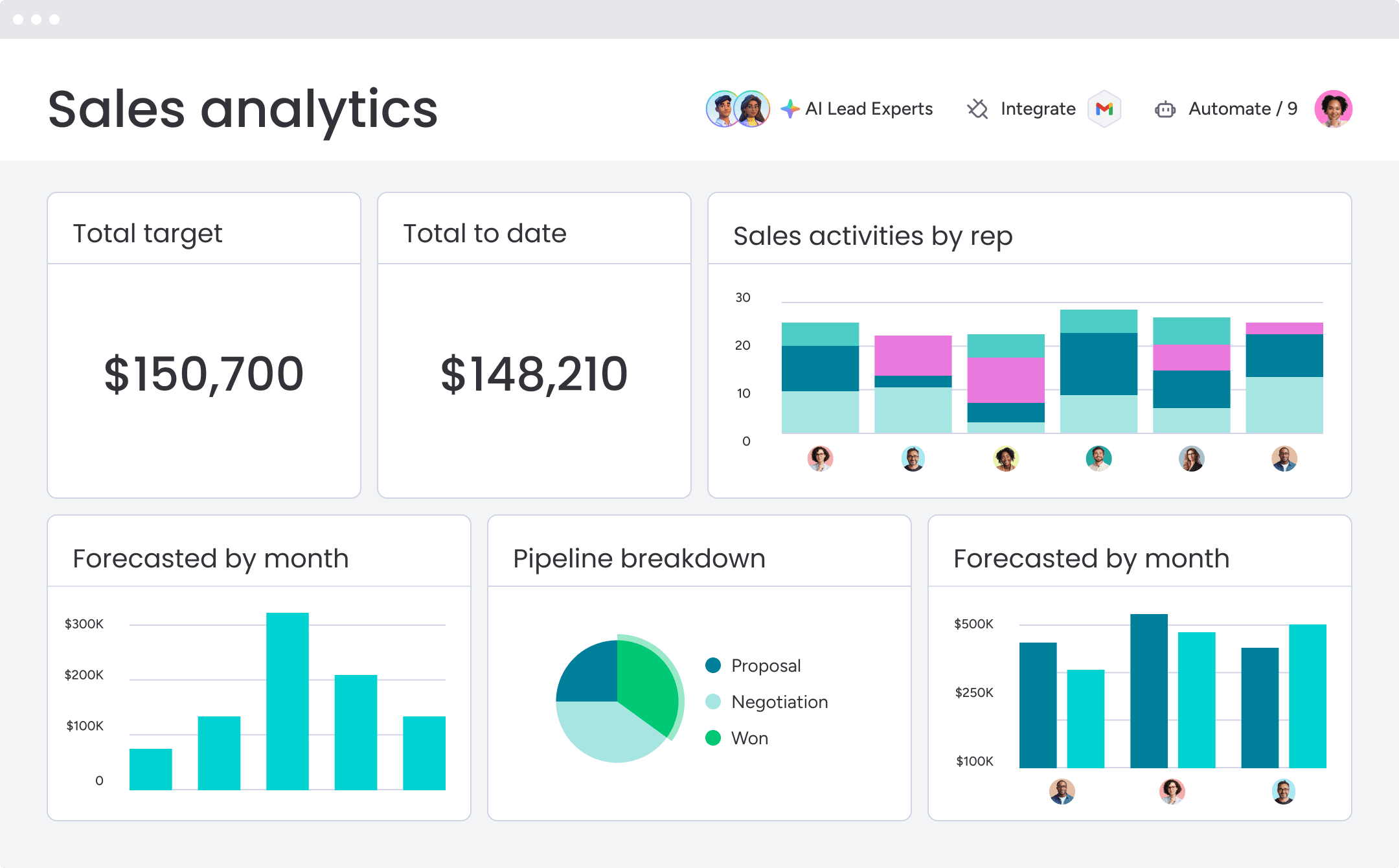
AI adoption must be measured against revenue outcomes, not just activity metrics. These 6 metrics give revenue leaders a concrete framework for evaluating whether AI is driving tangible business results — and where to course-correct if it isn’t.
- Pipeline velocity measures how quickly deals move from lead to close. The formula: (Number of opportunities × Average deal value × Win rate) ÷ Sales cycle length. AI accelerates velocity by automating follow-ups, prioritizing high-intent leads, and flagging stalled deals.
- Win rate measures the percentage of opportunities that convert to closed deals. AI improves win rates by prioritizing high-fit leads, personalizing outreach, and providing reps with real-time coaching insights.
- Forecast accuracy measures how closely projected revenue matches actual results. AI improves accuracy by analyzing deal characteristics, engagement signals, and historical patterns to generate data-driven forecasts.
- Lead response time measures how quickly sales teams follow up with new leads. AI reduces response time by automating lead routing, triggering instant notifications, and sending initial outreach emails.
- Revenue per rep measures individual productivity. AI increases revenue per rep by automating administrative tasks, improving lead quality, and providing real-time coaching.
- Customer retention and expansion measure how well teams keep existing customers and grow account value. AI improves retention by identifying at-risk accounts early and surfaces upsell opportunities based on usage patterns.
Best practices for AI adoption on revenue teams
AI adoption isn’t just about technology. It’s about people, processes, and change management. These practices help revenue teams embrace AI tools, build confidence, and drive sustained usage — because the best AI strategy fails if the team doesn’t actually use it.
Keep AI embedded inside the CRM so reps never have to context-switch
AI tools that require context-switching face low adoption. Reps already have too many tabs open. Revenue teams need AI embedded directly into their CRM, where they already spend their time.
Organizations find that monday CRM embeds AI capabilities directly into boards, dashboards, and deal records, ensuring reps access AI without switching tools or breaking their workflow.
Train teams using real revenue scenarios, not abstract feature demos
Generic AI training doesn’t resonate with revenue teams. Reps care about hitting quota, not about AI capabilities in the abstract. Effective training uses real revenue scenarios that connect AI features to daily challenges.
Training scenarios that drive adoption:
- Lead qualification: Demonstrating how AI scores leads using actual pipeline data
- Deal progression: Showing how AI flags risks using real deals from the team
- Forecast accuracy: Explaining how AI analyzes pipeline data with examples from recent quarters
Give managers AI-generated coaching signals they can act on immediately
AI adoption accelerates when managers use AI to coach their teams. AI-generated insights give managers actionable coaching signals they couldn’t access before — specific call patterns, engagement gaps, and deal risks tied to individual rep performance.
Set clear permissions and review gates for customer-facing AI
Revenue teams need guardrails around customer-facing AI to ensure quality and brand consistency. Teams can configure AI to operate in review mode for customer-facing tasks, where AI drafts content but humans approve before sending.
Review AI outputs on high-stakes decisions before acting
AI excels at data analysis and pattern recognition but lacks human judgment. Revenue teams should review AI outputs for high-stakes decisions — large deals, strategic accounts, and forecast commitments — to ensure accuracy and appropriate context.
Learn more: AI adoption strategy
Turn strategy into consistent results by scaling revenue with AI
AI-powered revenue strategies offer an advantage for teams willing to act on it. The strategies, steps, and metrics in this article give revenue leaders a practical path from AI curiosity to AI-driven results, without overhauling existing workflows or waiting on IT. The teams seeing the biggest gains aren’t the ones with the most sophisticated tech stacks — they’re the ones who identified their highest-impact workflows, connected their data, and gave reps AI tools that fit naturally into how they already work.
If you’re ready to put these strategies into practice, monday CRM gives revenue teams a single place to manage pipeline, automate follow-ups, surface buying signals, and forecast with confidence. Try monday CRM and see how AI fits into the way your team already sells.
Try monday CRMFAQs
Which AI strategies have the biggest impact on revenue growth first?
AI strategies that automate lead scoring, routing, and follow-ups typically deliver the fastest revenue impact because they reduce response time and ensure high-intent prospects receive immediate attention.
How can AI improve lead qualification and routing?
AI improves lead qualification by analyzing fit signals, intent signals, and historical conversion patterns to score leads in real time, then automatically routes high-priority leads to the right rep based on territory, expertise, or availability.
What AI workflows should revenue teams automate first for quick ROI?
Revenue teams should automate lead-to-opportunity conversion, post-meeting follow-ups, and sales-to-success handoffs first because these workflows directly impact pipeline velocity and deal progression.
How do you use AI inside a CRM to scale personalized outreach?
AI inside a CRM analyzes prospect data, engagement history, and industry context to generate personalized email drafts, recommend relevant content, and optimize send timing without manual research.
How can leaders measure whether AI is improving forecast accuracy?
Leaders measure AI's impact on forecast accuracy by tracking forecast variance prediction accuracy over time, monitoring pipeline confidence scores, and analyzing how consistently AI projections align with actual revenue across multiple quarters.
How can AI help with post-sale revenue like renewals and expansion?
AI helps with post-sale revenue by monitoring account health indicators, identifying upsell opportunities based on usage patterns, and triggering proactive outreach before churn risks materialize.
