


Choosing a CRM looks simple on paper. Then you start comparing features, pricing tiers, and implementation timelines, and realize it’s anything but. Two platforms dominate most shortlists: Zoho CRM and Salesforce. The Zoho CRM vs Salesforce debate usually comes down to a few honest trade-offs: Zoho CRM is faster to deploy, easier on the budget, and accessible, while Salesforce goes deeper on customization, AI, and enterprise-grade complexity.
In this article, we’ll cover pricing, core features, AI and automation, reporting, customization, and what adoption actually looks like for both platforms. You’ll also see where each platform fits best so you can decide based on real requirements, not just feature lists. As you evaluate your options, you’ll also find context for how modern, flexible platforms like monday CRM are filling the gap between lightweight tools and legacy systems.
Key takeaways
- Salesforce costs far more than its list price: Factor in admin fees, add-ons, and implementation, mid-market teams often spend $50K–$150K annually just on Salesforce administration.
- Zoho CRM wins on speed and affordability for smaller teams: Small businesses can deploy Zoho CRM in days without consultants, while Salesforce typically takes 8–16 weeks with outside help.
- The CRM your team ignores is money wasted: Salesforce’s complexity drives low adoption; more intuitive interfaces like monday CRM lead to more consistent data entry and fewer deals falling through the cracks.
- Flexible CRMs fill the gap between lightweight and legacy: Teams that need fast setup, visual pipelines, and built-in email sequences can get it all without the admin overhead of traditional platforms.
- Hidden costs decide the real winner: Salesforce’s CPQ, Marketing Cloud, and support plans can 2–3x your total spend, so it’s essential to always calculate total cost of ownership, not just per-seat pricing.Try monday CRM
Zoho CRM vs Salesforce at a glance
Your choice between Zoho CRM and Salesforce comes down to three things: budget, team size, and how much customization you can actually handle. Here’s how they stack up on what matters most:
| Feature | Zoho CRM | Salesforce |
|---|---|---|
| Starting price | $14/user/month | $25/user/month |
| Implementation complexity | Low to moderate | High |
| Ideal company size | SMB to mid-market | Mid-market to enterprise |
| Customization depth | Moderate | Extensive |
| Learning curve | 1–2 weeks | 2–4+ weeks |
Quick verdict for small businesses
For small businesses with tight budgets and no IT team, Zoho CRM is the clear winner here. A 20-person sales team can deploy Zoho CRM in days without consultants, while Salesforce typically requires professional services even for basic configurations.
Zoho’s transparent tier pricing at the Professional level ($23/user/month) delivers immediate value without surprise costs. Email integration, workflow automation, and mobile access are all included from day one.
For even faster adoption, small businesses shoul opt for platforms with visual, no-code workflows that require almost no training or prior CRM expertise.
Quick verdict for mid-market teams
Mid-market teams face a real choice here. Zoho CRM offers cost efficiency and reasonable feature depth for growing sales teams, while Salesforce provides more robust automation and ecosystem integrations at significantly higher cost and complexity.
Here’s what mid-market teams struggle with:
- Per-user cost pressure: Salesforce’s per-user pricing and admin overhead strain mid-market budgets quickly.
- Analytics limitations: Zoho CRM’s advanced analytics and AI gaps become apparent as data volume grows.
- Cross-functional alignment: Teams running marketing, sales, and post-sales need platforms that bring these workflows together without the months-long implementation grind.
Quick verdict for enterprise teams
Salesforce owns the enterprise CRM market for companies that need deep customization, tight governance, and the ability to extend the platform however they want. Zoho CRM works for enterprises willing to trade some features for major cost savings, especially for sales processes that aren’t overly complex.
- Salesforce suits: Multi-cloud strategies, complex compliance needs, and extensive legacy integrations, despite higher total cost of ownership.
- Alternatives appeal when: Organizations need rapid deployment, intuitive UX for high user adoption, and unified visibility across revenue operations without months-long implementations.
What is Zoho CRM?
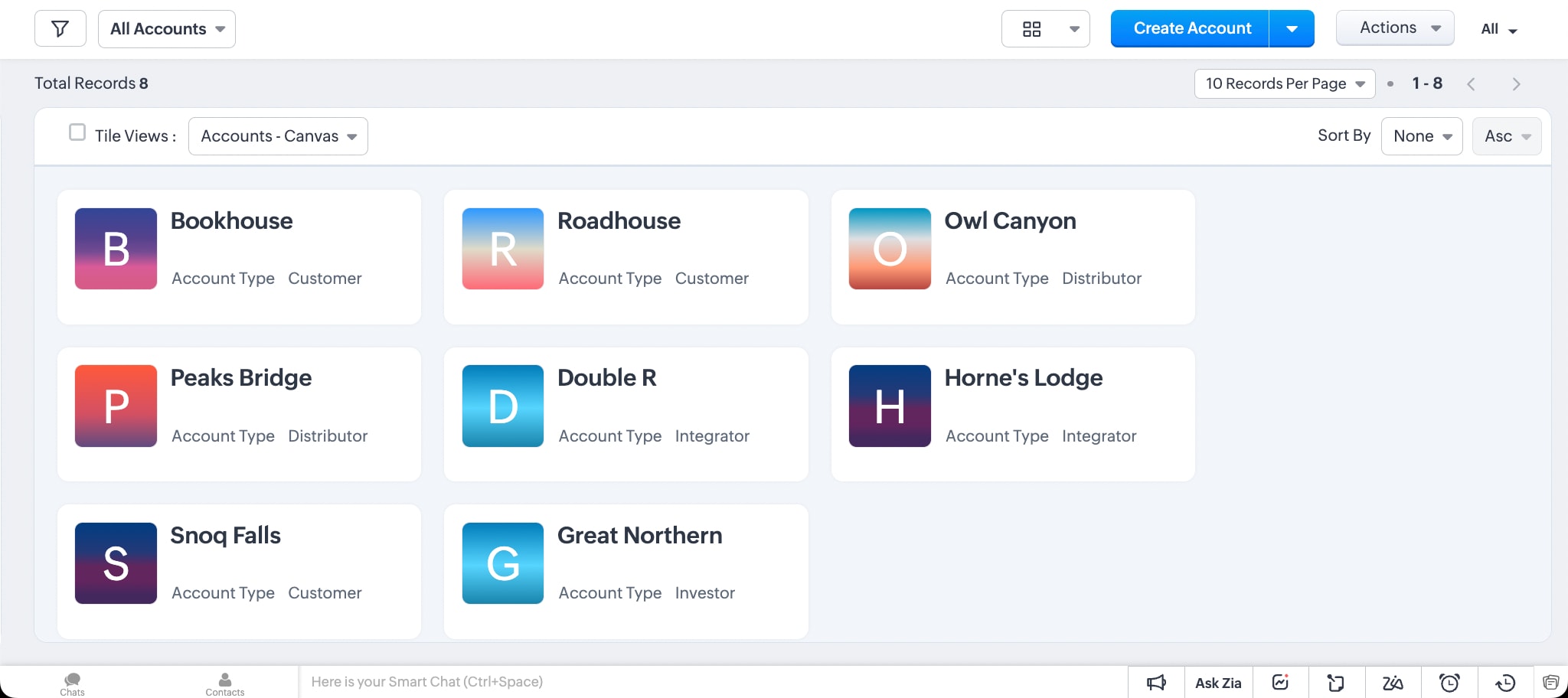
Zoho CRM is a cloud-based customer relationship management platform developed by Zoho Corporation, founded in 1996. Zoho CRM targets SMBs and mid-market companies with affordable pricing and solid features like contact management, pipeline tracking, and marketing automation.
Three things define Zoho CRM:
- Ecosystem depth: Integrates with over 45 Zoho applications (Zoho Mail, Zoho Books, Zoho Desk, and more), giving you connected data across business functions without third-party tools.
- Accessible AI: Includes AI assistant Zia and built-in calling at lower price tiers than competitors, so smaller teams get advanced features without enterprise budgets.
- Practical automation: Automates routine tasks and delivers insights without forcing you into enterprise pricing.
What is Salesforce?
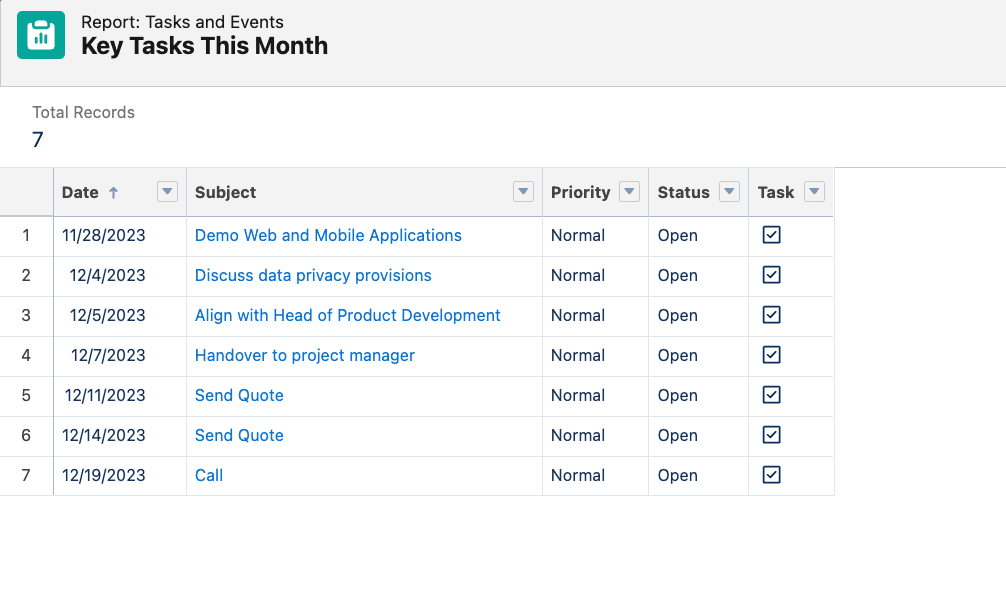
Salesforce is a dominant enterprise CRM platform, founded in 1999 as a pioneer of cloud-based software. It dominates the enterprise market with highly customizable, scalable solutions across sales, service, and marketing functions.
Here’s what defines Salesforce:
- Multi-cloud architecture: Sales Cloud, Service Cloud, Marketing Cloud, and Commerce Cloud each handle different business functions, letting enterprises build custom apps that go way beyond standard CRM.
- Extensive ecosystem: The AppExchange marketplace offers 7,000+ apps for deep extensibility.
- Enterprise AI: Einstein handles predictive analytics, lead scoring, and activity capture. The newer Agentforce runs autonomous AI agents, but both Einstein and Agentforce need serious investment and well-structured data to deliver real results.
Learn more: AI account sync agent
Zoho CRM versus Salesforce pricing
Zoho CRM is the budget-friendly option with transparent pricing. Salesforce costs more upfront, and also comes with serious hidden expenses. Total cost of ownership matters more than the ticket price. Here’s what you can actually expect to be paying.
Zoho CRM pricing tiers explained
Zoho CRM keeps pricing simple with five tiers and no surprise fees. Here’s what you get at each tier:
| Plan | Price (per user/month, billed annually) | Key features included |
|---|---|---|
| Free | $0 (up to 3 users) | Basic contact management, leads, documents |
| Standard | $14 | Scoring rules, workflows, multiple pipelines |
| Professional | $23 | Email integration, workflow automation, mobile access, inventory management |
| Enterprise | $40 | Zia AI, multi-user portals, custom modules, advanced customization |
| Ultimate | $52 | Advanced BI, enhanced storage, dedicated database cluster |
Which tier fits your team?
- Free: A genuine entry point for micro-businesses testing CRM adoption.
- Standard: Suits very small teams needing basic CRM functionality.
- Professional: The best deal for most small businesses with email integration, workflow automation, and mobile access included.
- Enterprise: Unlocks Zia AI capabilities and advanced customization.
- Ultimate: Adds enhanced analytics and storage for data-intensive operations.
Salesforce pricing tiers explained
Understanding Salesforce pricing requires a detailed review. Each tier includes some features and leaves out others you might assume are standard.
| Plan | Price (per user/month, billed annually) | Key features included |
|---|---|---|
| Starter | $25 | Basic sales and service features, limited customization |
| Professional | $100 | Full sales CRM, forecasting, quotes (no workflow automation) |
| Enterprise | $175 | Workflow automation, API access, advanced reporting |
| Unlimited | $350 | Premier support, sandbox, unlimited customization |
Before you budget, know this:
- Key differences in the Professional tier: This tier lacks advanced analytics and API access. Most organizations need Enterprise tier for meaningful insights and platform customization.
- Understanding feature-driven tier upgrades: Essential features often cost extra or require higher tiers, which can blow your budget fast.
License costs and add-ons
Add-ons and extras drive up total costs for both platforms — sometimes doubling what you expected to pay. Know these costs upfront so you don’t get blindsided later.
Zoho CRM add-ons:
- Advanced BI analytics: Zoho Analytics integration ($24–$455/month depending on users)
- Additional storage: $4/month per 5GB
- Premium integrations: Most included; some third-party connectors have fees
Salesforce add-ons:
- Revenue Cloud: Starting at $150/user/month
- Marketing Cloud: Starting at $1,250/month
- Additional sandboxes: $1,500–$3,000/month
The difference is huge. Zoho’s quote management is included in the Enterprise tier, while Salesforce Revenue Cloud starts at $150/user/month on top of CRM licenses. Need marketing automation? Salesforce makes you buy Marketing Cloud as an expensive add-on. Zoho CRM includes basic marketing automation at mid-tier pricing.
Support, training, and admin costs
Support, training, and admin costs often add up to more than the licenses themselves (especially with Salesforce). Factor these costs in before you commit.
Support costs:
- Zoho CRM: Email and phone support included at all tiers; premium support available at additional cost.
- Salesforce: Basic support included; Premier Success plans cost 20–30% of license fees.
Administration costs:
- Zoho CRM: Admin tasks are often handled by sales ops without external help; simpler configuration reduces ongoing maintenance.
- Salesforce: Typically requires a dedicated admin or consultant retainer; mid-market companies report spending $50K–$150K annually on Salesforce admin contractors.
Admin work piles up fast, and the burden only grows over time. Teams often find that visual, no-code interfaces reduce admin dependency, allowing business users to manage workflows directly without specialist support.
Zoho CRM vs Salesforce feature comparison
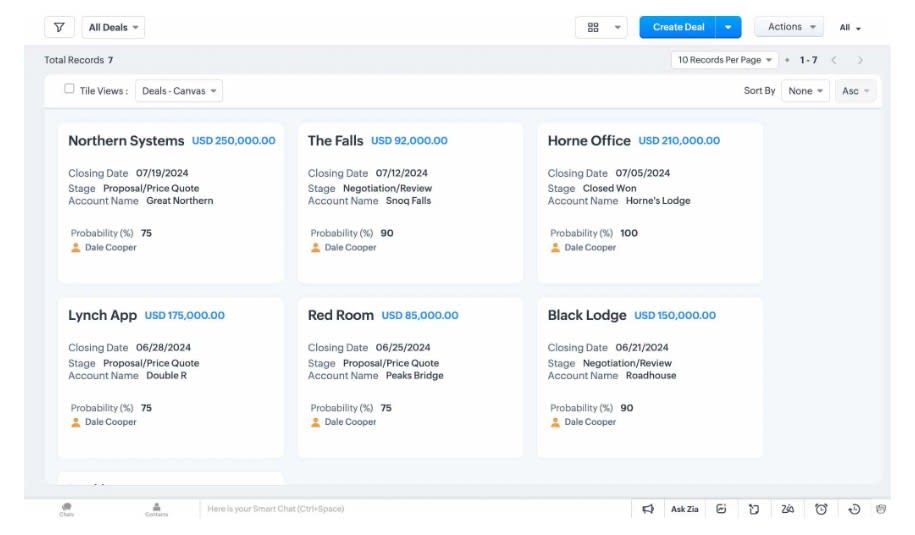
Both platforms cover CRM basics, but they differ in depth, usability, and what you get at each pricing tier. Here’s how the key features compare:
Lead and contact management compared
Both Zoho CRM and Salesforce provide custom fields, tagging, and list views for managing leads and contacts. Salesforce offers more granular customization and complex relationship mapping, including multi-level account hierarchies for enterprise organizational structures.
Zoho CRM lead management capabilities:
- Lead scoring: Zia AI-powered scoring included in Enterprise tier
- Contact segmentation: Custom fields, tags, and list views
- Deduplication: Built-in duplicate detection and merge capabilities
- Relationship mapping: Parent-child account relationships
Salesforce lead management capabilities:
- Lead scoring: Einstein Lead Scoring (requires additional licensing)
- Contact segmentation: Advanced filtering, dynamic lists, person accounts
- Deduplication: Duplicate management with matching rules
- Relationship mapping: Multi-level account hierarchies, contact roles, complex org structures
Teams seeking visual, customizable contact and lead boards with no-code flexibility often find platforms with an intuitive UX appealing, as they don’t require deep CRM expertise.
Sales pipeline management compared
Both platforms offer customizable pipelines and Kanban views for deal management. The real differences show up in forecasting and deal insights.
| Feature | Zoho CRM | Salesforce |
|---|---|---|
| Pipeline customization | Multiple pipelines, custom stages | Unlimited pipelines, complex stage logic |
| Visual pipeline views | Kanban, list, chart views | Kanban, path view, Lightning components |
| Forecast accuracy | Basic probability-based | Collaborative forecasting, territory management |
| Deal insights | Zia predictions (Enterprise) | Einstein Opportunity Insights (Enterprise+) |
Salesforce Enterprise tier includes customizable forecast categories and team-based forecasting, while Zoho CRM’s forecasting focuses on individual rep projections. Want pipeline visibility without CRM training? Visual boards with drag-and-drop and real-time updates get you there faster.
Email, calling, and customer communication compared
Zoho CRM includes built-in telephony and email at lower tiers, while Salesforce requires third-party integrations or higher-cost add-ons for calling capabilities. Here’s the breakdown:
| Feature | Zoho CRM | Salesforce |
|---|---|---|
| Custom dashboards | Drag-and-drop widgets | Lightning Dashboard Builder |
| Real-time refresh | Scheduled or manual | Real-time (Enterprise+) |
| Role-based filtering | Basic filtering | Dynamic dashboards by user role |
| Mobile dashboards | Included | Included with customization |
Zoho CRM communication features:
- Email integration: Gmail and Outlook sync at the Professional tier
- Email templates: Included at all paid tiers
- Click-to-call: Built-in PhoneBridge telephony
- Call logging: Automatic with PhoneBridge integration
Salesforce communication features:
- Email integration: Gmail and Outlook sync via Einstein Activity Capture (Enterprise tier)
- Email templates: Included, with advanced personalization at higher tiers
- Calling: Requires third-party integration (RingCentral, Aircall, Dialpad)
- Activity capture: Einstein auto-logs emails and meetings (Enterprise+)
Revenue teams get more done when email sequences and campaigns live right inside the CRM rather than jumping between tools. Send individual or mass emails with dynamic fields and templates, then track opens and clicks without leaving the platform.
Marketing and campaign management compared
Zoho CRM includes basic marketing automation at mid-tier plans, while Salesforce separates marketing into Marketing Cloud, which comes with a significant additional cost.
| Capability | Zoho CRM | Salesforce |
|---|---|---|
| Email campaigns | Included (Enterprise) | Marketing Cloud required |
| Landing pages | Included (Enterprise) | Marketing Cloud required |
| Lead nurturing | Workflow-based automation | Marketing Cloud |
| Web forms | Included (all tiers) | Web-to-Lead (included) |
Revenue teams that want sales and marketing in one place can skip the platform juggling act with integrated tools. This approach is a practical fit for teams that want consolidated workflows without the added cost of separate marketing platforms.
Zoho vs Salesforce AI and automation

AI and automation capabilities increasingly separate AI CRM platforms. Salesforce has invested heavily in AI with Einstein and Agentforce, while Zoho offers AI assistant Zia at lower price points. Here’s what you actually get:
What Zoho Zia AI does in practice
Zia is Zoho’s AI assistant (included in Enterprise and Ultimate tiers). Zia handles predictive lead scoring, spots anomalies, suggests workflows, responds to voice commands, and automates repetitive tasks.
Zia’s practical capabilities:
- Predictive scoring: Predicts deal win probability based on historical patterns
- Best time to contact: Suggests optimal outreach timing for each lead
- Anomaly detection: Alerts reps when metrics deviate from normal patterns
- Voice commands: Automates data entry via voice input
Zia flags at-risk deals based on activity patterns, but it doesn’t match Einstein’s predictive depth. SMBs get practical AI features without enterprise pricing.
What Salesforce Agentforce and Einstein deliver
Salesforce’s AI ecosystem includes Einstein AI for predictive analytics and Agentforce for autonomous AI agents. Together, they make up one of the most advanced AI systems in the CRM market. The price reflects that.
Einstein capabilities in practice:
- Opportunity scoring: Analyzes historical data to predict close likelihood
- Activity capture: Auto-logs emails and meetings to contact records
- Lead scoring: Prioritizes leads based on conversion probability
- Forecasting insights: AI-powered forecast adjustments
Einstein features vary by tier. Professional gets basic insights, Enterprise and Unlimited get advanced AI, and Agentforce costs extra. Einstein works best for enterprises with massive datasets. Smaller teams often struggle with the setup and tuning required.
Workflow automation and approvals compared
Both platforms automate workflows, but they differ in how powerful and accessible those tools are. Pick based on how much developer help your team can actually handle long-term.
Zoho CRM automation approach:
- Workflow rules: Trigger-based automation for common tasks
- Blueprint: Guided processes with mandatory fields and approvals
- Custom functions: Deluge scripting for advanced logic
Salesforce automation approach:
- Flow Builder: Visual automation with complex conditional logic
- Apex: Code-based automation for complex requirements
- Approval processes: Multi-step approval workflows
Salesforce Flow can orchestrate multi-step, cross-object processes with conditional logic. Zoho Blueprint guides reps through standardized sales processes with mandatory fields and approvals. Teams that want powerful automation without developers lean toward visual, no-code tools with lots of triggers and actions.
Reporting and forecasting: Zoho CRM vs Salesforce
Reporting and forecasting capabilities, much like sales analytics software, help sales leadership make confident, data-backed decisions. Salesforce and Zoho CRM differ in depth and usability here. The gap gets bigger at higher tiers.
Sales dashboards compared
Both platforms offer customizable dashboards, but Salesforce provides more advanced options at higher tiers. Here’s the breakdown:
Salesforce allows dashboard filtering by user role and real-time data refresh, while Zoho CRM dashboards update on schedule or manual refresh. Want executive visibility without BI tool complexity? Visual dashboards that pull data across boards get you there faster.
Forecasting capabilities compared
Salesforce offers advanced sales forecasting in Enterprise and Unlimited tiers. Zoho CRM provides basic forecasting at mid-tier plans. Here’s what you get:
Zoho CRM forecasting features:
- Individual and team quotas
- Pipeline-based projections
- Probability-weighted forecasts
Salesforce forecasting features:
- Customizable forecast categories
- Collaborative forecasting with manager adjustments
- Territory-based forecasting
- Forecast accuracy tracking over time
Custom forecast boards and visual pipelines let you slice data by month, rep, or whatever criteria matter to your team. Revenue leaders get accurate forecasts without rigid CRM structures locking them in.
Customization and integrations: Zoho CRM vs Salesforce
Customization and integrations decide whether a CRM actually fits your business processes and existing tools. Salesforce goes deeper on customization and has a bigger ecosystem. Zoho CRM offers strong customization that’s easier to manage. Pick based on how much flexibility you need and how much IT help you can actually sustain.
No-code customization options compared
Both platforms let business users customize without code. What matters is how much your team can do without pulling in developers.
Zoho CRM no-code options:
- Custom fields: All field types with validation rules
- Canvas: Visual layout designer for custom record views
- Custom modules: Create new data objects without code
Salesforce no-code options:
- Lightning App Builder: Drag-and-drop page design
- Custom objects: Create new data structures
- Record types: Different page layouts and picklist values per record type
Want to adapt your CRM without IT? Visual, no-code customization with boards, columns, and views that anyone can manage makes a real difference.
Native integrations compared
Both platforms integrate with common business tools, but what’s available and how deep those integrations go varies.
| Integration category | Zoho CRM | Salesforce |
|---|---|---|
| Email (Gmail, Outlook) | Professional tier | All tiers (Einstein Activity Capture in Enterprise) |
| Calendar | Included | Included |
| Accounting | Zoho Books, QuickBooks | QuickBooks, Xero (via AppExchange) |
| Support | Zoho Desk | Service Cloud (separate product) |
Salesforce integrations tend to be deeper and more mature. Zoho CRM connects tightly with other Zoho apps. Need quick connectivity without complex setup? Look for platforms with 200+ native integrations that are easy to configure.
Zoho vs Salesforce setup and team adoption
Setup complexity and user adoption decide whether your CRM investment actually delivers. Salesforce typically requires longer implementation and more training, while Zoho CRM deploys faster. Getting this right ensures you invest in a CRM your team will embrace, maximizing your return on investment.
Setup requirements and implementation timelines
Implementation timelines differ between platforms based on your organization’s size and complexity. Here’s what to expect:
| Scenario | Zoho CRM | Salesforce |
|---|---|---|
| Basic setup (small team) | 1–2 weeks | 4–8 weeks |
| Mid-market implementation | 2–4 weeks | 8–16 weeks |
| Enterprise deployment | 4–8 weeks | 3–6+ months |
A mid-market company can configure Zoho CRM in 2–4 weeks, while Salesforce typically takes 8–16 weeks with consultant support.
Sales rep adoption patterns
User adoption is tough, especially with complex CRMs. Know the adoption patterns so you pick a system reps will actually use (not just tolerate).
Here’s what drives adoption:
- Complex interfaces can reduce adoption: Reps may struggle with platforms that have a steep learning curve or require extensive data entry, which can impact adoption rates and data quality.
- Zoho CRM advantage: The simpler interface drives stronger adoption, so your CRM investment actually gets used.
- Interface familiarity matters: Visual, familiar interfaces similar to project management platforms drive higher adoption rates. Reps find intuitive systems easy to update on the go, directly addressing the sales drag caused by manual work and human error.
Which CRM is right for your revenue team?
Zoho CRM and Salesforce serve genuinely different needs, and the right choice comes down to where your team is today and where you’re headed. Zoho CRM wins on cost, speed, and accessibility for SMBs and growing mid-market teams. Salesforce wins on depth, extensibility, and enterprise-grade AI for organizations with the resources to match.
That said, teams comparing Salesforce alternatives may decide neither platform is the only option worth considering. Revenue teams weighing monday CRM vs Zoho CRM often find that monday CRM fits the gap for fast deployment, visual pipeline management, and unified sales and marketing execution without the admin overhead of legacy CRMs. It’s built for teams who want to move quickly, stay aligned, and spend less time managing their CRM and more time closing deals.
Compare more: Sugar CRM vs Salesforce
monday CRM: A flexible alternative to Zoho and Salesforce
If you’re weighing Zoho CRM vs Salesforce, there’s a third option worth considering: monday CRM. Built for teams that want powerful CRM capabilities without the complexity of legacy platforms, monday CRM delivers visual pipeline management, built-in automation, and intuitive workflows that require almost no training.
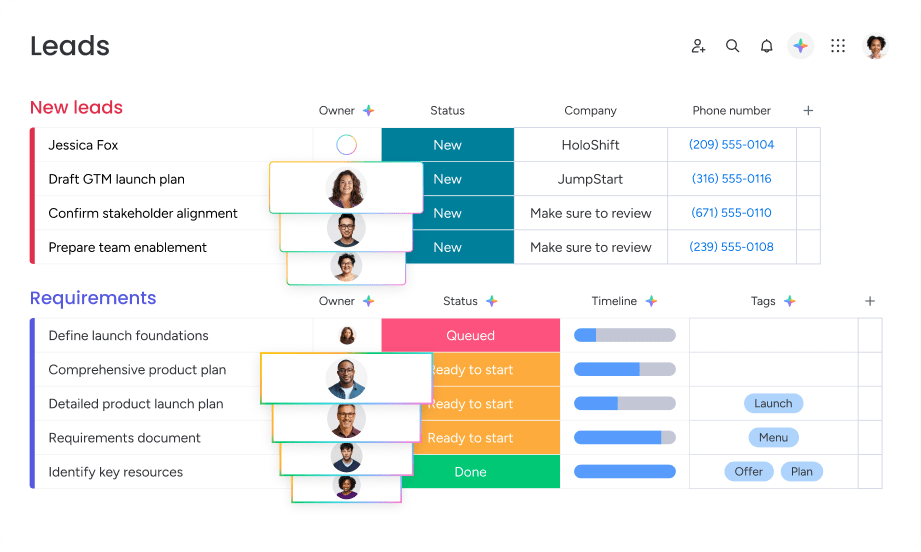
monday CRM fits the gap between lightweight tools and enterprise systems. You get fast deployment (often in days, not months), no-code customization that business users can manage themselves, and unified visibility across sales, marketing, and post-sales without the admin overhead that comes with traditional CRMs.
How monday CRM compares to Zoho and Salesforce
| Feature | monday CRM | Zoho CRM | Salesforce |
|---|---|---|---|
| Starting price | $12/user/month | $14/user/month | $25/user/month |
| Implementation time | Days to 1–2 weeks | 1–4 weeks | 8 weeks to 6+ months |
| Learning curve | Minimal (hours to days) | 1–2 weeks | 2–4+ weeks |
| Visual pipeline management | Drag-and-drop boards, multiple views | Kanban, list, chart views | Kanban, path view, Lightning components |
| Email integration | Gmail and Outlook (all tiers) | Professional tier and above | All tiers (advanced features in Enterprise) |
| Built-in automation | No-code automation (all tiers) | Workflow rules (Standard+) | Flow Builder (Enterprise+) |
| AI capabilities | AI-powered email generation, activity suggestions | Zia AI (Enterprise tier) | Einstein AI (varies by tier, additional costs) |
| Customization approach | Visual, no-code for business users | Canvas designer, custom modules | Lightning App Builder, Apex code |
| Native integrations | 200+ apps | 45+ Zoho apps, select third-party | 7,000+ via AppExchange |
| Admin requirements | Minimal (business users manage) | Low to moderate | High (often requires dedicated admin) |
Why teams choose monday CRM
Revenue teams choose monday CRM when they need:
- Fast deployment without consultants: Get up and running in days with intuitive setup that doesn’t require IT support or external implementation partners.
- Visual workflows everyone understands: Drag-and-drop boards, customizable views, and real-time updates make it easy for reps to see what needs attention and take action immediately.
- Built-in email sequences and campaigns: Send personalized emails, track engagement, and automate follow-ups directly from the CRM without jumping between tools or paying for separate marketing platforms.
- No-code automation that business users control: Build workflows, set triggers, and automate repetitive tasks without writing code or waiting for developers.
- Unified sales and marketing execution: Manage leads, deals, campaigns, and post-sales activities in one platform with full visibility across the revenue team.
- Transparent pricing with no hidden costs: What you see is what you pay — no surprise fees for essential features, add-ons, or support.
AI that’s accessible and practical
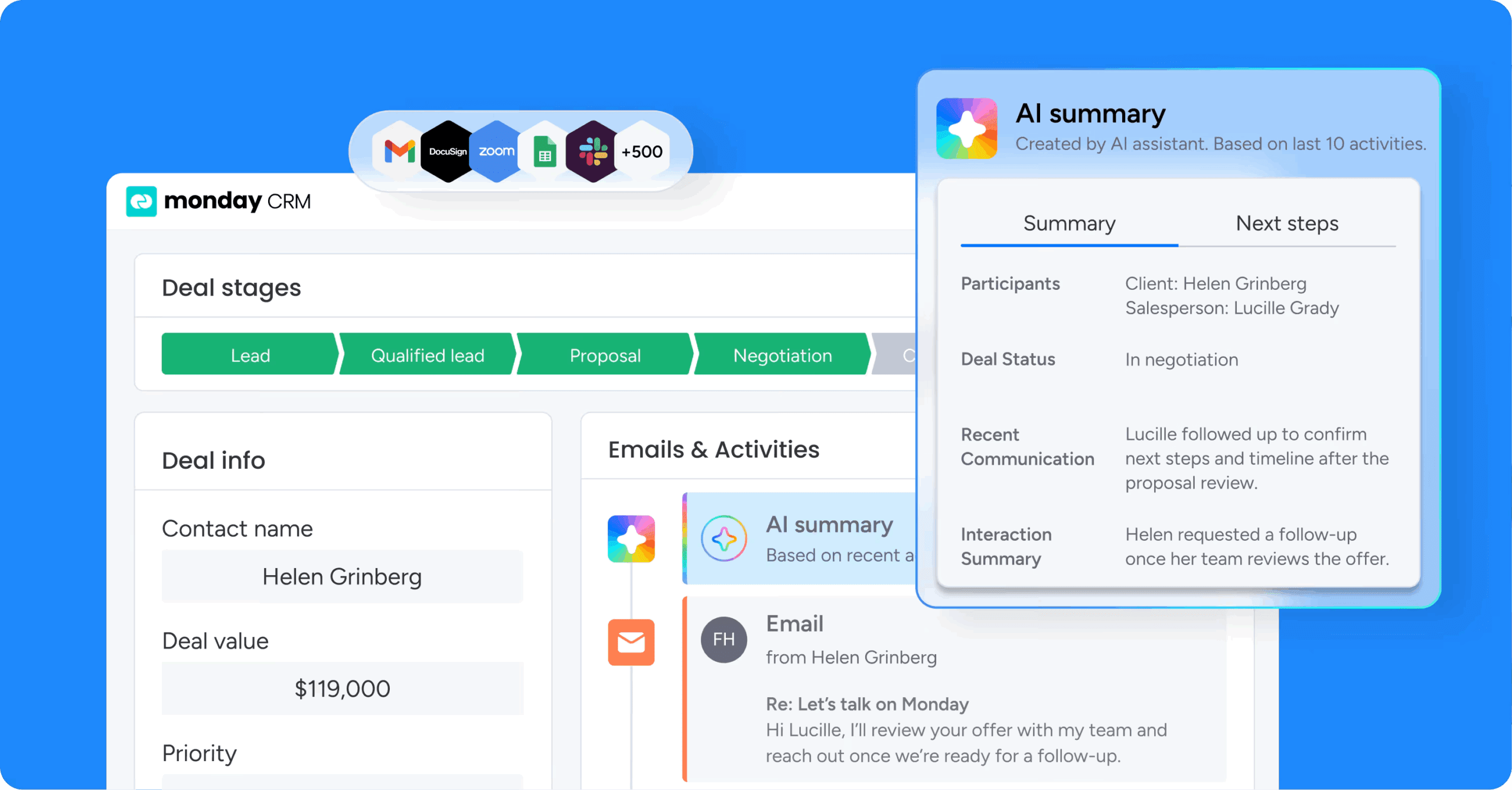
monday CRM includes AI capabilities that help reps work faster without requiring enterprise budgets or complex setup. AI-powered email generation drafts personalized outreach based on deal context, while activity suggestions surface next-best actions based on pipeline data. You get practical AI that drives results and frees up time for your team to focus on more strategic workflows.
Customization without the complexity

Customize pipelines, fields, automations, and dashboards with visual, no-code tools that anyone on your team can manage. No developers required. No rigid structures locking you in. Adapt the CRM to your sales process as your business evolves, without waiting weeks for IT or paying consultants to make changes.
Choose the CRM your team will actually use
The best CRM is the one your team actually uses. Before committing to Zoho CRM or Salesforce, map your real requirements: implementation timeline, admin capacity, integration needs, and the features your reps will rely on daily. That level of understanding will point you to the right fit faster than any feature checklist.
If you’re looking for a platform that combines the accessibility of Zoho CRM with powerful features without the complexity and cost of Salesforce, monday CRM offers a compelling alternative. You get visual pipeline management, built-in automation, and intuitive workflows that drive adoption from day one, all without the admin overhead that slows teams down.
Try monday CRMFAQs
Is Zoho CRM better than Salesforce for small businesses?
For small businesses, Zoho CRM is generally the stronger choice over Salesforce due to its lower costs, simpler implementation, and faster time-to-value. Small teams can deploy Zoho CRM in days without consultants, while Salesforce typically requires professional services even for basic configurations.
What is the main difference between Zoho CRM and Salesforce?
The main difference is complexity versus accessibility. Salesforce offers deeper customization, a larger app ecosystem, and more advanced AI capabilities, but requires significant investment in implementation, training, and ongoing administration. Zoho CRM provides solid CRM functionality at lower cost with simpler setup.
Can Zoho CRM replace Salesforce?
Zoho CRM can replace Salesforce for organizations that don't require Salesforce's advanced customization, extensive integrations, or enterprise-grade AI capabilities. Teams with straightforward sales processes, limited IT resources, and budget constraints often find Zoho CRM meets their needs at significantly lower total cost of ownership.
How long does it take to implement Zoho CRM versus Salesforce?
The time it takes to implement Zoho CRM versus Salesforce differs significantly. Zoho CRM implementation typically takes 1–4 weeks for small to mid-market organizations. Salesforce implementation ranges from 8 weeks to 6+ months depending on complexity. A mid-market company can configure Zoho CRM in 2–4 weeks, while Salesforce typically takes 8–16 weeks with consultant support.
Does Zoho CRM have AI like Salesforce Einstein?
Yes, Zoho CRM has an AI assistant named Zia, which is comparable in some ways to Salesforce Einstein. Included in the Enterprise and Ultimate tiers, Zia offers predictive lead scoring, anomaly detection, workflow suggestions, and conversational AI. Zia provides accessible AI for SMBs at lower price points than Salesforce Einstein, though it lacks the deep predictive analytics and autonomous agent capabilities that Salesforce offers at enterprise tiers.
What are the hidden costs of Salesforce?
Salesforce hidden costs include add-ons like Marketing Cloud starting at $1,250/month, Premier Success support plans at 20–30% of license fees, implementation services ranging from $50K–$500K+, ongoing admin costs of $50K–$150K annually for mid-market companies, and training investments. Total cost of ownership often exceeds list prices by 2–3x when accounting for these factors.
