


Most customer engagement software promises a single source of truth but delivers a dozen disconnected tabs. When teams spend more time fighting their platforms than talking to customers, promising deals fall through the cracks. Sales reps toggle between systems for basic info, support agents lose track of marketing promises, and customers feel the resulting lack of context.
The cost of this friction is measurable. Deals stall and revenue opportunities slip away while teams hunt for data that should be at their fingertips. A platform should pave the way to a sale, not add obstacles. The right customer engagement software unifies every touchpoint and provides the visibility teams need to win.
To address these challenges, this guide cuts through the noise. It explores top market platforms, breaks down essential features, and provides a straightforward playbook for choosing and implementing the right system. Organizations will learn how to use AI and automation to give their teams the speed and confidence to close more deals.
Key takeaways
- Unified visibility drives revenue: customer engagement software eliminates the toggle tax between disconnected systems, giving teams a single source of truth that turns scattered touchpoints into closed deals.
- AI that works for your team, not against it: platforms like monday CRM deploy intelligent automation without requiring technical expertise, freeing reps from busywork so they can focus on building relationships that convert.
- Speed wins in modern sales: the right platform removes friction at every stage, enabling teams to respond in real time, maintain context across channels, and move prospects through the pipeline faster.
- Adoption determines ROI: intuitive design is non-negotiable; a platform like monday CRM transforms engagement from a compliance exercise into a collaborative workflow that teams actually want to use daily.
- Clean data unlocks everything: AI, automation, and personalization only deliver results when built on accurate customer information, making data quality the foundation of every successful engagement strategy.
What is customer engagement software?
Scattered conversations create chaos. Customer engagement software is designed to end it by pulling every email, call, and message into one unified view, giving your team the full picture. This system replaces mental juggling with a straightforward playbook that helps you win.
This isn’t just another platform to manage. Intelligent automation takes over the follow-ups and repetitive tasks that consume your day, eliminating the “I thought you were on it” moments that kill momentum and let deals slip through the cracks.
The result is a faster, more confident sales team. You gain real-time insights to see what’s actually working, close deals quicker, and build a process you can trust. Ultimately, it’s about giving your team the visibility and control they need to turn more prospects into customers.
Customer engagement software vs CRM platforms
The distinction between customer engagement software and a CRM can feel like a false choice. One platform maps the entire customer journey, while the other zeros in on closing the deal. In reality, they represent two sides of the same coin, and today’s teams need both to win.
To understand the difference, consider that engagement platforms are built to connect every touchpoint, from the first click to the final follow-up, with a primary focus on the customer experience. A classic CRM, conversely, serves as the sales team’s home base for pipeline visibility and deal tracking; it is engineered specifically to drive conversion.
The essential question isn’t which one to pick, but how to eliminate the toggle tax between platforms that don’t communicate. A unified platform provides a single place to manage the entire cycle, from relationship to revenue. Your organization gets the full picture, and your team gets the speed to act on it.
10 best customer engagement platforms
Legacy engagement platforms can hinder even high-performing teams. Organizations require platforms that align with current sales velocities, not systems that constrain them with outdated workflows.
The selection process for these platforms evaluated what matters most: speed, intelligence, and scalability. Specifically, it addresses three critical questions: Can teams deploy quickly? Does the AI deliver measurable impact on deal closure? Can the platform scale without exceeding budget constraints?
In the end, the right platform eliminates technology as an obstacle, enabling teams to focus on customer relationships. These are the platforms designed for organizations committed to operational excellence.
1. monday CRM
For growing businesses tired of juggling multiple systems, monday CRM transforms scattered touchpoints into a unified command center. The platform bridges sales, marketing, and support teams with AI-powered automation that actually works. By eliminating context switching between platforms, it ensures everything your team needs to engage customers lives in one place.
Example:
Unify cross-departmental engagement (sales, marketing, support) with AI-driven automation to eliminate manual work and maintain a single customer view.
Key features:
- Unified customer timeline: every email, call, and interaction lives in one place with two-way email sync and automatic activity logging.
- AI-powered sequences: build multi-step engagement flows with conditional logic, automated emails, and personalized outreach at scale.
- Omnichannel communication: manage conversations across email, chat, phone, and social media with consistent messaging and full interaction history.
Pricing:
- Basic: $12/month per seat (billed annually).
- Standard: $17/month per seat (billed annually).
- Pro: $28/month per seat (billed annually).
- Enterprise: custom pricing with quote-based options.
- Annual billing: provides 18% discount across all plans.
- Campaigns: sold separately with Pro and Enterprise tiers.
Why it stands out:
- No-code customization: build workflows, dashboards, and automations without technical skills, accelerating adoption and ROI.
- AI-powered intelligence: deploy intelligent workflows without coding: automate lead scoring, response suggestions, and follow-up sequences based on customer behavior.
- Visual automation builder: create complex automation sequences using drag-and-drop tools that connect triggers, conditions, and actions across teams.
- Unified Work OS ecosystem: connects CRM with project management, service, and dev teams, eliminating data silos across departments.
- Enterprise-grade security: ISO certifications, SOC compliance, GDPR/CCPA ready, with optional HIPAA on Enterprise plans.
2. Braze
Built for the speed of mobile-first commerce, Braze orchestrates real-time campaigns across every channel. Its architecture specializes in streaming data and AI-powered decisioning, making it a powerful choice for app-based businesses and e-commerce brands that require instant, personalized messaging at scale.
Example:
Orchestrate responsive, cross-channel journeys for mobile-first brands by applying AI decisioning to real-time user data from push notifications, email, SMS, and in-app messages.
Key features:
- Real-time data streaming: canvas Flow drag-and-drop journey builder with AI-assisted testing and experimentation across all customer touchpoints.
- BrazeAI Decisioning Studio: multi-agent AI that optimizes channel, content, timing, and offers for each individual user with explainable recommendations.
- Cross-channel orchestration: native integration with email, SMS, push notifications, WhatsApp, and paid media platforms like Meta, Google, and TikTok.
Pricing:
- Free trial: 14-day hands-on trial with AI features and up to 250 profile uploads.
- Startup program: four months free for eligible VC-backed startups (up to 2M monthly active users and 120M emails).
- Paid plans: quote-only pricing based on data points and usage volume.
- Add-ons: dedicated IPs, additional Currents connectors, higher Catalog storage tiers, and carrier costs for SMS/WhatsApp messaging.
Considerations:
- Usage-based pricing tied to “data points”: can become expensive if tracking isn’t optimized, requiring careful budget management as engagement volumes scale.
- Advanced segmentation and reporting features: have a learning curve, with users noting complexity for measurement and desire for richer out-of-the-box analytics.
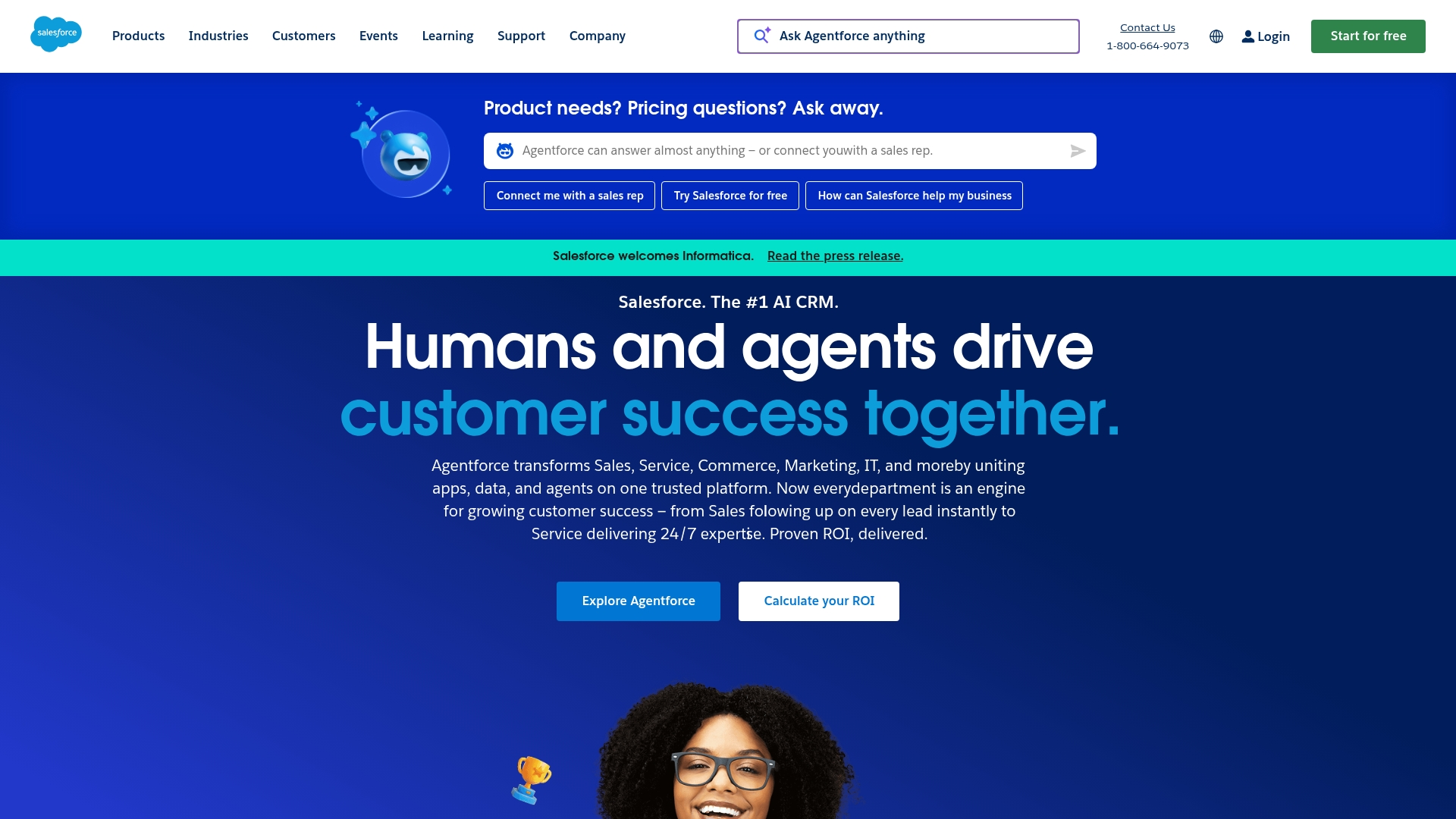
3. Salesforce Marketing Cloud
At the enterprise level, Salesforce Marketing Cloud provides an expansive engagement ecosystem powered by AI-driven insights and one of the most extensive integration libraries on the market. The platform is engineered for omnichannel marketing automation and real-time personalization at scale, making it a fit for large organizations with complex customer journeys.
Further, its Einstein AI delivers predictive analytics and journey optimization to help teams send the right message at the right time.
Example:
Manage complex, enterprise-scale customer journeys by unifying data in the cloud and using AI agents to personalize the next-best message in real time across all channels.
Key features:
- Journey orchestration: with event-driven triggers, drag-and-drop branching, and A/B path experimentation through Journey Builder.
- Omnichannel messaging: across email, SMS, WhatsApp, push notifications, and web personalization with unified conversation management.
- Real-time customer profiles: unified profile data, advanced segmentation, and identity resolution powered by Data Cloud for instant customer insights.
Pricing:
- Marketing Cloud Engagement+ Pro+: $2,000/org/month (includes message/contact credits and Data Cloud credits).
- Marketing Cloud Engagement+ Corporate+: $5,500/org/month (includes enhanced message/contact allocations).
- Marketing Cloud Engagement+ Enterprise+: $30,000/org/month (includes premium features and expanded credits).
- Account Engagement Growth: $1,250/month (up to 10k contacts for B2B marketing automation).
- Account Engagement Plus: $2,750/month (enhanced B2B capabilities).
- Account Engagement Advanced: $4,400/month (advanced B2B features).
- Account Engagement Premium: $15,000/month (up to 75k contacts with full B2B suite).
- Personalization: starting at $8,000/org/month for basic personalization features.
- Personalization+: $15,000/org/month for advanced personalization capabilities.
- Premier Success: support adds 30% of net license fees.
- Additional messaging credits and Data Cloud overages: available for purchase.
Considerations:
- Complex learning curve: with advanced automation and data extensions requiring significant expertise and dedicated teams.
- High total cost of ownership: with licensing, add-ons, and specialized admin requirements that can strain smaller marketing budgets.
4. HubSpot
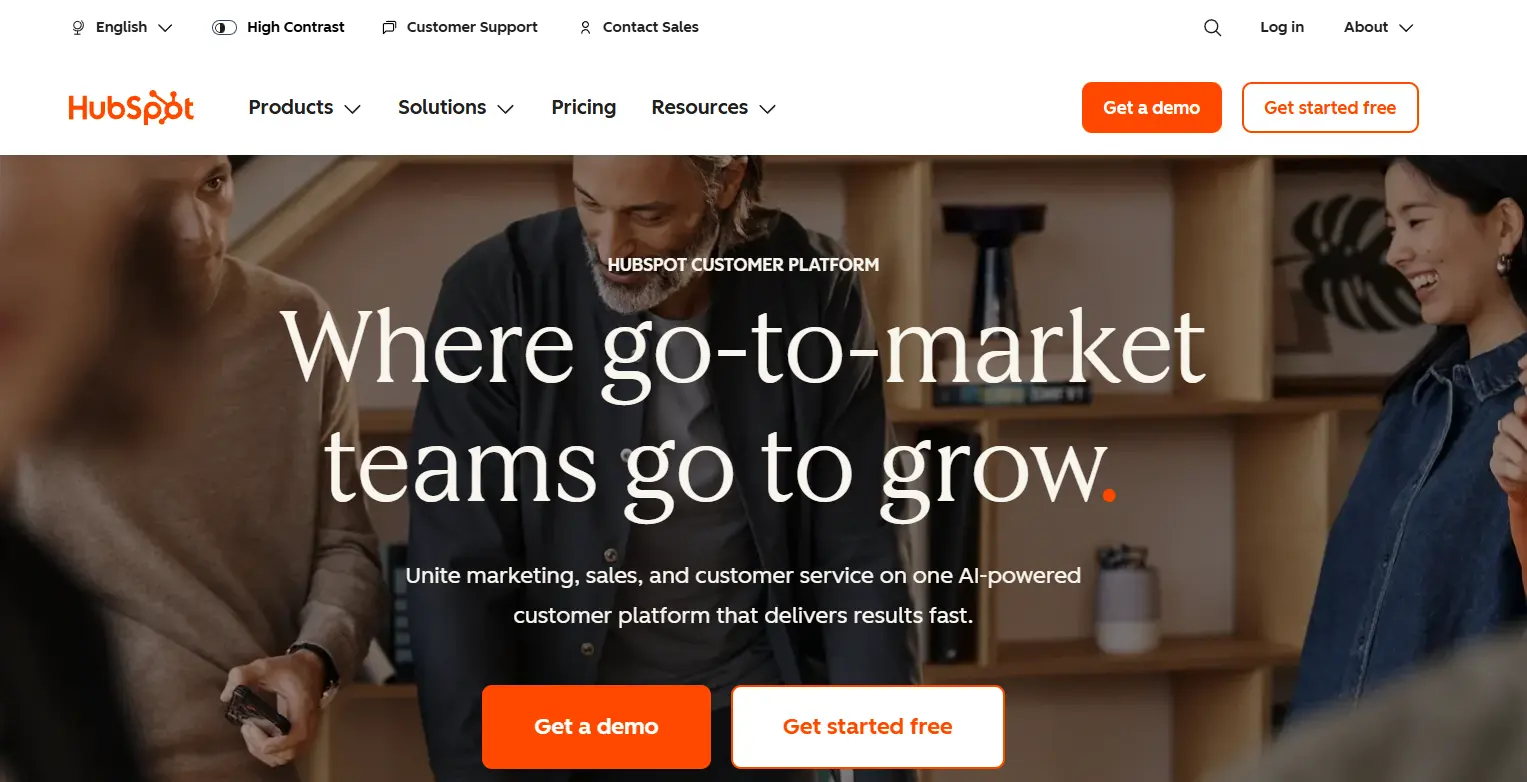
Grounded in the inbound methodology, HubSpot’s all-in-one customer platform is designed to turn every interaction into a growth opportunity. Its strength lies in unifying customer data across marketing, sales, and service, making it ideal for growing businesses that want to attract, engage, and delight customers without managing multiple disconnected systems.
Example:
Enable businesses to manage the entire customer lifecycle, from first touch to loyal advocate, through a unified Smart CRM that connects marketing, sales, and service teams.
Key features:
- Omni-channel messaging: across email, chat, phone, WhatsApp, and Facebook Messenger with shared inbox routing.
- AI-powered Customer Agent: resolves common inquiries 24/7 and Knowledge Base Agent for self-service content.
- Journey analytics and orchestration tools: personalize engagement across every touchpoint and measure end-to-end .performance
Pricing:
- Free: $0 (basic CRM and limited features).
- Starter: from $15/seat/month (essential tools for small teams).
- Professional: from $1,450/month (five seats included, advanced automation and analytics).
- Enterprise: from $4,700/month (seven seats included, advanced journey orchestration).
- Marketing contacts: have separate pricing tiers with overage fees.
- Mandatory onboarding fees: apply to Professional ($3,000) and Enterprise ($7,000) tiers.
- AI usage: consumes HubSpot Credits with monthly allotments by tier.
Considerations:
- Advanced features: like WhatsApp require Professional+ tiers and SMS needs separate add-ons, which can increase costs for teams needing specific channels.
- Data residency: is primarily US-based with optional EU centers, potentially limiting options for businesses with strict regional requirements.
5. Twilio
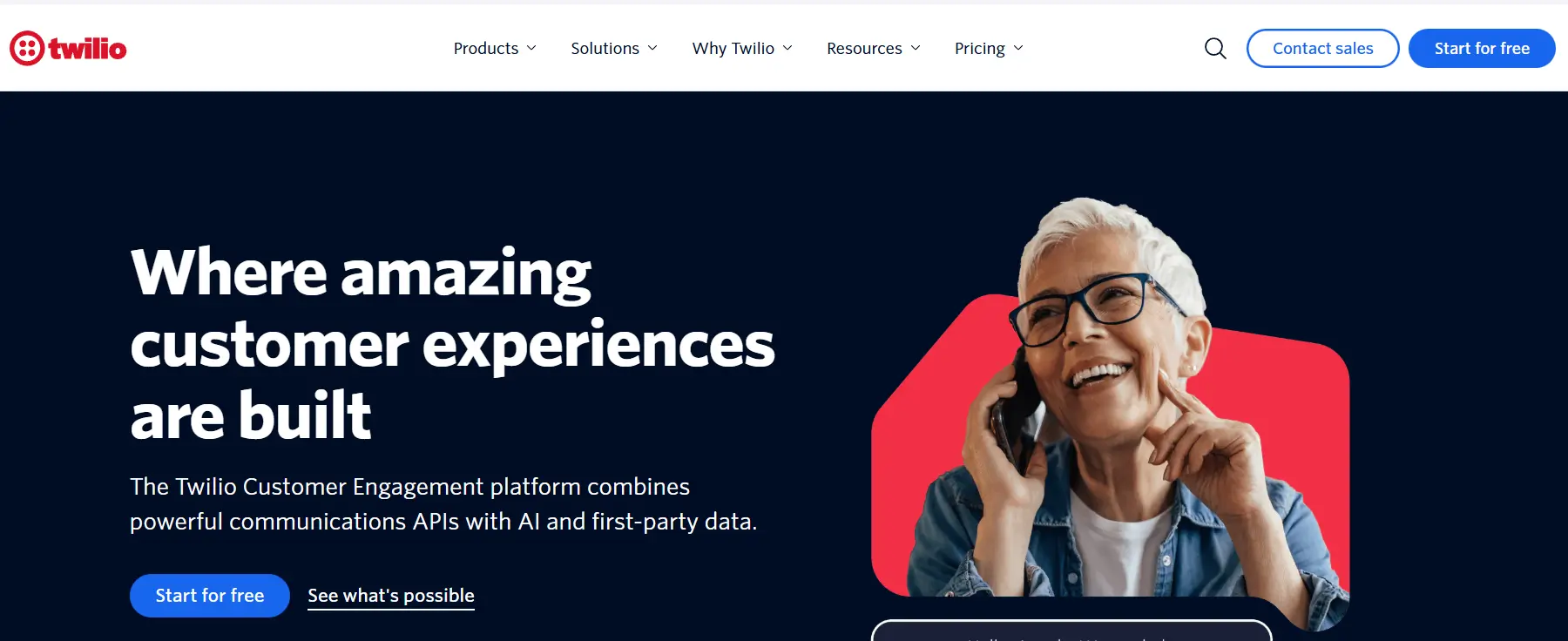
Twilio’s power lies in its programmable communications APIs, which allow developers to build entirely custom engagement solutions across SMS, voice, video, and chat. By combining first-party data from its Segment CDP with AI-powered orchestration, the platform is perfect for businesses that require highly customized communication workflows at enterprise scale.
Example:
Create tailored customer engagement experiences by integrating real-time data with multi-channel communications through a single, developer-centric platform.
Key features:
- Unified customer data platform: segment CDP creates real-time customer profiles with 700+ pre-built integrations for seamless data activation.
- AI-powered engagement tools: customerAI suite includes conversational AI, intelligence analytics, and Agent Copilot to automate interactions and extract insights.
- Global communications infrastructure: 99.95% uptime SLA across 180+ countries with 4,500+ carrier connections and enterprise compliance features.
Pricing:
- SMS: starting at $0.0083 per message segment (US) plus carrier fees.
- Voice: $0.014 per minute outbound, $0.0085 per minute inbound.
- WhatsApp: $0.005 Twilio fee per message plus Meta template charges.
- Verify: $0.05 per successful verification plus channel fees.
- Flex contact center: $1 per active user hour or $150 per named user monthly.
- SendGrid email: plans start at $19.95/month (free tier discontinued).
- Volume discounts and committed-use pricing: available for enterprise accounts.
Considerations:
- Complex pricing structure: with per-segment billing, carrier surcharges, and additional regulatory fees like A2P 10DLC registration ($44 brand fee, $15 campaign vetting).
- Some advanced features: like Compliance Toolkit remain in beta without full SLA coverage, potentially limiting immediate deployment for strict regulatory requirements.
6. Zendesk
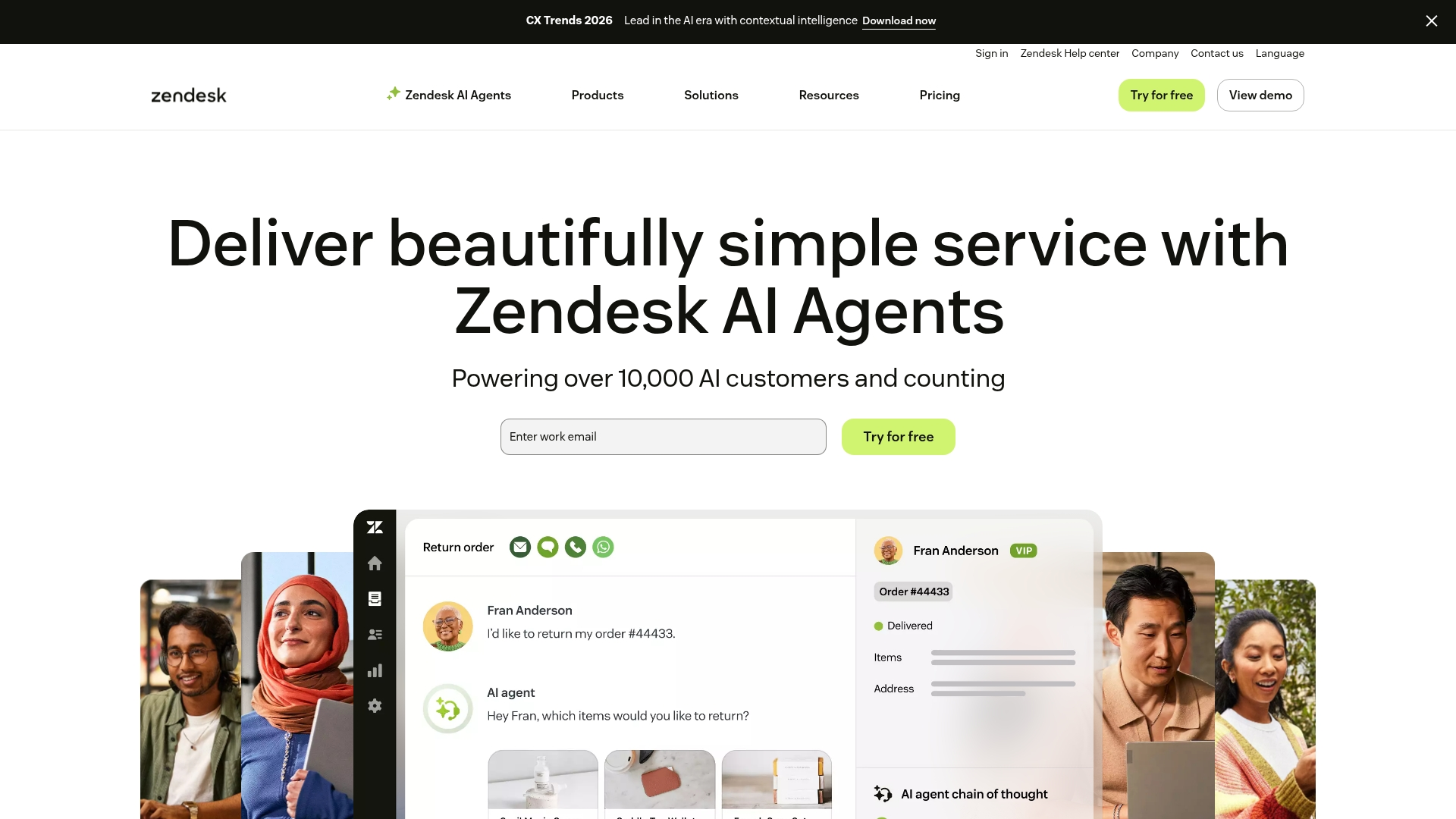
Engineered to bring order to customer service chaos, Zendesk creates smooth, resolution-focused experiences that work. The platform specializes in omnichannel support augmented by AI-powered automation, making it an excellent fit for teams who need to resolve issues quickly without sacrificing the human touch.
Example:
Empower support teams to handle customer inquiries from a unified workspace, using AI to automate routine tasks and accelerate resolutions across email, chat, phone, and social media.
Key features:
- AI Agents and Copilot: pre-trained bots handle up to 80% of routine inquiries while AI assists human agents with suggested responses and next steps.
- Omnichannel workspace: manage conversations across all channels without losing context when customers switch from chat to email to phone.
- Resolution Platform: integrated ticketing, knowledge base, analytics, and quality assurance tools designed to solve problems, not just deflect them.
Pricing:
- Support Team: $19/agent/month (billed annually).
- Suite Team: $55/agent/month (billed annually).
- Suite Growth: $89/agent/month (billed annually).
- Suite Professional: $115/agent/month (billed annually).
- Suite Enterprise: $169/agent/month (billed annually).
- Add-ons: Copilot ($50/agent/month), Quality Assurance ($35/agent/month), Workforce Management ($25/agent/month).
- Discounts: save 20% with annual billing.
- Free trial: 14-day Suite trial available.
Considerations:
- Setup complexity: increases with advanced workflows, and some users report mixed feedback on native voice quality.
- Costs can climb quickly: when adding AI features, analytics depth, and compliance add-ons that many growing teams need.
7. Intercom
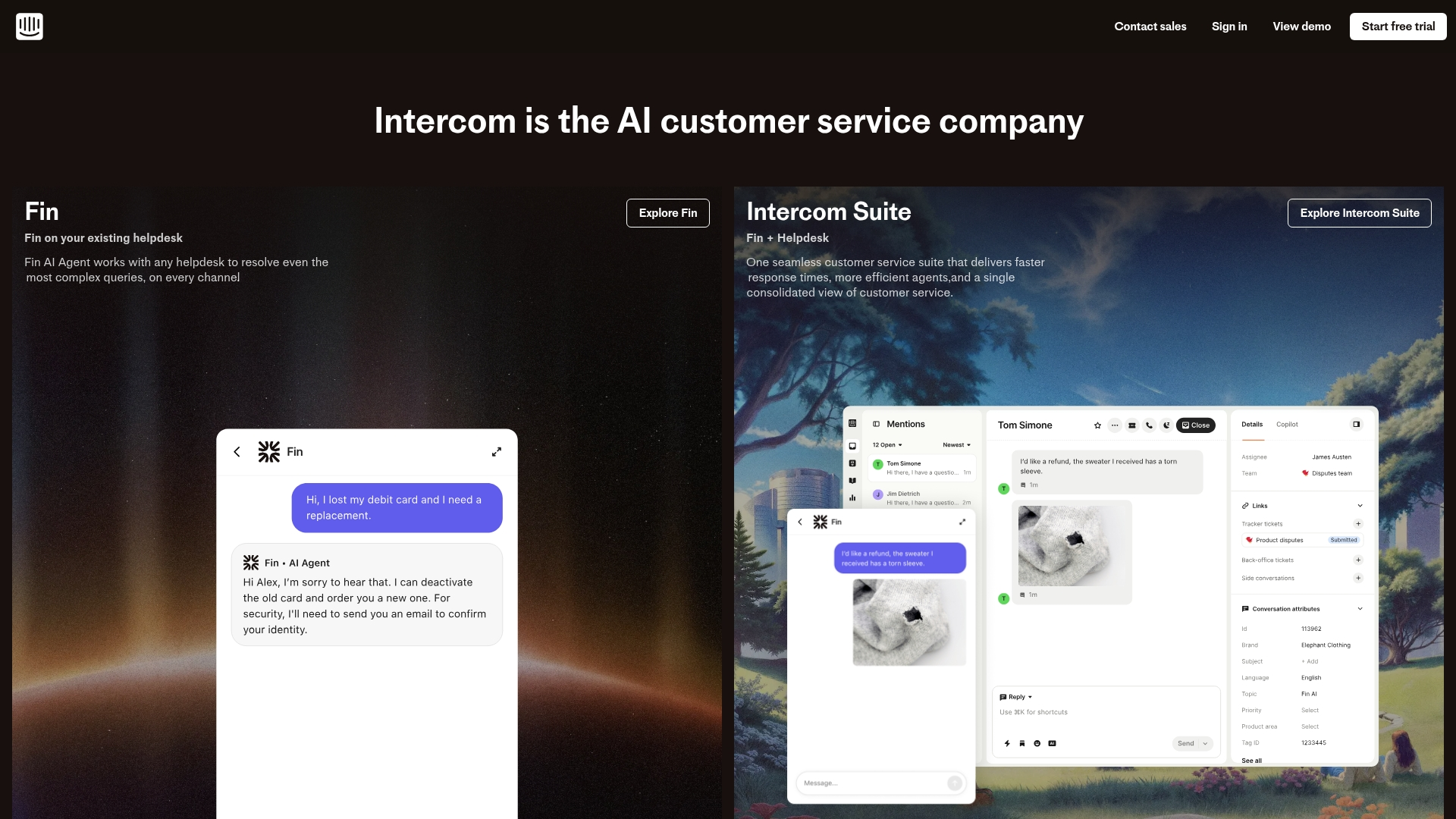
Intercom champions conversational customer engagement, turning every interaction into an opportunity to build stronger relationships. The platform’s blend of AI-powered automation and human touch makes it a strong choice for SaaS companies and digital-first brands aiming to engage customers proactively across their entire journey.
Example:
Create personalized, real-time customer conversations that blend proactive outreach, self-service automation, and human support to reduce response times and increase satisfaction.
Key features:
- Fin AI Agent: resolves customer queries across multiple channels with $0.99 per-resolution pricing, only charging when issues are actually solved.
- Conversational Support Funnel: provides a clear framework for proactive engagement, self-service automation, and human handoffs.
- Unified messenger platform: connects web, mobile, email, WhatsApp, SMS, and voice channels in one seamless experience.
Pricing:
- Essential: $29/seat per month (billed annually, $39 monthly).
- Advanced: $85/seat per month (billed annually, $99 monthly).
- Expert: $132/seat per month (billed annually, $139 monthly).
- Fin AI Agent: $0.99 per resolution (only pay when conversations are resolved).
- Copilot unlimited: $29 per agent/month add-on.
- Early Stage program: up to 93% discount in Year 1 for qualifying startups.
Considerations:
- Pricing complexity: with usage-based charges for AI resolutions, outbound messages, and phone minutes can make cost forecasting challenging.
- Some advanced features: like SSO, HIPAA compliance, and multi-brand support are only available on the highest-tier Expert plan.
8. Adobe Experience Cloud
Adobe Experience Cloud integrates content management, real-time analytics, and journey optimization into a unified platform for large-scale enterprises. It is designed for organizations managing complex customer experiences across multiple touchpoints, offering enterprise-grade engagement through unified data and AI-powered personalization.
Example:
Help enterprises unify customer data, orchestrate personalized journeys, and deliver real-time experiences across all channels while maintaining governance and compliance standards.
Key features:
- Real-time customer data platform: processes 30 trillion segment evaluations daily and creates unified profiles across all touchpoints.
- Journey Optimizer with AI-powered orchestration: across email, SMS, push notifications, web, and mobile channels.
- Advanced analytics and AI-driven personalization: delivers 600+ billion predictive insights annually.
Pricing:
- Journey Optimizer: Select, Prime, and Ultimate tiers (custom pricing).
- Real-Time CDP: B2C and B2B editions with Prime and Ultimate packages (quote-based).
- Marketo Engage: Growth, Select, Prime, and Ultimate packages (custom pricing).
- Additional costs: for data volume, sandboxes, API calls, and specialized shields.
Considerations:
- Requirements: significant technical expertise and resources for implementation and ongoing management.
- Complex pricing structure: with multiple add-ons can make total cost of ownership difficult to predict.
9. Pendo
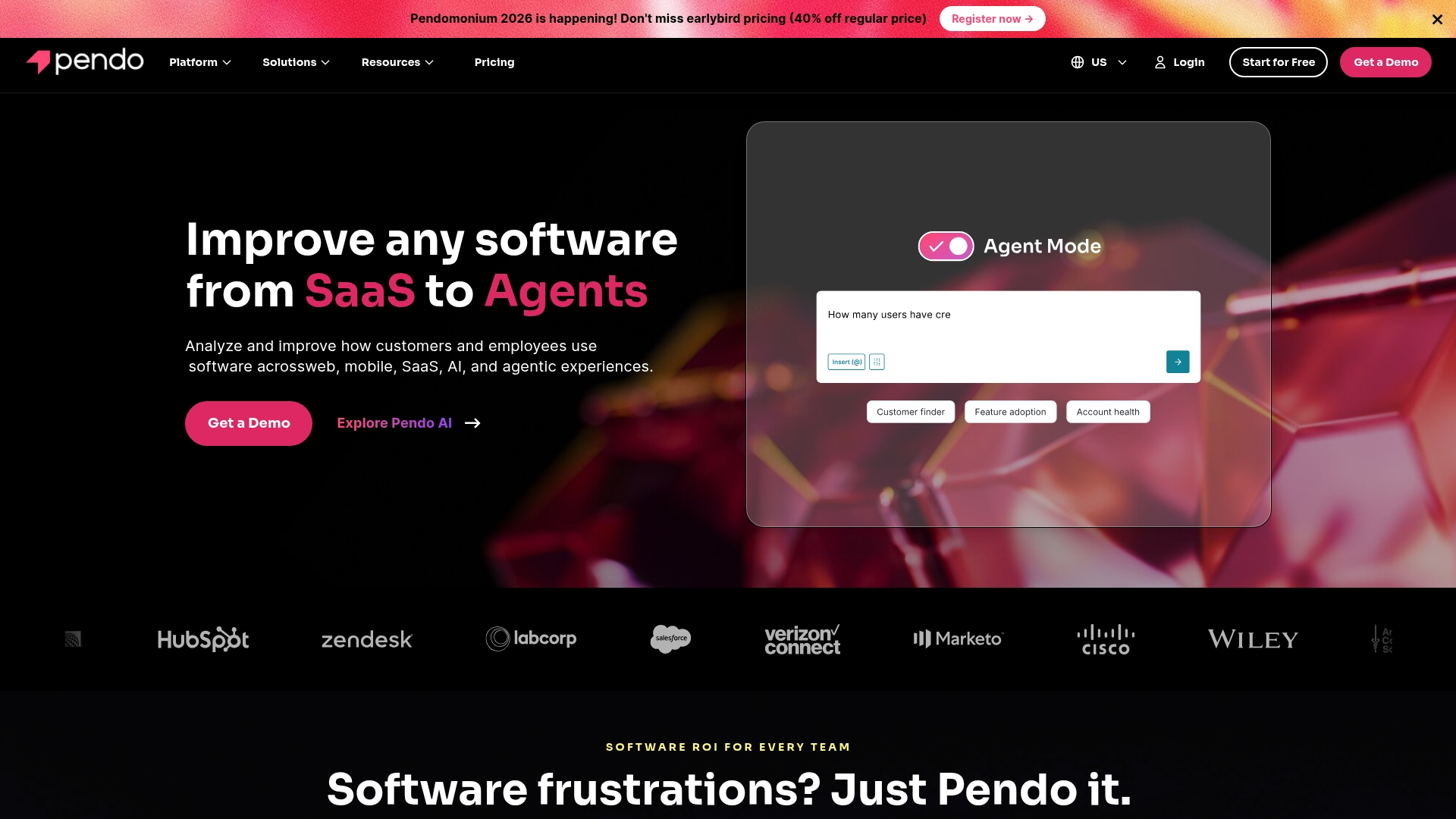
Pendo operates directly within your application, transforming how software teams understand and engage users through in-app messaging, analytics, and feedback tools. The platform specializes in product experience management, making it ideal for product-led growth strategies that need to guide users and optimize onboarding without disrupting the customer experience.
Example:
Enable product managers and customer success teams to deliver targeted in-app experiences that drive user adoption and satisfaction through data-driven insights and no-code engagement tools.
Key features:
- In-app guides and messaging: with visual design studio for no-code creation and A/B testing.
- Product analytics: with retroactive data collection and Product Engagement Score (PES) tracking.
- Resource Center: for self-serve help, announcements, and feedback collection within your product.
Pricing:
- Free: up to 500 monthly active users with basic analytics, in-app guides, and Pendo-branded NPS surveys.
- Paid plans: quote-based pricing with Base, Core, Pulse, and Ultimate tiers that scale with monthly active users.
- Add-ons: session Replay, Journey Orchestration, and Data Sync available as paid upgrades.
Considerations:
- Free plan: has significant limitations with only 12 months of data visibility and excludes advanced features like Resource Center and email journeys.
- Session Replay: can impact app performance and mobile battery life, requiring careful configuration and user segmentation.
10. Microsoft Dynamics 365
Leveraging its deep integration with the Microsoft 365 ecosystem, Dynamics 365 offers a unified suite of CRM and ERP applications for sales, marketing, and customer service. The platform targets midsize to enterprise organizations with its “agentic” approach, featuring embedded AI agents and a shared data foundation.
Built on Microsoft Dataverse, it also provides end-to-end customer engagement from unified profiles through omnichannel service delivery.
Example:
Unify customer data, AI-powered insights, and business processes for organizations already invested in the Microsoft ecosystem, enabling seamless integration across Teams, Outlook, and Azure services.
Key features:
- Unified customer profiles: with AI enrichment and real-time journey orchestration across email, SMS, and digital channels.
- Embedded Copilot agents: for sales research, lead qualification, and automated customer service responses.
- Omnichannel contact center capabilities: work with existing CRMs and integrate with Teams Phone.
Pricing:
- Sales Professional: $65/user/month (annual billing).
- Sales Enterprise: $105/user/month (annual billing).
- Sales Premium: $150/user/month (annual billing).
- Customer Service Professional: $50/user/month (annual billing).
- Customer Service Enterprise: $105/user/month (annual billing).
- Customer Service Premium: $195/user/month (annual billing).
- Contact Center: $110/user/month (annual billing).
- Customer Insights: $1,700/tenant/month (unlimited users).
- Current promotion: 40% off Contact Center and Customer Service Premium through June 30, 2026.
- Additional costs: may apply for Azure Communication Services and Copilot Studio credits.
Considerations:
- Licensing complexity: with capacity-based pricing models for Customer Insights can make total cost of ownership difficult to predict.
- Some “agentic” features: remain in public preview, requiring organizations to wait for general availability before full production deployment.
Essential features for customer engagement today
Your customers expect a single, seamless conversation, regardless of the channel. Yet, your team is often stuck toggling between tools, losing context and momentum with every switch. That disconnect is where promising deals go to die.
The right customer engagement software eliminates this friction by unifying every touchpoint into one platform. In doing so, it transforms a fragmented process into a streamlined engine for growth.Here’s what separates platforms that drive results from those that just add complexity:
- Unified customer view: modern solutions like monday CRM bring every interaction into one place, so your team always has the full story. No more hunting across systems to understand where a deal stands or what a customer needs.
- Intelligent automation: smart automations handle the busywork, freeing up reps to build relationships that actually convert. Let the platform manage follow-ups, data entry, and routine tasks while your team focuses on closing.
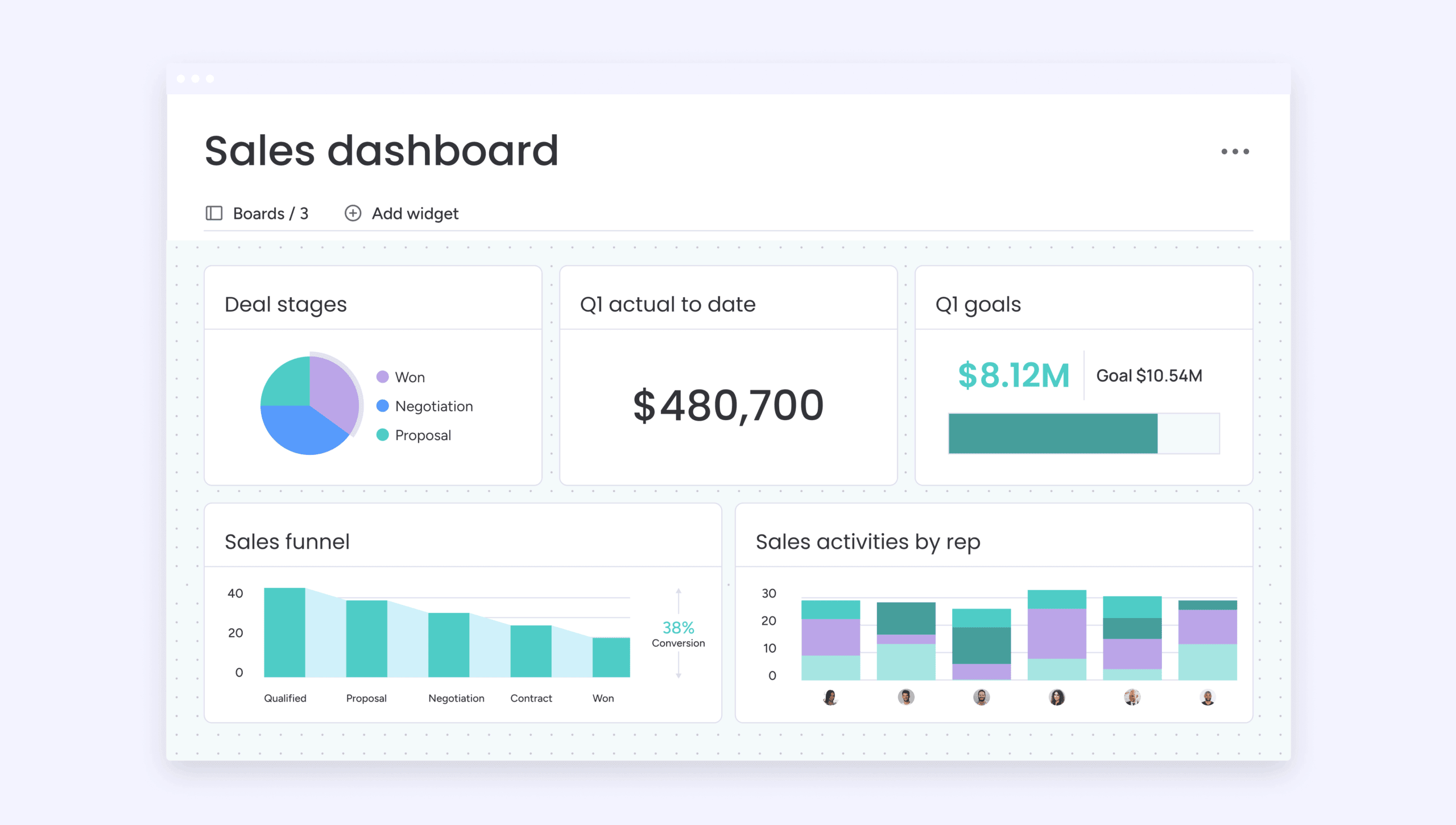
- Real-time visibility: dashboards show you what’s working now, not last quarter. Track engagement metrics, pipeline health, and team performance with insights that drive immediate action.
- No-code customization: you don’t need an IT degree to make it your own. With no-code tools and simple integrations, your team can build and adjust workflows in minutes, not months.
- Omnichannel communication: manage conversations across email, chat, phone, and social media without losing context when customers switch channels mid-conversation.
This is how you create a sales team that’s faster, more aligned, and totally confident. It’s all signal and no noise.
“With monday CRM, we’re finally able to adapt the platform to our needs — not the other way around. It gives us the flexibility to work smarter, cut costs, save time, and scale with confidence.”
Samuel Lobao | Contract Administrator & Special Projects, Strategix
“Now we have a lot less data, but it’s quality data. That change allows us to use AI confidently, without second-guessing the outputs.”
Elizabeth Gerbel | CEO
“Without monday CRM, we’d be chasing updates and fixing errors. Now we’re focused on growing the program — not just keeping up with it."
Quentin Williams | Head of Dropship, Freedom Furniture
“There’s probably about a 70% increase in efficiency in regards to the admin tasks that were removed and automated, which is a huge win for us.“
Kyle Dorman | Department Manager - Operations, Ray White
"monday CRM helps us make sure the right people have immediate visibility into the information they need so we're not wasting time."
Luca Pope | Global Client Solutions Manager at Black Mountain
“In a couple of weeks, all of the team members were using monday CRM fully. The automations and the many integrations, make monday CRM the best CRM in the market right now.”
Nuno Godinho | CIO at VelvHow AI is transforming customer engagement
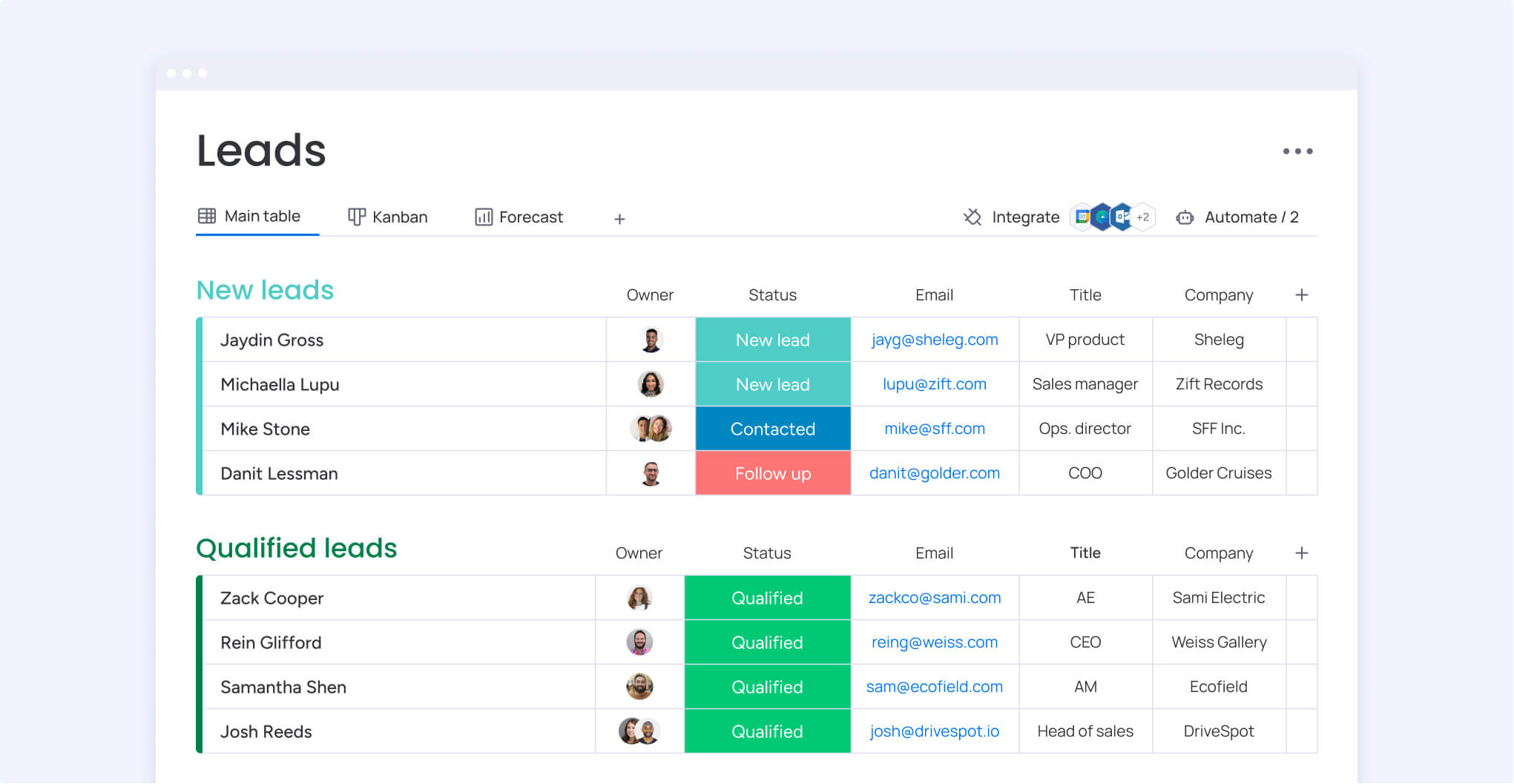
Accessing smarter insights shouldn’t require a dedicated data science team. Therefore, advanced platforms like monday CRM put AI to work instantly, automating the tedious tasks that drain your team’s momentum and freeing them to focus on what they do best: selling.
For instance, you can let automated systems handle the heavy administrative burden of lead qualification and follow-ups. Your digital assistant works around the clock to ensure no opportunity is dropped and your team can dedicate their energy exclusively to the high-value conversations that actually close deals.
Furthermore, it is time to stop guessing which leads are ready to buy. These systems interpret customer behavior in real-time to identify who is a hot prospect and who is a potential churn risk. You receive direct signals that tell you exactly when to reach out and what to say, turning raw data into a competitive advantage.
5 steps to select your customer engagement platform
Choosing a CRM is a foundational business decision that shapes the future of your organization, and as such, it should never be treated as just another tech purchase. While the right system acts as a catalyst for growth, a poor choice inevitably saddles your team with busywork and kills their sales momentum.
To ensure your investment delivers results rather than obstacles, you must approach the selection process with a clear strategy. Here is the five-step roadmap to getting it right:
Step 1: audit your current tech
Before looking at new features, analyze your current tech stack. It tells a story. Pinpoint exactly where your team is bogged down by manual tasks, copy-paste workarounds, and communication gaps that are costing you deals.
Be brutally honest about your data quality. Migrating a messy database just creates a more expensive mess. A solid foundation is non-negotiable.
Step 2: define your customer’s journey
Don’t force customers into a one-size-fits-all process. Map the journey from their perspective, not yours. Your platform must accommodate how they want to buy, whether that’s by text, email, or a call.
Identify where automation can add speed and where personalization can build trust. This isn’t about replacing people; it’s about freeing them up to focus on closing.
Step 3: get real about AI and automation
AI runs on clean data, not hype. It means that, if your data is a disaster, AI will only help you make bad decisions faster. Get your house in order first.
Start with small, high-impact automations that give your team quick wins. Modern platforms like monday CRM make this easy, so your team builds confidence and sees the value right away.
Step 4: prioritize team adoption
Even the most powerful CRM is just expensive shelfware if your team avoids it. The fact remains that, if a platform isn’t intuitive, it won’t get used. Your reps are here to sell, not to get a degree in software engineering.
Let your team drive the demos. A platform they help choose is a platform they’ll actually use. Their buy-in is your most valuable asset.
Step 5: calculate your true investment
The sticker price is just a starting point. The real cost includes implementation, training, and the hours your team wastes fighting the software. The cheapest option is rarely the best value.
Calculate the return on time saved, not just dollars. How many more deals could your team close if they weren’t buried in admin work? That’s the real ROI.
The real cost of your CRM
That per-user price quoted is rarely the final number. Most platforms are a minefield of hidden fees, leaving teams to explain a busted budget six months down the line.
In practice, the budget-killers are often the same: surprise implementation costs, painful data migrations, and tiered support that holds organizations hostage. A “great deal” quickly becomes a liability when paying extra for every essential integration.
Flexible solutions like monday CRM take a different approach with one straightforward price, world-class support, and core integrations included. Ultimately, there are no “gotchas”, just the freedom to focus on growth.
Your CRM rollout playbook
A messy software rollout kills momentum and wastes valuable time. This process requires more than simply flipping a switch and hoping for the best; it demands a strategic transition that moves your team from initial setup to winning deals.
By following a structured approach, you ensure your reps hit the ground running, fully confident in the new system rather than questioning the switch.
Step 1: get your data in order
Garbage in, garbage out. This is the stage that determines if your new CRM will fly or fail. Therefore, audit your data, remove outdated or incorrect entries, and standardize everything before you move it.
Clean data is what makes your automations actually work. Setup provided by solutions like monday CRM is straightforward, so you can focus on getting your data right, not on fighting the software.
Step 2: build your workflows
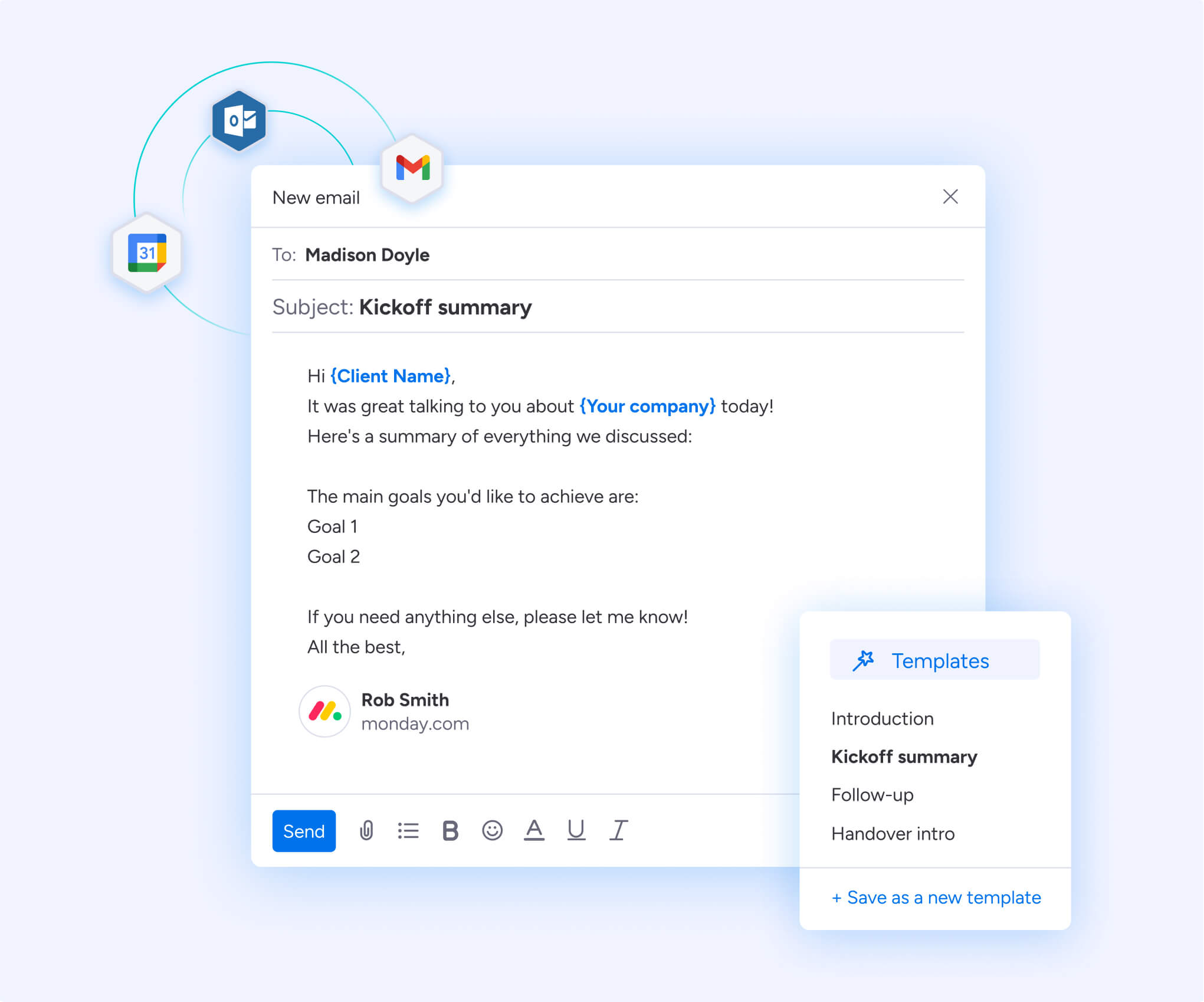
Now, make the platform work for you. Configure automations to handle the busywork, from lead scoring to follow-ups, so your team can get back to selling. Test your integrations to ensure all systems communicate smoothly.
With platforms like monday CRM, your team can build and tweak these workflows themselves — no code, no waiting for IT. It’s a CRM that fits your process, not one that forces you to change it.
Step 3: bring your team on board
Great software is useless if no one uses it. Run training that shows each person exactly how the platform makes their job easier, not just where to click. Identify your champions and establish a feedback loop for continuous improvement.
Remember, this isn’t about memorizing features, but about building confidence and showing your team a faster way to hit their goals.
Step 4: launch, learn, and optimize
Don’t just launch and walk away. Start with a pilot group to work out any kinks, then roll it out to everyone. Monitor your dashboards to see what’s working and what isn’t, then use that data to make things better.
In the end, true success is a team that’s closing more deals, moving faster, and feeling more confident in their work.
Measuring success with customer engagement metrics
Most engagement reports are filled with noise. You might be tracking opens and clicks, but you can’t connect that activity to actual revenue. It’s time to stop chasing vanity metrics and focus on what wins deals.
Flexible platforms like monday CRM connect every email, call, and meeting to its impact on the deal. You can see which activities actually lead to conversions and a higher CLV, all on one dashboard. No more digging through spreadsheets to find the truth.
Now you can walk into any meeting with a compelling story backed by real numbers. Show leadership exactly how your team’s work impacts the bottom line and make decisions with total confidence. You’ll finally have the proof you need to double down on what works.
The future of customer engagement technology
The next decade of sales will be defined by a few key technological shifts. Success in this new landscape requires more than small tweaks; it demands making the right bets on how the game is changing. Anticipating these shifts allows organizations to secure a competitive advantage before the market catches up.
- AI that actually sells: the next wave of AI acts like your top rep: proactive and always on. It sources leads and handles follow-ups, becoming more effective with every interaction. Platforms like monday CRM already automate these tasks, allowing you to scale revenue without increasing headcount.
- Adaptive, modular architecture: rigid, one-size-fits-all systems are obsolete. Your CRM should be built for your specific process, allowing you to add or remove components as you grow. When your business evolves, your CRM must evolve with it to survive.
- Industry-specific intuition: generic CRMs force teams into clunky workarounds that cause friction. A platform that understands your industry’s unique workflows ensures your team spends time selling rather than fighting software.
- Frictionless compliance: data privacy is critical, and a breach can instantly destroy customer trust. Compliance must be part of the CRM’s DNA, built into the foundation so you can meet global standards without slowing down your workflow
Maximize customer engagement with monday CRM
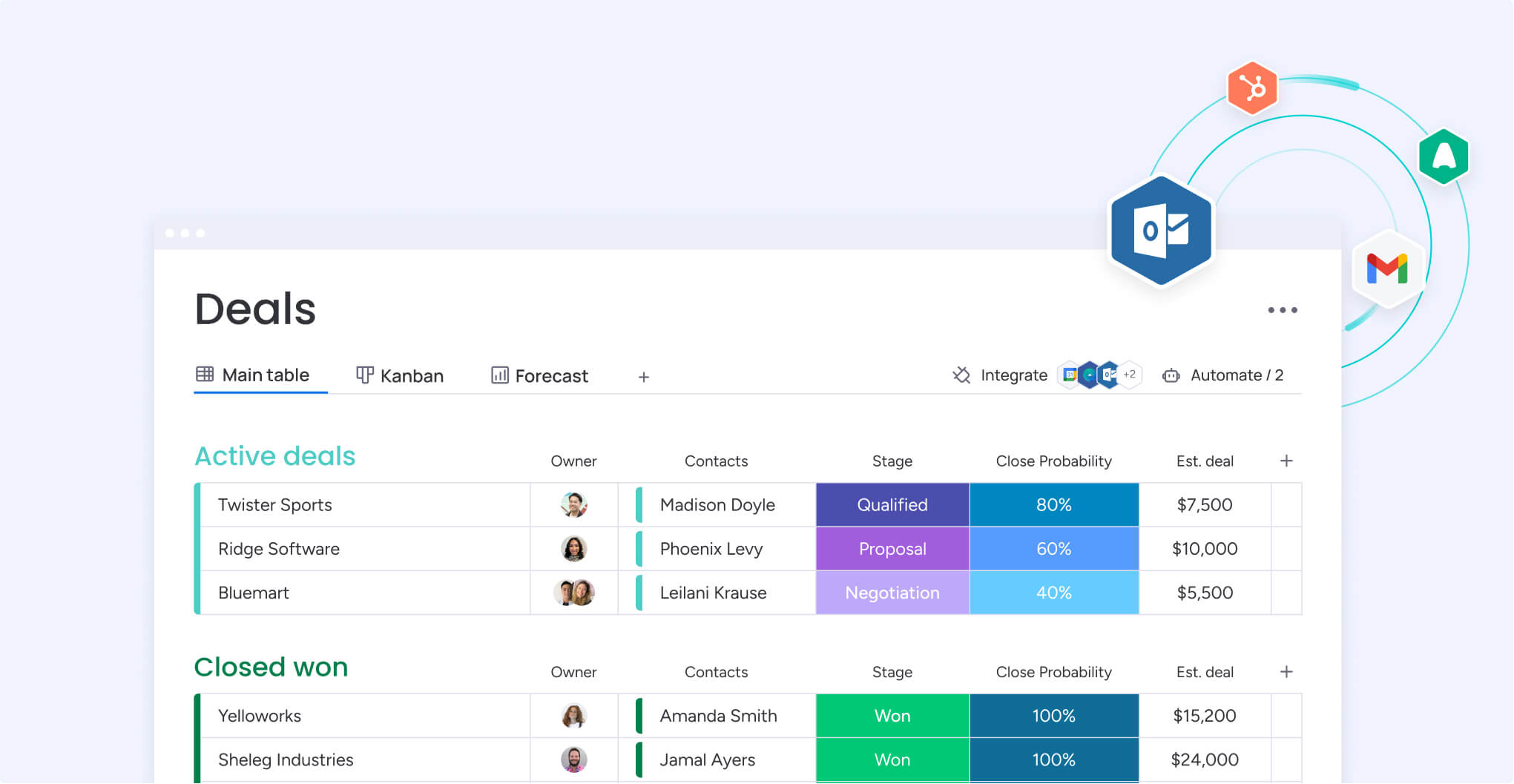
Traditional CRMs create friction at every turn. Data disappears between systems, teams resist logging in, and leadership lacks visibility into pipeline health. To solve this, the right platform eliminates these obstacles by aligning with how teams actually work.
For instance, a unified system like monday CRM connects sales, marketing, and service operations in one customizable workspace. Teams gain real-time visibility without rigid workflows or IT bottlenecks, enabling faster decisions and accelerated revenue growth.
AI blocks that anyone can use
Effective AI shouldn’t require technical expertise. Intuitive AI blocks transform complex tasks into simple drag-and-drop actions. Lead scoring, email personalization, and sentiment analysis become accessible to every team member.
Furthermore, custom automations adapt to specific workflows without coding. Hot leads receive immediate follow-up, high-value deals route to experienced reps, and teams redirect their energy from administrative tasks to revenue-generating activities.
One platform for every customer touchpoint
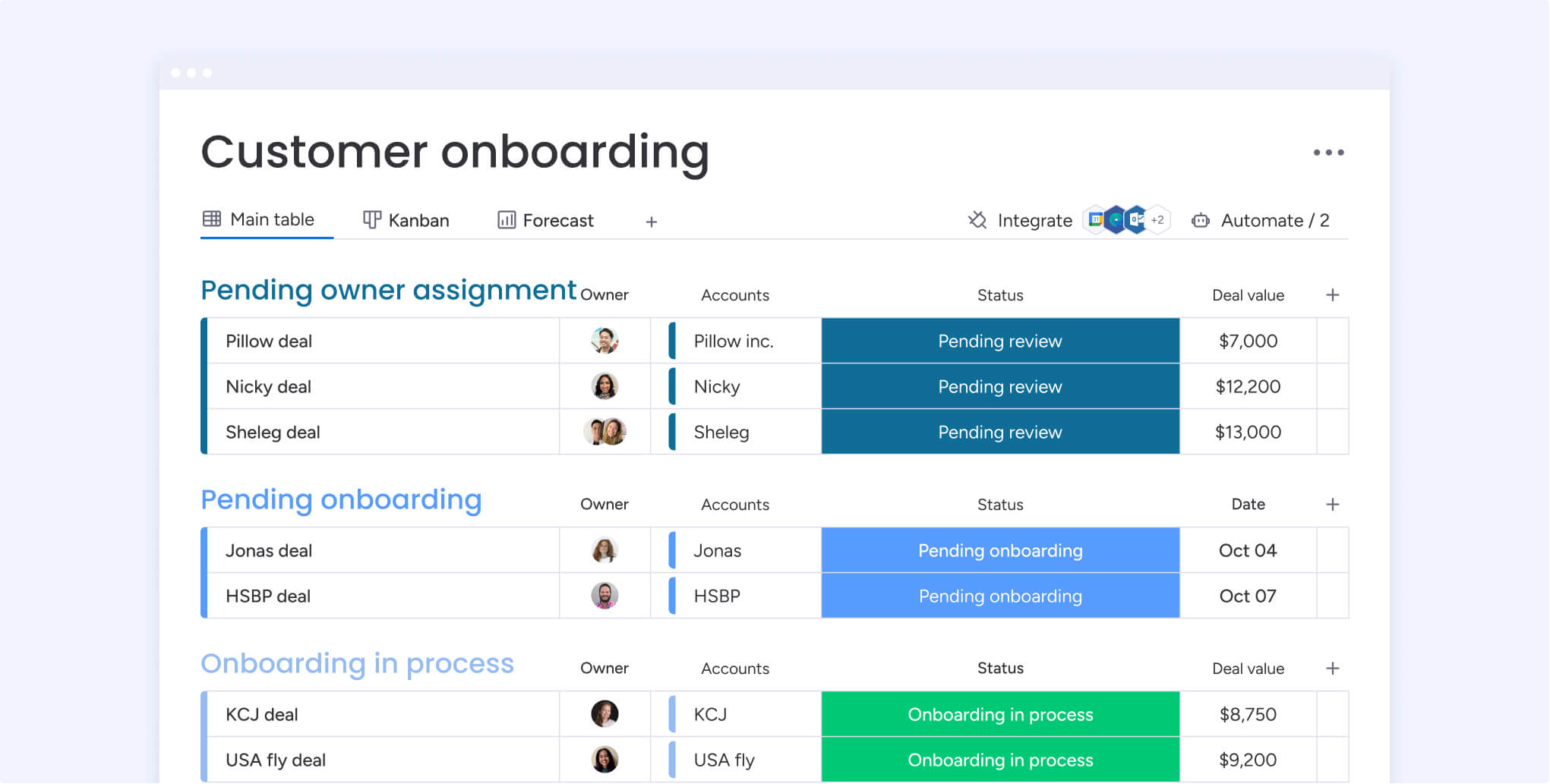
Managing customer relationships across disconnected applications creates gaps and delays. A centralized platform captures every interaction, from initial engagement through post-sale support, giving teams a single source of truth.
As a result, information flows seamlessly between departments. Marketing-generated leads become immediately visible to sales. Support ticket resolutions update the entire team. Customers experience consistency, and teams maintain complete context.
The CRM your team actually wants
Most CRMs prioritize management reporting over daily usability. Platforms designed for frontline users feature clear visuals and flexible customization. Mobile updates, at-a-glance risk identification, and streamlined workflows keep deals moving forward.
Shared boards and real-time collaboration transform selling from isolated data entry into coordinated teamwork. When everyone operates from the same information, execution accelerates naturally.
Frequently asked questions
How quickly can I implement customer engagement software?
Timelines vary from weeks to months, depending on your data and required integrations. Platform like monday CRM is built for a fast setup, so your team can get started without the usual delays.
What distinguishes customer engagement platforms from marketing automation tools?
Marketing automation focuses on lead nurturing and campaigns. A customer engagement platform manages the entire relationship, from first contact to renewal and beyond.
Will customer engagement software integrate with my existing CRM system?
While many platforms integrate, monday CRM has engagement features built-in. This gives you a single source of truth without juggling separate tools or messy integrations.
How do I ensure high team adoption rates for customer engagement software?
Adoption is highest with intuitive software that doesn't require extensive training. A platform like monday CRM is designed to be used, not just managed.
What data infrastructure do I need for AI-powered customer engagement features?
You don't need a complex data infrastructure. Solutions like monday CRM have AI built-in, making it accessible without a major tech overhaul.
How can I maintain customer trust while using AI in engagement strategies?
Maintain trust with transparency and by keeping a human in the loop for important interactions. AI should be used to make your team more effective, not to replace the human connection.

 Get started