Sales teams close deals, yet revenue remains unpredictable. Marketing generates leads, yet conversion rates plateau. Customer service resolves tickets, yet satisfaction scores stagnate. The gap between having a CRM and actually driving results comes down to one thing: operations.
CRM operations transforms messy customer data into a genuine revenue engine. It’s the backbone that automates daily workflows, maintains data integrity, and gives revenue teams the direct visibility they need to hit targets. Without operations, a CRM becomes expensive digital storage. With operations, it becomes the engine that scales a business.
This guide covers exactly what CRM operations entails, how to build a framework that delivers results, and why choosing the right platform speeds up implementation and drives team adoption.
Key takeaways
- Build operational excellence through strategic automation: transform your CRM from a digital filing cabinet into a revenue engine by automating workflows, standardizing processes, and creating real-time visibility across your entire customer journey.
- Focus on the three CRM pillars that drive results: operational CRM automates daily tasks, analytical CRM reveals data insights, and collaborative CRM breaks down team silos. Most organizations need all three working together.
- Implement in phases to minimize risk and maximize adoption: start with assessment and strategy, select the right platform, execute through phased deployment, and drive adoption through ongoing change management over 8-16 weeks.
- Leverage AI capabilities for competitive advantage: use features provided by solutions like monday CRM like email composition, timeline summarization, and intelligent automation to scale personalized customer experiences while reducing manual workload.
- Measure ROI through concrete metrics that matter: track operational efficiency (80%+ adoption), customer experience (sub-four hour response times), revenue impact (15-25% shorter sales cycles), and team productivity to prove value and guide optimization.
What is CRM operations?
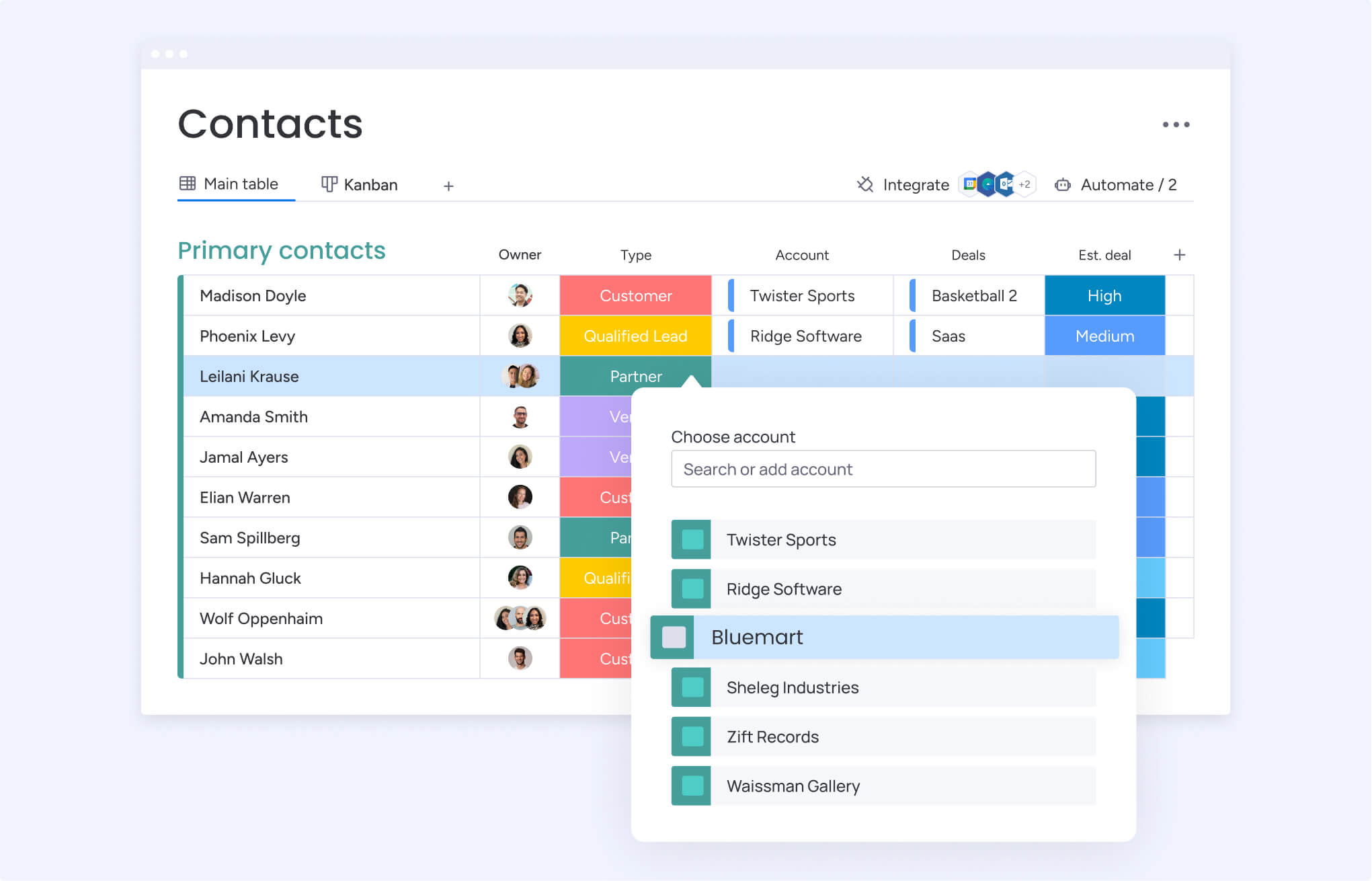
CRM operations transforms raw customer data into daily action by eliminating repetitive tasks, capturing every customer interaction, and showing your revenue teams exactly what’s working and what’s falling flat. It’s the systematic management of daily sales, marketing, and customer service workflows through a centralized platform.
While a CRM system is just software, CRM operations is the strategic framework that makes that software drive actual business results. Without this operational layer, you simply have a digital filing cabinet. With it, however, you have a revenue-generating machine that scales alongside your business.
it is important to remember that just buying a CRM won’t fix anything. You need smart processes, the right automation, and clean data rules to turn random customer conversations into revenue you can bank on. CRM operations orchestrates people, processes, and technology to create a system that actually works.
Effective CRM operations tackles five core responsibilities that work together to create operational excellence:
- Process standardization: creating consistent workflows across teams so everyone follows proven methods, not personal preferences.
- Data governance: maintaining clean, accessible data through validation rules and deduplication processes.
- System optimization: configuring automation, customizing fields, and connecting your CRM with other business systems.
- Performance monitoring: tracking metrics and building dashboards that reveal bottlenecks and opportunities.
- Team enablement: training teams and providing resources that help them extract maximum value from the platform.
Are deals falling through cracks because follow-ups get forgotten? Is your team spending more time on data entry than selling? These are operational problems that CRM operations solves through automation and process design.
3 types of CRM: operational vs analytical vs collaborative
Understanding the three CRM types helps you identify which capabilities align with your current priorities. Each type serves different purposes but works together to create comprehensive customer relationship management. Most organizations need elements of all three types working together. However, operational CRM typically forms the foundation. It creates the transactional data that analytical and collaborative capabilities build upon.
| CRM type | Primary focus | Key capabilities | Business impact |
|---|---|---|---|
| Operational | Process automation | Sales pipeline management, marketing automation, service ticketing | Reduced manual work, faster response times, consistent execution |
| Analytical | Data insights | Customer segmentation, predictive modeling, trend analysis | Improved targeting, accurate forecasting, optimized resource allocation |
| Collaborative | Team alignment | Shared customer views, cross-department workflows, unified communication | Consistent customer experience, reduced duplication, improved handoffs |
Operational CRM: automating customer-facing processes
Operational CRM focuses on automating front-office processes that directly interact with customers. This includes:
- Managing sales pipelines: tracking opportunities from lead capture through deal closure.
- Orchestrating marketing campaigns: coordinating initiatives across multiple channels.
- Routing support tickets: directing customer issues to the right agents.
Sales teams use it to manage opportunities and generate quotes, aided by sales operations. Marketing teams leverage it for lead nurturing and campaign tracking. Service teams rely on it for case management and SLA tracking.
The emphasis is on real-time transaction processing where every customer touchpoint gets captured, tracked, and optimized without delay. When a lead enters your system, operational CRM automatically enriches the record, assigns it based on territory rules, creates follow-up tasks, and triggers personalized emails all without manual intervention.
Analytical CRM: transforming data into strategic insights
Analytical CRM transforms raw data into strategic insights. Rather than managing day-to-day transactions, it uncovers patterns in customer behavior, segments audiences for targeted campaigns, and predicts which accounts are likely to churn (CRM for SaaS solutions heavily rely on churn projections).
This intelligence guides strategy by revealing:
- Which customer segments are most profitable: identifying high-value audiences for targeted resource allocation.
- Which marketing channels drive quality leads: revealing the sources that generate the best conversion opportunities.
- Which products have the strongest cross-sell potential: uncovering opportunities to expand customer relationships.
The right platform delivers dashboards and forecasting tools that go beyond displaying numbers to provide actionable guidance for closing more deals. Track conversion rates by stage, forecast revenue with increasing accuracy, and identify exactly which activities correlate with closed deals.
Collaborative CRM: breaking down departmental silos
Collaborative CRM breaks down silos between departments. When a customer calls support, the representative sees the entire relationship history including sales conversations and marketing engagement (CRM for SaaS companies unify these interactions for subscription-based models).
When sales follows up on a marketing lead, they have complete context about content engagement and expressed pain points (CRM for SaaS platforms streamline these cross-functional handoffs).
This shared visibility ensures consistent communication regardless of which team member handles the interaction.
Essential components of operational CRM software
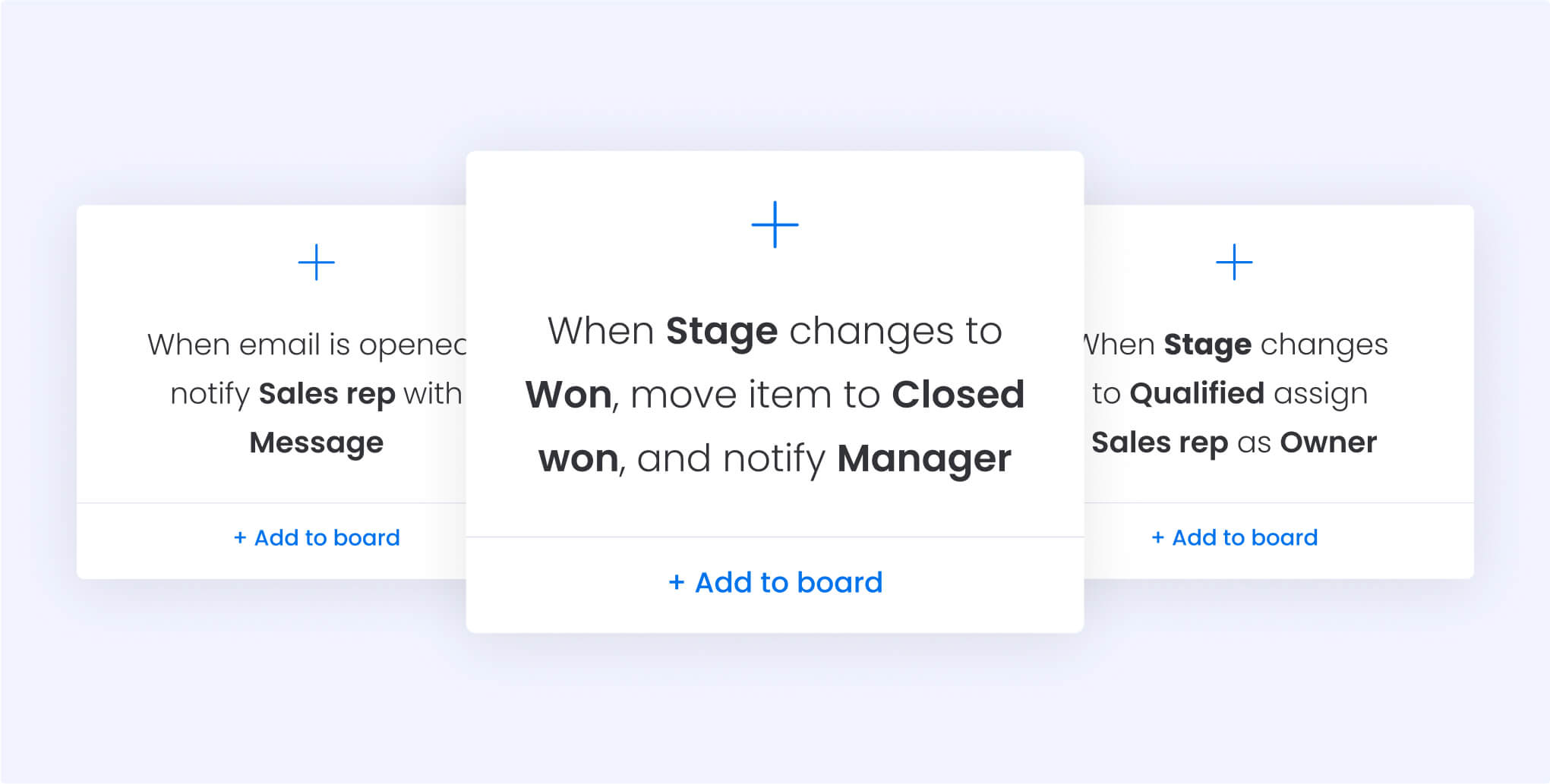
Operational CRM systems are built on three core functional areas that automate and optimize customer-facing processes. Each component addresses specific business needs while integrating with others to create a comprehensive operational framework.
Understanding these components helps you evaluate which capabilities matter most for your organization and how they work together to drive efficiency.
Sales force automation: streamlining opportunity management
Sales force automation encompasses the platforms and processes that help sales teams manage opportunities efficiently:
- Lead management: captures prospects from multiple sources and routes them automatically based on territory or expertise.
- Opportunity tracking: provides visibility into deal status, next steps, and closing probability.
- Pipeline visualization: presents deals in intuitive stages that reflect your actual sales process.
- Quote generation: automates proposal creation with accurate pricing and approval workflows.
- Sales forecasting: aggregates pipeline data to predict future revenue based on historical patterns.
These capabilities reduce manual data entry, ensure consistent follow-up through automated reminders, and provide the visibility needed for effective sales coaching.
Teams using advanced solutions like monday CRM can drag and drop deals through visual pipelines, set up conditional automation that trigger based on deal stage changes, and track team performance through leaderboard widgets without interruption, all part of a sales operations strategy.
Marketing automation: connecting campaigns to sales outcomes
Marketing automation creates seamless connections between campaigns and sales outcomes:
- Campaign management: orchestrates multi-channel initiatives while tracking performance in real-time.
- Lead nurturing: delivers relevant content based on prospect behavior and engagement.
- Email marketing: enables personalized communications at scale without manual intervention.
- Lead scoring: assigns values to prospects based on demographic fit and behavioral signals.
- Social media integration: captures leads from social platforms and tracks engagement.
Marketing automation platforms deliver qualified leads to sales teams with full context about their interests and engagement patterns. Modern CRM solutions provide mass email capabilities and tracking features that enable teams to send personalized campaigns and monitor performance metrics like open rates, click-throughs, and responses directly within the platform.
Customer service automation: improving response quality
Customer service automation improves response times and service quality:
- Ticket management: captures issues from multiple channels into unified case records.
- Case routing: assigns tickets to appropriate team members based on expertise and workload.
- Knowledge base integration: surfaces relevant help articles for faster resolution.
- Communication tracking: maintains complete histories of all customer interactions.
- SLA management: monitors response and resolution times against service agreements.
7 benefits of implementing CRM operations
Organizations that implement comprehensive CRM operations frameworks achieve measurable improvements across efficiency, customer experience, and revenue metrics. These benefits compound over time as processes mature and adoption deepens.
The following breakdown illustrates how CRM operations transforms business performance across seven key areas.
1. Automated workflow efficiency
Automation frees your team from repetitive tasks, allowing them to focus on high-impact activities. When a new lead enters the system, CRM operations can instantly enrich the record, assign it based on rules, create follow-up tasks, and send welcome emails — all without human intervention.
Key benefits include:
- Reduced administrative work: teams spend less time on data entry and manual processes.
- Eliminated data entry errors: automated validation prevents inconsistent or incomplete records.
- Consistent process execution: every lead follows the same proven workflow regardless of individual habits.
2. Enhanced customer experience at scale
CRM operations lets you deliver personal service to more customers without hiring an army of new people. Every customer receives timely follow-up, personalized recommendations, and consistent service quality. Response times improve because routing rules immediately direct inquiries to qualified representatives.
AI capabilities provided by platforms like monday CRM, like email composition and timeline summarization, help teams maintain personalization even as volume grows.
3. Real-time performance visibility
Instead of waiting days for manual reports, you gain access to real-time dashboards that highlight performance levels instantly. Specifically, sales leaders can monitor pipeline health, while marketing teams track campaign ROI and lead quality as they happen. This visibility enables rapid optimization of underperforming initiatives before they impact the bottom line.
4. Revenue growth acceleration
Sales cycles shorten when automation eliminates delays between stages, by following sales operations best practices. Leads get routed instantly, follow-ups happen automatically, and approvals flow through predefined workflows.
Revenue impact includes:
- Faster deal closure: automated routing and follow-up sequences accelerate sales cycles.
- Improved conversion rates: timely engagement and data-driven insights drive more deals forward.
- Increased deal sizes: better qualification and nurturing processes identify higher-value opportunities.
5. Reduced operational costs
Cost savings extend beyond obvious automation benefits. Standardized processes mean new team members become productive faster. Validation rules prevent bad data entry that would require cleanup later. When processes are automated, you need fewer people doing manual work and can redirect resources to revenue-generating activities.
6. Improved team productivity
Sales representatives spend more time in customer conversations when administrative tasks disappear, thanks to sales operations tools that automate mundane tasks. Marketing teams focus on strategy rather than list management. Service representatives resolve more cases with instant access to customer context.
Automation features in modern CRM platforms can save teams 10+ hours per week on manual tasks, time that gets redirected to high-value activities.
7. Data-driven decision making
CRM operations replaces intuition with actionable insights. You can identify which lead sources produce quality opportunities, which sales activities correlate with success, which customer segments have highest lifetime value, and which service issues indicate churn risk.
These insights guide strategic planning and resource allocation decisions.
Building your CRM operations framework: a 4-phase implementation roadmap
Implementing CRM operations requires a structured approach that balances speed with thoroughness. This phased methodology ensures successful deployment while minimizing disruption to ongoing business operations. Each phase builds on the previous one to create a comprehensive operational foundation.
| Phase | Duration | Key activities | Success metrics |
|---|---|---|---|
| Assessment | two to four weeks | Process mapping, stakeholder interviews, goal definition | Documented current state, specific objectives, stakeholder alignment |
| Selection | three to six weeks | Vendor evaluation, demos, pilot programs | Platform selected, implementation plan approved |
| Implementation | eight to 16 weeks | Data migration, configuration, integration, training | System live, users trained, workflows automated |
| Adoption | Ongoing | Monitoring, feedback, optimization | Usage rates >80%, data quality >95% |
Phase 1: assessment and strategy development
Start by documenting your current state through process mapping sessions with each customer-facing team. These sessions reveal where leads flow through your organization, where handoffs break down, and where manual workarounds compensate for system limitations.
Key assessment activities:
- Interview stakeholders: from sales, marketing, service, and operations to uncover different perspectives on priorities.
- Map existing processes: to identify gaps, redundancies, and improvement opportunities.
- Define specific objectives: rather than vague goals.
Instead of “improve efficiency,” target “reduce average sales cycle from 45 to 30 days” or “increase lead-to-opportunity conversion from 12% to 18%.” These concrete goals guide platform selection and measure success.
Phase 2: select the right technology stack for your needs
Evaluate platforms against requirements identified during assessment. Consider functional capabilities, integration requirements, customization flexibility, user experience, and total cost of ownership. Structure demos around real use cases rather than generic feature tours.
Platform assessment criteria:
- Functional capabilities: does it handle your specific workflows and processes?
- Integration requirements: can it connect with your existing tech stack?
- Customization flexibility: will it adapt to your unique business needs?
- User experience: is it intuitive enough for widespread adoption?
- Total cost of ownership: what are the hidden costs beyond licensing?
Test platforms with actual data and workflows through pilot programs. Map all systems that need CRM integration including marketing automation, accounting, support platforms, data enrichment services. Validate that connections are feasible and maintainable.
Platforms like monday CRM simplify this through no-code customization that business users can configure without technical expertise.
Phase 3: execute implementation through phased deployment
Execute deployment in manageable phases to minimize risk and ensure smooth adoption. Start with data migration by cleaning and deduplicating existing records. Map fields from source systems to the new platform. Conduct test migrations before final cutover.
Data migration and system configuration:
- Clean and deduplicate: existing records before migration.
- Map fields: from source systems to the new platform.
- Conduct test migrations: before final cutover.
- Configure the system: by translating documented processes into automated workflows, custom fields, and validation rules.
Integration and training:
- Set up integrations: to ensure data flows seamlessly between systems.
- Begin user training: with power users who will support their teams.
- Expand training: to broader groups with role-specific training focused on daily tasks rather than comprehensive features.
Phase 4: drive adoption through change management
Finally, ensure the platform becomes embedded in daily workflows through ongoing training and support. Monitor usage metrics to identify teams needing additional help. Collect feedback through surveys and meetings to surface refinement opportunities.
Adoption strategies:
- Monitor usage metrics: to identify teams needing additional support.
- Collect regular feedback: through surveys and meetings.
- Review automation effectiveness: regularly and identify new opportunities.
- Provide ongoing training: to maintain proficiency and discover new capabilities.
Review automation effectiveness regularly and identify new opportunities based on usage patterns.
How do you know if you’re ready for operational CRM? If deals are falling through cracks, your team spends more time on admin than selling, or you can’t confidently forecast next quarter — you need more efficient operations.
AI-powered strategies for CRM operations success
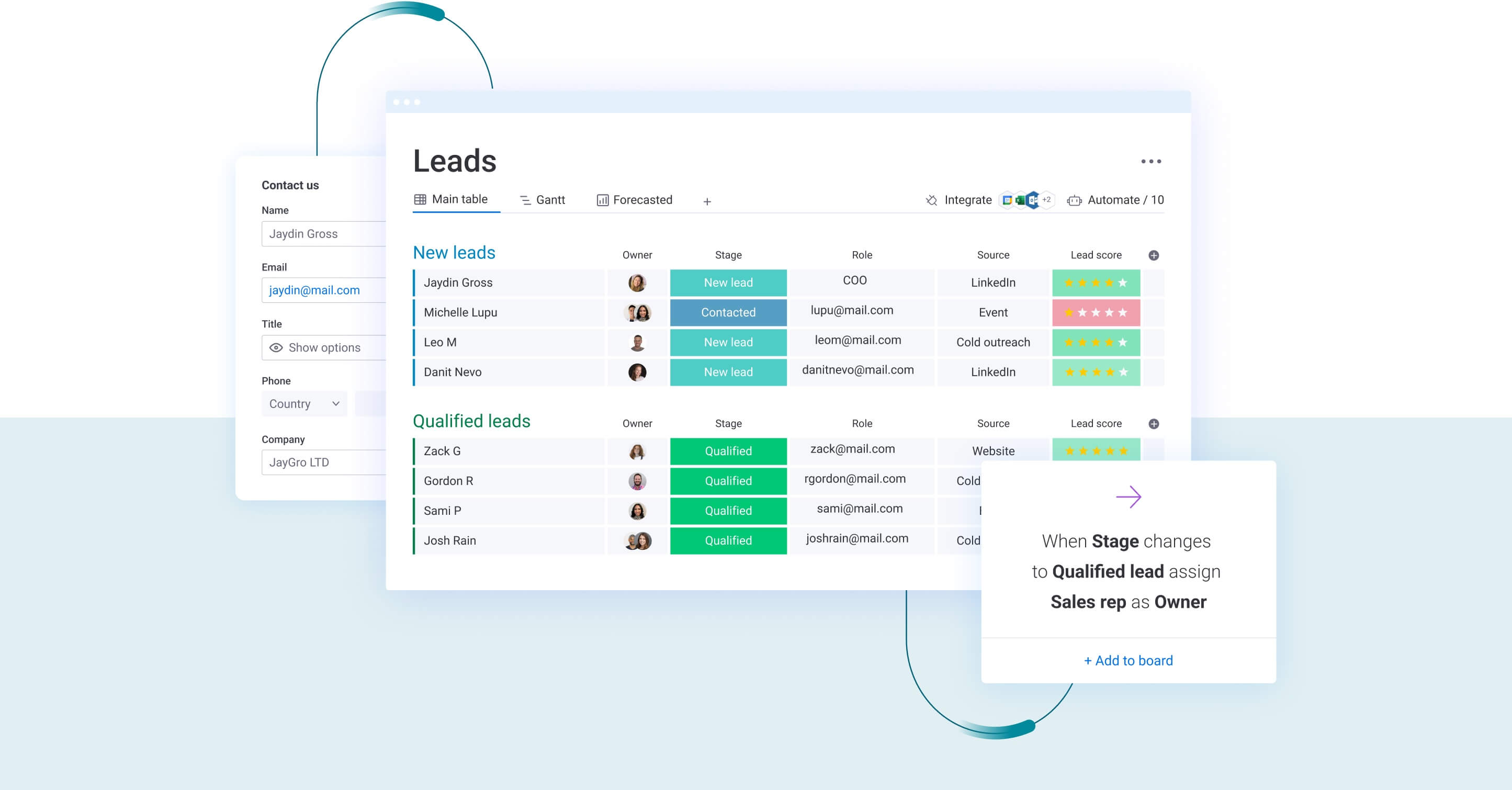
AI turns your CRM from a glorified address book into a system that actually makes decisions and handles complex work for you. To be clear: AI is no longer a luxury. In fact, organizations failing to adopt it risk falling behind competitors who are already leveraging these tools to scale personalized experiences while reducing manual workloads.
Implementing AI for customer engagement
AI-powered customer engagement enables organizations to handle routine interactions while maintaining quality. AI can qualify incoming leads by gathering information and routing qualified prospects with complete context. It provides round-the-clock support by answering questions and escalating complex issues when necessary.
AI differs from traditional automation in several key ways:
- Conversational intelligence: AI can actually carry on natural conversations instead of following rigid, pre-programmed scripts.
- Contextual understanding: it interprets what customers really mean, not just the literal words they use.
- Adaptive decision-making: AI makes smart decisions based on patterns and context rather than executing fixed if-then rules.
- Email composition: AI drafts personalized messages based on customer context.
- Timeline summarization: instantly surfaces key information from lengthy interaction histories.
- Sentiment detection: identifies customer mood to prioritize responses.
- Auto-assignment: routes work to optimal team members based on skills and performance.
Leveraging predictive analytics for strategic insights
Predictive analytics transforms historical data into forward-looking insights. AI analyzes patterns to forecast which opportunities will close, which accounts show churn signals, and where to allocate resources.
These predictions are actionable because they’re specific: identifying exactly which accounts need attention and what actions will drive outcomes.
Achieving personalization without complexity
AI-driven personalization ensures that systems automatically adapt content, timing, and suggestions based on individual customer behavior. As a result, email campaigns adjust to a recipient’s specific interests, and communication timing aligns with their unique engagement patterns.
Ultimately, teams achieve sophisticated, one-to-one personalization without the burden of manual segmentation or managing complex rule sets — the kind of outcome broader AI operations management software delivers when applied to processes beyond the CRM alone.
CRM operations team structure and roles
Successful CRM operations requires dedicated resources with both technical expertise and business acumen. The team structure scales with organizational size, but core responsibilities remain consistent. Building the right team ensures your CRM operations framework delivers sustained value across all customer-facing functions.
| Role | Primary responsibilities | Required skills | Interaction points |
|---|---|---|---|
| CRM operations manager | Strategy, administration, optimization, training | System configuration, process design, change management | All departments, leadership, vendors |
| Sales operations analyst | Pipeline analysis, forecasting, process optimization | Data analysis, sales methodology, reporting | Sales teams, finance |
| Marketing operations specialist | Campaign tracking, lead management, automation | Marketing technology, campaign analytics, integration | Marketing, sales operations |
| System administrator | User management, security, troubleshooting | Technical administration, data architecture | IT, all users, vendors |
CRM operations manager: driving strategic alignment
The CRM operations manager drives strategic planning by defining the roadmap and aligning system capabilities with business needs. They translate requirements into specifications, establish data governance policies, and optimize workflows based on usage patterns.
Key responsibilities include:
- Strategic roadmap development: aligning CRM capabilities with business objectives.
- Process optimization: continuously improving workflows based on performance data.
- Cross-functional coordination: ensuring all teams maximize platform value.
- Change management: leading adoption initiatives and training programs.
This role requires balancing technical proficiency with strategic thinking.
Cross-functional collaboration essentials
Cross-functional collaboration is essential since CRM operations intersects with every customer-facing function. For instance, sales teams must define pipeline management needs, while marketing specifies lead scoring criteria and service teams outline case management workflows.
To manage this overlap, the operations team facilitates collaboration through regular alignment meetings and provides shared visibility into all system changes.
Training and skill development requirements
Training and skill development extends beyond initial platform training. Technical skills include system navigation, report building, and automation creation. Strategic skills encompass understanding how CRM data informs decisions and identifying improvement opportunities.
Plan for 40-80 hours of initial training for operations team members, with ongoing education consuming 5-10% of time annually.

Measuring ROI from CRM operations
To prove your CRM is actually worth the investment, you need to connect what people do in the system to real business results that matter. Track metrics across four categories to demonstrate impact and guide optimization efforts. Effective measurement ensures continuous improvement and justifies ongoing investment in operational excellence.
| KPI category | Specific metrics | Target benchmark |
|---|---|---|
| Operational efficiency | User adoption rate, data quality score, automation coverage | Adoption >80%, quality >90% |
| Customer experience | Response time, resolution time, satisfaction score | Response |
| Revenue impact | Sales cycle length, conversion rates, deal size | 15-25% cycle reduction, 10-20% conversion improvement |
| Team productivity | Activities per rep, pipeline coverage, quota attainment | 50+ activities/day, 3-4× coverage, >75% attainment |
Calculating business impact
Calculate business impact by establishing baseline metrics before implementation, then measuring improvements after deployment. Cost savings come from reduced software expenses, eliminated manual work, and fewer errors requiring correction.
Revenue gains result from:
- Shorter sales cycles: automation eliminates delays between stages.
- Improved conversion rates: better lead qualification and nurturing.
- Increased deal sizes: enhanced opportunity management and upselling.
Optimization strategies for continuous improvement
Optimization strategies ensure increasing value over time. Use metrics to identify underperforming areas. Test improvements systematically through A/B testing. Benchmark against industry standards to reveal competitive positioning.
Customizable dashboards and reporting widgets provided by solutions like monday CRM make tracking these metrics straightforward with real-time updates showing progress against targets.
How to select operational CRM software?
Choosing the right operational CRM platform requires evaluating current needs while planning for future growth. A structured evaluation framework reduces risk and increases successful deployment likelihood. The right platform becomes the foundation for scalable revenue operations that adapt as your business evolves.
Must-have features for competitive operations
Must-have features for competitive operations include AI capabilities that actually work in daily workflows, not just dashboards. The platform needs mobile optimization for field teams, integration flexibility for your tech stack, and scalability for growing data volumes.
Essential capabilities include:
- AI-powered automation: intelligent data entry, predictive analytics, and natural language interfaces.
- Mobile optimization: full functionality for field teams and remote workers.
- Integration flexibility: native connections to your existing tech stack.
- Scalability: performance that is maintained as data volumes and user counts grow.
Modern CRM platforms offer AI-powered data entry, predictive analytics, intelligent automation, and natural language interfaces that make sophisticated operations accessible to teams of all sizes.
Integration requirements and considerations
Integration requirements start with mapping your existing technology stack. Document which systems must exchange data, required frequency, and whether integration is one-way or bidirectional.
Key evaluation criteria:
- Native integrations: which platforms connect without middleware?
- API capabilities: how flexible is custom integration development?
- Data synchronization: can you maintain real-time or near-real-time updates?
- Maintenance requirements: how much ongoing technical support is needed?
Evaluate native integrations, middleware options, and custom development needs. Look for platforms with open APIs and extensive integration libraries that enable organizations to connect their entire tech stack without vendor lock-in.
Scalability and customization factors
Scalability and customization ensure the platform adapts to evolving requirements. Consider user capacity, data limits, API rates, and performance at scale. Examine how pricing changes as you grow.
Critical questions to evaluate:
- Platform adaptability: can you adapt the platform to your processes or must you conform to rigid structures?
- Pricing scalability: how does pricing scale with growth?
- System limits: what are the limits on data storage, API calls, and customization?
- User empowerment: can business users make changes without IT involvement?
Assess whether you can adapt the platform to your processes or must conform to rigid structures. No-code configuration lets business users adapt CRM platform as needs evolve, reducing dependence on IT resources.
Will your CRM play nicely with your existing stack? How painful will migration be? What are the hidden costs beyond licensing? These questions determine long-term success more than feature lists.

“With monday CRM, we’re finally able to adapt the platform to our needs — not the other way around. It gives us the flexibility to work smarter, cut costs, save time, and scale with confidence.”
Samuel Lobao | Contract Administrator & Special Projects, Strategix
“Now we have a lot less data, but it’s quality data. That change allows us to use AI confidently, without second-guessing the outputs.”
Elizabeth Gerbel | CEO
“Without monday CRM, we’d be chasing updates and fixing errors. Now we’re focused on growing the program — not just keeping up with it."
Quentin Williams | Head of Dropship, Freedom Furniture
“There’s probably about a 70% increase in efficiency in regards to the admin tasks that were removed and automated, which is a huge win for us.“
Kyle Dorman | Department Manager - Operations, Ray White
"monday CRM helps us make sure the right people have immediate visibility into the information they need so we're not wasting time."
Luca Pope | Global Client Solutions Manager at Black Mountain
“In a couple of weeks, all of the team members were using monday CRM fully. The automations and the many integrations, make monday CRM the best CRM in the market right now.”
Nuno Godinho | CIO at Velv
“monday.com provides developmental flexibility, operational efficiency, and data transparency — all in one place. We became a company that moved from chasing data to leading with it.”
Hyunghan Lee | Team Lead, Sandbox Network
"monday.com brought every part of our business into one connected space. The harmony between work management and CRM has become our operating system — giving us the clarity and confidence to scale.”
Jennifer Chinburg | Executive Vice President of Corporate Development & Brand, Chinburg Properties
“We just weren’t getting value from our old CRM. With monday.com, it's a thousand times better. Our sales teams are more informed, more consistent, and far more connected."
James Arnold | Chief Operating Officer, CenversaMake CRM operations your competitive advantage
CRM operations is the strategic engine that converts fragmented data into predictable revenue. By providing the efficiency, visibility, and agility modern teams require, a solid operational framework transforms a static database into a scalable revenue engine.
Success depends on selecting a platform that aligns with your workflow. Specifically, you must evaluate if users can customize the system without IT support, if AI truly reduces effort, and if integrations are native. These factors determine whether your operations accelerate or constrain growth.
Looking ahead, AI will increasingly manage routine decisions, allowing teams to focus on strategy as tech stacks become more integrated. As sales cycles lengthen and pre- and post-sale activities merge, operational complexity will only grow.
To succeed, choose a platform that adapts to these shifts rather than one that locks you into outdated methods. The organizations winning today understand that operational excellence is a journey of continuous improvement—driven by the right combination of people, processes, and technology.
The content in this article is provided for informational purposes only and, to the best of monday.com’s knowledge, the information provided in this article is accurate and up-to-date at the time of publication. That said, monday.com encourages readers to verify all information directly.
Frequently asked questions
What is the difference between CRM and CRM operations?
The difference between CRM and CRM operations is that CRM typically refers to the software platform itself, while CRM operations is the strategic framework of people, processes, and practices that makes the software drive business results. CRM operations encompasses the people, processes, and practices that determine how effectively the CRM platform drives business outcomes.
How long does operational CRM implementation take?
Operational CRM implementation typically takes 8-16 weeks for full deployment, though basic functionality can often be established within 2-4 weeks. The timeline varies based on data migration complexity, integration requirements, customization needs, and the number of users requiring training.
What budget should I allocate for CRM operations software?
CRM operations software costs typically range from $20-200 per user per month, with additional implementation and training costs representing 20-50% of annual software costs. Total cost includes licensing fees, implementation services, integration development, ongoing administration, and training programs.
Can small businesses benefit from operational CRM systems?
Small businesses can significantly benefit from operational CRM systems, especially those with growing customer bases who need to scale sales and service processes efficiently. Platforms with no-code configuration and AI capabilities make sophisticated CRM operations accessible without requiring large IT teams.
How does AI enhance operational customer relationship management?
AI enhances operational CRM by automating data entry and enrichment, providing predictive insights about deal outcomes and customer behavior, personalizing interactions at scale, and identifying patterns humans might miss. These capabilities enable exceptional customer experiences while reducing manual work.
What training do CRM operations teams need?
CRM operations teams need training in system administration, data analysis, process optimization, and change management, typically requiring 40-80 hours of initial training plus ongoing education. Training should cover both technical platform skills and strategic capabilities like translating business requirements into system configurations.