


The best sales teams don’t just close deals — they turn customer feedback into a competitive advantage that drives predictable revenue growth. When you systematically capture what customers think and feel throughout the sales process, you’ll spot buying signals earlier, prevent churn before it happens, and uncover expansion opportunities that others miss.
This guide reveals 8 proven methods to collect customer feedback and transform it into actionable revenue intelligence. You’ll discover how to map feedback collection to your sales process, build automated workflows that scale, and leverage AI-powered insights to boost win rates, accelerate deals, and increase customer lifetime value.
Key takeaways
- Collect customer input, analyze patterns, implement changes, and show customers how their feedback created real improvements to keep them engaged in a continuous feedback loop.
- Ask for demo feedback within 24 hours, post-purchase input at 3-5 days, and renewal feedback 60-90 days early to capture meaningful insights when they matter most.
- Spot warning signs like adoption struggles, unmet expectations, and competitive threats before customers cancel, giving you time to intervene and save the relationship.
- Leverage AI-powered summaries, sentiment detection, and automated routing to turn scattered customer input into actionable sales intelligence without switching between systems.
- Prioritize input from top revenue accounts, strategic relationships, and at-risk customers to maximize impact with monday CRM’s AI capabilities that automatically detect sentiment and route feedback to the right team members.
What is customer feedback?
Customer feedback is what prospects and customers tell you about their experience with your sales process, product, and service. That means demo reactions, pricing concerns, onboarding challenges, renewal decisions — all of it. For revenue teams, feedback is intelligence that directly affects deal velocity, win rates, and customer lifetime value.
Revenue-focused feedback goes deeper than customer satisfaction surveys. It captures buying signals, decision criteria, and competitive intel that actually shape your pipeline. When a prospect mentions they’re evaluating 3 vendors during a demo, that’s feedback. When a customer struggles with implementation, that’s feedback. When an account champion shares budget concerns, that’s feedback that needs immediate action.
Understanding the 3 types of revenue-focused feedback
Revenue teams deal with 3 types of feedback, and each one serves a different purpose. Know these categories and you’ll capture the right insights at the right time — leading to more closed deals.
- Prospect insights cover information gathered during discovery calls, demos, and negotiations. This includes buying criteria and decision-making processes, budget considerations and timeline constraints, and competitive evaluations and feature requirements.
- Deal-stage feedback captures real-time input about pricing concerns, feature gaps, or stakeholder objections that impact deal progression. When a champion shares that their CFO has concerns about implementation timeline, you need to address that immediately to keep the deal moving.
- Post-sale intelligence encompasses onboarding experiences, product adoption patterns, and expansion opportunities. A customer struggling with a specific workflow signals both a retention risk and an opportunity for proactive support that builds trust.
Building an effective customer feedback loop
A customer feedback loop is simple: collect feedback, analyze it, act on it, then show customers what changed. For revenue teams, this loop turns scattered customer input into real improvements that boost sales performance.
The 4 stages work together to create measurable impact:
| Stage | Purpose | Revenue impact |
|---|---|---|
| Collection | Gathering feedback at strategic touchpoints | Captures critical insights before they're lost |
| Analysis | Converting raw feedback into actionable intelligence | Transforms data into decisions |
| Action | Implementing changes to sales processes and messaging | Drives measurable improvements |
| Communication | Showing customers how their feedback created change | Builds trust and encourages participation |
Your feedback loop needs to work inside your CRM and sales workflows. When a customer shares concerns during a quarterly review, that insight should reach the account manager, shape the renewal strategy, and kick off follow-up — all automatically.
When you collect feedback but never act on it, these things happen:
- Customers stop participating because they see no value
- Sales teams miss intelligence that could prevent churn or accelerate deals
Why customer feedback drives sales success
Customer feedback gives you revenue intelligence that directly impacts sales predictability, retention, and deal speed. Teams that treat feedback as real intelligence consistently beat teams that see it as just another box to check.
Boost sales predictability and forecasting
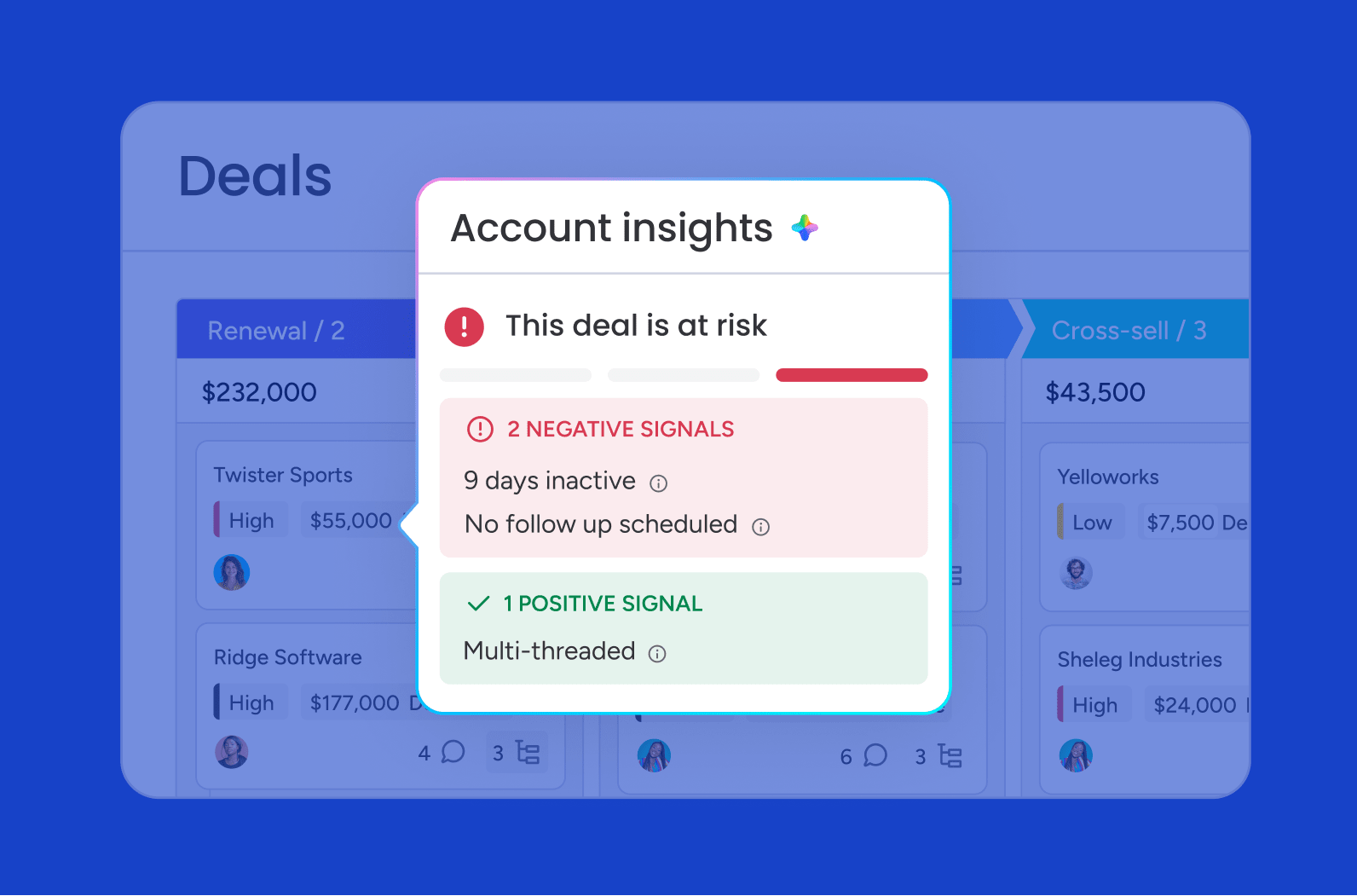
Accurate forecasts depend on understanding customer sentiment and buying signals throughout your sales cycle. Customer feedback catches early warning signs and validates pipeline health in ways standard CRM data can’t.
How does your team currently identify deals at risk before they stall? Feedback-driven insights improve forecast accuracy in these ways:
- Deal risk indicators: Feedback reveals customer hesitations, budget concerns, or stakeholder misalignment before deals slip. A prospect who rates their demo experience as “somewhat helpful” signals a deal needing attention, even if the opportunity stage looks healthy.
- Buying timeline validation: Real customer input on decision-making processes helps sales leaders predict close dates more accurately than relying on rep estimates alone. When prospects share that budget approval requires board sign-off, you can adjust forecasting accordingly.
- Win/loss pattern recognition: Consistent feedback themes emerge over time. If lost deals repeatedly cite “implementation concerns” while won deals highlight “ease of setup,” you can identify which current opportunities are likely to close.
This intelligence lets revenue leaders shift resources before deals stall. A sales manager who sees feedback indicating 3 enterprise deals have stakeholder alignment issues can prioritize coaching time on those accounts.
Reduce customer churn before it happens
Collecting feedback proactively helps you spot at-risk customers while you can still save them. Feedback acts as an early warning system — it shows you problems before customers cancel.
Revenue teams use feedback to spot 3 churn signals that need immediate attention:
- Adoption challenges: Customers struggling with onboarding or product usage signal potential disengagement. A customer reporting difficulty setting up their first workflow needs proactive support before frustration leads to cancellation.
- Unmet expectations: Gaps between what was promised during sales and what customers experience post-purchase surface through feedback. This points to either a sales messaging issue or a customer success intervention need.
- Competitive threats: Customers evaluating alternatives or experiencing pain points that competitors could exploit emerge through check-in conversations. A customer mentioning they’ve been “looking at what else is out there” provides critical retention intelligence.
monday CRM’s Emails & Activities feature logs every interaction in one chronological view. This centralized communication history helps account managers spot warning signs across the full customer relationship, not just isolated touchpoints.
Accelerate deal velocity with real insights
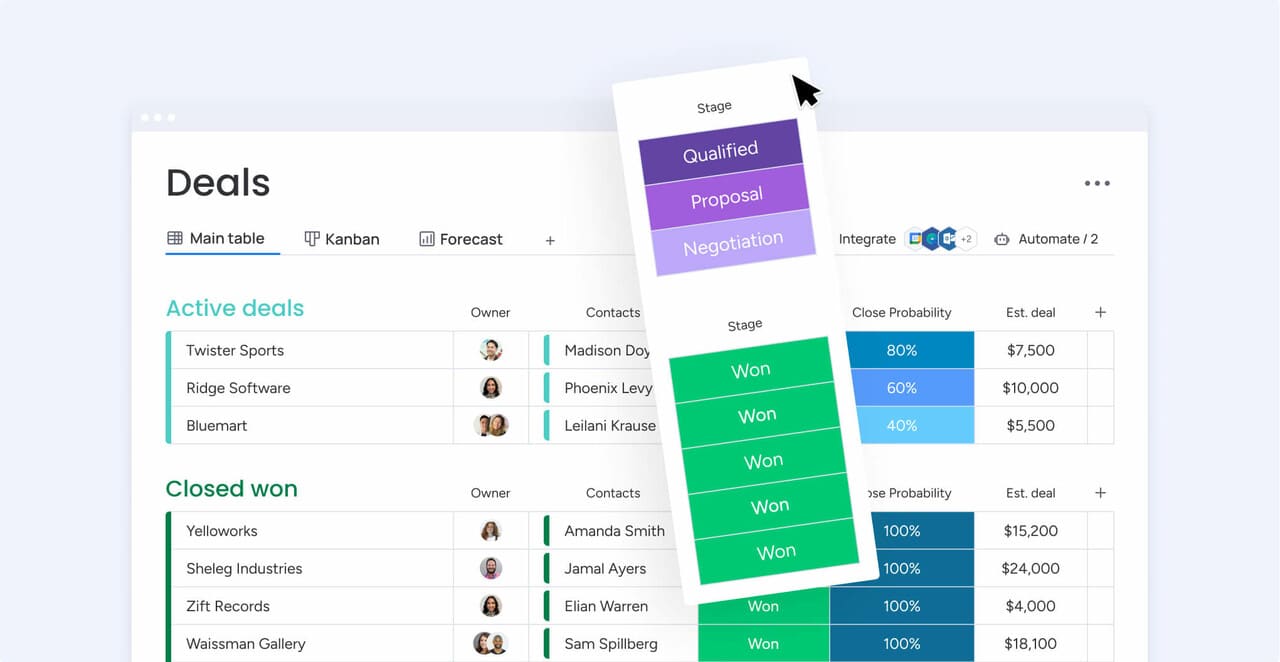
Customer feedback shortens sales cycles by showing you exactly where buyers get stuck. When you know what slows deals down, you can fix those issues before they kill momentum.
Feedback answers 3 critical questions:
- Decision-making bottlenecks: When multiple prospects mention their legal team needs additional security documentation, you know to include that documentation earlier in future sales processes.
- Objection patterns: Common hesitations across similar prospects emerge from consistent feedback collection. If healthcare prospects consistently raise HIPAA compliance questions during demos, sales teams can address those concerns proactively.
- Value perception gaps: Misalignments between how sales teams position value and what customers actually care about appear in feedback. A prospect who prioritizes “ease of use” but received a demo focused on “advanced customization” experienced a gap that slowed their decision.
Sales teams use this intelligence to sharpen messaging, improve demos, and handle objections before they kill deals. Faster deals mean more strategic use of your team’s time and more reps hitting quota.
Try monday CRM AI Features8 customer feedback collection methods that boost revenue
Effective feedback collection means using multiple methods at key moments throughout the customer journey. Each method captures different types of revenue intelligence at different moments. Pick the right mix based on your sales process, customer segments, and available resources.
1. CRM-integrated survey forms
CRM-integrated survey forms capture customer feedback right inside your sales platform. These forms trigger at specific deal stages or milestones and populate CRM records automatically — no manual entry needed.
Here’s why this method works for revenue teams:
| Survey type | Trigger point | Key questions | Revenue application |
|---|---|---|---|
| Post-demo | Within 24 hours | Feature relevance, value resonance | Refine demo approach |
| Deal checkpoint | Proposal sent | Pricing concerns, timeline alignment | Validate deal health |
| Win/loss | Deal closed | Decision factors, competitive comparison | Improve win rates |
monday CRM’s customizable forms enable automatic population of deal records through survey responses, making feedback immediately actionable without switching between systems.
2. Post-purchase email feedback campaigns
Post-purchase email campaigns collect feedback during onboarding and early adoption — when it matters most. These automated emails go out at specific intervals to track how customer sentiment changes.
Timing matters for these campaigns. The right timing captures real insights without burning out your customers:
- Onboarding satisfaction: Day 7 surveys identify customers struggling with implementation who may become churn risks.
- Feature adoption feedback: Day 30 feedback reveals which capabilities customers value most, informing upsell strategies.
- Referral readiness: Day 90 indicators identify satisfied customers who could provide testimonials or referrals.
Email campaigns let you collect feedback at scale without eating up your sales team’s time. Responses should trigger CRM workflows that flag at-risk accounts, spot expansion opportunities, and route happy customers to advocacy programs.
3. Sales call feedback collection
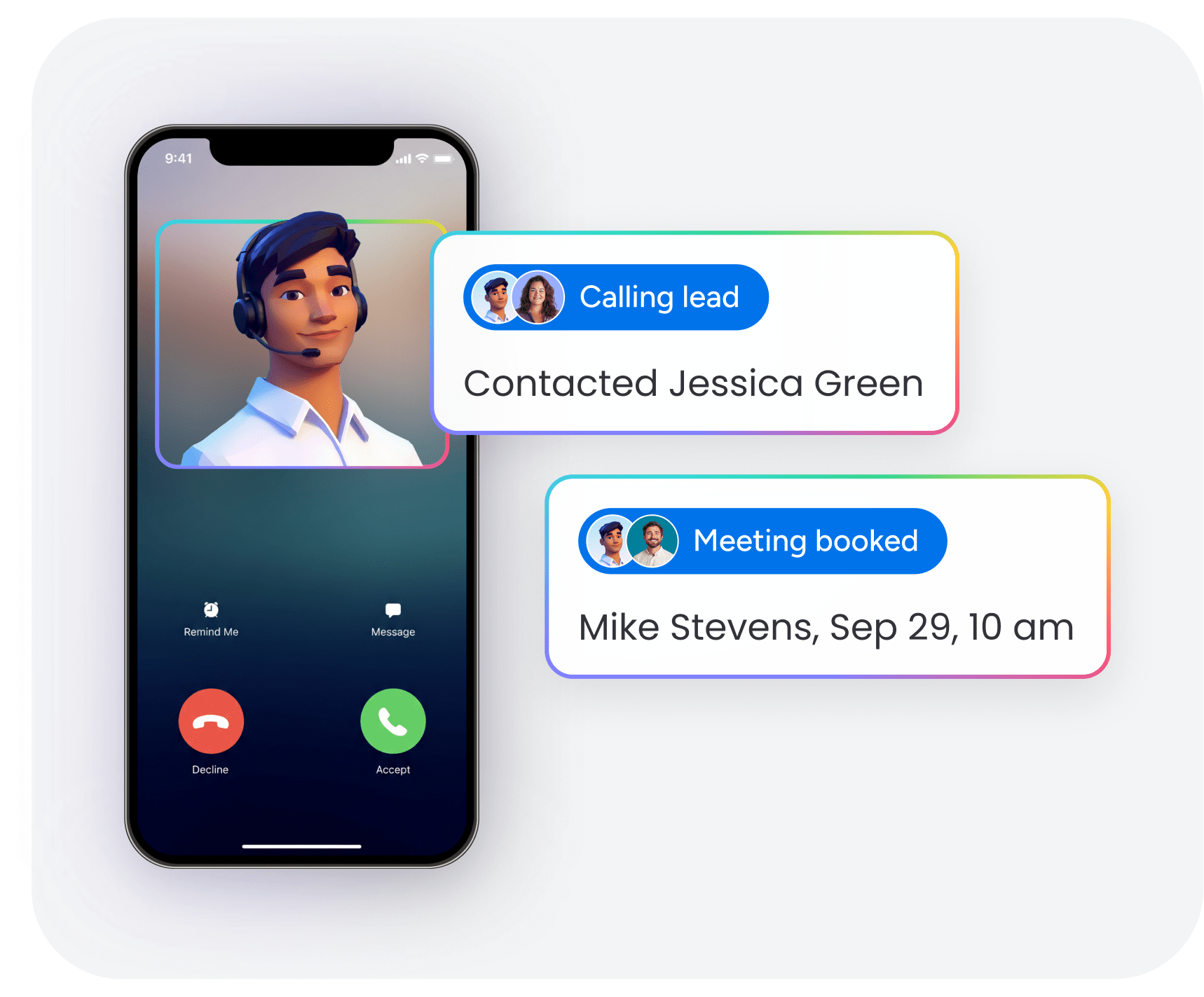
Sales call feedback captures insights during live conversations with prospects and customers. This includes post-call surveys sent to prospects and internal notes reps capture about customer reactions and buying signals.
Key feedback types to capture during calls:
- Prospect sentiment: Use post-call rep notes and document within 30 minutes while details are fresh.
- Objections: Capture in structured CRM fields using consistent categorization for pattern analysis.
- Buying committee: Record in discovery call notes, mapping all stakeholders and their specific concerns.
monday CRM’s AI timeline summary condenses call history for faster review before the next conversation, while the Emails & Activities feature logs all notes alongside emails and meetings in one timeline.
4. Support ticket mining for sales intelligence
Support ticket mining looks at customer service interactions to find patterns that affect revenue. Support tickets contain raw feedback about product issues, feature requests, and usage challenges that sales teams can use.
Mining support tickets uncovers 3 types of sales intelligence:
- Churn risk identification: Recurring support issues or escalations signal customer frustration.
- Upsell opportunity detection: Feature requests or workaround discussions indicate expansion potential.
- Competitive intelligence: Mentions of alternatives reveal feature gaps and competitive pressure.
This method needs support and sales teams to work together — flagging revenue-relevant tickets and routing insights to account owners.
5. Social listening and review monitoring
Social listening tracks what customers and prospects say about you on LinkedIn, G2, and industry forums. This unsolicited feedback shows you what customers really think about you and your competitors.
Platform-specific insights to monitor:
- G2/Capterra product reviews: Use customer feedback from review sites to build competitive battle cards that address common objections and highlight your strengths against alternatives.
- LinkedIn industry discussions: Monitor conversations where prospects discuss challenges and solutions to identify potential customers actively seeking alternatives.
- Industry forum technical discussions: Track feature requests and pain points mentioned in specialized communities to inform product roadmap decisions that matter to your target market.
Sales teams use review site feedback to sharpen competitive positioning, handle common objections early, and find which customer stories resonate with prospects.
6. In-app feedback widgets
In-app feedback widgets let customers submit feedback right inside your product. These widgets show up as embedded forms or rating prompts — customers don’t have to leave the product.
Widget feedback reveals these things:
- Feature adoption insights: Which capabilities do customers use most and which create friction?
- Expansion signal detection: Are customers requesting advanced features or hitting usage limits?
- Product-led growth intelligence: How do product experiences influence buying decisions for trial users?
In-app feedback captures reactions in the moment, making it more accurate than surveys sent later.
7. Customer advisory boards and panels
Customer advisory boards bring select customers together for structured feedback sessions. These groups usually meet quarterly or twice a year to discuss roadmap priorities, industry trends, and customer needs.
Advisory boards deliver these benefits:
- Strategic account retention: Deepen relationships with high-value customers by involving them in product strategy.
- Roadmap validation: Test new features, pricing models, or positioning with trusted customers before broader launches.
- Reference development: Build relationships with customers who become strong advocates.
Advisory boards take real investment but give you deeper insights and stronger customer relationships than any other method.
8. Automated NPS and CSAT tracking
Net Promoter Score (NPS) and Customer Satisfaction (CSAT) tracking provide standardized metrics for measuring customer sentiment at scale. These automated surveys go out at regular intervals to track how satisfaction changes over time.
How revenue teams use this:
- Churn prediction: Low scores correlate with increased churn risk, enabling proactive retention.
- Account health scoring: Satisfaction metrics help prioritize sales and success team attention.
- Expansion identification: High scores flag customers ready for upsell conversations or referrals.
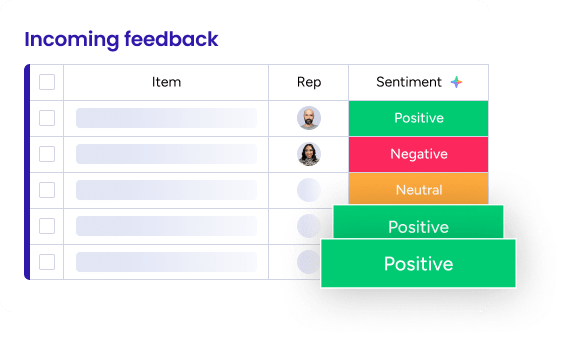
monday CRM’s AI detects sentiment and automatically labels feedback as positive, negative, or neutral. This lets teams route detractors to retention and flag promoters for expansion conversations — all in the same platform where you manage deals.
Learn more: AI feedback digest agent
How to build a customer feedback strategy for sales teams
Creating an effective VoC strategy requires defining when to collect feedback, what to measure, which methods to use, and how to act on insights. The right framework ensures feedback drives real sales improvements instead of creating busywork that buries your team.
Step 1: Map feedback touchpoints to your sales process
Effective feedback strategies match collection methods to specific customer journey stages. Mapping touchpoints ensures you capture the right information at the right time.
A complete touchpoint map includes these stages:
| Customer stage | Primary method | Key questions | Revenue impact |
|---|---|---|---|
| Prospecting | Social listening | Market perception | Shape outreach messaging |
| Discovery/Demo | Post-call surveys | Message resonance | Tailor proposals |
| Negotiation | Deal-stage surveys | Pricing concerns | Reduce deal slippage |
| Post-purchase | Onboarding surveys | Adoption progress | Prevent early churn |
| Renewal | NPS tracking | Satisfaction trends | Increase retention |
This mapping prevents survey fatigue while making sure you don’t miss critical feedback.
Step 2: Define revenue-focused feedback metrics
Revenue teams need metrics that tie directly to sales performance. The right metrics show how feedback affects pipeline health, deal speed, and customer lifetime value.
Three categories give you full visibility:
- Leading indicators: Demo satisfaction scores, stakeholder alignment ratings, and onboarding completion rates that predict future outcomes
- Lagging indicators: Win-rate improvements, renewal rate correlation, and churn reduction from proactive interventions
- Operational metrics: Response rates, time-to-action on feedback, and coverage by customer segment
Set baseline measurements before rolling out new methods so you can track improvement over time.
Step 3: Select methods based on customer value
Different customer segments need different feedback investments. High-value accounts deserve personalized approaches. High-volume customers need automated methods.
Smart segmentation helps you use resources efficiently:
- Enterprise: Use advisory boards and executive reviews with high personalization from your sales team.
- Mid-market: Deploy automated NPS and email campaigns with triggered outreach based on responses.
- SMB: Implement in-app widgets and automated CSAT with exception-based sales involvement.
monday CRM’s segmentation automatically routes feedback requests based on account attributes — so the right methods reach each customer tier.
Step 4: Create cross-team feedback workflows
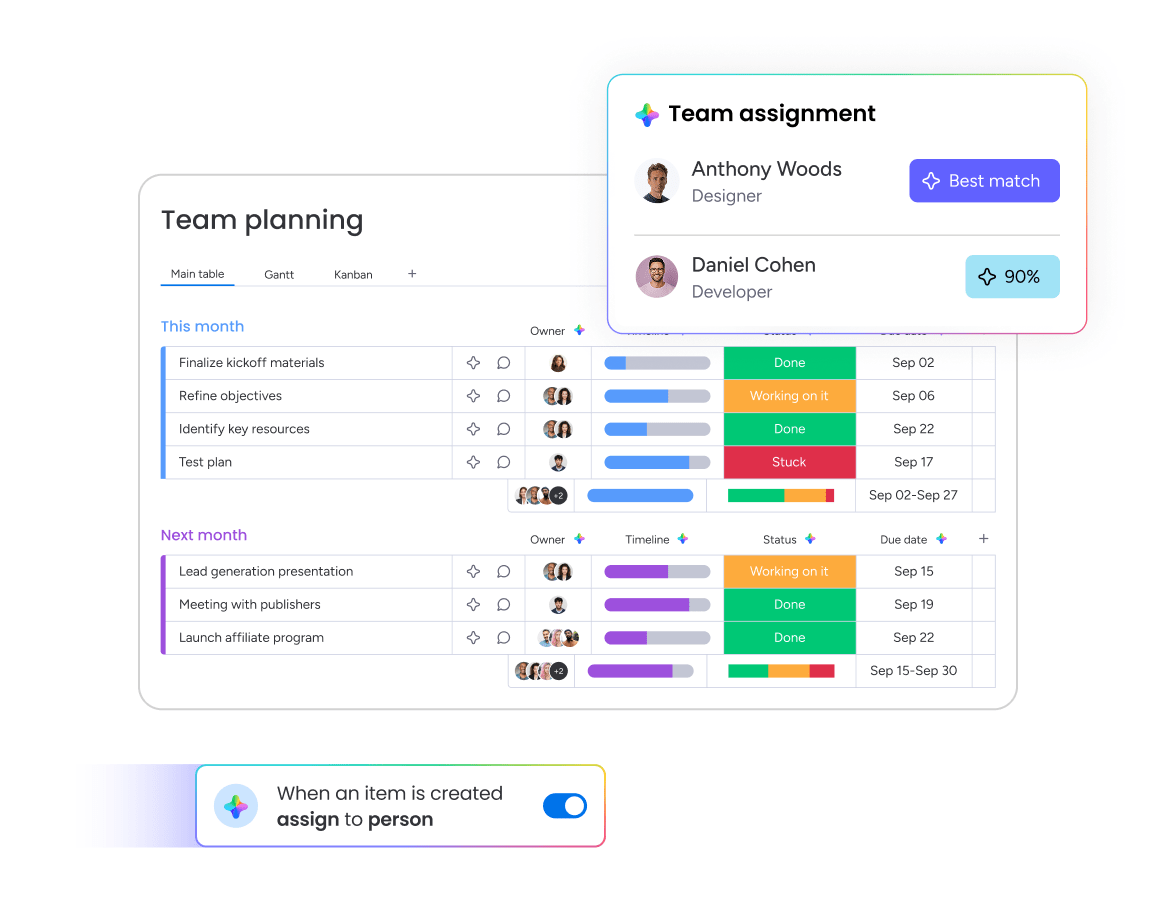
Customer feedback affects sales, customer success, support, and product teams. Effective workflows get insights to the right people and trigger action across teams.
Key workflow components:
- Feedback routing rules: Negative feedback from enterprise accounts routes to account owners immediately.
- Escalation protocols: Detractor scores from top accounts trigger executive notification.
- Insight sharing cadence: Weekly team updates summarize feedback trends relevant to active deals.
- Closed-loop accountability: Every actionable feedback item has an owner, timeline, and defined outcome.
monday CRM’s automation runs these workflows automatically. The AI-powered Assign person feature routes issues by role or expertise. Assign label categorizes feedback themes automatically — no manual tagging needed.
Try monday CRM AutomationsCustomer feedback best practices that drive revenue growth
Getting quality feedback and high response rates takes careful execution. These best practices ensure your feedback program drives real sales improvements instead of burning out customers with too many surveys.
Time your feedback requests for maximum response
When you ask matters — it directly affects response rates and data quality. Smart timing captures real insights without wasting customer time.
Best timing for different feedback types:
- Post-demo feedback: Within 24 hours while impressions are fresh
- Post-purchase satisfaction: 3-5 days after purchase when setup is complete
- Onboarding feedback: At meaningful milestones rather than arbitrary intervals
- Renewal feedback: 60-90 days before renewal to allow time for addressing concerns
Think about customer workload and industry cycles. Don’t ask for feedback during busy periods like month-end close or tax season.
Design short surveys that get completed
Survey length directly impacts completion rates. Short, focused surveys get more responses and better data.
Design principles for high completion:
- Limit to 3-5 questions maximum: Questions should serve a specific, actionable purpose
- Use strategic question types: Multiple choice for quantitative data, one optional open-ended for context
- Mobile-optimize all surveys: Many customers respond on mobile devices
- Avoid redundant questions: Don’t ask for information already in your CRM
Multiple short surveys over time beat one long survey that nobody finishes.
Personalize outreach based on customer segments
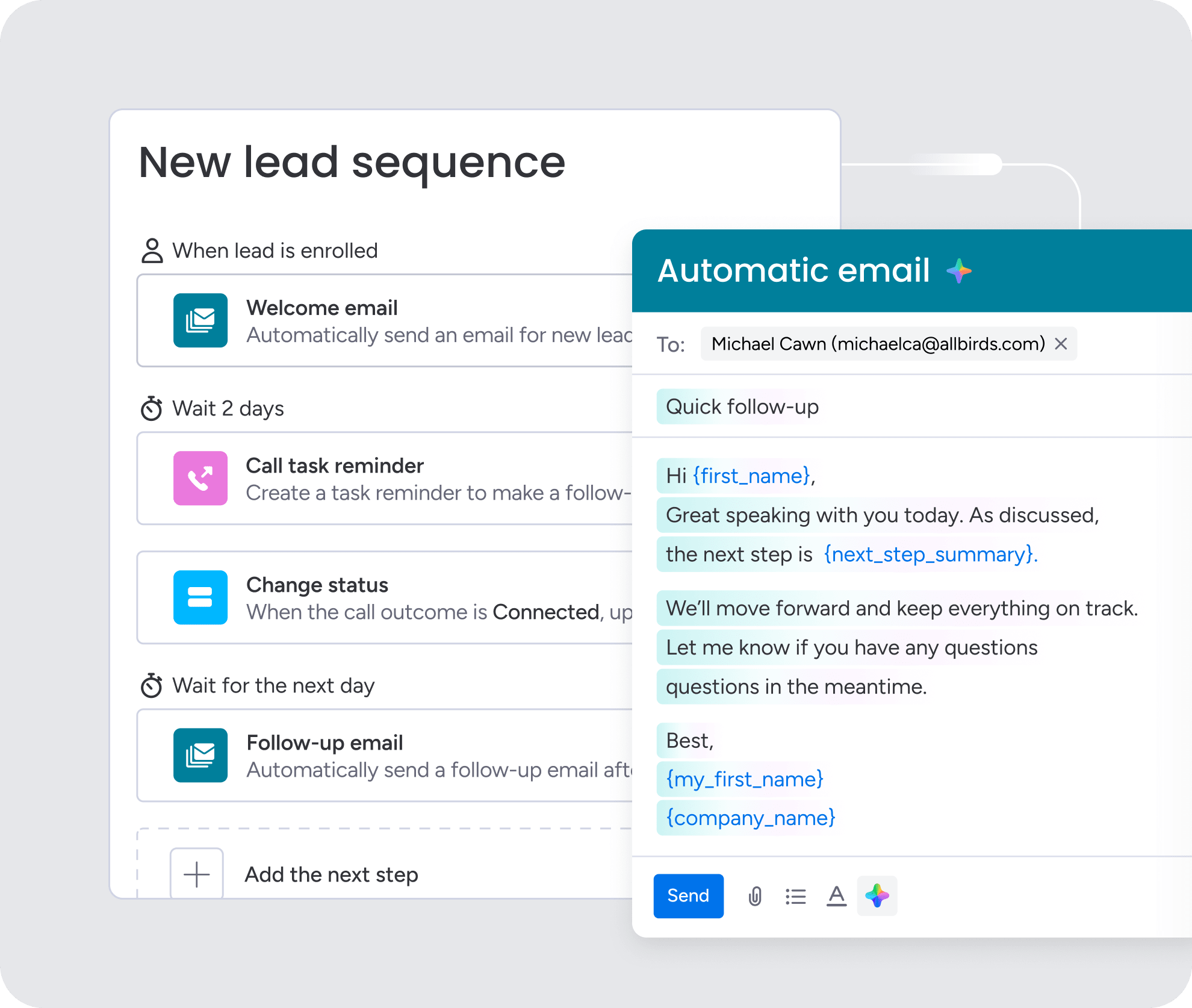
Personalized feedback requests show customers you value the relationship. Customizing requests based on customer characteristics and history boosts response rates.
Personalization strategies that work:
- Reference specific interactions: “Following up on your demo last Tuesday” performs better than generic requests
- Segment by customer tier: Enterprise customers receive personalized emails from account executives
- Customize question relevance: Ask enterprise customers about integration needs, SMB customers about ease of use
- Adjust sender and tone: High-value accounts receive requests from senior sales leaders
monday CRM’s automation makes personalization scalable with dynamic fields and segment-based workflows.
Always close the loop with action
Closing the loop — showing customers how their feedback is used — is critical. Customers who see their feedback ignored stop responding to future requests.
Effective loop-closing approaches:
- Acknowledge receipt immediately: Automated confirmation shows feedback was received
- Communicate specific actions: Follow ups explaining what changed based on their input
- Share broader improvements: Quarterly updates highlighting feedback-driven enhancements
- Report measurable impact: Shows how feedback improved experiences or outcomes
Transparency about why certain feedback can’t be acted upon is more effective at maintaining trust than silence.
Prioritize high-value customer feedback
Give strategic weight to feedback from high-revenue accounts, ideal customer profiles, and strategic relationships. Not all feedback carries equal importance for revenue impact.
Prioritization factors to consider:
- Customer lifetime value: Feedback from top revenue accounts receives immediate attention
- Strategic importance: Input from target industry customers or reference accounts gets executive review
- Churn risk indicators: Negative feedback from at-risk accounts triggers urgent intervention
- Pattern significance: Recurring themes across multiple customers signal systemic issues
monday CRM’s Detect sentiment feature automatically labels feedback as positive, negative, or neutral, enabling instant prioritization based on account attributes and sentiment combination.
Turn customer feedback into sales performance gains with monday CRM
Collecting feedback only creates value when translated into concrete sales improvements. Systematic processes for analysis, action planning, and measurement ensure feedback drives real performance gains rather than creating data that sits unused in your CRM.
Extract actionable sales intelligence from feedback
Raw feedback requires customer feedback analysis to become actionable intelligence. Systematic review and customer data analysis identify patterns and insights that inform sales strategies. monday CRM’s AI capabilities accelerate data analysis. The Summarize action compresses long responses for faster scanning, while Extract information pulls key details from text automatically.
Build feedback-driven action plans
Insights require specific action plans to drive improvements. Clear ownership and timelines ensure feedback leads to real changes. monday CRM’s workflow capabilities enable action plan tracking alongside the feedback that triggered them, creating accountability through status columns and timeline views.
Share insights across your revenue organization
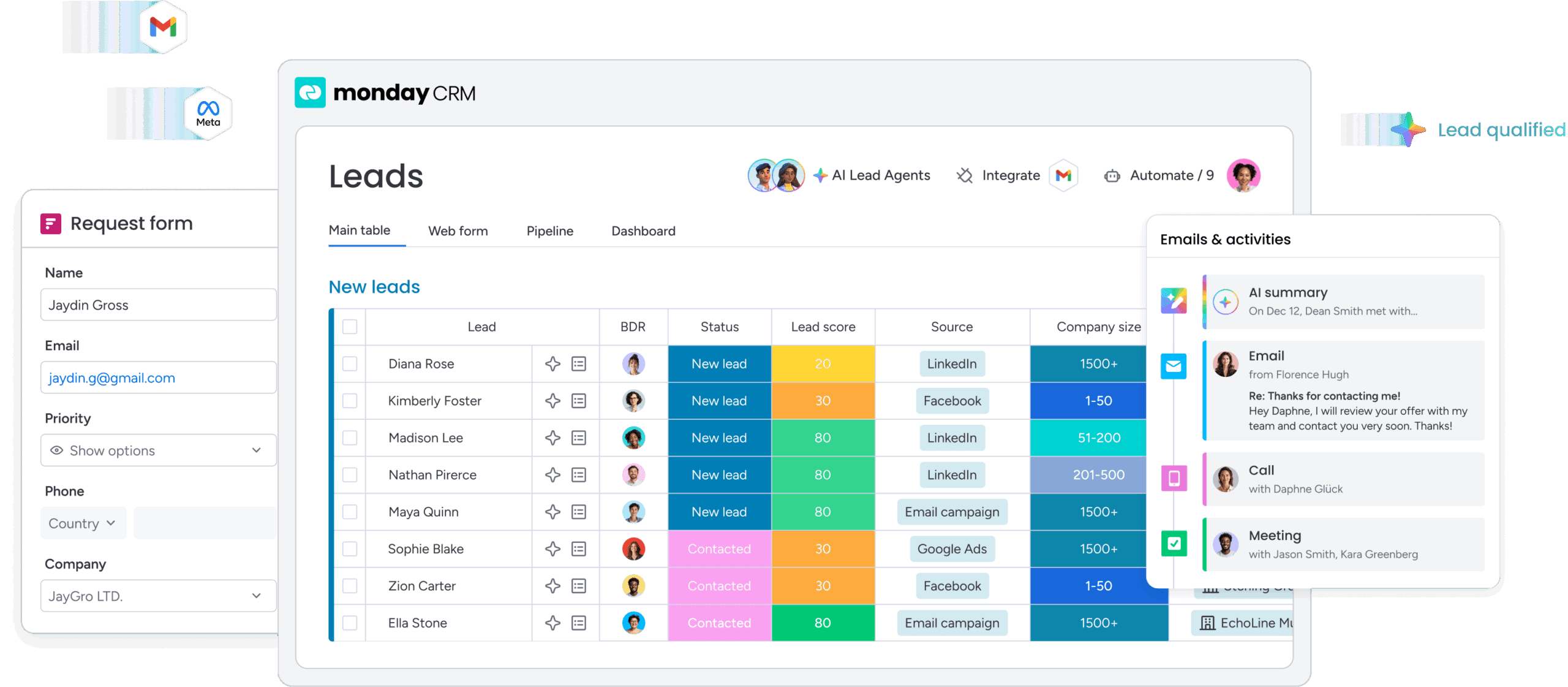
Feedback insights benefit multiple teams. Systematic sharing ensures organizational alignment and coordinated improvement. monday CRM’s AI timeline summary condenses communication history into scannable summaries, ensuring reps have full context before customer interactions.
Measure feedback impact on sales KPIs
Demonstrating feedback program ROI requires connecting initiatives to measurable performance improvements. monday CRM’s analytics capabilities enable correlation between feedback patterns and revenue outcomes through customizable dashboards.
Transform feedback into competitive advantage
Customer feedback transforms from scattered input into systematic revenue intelligence when you implement the right collection methods, analysis processes, and action frameworks. Revenue teams that master feedback-driven improvements consistently outperform those that rely on intuition alone.
The most successful teams combine multiple collection methods to capture insights at every customer touchpoint. They use CRM integration to make feedback immediately actionable and AI capabilities to identify patterns that human analysis might miss. Most importantly, they close the loop by showing customers how their input drives real improvements.
Start with 1 or 2 feedback methods that align with your highest-value customer interactions. Build systematic processes for analysis and action before expanding to additional collection methods. Your customers will notice the difference, and your sales performance will reflect their increased satisfaction and engagement.
Try monday CRM AI CapabilitiesFAQs
What is customer feedback in sales?
Customer feedback in sales encompasses all information gathered from prospects and customers about their experiences throughout the sales cycle and post-purchase journey, including prospect insights from discovery calls, deal-stage feedback about pricing and objections, and post-sale intelligence about adoption and expansion opportunities.
How do you collect customer feedback effectively?
Effective customer feedback collection requires deploying multiple methods at strategic touchpoints, including CRM-integrated surveys, post-purchase email campaigns, sales call documentation, support ticket mining, social listening, in-app widgets, customer advisory boards, and automated NPS tracking.
What are the best customer feedback methods for B2B sales?
The best B2B feedback methods depend on deal complexity and customer value, with enterprise sales benefiting from advisory boards and executive reviews, mid-market sales using automated NPS and post-demo surveys, and high-velocity sales leveraging in-app widgets and automated CSAT surveys.
How often should you ask customers for feedback?
Feedback frequency should align with customer journey milestones, with post-demo feedback within 24 hours, post-purchase surveys at 3-5 days, onboarding feedback at key milestones, and renewal feedback 60-90 days before renewal date.
What is a customer feedback loop and why does it matter?
A customer feedback loop is a continuous cycle of collecting, analyzing, acting upon, and communicating back to customers about their feedback, which matters for revenue teams because it transforms scattered input into systematic sales intelligence driving measurable improvements.
How do you measure the ROI of customer feedback programs?
Measuring feedback program ROI requires connecting initiatives to sales performance improvements including win rate changes after implementing feedback-driven messaging, deal velocity reductions from addressing objections, churn decreases from proactive interventions, and expansion revenue growth from feedback-identified opportunities.
