

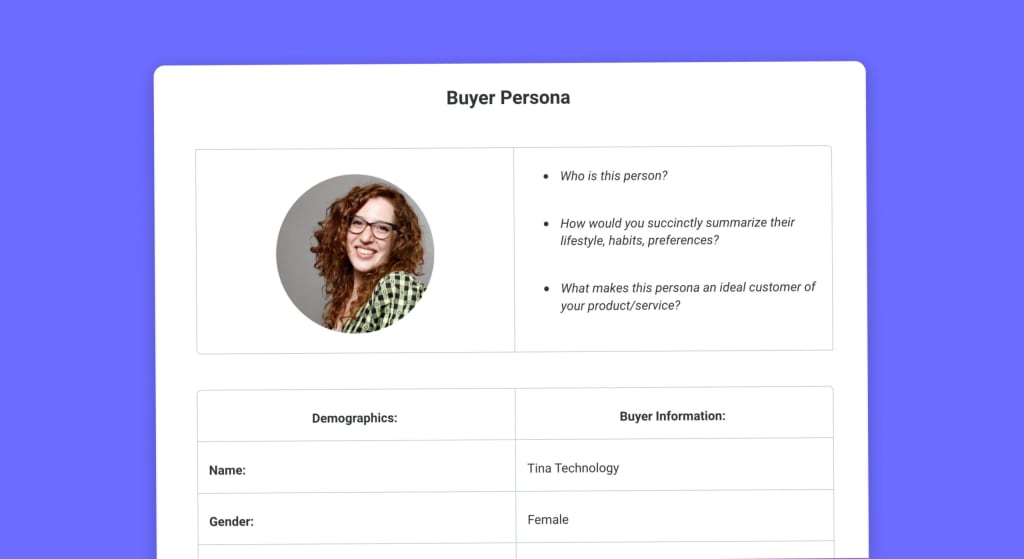
When done correctly, buyer personas are a great way for businesses to get to know their customers on a more personal level. For marketing teams, knowing who their ideal buyer is, what they need, and what makes them tick is the secret to powerful brand messaging and marketing strategies that land every time.
In this guide, we’ll explore what a buyer persona is, what goes into a persona template, and how you can build your own with a few examples for different industries. We’ll also show you how a solution like monday CRM can help businesses use AI to level up their personas and better understand their customers.
What is a buyer persona template, and why does your business need one?
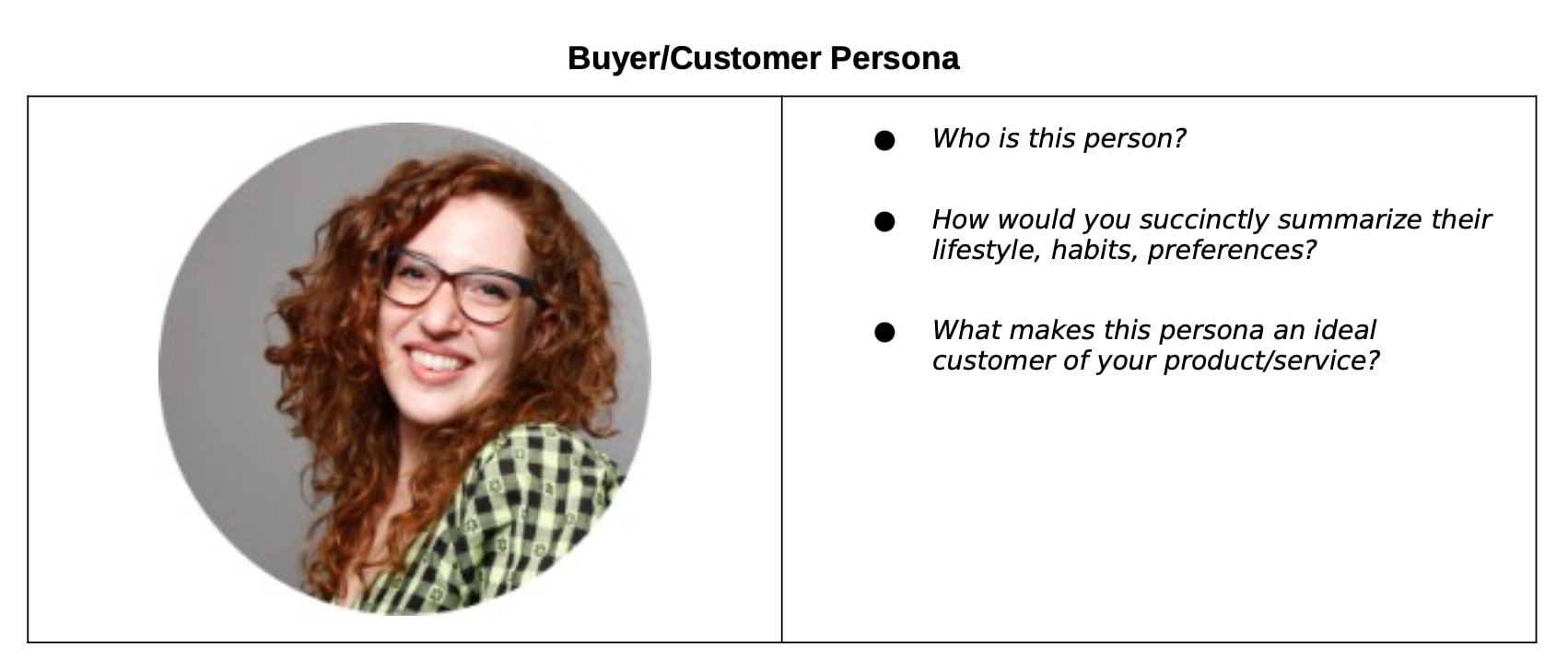
A buyer persona, also known as a customer persona, is a representation of your ideal customer that includes a detailed description of what your ideal customer might look like based on research and data points.
A buyer persona template is a ready-made document that helps you focus on collecting relevant, useful information when crafting buyer personas. It often includes specific elements to help you narrow down essential customer information, such as:
- Interests or hobbies
- Behavioral traits
- Goals and motivations
- Particular pain points
- Role-specific and contextual demographics where relevant
Customer persona templates are very useful for a range of business functions because they help teams focus their approach to selling, marketing, and connecting with their audience. Buyer personas help businesses meet customer expectations and create cohesive brand messaging that engages high-value customers who remain loyal.
What’s the difference between your target audience and a buyer persona?
While these terms are often used interchangeably, they serve different purposes in your strategy.
| Category | Target audience | Buyer persona |
|---|---|---|
| Definition | A broad group of potential customers defined by shared characteristics | A detailed, semi-fictional representation of an ideal individual customer |
| Scope | Wide and generalized | Narrow and specific |
| Level of detail | Basic demographic and firmographic data | Deep behavioral, psychological, and motivational insights |
| Focus | Who might buy | Why they buy and how they decide |
| Data included | Age, location, job title, income, industry | Goals, pain points, buying triggers, objections, preferred channels, decision criteria |
| Usage | Campaign targeting, ad segmentation, media planning | Messaging strategy, sales enablement, product positioning |
| Example (B2C) | Women ages 25–40 interested in fitness | “Emma,” a 32-year-old working mom who exercises at 5 AM and researches gear via YouTube reviews |
| Example (B2B) | Mid-sized SaaS companies in North America | “David,” a VP of Operations struggling with tool sprawl and needing executive buy-in before purchase |
| Decision complexity | Often single-layer | Often includes emotional, rational, and organizational factors |
| Business impact | Improves reach | Improves conversion and alignment |
In short, your target audience defines the market you’re speaking to, while your buyer persona defines the individual you’re persuading.
Target audience and buyer persona example
A sneaker company might define its target audience as active adults ages 25–45 with household incomes over $75,000. But a buyer persona goes deeper: “Alex,” a 32-year-old software engineer who runs 40 miles per week and relies on YouTube reviews and Reddit forums before purchasing performance gear.
Benefits of using a buyer persona template
Buyer persona templates support more efficiency than starting from scratch with a blank document, as you can work from ready-made categories and formats. Templates can also provide some guidance so you know how to structure research and present information to create personas that lead to more effective campaigns for each target market. Here’s a look at some of the key benefits of using customer persona templates.
- More targeted marketing campaigns that speak directly to customer needs and pain points, improving engagement and conversion rates.
- Better product development by understanding what features and solutions your customers actually want.
- Improve customer experiences through personalized messaging and touchpoints that resonate with specific audience segments.
- Streamline resource allocation by focusing time and budget on the channels and strategies that matter most to your ideal customers.
- Keep teams aligned across marketing, sales, and customer service through a shared understanding of who they’re serving thanks to consistent template data.
- Enhance personalization across all customer touchpoints, from email subject lines to product recommendations.
- Increase customer loyalty by consistently delivering value that aligns with what matters most to your audience.
Customized templates let you address various marketing needs with buyer personas while staying true to high-level brand visions or a common format. By creating different types of customer persona templates to work from, you empower your marketing teams to start from a strong foundation each time they want to address a new audience segment.
How to create a buyer persona template from scratch in 6 steps
Instead of downloading a free template that you need to customize and fit to your business, you can create your own once and use it over and over for different segments or departments. Better yet: Use a customizable template in the monday CRM template center.
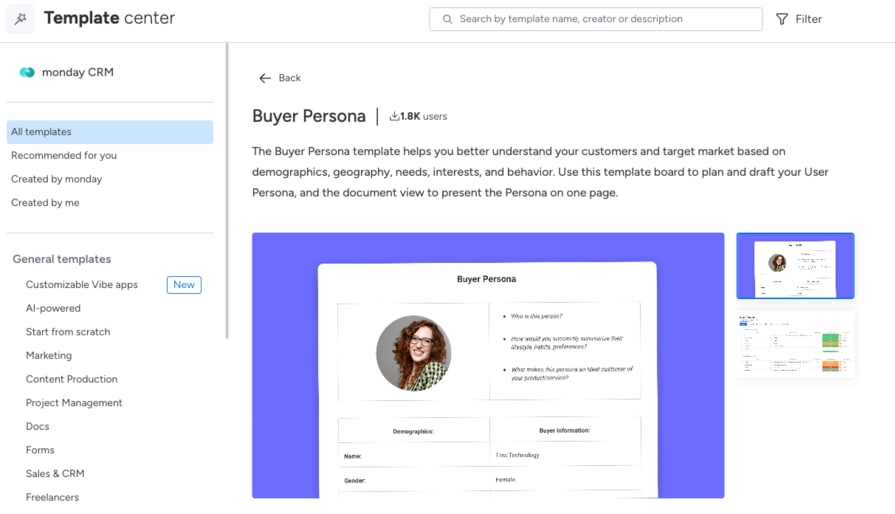
Let’s look at the steps you need to create a buyer persona and give you some tips on what to include in a template to make the process repeatable.
1. Set goals and objectives for personas
Before jumping straight into data collection and analyzing demographics, start by deciding on your goals for creating a customer persona. Ask yourself questions to narrow down your objectives, such as:
- What does my business need to understand better about its customers?
- Which marketing campaigns or sales strategies are currently underperforming?
- What specific business problems are we trying to solve with this persona?
- Which departments will use this persona, and how will they apply it?
- What decisions will this persona help us make more effectively?
With your answers to these questions, you can begin outlining the data you need to gather in interviews and surveys to make sure you’re targeting the right information and not wasting resources.
Template tip: Create a “persona purpose” section at the top of your template that includes fields for primary business objectives, departments using this persona, key decisions it will inform, and success metrics. This anchors each persona to specific business goals rather than just collecting data.
2. Research demographics
Next, start by looking into basic customer demographics. This can include data you gather from analytics tools, such as age, location, gender, or income level. Once all the basics are covered, try to dig deeper to uncover more detailed demographics about your customers, such as job titles, education level, and industry or company size for B2B audiences.
To make sure your data is varied and unbiased, use multiple data sources, such as your website, social media platforms, and CRM data. You can also look at previous buying patterns and interaction history from existing customers.
Template tip: Build a demographics checklist with required fields (age range, location, income, job title) and optional fields (education, company size, household size, career stage). This checklist ensures consistency across personas while allowing flexibility for different customer segments.
3. Conduct interviews and surveys
In the next stage, you want to start talking to your customers to hear directly from them. Ask them questions about their customer journey, their impression of your brand, or what makes them loyal. What’s important here is hearing exactly what customers have to say to see if it aligns with the data you gathered in the previous stage.
Some ways to research and gather insights directly from customers include:
- Digital surveys
- Online or in-person interviews
- Focus groups
- Social listening
- Sentiment analysis tools
4. Pinpoint pain points and motivators
Once you have a solid understanding of demographics and customer feedback, you can begin to paint a picture of your customers’ pain points and motivators for purchasing. This step is critical, since it can provide direction for sales strategies and marketing campaigns. Some considerations to cover in this stage include:
- Job struggles or problems in the workplace
- What solutions customers have already tried
- Awareness of existing solutions and adoption barriers
- Personal challenges or frustrations in daily life
- Goals they’re trying to achieve (professionally or personally)
- Fears or concerns holding them back from making a purchase
Essentially, you’re trying to get to the core of what would make your buyer’s life easier or more successful so that you can position your product or service as the ultimate solution.
Template tip: Use a “before/after” framework to structure your template. You can look at your customers’ current state (daily struggles, failed solutions, barriers) and the desired state (success vision, goals, what would help) they might want to reach. This framework makes it easier to craft messaging showing the transformation your product provides.
5. Build out your persona collaboratively
Now that you have all the information you need gathered from different sources, it’s time to put it all together. Even if you’re an individual or one team assigned to build out a buyer persona, this should be a collaborative step that involves everyone the persona will impact.
Make sure to involve your sales team, marketing department, and customer service to all provide input and craft a persona that is relevant for every business function and department. With a well-rounded view of how the same buyer might interact with a sales pitch, marketing campaign, or service agent, you can create a more complete and actionable persona that addresses the full customer journey and ensures alignment across all teams.
Template tip: Add department-specific sections in your template where sales capture objections and timelines, marketing notes preferred channels and content types, and customer service documents frequent questions and support needs. This ensures your template captures a 360-degree view from all teams.
6. Validate data and update consistently
Lastly, you want to test out your buyer persona to make sure it works in action and covers all your bases. Try out different scenarios, such as creating marketing messaging or building a sales deck that’s tailored to the customer persona. Pay close attention to any information that’s missing, segments that have been ignored, or whether or not your persona is too generic to make a real impact.
After testing and updating, you’ll want to revisit your buyer persona regularly to make sure it’s constantly refreshed with the most updated business data. This might mean scheduling quarterly reviews to incorporate new customer feedback, analyzing recent campaign performance to identify shifts in customer behavior, or adjusting demographics and pain points as your market evolves and your business grows.
B2B vs. B2C buyer persona templates: Key differences
Buyer persona templates can look different depending on a number of factors, including your industry, the products you’re selling, or whether you sell B2B or B2C. When building or looking for a customer persona template, consider the differences in how you sell so that you can narrow down the essential fields to include on your template.
Here’s a comparison table for B2B and B2C buyer persona templates:
| Element | B2B buyer persona | B2C buyer persona |
|---|---|---|
| Primary focus | Professional role, company needs, and business objectives | Personal lifestyle, individual preferences, and personal goals |
| Decision-making | Multiple stakeholders and longer sales cycles | Individual or household decisions, shorter sales cycles |
| Key demographics | Job title, company size, industry, annual revenue, department | Age, gender, income, education level, family status, location |
| Motivations | ROI, efficiency gains, competitive advantage, problem-solving | Personal satisfaction, convenience, emotional connection, lifestyle enhancement |
| Pain points | Business challenges, budget constraints, implementation concerns, scalability issues | Personal frustrations, time constraints, price sensitivity, product availability |
| Information sources | Industry publications, webinars, whitepapers, LinkedIn, peer recommendations | Social media, online reviews, influencers, friends and family, blogs and forums |
| Relationship with vendor | Long-term partnerships, ongoing support, account management | Transactional, loyalty based on experience, some repeat purchases |
| Buying triggers | Business growth, competitive pressure, operational inefficiencies | Life events, seasonal needs, trends, emotional triggers |
Buyer persona template examples for different industries
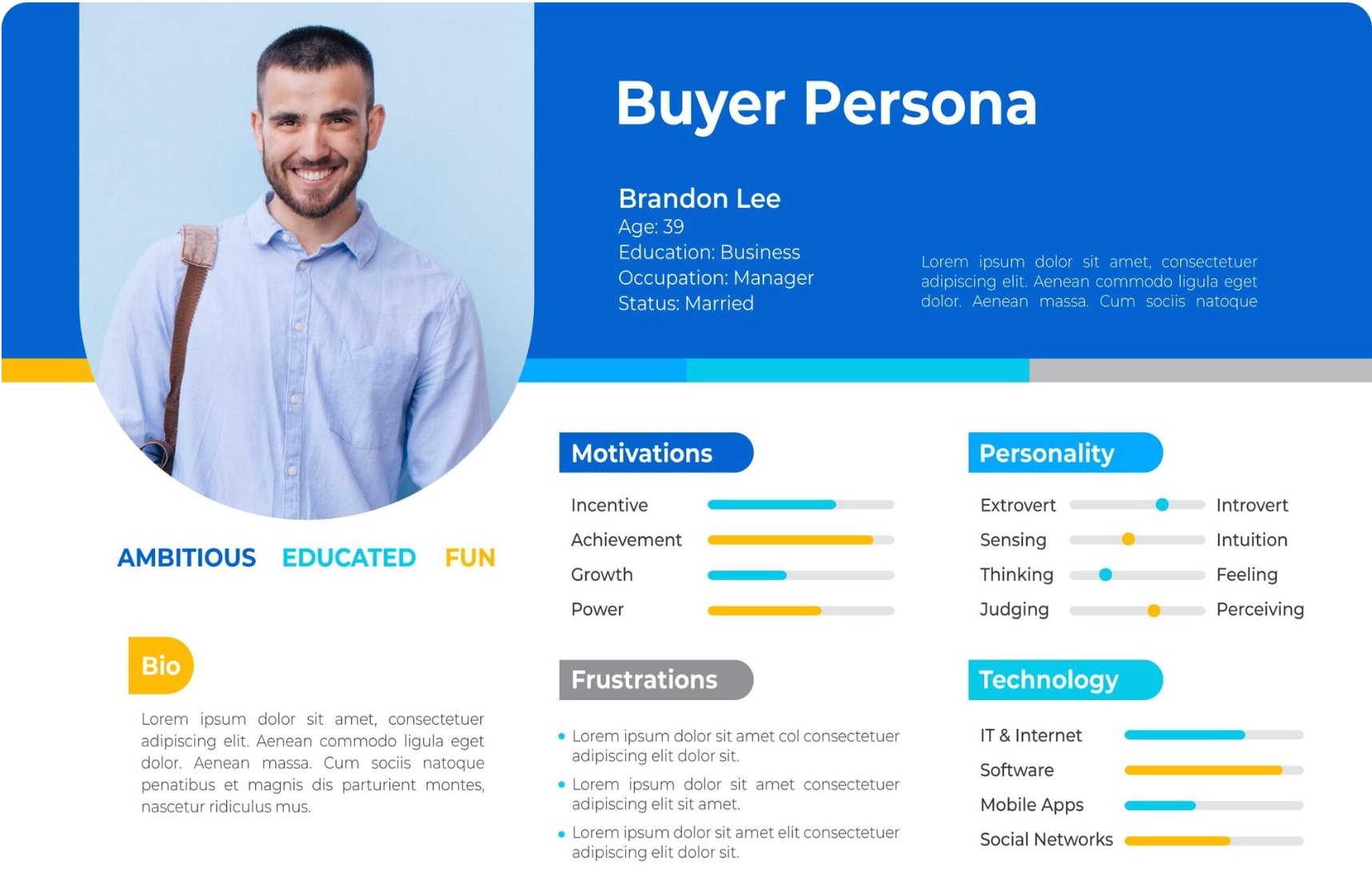
(Source)
The aesthetic and format of your buyer persona don’t matter as much as the content. Each industry might have slight variations on what kind of sections and content are included, which is why it’s important to start with a template that’s customizable. Below, we’ll give you a quick overview of some examples of specific sections and data to include in buyer persona templates for different industries.
Retail buyer persona: Suzanne the conscious shopper
- Demographics: 34-year-old marketing manager, lives in suburban Chicago, household income $85K, married with 2 young children
- Shopping behavior: Researches products online before buying in-store, shops mainly on weekends, prefers brands with sustainable practices
- Pain points: Limited time for shopping trips, overwhelmed by too many product options, concerned about product quality, and ethical sourcing
- Motivators: Values convenience and quality over price, influenced by online reviews and recommendations from mom groups
- Preferred channels: Instagram, parenting blogs, email newsletters with exclusive deals
- Brand interaction: Loyal to brands that align with her values, appreciates personalized recommendations
Ecommerce buyer persona: Jake the deal hunter
- Demographics: 28-year-old graphic designer, lives in Austin, TX, single, household income $55K
- Shopping behavior: Shops exclusively online, comparison shops across multiple sites, uses browser extensions for coupon codes
- Pain points: Distrusts websites with poor design or security, frustrated by unexpected shipping costs, hesitant about return policies
- Motivators: Free shipping, limited-time discounts, easy returns, fast checkout process
- Preferred channels: Reddit deal communities, browser push notifications, abandoned cart emails
- Brand interaction: Low brand loyalty, switches based on best price, influenced by customer reviews and ratings
SaaS buyer persona: Marcus the efficiency seeker
- Demographics: 42-year-old operations director at a 150-person tech company, MBA, manages a team of 12
- Buying behavior: Researches solutions for 2-3 months, looks at demos and trials, involves IT and finance in decision-making
- Pain points: Current tools don’t integrate well, team is resistant to change, limited budget for new software, and needs executive buy-in
- Motivators: Proven ROI, seamless integrations, scalability, strong customer support, and implementation assistance
- Preferred channels: LinkedIn, industry webinars, peer recommendations, case studies, G2 reviews
- Brand interaction: Values long-term partnerships, expects regular check-ins and product updates
Negative buyer persona: Beth the chronic returner
- Demographics: Price-focused shopper across any age/location, primarily seeks the lowest cost option
- Behavior patterns: Purchases multiple items with the intent to return most, frequently disputes charges, and demands excessive customer service time
- Red flags: History of chargebacks, serial returner in CRM data, unrealistic expectations for product capabilities
- Why exclude: Low lifetime value, high service costs, never becomes a loyal customer, drains resources from ideal customers
- How to filter: Implement minimum purchase requirements, clear return policies, and require account history for discounts
Even with industry-specific data in your buyer persona, your templates are only as good as the data and information that feed them.
Working together as a team to brainstorm and gather diverse data can help ensure optimal results and well-targeted marketing messages. But for a truly seamless process, you need a customer persona template that’s connected to real-time data with a solution like a CRM that acts as a single source of truth.
Try monday CRMSimple buyer persona template
Copy and paste this list to create your own simple buyer persona template:
- Persona name:
- Role/job title:
- Industry/company size (if B2B):
- Age range (if relevant):
- Primary goals:
- Top 3 pain points:
- Buying triggers:
- Common objections:
- Decision-making process:
- Preferred research channels:
- Success metrics:
- Quote that captures their mindset:
Using monday CRM for audience management and scaling personas
Creating a buyer persona is one thing; scaling and applying it to better manage your audience and boost conversion rates is something else. With a platform like monday CRM, businesses can access buyer data before and after creating a persona to get deep insights and use it to improve sales and marketing tactics and build strong customer relationships.
Built on monday.com’s Work OS, monday CRM makes it easy to share buyer personas across your team and collaborate in real time so everyone stays in the loop. Additionally, the platform is powered by AI capabilities that teams can use to learn more about customer behaviors and automate customer interactions across the funnel.
Let’s take a closer look at a few of the monday CRM features that help teams manage customer relationships and build strong, data-backed buyer personas.
Sentiment analysis to uncover customer behavior

Thanks to monday CRM’s AI Blocks, users can implement instant AI-powered workflows, like sentiment analysis. This tool helps teams understand user sentiment in interactions like call logs and emails, so that teams can react proactively to customers who are at risk of leaving or who have shown negative sentiment. Sentiment analysis helps teams build more resilient customer personas by revealing emotional patterns and pain points that traditional data might miss.
Customizable buyer persona template
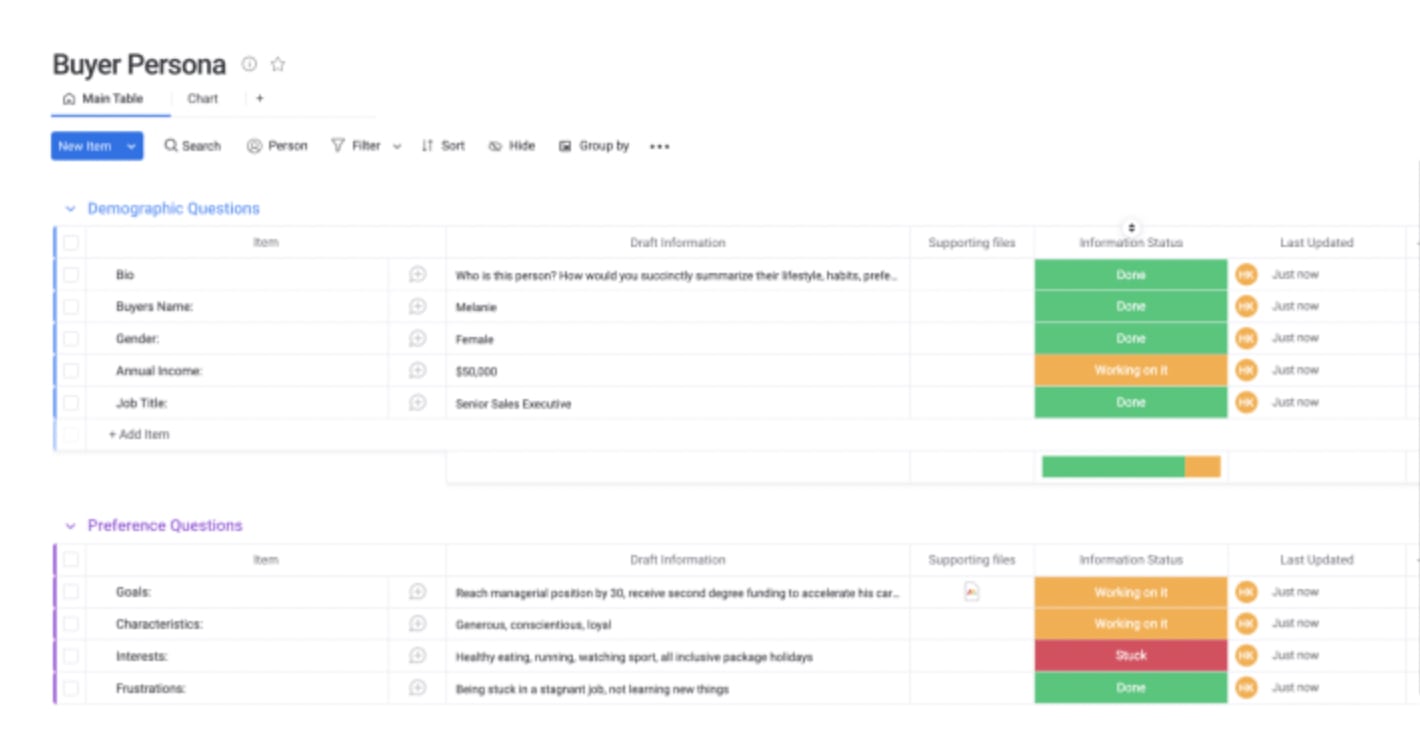
For teams who want to hit the ground running, monday CRM has a buyer persona template that can be entirely customized to fit any business or industry. This template board can help teams plan and draft user personas across different segments, and then view the data using 27 different work views to make it easier to present to stakeholders and collaborate between departments.
AI customer-focused dashboards and insights

Another way monday CRM’s AI leads to smarter customer personas is through smart dashboards, reports, and analytics. Teams can make sure they’re leaving no stone unturned with detailed dashboards that show engagement trends and behavior patterns, real-time reports for tracking campaign performance and conversion rates, and insights based on predictive analytics and forecasting to identify emerging customer segments and refine existing personas.
Smart workflow automations to engage buyers
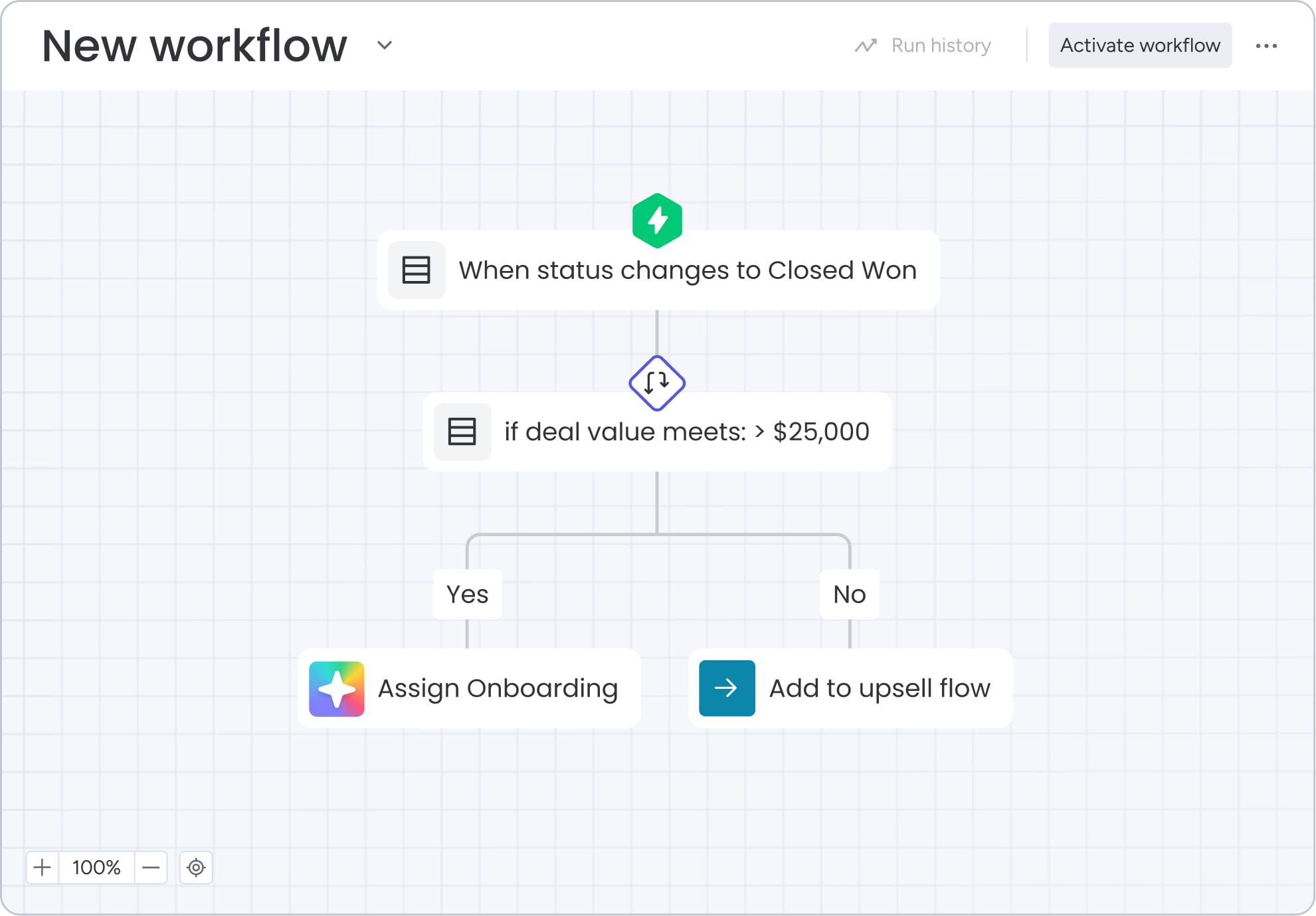
With monday CRM’s smart workflows, teams can focus on building stronger customer relationships while AI takes care of manual, repetitive work. For example, teams can create workflow automations to trigger personalized email sequences based on persona type, automatically tag and segment contacts by buyer persona characteristics, and route leads to the right sales rep based on which persona profile they match.
Common mistakes to avoid when building a buyer persona
The success of your buyer persona depends entirely on its relevance. To make sure you develop the most reliable customer persona possible, it’s important to make sure it isn’t too broad and is based on trustworthy data. When creating a persona from scratch, it’s easy to make mistakes in the process, but by being aware of common oversights, you can ensure your persona is relevant to your business’s needs.
Don’t forget to maintain accuracy
An accurate buyer persona is built over time. As your business gathers more data and learns more about its customers over time, it’s important to consistently update your persona to reflect company shifts or market changes. You want to make sure your persona is reflective of the most up-to-date data, so make sure you’re regularly assessing analytics and running reports to keep your persona accurate.
Be mindful of biased data
Even with the most robust data collection strategy in place, your buyer persona can still come out flawed if you’re working with biased data. It’s especially easy to let biased data slip into your persona in the data collection phase, such as through customer surveys or interviews. Add in some guesswork by marketing and sales teams based on a hunch rather than hard data, and you have a recipe for a persona that’s biased and isn’t likely to lead to the results you want.
Not building a persona based on gaps
Before you jump straight into surveys and interviews, you should identify the gaps in your business that would benefit from a persona. Look for areas where your marketing messaging isn’t resonating, where customer churn is high, where sales conversions are dropping off, or where customer feedback reveals unmet needs. These gaps will guide you toward creating a persona that addresses real business challenges rather than just collecting what you already know about your customers.
Don’t overlook creating a negative buyer persona
If you’re too focused on your perfect customer, you might overlook the buyer traits you want to avoid. Alongside your buyer persona, create a negative buyer persona that addresses the traits you don’t want in a customer, whether that’s someone who doesn’t fit the demographics or has different priorities and is less likely to convert.
Set yourself up for success with dynamic personas
Buyer personas are a part of the foundation of any winning sales and marketing strategy. Creating a persona shows that you’ve taken the time to genuinely understand your customer and how they relate to your business.
With a solution like monday CRM, teams can access the insights they need to create dynamic personas that evolve based on trends, fresh data, and developing customer needs. Armed with a regular stream of customer data, automations to boost engagement, and dynamic buyer personas, businesses can deliver targeted experiences that convert prospects into loyal customers.
Try monday CRMFAQs
What is the quickest way to create a buyer persona template for a small business?
When putting together a buyer persona template for a small business, start with the essentials: demographics, pain points, and goals. Skip fancy formatting and focus on gathering real customer data through quick surveys or analyzing your top customers. Create a simple one-page template with sections you’ll actually use, then refine it as you learn more about your audience over time.
How does a B2C buyer persona template differ from a lead profile?
A lead profile is basic qualifying information like contact details and company size, while a B2C buyer persona digs deeper into personal motivations, lifestyle, shopping behaviors, and emotional triggers. Think of lead profiles as “who they are” and buyer personas as “why they buy and how they think.”
Where can I find a simple buyer persona template to download?
Many marketing platforms and template websites offer free downloadable buyer persona templates that can be used as-is or customized. You can also find more designed templates on Canva or Google Docs. Look for templates that match your industry and include sections for demographics, goals, pain points, and preferred channels to ensure they’re comprehensive enough.
How do AI tools help in identifying buyer persona patterns within a CRM?
AI tools analyze your CRM data to spot patterns in customer behavior, purchase history, and engagement that humans might miss. For example, monday CRM’s AI can segment customers based on similar traits, predict buying behaviors, and surface insights about what motivates different groups, making it easier to build accurate, data-driven personas.
Why is building a buyer persona critical for your content marketing strategy?
A buyer persona is important for a successful content marketing strategy because, without one, you’re creating content for everyone, which means it resonates with no one. A solid persona helps you craft targeted messaging that speaks directly to your audience’s needs, choose the right channels, and create content that actually converts because it addresses real pain points and motivations.

 Get started