


AI sales report automation transforms how revenue teams operate, shifting from manual spreadsheets to real-time intelligence that predicts deal risks before they materialize. While traditional reporting tells you what happened last week, AI-powered systems show you which deals need attention right now and what’s likely to happen next quarter.
This guide shows you how to implement AI sales report automation that delivers measurable ROI in days, not months. You’ll discover how to build the right data foundation, automate high-impact reports, and leverage agentic AI that handles complex analysis autonomously — freeing your team to focus on closing deals instead of compiling spreadsheets.
Key takeaways
- Your sales team wastes valuable hours monthly on spreadsheet compilation — that’s one full-time employee doing nothing but assembling reports instead of closing deals.
- AI amplifies whatever data exists in your system, so standardize metric definitions and implement automated data hygiene workflows before launching any automation.
- AI transforms reporting from backward-looking snapshots to forward-looking predictions that identify at-risk deals and quota shortfalls while you can still intervene.
- Instead of scanning dozens of metrics, let AI learn your baseline patterns and alert you to the top issues that actually need intervention this week.
- Native AI capabilities in monday CRM eliminate integration complexity while delivering predictive insights, sentiment detection, and automated workflows that grow with your business.
What manual sales reporting actually costs revenue teams
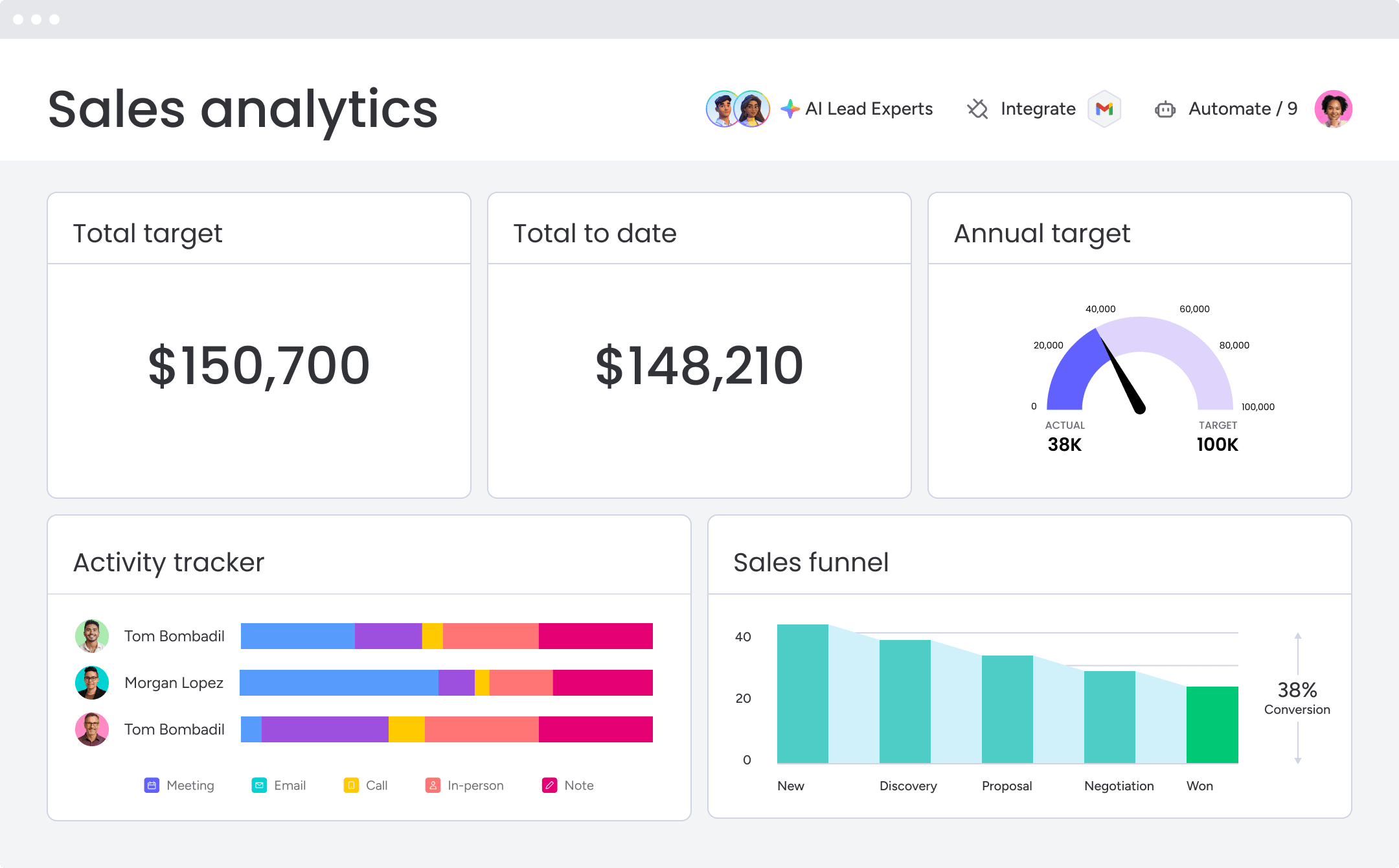
Revenue leaders know manual reporting wastes time. But the real cost? It’s not just spreadsheet hours. When your team builds reports manually, you’re losing more than productivity. You’re losing the ability to intervene when deals start slipping, missing the window to reallocate resources to struggling territories, and eroding confidence in your forecasts.
The hidden costs hit 3 ways: time drain, delayed visibility, and data inconsistency. Each problem feeds the next, creating a reporting system that works against your revenue goals instead of helping them.
Identify pipeline changes discovered too late to act
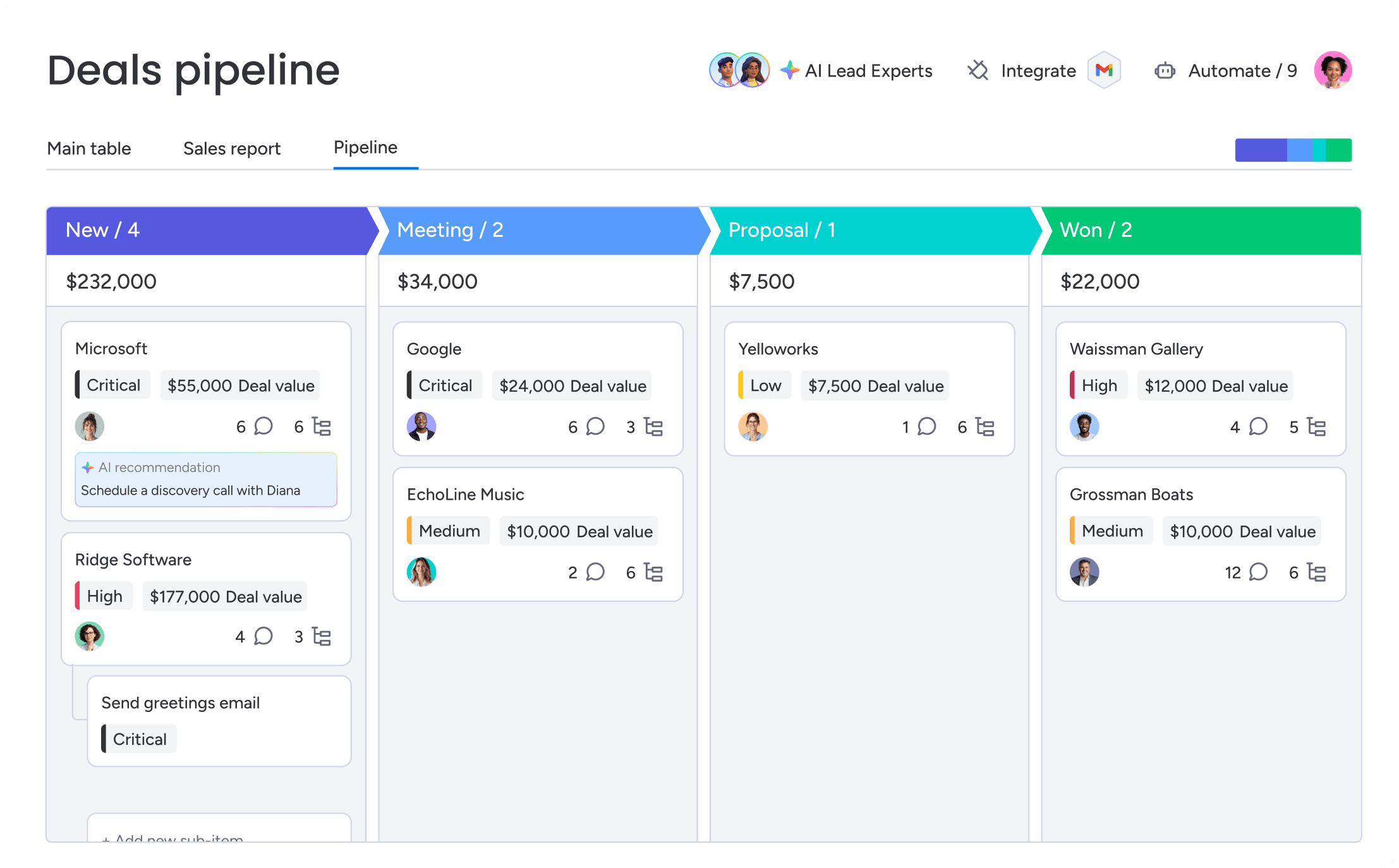
Weekly or monthly manual reports create dangerous blind spots. A deal that shifts from “verbal commit” to “evaluating alternatives” on Tuesday won’t appear in your weekly report until Friday. By then, your competitor has already scheduled their executive presentation.
A territory underperforms for 3 straight weeks. Your monthly review doesn’t catch it until week 4. You could have provided additional support or coaching after week one. Instead, the quarter is already at risk before anyone notices the pattern.
These delayed insights mean you’re always reacting to problems instead of preventing them. Your team operates with outdated information while critical deals hang in the balance.
Address inconsistent metrics across regional teams
Manual reporting lets teams define metrics however they want. One region counts all open opportunities as “pipeline.” Another excludes deals under $10K. A third only includes opportunities past qualification.
This inconsistency breaks everything downstream:
| Metric | Region A definition | Region B definition | Region C definition |
|---|---|---|---|
| Qualified lead | Budget confirmed | Budget + timeline + authority | Completed discovery call |
| Close date | Contract signature expected | Payment expected | Verbal commitment expected |
| Pipeline value | Full deal value | Weighted by stage probability | Committed portion only |
You can’t compare territory performance when the metrics mean different things. Forecasts become unreliable because they aggregate incompatible data. Board presentations lose credibility when numbers don’t align. Fix this foundational problem before automating anything.
7 best practices for successful AI sales report automation
These practices come from revenue teams who’ve successfully implemented AI automation while avoiding common pitfalls. They address real challenges around sequencing, trust, adoption, and measurement.
1. Start with quick wins while building long-term foundation
Implement high-value, low-complexity automations immediately to demonstrate ROI. Automate weekly pipeline summaries that save hours while you work on data standardization and complex predictive models. Leadership sees value in the first week, building support for continued investment.
This dual-track approach maintains momentum:
- Quick wins create enthusiasm and demonstrate immediate value.
- Foundation work enables sophisticated automation later.
- Starting small builds confidence for broader implementation.
2. Use RAG to ground AI reports in actual CRM data
Retrieval-augmented generation (RAG) prevents AI from generating plausible but incorrect information. Instead of creating reports from training data, RAG systems pull actual records from your CRM as the factual basis.
When someone asks about at-risk deals, the AI:
- Queries your CRM: For specific deals matching risk criteria
- Retrieves records: With complete deal details and history
- Generates reports: Using only verified data
- Cites sources: For verification and transparency
3. Design for actionable intelligence not pretty dashboards
Beautiful dashboards that don’t drive action waste everyone’s time. Shift from descriptive reports (“pipeline by stage”) to prescriptive intelligence (“deals needing attention this week and recommended actions”).
The design difference is fundamental:
- Descriptive reports: Show what happened
- Actionable intelligence: Show what to do about it
- Focus shift: From interesting metrics to behavior-changing insights
4. Roll out in phases with measurable milestones
Phased implementation lets you learn and adjust. Each phase builds on the last while keeping scope and risk manageable.
- Phase 1 (days 1-30): Automates 2-3 high-value reports for leadership
- Phase 2 (days 31-60): Expands to managers with predictive capabilities
- Phase 3 (days 61-90): Reaches the full team with exception alerts
Don’t advance phases until current adoption exceeds 70%. Expanding too quickly spreads problems instead of solving them. Each phase should demonstrate value before moving forward.
5. Build trust through explainable AI operations
Revenue leaders won’t act on recommendations they don’t understand. “This deal is at risk” isn’t actionable. “This deal shows risk because of 21-day activity gap, missing economic buyer, 2 close date changes, and 15% historical close rate for similar patterns” drives action.
Teams using monday CRM appreciate the Run history feature that shows why AI actions succeeded or failed. This transparency transforms AI from interesting to actionable by letting teams review logic and improve instructions over time.
6. Automate end-to-end workflows not just final outputs

True automation covers the entire workflow: data collection, analysis, report creation, distribution, and follow-up actions. The complete cycle from pipeline change to action taken happens automatically for routine situations.
This comprehensive approach:
- Frees humans for exceptions requiring judgment
- Handles routine situations that process automatically
- Focuses attention on complex decisions that matter
7. Measure business outcomes beyond hours saved
Time savings justify initial investment, but effectiveness metrics justify expansion. Track both efficiency and effectiveness to build a complete ROI picture.
Efficiency metrics include hours saved per week, report generation speed, and manual task reduction. Effectiveness metrics include forecast accuracy improvement, deal velocity increase, win-rate improvement, and at-risk deals saved.
The effectiveness metrics get budgets renewed and scope expanded. They prove AI reporting drives revenue, not just productivity.
How AI transforms sales report automation
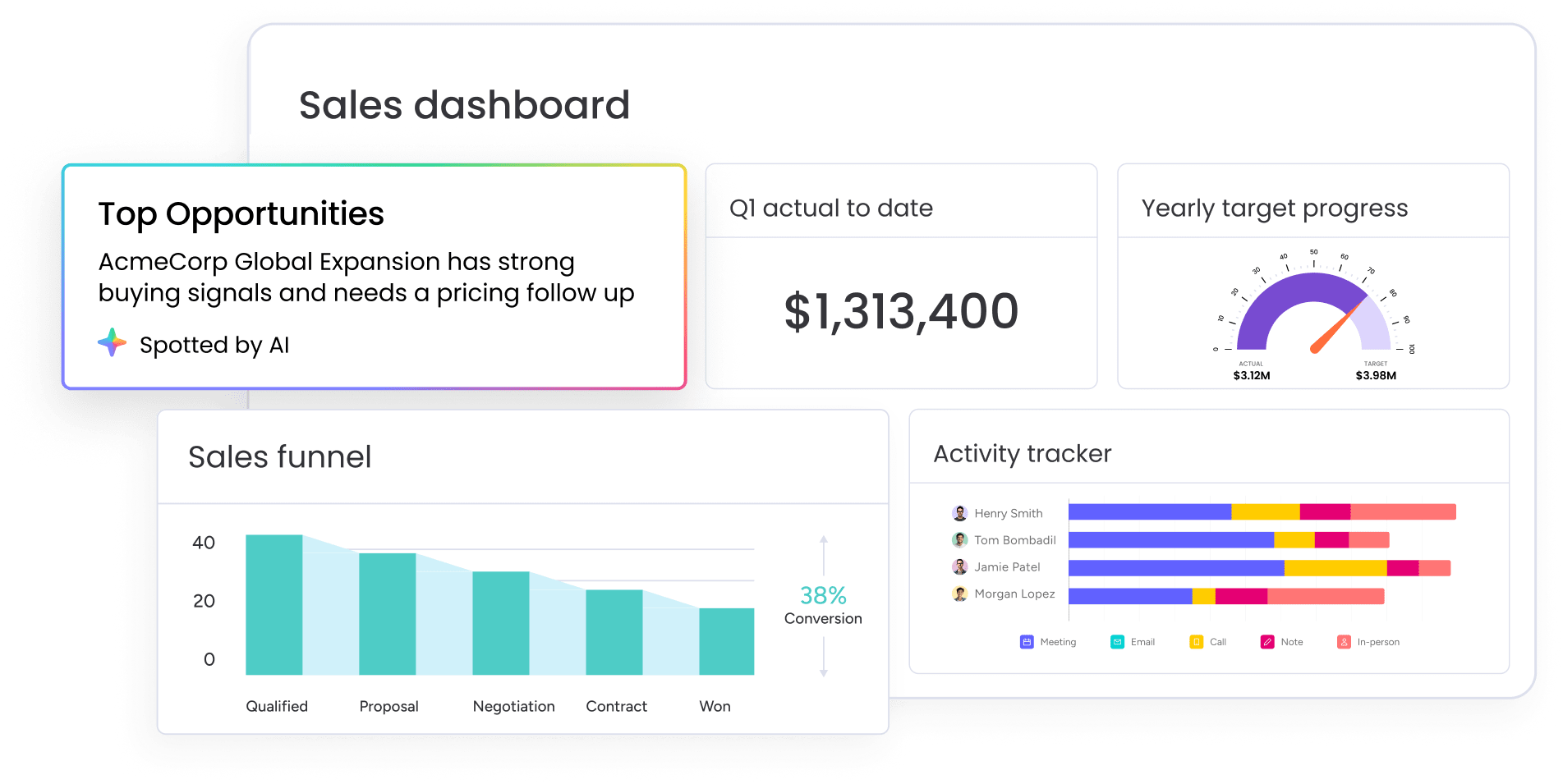
AI doesn’t just speed up your existing reports. It changes what’s possible. This goes beyond faster dashboards. You shift from backward-looking snapshots to forward-looking predictions. From drowning in data to targeted alerts. From technical bottlenecks to natural language access.
Traditional dashboards tell you what happened last week or last month. They answer questions about pipeline added and deals closed, but the insights arrive too late. AI-powered reporting analyzes patterns to predict what happens next quarter. You get time to intervene while you can still change the outcome.
From reactive dashboards to predictive intelligence
Let’s say traditional reporting shows enterprise win rates dropped from 35% to 28% last quarter, but AI shows they’re trending toward 25% this quarter. This shift from historical analysis to predictive insights changes everything.
AI transforms your reporting these ways:
- Deal slippage prediction: Identifies which deals will likely push based on activity patterns.
- Quota attainment forecasting: Projects achievement based on current activity levels.
- Churn risk identification: Flags accounts showing early warning signals.
The difference is timing. You get insights when you can still change the outcome, not after it’s too late.
Exception-based alerts surface hidden risks
Instead of scanning dozens of metrics hoping to spot problems, AI learns your baseline and alerts you when something’s off. Your attention goes to the 3-4 issues that actually need intervention, not the 50 metrics that look normal.
These targeted alerts catch risks you’d otherwise miss:
- Deal velocity drops: When Enterprise segment velocity drops 40% compared to the 90-day average
- Deal activity gaps: When 3 high-value deals go dark simultaneously
- Competitive threats: When competitors appear in 6 deals versus the usual 2
Natural language replaces complex query builders
Traditional BI platforms create bottlenecks. Sales leaders need SQL knowledge or they wait for analysts to build custom reports. Simple questions like “Which deals over $50K haven’t had activity in 2 weeks?” require technical expertise.
AI-powered interfaces let you ask questions in plain English and get immediate answers. Reps and managers get insights when they need them, not when someone has time to build a report. The technical barrier disappears. Decision-makers get data directly.
5 sales reports that deliver immediate ROI through AI automation
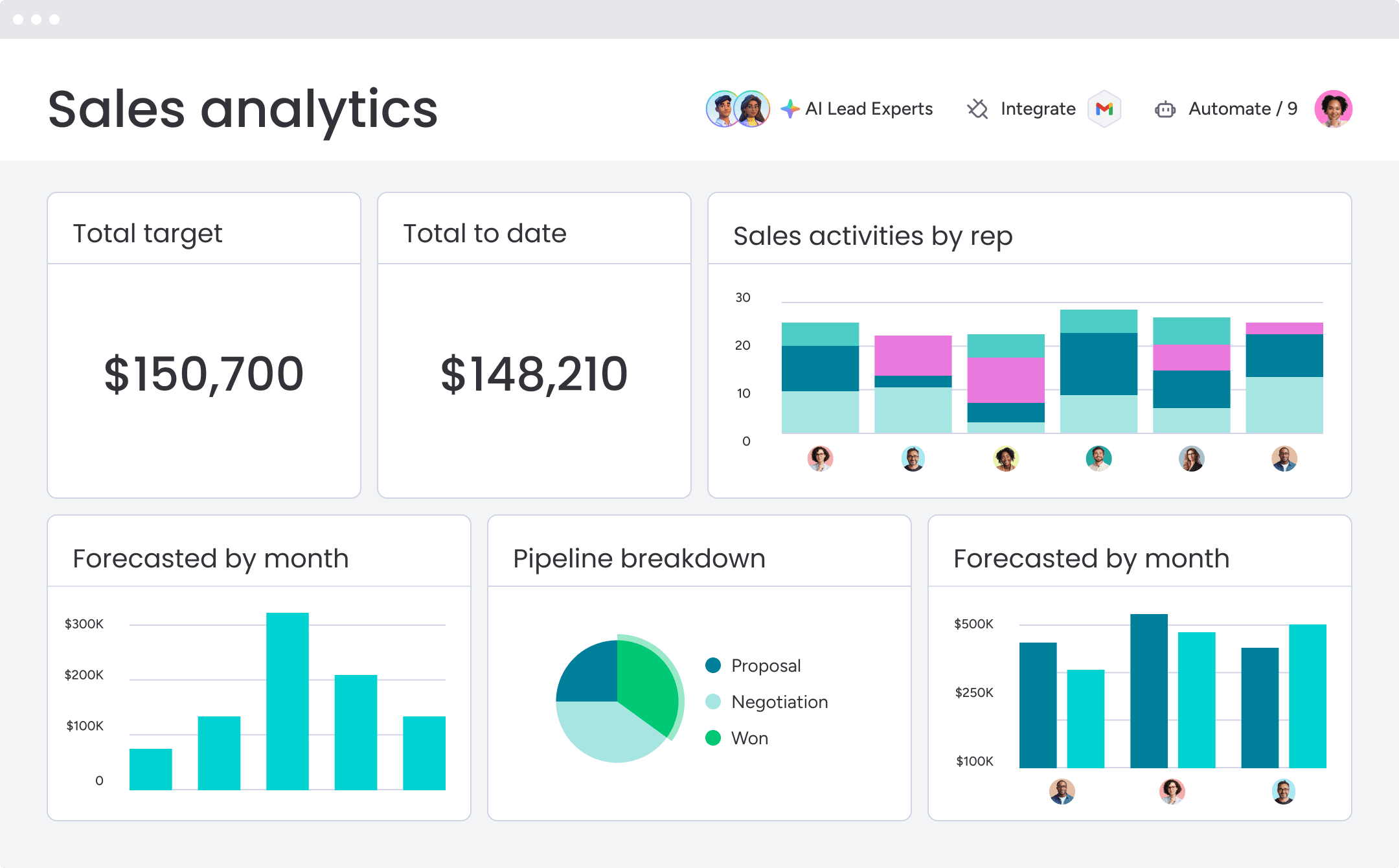
AI can automate dozens of report types. These 5 sales reports deliver measurable value quickly because they directly impact revenue decisions. Each fixes a pain point manual processes can’t handle.
1. Pipeline movement and velocity analysis
Pipeline velocity reveals where deals stall and which segments close fastest. This report matters because velocity changes signal problems or opportunities.
AI automation adds capabilities manual tracking can’t match:
- Automatic velocity calculation: Real-time computation across all deals
- Historical benchmarking: Comparison against 30/60/90-day averages
- Bottleneck identification: Flags stages where deals slow down
- Threshold alerts: Notifications when velocity drops below targets
Revenue teams using monday CRM leverage these insights through customizable dashboards that track velocity by stage, rep, and territory. The platform’s AI capabilities support AI deal flow management by identifying patterns in deal movement that predict which opportunities need attention.
Try monday CRM AI Capabilities2. Deal risk scoring and slippage predictions
Catching at-risk deals early can save 20-30% of pipeline that would otherwise slip. AI analyzes signals humans can’t track manually across hundreds of deals: activity gaps, stakeholder coverage, timeline changes, competitive presence.
Teams find that monday CRM’s AI actions like Detect sentiment and Custom action automatically flag deals showing warning signs. The platform analyzes communication patterns in the Emails & Activities timeline to surface risks before they become problems.
3. Territory performance optimization reports
Understanding why some territories outperform helps you replicate success and fix problems before the quarter tanks.
AI-powered sales performance optimization platforms analyze performance across multiple dimensions automatically:
- Activity levels: Compared to territory benchmarks
- Deal mix: Distribution across segments and sizes
- Win rates: Overall and by segment
- Cycle times: From opportunity to close
- Pipeline health: Coverage ratios and stage distribution
4. Forecast accuracy and variance tracking
Improving forecast accuracy by even 10% transforms resource planning and board confidence. AI tracks how accurately teams predict outcomes and identifies where forecasts consistently miss.
Key metrics AI monitors include:
- Variance patterns: By rep, manager, and territory
- Forecast changes: How predictions shift through the quarter
- Systematic biases: Which reps over or under-forecast
- Timing patterns: When accuracy typically degrades
5. Activity effectiveness and ROI analysis
Most teams track activity volume but miss activity effectiveness. AI connects specific actions to revenue outcomes, showing which activities actually move deals.
The correlations AI uncovers include:
- Multi-threading impact: Deals with 3+ stakeholder meetings close faster
- Response rate differences: Between video messages and text emails
- Optimal sequence timing: For maximum engagement
- Diminishing returns thresholds: When more activity hurts rather than helps
Looking for a template? Read more about sales report templates.
Build your data foundation for trustworthy AI reporting
AI amplifies whatever data quality exists in your system. Clean, standardized data produces reliable insights. Messy, inconsistent data produces confident but wrong predictions. Build a solid foundation before you automate anything.
Step 1: Standardize definitions before automating outputs
Agreement on metric definitions comes first. Without consensus on what counts as a “qualified lead” or when deals enter “pipeline,” AI will produce 3 incompatible forecasts from 3 regional definitions.
Start by documenting definitions for your core metrics:
- Document core metrics: Define qualified leads, pipeline stages, close dates
- Get leadership alignment: Secure buy-in on standardized definitions
- Update CRM fields: Reflect definitions in field descriptions
- Train teams: Ensure consistent usage across all regions
Organizations using monday CRM benefit from the platform’s standardized board structure and custom columns that enforce shared definitions across teams. The AI actions for detecting sentiment and assigning labels create consistent categories from unstructured data.
Step 2: Implement automated data hygiene workflows
Manual data entry creates inevitable errors. Duplicate records multiply. Required fields stay empty. Contact information becomes outdated. These errors compound until reports become unreliable.
CRM automation AI workflows continuously maintain data quality:
- Duplicate detection: Identifies and merges duplicate accounts
- Required field enforcement: Prevents deals from advancing without key data
- Stale opportunity alerts: Flags opportunities with no recent activity
- Formatting standardization: Normalizes company names and phone numbers
Step 3: Create unified metrics across your tech stack
Sales data lives in CRM. Marketing data sits in automation platforms. Customer success uses support systems. Finance tracks revenue in ERP. AI reporting needs unified metrics across all these systems.
Key metrics requiring unification include:
- Lead-to-customer conversion rates: Across marketing and sales systems
- Customer acquisition costs: From marketing spend to closed deals
- Expansion revenue: From initial sale to account growth
- Net revenue retention: Combining new sales and churn data
Establish a single source of truth for each metric. Create data mappings between systems. Implement validation rules to catch inconsistencies.
Master agentic AI for multi-step report generation
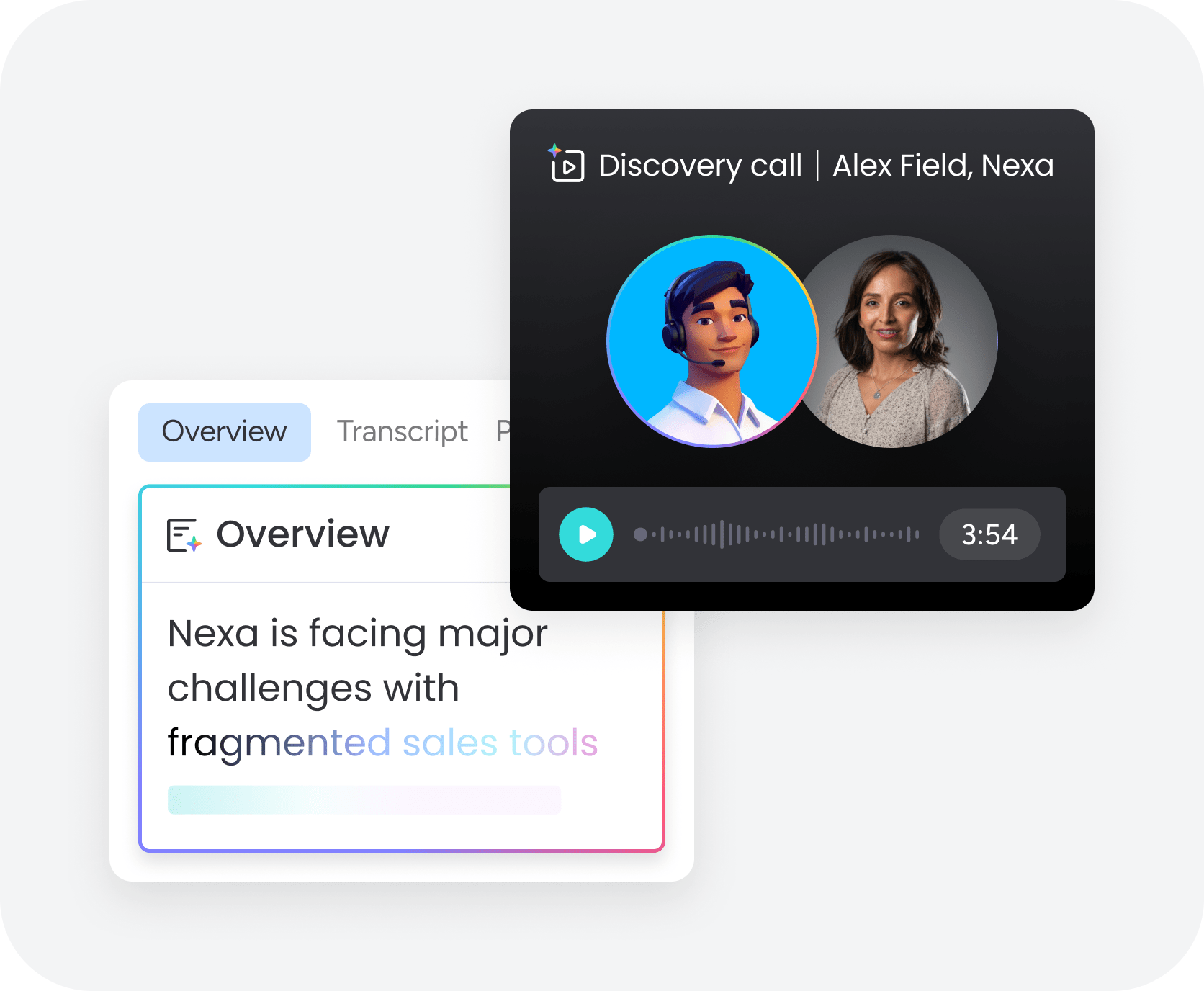
Basic automation handles single tasks. Agentic AI in sales orchestrates entire processes, gathering data from multiple sources, performing analysis, generating insights, creating customized reports, and triggering follow-ups, all autonomously.
Why AI agents outperform basic automation
Basic automation follows fixed scripts regardless of context. If leadership needs detailed forecast analysis because Q1 ends in 2 weeks, basic automation still sends the standard weekly summary.
Agentic AI works toward goals. It determines what data to gather, what analysis to perform, and how to present findings based on current business context. The agent adapts to what’s actually needed, not what was programmed months ago.
Set autonomy levels based on risk and value
Different AI actions need different autonomy levels based on risk (impact of mistakes) and value (benefit from speed and scale).
| Autonomy level | How it works | Best used for |
|---|---|---|
| Full automation | Agent acts independently | High-value, low-risk routine tasks |
| Human-in-the-loop | Agent proposes, human approves | High-value, high-risk decisions |
| Human oversight | Agent acts, notifies human | Medium-risk tasks |
| Advisory only | Agent recommends, human executes | High-risk strategic decisions |
Start with more human involvement and reduce it as the agent proves reliable. Building trust gradually is easier than recovering from early mistakes.
Choose AI sales platforms that actually work together
Integration quality varies dramatically between platforms. Some work seamlessly while others create new silos. The goal isn’t finding the perfect individual platform but building an integrated stack where capabilities compound.
Native CRM AI vs. third-party point solutions
Native CRM AI requires no integration, uses a unified data model, and provides consistent user experience. Third-party solutions offer specialized capabilities and faster innovation for specific use cases.
Revenue teams find that monday CRM’s native AI handles most core reporting needs without integration complexity. The platform lets teams summarize communication timelines, extract information from documents, detect sentiment, and autofill columns, all within the same system where deals and contacts live.
Evaluate real integration depth not just APIs
“API available” doesn’t guarantee meaningful integration. Many vendors offer surface connections that can’t access the full context needed for intelligent automation.
Ask potential vendors these critical questions:
- Data access: Can your AI access our complete CRM history or just recent records?
- Workflow triggers: Can it trigger workflows in our CRM or only read data?
- Sync frequency: Does it sync in real-time or on a schedule?
- User experience: Can users access AI features without leaving CRM?
The answers reveal whether you’re getting true integration or just data transfer.
5 lessons for successful AI report automation
Most failures stem from implementation mistakes, not technology limitations. Understanding these patterns helps you avoid the same pitfalls that derail other implementations.
- Automating chaos without fixing root causes: Teams automate broken processes without addressing underlying problems. Automation makes existing problems worse, not better. Fix the process, then automate.
- Ignoring data governance until after launch: Without clear ownership of data quality and access controls, accuracy degrades over time. Establish governance before launching automation.
- Prioritizing technology over user adoption: Sophisticated AI means nothing if no one uses it. Invest in change management, training, and user experience alongside technology.
- Treating AI as set-and-forget: AI accuracy degrades as business conditions change. Regular monitoring and adjustment keep automation effective.
- Measuring activity instead of outcomes: Tracking reports generated rather than business impact misses the point. Focus on forecast accuracy improvement and deals saved, not automation metrics.
Transform your revenue operations with intelligent automation
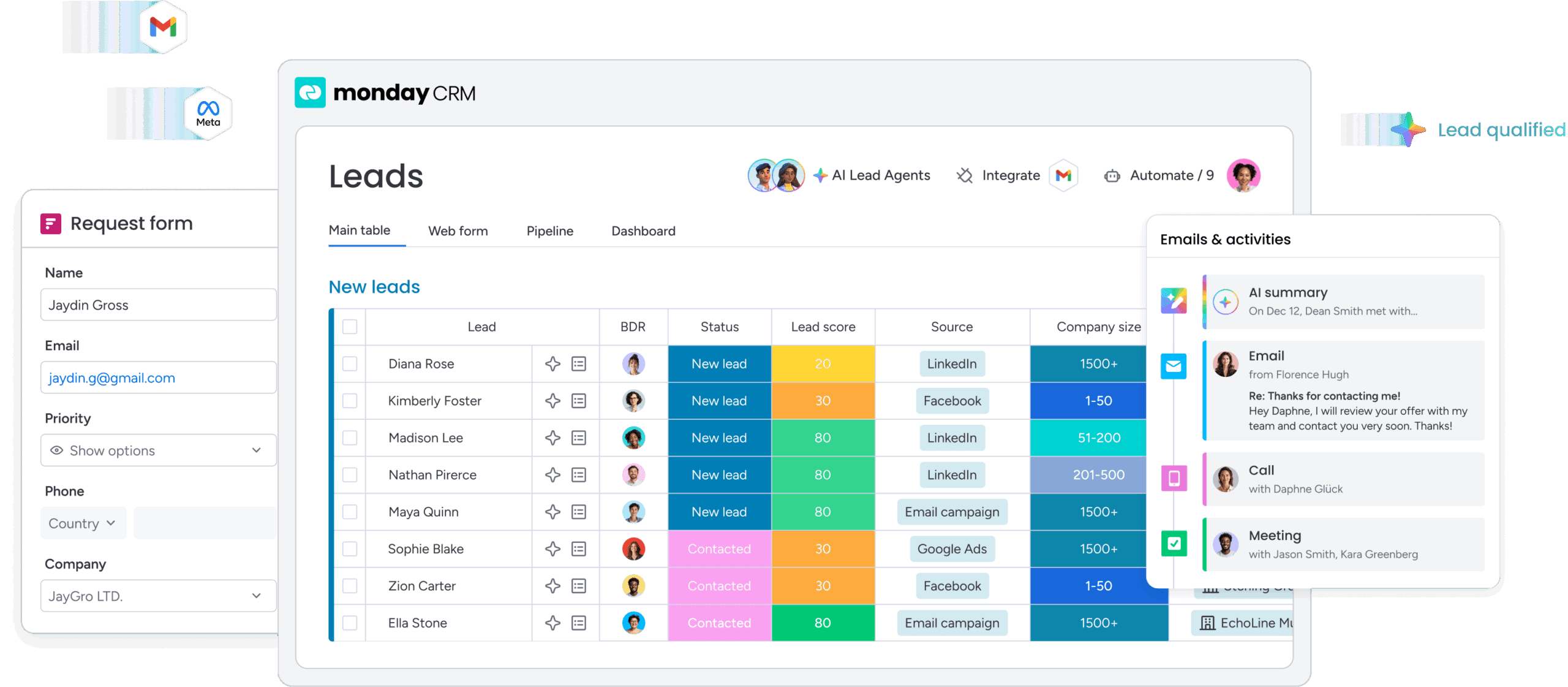
AI sales report automation represents more than a productivity upgrade. It’s a fundamental shift from reactive reporting to proactive revenue intelligence. Teams that master this transition gain competitive advantages that compound over time.
The path forward requires balancing quick wins with foundational work. Start with high-impact automations that demonstrate immediate value while building the data quality and process standardization that enables sophisticated AI capabilities. Focus on outcomes that matter: forecast accuracy, deal velocity, and revenue predictability.
Revenue teams using monday CRM discover that native AI capabilities eliminate integration complexity while delivering the intelligence modern sales organizations need. The platform’s unified approach to data, workflows, and AI creates the foundation for sustainable automation that grows with your business.
Try monday CRMFAQs
What is AI sales report automation and how does it differ from traditional reporting?
AI sales report automation uses artificial intelligence to automatically generate, analyze, and distribute sales reports without manual compilation. Unlike traditional reporting that requires manual data gathering and creates static snapshots, AI automation adds predictive analytics, exception alerts, and natural language interfaces.
How long does it take to implement AI sales report automation?
Most teams achieve initial value within 30-60 days using a phased approach. The first month focuses on automating 2-3 high-value reports for leadership, followed by expansion to managers and eventually the full team in subsequent phases.
What data quality requirements must be met before implementing AI sales reporting?
Three requirements are essential before implementation. First, standardize metric definitions across all teams. Second, implement automated data hygiene workflows to maintain quality. Third, create unified metrics across your tech stack for consistency.
How do AI agents differ from basic sales report automation?
Basic automation follows fixed scripts regardless of context, running the same reports on schedule. AI agents work toward goals, autonomously determining what data to gather and how to present findings based on current business needs.
What security considerations apply to AI sales report automation?
Key security requirements include data encryption in transit and at rest, role-based access controls, compliance certifications, and verification of data residency and vendor security practices before implementation.
How should organizations measure the ROI of AI sales report automation?
Organizations should track both efficiency metrics like hours saved and report generation speed, and effectiveness metrics including forecast accuracy improvement, deal velocity increase, and win rate improvement. Effectiveness metrics provide the strongest justification for continued investment.
