


AI sales manager solutions turn invisible pipeline risks into clear, actionable insights before deals slip away. These systems sit inside your CRM, continuously monitoring your pipeline to surface what matters most: which deals are drifting, which reps need coaching, and whether your forecast reflects reality.
This guide covers 8 practical AI sales manager use cases, including forecasting, pipeline monitoring, rep coaching, lead prioritization, conversation intelligence, and cross-functional revenue coordination.
Key takeaways
- AI sales manager solutions surface at-risk deals, coaching gaps, and forecast risks so managers act on facts instead of gut feel.
- Probability-weighted deal scores and slippage predictions give revenue leaders a reliable forecast number to report upward.
- Conversation intelligence analyzes real calls to show managers exactly where each rep needs support, freeing them from manual call reviews.
- AI agents automate routine tasks like updating CRM records and managing follow-up sequences so reps stay focused on selling.
- Start with your biggest challenge — forecast accuracy, pipeline visibility, or rep productivity — and platforms like monday CRM let you build from there for faster results.
What are AI sales manager solutions?
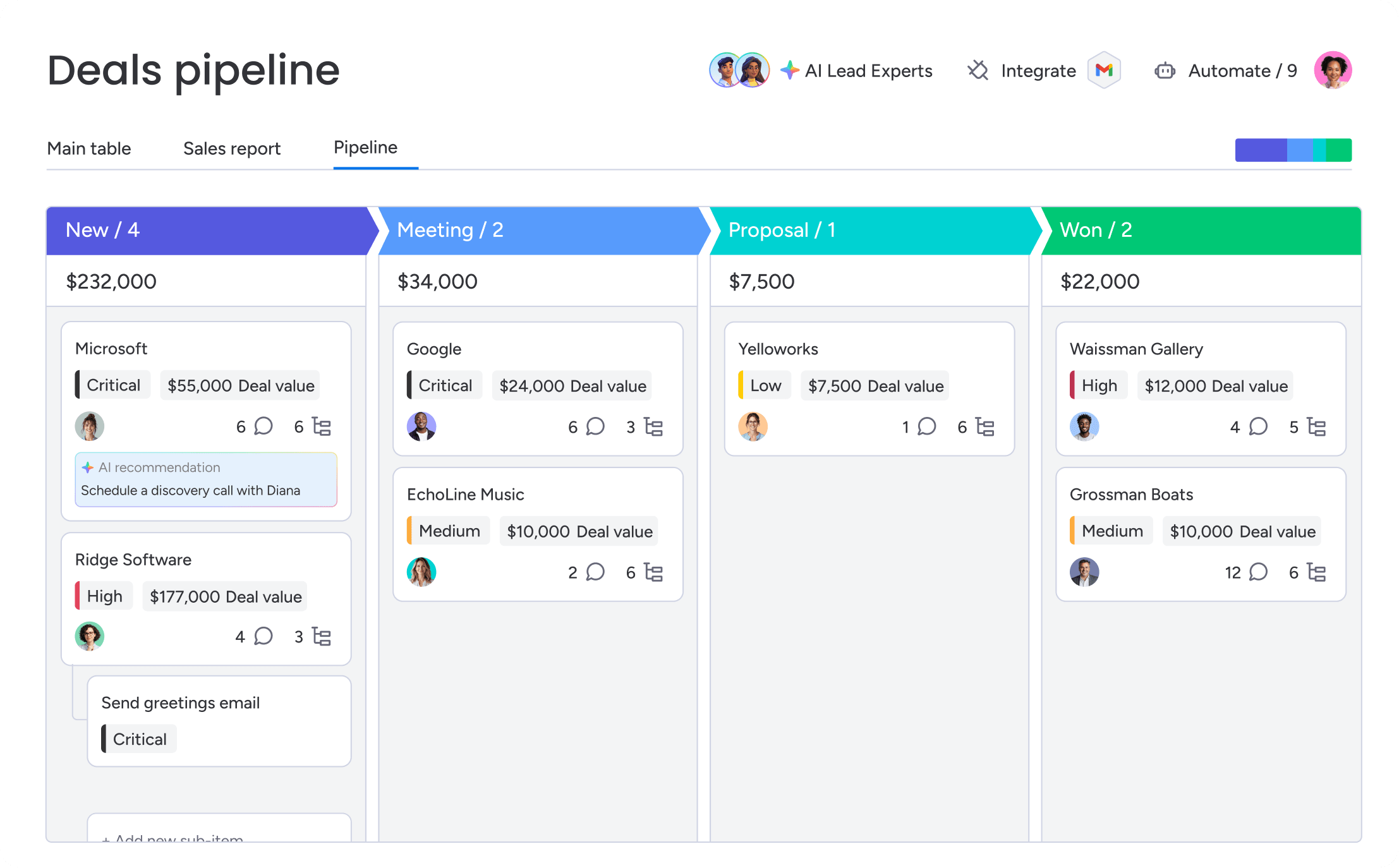
AI sales manager solutions analyze sales data, automate routine tasks, and surface insights that help sales leaders make better decisions. These solutions tackle management challenges general sales AI tools miss: pipeline visibility, team performance tracking, forecast accuracy, and coaching at scale.
Most sales managers face the same reality: uncertainty about hitting targets, hours compiling pipeline reports instead of coaching, and limited visibility into which deals need attention. AI sales manager solutions fix this by analyzing CRM data, conversation patterns, and deal progression continuously. They surface insights you’d never catch manually.
These solutions enhance human-AI collaboration in sales rather than replace it. AI identifies at-risk deals, flags coaching opportunities, predicts pipeline gaps, and automates status updates. Managers get the context they need to act decisively.
How AI sales manager solutions work inside a CRM
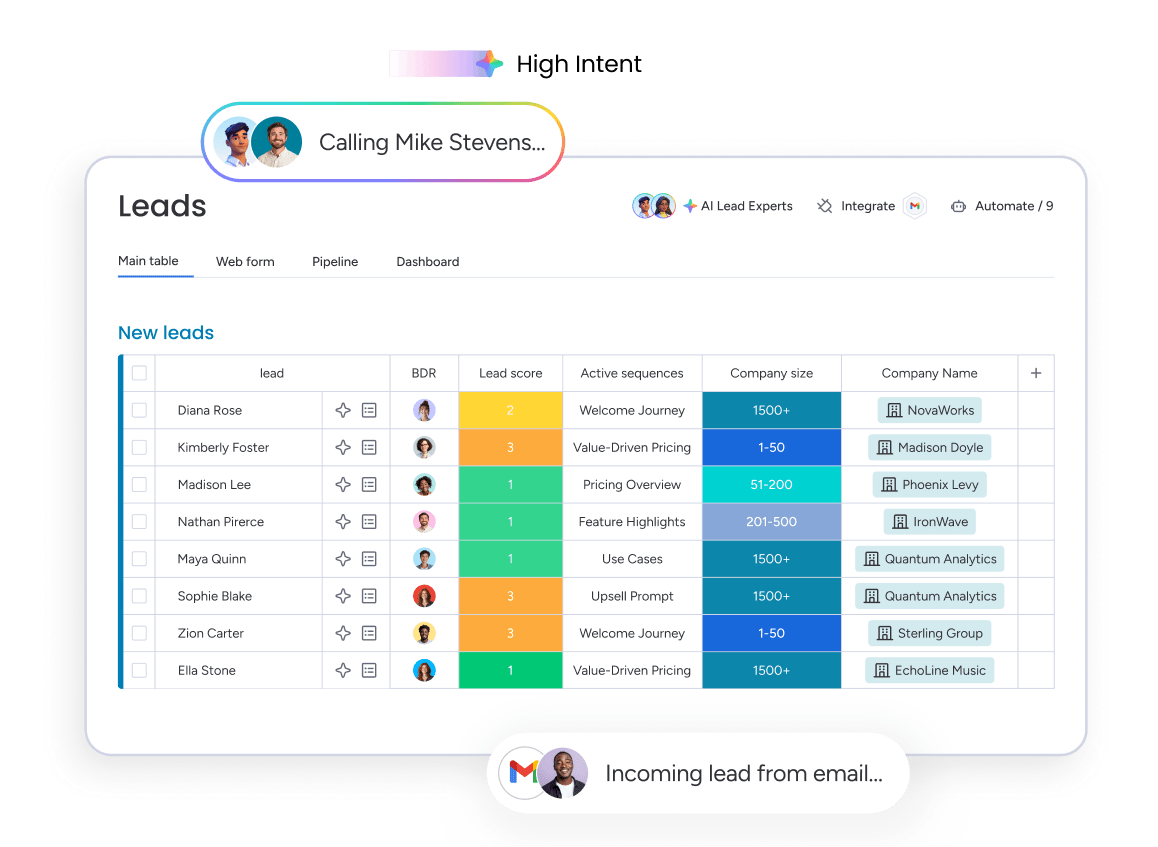
AI sales manager solutions plug directly into CRM systems and access real-time sales data. That means contacts, deals, activities, emails, call recordings, and pipeline stages. Because these solutions live inside the CRM instead of sitting in separate tools, they use data sales teams already enter.
The workflow runs on a continuous cycle, turning raw data into actionable recommendations:
| Stage | What happens | Example |
|---|---|---|
| Data collection | AI monitors all CRM data in real time | Email opens, meeting frequency, deal stage changes |
| Pattern analysis | AI identifies trends and anomalies | Deals stalling longer than average, engagement drops |
| Insight generation | AI produces recommendations and predictions | This deal has 65% close probability based on similar won deals |
| Action surfacing | AI delivers alerts or triggers automations | Manager receives notification about an at-risk deal |
AI analyzes historical deal patterns, rep behavior, customer engagement signals, and pipeline movement. It predicts outcomes and flags risks. The specific data sources include:
- Email open rates
- Meeting frequency
- Deal stage duration
- Response times
- Win/loss patterns
- Conversation content
How AI sales manager solutions differ from traditional automation
Traditional sales automation runs on pre-set rules. When a deal stage changes to “Proposal Sent,” it sends a reminder email in 3 days. These rules stay static, need manual setup, and run the same action every time.
AI-powered solutions learn from patterns, adapt to changing conditions, and predict outcomes based on probability. Instead of running a fixed action, AI identifies which deals need attention, why a forecast might be at risk, and what coaching would help.
| Dimension | Traditional automation | AI-powered solutions |
|---|---|---|
| How it works | Follows pre-defined if/then rules | Learns from patterns and adapts |
| What it does | Executes the same action every time | Recommends different actions based on context |
| When it adapts | Only when rules are manually updated | Continuously as new data becomes available |
| Example | Sends follow-up email 3 days after proposal | Analyzes engagement to determine optimal timing |
The most powerful approach combines both. AI identifies the insight, automation runs the action.
The biggest benefits of AI sales manager solutions
AI improves sales manager decisions by replacing guesswork with data-backed recommendations in 4 areas: team performance, individual rep development, cross-functional alignment, and strategic planning. The manager’s experience and strategic judgment remain essential. AI removes the blind spots.
Sales teams gain pipeline-wide visibility
AI analyzes team-wide data to spot patterns you’d never see at the individual level. You see which deal types close fastest, which industries have the highest win rates, which outreach sequences generate the most meetings, and which territories underperform.
Team-level insights AI provides include:
- Capacity planning to identify when the team has too many deals in late stages for reps to handle effectively
- Territory optimization to highlight imbalances in account distribution or opportunity coverage
- Process bottlenecks flag stages where deals consistently stall across multiple reps
- Competitive intelligence surfaces patterns in losses to specific competitors
These insights drive decisions about hiring, territory assignments, process changes, and resource allocation.
Managers can coach individual reps more precisely
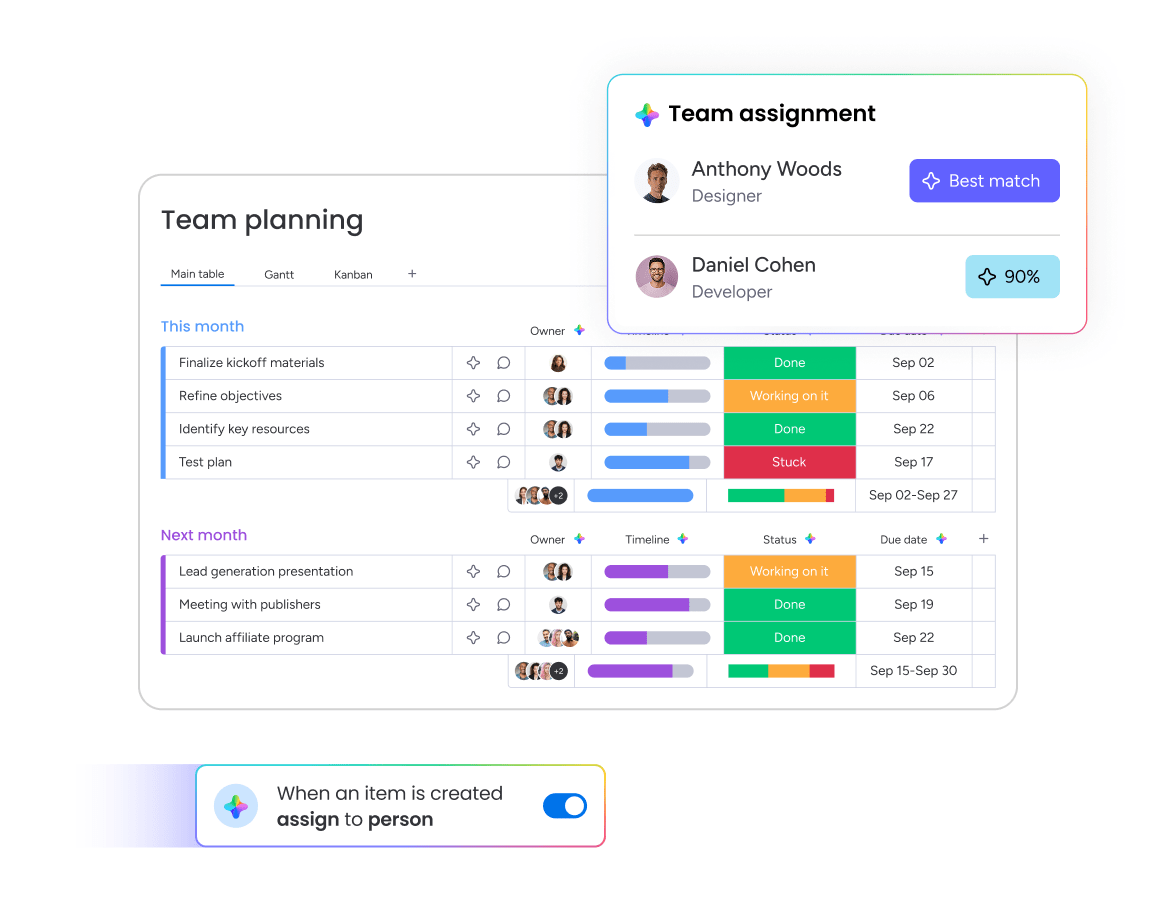
AI helps surface each rep’s activity patterns, conversation quality, deal progression, and win/loss trends. It identifies personalized coaching opportunities. Instead of relying on gut feel or sporadic deal reviews, managers get a data-backed view of where each rep needs support.
Rep-level insights AI surfaces include:
- Skill gaps identify reps who struggle with specific objections or pricing conversations
- Activity patterns flag reps who aren’t following up consistently or engaging decision-makers
- Win/loss trends highlight which deal characteristics correlate with each rep’s success
- Coaching priorities that recommend which reps need immediate intervention
Managers can coach proactively and precisely. This matters most for managers overseeing large teams who can’t manually review every deal or call.
The gap between sales and marketing closes
AI for sales and marketing helps sales managers collaborate more effectively by providing shared visibility into lead quality, campaign performance, and conversion patterns. When both teams work from the same data, conversations shift from blame to strategy.
AI bridges the sales-marketing gap through several key capabilities:
- Lead scoring alignment shows which marketing-sourced leads actually convert, helping both teams refine targeting
- Campaign attribution tracks which marketing touches influence deal progression
- Feedback loops surface patterns in why qualified leads don’t convert
- Content effectiveness identifies which marketing assets sales reps use in winning deals
This shared intelligence helps sales managers give marketing specific, data-backed feedback instead of anecdotal complaints about lead quality.
Revenue teams are better connected across the entire customer journey
AI gives you a unified view of the customer journey from first marketing touch through closed deal and renewal. This cross-functional visibility helps sales managers coordinate across the entire revenue organization, not just their own team.
Cross-functional benefits AI provides include:
- Handoff coordination manages transitions from marketing to sales to customer success based on engagement signals
- Shared metrics use AI-driven data to create a common language all teams trust
- Drop-off identification pinpoints where prospects disengage across the full journey
- Unified revenue forecasting that incorporates marketing pipeline generation, sales conversion rates, and customer expansion opportunities into a single view
Common challenges AI sales manager solutions solve
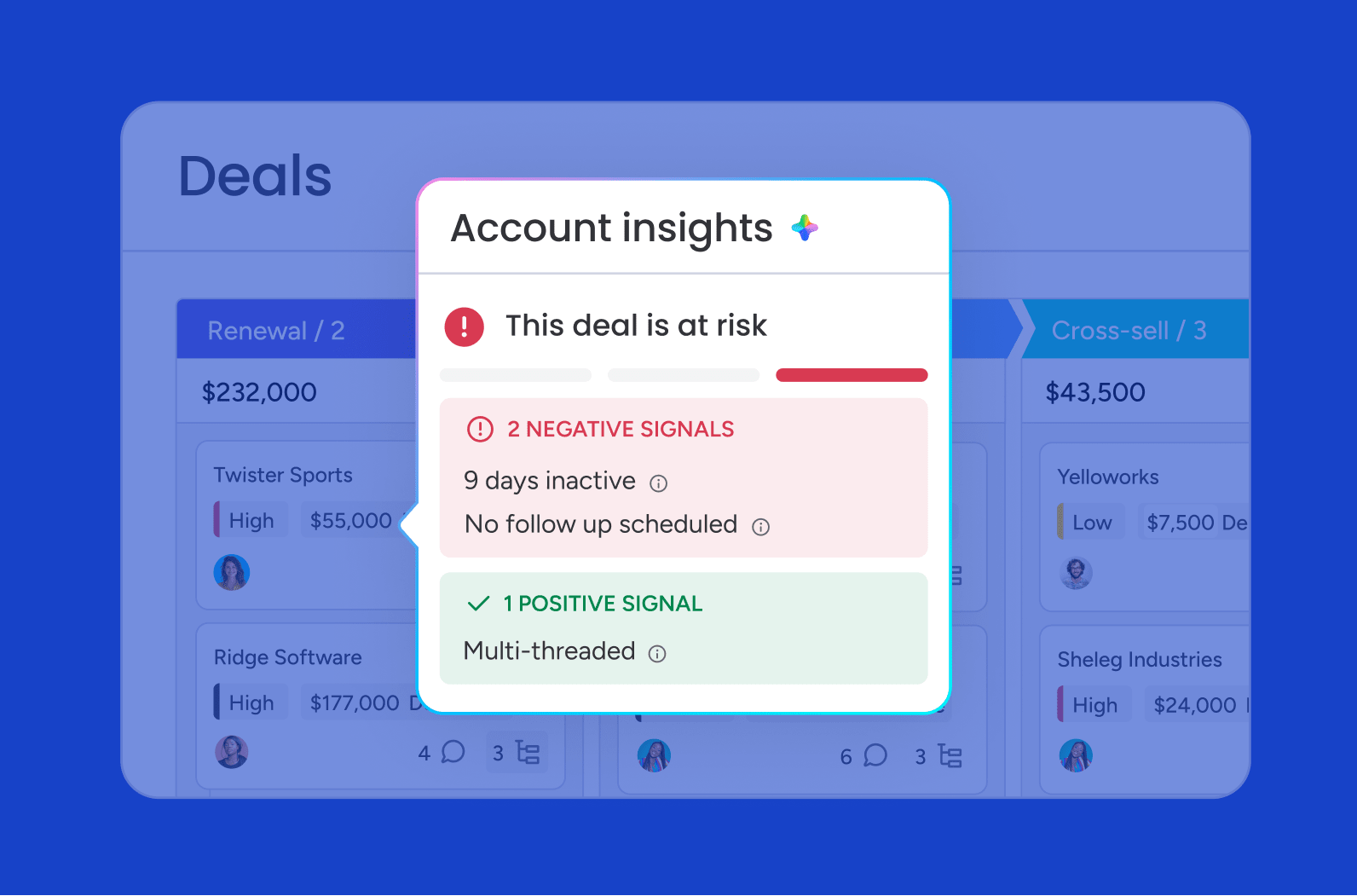
Sales managers face recurring challenges that drain time, create forecast uncertainty, and limit their ability to coach effectively. AI sales manager solutions directly address these pain points by automating what’s manual, surfacing what’s hidden, and predicting what’s at risk.
Forecast uncertainty and missed targets
Most sales managers struggle to predict which deals will actually close. Reps mark deals as “90% likely” that slip to next quarter. Pipeline coverage looks healthy until it doesn’t. AI eliminates guesswork by analyzing historical patterns, engagement signals, and deal progression to assign accurate close probabilities. Managers get a reliable forecast number backed by data instead of optimism.
Coaching large teams at scale
Managers overseeing 10+ reps can’t manually review every call or deal. Coaching becomes reactive, inconsistent, or focused on whoever’s loudest. AI analyzes every conversation and deal to surface specific coaching opportunities for each rep. Managers see exactly where each seller needs support without listening to hours of calls.
Poor pipeline visibility and hidden risks
Deals stall without warning. Engagement drops go unnoticed until it’s too late. Managers lack real-time visibility into which opportunities need intervention. AI continuously monitors pipeline health and flags early warning signals: engagement drops, stage duration anomalies, missing activities, and competitive threats. Managers act on risks before deals slip away.
CRM hygiene and incomplete data
Reps hate updating CRM records. Missing data creates blind spots that undermine forecasting and reporting. AI automates CRM updates by capturing meeting notes, logging activities, enriching contact records, and maintaining deal stages. Clean, consistent data flows into the system without manual effort.
Rep accountability and activity tracking

Managers struggle to know whether reps are executing the right activities consistently. Who’s following up? Who’s engaging decision-makers? Who’s stuck in low-value tasks? AI tracks activity patterns across the team and surfaces gaps in execution. Managers see who needs redirection before performance suffers.
Cross-functional alignment and revenue coordination
Sales, marketing, and customer success operate in silos with conflicting data and misaligned priorities. Lead handoffs break down. Campaign attribution stays unclear. Renewal risks go unnoticed. AI creates shared visibility across the revenue organization by connecting marketing touches, sales activities, and customer health signals into a unified view. Teams coordinate around the same insights instead of debating whose numbers are right.
8 AI sales manager use cases that improve team performance
These 8 use cases show the highest-impact ways sales managers use AI to improve forecast accuracy and coaching effectiveness. Each tackles specific pain points: pipeline visibility, coaching at scale, lead prioritization, and cross-team coordination.
1. Use AI to improve forecasting accuracy
Sales managers use AI to improve forecast accuracy by analyzing historical deal patterns, current pipeline health, and leading indicators. It predicts which deals will close and when, giving revenue leaders a reliable number to report upward.
AI assigns close probabilities based on stage, age, engagement level, and historical win rates. It projects future pipeline needs by comparing current coverage to historical conversion rates, identifies deals likely to push to next quarter, and surfaces patterns in win rates and deal velocity that would take hours to compile manually.
2. Identify at-risk deals before they stall
An AI sales pipeline continuously monitors pipeline health and surfaces early warning signals that indicate deals need attention. Deal signals AI detects include:
- Engagement drops: A prospect who responded quickly now takes days to reply
- Stage duration anomalies: Deals sitting in a stage longer than average
- Missing activities: Deals advancing without completing critical steps
- Competitive threats: Mentions in emails or patterns consistent with competitive evaluations
- Champion changes: Key contacts departing, putting deals at risk
3. Coach reps using conversation intelligence
AI analyzes sales calls and emails to identify coaching opportunities based on what reps say in customer conversations. This gives managers data-backed evidence of where each rep needs support, replacing gut feel with specific behaviors to address.
Instead of listening to hours of calls, managers get flagged moments where reps dominate conversations, fail to address common objections, or miss securing next-step commitments. AI reveals how reps position against competition, discuss pricing and value, and whether they’re following the sales methodology consistently across deals.
4. Automate meeting summaries and CRM updates

AI automates call documentation so reps stay focused on selling rather than typing notes. Accurate, consistent records also give managers a reliable trail to coach against. AI-generated meeting summaries automatically capture:
- Key discussion points: Customer pain points and questions asked
- Action items: Commitments made by both parties, with owners and deadlines
- Next steps: Agreed-upon follow-up activities
- Sentiment and engagement: Customer tone and interest levels
- Stakeholder identification: Who participated and how engaged they were
5. Prioritize leads and accounts
AI scores leads and accounts based on conversion likelihood and revenue potential. This helps reps focus their time on opportunities most likely to close and helps managers spot expansion opportunities across the book of business.
The system identifies which lead characteristics correlate with closed deals by analyzing historical conversion patterns. It assesses existing accounts based on expansion potential and engagement level, updates scores in real time as leads engage or disengage, and creates rep-specific or territory-specific scoring models that reflect what actually works for each seller.
6. Automate repetitive sales management tasks
An AI sales assistant reduces administrative work by automating routine follow-up tasks. Automation capabilities include:
- Intelligent follow-up sequences that determine optimal timing based on prospect engagement patterns
- CRM field updates that automatically maintain deal stages and contact information
- Task creation that generates follow-up tasks based on call commitments
- Data enrichment that pulls missing information from external sources
7. Scale personalized outreach
Generative AI for sales growth helps sales reps create personalized, relevant outreach at scale. It drafts email openers based on company news and shared connections, generates proposal sections tailored to specific pain points, suggests follow-up messaging angles based on previous conversations, and provides suggested replies to common objections.
This means reps spend less time staring at blank screens and more time refining messages that reflect their voice and the customer’s context.
8. Coordinate revenue teams across the customer journey
AI connects sales workflows with marketing campaigns and customer success activities. This creates a unified revenue motion where every team works from the same data and insights. Cross-functional workflows AI enables include:
- Lead-to-opportunity handoff: Triggers sales outreach when marketing-qualified leads are ready
- Campaign influence tracking: Connects closed deals to the marketing that influenced them
- Sales-to-CS handoff: Identifies when deals transition to customer success with full context
- Renewal and expansion signals: Monitors customer health to flag opportunities or risks
How AI sales agents support daily sales execution
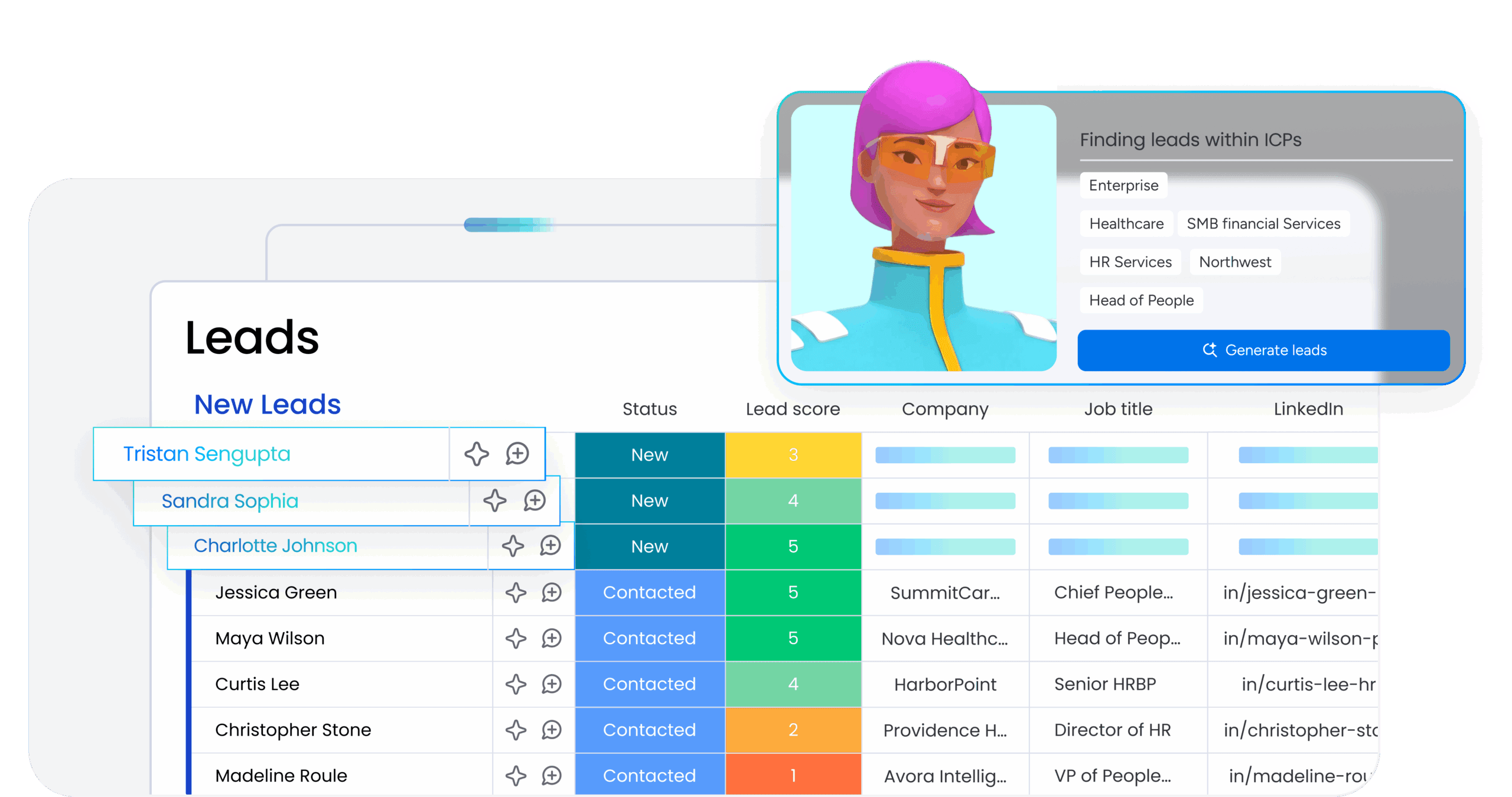
AI sales agents go beyond insights and recommendations to execute tasks on behalf of sales managers and reps. Unlike AI copilots, agentic AI in sales adapts to changing conditions and handles complex, multi-step tasks with minimal human input.
AI copilots vs. AI agents: What’s the difference and when to use each
| AI copilots | AI sales agents | |
|---|---|---|
| How they work | Provide suggestions; human reviews and acts | Execute tasks autonomously within set parameters |
| Pipeline reviews | Recommend which deals need attention | Continuously track deal health and trigger interventions |
| Follow-up emails | Draft emails for rep review before sending | Manage full follow-up sequences |
| Lead handling | Surface insights about lead quality | Engage inbound leads, ask qualifying questions, and route them |
| CRM updates | Surface data gaps for reps to complete | Research prospects and update CRM records automatically |
How to maintain manager control when using AI agents
Sales managers maintain control over AI through specific governance tools:
- Permission settings: Define what actions agents can take autonomously.
- Review workflows: Ensure high-stakes actions get manager approval.
- Audit trails: Log all AI actions with timestamps and rationale.
- Override capabilities: Let managers pause or reverse AI decisions.
How to choose an AI sales management platform
Evaluating the right platform means looking beyond feature lists to how well the AI fits your data, your workflows, and your team’s ability to use it. The strongest fit comes from platforms that integrate natively with your CRM and grow alongside your team.
Evaluate CRM data and workflow fit before anything else
- Native CRM integration: Ensures seamless data access and eliminates context switching
- Data quality requirements: Helps determine if current CRM hygiene meets AI needs
- Workflow compatibility: Confirms AI fits into how managers already work
- Customization flexibility: Allows AI models to match unique sales processes
Assess forecasting and coaching capabilities against your biggest pain points
| Capability area | What to evaluate | Why it matters |
|---|---|---|
| Forecasting features | Probability-weighted forecasts, pipeline gap analysis, deal slippage prediction | Addresses uncertainty about hitting targets |
| Coaching insights | Call analysis, specific behavioral feedback, skill gap identification | Enables precise coaching at scale |
| Scalability | Support for large teams without manual review | Managers need support to review at scale |
| Actionability | Clear next steps from insights | Actionable insights drive measurable outcomes |
Confirm integration with the tools your sales team already uses
- Email and calendar: Lets AI track engagement and trigger follow-ups
- Video conferencing: Enables call recording and analysis
- Marketing automation: Tracks lead sources and campaign influence
- Business intelligence: Ensures AI insights flow into executive reporting
Prioritize ease of implementation and team adoption
- Time to value: How quickly the organization starts seeing insights
- User experience: Whether the interface is intuitive for managers and reps
- Training requirements: How much education users need to get up to speed
- IT involvement: Whether sales operations can implement without heavy technical resources
Plan for scalability and evolving AI capabilities
- Team growth: Support for larger teams and more complex sales processes
- Vendor roadmap: Evidence of ongoing investment in AI development
- Customization depth: AI models that improve with organization-specific data over time
- Cross-functional expansion: AI capabilities that extend to marketing and customer success
Putting AI sales management into practice with monday CRM
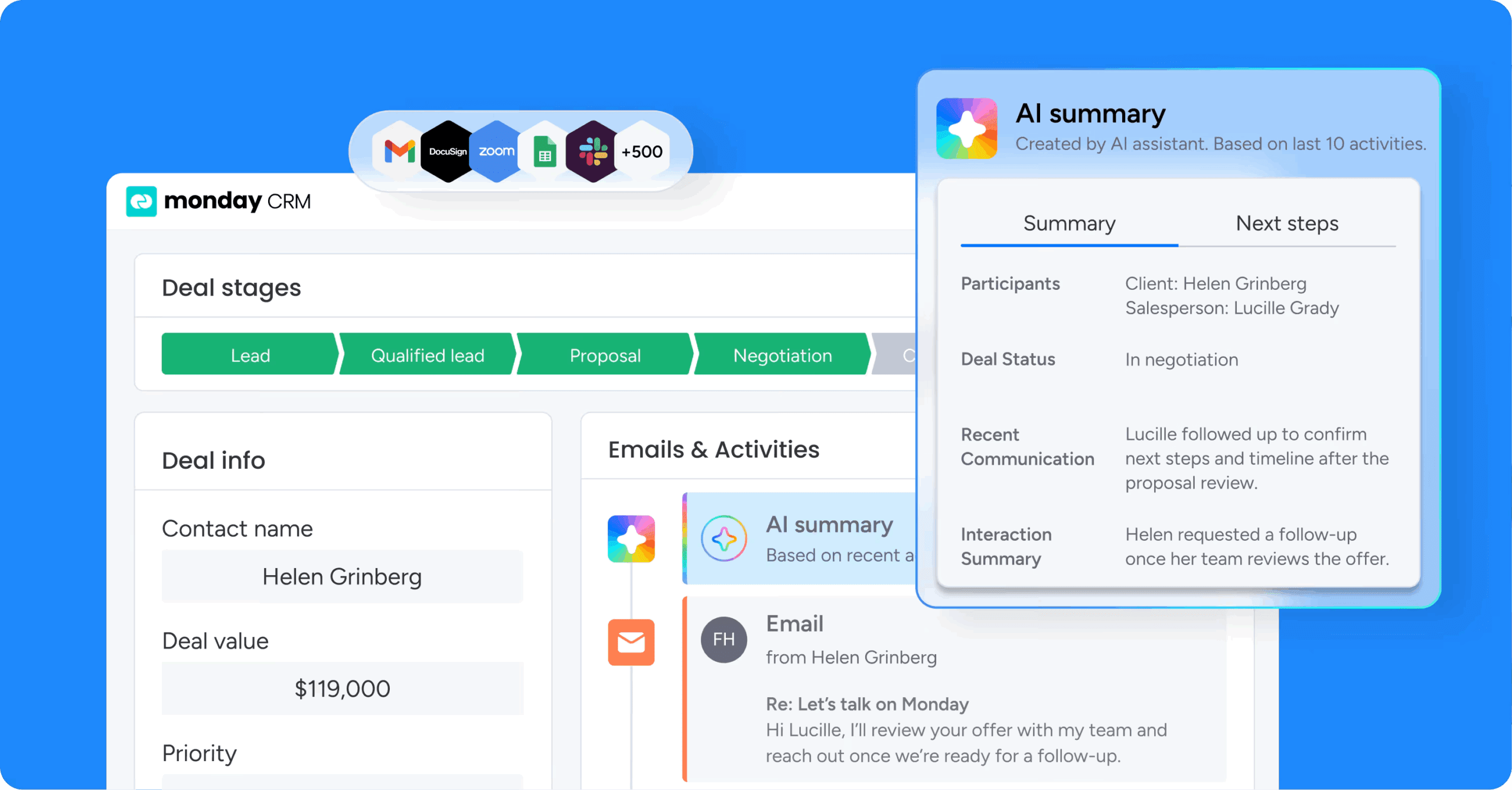
AI sales manager solutions aren’t a future-state investment anymore. It’s a practical advantage available to any team willing to act on it. The managers who move first gain compounding benefits: sharper forecasts, faster coaching cycles, and a pipeline that’s visible in real time rather than reconstructed after the fact.
These AI in sales examples aren’t theoretical. Predictive forecasting, conversation intelligence, automated follow-ups, and cross-functional coordination are capabilities revenue teams are using right now to close more deals with less manual effort. Start by identifying your biggest pain point and build from there with monday CRM.
Try monday CRMFAQs
What is AI for sales managers and how does it improve sales forecasting?
AI for sales managers refers to intelligent software systems that analyze sales data, automate routine management tasks, and surface actionable insights to help sales leaders make more informed decisions. AI improves sales forecasting accuracy by analyzing historical deal patterns, current pipeline health, and leading indicators to predict which deals will close and when.
Can AI replace sales managers?
AI complements sales managers rather than replacing them. AI enhances human judgment by surfacing insights and automating routine tasks, while the manager's experience and strategic judgment remain essential.
What data does AI need to work effectively in sales?
AI needs access to CRM data — including contacts, deals, activities, emails, call recordings, and pipeline stages — to work effectively in sales.
How do AI sales agents differ from AI copilots?
AI sales agents differ from AI copilots in that copilots provide suggestions with human review, while AI sales agents are autonomous programs that execute multi-step workflows with less human oversight.
What should sales managers look for in an AI sales management platform?
When choosing an AI sales management platform, evaluate CRM data and workflow fit, forecasting and coaching capabilities, integration with your existing tech stack, ease of implementation, and scalability.
