


Your operations team just spent three hours manually routing support tickets and chasing approvals. Marketing is drowning in lead qualification. Your finance team is processing vendor invoices by hand. This is exactly the workload enterprise AI agents for operations management are built to absorb, interpreting context across emails, documents, and tickets instead of following rigid scripts.
Unlike basic automation that follows rigid rules, AI-powered systems adapt to changing conditions without constant reprogramming. The payoff? Faster cycle times, fewer manual handoffs, and teams who actually focus on strategic work.
In this article, you will learn how to implement AI business process automation successfully. You’ll learn how to identify the right processes for automation, build governance frameworks that keep things secure and compliant, and scale AI capabilities across departments. You’ll also see how modern work platforms like monday.com combine flexible workflow building with AI agents, creating automation that teams actually want to use.
Key takeaways
- Start with high-volume, repetitive processes that have measurable business impact. Focus on workflows like ticket routing, status reporting, or vendor management that occur frequently and create bottlenecks when handled manually.
- AI automation handles what rule-based systems can’t. Unlike traditional automation, AI interprets unstructured data like emails and documents, adapts to exceptions, and makes context-aware decisions without breaking when conditions change.
- Scale operations without adding headcount by automating knowledge work. Teams can manage 3-4x more processes using AI to handle coordination, analysis, and decision-making that previously required manual intervention.
- monday agents provides ready-made automation plus custom agent building. Get immediate value from specialized agents for risk analysis, ticket assignment, and meeting summaries, or build custom agents using your organization’s actual work data.
- Establish governance frameworks early to ensure enterprise-grade security. Implement granular permissions, audit trails, and human-in-the-loop controls before scaling automation across departments to maintain compliance and trust.
What is AI business process automation?
AI business process automation executes multi-step workflows that span departments, systems, and decision points. This means moving beyond simple “if-then” rules to systems that interpret context, handle exceptions, adapt to changing conditions, and make decisions across unstructured inputs like emails, documents, and support tickets.
Traditional automation follows fixed logic: “If a purchase order exceeds $5,000, route it to a senior manager.” AI-powered automation goes further.
Instead of checking a single condition, AI automation systems analyze patterns in historical data and interpret natural language.
They recommend actions based on context and handle the variability that’d break a rule-based approach.
Consider ticket routing. A rule-based system routes tickets based on keyword matching and fails the moment customers describe problems in unexpected ways. An AI-powered system analyzes the ticket’s sentiment, urgency, and customer history. It checks current team workload, determines priority, assigns the right owner, and drafts an initial response.
Here’s what sets AI business process automation apart:
- Interpreting unstructured inputs: Extracting meaning, intent, and urgency from emails, documents, meeting notes, and support tickets without requiring structured data entry
- Context-aware routing: Assigning requests based on workload, expertise, and priority rather than simple keyword matching
- Predictive bottleneck detection: Analyzing velocity data, dependency chains, and historical patterns to flag risks before they occur
- Continuous improvement: Learning from corrections, outcomes, and feedback without requiring manual reprogramming
AI-powered automation vs. traditional automation
Understanding the difference between conventional approaches and AI-powered automation helps you spot where AI delivers value that rule-based systems can’t. The comparison below shows which approach fits your workflow needs.
| Dimension | Rule-based automation | AI-powered automation |
|---|---|---|
| Input handling | Structured data only, fields, dropdowns, numerical values | Structured and unstructured data, emails, documents, meeting notes |
| Decision logic | Fixed if-then rules defined in advance | Context-aware decisions based on multiple data points |
| Adaptability | Requires manual reprogramming when conditions change | Learns and adapts from data, corrections, and outcomes |
| Exception handling | Fails or escalates on anything outside predefined rules | Interprets and resolves many exceptions autonomously |
| Best suited for | High-volume, identical repetitive activities | Variable, judgment-dependent workflows with cross-functional coordination |
| Strengths | Predictable, fast execution for consistent processes; easy to audit and troubleshoot | Handles variability and complexity; improves over time without reprogramming |
| Limitations | Breaks when inputs vary; can't handle exceptions or learn from outcomes | Requires quality data to train; needs governance frameworks for enterprise deployment |
AI-powered automation adapts when processes change. It learns from corrections. When a team member reassigns a ticket that was routed incorrectly, the system incorporates that feedback into future routing decisions. Most organizations benefit from combining both approaches: rule-based automation for straightforward, high-volume processes, and AI where variability, judgment, or cross-functional coordination is required. This shift is already underway, with Gartner forecasting that 40% of enterprise applications will feature AI agents for specific processes by 2026, up from less than 5% in 2025.
6 benefits of AI-driven automation for businesses
When evaluating AI business process automation, connect capabilities to measurable business outcomes. The strongest ROI comes when you apply automation strategically across departments, not in isolated pockets. Here are six benefits driving adoption across mid-market and enterprise organizations.
1. Faster cycle times and operational efficiency
AI automation compresses the time between starting and finishing a process. It eliminates handoff delays and runs 24/7. When a support ticket arrives at 2 a.m., an AI-powered system classifies and prioritizes it immediately. It routes the ticket without waiting for someone to start their shift.
A single automated request intake that validates, deduplicates, and routes without human bottlenecks might save 15 minutes per request. Across 200 requests per month, that’s 50 hours returned to the team.
2. Reduced costs and optimized resources
AI automation reduces costs through direct labor savings and smarter resource allocation, and it’s becoming the primary driver of AI adoption: 54% of infrastructure and operations leaders say cost optimization is their top goal for adopting AI. AI analyzes workload distribution across teams and identifies over- and under-utilized team members. It recommends reallocation before burnout sets in or deadlines slip.
Direct cost reductions include:
- Fewer manual hours on repetitive coordination
- Reduced error-related rework
- Decreased overtime from uneven workload distribution
3. Smarter decision-making with real-time insights
AI automation generates decision-ready data as a byproduct of running processes. When you automate and track workflows on a single platform, leaders get real-time dashboards showing process health, bottlenecks, and resource utilization. No waiting for someone to compile a report.
Proactive risk detection: AI can flag a project trending toward a missed deadline based on velocity data, a team member whose workload has spiked beyond sustainable levels, or a budget line burning faster than planned.
4. Scalability without proportional headcount
AI automation lets organizations handle growing process volumes without adding headcount at the same rate. Take an operations team managing 50 vendor relationships. Scaling to 200 vendor relationships with manual processes would mean tripling the team.
With AI-powered capabilities: Vendor research, automated SLA monitoring, and risk flagging enable the same team to manage the expanded portfolio.
5. Workforce empowerment and lower skill barriers
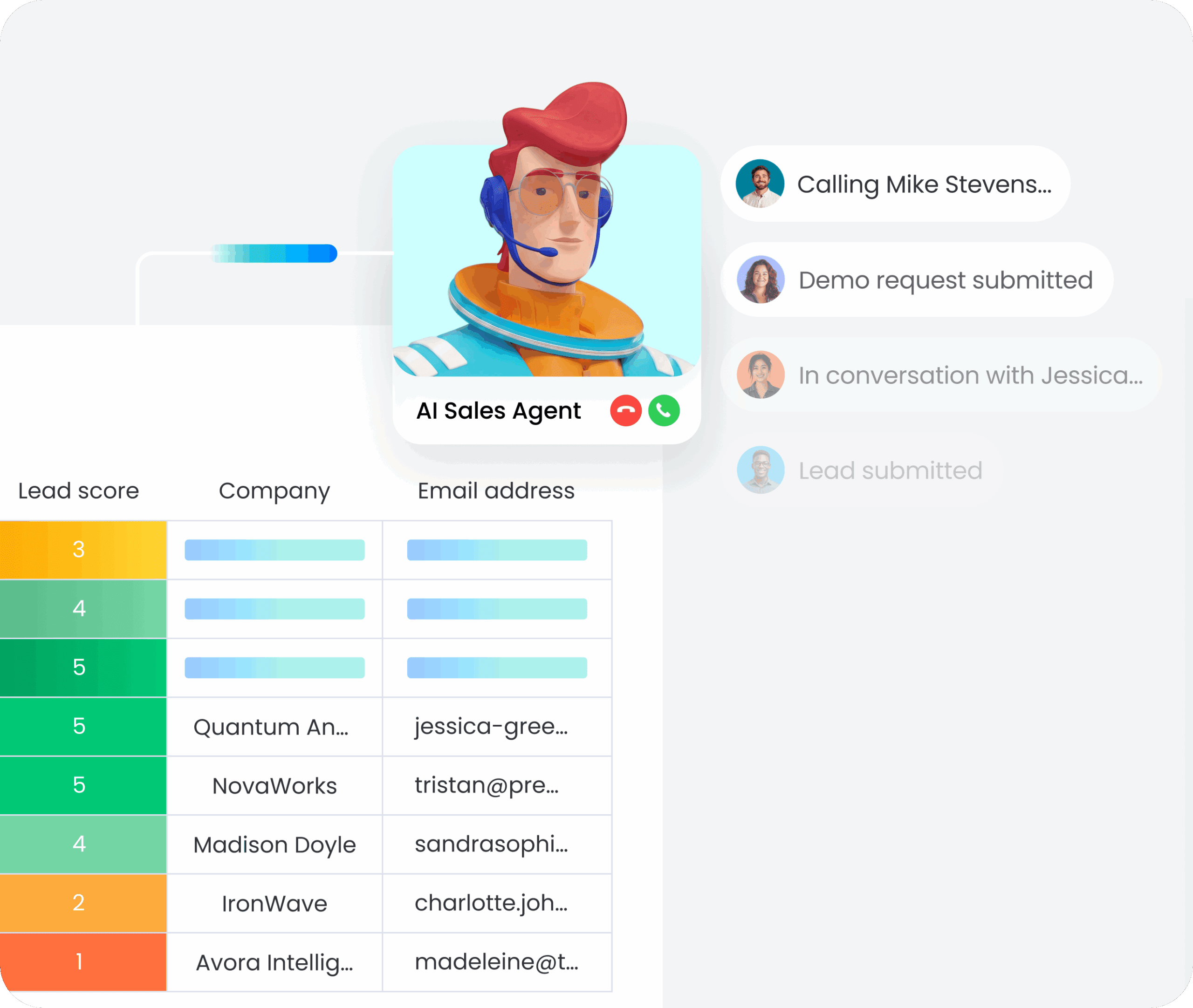
AI automation makes process execution accessible to everyone. Team members who aren’t technical specialists can build, modify, and manage automated workflows with no-code automation and pre-built templates.
Enhanced capabilities: AI agents can draft reports, analyze data, research vendors, and summarize meetings, which were capabilities that previously required specialized expertise.
6. Stronger quality control and compliance
Automated workflows ensure every step gets completed in the correct order. Every approval is obtained, and every action is logged with an audit trail. AI adds another layer by actively monitoring for compliance violations and flagging anomalies.
How to identify the right processes for AI automation
Not every process is a good candidate for AI automation. Starting with the wrong processes is why most automation initiatives stall. Use these four criteria to identify processes that’ll deliver the highest ROI and adoption success.
Assess volume and repetitiveness
The highest-value automation candidates are processes that occur frequently and follow a consistent pattern, even if they involve some variability.
Strong candidates include:
- Weekly status report compilation
- Daily ticket triage
- Recurring client onboarding steps
- Monthly procurement reviews
Evaluation benchmark: A process that runs 200 times per month with 80% consistency is a strong candidate. A process that runs twice a year with completely unique requirements each time isn’t.
Evaluate data availability and quality
AI workflow automation software needs data to learn from and act on. Before automating a process, assess whether inputs are captured digitally and whether there’s enough historical data for AI to learn patterns. Check if inputs are structured consistently.
Data quality considerations: Processes with poor data quality may need a data cleanup phase before automation can be effective.
Measure business impact and SLA exposure
Prioritize processes where delays or errors hit hardest.
High-impact example: Automating SLA monitoring for IT support tickets has high impact because missed SLAs directly affect customer satisfaction and contractual obligations.
Lower-impact example: Automating an internal newsletter distribution has lower urgency.
Confirm process ownership and stakeholder alignment
Successful automation requires a process owner who can define requirements and validate outcomes. They need to champion adoption too. Stakeholder alignment matters even more when processes cross departments.
Cross-functional consideration: If marketing, legal, and operations are all involved in a campaign approval workflow, all three teams need to agree on the automation approach.
5 steps to implement AI business process automation
Successful implementations follow a phased approach: automate, measure, learn, expand. This approach reduces risk while building confidence and expertise with each phase.
Step 1: Map current processes and establish baseline KPIs
Start with process mapping to document how target processes currently work. Who does what, in what order, using which systems, and how long does each step take?
Key metrics to track:
- Cycle time
- Error rate
- Cost per execution
- SLA compliance rate
- Team hours spent
Step 2: Start with quick-win automations
Starting with processes that are relatively simple to automate and deliver visible value quickly builds confidence.
Quick-win examples:
- Automated status notifications when a project phase changes
- Automated request intake forms that validate inputs and route to the right team
- Automated deadline reminders
Step 3: Connect systems and strengthen data quality
Integrating communication platforms, file storage, CRM, and other business applications lets data flow automatically between them.
Data standardization activities:
- Establishing consistent naming conventions
- Removing duplicates
- Defining data governance rules
Step 4: Layer in AI for recommendations and decision support
Once you’ve got foundational automations and integrations in place, introduce AI capabilities that go beyond rule-based execution.
AI capabilities to implement:
- Sentiment analysis on incoming requests
- Predictive risk flagging on projects
- Automated content generation for reports
- Intelligent routing based on workload analysis
Step 5: Scale with templates and continuous optimization
You can templatize successful automations and replicate them across teams and departments. monday agents makes this scaling process even more powerful—once you’ve built a custom agent that works for one team, you can deploy it across other departments with similar needs. Continuous process optimization uses performance data from automated workflows to identify further improvement opportunities, and AI agents can surface these insights automatically by analyzing patterns across all your processes.
Try monday agentsBuilding governance and trust into AI-driven automation
Governance is essential for scaling AI automation in any organization. Without proper controls, permissions, and transparency, AI automation creates risk rather than reducing it. The data backs this up: organizations that perform regular audits of AI systems are more than three times as likely to achieve high GenAI value compared with those that do not. Enterprise organizations need governance frameworks that balance automation benefits with security and compliance requirements.
Human-in-the-loop controls
AI can recommend, draft, or prepare actions, but a human reviews and approves before execution for high-stakes decisions. Approval workflows can be configured so that AI handles routine steps autonomously while pausing at defined checkpoints for human review.
Enterprise permission requirements
Granular permissions controlling which team members and AI agents can access, read, edit, or create data in specific areas of the platform. Audit trails automatically log every action taken by both people and AI agents, creating a complete record of who did what, when, and why.
Key governance capabilities to evaluate
- Granular access controls
- Comprehensive audit trails with timestamps
- Compliance certifications (SOC 2 Type II, ISO/IEC 27001, HIPAA support)
- Content ownership policies ensuring organizations retain ownership of all content
How monday.com powers AI-driven business automation with AI agents
AI business process automation delivers the most value when it operates on a platform that provides cross-department context, strong security, and easy adoption. monday.com combines flexible workflow building, AI agents, and deep integrations on a single platform with the security and trust enterprises need.
Ready-made specialized agents
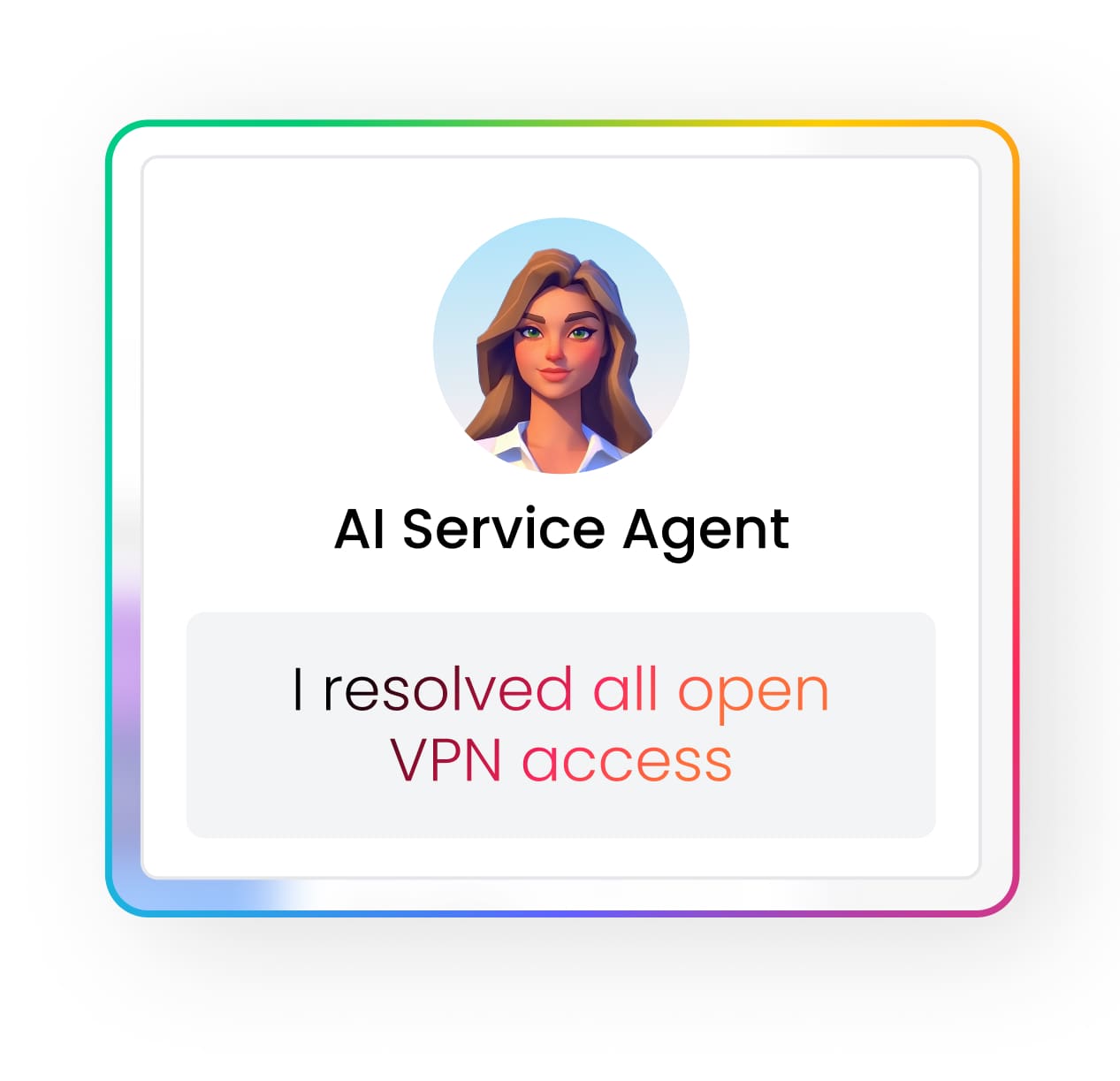
monday agents offers ready-made agents for specialized scenarios. Some of the specialized AI agents users can implement immediately include:
- Risk Analyzer: Detects schedule, dependency, and workload risks across projects
- Ticket Assignment: Classifies, prioritizes, and routes requests automatically
- Meeting Summarizer: Creates meeting notes, extracts action items, and assigns owners
- Vendor Researcher: Gathers vendor details and builds structured comparison summaries
Custom agent builder
Put agent creation in the hands of the people who understand the process best. You describe what you need and connect the relevant knowledge, such as documents, PDFs, and boards. The agent operates 24/7, grounded in your organization’s actual work data.
Cross-departmental intelligence
A single structured data layer on monday.com spans marketing, sales, operations, IT, HR, and every other department. This cross-departmental context is what makes AI agents truly intelligent. An agent helping operations can see project timelines from the PMO. Executive dashboards can pull live data from every department simultaneously.
Enterprise governance capabilities
Using powerful AI agents requires responsibility to keep data secure and ensure compliance. Here’s what you get:
- Control: Define what agents can and cannot do
- Permissions: Granular access controls
- Human-in-the-loop: Simulation mode for testing
- Compliance: SOC 2 Type II, ISO/IEC 27001, and HIPAA support
Getting started with AI business process automation
AI business process automation changes how organizations handle repetitive, knowledge-heavy work. The organizations seeing the strongest results start with processes that have high volume, measurable impact, and clear ownership. Success comes from combining the right technology platform with a phased implementation approach: start with quick wins to build confidence, establish governance frameworks early, and scale systematically across departments. Choosing AI operations management software that unifies these workflows on a single platform makes it easier to sustain automation gains as you scale across teams.
The competitive advantage goes to organizations that can execute more processes with the same headcount while maintaining quality and compliance standards. AI automation makes this possible by handling the coordination, analysis, and decision-making that previously required manual intervention. monday agents delivers both ready-made specialized agents and a custom agent builder, giving teams the tools to automate intelligently without sacrificing security or control.
Try monday agentsFAQs
How is AI business process automation different from robotic process automation?
Robotic process automation follows fixed, rule-based scripts to replicate manual steps in structured processes. AI business process automation adds intelligence using machine learning, natural language processing, and decision engines to handle unstructured data and make context-aware decisions.
What size organization benefits most from AI-powered automation?
Organizations of all sizes can benefit, but mid-to-large organizations with complex, cross-departmental workflows see the greatest ROI because they have more processes to automate and more data for AI to learn from.
How long does it typically take to see results from AI business process automation?
Quick-win automations like status notifications and request routing can deliver measurable time savings within days. More complex AI-driven processes such as predictive risk analysis typically show significant ROI within 2-3 months.
What capabilities make an AI business process automation platform safe to adopt?
Look for platforms that provide granular permissions, comprehensive audit trails, human-in-the-loop controls, simulation mode for testing before activation, compliance certifications, and content ownership policies.

 Get started