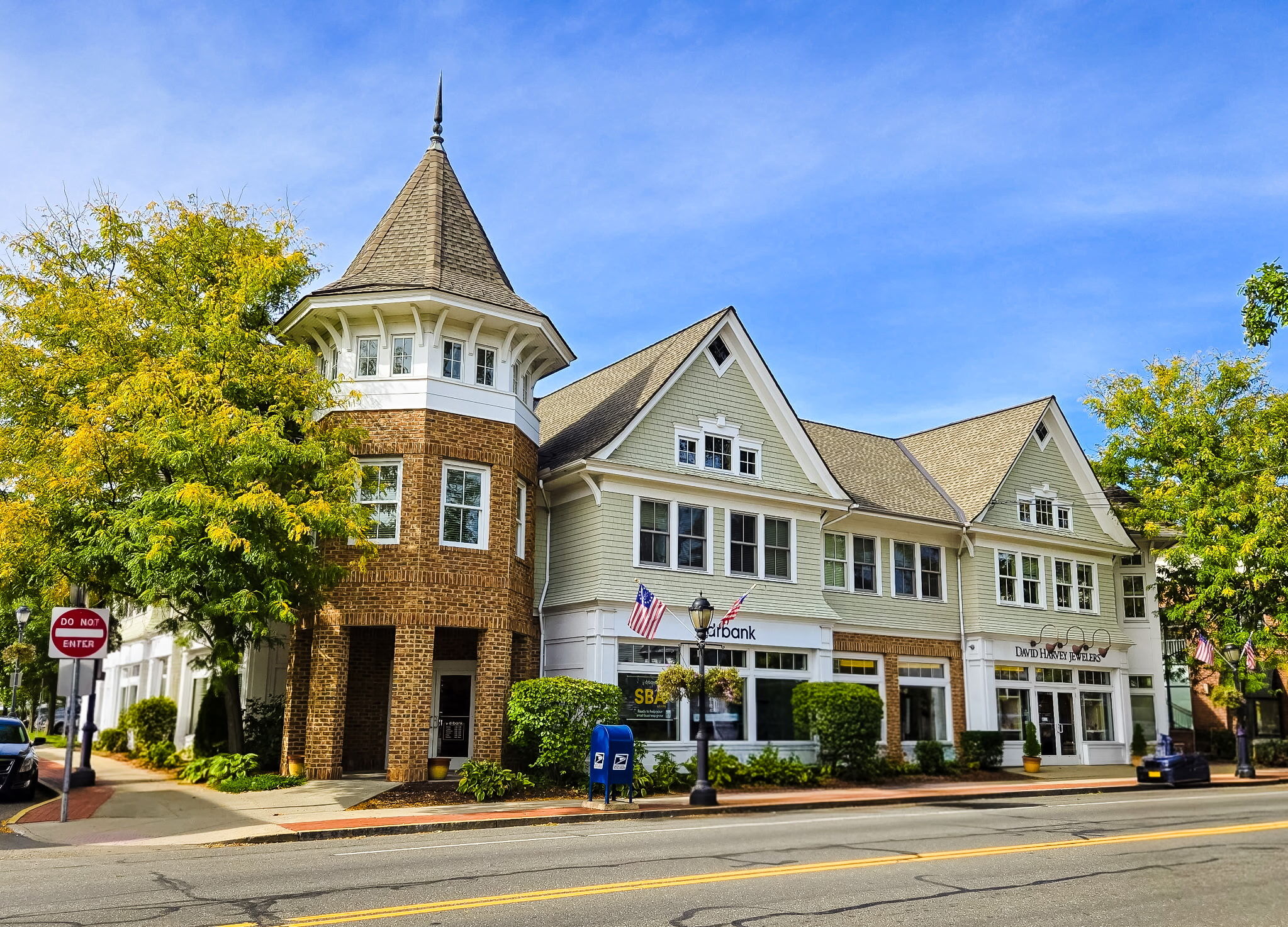
Meet DR Bank
DR Bank (DRB) is a state-chartered, commercial institution headquartered in Darien, Connecticut. DRB has two full-service branches, one located in Darien, CT and one in Rowayton, CT primarily serving Fairfield County and the adjoining New York metropolitan area. DRB also maintains an appointment-only branch in White Plains, NY. DRB offers local commercial real estate lending and consumer and business deposit products. DRB also serves as a sponsor bank for fintech partners across the United States that offer consumer loan products, payment services, and digital deposits, widening access to credit and innovating the payments space.
Kristen Jones is a Certified Enterprise Risk Professional leading the Bank’s enterprise and third-party risk management. Her team makes sure every partnership is sound, that the third-parties providing services meet its standards, and that ultimately consumers are protected. DR Bank sets a high bar for risk and compliance, which supports its strategic plan to keep growing as a sponsor bank. The team's work covers risk assessments, due diligence, onboarding, ongoing monitoring, and termination.
The challenge
A core part of third-party due diligence is reviewing each partner's policies and procedures, which may include a detailed Service Organization Control report, otherwise known as a SOC report. A SOC report is an independent audit of third party controls evaluating how a provider manages and safeguards data. These reports are long: over 100 pages in a typical example, and more than 200 in some cases. Buried in each is a section of complementary user entity controls (CUECs), which defines the user’s side of the shared responsibility. As a Bank, it's important to review CUECs and implement the advised controls, as a service provider’s controls may not operate as effectively, which can potentially create compliance or operational gaps. Examiners and auditors will likely expect this type of review from a Bank, and also want the proof.
DRB’s process was not wrong. DRB followed all processes, documented its reviews, and maintained the evidence to back it up. However, it was manual. Analysts read the report and produced a manual file-review form within Excel. Often, this manual effort of reviewing CUECs was a copy/paste exercise, or manual typing exercise, since many reports can't be copy-pasted. Copying controls alone could take close to an hour. A full review, including reading, extracting CUECs, writing detailed responses to the CUEC lists, circulating for internal review/ approval, and filing all the in-between work, could take up to eight hours of work and about a week to close.
"A lot of third parties aren't taking advantage of reviewing SOC reports, because they're intimidating," says Kristen. "Sometimes the controls are listed plainly. Sometimes they're threaded through 200 pages and you can miss them or get overwhelmed."
The solution
From Excel to one connected board
DRB first moved the tracker out of Excel and onto a monday board, with an automation that notified the reviewer when an analyst finished. However, a lot was still tracked manually such as input of dates, bridge letters, approval sign offs.
SOCCER: an agent that does the extraction
Kristen then built SOCCER, the Service Organizational Control Consultant for Enterprise Risk, as an agent on monday. A human analyst on the Enterprise Risk team drags a SOC report, and a bridge letter if there is one, onto a board item. SOCCER then:
- Produces a SOC/CUEC Review document for the DRB team
- Pulls every complementary user entity control into the review document
- Captures the reporting period of the SOC itself
- Flags exceptions and deviations, and controls the auditor couldn't test
- Highlights risk notes and suggests follow-ups for the human risk analyst
- Creates a checklist of sub-items and moves the status to In progress
- Automates the email processes between the analyst and Risk team leader for approval
The human analyst's responses to CUECs sit alongside the agent's output, providing clear evidence DRB reviewed every control and every agent output.
Human review and controls built in
The checklist prompts the human analyst to confirm that the dates are right, that every control was pulled, and that no exceptions were missed. When the human analyst has completed his/her work, he/she clicks a button that tells SOCCER to email the designated Risk team leader, or approver, for approval via a quality control (QC) process. Once the approver has clicked a checkbox marking the QC process has been completed, the agent changes the status to Approved, the completion date is stamped, and the analyst is notified.
SOCCER also enforces the process. If an analyst checks the QC box themselves by accident, the agent reverts the change, posts a notice, and alerts the analyst. For regulators and auditors, that is proof that an independent QC of the analyst's work actually took place.
What's next
Next, Kristen aims to develop a larger control inventory where SOCCER can query results from already written control responses.
The impact
The change moved the team from document handling to true risk analysis. SOCCER generates the controls report within seconds of an upload. A review that took about a week now closes in under 24 hours.
The team keeps its judgment on risk and compliance, while SOCCER handles the paperwork.