

Workplace challenges in 2026 are less about isolated problems and more about how everything connects. When projects slow down, it’s rarely just a timeline issue. When teams feel stretched, it’s not only about headcount. Delays, misalignment, and communication gaps tend to build on each other, creating friction that makes execution harder than it should be.
As organizations scale, that friction becomes more visible. Tools don’t connect properly, priorities drift away from strategy, and teams spend more time coordinating work than actually moving it forward. Even high-performing teams can struggle when the systems around them aren’t designed to support how work really happens.
Understanding these challenges in isolation isn’t enough though: the real shift comes from seeing how they interact, where they originate, and how to address them in a way that improves the entire system rather than fixing symptoms one by one.
This article breaks down the biggest workplace challenges teams are facing today, along with practical ways to solve them. You’ll see how issues like burnout, skills gaps, and fragmented workflows are connected, and how better visibility, smarter resource management, and more structured collaboration can turn those pressure points into opportunities for stronger execution.
Key takeaways
- Address interconnected challenges systematically: Workplace problems like communication silos, resource waste, and burnout feed into each other, requiring unified solutions rather than isolated fixes.
- Prioritize real-time visibility across all work: Eliminate information silos by centralizing project data, team capacity, and progress updates so leaders can make confident decisions quickly.
- Transform workplace friction with monday work management: Use AI-powered resource optimization, automated compliance workflows, and contextual collaboration to turn operational challenges into competitive advantages.
- Focus on outcomes over activity: Shift from micromanaging hours to measuring deliverables and impact, especially in hybrid environments where traditional oversight fails.
- Embed learning and adaptation into daily workflows: Close skills gaps and reduce change resistance by integrating development opportunities directly into work processes rather than separate training programs.
What are common workplace challenges?
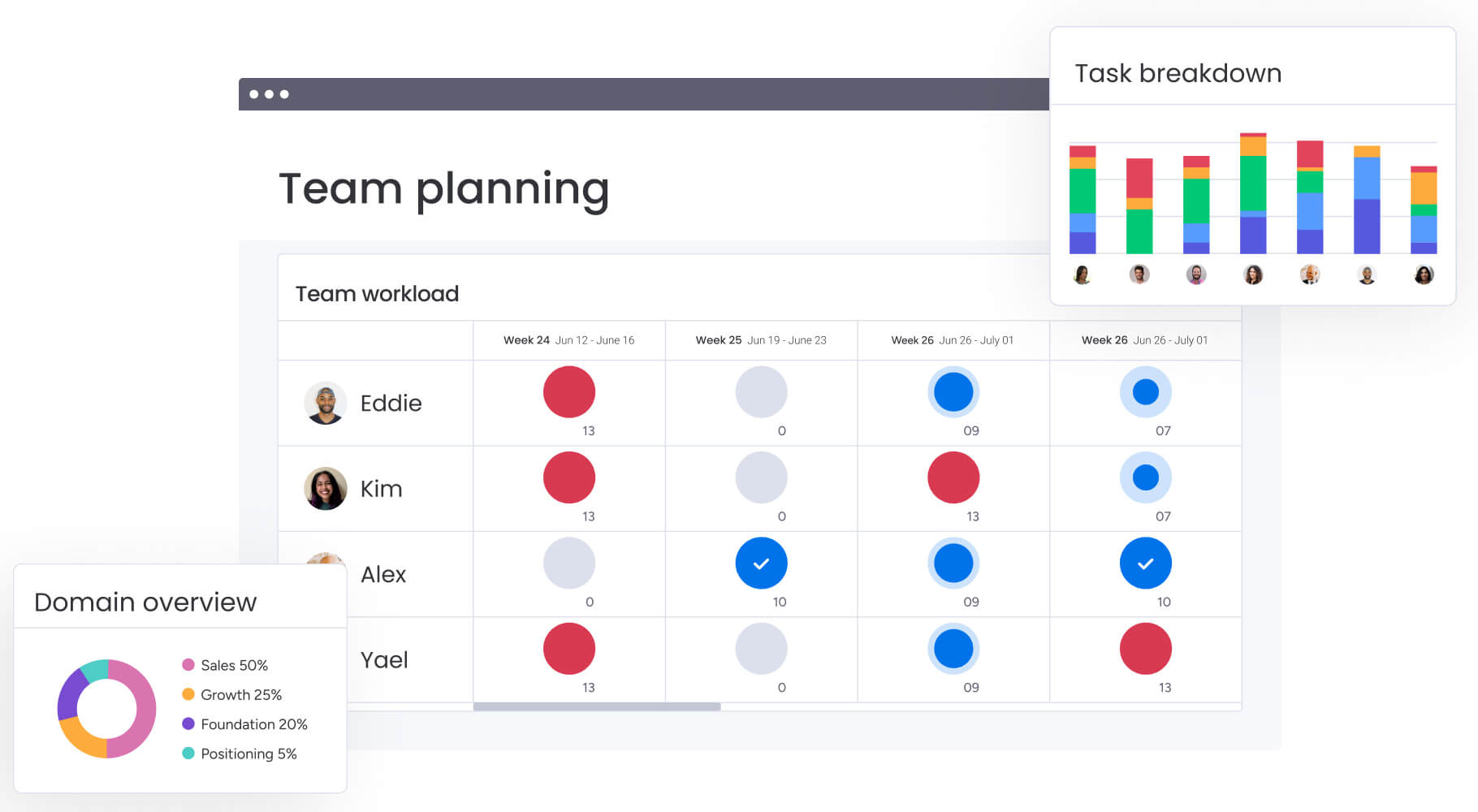
Workplace challenges are the operational friction that stops organizations from hitting their goals. They’re not isolated incidents — they’re interconnected problems that get worse when ignored. Let’s break down what they entail in a little more detail.
The most significant workplace challenges fall into four main categories that feed into each other:
| Category | What it looks like | Root cause |
|---|---|---|
| Operational inefficiencies | Slow workflows, redundant data entry, resource bottlenecks | Lack of standardized processes or capacity visibility |
| Cultural misalignment | Low engagement, resistance to change, communication silos | Disconnect between individual work and company vision |
| Technological fragmentation | Data silos, integration gaps, excessive app switching | Disconnected platforms that hinder rather than enable work |
| Strategic disconnect | Teams working hard on wrong priorities | Execution that doesn't map back to high-level goals |
When these challenges overlap, the damage can build extremely fast. Tool fragmentation creates communication silos. Communication silos then lead to resource misallocation. Finally, resource misallocation drives burnout.
Each problem essentially feeds the next, creating a cycle that requires a unified solution to break.
Workplace challenges are the operational friction that stops organizations from hitting their goals.
12 major workplace problems and solutions
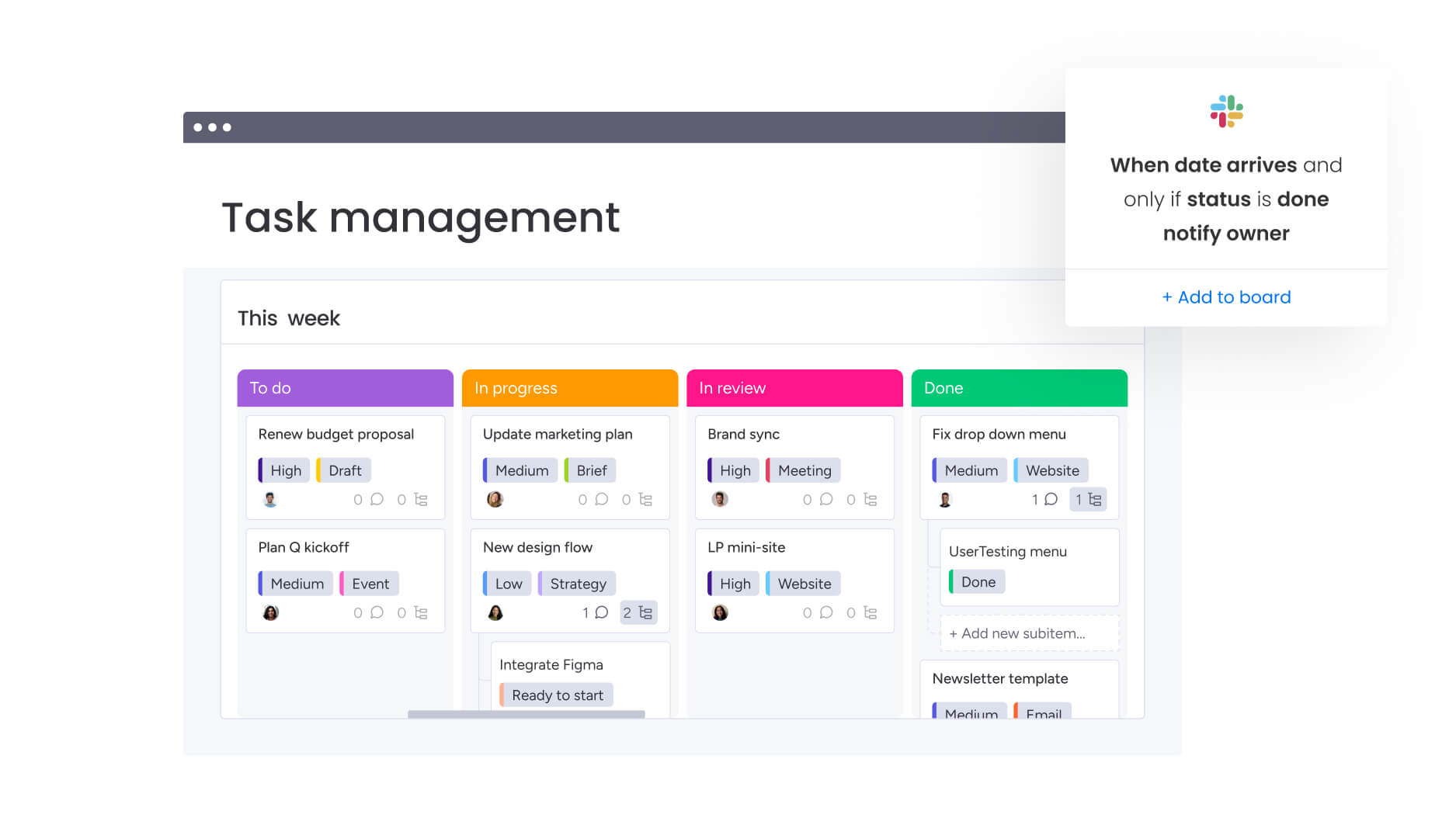
Most workplace challenges start small, then build into patterns that slow teams down, create misalignment, or make execution harder than it should be. What looks like a single issue is often part of a bigger system that isn’t working as efficiently as it could.
To understand what’s really getting in the way, it helps to break these challenges down clearly.
Below are 12 of the most common workplace challenges teams are facing in 2026, along with what’s driving them and how to solve them in a practical, scalable way.
1. Critical skills gaps block transformation
AI and automation are advancing faster than most teams can keep up. The tech is there — but your team doesn’t know how to use it yet.
When skills lag behind strategy, your digital transformation stalls before it starts. You end up paying more to hire talent instead of building it internally. Meanwhile, competitors who move faster pull ahead.
Addressing skills gaps requires integrating learning into daily work rather than treating it as a separate initiative. Here’s how to close the gap between where your team is now and where they need to be:
- Dynamic skills mapping: Regularly audit team capabilities against future roadmap requirements to identify deficits early.
- Micro-learning workflows: Integrate learning opportunities directly into daily workflows rather than relying on infrequent training sessions.
- AI for development: Use AI-driven platforms to suggest personalized learning paths based on role and performance data.
- Workforce planning integration: Visualize skill distribution across teams to ensure projects are staffed by capability, not just availability.
2. Employee burnout reaches crisis levels
Burnout in 2026 comes from always-on expectations, app overload, and blurred boundaries in hybrid work. It’s a workload management problem — not a resilience issue.
Chronic burnout doesn’t just affect individual well-being — it shows up in higher absenteeism, rising healthcare costs, and a steady drop in overall productivity. It also plays a major role in employee turnover. Recent data shows that 39% of employees say they’re considering leaving their jobs, with burnout affecting over a third of the workforce across both remote and in-person environments.
When experienced employees leave, they take critical knowledge and context with them. That loss creates gaps that are difficult to replace, often slowing teams down and putting additional pressure on those who remain.
Teams that tackle burnout early retain more people and see improved work quality. Here’s how to transition from reactive firefighting to preventive workload management:
- Data-driven workload management: Shift from gut-feel assignment to capacity-based planning using visual workload views that display individual bandwidth before assigning new work.
- Automate repetitive administrative work: Remove drudgery from daily operations to allow teams to focus on high-value, engaging work.
- Enforce disconnect protocols: Establish cultural norms and technical settings that discourage communication outside core hours.
- Monitor capacity trends: Track resource allocation over time, flagging risks where specific team members are consistently over-utilized.
3. Communication breaks down across teams
As organizations grow and spread out, information silos get worse. Communication breaks down when critical context gets trapped in private messages, email threads, or disconnected apps — leaving cross-functional teams out of sync.
The immediate result is duplicated work and missed deadlines. Long-term, it kills trust and innovation — teams work with incomplete information and miss insights from other departments.
The fix? Make sure critical context travels with the work. Here’s how to stay aligned as you scale:
- Centralize context with work: Move communication out of ephemeral chat channels and into the specific project where the work is happening.
- Establish a single source of truth: Designate one platform as the definitive record for project status, decisions, and updates.
- Standardize update cadences: Replace ad-hoc status checks with automated reporting and scheduled asynchronous updates.
- Unified workspaces: Deploy platforms that allow marketing, sales, and product teams to view the same data through different lenses.
4. Hybrid work creates new collaboration hurdles
Hybrid work often introduces proximity bias, where in-office employees naturally get more visibility and access than those working remotely. That gap is becoming more pronounced as more companies shift back on-site, with 68% of employees now working mostly in person, up from 34% in 2023, while hybrid setups have dropped significantly.
The challenge is maintaining consistent, equitable collaboration when teams aren’t all operating in the same environment.
Inequitable collaboration leads to in-groups and out-groups, reducing diversity of thought in decision-making. Remote employees feel left out, which tanks engagement and stalls career growth.
Teams that nail hybrid work treat digital collaboration as the default — not a backup plan. Here’s how to create equitable experiences no matter where people work:
- Digital-first meeting culture: Conduct all meetings as if everyone is remote, with shared digital whiteboards and documentation.
- Asynchronous collaboration protocols: Shift reliance from real-time meetings to asynchronous document collaboration and video updates.
- Equitable tech stacks: Ensure all employees have access to the same suite of cloud-based collaboration capabilities.
- Cloud-based visual collaboration: Use platforms with shared visual workspaces like Kanban boards and Gantt charts.
5. Leadership practices miss the mark
Command-and-control management doesn’t work in distributed, knowledge-based teams. Leaders who rely on seeing people work can’t manage outcomes — so they either micromanage or check out completely.
Bad leadership kills engagement fast. Teams feel untrusted due to surveillance-style management or unsupported due to lack of direction. The result? Poor performance and no pipeline for future leaders.
Effective leadership in distributed teams looks different. Here’s how to measure success and support teams when you can’t see them working:
- Outcome-based management: Define success by deliverables and impact, not hours logged or activity metrics.
- Structured feedback loops: Implement regular check-ins focused on blockers and development rather than status updates.
- Transparent goal alignment: Connect individual work items to company-wide OKRs so every employee understands their contribution.
- Management visibility through dashboards: Aggregate high-level progress to allow leaders to monitor health without micromanaging.
6. Work lacks transparency and visibility
When work is scattered across spreadsheets, emails, and local drives, gaining a single, accurate view of progress becomes nearly impossible. This visibility challenge is widespread, with 70% of firms not tracking employee days in the office and 75% not monitoring employees when they work from home.
Without transparency, decisions get made on outdated info instead of real-time data.
When you can’t see capacity, resources end up in the wrong places too. Managers can’t tell who’s free and who’s drowning. Strategic pivots get slow and risky when leadership can’t see how work connects.
Teams with real visibility make faster, more confident decisions. This is achieved through real-time dashboards that pull live data from ongoing projects. Here’s how to build that visibility:
- Real-time dashboards: Implement dashboards that automatically display live project data for insights on budget, goals, schedules, and resources.
- Standardized project templates: Ensure all projects follow consistent structure so data can be aggregated and compared accurately.
- Open-access permissions: Default to open visibility for project data where security permits.
- Automated status reporting: Trigger alerts when projects deviate from timelines or budgets.
7. Top talent keeps leaving
In 2026, people stay for purpose, flexibility, and growth opportunities. High performers leave when they hit bureaucratic walls, lose autonomy, or can’t see a path forward.
Turnover costs more than just recruitment fees. You lose institutional knowledge and disrupt team dynamics. High turnover wrecks your employer brand — making it harder to attract talent later.
Teams that keep top talent remove friction and show clear paths for growth. Here’s how to tackle the root causes of turnover:
- Visible career pathing: Use performance data to identify high achievers and proactively discuss growth opportunities.
- Reduce work about work: Automate repetitive processes so talent can focus on creative and strategic work they were hired to do.
- Flexible work arrangements: Offer genuine autonomy over when and how work gets done.
- Engagement tracking: Leverage platform data to identify teams with consistently high workloads or stalled projects.
8. Organizations resist necessary change
People resist change when they’re scared of the unknown or exhausted from constant restructuring. When teams cling to old processes, they kill efficiency and innovation.
Organizations that can’t adapt fast get left behind. Change resistance tanks adoption rates, wastes tech investments, and creates a culture that punishes experimentation.
Successful change management focuses on making the new way easier than the old way. Here’s how to reduce friction and build momentum:
- Identify change champions: Recruit influential team members to pilot new processes and advocate for their benefits.
- Start small and scale: Introduce changes in manageable phases rather than massive initiatives.
- Communicate the why: Articulate personal benefits to employees rather than just company benefits.
- Intuitive platform adoption: Choose work management platforms with low barriers to entry and high customizability.
9. Turning technology into a true solution
App sprawl happens when you adopt a different platform for every problem without a unified strategy. The result? A fragmented tech stack where data’s trapped in silos and notifications overwhelm everyone.
Productivity tanks when people constantly switch between apps. Data integrity falls apart without a single source of truth. IT costs balloon from redundant licenses and complex integrations.
The fix isn’t fewer apps — it’s a unified platform that connects them. Here’s how to regain control:
- Tech stack audit: Regularly review application usage and eliminate redundant or underutilized solutions.
- Prioritize integration capabilities: Select platforms that connect specialized applications into a cohesive ecosystem.
- Unified Work OS: Move toward a central operating system for work that consolidates project management, communication, and documentation.
- User-centric selection: Involve end-users in the selection process to ensure platforms solve daily workflow problems.
10. Compliance requirements overwhelm teams
As regulations around data privacy, AI governance, and industry standards get more complex, manual compliance tracking becomes a liability. Teams waste time prepping for audits instead of doing actual work.
Compliance failures bring legal penalties and wreck your reputation. Manual compliance eats up resources that should go toward revenue-generating work.
Teams that build compliance into workflows — instead of treating it like a separate checklist — move faster and stay protected. Here’s how to turn compliance from burden to advantage:
- Automate compliance workflows: Build regulatory checks directly into project templates with mandatory approval steps.
- Centralized documentation: Keep all compliance-related records, approvals, and audit trails in a secure, searchable repository.
- Role-based access control: Implement rigorous permission settings to ensure data security without hindering visibility.
- Automated audit trails: Use platforms that automatically log all changes and approvals.
11. Generations clash over work expectations
Today’s workforce spans four generations — each with different preferences for communication, technology, and work-life balance. Friction happens when people treat these preferences as right vs. wrong instead of just different.
Generational friction kills collaboration and creates cliques. Older employees retire without passing knowledge to younger team members — creating gaps that hurt the business.
Teams that embrace generational diversity get broader perspectives and smoother knowledge transfer. Here’s how to bridge generational gaps:
- Flexible communication channels: Allow teams to choose their preferred mode while centralizing output in a shared platform.
- Reverse mentorship programs: Pair younger employees with senior leaders to exchange insights on technology and industry experience.
- Inclusive technology training: Provide diverse training formats to suit different learning styles.
- Adaptable interfaces: Use customizable work platforms that allow team members to view data in their preferred format.
12. Resources get misallocated and wasted
Finally, without visibility into capacity and priorities, you overcommit resources to low-value projects while starving critical ones. You don’t see the problem until deadlines blow up.
Resource waste leads to budget overruns and reduced ROI on projects. It burns out high performers who get overloaded to make up for bad planning.
The challenge? Getting the right people on the right projects at the right time. Here’s how to allocate resources effectively:
- Capacity planning views: Visualize resource availability across the entire portfolio before projects are approved.
- Dynamic reallocation: Establish processes for shifting resources quickly as priorities change.
- Time tracking analysis: Analyze actual time spent versus estimated effort to improve future planning accuracy.
- Skill-based allocation: Assign work based on specific employee skills and development goals, not just availability.
Addressing skills gaps requires integrating learning into daily work rather than treating it as a separate initiative.
How monday work management solves modern workplace challenges
Solving these workplace challenges isn’t about adding more tools or processes. It comes down to creating a connected system where teams can plan, execute, and collaborate without friction.
Modern and intelligent solutions like monday work management brings that structure together in one place, giving teams the visibility, flexibility, and coordination they need to manage complex work at scale. Instead of reacting to problems after they appear, teams can stay aligned, make faster decisions, and keep work moving without constant manual oversight.
Real-time visibility across all work
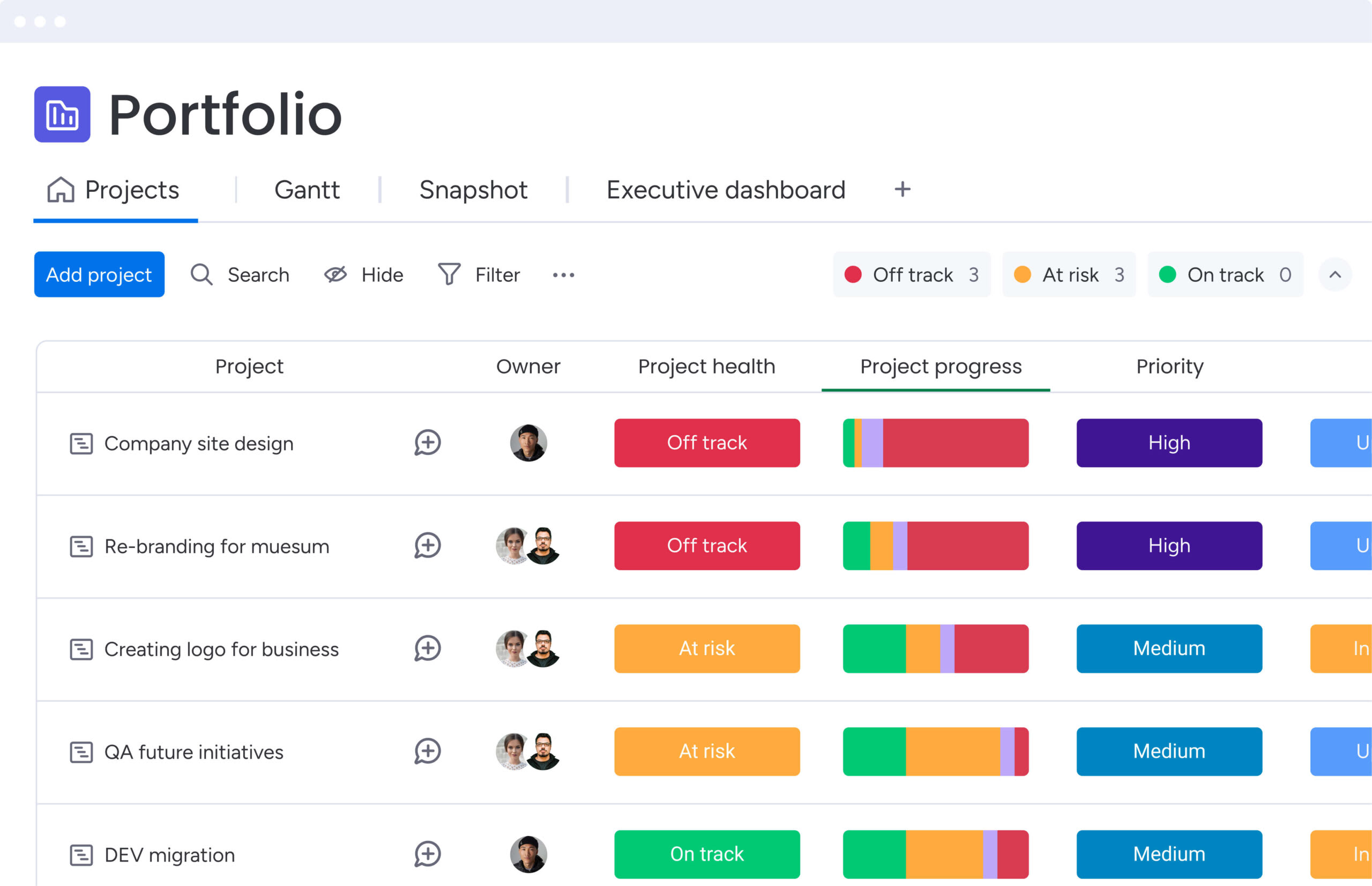
High-level dashboards and portfolio views break down silos and create transparency. monday work management pulls data from multiple boards into one executive view — so leaders can track progress, budget, and risk in real-time.
Portfolio Risk Insights automatically flag projects that are off-track, while Workload Views provide a visual heatmap of team capacity. That visibility speeds up decisions and stops resource conflicts before they start.
AI-powered resource optimization
To combat skills gaps and resource waste, the platform leverages AI capabilities. AI Blocks assist in breaking down complex projects into actionable items and suggesting optimal resource allocation based on historical data.
This intelligent layer transforms the platform from a passive tracking system into an active assistant that helps balance workloads and identify potential bottlenecks: teams gain predictive insights that prevent overallocation and ensure critical projects receive adequate attention.
Seamless collaboration and communication
Fragmentation and hybrid hurdles are resolved by bringing context to the conversation. monday workdocs allow teams to co-create and collaborate in real-time directly alongside their workflows.
By integrating with Slack, Microsoft Teams, and email, the platform captures communication within the relevant item or project, creating a permanent, accessible record of decisions. This contextual approach eliminates the need to hunt through chat histories or email threads for project updates.
Automated compliance and process management
Resistance to change and compliance overwhelm are mitigated through standardization and automation. Automations handle repetitive administrative work and enforce process governance without manual intervention.
Customizable templates ensure every new project starts with the correct compliance steps built in. This approach reduces audit preparation time and helps teams maintain consistent adherence to regulatory requirements across all initiatives.
When compliance, workflows, and approvals are embedded directly into how work gets done, teams spend less time managing processes and more time moving projects forward. That level of consistency is difficult to maintain with fragmented tools or manual systems.
The difference becomes clearer when you compare how monday work management performs against spreadsheets and standalone solutions across key areas:
| Feature | monday work management | Spreadsheets / manual | Point solutions |
|---|---|---|---|
| Visibility | Real-time, cross-project dashboards | Static, siloed, requires manual updates | Fragmented across multiple logins |
| Automation | Native, no-code automations | None or requires complex macros | Limited to specific app functions |
| Scalability | Enterprise-grade, connects departments | Breaks down with large data sets | Becomes expensive and chaotic at scale |
| Collaboration | Contextual, in-item communication | Disconnected (email/chat separate) | High noise, low context retention |
| Resource management | Visual workload and capacity planning | Difficult to visualize or update | Often lacks high-level capacity views |

“monday.com has been a life-changer. It gives us transparency, accountability, and a centralized place to manage projects across the globe".
Kendra Seier | Project Manager
“monday.com is the link that holds our business together — connecting our support office and stores with the visibility to move fast, stay consistent, and understand the impact on revenue.”
Duncan McHugh | Chief Operations OfficerA smarter way to solve workplace challenges
As this article has shown, workplace challenges in 2026 rarely exist in isolation. Issues like burnout, misalignment, and fragmented tools are often connected, creating friction that slows teams down and makes execution harder than it should be.
Addressing them effectively means looking beyond individual fixes and focusing on how work flows across the organization. When priorities are clear, work is visible, and teams are aligned around shared systems, that friction starts to ease.
With the right structure in place, decisions become easier to make, resources are used more effectively, and teams can focus on meaningful work instead of constant coordination. Over time, that consistency leads to stronger performance, better retention, and a more sustainable way to scale.
Frequently asked questions
What is an example of a challenge in the workplace?
An example of a workplace challenge is the formation of information silos, where departments hoard data or fail to communicate effectively, leading to duplicated efforts, misaligned goals, and delayed decision-making across the organization.
What are the 6 key workplace stressors?
The six primary workplace stressors include excessive workload, lack of control or autonomy, insufficient reward and recognition, poor community and relationships, perceived lack of fairness, and conflicting values between employees and the organization.
How do you handle difficult situations at work?
Handling difficult situations at work requires a combination of documentation, focusing on objective outcomes rather than personalities, and seeking constructive solutions through established protocols while maintaining professional communication throughout the process.
What workplace challenges will emerge in 2027?
By 2027, organizations will likely face intensified challenges regarding AI ethics and governance, the management of human-AI hybrid teams, and deeper complexities in cybersecurity for fully distributed workforces.
How can organizations measure workplace improvements?
Organizations measure workplace improvements through a mix of quantitative metrics such as project delivery speed and error rates, combined with qualitative data like employee net promoter scores and engagement surveys.
How does monday work management help solve workplace challenges?
monday work management solves workplace challenges by providing a unified Work OS that centralizes communication, automates repetitive work, and offers real-time visibility into projects and resources, allowing teams to customize workflows to their specific needs while maintaining enterprise-grade security.

 Get started