

When your best people have the freedom to innovate, they don’t just stay — they drive the business forward. But what happens when they’re stuck in a cycle of approval requests and information silos? Progress slows, and the organization’s most valuable talent feels powerless to make a real impact.
Empowered teams flip this dynamic. They are autonomous groups with the authority, resources, and accountability to make decisions within their domain. Instead of waiting for management approval on every choice, these teams own the “how” of their work while leadership defines the “what” and “why.” They operate with psychological safety, experiment freely, and pivot quickly.
This practical article explores what empowered teams look like in practice, why they’ve become essential for modern organizations, and the steps required to build them effectively in 2026.
Key takeaways
- Empower teams by giving them decision-making authority within clear boundaries: Define what teams can decide independently while maintaining accountability for specific business outcomes, not just completed tasks.
- Focus on outcomes, not activities, to drive real business impact: Measure teams by value delivered — like increasing conversion rates by 5% — rather than hours worked or projects finished.
- Break down silos with cross-functional collaboration: Build teams containing all necessary skills to take initiatives from concept to delivery without waiting on external departments.
- Use monday work management to connect daily work directly to strategic goals: Link team activities to high-level OKRs through the Goals feature, giving teams autonomy while maintaining organizational alignment.
- Start with pilot teams to prove the model works: Select high-performing teams with strong leadership and direct revenue connection to demonstrate empowerment benefits before scaling organization-wide.
What are empowered teams?
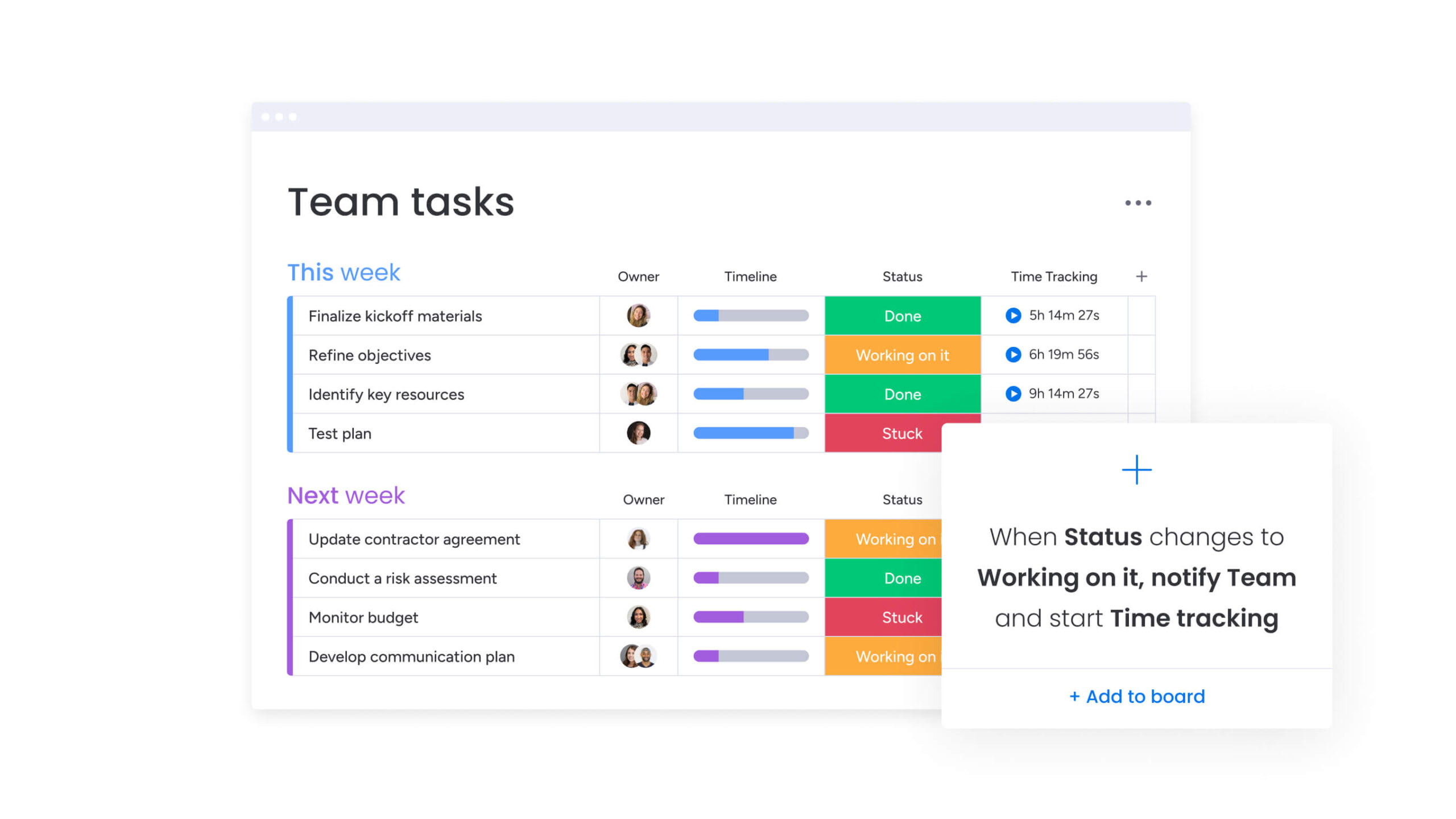
Empowered teams have the authority, resources, and accountability to make decisions and drive outcomes in their area — no permission slips required. Unlike traditional teams that wait for management approval on every decision, empowered teams own the “how” of their work while leadership defines the “what” and “why.”
These teams operate with real psychological safety and transparency — people speak up without fear, and information flows freely. They experiment, adapt quickly, and pivot without lengthy approval chains. What sets them apart? Decisions get made by whoever has the expertise, not whoever’s highest on the org chart. And success gets measured by value delivered, not hours logged.
Consider a product development team with full authority to adjust their roadmap based on user feedback, as long as they meet quarterly retention goals. Or a customer success team with the budget and autonomy to resolve client issues instantly without manager approval. This is empowerment in action.
How empowered teams differ from traditional structures
Moving from traditional hierarchy to empowered teams means rethinking how information flows and who makes decisions. Here’s what actually changes — and where to focus your energy.
| Aspect | Traditional teams | Empowered teams |
|---|---|---|
| Decision-making | Travels up the chain, creating bottlenecks | Happens at the point of impact by those with expertise |
| Accountability | Focus on completing work on time | Focus on achieving specific business outcomes |
| Information flow | Siloed on a need-to-know basis | Transparent and accessible in real-time |
| Response to change | Requires lengthy approval processes | Teams pivot rapidly based on data |
| Resource allocation | Assigned by managers | Teams optimize based on skills and capacity |
How team empowerment drives business success
Empowering teams is no longer optional — it’s how you stay competitive and adapt quickly enough to thrive. When you distribute authority, your teams spot market shifts and customer needs faster than competitors still waiting on approvals.
Recent research even shows that 95–97% success rates are achieved when operating-model redesigns institutionalize empowerment through clear decision rights and cross-functional ways of working.
Cross-functional teams with different perspectives solve complex problems better than isolated leadership groups ever could. Empowerment also builds resilience — your business can handle disruptions like supply chain chaos or sudden remote work shifts without falling apart.
Market forces making empowerment essential
Market realities are forcing companies to ditch rigid management styles. Here’s why empowerment is now a must-have, not a nice-to-have:
- Digital transformation demands: Technology adoption requires teams to implement and iterate instantly. Waiting for centralized approval halts digital progress and lets competitors pull ahead.
- Customer expectations: Today’s customers demand personalized, immediate responses. Frontline teams need authority to solve problems instantly, as delays in seeking manager approval often result in lost business.
- Talent market dynamics: High performers prioritize autonomy and meaningful work. Organizations without empowerment struggle to retain top talent, who leave for environments where they can directly influence outcomes.
- Remote and hybrid work realities: Distributed work makes micromanagement impossible, with 24.9% of U.S. workers now teleworking. Success in hybrid models relies on trust-based management where outcomes matter more than visibility.
Cross-functional teams with different perspectives solve complex problems better than isolated leadership groups ever could. Empowerment also builds resilience — your business can handle disruptions like supply chain chaos or sudden remote work shifts without falling apart.
5 core elements that define empowered teams
Empowerment isn’t the absence of structure. It’s autonomy within a specific, high-trust framework. These five elements keep empowered teams effective and aligned with company goals, with each element building on the others.
1. Distributed decision-making authority
Real empowerment means defining exactly which decisions a team can make on their own. Set clear boundaries, then let teams operate freely within them.
A marketing team might have full authority to reallocate budget between channels to maximize ROI but need approval to exceed quarterly spend. Match authority with expertise:
- Technical decisions sit with engineers.
- Customer-facing decisions sit with support leads.
- Escalation protocols remain for decisions that introduce systemic risk or impact other departments.
2. Outcome accountability
Empowered teams ditch micromanagement in exchange for strict accountability on results. They’re measured on value created — like increasing conversion rates by 5% — not volume of work completed.
Leaders set KPIs teams can actually influence, then check progress regularly. This shifts conversations from “Did you finish the project?” to “Did the project achieve its goal?” Teams using monday work management can even connect daily work directly to high-level OKRs through the Goals feature — strategy then becomes visible and trackable for everyone.
Cross-functional collaboration
Breaking down silos is the key to empowerment, as it allows teams to move forward without waiting on other departments. Empowered teams are cross-functional from the start, with all the skills needed to take initiatives from concept to delivery.
Everyone shares accountability — designers and developers are equally responsible for user experience. To make this work, you need:
- Shared goals: Objectives that supersede departmental KPIs.
- Transparent communication: Open channels for continuous dialogue.
- Collaborative decision-making: Processes that integrate diverse perspectives.
- Unified workspaces: Platforms where all team members can access and contribute.
Continuous learning and adaptation
Empowerment depends on learning from decisions. Teams need a continuous improvement mindset — regular retrospectives to analyze what worked and what didn’t.
This requires psychological safety where failures become data points for improvement, not reasons to punish people. Teams test hypotheses, capture what they learn in shared spaces, and spread what works across the organization. This cycle — action, feedback, adaptation — makes teams more efficient over time.
Technology infrastructure for autonomy
Autonomy depends on having direct access to information. Work management platforms give teams the tech foundation they need — centralized data and automated workflows.
Key capabilities include:
- Real-time visibility into project status, which eliminates status meetings.
- Automated dependencies that ensure handoffs happen without management intervention.
- Instant access to shared goals, live dashboards, and resource management features.
- Democratized data access allowing any team member to see how their work connects to broader company goals through portfolio management views.
Measurable benefits of team empowerment
Companies that empower teams see real improvements in finances, operations, and culture. These outcomes help leaders build the business case and set realistic expectations.
Faster execution and decision-making
Empowered teams speed things up by cutting out approval chain delays. When teams make decisions themselves, projects that took months now finish in weeks.
A software team authorized to deploy code updates can release daily fixes rather than waiting for monthly release windows. This speed gives you a competitive edge — you can jump on market opportunities and fix customer issues before they escalate.
Increased problem-solving capacity
The teams closest to problems are the best ones to solve them. Empowered teams use their direct experience with customers and processes to spot improvements leadership would never see.
This builds a culture where small daily improvements add up to major operational wins:
- Customer support teams develop new self-service resources.
- Sales teams restructure pricing models to close deals faster.
- Each improvement builds on the last, creating momentum.
Higher engagement driving retention
Autonomy is one of the biggest drivers of employee satisfaction. When people feel trusted to make decisions and see the impact of their work, engagement goes up.
This sense of purpose and mastery cuts turnover, saving serious money on recruiting and onboarding. When you keep people around, you preserve institutional knowledge — teams can maintain performance without constant turnover chaos.
Try monday work managementEmpowered teams speed things up by cutting out approval chain delays. When teams make decisions themselves, projects that took months now finish in weeks.
How AI transforms team empowerment
As teams take on more autonomy, the need for faster, better decision-making increases. This is where AI starts to play a critical role.
AI extends what empowered teams can do by reducing manual work and surfacing insights instantly. Instead of spending time gathering and analysing data, teams can focus on higher-value decisions, using real-time information to act with greater speed and confidence.
Building human-AI collaborative teams
The best teams treat AI as a collaborative partner, not just an automation tool. AI handles data analysis, pattern recognition, and admin work. Humans focus on creative problem-solving, empathy, and strategic judgment.
AI might analyze thousands of customer feedback entries to spot trending issues, while the human team decides on strategic product changes. Studies demonstrate that generative AI assistants can increase productivity by 15% on average, particularly benefiting less-experienced workers with measurable improvements in work quality.
Teams using monday work management use AI Blocks to categorize data, summarize meeting notes instantly, and pull actionable insights from any document.
Digital workers as empowered team members
Digital workers are specialized AI agents that act as autonomous team members with specific responsibilities. Unlike simple automation scripts, these agents handle complex work like monitoring project risks or reallocating resources based on availability.
The Digital Workforce extends what teams can do, keeping operations running continuously. A digital worker might triage incoming requests, instantly categorizing and assigning them to the right specialist, which removes the administrative burden from team leads. This frees up humans to focus on strategic work that actually matters.
Governance models for autonomous AI teams
As teams adopt AI, governance keeps autonomy from turning into chaos. You need frameworks that define decision boundaries for AI systems.
An AI might approve expenses under certain thresholds but require human review for anything higher. Good governance includes:
- Regular audits: Checking AI outputs for bias or error.
- Escalation paths: Defined routes when AI encounters novel situations.
- Transparency requirements: Clear documentation of AI decision logic.
- Human oversight: Maintaining control over critical decisions.
This balance lets teams use AI speed while keeping the safety and compliance enterprises need.
6 steps to build empowered teams
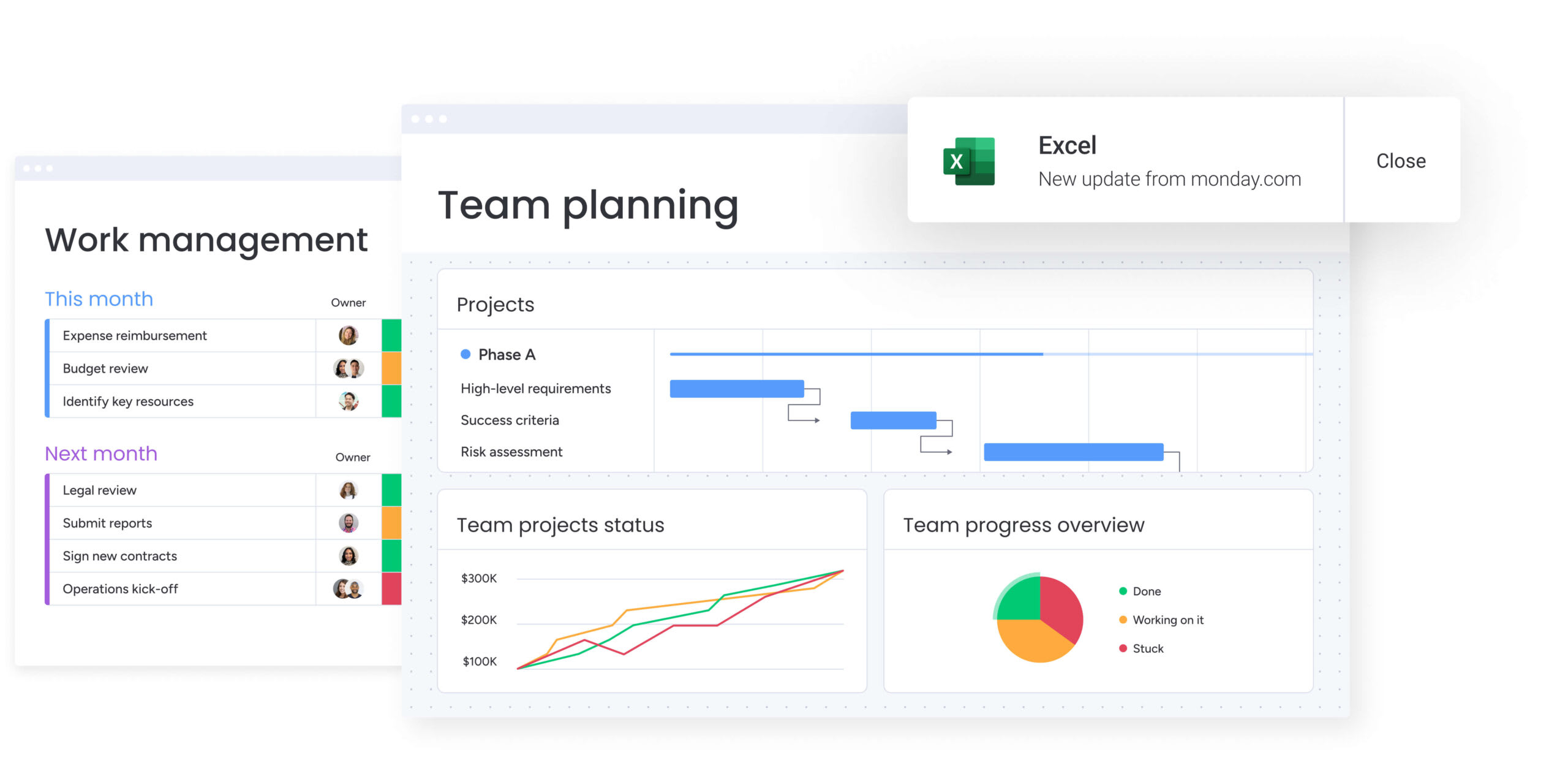
Building empowered teams requires deliberate change — you’re evolving structure, leadership, and technology all at once. This roadmap below gives you practical steps to make the shift systematically, not haphazardly.
Step 1: identify your highest-value teams
Start by selecting pilot teams where empowerment will have the biggest immediate impact. Look for teams with mature processes, strong leadership, and direct ties to revenue or customer experience.
Check if the team can handle ambiguity and has a solid delivery track record. Match teams to strategic goals and plan a phased rollout so you can learn and adjust before scaling.
Step 2: create mandates with outcome ownership
Empowerment needs a clear agreement between team and organization. Draft team charters that spell out the mission, specific outcomes they own, and where their authority starts and stops.
Translate high-level strategy into concrete team objectives like “Reduce onboarding time by 20%.” These documents set the rules — everyone knows what success looks like and how much freedom they have.
Step 3: transform leaders into empowerment coaches
Managers need to shift from directing work to supporting the people doing it. This means training in coaching, systems thinking, and how to build trust.
Leaders now remove obstacles, provide context, and develop talent rather than assigning work and checking boxes. Organizations support this shift by redefining leadership success metrics to focus on team output and growth rather than personal control.
Step 4: deploy enabling technology platforms
Technology gives autonomy the guardrails it needs. Roll out work management platforms that support transparent workflows and collaborative planning.
Set up systems to automate status updates and make progress visible to everyone — no manual reporting needed. Teams customize platforms to mirror unique workflows, ensuring systems adapt to teams rather than forcing teams to adapt to systems.
Step 5: establish rapid feedback loops
You can’t improve continuously without continuous feedback. Teams set up ways to get feedback on performance from data, customers, and stakeholders.
Set up real-time dashboards, schedule regular retrospectives, and create channels for stakeholder feedback. Focus on rapid, actionable feedback so you can course-correct immediately — don’t wait for annual reviews.
Step 6: scale success through phased expansion
Once pilot teams demonstrate success, expand the model. Capture best practices, document what worked and didn’t, and share with next wave of teams.
Scaling requires deliberate internal communications to celebrate wins and normalize new working methods. As more teams become empowered, adjust central structures like HR and Finance to support distributed decision-making across enterprises.
Try monday work managementOvercoming team empowerment challenges
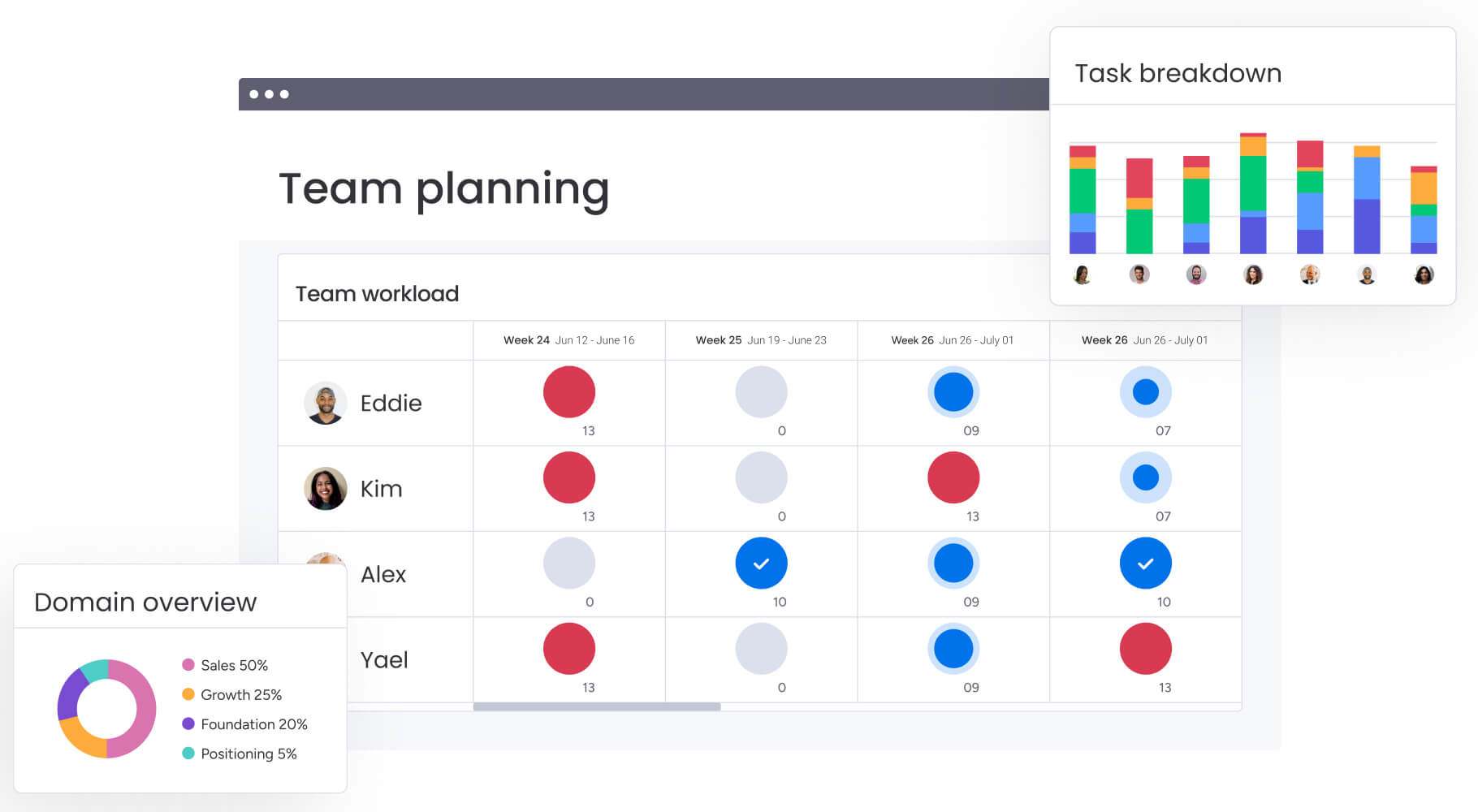
The path to empowerment faces inevitable friction as organizations dismantle command-and-control structures. Anticipating and addressing these obstacles before they derail progress requires understanding common resistance patterns and proven solutions for overcoming them.
Maintaining governance while enabling autonomy
The tension between control and freedom is the most common hurdle. Organizations overcome this by distinguishing between governance (compliance, security, budget limits) and management (telling people how to work).
Effective frameworks embed governance into workflows. Automated approval triggers activate only when specific risk thresholds are crossed. This “governance by design” ensures compliance without constant manual oversight.
Intelligent solutions such as monday work management enable this through customizable workflows with built-in approval processes and audit trails.
Shifting leadership mindsets at scale
Resistance often comes from middle management fearing empowerment renders their role obsolete. Address this by articulating the new value proposition: shifting from low-value work management to high-value strategy and coaching.
Organizations accelerate mindset shift by:
- Celebrating leaders who successfully build autonomous teams.
- Providing intensive support for those struggling to let go of control.
- Recognition programs and peer learning to accelerate adoption.
Aligning empowered teams with strategic goals
Highly autonomous teams risk drifting from company mission. Maintain alignment through rigorous goal cascading where team objectives link to top-level strategy.
Regular communication and transparent strategic planning sessions ensure every team understands how specific outcomes contribute to broader picture. The objective is to give teams the freedom to execute their work independently while ensuring their purpose and goals remain tightly connected to the overall company strategy.
Measuring team empowerment success
Success must be quantifiable to ensure empowerment initiatives deliver promised value. A robust measurement framework tracks not just results but health of the empowerment initiative itself, providing early warning signals when course corrections are needed.
Essential metrics for tracking empowerment
A balanced scorecard for empowerment includes both leading and lagging indicators. On monday work management, you can build dashboards to track these metrics, providing a comprehensive view of empowerment health:
- Team performance: Cycle time, defect rates, goal achievement percentage.
- Engagement: Employee Net Promoter Score, retention rates, internal mobility.
- Business impact: Revenue per employee, customer satisfaction, percentage of revenue from new products.
- Organizational health: Decision latency, cross-functional dependency delays.
Creating visibility without micromanagement
Measurement aims for insight, not surveillance. Organizations implement transparent dashboards accessible to everyone, including teams themselves.
This transparency allows teams to self-regulate based on data rather than management intervention. Reporting cadences focus on trends and blockers rather than line-item status updates, reinforcing trust essential for empowerment. Live dashboards automatically display project data for insights on budget, goals, schedules, and resources without chasing updates.
Building your empowered organization
Empowered teams represent the future of work — organizations that embrace this model gain speed, resilience, and competitive advantage. The transformation requires commitment to changing structures, mindsets, and technology simultaneously.
Success depends on starting with pilot teams, establishing clear boundaries and accountability, and providing the technological infrastructure teams need to operate autonomously. Leaders must evolve from directors to coaches, while measurement systems shift from surveillance to insight.
Organizations ready to make this shift will find empowered teams deliver faster execution, higher engagement, and stronger business results. The question isn’t whether to empower teams, but how quickly you can begin the transformation.

“monday.com has been a life-changer. It gives us transparency, accountability, and a centralized place to manage projects across the globe".
Kendra Seier | Project Manager
“monday.com is the link that holds our business together — connecting our support office and stores with the visibility to move fast, stay consistent, and understand the impact on revenue.”
Duncan McHugh | Chief Operations Officer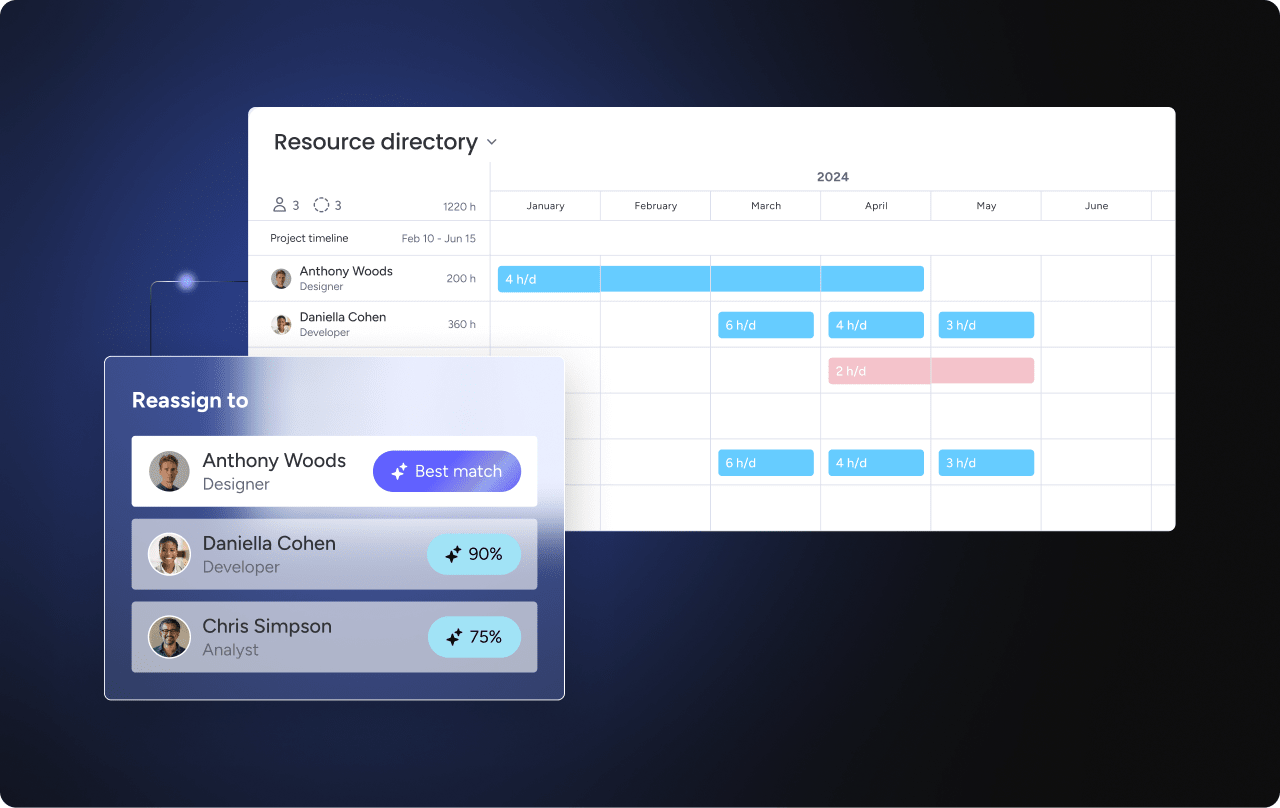
Accelerate team empowerment with monday work management
monday work management provides the operating system for empowered teams. It replaces fragmented systems with a unified platform connecting strategy to execution, giving teams autonomy they need and leaders visibility they require.
The platform’s architecture supports all five core elements of empowerment:
Distributed decision-making: Customizable dashboards provide real-time analytics, giving teams data needed for decisions without asking for reports. Automated workflows handle routine approvals based on pre-set logic, eliminating bottlenecks.
Outcome accountability: The Goals feature allows teams to link daily work directly to high-level OKRs. Portfolio management views give leaders high-level progress toward outcomes, enabling management by objective rather than activity.
Cross-functional collaboration: Shared digital workspaces break down silos by allowing marketing, sales, and development teams to collaborate on same items. Contextual communication happens directly within item cards, ensuring history and decisions visible to all partners.
Continuous learning: Teams use built-in retrospective templates to capture insights and immediately convert them into action items. The platform serves as knowledge base, preserving history of what was tried and learned.
Technology infrastructure: As a cloud-based Work OS, the platform scales securely. Granular permissions allow teams to control their workspaces while IT maintains global security standards.
AI-powered features for empowered teams
monday work management integrates AI to remove administrative friction slowing teams down. These capabilities extend team capacity and accelerate decision-making:
AI Blocks for automation: Teams utilize Categorize, Summarize, and Extract Info blocks to process information instantly. Support teams automatically categorize incoming requests and summarize complex customer histories, allowing faster autonomous resolution.
Product Power-ups for complex challenges: Features like AI-driven risk management proactively flag potential project delays based on historical data, prompting teams to adjust plans before crises occur. Resource allocation capabilities suggest optimal workload distribution, enabling teams to self-organize.
Digital Workforce for extended capacity: AI capabilities act as virtual team members. The Project Analyzer reviews project plans and suggests improvements, while the monday Expert answers how-to questions instantly, allowing teams to solve platform challenges without waiting for IT support.
Try monday work managementFrequently asked questions
What is the difference between empowered teams and self-managed teams?
The primary difference between empowered teams and self-managed teams is that empowered teams possess decision-making authority within strategic boundaries and remain accountable for specific business outcomes. Self-managed teams often have broader autonomy over internal governance but may lack the same level of strategic alignment.
How quickly can organizations build empowered teams?
Initial pilot teams can typically be established and operational within three to six months. Achieving full organization-wide transformation generally requires twelve to 18 months, depending on company size, existing culture, and leadership commitment to change.
Do empowered teams work in highly regulated industries?
Empowered teams operate effectively in regulated sectors by working within compliance frameworks. The sandbox of autonomy is defined by regulatory requirements, ensuring teams act independently without violating legal or safety standards.
What size companies benefit most from team empowerment?
While organizations of all sizes benefit, mid-to-large companies with 100+ employees and complex cross-departmental workflows see the most significant impact. Empowerment eliminates bureaucracy and slow decision-making that typically affects larger enterprises.
How do empowered teams resolve internal conflicts?
Empowered teams utilize structured conflict resolution frameworks like facilitated discussions and decision-making protocols. Defined escalation paths for deadlocks prevent personal conflicts from stalling progress while maintaining team autonomy.
What leadership capabilities are essential for empowering teams?
Core competencies required for leaders of empowered teams include coaching skills, ability to build psychological safety and trust, outcome-focused strategic thinking, and systems perspective to remove organizational blockers.

 Get started