


The jump from manager to senior manager is a shift in scope, responsibility, and the type of thinking your organization expects from you. And while there’s a fancy new title, unfortunately, your skills don’t upgrade automatically to match the level needed to become a senior manager. You have to build them.
This guide breaks down 8 skills that separate senior managers who thrive from those who plateau. Whether you’re stepping into the role for the first time or looking to sharpen your approach, you’ll find practical frameworks you can apply immediately. We’ll also look at how platforms like monday.com’s AI Work Platform give senior managers the visibility and structure to put these skills into practice across teams and projects.
Get startedKey takeaways
- Senior manager skills are fundamentally different from manager skills: The transition requires shifting from personal execution to strategic leadership, focusing on team-level impact rather than individual output.
- Emotional intelligence and active listening form the foundation: These skills build the trust and psychological safety that enable high-performing teams, helping you spot problems early and make decisions grounded in reality rather than filtered information.
- Strategic thinking and commercial acumen separate leaders from coordinators: Understanding how your team’s work connects to revenue, prioritizing ruthlessly, and making data-driven decisions aligned with business outcomes define senior-level leadership.
- Delegation and coaching unlock scalable impact: The most critical transition at this level is letting go of execution work and investing in developing your team’s capabilities, creating future leaders who can eventually handle the strategic responsibilities you hold now.
- monday.com’s AI Work Platform gives you the structure to apply these skills at scale: Dashboards for visibility, automations for systematic delegation, resource management for capacity planning, and AI-powered decision support help you lead strategically across multiple teams without becoming a bottleneck.
8 examples of senior manager skills you need in 2026
The following examples of senior manager skills represent the core competencies that separate effective senior leaders from those who struggle to scale their impact. Each one addresses a specific challenge you’ll face as your scope expands beyond direct execution into strategic leadership.
1. Active listening
Most managers think they’re good listeners. The reality? Hearing someone talk and actively listening are fundamentally different practices. Hearing is passive. Active listening is intentional, structured, and focused on understanding what’s being said, what’s being left out, and what the speaker needs from the conversation.
For senior managers, this distinction matters more than it does at any other level. You’re no longer close to the day-to-day work. The information you receive is filtered through layers of reporting, which means critical context gets lost unless you deliberately create space to listen.
What does active listening look like in practice?
Active listening at the senior level goes beyond nodding and making eye contact. It involves specific, repeatable behaviors that signal genuine engagement and draw out the information you need to lead well.
- Summarize back: After someone finishes speaking, paraphrase their key points before responding. This confirms understanding and gives them a chance to correct any misinterpretation.
- Ask clarifying questions: Replace assumptions with questions like “What would success look like from your perspective?” or “What’s the biggest risk you see that we haven’t discussed?”
- Hold skip-level meetings: Schedule regular conversations with people two levels below you. These sessions create ground-level insights that your direct reports may unintentionally filter out.
- Pause before responding: Give yourself 3 to 5 seconds after someone finishes speaking. This small habit reduces reactive answers and encourages deeper contributions from your team.
At scale, listening can’t be ad hoc; instead, it needs to be systematic. Build it into your weekly rhythm with dedicated 1:1 time, structured feedback loops, and regular team retrospectives where you listen more than you speak. Senior managers who treat listening as a leadership practice, not a personality trait, consistently make more grounded decisions and catch problems before they escalate.
2. Emotional intelligence and people leadership
Emotional intelligence (EQ) is one of those terms that gets thrown around in leadership discussions without much precision. For senior managers, it comes down to something specific: the ability to recognize, understand, and manage your own emotions while accurately reading and responding to the emotions of the people around you.
Why does this matter at the senior level? According to a 2025 World Economic Forum report, resilience, flexibility, and agility rank among the top skills employers prioritize, with emotional intelligence underpinning all three. Executive search firms consistently rank EQ in their top-3 competencies for senior hires because it directly predicts how well a leader navigates complexity, conflict, and organizational change.
The core components of EQ for senior managers
EQ isn’t a single skill. It’s a cluster of capabilities that work together to shape how you lead people through ambiguity and pressure.
- Self-awareness: Knowing your triggers, biases, and default reactions under stress. Senior managers who understand their own patterns make more deliberate choices instead of reacting impulsively.
- Empathy: The ability to understand someone’s perspective without necessarily agreeing with it. This is especially critical when managing managers, who often carry stress from both directions.
- Conflict resolution: Moving beyond avoidance or forced compromise toward outcomes where all parties feel heard and the underlying issue gets addressed.
- Psychological safety: Creating an environment where people can raise concerns, admit mistakes, and challenge ideas without fear of punishment. Research from Google’s Project Aristotle identified this as the single strongest predictor of high-performing teams.
The connection between EQ and team performance is direct. When senior managers demonstrate emotional intelligence, they create the conditions for trust and honesty. Teams that trust their leaders share problems earlier, collaborate more effectively, and stay engaged longer. These are the leadership traits that compound over time.
3. Adaptability and change management
Adaptability used to be described as a personality trait: some people handle change well, others don’t. At the senior manager level, that framing isn’t useful. Adaptability is a structured competency that you can develop, practice, and teach to your teams.
The pace of change in most organizations has accelerated significantly. AI adoption, shifting market conditions, restructuring, and evolving customer expectations all create environments where the ability to adjust course quickly determines whether your team delivers or stalls. A 2025 McKinsey analysis found that organizations with change-capable leaders were 2.5 times more likely to outperform their peers during periods of disruption.
How do you lead change instead of just surviving it?
The difference between senior managers who struggle with change and those who lead through it often comes down to communication. When your organization introduces a new direction, your team looks to you for three things: context, acknowledgment, and a path forward.
- Explain the why: People resist change when they don’t understand the reasoning behind it. Before rolling out any shift in process, strategy, or structure, explain the business case in language your team connects with.
- Acknowledge the impact: Change creates friction, uncertainty, and additional workload. Pretending it doesn’t undermines trust. Name what’s hard about the transition and give your team space to voice concerns.
- Set expectations: Define what success looks like during the transition period, not just after it. Temporary drops in velocity or morale are normal. Your job is to set realistic timelines and hold the team steady.
AI-driven change deserves specific attention here. Many organizations are introducing AI-powered workflows, automation, and decision-support systems that fundamentally alter how teams operate. Senior managers who understand PMO roles and structures can build the governance frameworks that make these transitions sustainable rather than chaotic. The key is framing AI adoption as an evolution of your team’s capabilities, not a replacement of them.
4. Strategic thinking
The most common trap for new senior managers is continuing to operate tactically. You’re used to solving problems, hitting deadlines, and managing deliverables. Those skills still matter, but your primary value at this level is thinking strategically: identifying which problems are worth solving, in what order, and with what resources.
Strategic thinking means stepping back from the day-to-day to evaluate trade-offs, anticipate obstacles, and align your team’s work with broader organizational goals. It’s less about having the right answer and more about asking the right questions.
What separates strategic from tactical thinking?
Tactical thinking focuses on execution. Strategic thinking focuses on direction. Both are necessary, but senior managers who spend 80% of their time in tactical mode leave a gap that no one else in the organization can fill.
- Prioritization: Not everything that’s urgent is important. Strategic senior managers evaluate initiatives based on impact, feasibility, and alignment with organizational objectives, then cut or defer the rest.
- Stakeholder alignment: Major initiatives fail when key stakeholders aren’t aligned on goals, timelines, or success criteria. Build alignment early through structured conversations rather than assuming consensus.
- OKR frameworks: Objectives and key results give you a shared language for connecting team-level work to company-level goals. They also create transparency about what’s being prioritized and why.
- Scenario planning: Anticipate what happens if a key assumption proves wrong. Having contingency plans for your top 2 to 3 risks reduces the reactive decision-making that drains senior managers’ time.
Understanding business management fundamentals helps you frame strategic conversations in terms that resonate with leadership. When you can connect your team’s priorities to revenue, retention, or market positioning, your proposals carry more weight and your team’s work gets the investment it deserves.

5. Commercial acumen and data literacy
Senior managers who understand the commercial side of their business make fundamentally different decisions than those who don’t. This isn’t about becoming a finance expert. It’s about understanding how your team’s work connects to revenue, cost, and margin so that every decision you make has a business rationale behind it.
Commercial acumen means knowing where your organization makes money, where it loses money, and how the work your team does affects those numbers. It also means being comfortable with data: reading dashboards, interpreting trends, and using evidence rather than intuition to guide your priorities.
What does commercial acumen look like for senior managers?
This skill set has expanded significantly in the past few years. Data literacy and digital fluency are now expected at the senior level, not optional extras. A 2025 Gartner workforce study found that 73% of senior managers are now expected to demonstrate data-driven decision-making as a core competency.
- Budget ownership: Understand your cost center, how it’s measured, and what financial constraints shape your team’s capacity. Senior managers who can articulate the ROI of their initiatives get more resources.
- Data literacy: You don’t need to build dashboards yourself, but you do need to interpret them. Know which metrics matter for your function, what trends indicate, and when data contradicts assumptions.
- Revenue connection: Understand how your team’s output influences the sales funnel, customer retention, or product adoption. This connection transforms your role from cost center to value driver.
- Digital fluency: Be conversant in the platforms, integrations, and automation capabilities your organization uses. You don’t need to configure them, but you should understand what’s possible so you can advocate for the right investments.
The combination of commercial awareness and data literacy gives senior managers a language that resonates across functions. When you can explain why a project matters in terms of customer acquisition cost, lifetime value, or operational efficiency, you earn credibility with both your leadership team and your peers.
6. Delegation and coaching
If there’s one skill that defines the transition from manager to senior manager, it’s delegation. Not the “hand off a project and check in later” kind. Real delegation means transferring ownership, authority, and accountability to someone else while staying available for guidance without taking the work back.
This is where most new senior managers struggle. You got promoted because you were excellent at execution. Letting go of that execution feels risky, even irresponsible. But here’s the reality: every hour you spend doing work that someone on your team could handle is an hour you’re not spending on the strategic priorities only you can address.
Why do senior managers under-delegate?
The under-delegation trap has a few common causes. Some senior managers don’t trust their team’s ability to deliver at the required standard. Others feel guilty about “dumping” work. Many simply find it faster to do things themselves in the short term. All of these impulses are understandable, and all of them are counterproductive.
Under-delegation creates a bottleneck at your level. It signals to your team that you don’t trust them. And it prevents the people below you from developing the skills they need to grow into leadership roles themselves.
Coaching as a complement to delegation
Delegation without coaching is just task assignment. Coaching transforms delegation into a development opportunity. When you delegate with coaching, you’re not just moving work off your plate. You’re developing future managers who can eventually take on the strategic responsibilities you hold now.
- Define outcomes, not methods: Tell your direct reports what success looks like and let them determine how to get there. This builds problem-solving skills and ownership.
- Create feedback loops: Check in at agreed milestones rather than hovering. Ask coaching questions like “What would you do differently?” instead of prescribing corrections.
- Accept imperfection: The first time someone handles a responsibility you used to own, the result will likely be 80% of what you’d have produced. And that’s perfectly acceptable because growth requires practice.
- Match delegation to development: Assign stretch responsibilities that align with each person’s growth trajectory, not just whoever has the most capacity.
7. Time management at scale
Time management advice aimed at individual contributors doesn’t translate to the senior manager level. At this level, your time decisions don’t just affect your own productivity. They ripple across your entire team. When you say yes to a meeting, you’re often committing 5 to 10 other people’s time as well. When you fail to protect your strategic thinking time, the quality of your team’s direction suffers.
This is why time management at scale requires a fundamentally different approach than personal productivity hacks. It’s about creating systems and boundaries that protect the time needed for leadership work while ensuring your team has the access and support they need.
What strategies work at the senior level?
The most effective senior managers treat their calendar as a strategic asset, not a shared resource that anyone can claim. Here are the practices that consistently produce results.
- Batch decisions: Group similar decisions into dedicated time blocks rather than addressing them as they arrive throughout the day. This reduces context-switching and improves decision quality.
- Protect strategic time: Block 4 to 6 hours per week for strategic work: planning, analysis, relationship-building. Treat these blocks as non-negotiable. If you don’t protect this time, it disappears.
- Define escalation criteria: Make it explicit what types of issues should reach you and what your team should resolve independently. Without clear criteria, everything escalates, and your calendar fills with decisions others could make.
- Audit your meeting load: Review your recurring meetings monthly. Ask whether each one still serves its original purpose and whether you need to be there. Senior managers who reclaim even 3 hours per week from unnecessary meetings gain meaningful strategic capacity.
Burnout is a real risk at this level. Gallup’s 2026 State of the Global Workplace report found that manager engagement dropped to 22%, a nine-point decline since 2022. The cause usually stems from poor time boundaries rather than the volume of work itself. When senior managers feel overwhelmed, it’s often because they’re spending their time on other people’s priorities instead of their own. The solution isn’t working more hours. It’s being more intentional about which hours go where.
8. Achievement focus and goal alignment
Achievement focus at the senior manager level looks different from individual performance. You’re no longer measured primarily by your personal output. You’re measured by what your team delivers, how consistently they hit targets, and whether the goals they’re pursuing align with organizational priorities.
This shift requires you to build an achievement culture rather than just achieving things yourself. That means setting expectations, creating visibility around progress, and holding your team accountable to outcomes rather than activity.
How do you create a team-level achievement culture?
The most effective framework for this is OKRs (objectives and key results). OKRs connect team-level work to company-level goals through a structured hierarchy of objectives and measurable results. They create alignment without micromanagement because everyone can see how their work contributes to the broader picture.
- Set outcomes, not outputs: Define what your team needs to achieve, not how many reports they need to produce. Outcomes focus on impact; outputs focus on activity.
- Create visibility: Make progress toward goals visible to the entire team through shared dashboards or regular updates. Visibility creates accountability and early warning when things fall behind.
- Review regularly: Monthly or bi-weekly goal reviews keep priorities fresh and give you the opportunity to adjust course before a quarter ends.
- Celebrate and learn: Acknowledge when goals are met, and conduct honest retrospectives when they’re missed. Both experiences build the muscle memory your team needs to perform consistently.
Investing in leadership development programs reinforces this culture by giving your direct reports the frameworks and skills they need to drive achievement within their own teams. The result is a cascading system of accountability that doesn’t depend on you personally tracking every milestone.
How monday.com's AI Work Platform supports senior managers
The skills outlined in this guide create a foundation for effective senior management. But applying them across multiple teams, projects, and priorities requires structure that goes beyond spreadsheets and status meetings. This is where monday’s AI Work Platform fits into the picture.
monday.com’s AI Work Platform gives senior managers a centralized view of everything happening across their teams without requiring them to attend every meeting or chase down updates manually. Here’s how the platform maps to the skills we’ve covered.
Dashboards for visibility and strategic oversight
Customizable dashboards aggregate data from multiple boards and teams into a single view. Senior managers can track project status, resource allocation, and goal progress without switching between different reporting formats. This supports strategic thinking and achievement focus by keeping high-level metrics visible and actionable.
Automations for delegation and time management
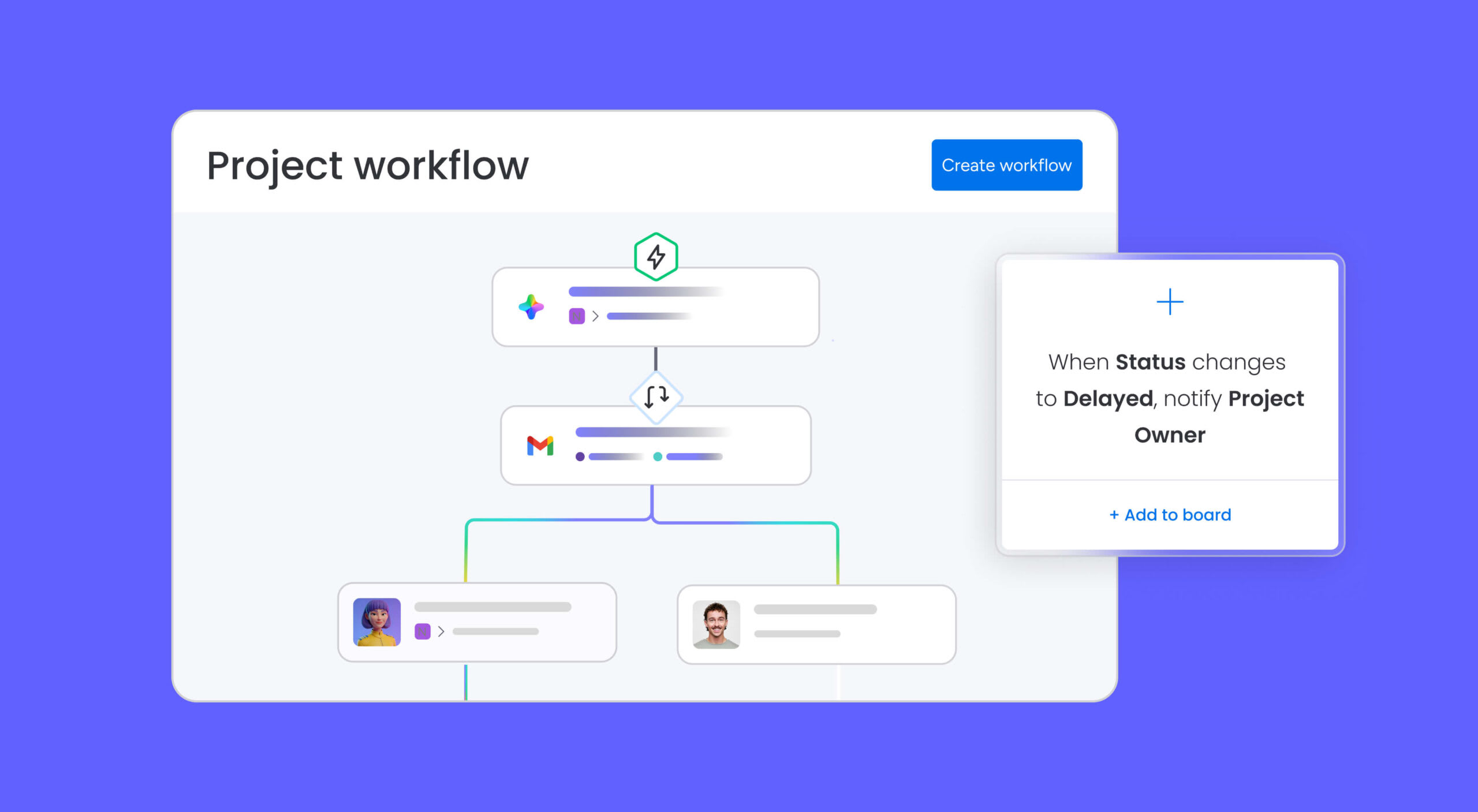
Automations handle the repetitive coordination work that eats into senior managers’ time. Status updates, notification routing, approval workflows, and deadline reminders all run automatically. This frees up the strategic time we discussed and makes delegation more systematic because handoffs happen through defined workflows rather than ad hoc messages.
Resource management for capacity planning
Workload views and resource management features show exactly how capacity is distributed across your team. This is critical for commercial acumen because it helps you make staffing and prioritization decisions based on data rather than assumptions. You can spot overallocation before it causes burnout and redistribute work proactively.
AI blocks and agents for decision support
AI-powered features on monday.com’s AI Work Platform help senior managers analyze data, generate summaries, and identify patterns across large datasets. These capabilities support data literacy by making information accessible without requiring you to build complex reports manually. They also accelerate adaptability by helping you assess the impact of changes quickly.
The platform connects to your existing workflows rather than replacing them. For senior managers who are developing their project management skills alongside their leadership capabilities, this integration means you can apply frameworks like OKRs, delegation protocols, and escalation criteria within a system your team already uses.
Building the senior manager skillset that scales
The 8 senior manager skills in this guide share a common thread: they all shift your focus from personal execution to organizational impact. Active listening, emotional intelligence, strategic thinking, and the rest aren’t skills you master once and move on from. They’re practices you refine continuously as your scope and influence grow.
What’s changed in recent years is the environment where these skills play out. AI, remote and hybrid teams, and faster market cycles mean that adaptability and data literacy carry more weight than they did even 5 years ago. The senior managers who thrive are the ones who combine timeless people leadership with fluency in the platforms and frameworks that make modern organizations run.
Start with the skill that feels most relevant to where you are right now. Build one habit, apply it consistently, and expand from there. That’s how sustainable leadership growth works.
Get startedFAQs
What are the most important senior manager skills?
The most important senior manager skills include active listening, emotional intelligence, strategic thinking, delegation, and the ability to align team goals with organizational priorities. These skills shift your impact from individual output to team-level results.
What is the difference between a manager and a senior manager?
A manager typically oversees individual contributors and focuses on day-to-day execution. A senior manager oversees other managers, sets strategic direction, and is responsible for outcomes across multiple teams or functions.
What are the key responsibilities of a senior manager?
Senior managers are responsible for translating organizational strategy into team-level goals, coaching and developing managers, managing budgets and resources, driving cross-functional collaboration, and ensuring consistent delivery against business objectives.
How do senior managers develop their skills?
Senior managers develop skills through deliberate practice, executive coaching, leadership development programs, peer learning, and feedback loops. Reading and formal training help, but applying new approaches in real situations drives the most growth.
How does emotional intelligence help senior managers?
Emotional intelligence helps senior managers build trust, navigate conflict, create psychological safety, and make decisions that account for the human impact on their teams. High EQ is consistently linked to stronger team retention and performance.
How can monday.com's AI Work Platform help senior managers?
monday.com's AI Work Platform gives senior managers dashboards for cross-team visibility, automations for delegation and coordination, resource management for capacity planning, and AI-powered features for faster data analysis and decision support.

 Get started