


Universities once operated as independent departments, sending students through a maze of separate offices for admissions, financial aid, and housing. Today, that model no longer works. Students expect connected digital experiences, and staff need efficient processes to support them without burning out. Service management for higher education brings order to this complexity by connecting IT, student services, and facilities into a single, unified operation.
This guide explores the essential components of a modern service platform, from automated ticketing to real-time analytics, and shows how AI is transforming campus support. You’ll learn how to break down silos, adapt to academic life’s unique rhythms, and build a more responsive institution. With platforms like monday service, you can create seamless experiences that meet rising expectations.
Try monday serviceKey takeaways
- Connect all campus departments: Service management unifies IT, student services, facilities, and HR into one smooth experience that eliminates the runaround students and staff face daily.
- Start with quick wins: Launch with password resets and transcript requests to build momentum, then expand gradually to avoid overwhelming your team while proving value early.
- Launch in 30 days: Pre-built education templates and no-code customization let you skip months of configuration while adapting to your unique campus needs.
- Automate routine work: AI handles ticket routing and classification, freeing your staff to focus on complex issues that need human judgment and problem-solving skills.
- Measure what matters: Track SLA compliance, satisfaction scores, and first contact resolution rates to prove ROI and guide continuous improvements.
What is service management in higher education
Service management in higher education is the systematic approach to delivering, coordinating, and improving services across a university campus. This means creating consistent processes for everything from IT support and student services to facilities management and research administration.
Think of your university as a small city. Students need housing assignments, faculty need classroom technology, and staff need HR support, all while academic calendars create massive demand spikes.
Service management brings order to this complexity by defining who handles what, how requests flow between departments, and what “good service” actually looks like.
IT service management for universities
IT service management (ITSM) forms the backbone of campus technology support. This covers password resets, learning management system access, Wi-Fi connectivity, and software licensing, basically everything that keeps digital campus life running.
Most universities adapt the ITIL framework to fit academic realities. Why? Because a research lab’s urgent data recovery needs different handling than a freshman’s forgotten password. With customizable workflows, monday service recognizes these distinctions and matches how universities actually operate, not how a textbook says they should.
Student service management across campus departments
Student service management connects traditionally siloed departments (admissions, financial aid, housing, advising) into one coherent experience. Instead of sending students on a campus tour just to submit paperwork, service management creates smooth handoffs between offices.
What does this look like in practice? When a student’s financial aid affects their housing eligibility, both departments see the same information. When registration opens, advisors know which students need help first. As institutions grow from 1,000 students to 10,000, these coordinated workflows become essential. Through shared workflows, monday service makes these connections visible and keeps everyone working from the same playbook.
Enterprise service management in academic settings
Enterprise service management (ESM) takes IT’s structured approach and spreads it campus-wide. HR uses it for onboarding, facilities uses it for maintenance requests, and finance uses it for procurement approvals.
The magic happens when these services connect. A new faculty hire triggers IT account setup, office assignment, parking permit creation, and benefits enrollment, all from one initial request. No more chasing five departments for five different forms.
This integrated approach matters more than ever because today’s students grew up with Amazon and Netflix. They expect instant updates, mobile access, and services that just work. When campus systems feel stuck in the past, satisfaction drops and retention suffers. The real challenge? Meeting these expectations without doubling your staff or budget. Modern service management provides the answer through automation, self-service, and smarter workflows that do more with less.
Critical challenges in higher education service management
Universities face unique hurdles that corporate service desks never encounter. Academic calendars create demand tsunamis, stakeholder groups pull in different directions, and legacy systems refuse to talk to modern platforms. Understanding these challenges helps you build service management that actually works in higher education.
Meeting rising student expectations for digital services
Students want services that work like the apps they already use: 24/7 access, mobile-first design, and personalized experiences. Through customizable portals and automated workflows, monday service delivers these capabilities while your team focuses on complex issues.
Reducing operational costs while improving service quality
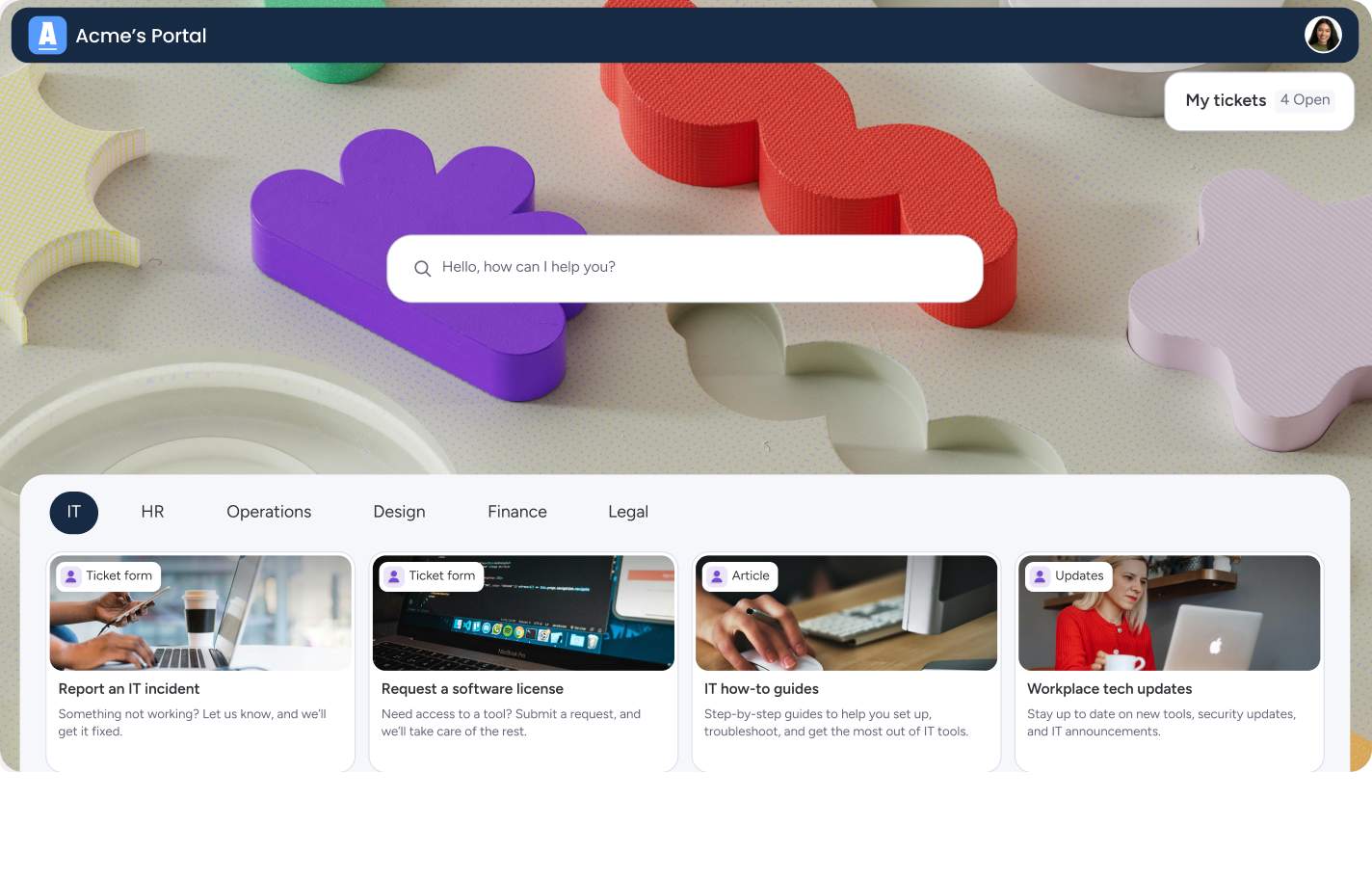
With 42% of higher education technology leaders anticipating IT budget decreases for 2025-26, service management helps by eliminating duplicate work through automated ticket routing, self-service portals, shared workflows, and performance analytics that show where to focus limited resources.
Supporting staff well-being and preventing burnout
Unclear processes create stressed staff. Service management fixes this by defining clear ownership and automating repetitive work. Through automated routing and workload balancing, monday service helps staff spend less time on manual processes and more time actually helping people.
Managing complex stakeholder needs
Students prioritize speed, faculty value autonomy, parents expect transparency, and administrators need measurable outcomes. Through role-based workflows and customizable service levels, monday service balances these competing demands and matches actual priorities.
Integrating legacy systems with modern platforms
Most universities run on a patchwork of systems—some decades old, others cloud-native. Higher ed’s tech sprawl problem creates integration headaches that slow down service delivery. Through extensive integrations and open APIs, monday service connects your existing systems without massive custom development or risky data migrations.
Meeting compliance and data privacy requirements
Universities navigate FERPA, HIPAA, financial aid regulations, and research data requirements. With enterprise-grade security, detailed audit trails, and flexible permissions, monday service satisfies regulators while keeping workflows smooth.
Working within academic calendar constraints
Registration week brings ten times normal volume, summer means skeleton crews, and finals week allows no system changes. Smart service management adapts to these rhythms. The analytics in monday service help you predict demand spikes and plan accordingly.
Overcoming resource and staffing limitations
Small teams supporting large populations—that’s the higher education reality. The no-code approach in monday service lets your existing team build and modify workflows without waiting for IT support, multiplying your team’s effectiveness.
Essential components of campus service management
Effective service management needs several pieces working together. Miss one, and the whole system struggles. Here’s what you need to build a service operation that actually serves.
| Component | What it does | Key features |
|---|---|---|
| Unified service portal and catalog design | Gives everyone one place to find help—no more hunting through department websites or guessing which email to use | Clear service catalog, single sign-on, mobile design, personalized views based on user role |
| Automated ticketing and smart request routing | Sends requests to the right team instantly based on content, urgency, or requester type | Request category, urgency level, team capacity, escalation rules for time-sensitive issues |
| Knowledge management for self-service support | Turns repetitive questions into self-service wins through a searchable library of articles, guides, and FAQs | Common solutions, visual guides, smart search, feedback loops to improve content over time |
| Real-time analytics and performance dashboards | Shows ticket volumes, resolution times, SLA compliance, and satisfaction scores as they happen | Daily operations tracking, cost and satisfaction monitoring, system health metrics, ROI and strategic data |
Break down campus silos through service integration
Departments often operate like independent kingdoms, each with its own processes and systems. Service integration connects these kingdoms into one coordinated campus so students stop repeating their story to every office, and staff stop wondering what other departments already know.
Connect IT, student services, facilities, and HR
Cross-department workflows happen constantly in universities. New student onboarding touches admissions, IT, housing, and financial aid. Faculty hiring involves HR, IT, facilities, and academic departments. Without integration, these processes become email marathons and dropped balls.
Through shared workflows and unified data, monday service connects departments. When admissions confirms enrollment, IT automatically creates accounts, housing assigns rooms, and orientation gets scheduled, all without manual handoffs.
Create shared service ownership models
Shared ownership means departments take joint responsibility for outcomes. Instead of “that’s not my department,” teams work together toward common goals. Successful models include cross-functional teams, clear SLAs, shared metrics, and regular reviews to address bottlenecks.
Build unified communication channels
Consistent communication keeps everyone informed without overwhelming anyone. Students get updates through their preferred channel, staff see the full conversation history, and managers track communication patterns to spot issues early.
Through automated notifications, shared comment threads, and integrated messaging, monday service centralizes communication. No more searching emails for that important update because everything stays with the request.
How AI transforms university service operations
AI isn’t replacing your service team; it’s making them more effective. By handling routine classification and routing, AI frees staff to focus on complex issues that need human judgment. Here’s how AI changes the game for university service teams:
- Automated ticket classification and smart routing: AI reads incoming requests and determines what they’re about, how urgent they are, and who should handle them.
- Natural language processing: The system understands student-speak like ‘Canvas is broken’ and routes it to LMS support without manual intervention.
- Widespread adoption: A 2026 Educause report found that 92% of higher education institutions now have a work-related AI strategy, signaling that AI is transforming campus service operations.
- Smart capabilities: AI features in solutions like monday service include content analysis, sentiment detection, category prediction, and smart assignment to the best available team member.
- Predictive analytics for proactive student support: AI spots patterns that suggest students need help before they ask for it.
- Early warning signals: Declining portal logins might indicate disengagement, while multiple financial aid inquiries could signal payment problems.
- Privacy-first approach: Use predictive analytics carefully—students need to trust that data helps rather than surveils them.
- Self-service automation that actually works: AI-powered assistants understand questions, ask for clarification, and guide users to solutions.
- 24/7 availability: They handle password resets at 2 a.m. and explain financial aid requirements on weekends.
- Win-win outcomes: Students get instant answers, staff handle more interesting work, and ticket volume decreases.
- AI-powered knowledge recommendations: AI helps agents find the right information fast by suggesting relevant articles, similar past cases, and proven solutions.
Steps to launch service management successfully
Successful implementation follows a proven path. Rush it, and adoption suffers. Overthink it, and momentum dies. Here’s how to launch service management that sticks.
Step 1: Assess your current service maturity level
Start by understanding where you are now. Document existing processes, identify technology gaps, evaluate team capabilities, and measure current performance. Most universities fall somewhere between ad hoc (email and spreadsheets) and repeatable (basic templates and manual routing). Don’t aim for perfection immediately. Pick a realistic target for year one, then build from there.
Step 2: Define your service catalog and ownership
List every service your institution provides, assign clear owners, and define what users should expect. This exercise often reveals duplicate services, unclear ownership, and gaps nobody noticed before. Keep service definitions simple and user-focused. “Password reset service” beats “Identity management system credential recovery process.”
Step 3: Select the right platform for your institution
Platform choice shapes everything that follows. Consider ease of use, integration capabilities, scalability, higher education fit, and available support. Test with real scenarios, not vendor demos. For universities wanting quick implementation without sacrificing capability, monday service stands out. Pre-built templates and no-code customization mean you launch in weeks, not months.
Step 4: Start with quick wins to build momentum

Pick a few high-impact, low-complexity services to launch first. Password resets, transcript requests, and basic IT support tickets work well. These quick wins prove value and build confidence for bigger changes. Don’t forget to celebrate early successes publicly because when people see real improvements, resistance melts away.
Step 5: Establish cross-functional governance
Create structure without bureaucracy. Form a steering committee for strategic decisions, designate service owners for operational management, and schedule regular reviews to address issues and plan improvements. Good governance keeps service management aligned with institutional goals while staying flexible enough to adapt.
Step 6: Train and empower your service teams
Training goes beyond clicking buttons. Help staff understand the service mindset, teach problem-solving approaches, build confidence through hands-on practice, and make ongoing learning part of the culture. The intuitive interface in monday service reduces training time. Staff learn by doing, which builds confidence faster than classroom sessions.
Step 7: Measure performance and iterate
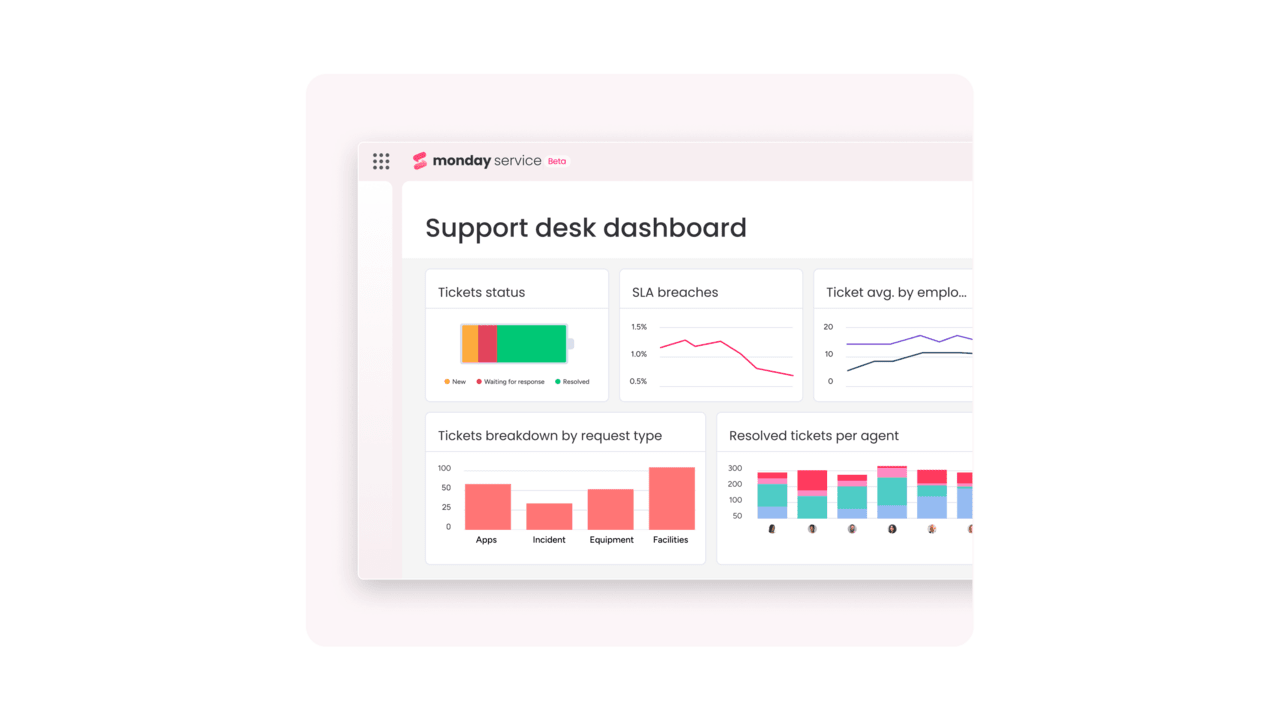
Track the metrics that matter. Monitor SLA compliance, survey user satisfaction, and analyze resolution patterns. Use data to guide improvements, not just create reports. Regular iteration keeps your service management fresh and effective. What worked at launch might need adjustment after a semester of real use.
Try monday serviceKey metrics for measuring service management success in higher education
Universities operate differently from businesses. Your “customers” include students navigating financial aid, faculty managing research grants, and staff coordinating campus events. Each group defines success differently, which means your metrics need to reflect these diverse needs while proving value to leadership.
Measurement drives improvement, but only when you track what actually matters. These key indicators help you demonstrate that your service management delivers real value across campus:
| Metric | What to track | Why it matters |
|---|---|---|
| Service level performance and SLA compliance | Response times, resolution times, and quality measures | Keep SLAs realistic because promising more than you can deliver destroys trust quickly. monday service automatically tracks SLA performance and alerts teams when deadlines approach |
| Student and staff satisfaction scores | Post-ticket surveys, periodic assessments, Net Promoter Scores | Campus satisfaction directly impacts retention, enrollment, and your institution's reputation |
| First contact resolution rates | How often issues get solved without escalation or callbacks (target 70-80% for routine requests) | When students don't have to explain their problem three times to three different offices, satisfaction soars |
| Cost per ticket and ROI calculations | Direct costs (licensing, staff time), benefits (reduced manual work, improved retention) | The analytics in monday service let you track these metrics in real-time dashboards to prove value to leadership |
Transform the complete student journey with these best practices
Service management shapes every student touchpoint from application through alumni engagement. By connecting traditionally siloed services across enrollment, academics, and career development, universities deliver the coordinated support that today’s students expect.
Streamline enrollment and onboarding services
First impressions matter. monday service connects application processing, financial aid, housing assignment, and orientation scheduling into one coordinated flow where each completed step triggers the next without manual coordination, ensuring new students experience a welcoming, professional start.
Deliver seamless academic support
Academic support works best when services connect across the institution, linking early alert systems with advising outreach, tutoring requests with course performance data, and accommodation services with classroom technology needs. When warning signs appear, the right people know immediately and can intervene with timely support that keeps students on track.
Connect career services through graduation
Career support shouldn’t start senior year. By tracking the full student journey, monday service makes it easier to provide timely career support at every stage, connecting career exploration with academic planning, internship coordination with employer relations, and job placement with alumni networking.
Prevent over-customization and complexity
Resist the urge to replicate every quirk in your new system. The templates in monday service provide proven starting points that let you start simple, add complexity only when truly necessary, and standardize the rest to maintain clarity as your service management matures.
Manage change resistance across departments
Change is hard, especially in higher education where traditions run deep. Address resistance through early involvement, clear communication about benefits, and visible wins that demonstrate value. People support what they help create, so involve skeptics early while showing how service management makes work easier.
Consolidate platforms to reduce sprawl
Multiple overlapping systems create confusion and waste resources. Map current functionality, identify redundancies, and sunset old systems definitively. By replacing several point solutions with one integrated platform, monday service delivers less complexity and more capability while reducing training burden and integration headaches.
How monday service revolutionizes campus service delivery
Universities need service management that understands academic life. The platform brings together everything from IT support to student services in one place, designed specifically for the unique rhythms and demands of higher education. You get a system that adapts to your institution rather than forcing you to adapt to it.
Built for teams that need to move fast without technical expertise, the platform combines intelligent automation with intuitive design. Whether you’re supporting 500 students or 50,000, you’ll find the tools to deliver responsive, connected service across every department.
AI-powered ticket routing and classification
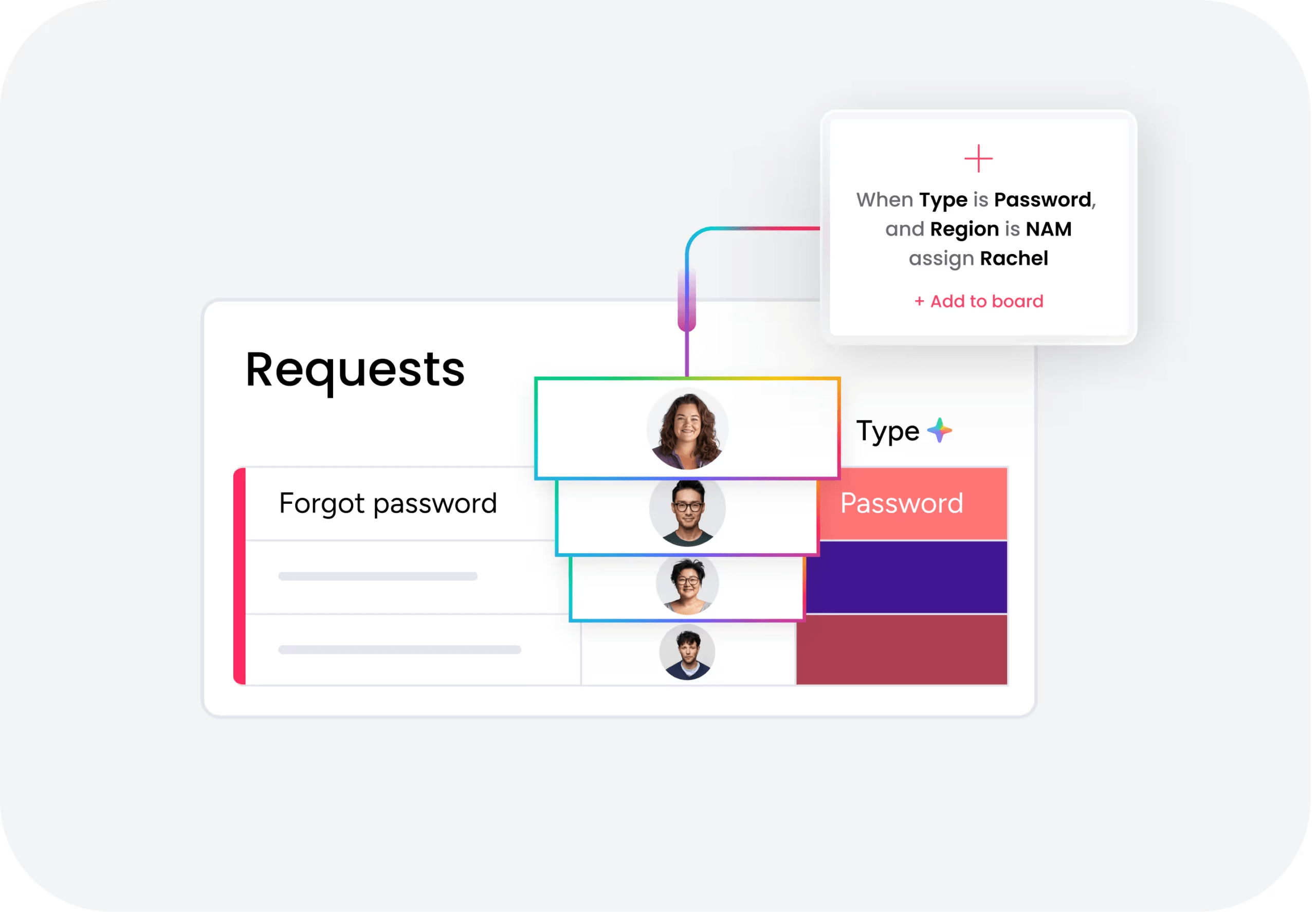
AI reads incoming requests and instantly determines what they’re about, how urgent they are, and who should handle them. The system understands context, detects sentiment, and routes tickets to the right team member based on expertise and current workload. Your staff stops sorting tickets manually and starts solving problems faster.
Pre-built templates for rapid deployment
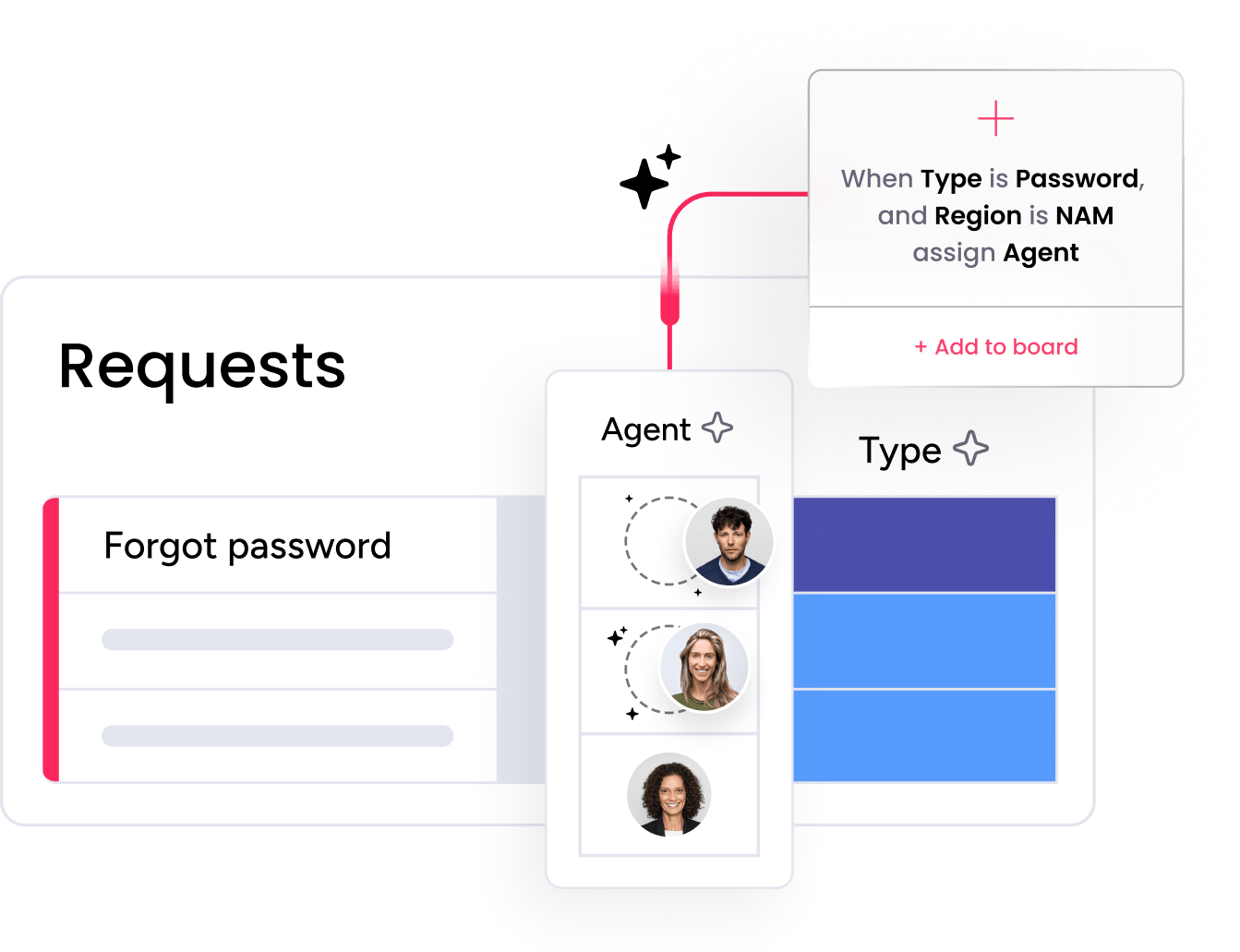
Launch in weeks instead of months with templates designed for higher education. IT support, student services, facilities management, and HR workflows come ready to use, reflecting proven practices from successful campus implementations. Customize what you need while keeping the foundation that works.
No-code workflow customization
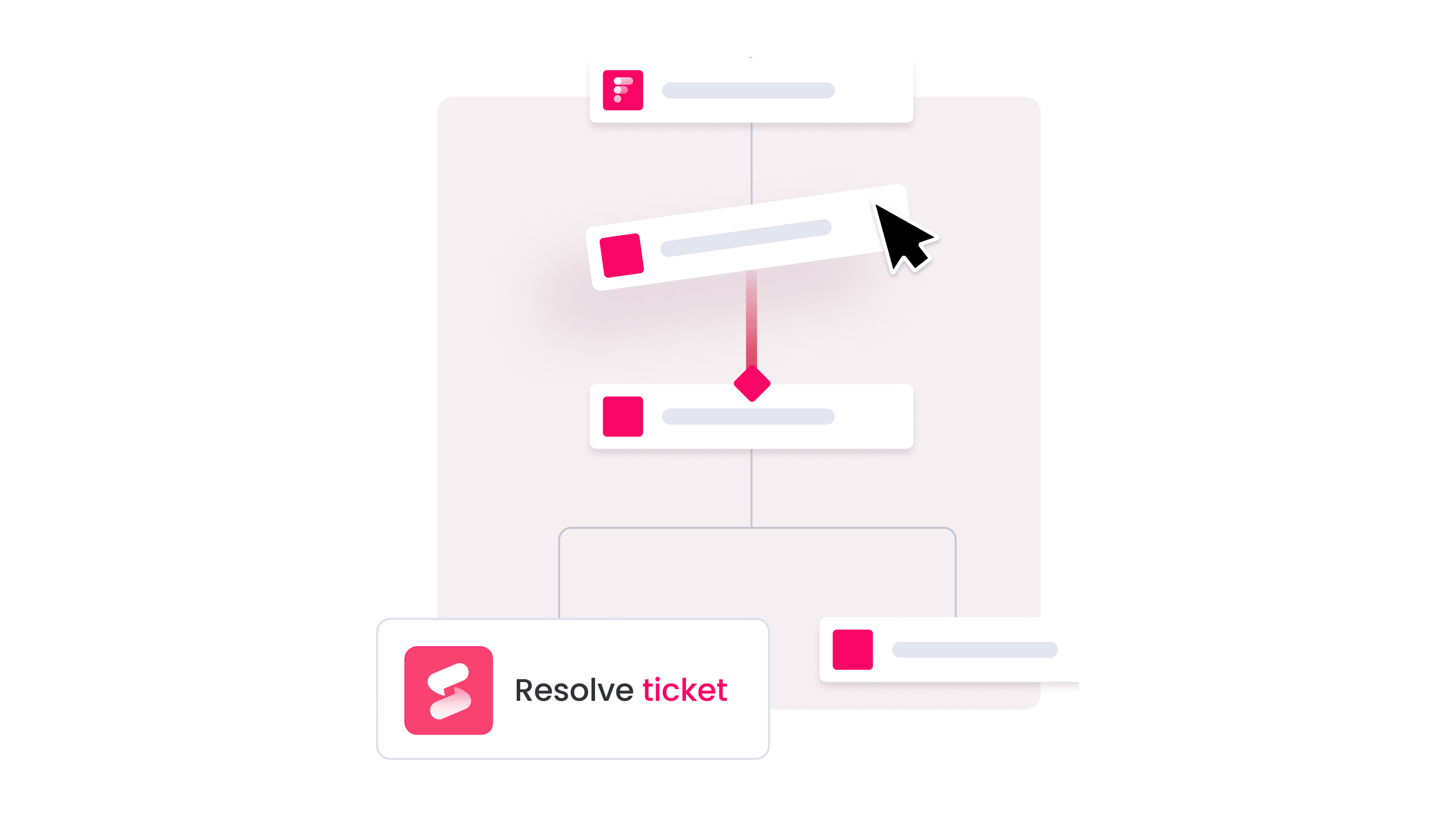
Build and modify service workflows without writing a single line of code. Drag-and-drop design lets you create approval chains, set routing rules, and design intake forms that capture exactly what you need. When processes change, your team updates workflows immediately without waiting for developers.
Intelligent knowledge base with AI recommendations

AI suggests relevant articles and solutions as users submit requests, often resolving issues before a ticket gets created. The system learns from resolution patterns and surfaces the right information at the right time. Students get instant answers, agents find solutions faster, and your knowledge base becomes genuinely useful.
Build a service culture that supports your entire campus
Service management transforms how universities operate by connecting departments, automating routine work, and creating experiences that meet modern expectations. The institutions that thrive will be those that break down silos, empower their teams with the right tools, and put students at the center of every process.
Start with quick wins that prove value, then expand gradually as confidence builds. Track metrics that matter, listen to feedback, and iterate continuously. With platforms like monday service, you get the foundation to deliver responsive, connected support across your entire campus without the complexity that slows you down.
Try monday serviceFAQs
What is the typical cost of service management platforms for universities?
The typical cost of service management platforms for universities varies based on user count, features, and implementation scope. Smaller deployments might start around $30,000 annually, while enterprise implementations can reach six figures. Consider total value, not just subscription costs, because automation and efficiency gains often offset the investment within the first year.
How long does service management implementation take in higher education?
Implementation timelines depend on scope and complexity. A focused departmental launch using templates can happen in 30-60 days, while full enterprise rollouts typically take 3-6 months. Phased approaches work best, allowing you to show value quickly while building toward comprehensive coverage.
What's the difference between ITSM and ESM in higher education?
ITSM focuses specifically on technology services like help desk tickets, system access, and infrastructure support. ESM expands these principles across the entire institution, including HR, facilities, finance, and student services. Most universities start with ITSM and grow into ESM as they see success.
Can service management platforms integrate with Banner and Workday?
Yes, modern service platforms support integration with major higher education systems. Look for platforms with pre-built connectors, open APIs, and flexible integration options. Through various integration methods, monday service connects with Banner, Workday, Canvas, and other common university systems.
How do you get buy-in from different campus departments?
Department buy-in grows through early involvement, visible benefits, and gradual adoption. Start with willing partners, show quick wins, and let success stories spread naturally. Address concerns directly and make participation attractive, not mandatory.
What staff resources are needed to run service management effectively?
Successful service management needs clear ownership more than large teams. Designate service owners, platform administrators, and process champions. With modern no-code platforms like monday service, small teams can manage comprehensive service operations without dedicated technical staff.

 Get started