

Many professional teams struggle with a persistent “productivity paradox” where individuals are constantly busy, yet collective strategic goals remain stagnant. This friction often stems from a lack of cohesion between daily tasks and long-term objectives, leading to a culture of reactive firefighting. Without a centralized roadmap, valuable resources are wasted on low-impact activities that do not move the needle.
Bridging this gap requires moving beyond simple to-do lists and embracing a structured weekly work plan. This approach ensures that every team member understands their specific priorities and how their output impacts the broader organizational mission. When execution is planned with intention, teams can anticipate bottlenecks and coordinate handoffs before they become critical delays.
To achieve this level of alignment, organizations must implement proven strategies that turn individual effort into measurable team progress. By focusing on resource balance and dependency mapping, managers can protect their teams from burnout while maintaining high velocity. This article explores twelve practical tips to help you master this essential planning process.
Key takeaways
- Connect weekly activities to strategic goals: Map every activity back to quarterly objectives so your team focuses on high-impact work instead of low-value activities that don’t move the business forward.
- Build 20% buffer time into every weekly plan: Reserve one day out of five for unexpected priorities and urgent requests so a single crisis doesn’t derail your entire week’s progress.
- Plan cross-team dependencies before individual assignments: Schedule handoffs between departments first to prevent workflow bottlenecks where one team waits idly for another to deliver.
- Use visual dashboards for instant progress updates: monday work management displays live project data across teams, giving stakeholders at-a-glance status updates and freeing up time for strategic work.
- Run mid-week progress reviews to course-correct early: Hold 15-minute Wednesday check-ins focused on what’s behind schedule and what obstacles emerged while there’s still time to recover.
What makes an actionable weekly work plan
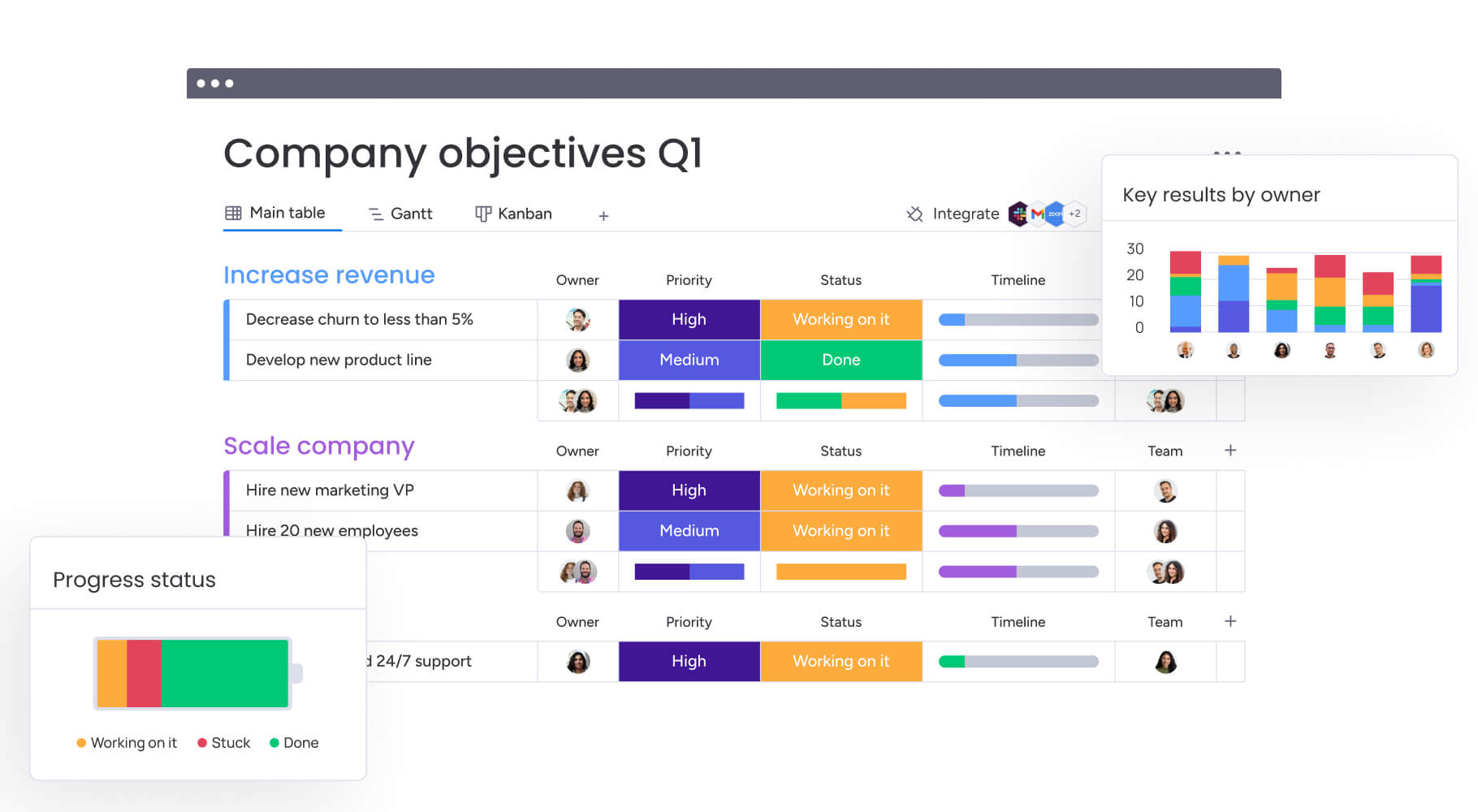
An actionable weekly work plan connects what your team does every day to the goals that actually matter to the business. For mid-to-large companies, it’s how you turn quarterly goals into actual work, coordinate between departments, and give leadership a clear view of what’s happening.
The real difference between a solid plan and a “hopeful” wish list comes down to the specific details that create true accountability. To make it work, every project needs a clear owner, every deliverable requires a firm deadline, and every intended result needs a measurable metric attached to it so progress is undeniable.
This structure empowers mid-level managers to drive results instead of just managing chaos. With a clear plan, team activity consistently translates to meaningful impact.
Essential components every weekly plan needs
A strong weekly plan turns to-do lists into actual workflows. Get these five components right, and your plan becomes a platform people actively rely on. Each component serves a specific purpose in creating accountability and maintaining strategic focus.
| Component | Purpose | Business impact |
|---|---|---|
| Strategic alignment | Connects weekly activities to quarterly or annual objectives | Ensures teams prioritize high-value work over low-impact noise |
| Resource allocation | Accounts for people, time, and budget explicitly | Prevents burnout and ensures realistic delivery schedules |
| Dependency mapping | Identifies which activities rely on others before they can begin | Prevents bottlenecks where one team waits idly for another |
| Progress tracking | Includes defined checkpoints and metrics for success | Allows leaders to monitor real-time status without constant check-ins |
| Buffer time | Reserves capacity for unforeseen priorities | Ensures a single urgent request doesn't derail the entire week |
Dashboards show live project data — budget, goals, schedules, and resources — automatically.
How weekly planning differs from daily task lists
Daily task lists and weekly work plans aren’t the same thing. While daily lists help individuals get things done, weekly plans keep entire teams aligned and moving toward the same goals. Weekly planning bridges strategy and execution. It’s how teams stop reacting and start achieving.
The key distinctions shape how teams approach their work:
- Scope differences: Daily lists address one person’s output, while weekly plans coordinate multiple stakeholders across departments.
- Timeframe focus: Daily lists react to immediate needs. Weekly plans anticipate bottlenecks and milestones before they occur.
- Alignment approach: Daily lists emphasize checking off boxes. In contrast, weekly plans emphasize achieving strategic outcomes.
- Coordination requirements: Daily lists work in isolation. However, weekly plans explicitly manage handoffs and cross-team needs.
To make it work, every project needs a clear owner, every deliverable requires a firm deadline, and every intended result needs a measurable metric attached to it so progress is undeniable.
12 tips to master your weekly work planning
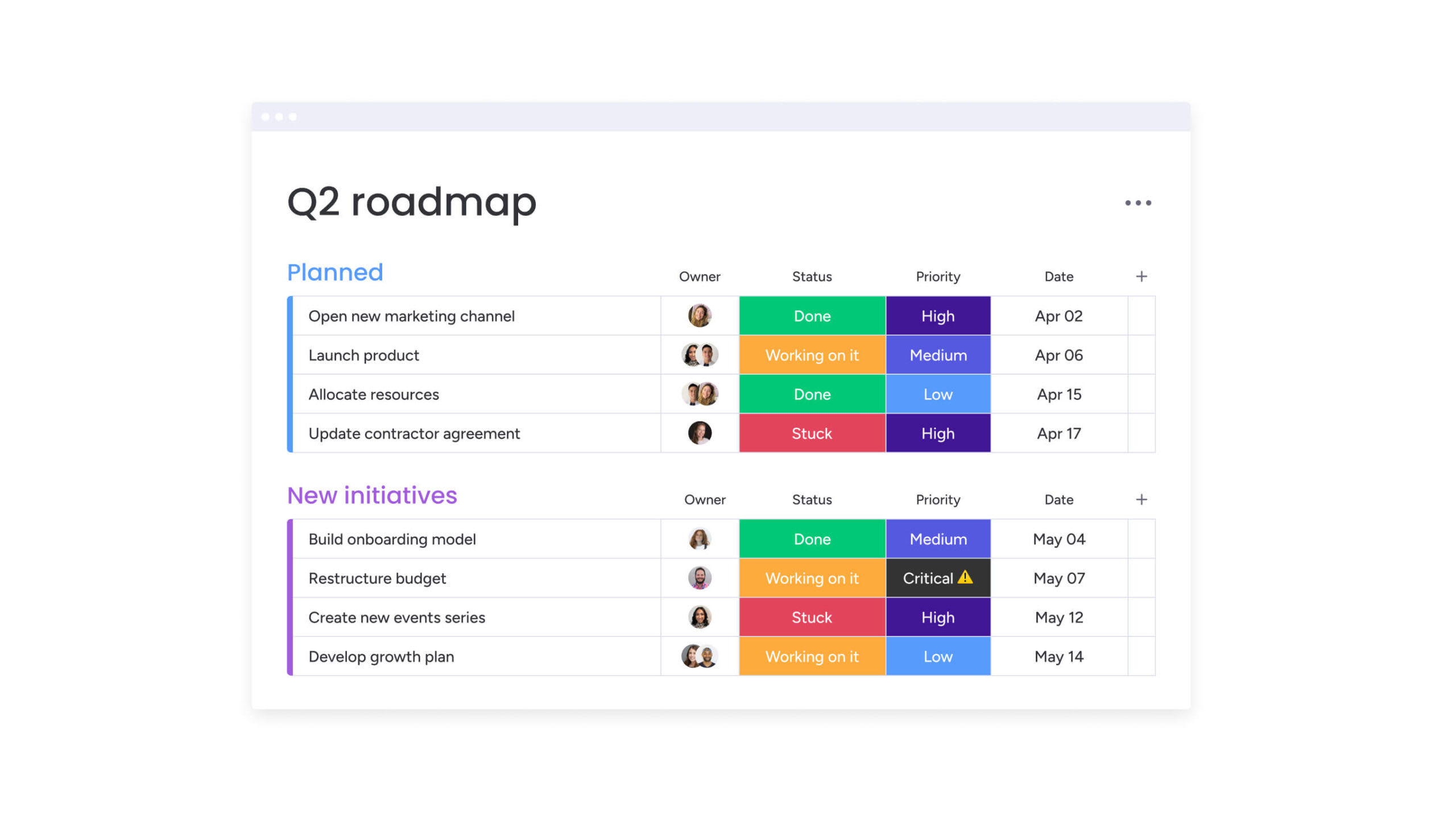
These tips build a system for weekly planning that actually works. They go beyond basic scheduling to real coordination — building a system that adapts when priorities shift without losing sight of what matters. Each tip tackles a specific planning challenge that turns individual work into team progress.
1. Map your week to strategic objectives
Connecting weekly activities to quarterly and annual goals ensures your team prioritizes work that actually moves the needle. Data from the Federal Employee Viewpoint Survey suggests that strategic alignment is a primary driver of performance, with a vast majority of high-achievers reporting a clear understanding of how their daily tasks support organizational missions.
To execute this, review your high-level objectives and work backward to determine the specific milestones required this week to maintain progress.
A marketing team aiming for a Q1 revenue target breaks that goal into campaign launch dates, content creation deadlines, and ad spend allocation for the specific week. Platforms like monday work management link individual tasks to bigger goals, so everyone sees how their daily work fits into the bigger picture.
2. Conduct a weekly brain dump session
Capture everything upfront so nothing gets forgotten. Hold a brain dump session — Friday afternoon or Monday morning works best — where everyone shares pending work, requests, and ideas.
This 15 to 30 minute session is just for capture — don’t organize yet. Once captured, items are categorized by urgency, impact, and resource requirements. Digital platforms let distributed teams add items to a shared backlog throughout the week without needing to meet.
3. Apply the impact-effort matrix for prioritization
The impact-effort matrix helps you decide what to tackle from your backlog. This 2×2 matrix helps teams decide what to do now, what to schedule later, and what to skip.
| Quadrant | Description | Action | Example |
|---|---|---|---|
| High impact, low effort | Quick wins | Do first | Automating a manual report |
| High impact, high effort | Strategic projects | Schedule | Launching a new product feature |
| Low impact, low effort | Fill-ins | Delegate or batch | Routine email correspondence |
| Low impact, high effort | Thankless work | Avoid or deprioritize | Reformatting internal slides |
Operations teams use this matrix to prioritize process improvement initiatives over minor aesthetic updates to internal documentation.
4. Block time for deep work and focus
Complex problems and creative work need uninterrupted time. Time blocking means scheduling deep-focus work during your peak energy hours and protecting those blocks from meetings and interruptions.
- Creative and analytical work: Typically requires longer, uninterrupted sessions of 90 to 120 minutes.
- Collaborative activities: Fit into shorter blocks.
- Calendar integration: Signals to the rest of the organization when a team member is unavailable, preserving the integrity of focus time.
5. Build 20% buffer time into your schedule
Including buffer time is essential for a plan’s success. Therefore, reserve 20% of your week for buffer time so unexpected priorities don’t blow up your entire schedule. This becomes especially important given that 29% of workers continue working on weekends, demonstrating how poor weekly boundaries can lead to work spillover.
Spread buffer time throughout the week instead of saving it all for Friday. This time is a strategic reserve. It boosts productivity by giving your team the flexibility to adapt when schedules are tight.
For example, project managers might keep Tuesday and Thursday afternoons open to address emerging risks or support team members who hit roadblocks.
6. Plan cross-team dependencies first
Map dependencies before assigning individual work. Otherwise, people end up waiting on each other. Identify deliverables that need input from other teams, then schedule those handoffs first — they’re the anchors of your weekly plan.
A product launch requires coordination between marketing for messaging, operations for logistics, and customer service for training. Scheduling the handoffs between these teams first ensures no one is left waiting. When one link breaks, everything delays.
Teams gain visibility into project plan scope, schedule, milestones, and dependencies using Gantt charts on monday work management.
7. Balance team capacity using workload views
Seeing workload distribution helps prevent burnout and keeps delivery on track. Therefore, check team capacity to spot who’s overloaded and who has room to take on more.
Good allocation considers skill levels and how people work best. When you spot a bottleneck, you can redistribute work or adjust timelines before it becomes a crisis.
The Workload View within monday work management provides this insight instantly, allowing teams to balance resources through workload planning and quickly adapt to changing priorities.
8. Schedule mid-week progress reviews
A mid-week check-in lets you course-correct while there’s still time. Held typically on Wednesday afternoon for 15 to 30 minutes, this review focuses on three questions:
- Status check: What is on track?
- Delay identification: What is behind?
- Risk assessment: What obstacles have emerged?
This isn’t just a status update. It’s a working session to adjust resources or expectations while you can still salvage the week. Keeping these reviews focused on exception handling rather than routine updates ensures they remain productive and action-oriented.
9. Automate routine planning activities
Automation handles repetitive admin work so you can focus on strategy. It also cuts errors and keeps things consistent.
- Recurring item creation: Automatically generate weekly planning boards or standard activities every Monday morning.
- Status update reminders: Notify team members when deadlines approach or items remain incomplete.
- Progress reports: Generate summaries of weekly completion rates without manual compilation.
- Stakeholder notifications: Alert project owners when milestones are completed or risks emerge.
Organizations eliminate manual data entry and status checking by setting up specific automation recipes on monday work management. This transition allows teams to dedicate their full capacity to technical problem-solving rather than administrative maintenance.
10. Create visual dashboards for quick updates
Visual progress tracking keeps everyone aligned and cuts down on status meetings. Good weekly dashboards show progress, resource usage, deadlines, and risks in one view.
When stakeholders see project status at a glance, they are proactively informed and can focus on strategic decisions. Meetings can focus on strategy rather than information sharing.
A project-focused dashboard might highlight timeline adherence, while an operations-focused view might track ticket resolution times and volume. Teams customize views with drag-and-drop widgets on monday work management, displaying live high-level project data for insights on budget, goals, schedules, and resources.
11. Include recovery time for sustainable performance
High performance requires sustainable pacing. Unlike buffer time for unexpected tasks, recovery time is a deliberate, low-intensity period following major milestones. This scheduled downtime allows teams to decompress and recalibrate before the next high-pressure objective.
Recognizing signs of fatigue, such as decreased quality or increased irritability, allows managers to adjust plans before burnout sets in. Building in lighter workload days or no-meeting blocks after a sprint deadline ensures the team maintains energy for the next challenge.
Research shows that roughly one-third of employees report burnout across all working models, making sustainable pacing essential for long-term performance.
12. Run weekly planning retrospectives
To improve your planning process, reflect on it regularly. A weekly retrospective, typically a 15-minute session on Friday afternoon, reviews the planning process itself.
The team discusses what worked well, what didn’t, what obstacles emerged, and what specifically to adjust for the following week. Don’t just collect insights — act on them. If the team consistently overestimates capacity, the plan must be adjusted to reflect reality. Track planning effectiveness over time to improve forecast accuracy and build a more resilient team.
Enhance team performance through weekly planning
Weekly planning improves team performance in measurable ways. It shifts focus from individual tasks to team results. The transformation shows up in several ways that directly impact results.
Boost productivity with defined weekly priorities
Weekly planning cuts decision fatigue and the mental drain of switching between tasks. When priorities are clear, people execute instead of constantly wondering what to do next.
The results are:
- Meeting efficiency: Meeting time reduces.
- Agility: Decision-making cycles accelerate.
- Output: Completion rates improve.
A solid plan empowers teams to protect their focus by prioritizing work that aligns with the week’s agreed-upon objectives.
Achieve improved work-life balance
Weekly planning improves work-life balance by making work predictable and protecting boundaries. A solid plan cuts after-hours work and weekend catch-up caused by poor time management or unrealistic expectations.
When you account for personal commitments and time off in your weekly plan, people can work hard during business hours and actually disconnect after. Less stress means happier employees who stick around longer.
Increase visibility across departments
Weekly planning creates transparency across the organization. Shared weekly plans let departments see what others are doing, which improves coordination and prevents duplicate work.
Leadership sees resource needs and potential bottlenecks across the company. This visibility turns siloed departments into teams moving in the same direction.
Organizations using monday work management pull data from all projects across different programs into one high-level view through portfolio management capabilities.
Weekly planning cuts decision fatigue and the mental drain of switching between tasks. When priorities are clear, people execute instead of constantly wondering what to do next.
Navigate common weekly planning challenges
Even strong weekly plans hit obstacles. However, successful teams anticipate these challenges and know how to handle them without ditching the plan.
When priorities shift mid-week
Priority changes are inevitable, but they don’t have to derail everything. When priorities shift, evaluate new requests against three things: strategic importance, resource needs, and impact on current work.
If you accept a new priority, something else has to move. The one in, one out rule preserves the integrity of the plan. Tell stakeholders about changes so they know what to expect. Acknowledge the shift to keep morale up — it shows you recognize the disruption.
Managing overloaded team schedules
Capacity overload shows up as missed deadlines, declining quality, and stressed teams. Fix it fast: redistribute work, adjust timelines, cut scope, or add resources.
Weekly planning gives you the data to have tough conversations about what’s actually realistic. Spot overload early so you can protect your team and maintain quality.
Coordinating hybrid team schedules
Hybrid and distributed teams deal with time zones and different communication styles. For these teams, weekly planning depends on async coordination and shared digital workspaces.
Planning sessions might happen live, but updates and tracking happen async to work with different schedules. Clear communication rules keep remote team members as connected to priorities as office workers, preventing the bias that favors people you see in person.
Essential weekly planning resources and templates
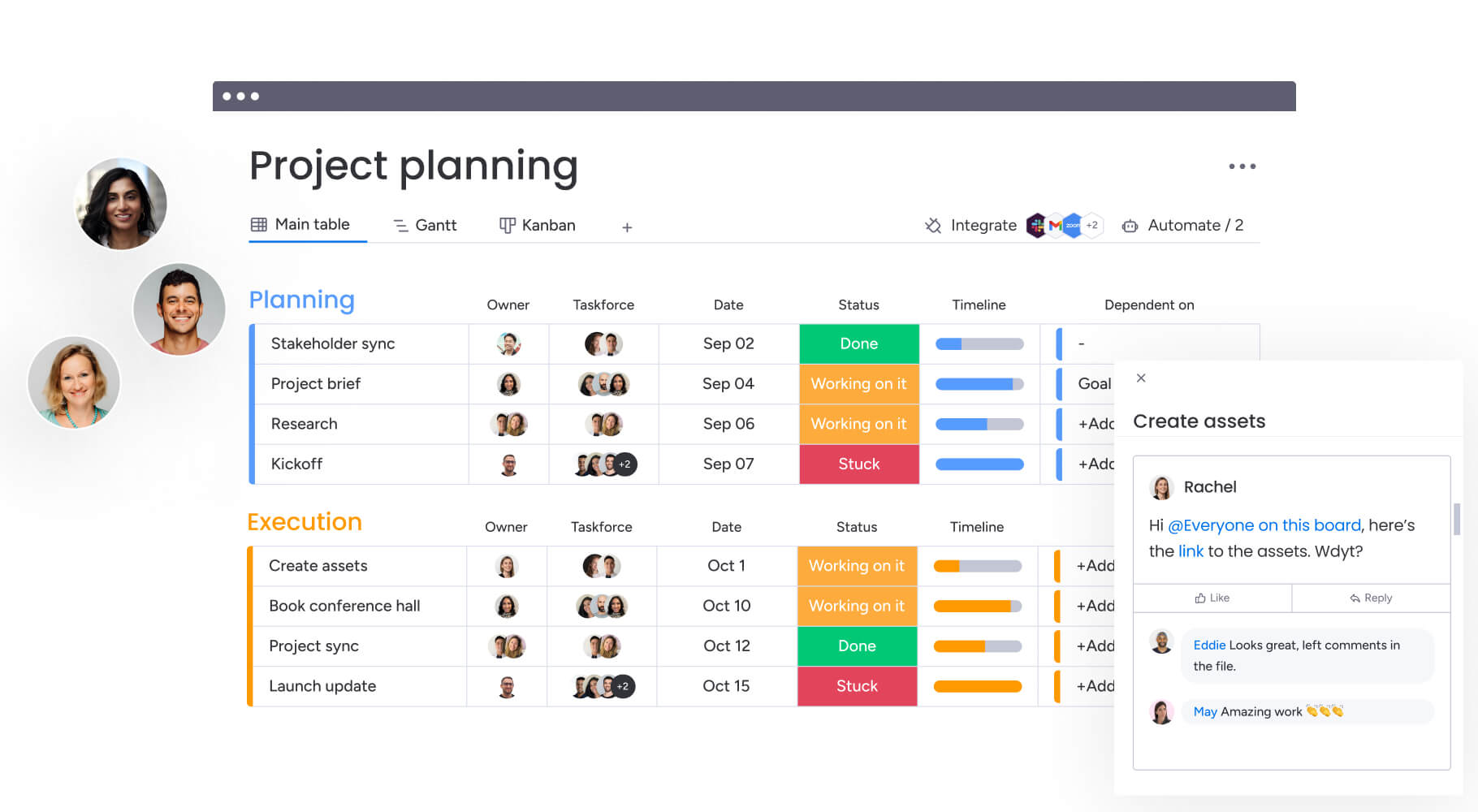
The right platform makes execution easier, boosts adoption, and scales across your organization. Weekly planning principles stay the same, but the right resources make implementation way smoother. These resources help you build planning practices that last.
Digital platforms for team planning
Teams need platforms with visual project organization, real-time collaboration, and automated tracking. The right solution adapts to the team’s workflow rather than forcing the team to adapt to the software.
| Feature category | Key capability | Why it matters |
|---|---|---|
| Collaboration | Contextual communication | Keeps discussions attached to the work, reducing email clutter |
| Visualization | Multiple views (Gantt, Kanban) | Allows different stakeholders to view data in the format that suits them |
| Automation | Workflow triggers | Removes manual repetition and ensures process consistency |
| Integration | API connectivity | Connects the planning platform to the broader tech stack |
Weekly work plan templates
Standardized templates like a weekly schedule template accelerate the planning process and ensure consistency. Templates can be project-focused, goal-oriented like a webinar plan template, or process-driven, depending on the team’s function.
Marketing teams might use campaign launch templates like a webinar planning template. IT teams use sprint planning templates. Customizing these templates allows teams to capture specific data points, such as budget codes or risk levels, without rebuilding the structure every week.
Teams collect information needed for efficient, streamlined project proposals and work requests using intuitive forms on monday work management.
AI-powered planning capabilities
Artificial intelligence enhances weekly planning by acting as an intelligent assistant that analyzes data to support human judgment. AI applications include automated categorization, workload balancing recommendations based on historical performance, and risk identification.
AI helps teams identify patterns, such as a tendency to underestimate testing time, and optimize planning processes over time. These capabilities are increasingly integrated into work management platforms, making advanced analytics accessible to every manager.
Portfolio Risk Insights on monday work management scan project boards and flag potential risks by severity, helping teams spot critical issues at a glance.

“monday.com has been a life-changer. It gives us transparency, accountability, and a centralized place to manage projects across the globe".
Kendra Seier | Project Manager
“monday.com is the link that holds our business together — connecting our support office and stores with the visibility to move fast, stay consistent, and understand the impact on revenue.”
Duncan McHugh | Chief Operations OfficerScale team impact with strategic weekly planning
Weekly planning transforms how organizations execute on their vision. When teams consistently connect daily work to strategic objectives, they build momentum that compounds over time. The discipline of weekly planning creates a rhythm that keeps everyone aligned and moving forward together.
The most successful organizations treat weekly planning as a competitive advantage. They invest in the right platforms, train their teams on effective practices, and continuously refine their approach. This investment pays dividends through faster execution, improved coordination, and sustained high performance.
monday work management provides the foundation for this transformation. Visual planning across teams becomes intuitive when different departments customize their views while accessing the same underlying data. Automation capabilities handle routine coordination through specific recipes. Real-time tracking eliminates the need for status meetings and email threads asking for updates.
Frequently asked questions
What is a weekly work plan?
A weekly work plan is a structured framework that organizes and prioritizes work activities for a seven-day period. It connects daily tasks to broader business objectives while coordinating resources, dependencies, and deadlines across teams.
How much time should weekly planning take for a team?
Effective weekly planning typically requires a 30 to 60 minute collaborative session for the team, supplemented by 15 to 20 minutes of individual preparation.
What day is best for weekly planning sessions?
Splitting the process works well. Friday afternoon for reflection and capturing loose ends, Monday morning for finalizing the plan and setting the week's direction.
How detailed should weekly work plans be?
Plans should focus on outcomes, key milestones, and deliverables rather than hour-by-hour scheduling of every minor activity.
Can weekly planning work effectively for remote teams?
Weekly planning is even more critical for remote teams. It creates the structure and alignment that replaces informal office coordination.
How do you handle urgent requests that disrupt weekly plans?
Teams should establish strict criteria for what constitutes urgent and build 20% buffer time into weekly capacity to absorb these requests.
What's the difference between weekly planning and project management?
Weekly planning focuses on coordinating work across a specific time frame, while project management encompasses the entire lifecycle of initiatives. Weekly planning serves as the tactical execution layer within broader project management frameworks.
How do you measure the success of weekly planning?
Success metrics include completion rates, deadline adherence, team satisfaction scores, and the percentage of work that aligns with strategic objectives. Teams should track these metrics over time to identify improvement opportunities.

 Get started