

Even high-performing teams can mistake momentum for progress. Projects launch, timelines are met, and activity stays high, yet the results that truly matter can still feel just out of reach. When effort becomes disconnected from outcomes, direction starts to blur and growth becomes harder to sustain.
A strong success plan keeps everyone focused on what actually moves the needle. It links everyday work to measurable impact, helping teams make better decisions, stay aligned on priorities, and maintain clarity as conditions evolve. With the right structure in place, progress becomes easier to track and easier to repeat.
This forward-looking guide explores the frameworks and templates that turn intention into tangible results. You will discover how to define meaningful success, create accountability across teams, and build plans that continue delivering value long after launch.
Key takeaways
- Shift focus from outputs to outcomes: Success plans prioritize measurable business impact such as adoption, retention, and ROI, rather than simply tracking task completion or delivery timelines.
- Use structured frameworks to standardize execution: Applying defined frameworks, from customer success roadmaps to digital transformation models, helps teams align strategy with execution and replicate successful approaches across initiatives.
- Build accountability into every stage: Clear ownership through tools like RACI matrices ensures responsibilities are defined upfront, reducing confusion and improving cross functional coordination.
- Track both leading and lagging indicators: Combining predictive metrics with outcome based metrics provides a complete view of performance, enabling teams to adjust early and validate long term success.
- Adopt dynamic planning tools for real time execution: Platforms like monday.com support success plans by enabling live collaboration, automated tracking, and adaptive workflows that evolve with changing conditions.
What is a success plan template?
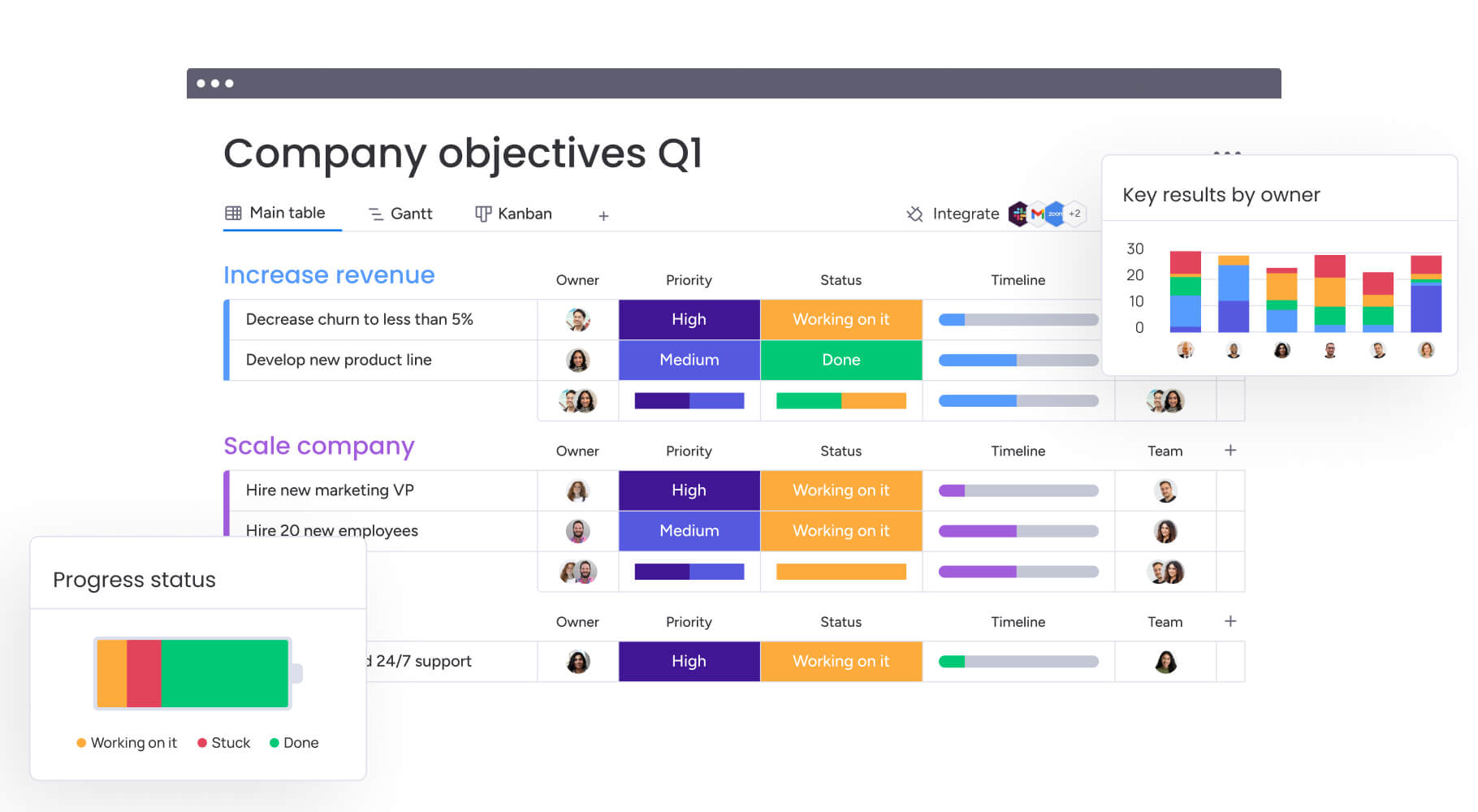
A success plan template helps your team define what success actually means, and how to achieve it in a structured, repeatable way. Rather than simply tracking tasks, it connects daily execution to measurable outcomes such as adoption, retention, revenue, or efficiency. This keeps effort focused on impact, not just activity.
While traditional plans often stop at delivery, success plans continue through implementation, adoption, and value realization. That shift matters. Research shows organizations with mature value-realization practices achieve 7 percentage points higher net revenue retention, proving that clear outcome tracking leads to stronger long-term performance.
The difference becomes clearer when you compare success plans with standard project plans. Although both play an important role, they answer very different questions.
| Aspect | Project plan | Success plan |
|---|---|---|
| Primary focus | Output (deliverables and tasks) | Outcome (value and impact) |
| Key driver | Timeline and budget constraints | Business goals and ROI |
| Success metric | "Did we finish on time?" | "Did we achieve the goal?" |
| Lifespan | Ends when the project launches | Continues through adoption and value realization |
| Stakeholder view | Execution team and project managers | Executives, customers, and strategy leaders |
Success plans vs project plans
Project plans keep you focused on execution. They map out timelines, assign resources, and make sure tasks get done as expected. A success plan, on the other hand, looks beyond delivery and asks whether the work actually created value.
So while a project plan answers “Did we finish on time?”, a success plan asks “Did we achieve the goal?”. That distinction matters, because hitting deadlines does not always mean you moved the business forward. When you separate the two, you can track both output and impact with clarity.

“monday.com has been a life-changer. It gives us transparency, accountability, and a centralized place to manage projects across the globe".
Kendra Seier | Project Manager
“monday.com is the link that holds our business together — connecting our support office and stores with the visibility to move fast, stay consistent, and understand the impact on revenue.”
Duncan McHugh | Chief Operations OfficerHow templates accelerate results
When your team works across departments, planning can quickly become messy and inconsistent. Templates solve that by giving everyone a shared structure, so you are not reinventing the process every time you start something new.
They also cut down planning time. Instead of building documents from scratch, you can focus on solving real problems and making decisions. At the same time, templates quietly bring in proven practices, so important elements like risk planning and communication are already covered.
Try monday.comWhy every team needs success plan templates
Without a clear structure, teams often rely on one-off approaches that are hard to repeat. That slows things down and makes it difficult to scale what works. A success plan template captures winning methods and makes them reusable across teams.
In addition, templates remove the “planning to plan” phase. You can jump straight into strategy and execution, which saves time and keeps momentum high. When teams across marketing, sales, and product align on the same approach, collaboration becomes much smoother.
Templates also build in accountability from day one by defining who owns what and how you’ll measure success. When accountability is baked into the foundation of the plan, it eliminates the “I thought you were handling that” conversations that derail progress.
When teams across marketing, sales, and product align on the same approach, collaboration becomes much smoother.
7 essential components of winning success plans
To make a success plan actually work, you need a clear structure. Each component plays a specific role, and together they ensure your plan drives real outcomes, not just activity.
- Objectives with measurable outcomes: Every plan begins with a definition of success that is specific, measurable, achievable, relevant, and time-bound (SMART), following proven goal setting methodologies. These objectives must connect directly to broader business goals.
- Stakeholder roles and accountability matrix: This defines who’s responsible, accountable, consulted, and informed (RACI) for every part of the plan — preventing bottlenecks by clarifying who makes decisions upfront.
- Success metrics and tracking methods: Your plan needs to spell out how you’ll measure progress — which KPIs matter and how you’ll track them.
- Three-horizon timeline approach: Strong plans cover three horizons: immediate execution (0-6 months), medium-term growth (6-18 months), and long-term vision (18+ months).
- Risk factors and mitigation strategies: Proactive planning spots obstacles early and sets up backup plans before you need them. Organizations that proactively manage transition risks are twice as likely to succeed as those who do not.
- Resource requirements and allocation: This section spells out what you’ll need: budget, people, technology, and time.
- Communication and feedback loops: This component establishes the cadence and format of updates, reviews, and feedback loops.
Learn more: Transition plan template
The success plan frameworks that transform goals into results
Every business challenge calls for a different way of planning. When you match the right framework to the problem, your team moves with more clarity and less friction. Each of these approaches focuses on outcomes, so you are not just completing work, you are actually seeing results.
Customer success roadmap framework
This framework is built for post sales teams that want to strengthen relationships and grow accounts over time. It helps you map the full customer journey, from onboarding to long term advocacy, so you can focus on where value is created.
To make it actionable, you define a few core elements:
- Onboarding milestones: Clear checkpoints that guide customers through early success
- Adoption metrics: Signals that show how deeply customers are using your product
- Quarterly business reviews: Structured conversations that keep alignment strong
As a result, you create consistency in how customers experience value, which leads to stronger retention and higher expansion revenue.
Project delivery success framework
When projects are complex and time sensitive, structure becomes essential. This framework helps you stay in control of scope, resources, and dependencies so nothing slips through the cracks.
With powerful solutions like monday.com, you can visualize timelines, map dependencies, and adjust plans in real time: that visibility makes it easier to keep teams aligned and avoid last minute surprises.
Strategic initiative framework
Big ideas often lose momentum when they are not translated into clear actions. This framework connects long term vision with day to day execution, so every team knows what they are working toward.
It typically includes:
- OKR alignment: Goals that connect company strategy to team level execution
- Cross functional tracking: Visibility into how different teams depend on each other
Because of this structure, teams stay aligned and progress becomes measurable at every level.
Digital transformation framework
Adopting new technology is rarely just about the technology itself. It also involves people, habits, and processes, which is why this framework balances technical rollout with change management.
To keep everything moving in sync, you focus on:
- Change management protocols: Clear steps to guide teams through transition
- Training schedules: Ongoing education that builds confidence and adoption
- Adoption KPIs: Metrics that show whether the new systems are actually being used
That way, you reduce resistance and ensure the transformation delivers real value instead of disruption.
Product launch excellence framework
Launching a product requires tight coordination across multiple teams. This framework brings product, marketing, and sales into one shared plan so nothing is disconnected.
Key components include:
- Go to market timelines: A clear sequence of launch activities
- Cross channel assets: Messaging and materials that stay consistent everywhere
- Sales training modules: Preparation that helps sales teams close effectively
As everything comes together, your launch feels organized and intentional, which increases your chances of strong early traction.
Team performance optimization framework
Strong teams do not just happen, they are built through continuous improvement. This framework helps you identify inefficiencies while also supporting individual growth.
To make progress visible, you focus on:
- Workflow audits: Identifying bottlenecks that slow teams down
- Skill gap analysis: Understanding where development is needed
- Capacity planning: Making sure workloads are realistic and balanced
Over time, this creates a healthier team environment where performance and well being improve together.
Strategic partnership framework
When you work with external partners, alignment is everything. This framework helps you define shared goals, responsibilities, and communication rhythms so both sides move in the same direction.
It usually includes:
- Joint value propositions: A clear understanding of what both parties bring
- Shared KPIs: Metrics that reflect mutual success
- Governance cadence: Regular meetings that keep decisions structured
Because expectations are clear, partnerships become more productive and easier to manage.
Try monday.com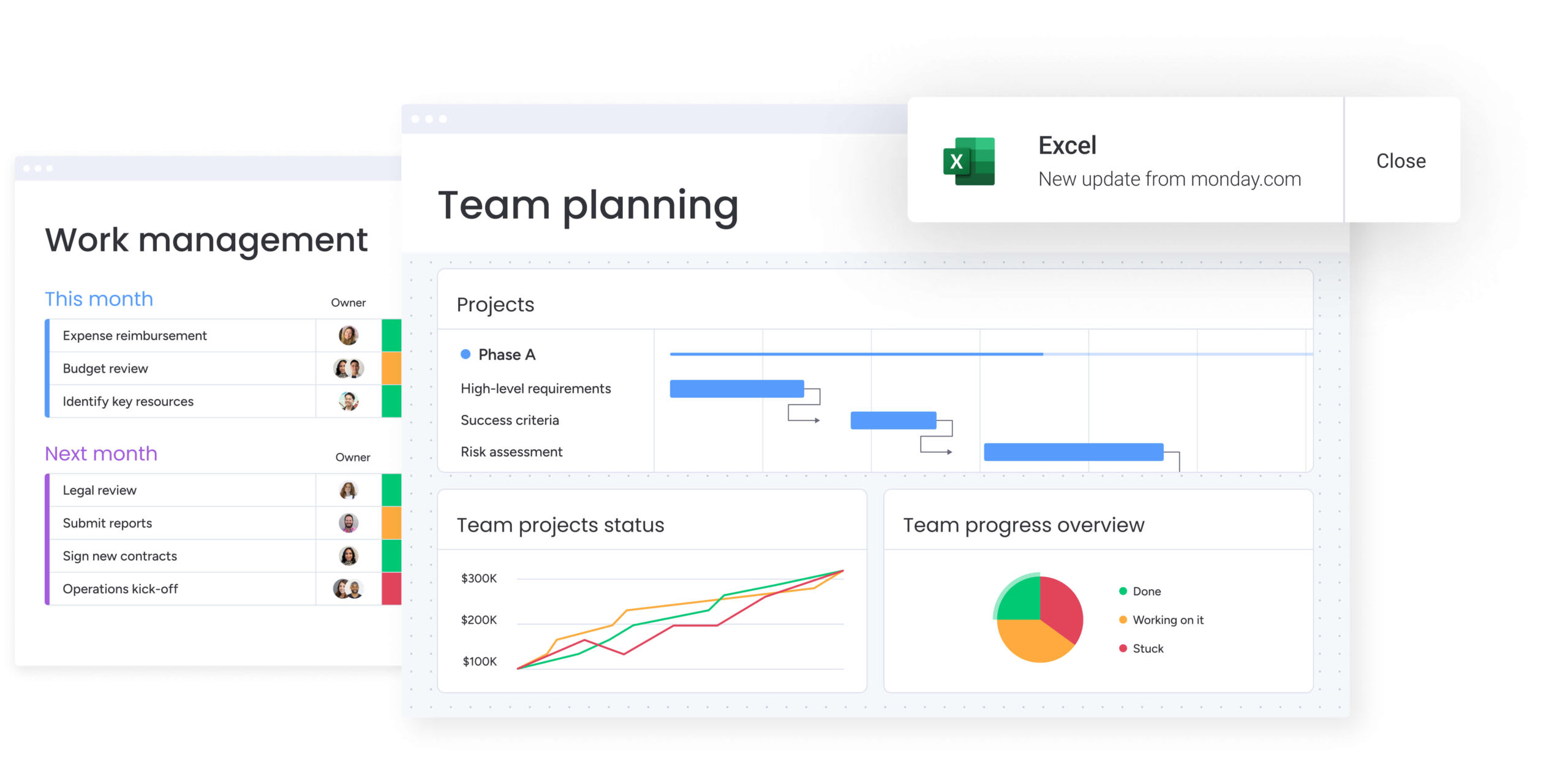
How to create your success plan in 5 steps
Creating a success plan means turning vague ideas into concrete steps. These five steps give you a plan that’s both strategic and doable. Each step builds on the last, creating a clear path to your goals.
A strong success plan turns broad goals into focused action. Each step below builds on the previous one, so you move from idea to execution without losing direction.
Step 1: define measurable objectives and outcomes
Everything starts with clarity. If your goal is vague, your results will be too. That is why you need specific, measurable outcomes that remove guesswork.
For instance, instead of saying improve customer service, you define a target like reducing response time by 20% within Q3. This gives your team a clear finish line and a way to track progress.
Step 2: map stakeholders and assign ownership
Once the goal is clear, you need to define who is responsible. Stakeholder mapping shows who is involved and how they are impacted, while ownership ensures accountability.
Without clear ownership, work often stalls because responsibility is shared but not defined. When each deliverable has one owner, progress becomes easier to manage.
Step 3: set success criteria and key milestones
Even with clear goals, teams can drift if success is not clearly defined. This step helps you set checkpoints that confirm whether you are on track.
Milestones act as early signals, so you can adjust direction before too much time or effort is lost. That way, you stay proactive instead of reactive.
Step 4: build a phased implementation roadmap
A roadmap breaks your plan into manageable phases. This makes complex work easier to execute and helps teams stay focused on immediate priorities.
At the same time, phased progress creates early wins, which builds momentum and keeps stakeholders engaged throughout the process.
Step 5: establish monitoring and iteration cycles
A success plan should evolve as you learn. Regular check ins, whether weekly or monthly, give you the chance to review data and adjust your approach.
Because of this, your plan stays relevant instead of becoming outdated, and your team can respond quickly to changes.
How to choose metrics that actually show progress
The metrics you track shape how your team behaves. If you only measure activity, you may stay busy without creating real impact. That is why strong success plans rely on a mix of indicators.
Leading indicators help you anticipate outcomes before they happen. For example, the number of demos booked can signal future revenue. By tracking these early signals, you can adjust before missing your targets.
At the same time, each framework requires its own metrics. Digital transformation focuses on adoption rates, while customer success tracks churn and expansion.
With monday.com, real time dashboards bring all this data into one place. Instead of spending time gathering information, you can focus on understanding trends and making better decisions.
Making success plans dynamic and adaptive
Static plans rarely survive real conditions. As priorities shift and new data comes in, your plan needs to adjust without losing direction. That is why modern success planning focuses on flexibility and continuous updates.
From static documents to living workflows
Traditional plans become outdated quickly because they do not reflect real time progress. In contrast, living workflows update as work moves forward, keeping everything current.
This approach ensures that decisions are based on what is actually happening, not what was planned weeks ago. As a result, your team stays aligned with reality.
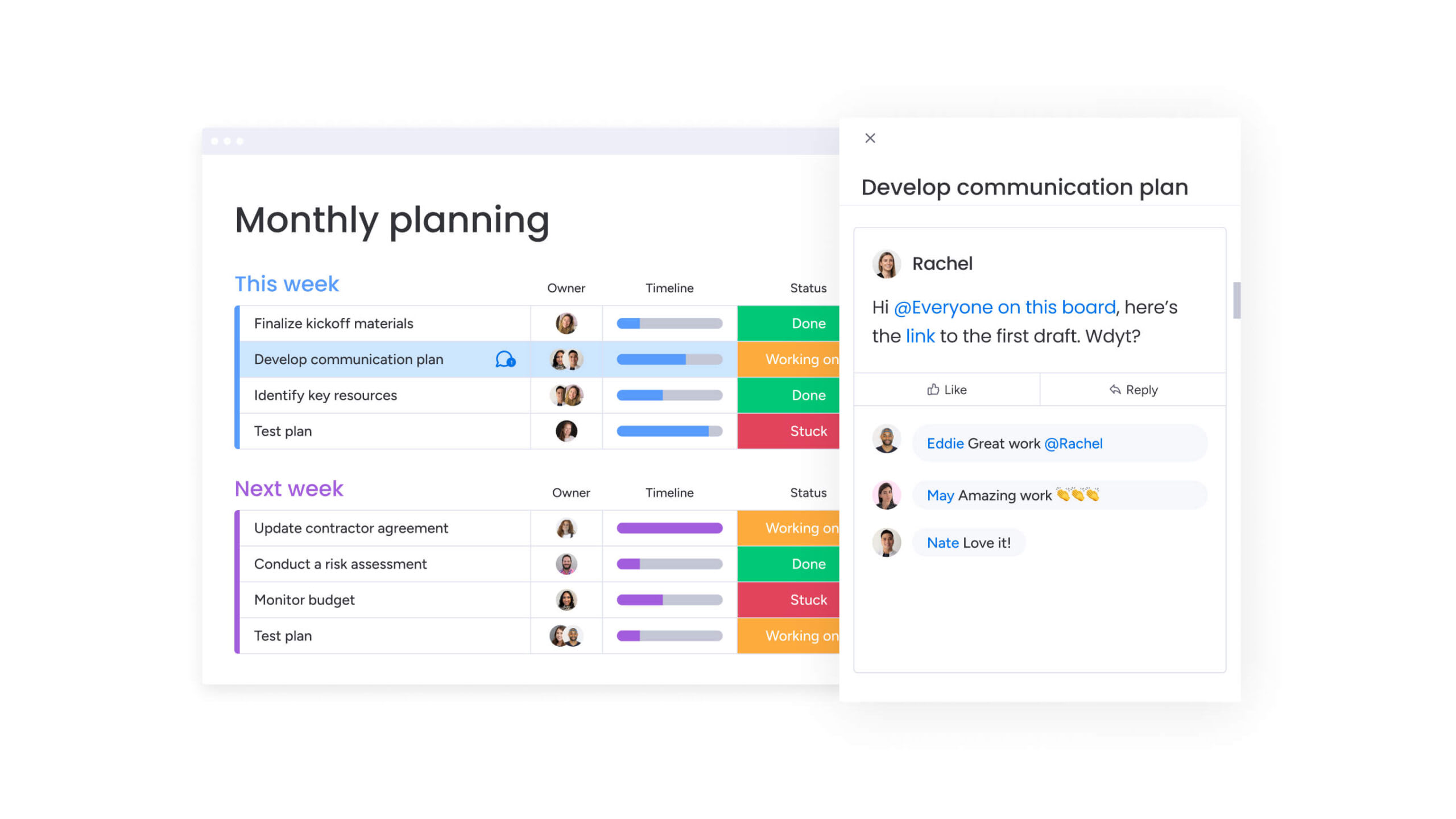
Real time collaboration across teams
Disconnected teams can slow everything down. When communication happens in separate channels, important details get lost.
A shared planning environment keeps conversations, updates, and files in one place. This makes collaboration smoother and ensures everyone is working from the same information.
AI powered insights and risk detection
Planning should not be reactive. With the help of AI, you can identify risks before they become problems.
By analyzing past data and current trends, potential delays or issues can be flagged early. That is why teams can act sooner, reduce disruptions, and keep progress on track.

Ready-to-use success plan templates
Starting with the right template makes planning faster and far more consistent. Instead of rebuilding your approach each time, you begin with a proven structure that keeps goals, ownership, and metrics clear from the start. Strong templates also stay flexible, so teams can adapt them to different initiatives without losing alignment.
The table below highlights common use cases and the template types that best support them, including typical success metrics and relative complexity. This helps you quickly identify the right starting point based on the scale and nature of your work.
| Template category | Ideal fororBest example | Key success metrics | Complexity |
|---|---|---|---|
| Operations and PMO excellence | Managing complex portfolios, resource allocation, and standardizing project delivery | On-time delivery rate, resource utilization %, budget variance | High |
| Marketing campaign success | Coordinating multi-channel launches, creative production, and performance tracking | CPA, ROAS, lead volume | Medium |
| HR transformation | Employee onboarding, internal policy rollouts, and culture initiatives | Time-to-productivity, eNPS, retention rate | Medium |
| Cross-functional initiative | Strategic projects involving multiple departments | Milestone completion, stakeholder alignment score, synergies realized | High |
When multiple teams are involved, clarity becomes even more important. A shared structure keeps priorities aligned, milestones visible, and collaboration running smoothly, so progress continues without unnecessary friction.
Scale success planning with monday.com
As organizations scale, success planning becomes harder to coordinate. More teams, more dependencies, and more data increase the risk of misalignment and slow decision making.
The powerful and advanced monday.com platform addresses these challenges by turning disconnected plans into a unified, continuously updated system that connects execution directly to strategic outcomes.
- Centralized planning and execution: All success plans, tasks, and milestones are managed in one shared workspace, which reduces fragmentation and ensures every team works from the same source of truth.
- Real time visibility across initiatives: Live dashboards and multiple views make it easier to track progress, identify bottlenecks early, and understand how individual efforts contribute to broader business goals.
- Structured ownership and accountability: Built in assignment, status tracking, and notifications ensure that every task has a clear owner, reducing delays and improving follow through across teams.
- Standardized yet flexible templates: Organizations can create reusable success plan templates that enforce best practices while still allowing teams to adapt them to specific projects or goals.
- Integrated resource and workload management: Teams can plan capacity, allocate resources effectively, and rebalance workloads based on real time demands, which helps prevent burnout and inefficiencies.
- Continuous monitoring and adaptive workflows: Plans evolve as data updates, enabling teams to adjust priorities, timelines, and strategies without losing alignment or momentum.
- AI supported insights and risk detection: Automated analysis highlights potential delays, stalled tasks, or performance gaps early, allowing teams to act before issues impact outcomes.
By bringing planning, execution, and monitoring into a single system, the intelligent work OS helps organizations scale success planning with clarity and control. Teams gain consistent processes, better alignment, and the ability to turn strategy into measurable results while staying responsive to change.
Try monday.comFrequently asked questions
How do you create a success plan template
Start by identifying patterns in your most successful projects. Then organize those elements into a repeatable structure that teams can adjust for new initiatives. This way, you keep what works while allowing flexibility.
What are the key components of an effective success plan
A strong plan includes clear objectives, defined metrics, stakeholder ownership, a structured timeline, and a risk strategy. Each piece works together to keep execution aligned with outcomes.
How is a success plan different from a project plan
A project plan focuses on tasks and deliverables. A success plan, on the other hand, focuses on results and long term value. That is why it connects daily work to bigger business goals.
You should include both leading and lagging indicators. For example, engagement metrics help predict success, while revenue or retention shows final outcomes.
You should include both leading and lagging indicators. For example, engagement metrics help predict success, while revenue or retention shows final outcomes.
Can success plan templates work for small teams
Yes, they work well for smaller teams because they provide structure without adding complexity. Teams can stay organized even without a dedicated project manager.
How does monday.com support success plan creation and tracking
monday.com helps you create structured plans, collaborate in real time, and track progress through dashboards. As a result, your plans stay active and aligned with your goals.

 Get started