


Project success often depends less on effort and more on clarity. When expectations remain loosely defined, small requests expand into unplanned work, timelines become difficult to control, and teams lose visibility into what was originally agreed. Over time, this creates tension between maintaining flexibility for clients and protecting delivery quality, margins, and capacity.
A scope of services template creates structure around that complexity. It defines what is included, what falls outside the agreement, and how changes are handled as needs evolve. With the right framework in place, teams can align deliverables, timelines, ownership, and expectations before work begins, reducing ambiguity throughout the engagement lifecycle.
This easy-to-follow post explains how to build a scope of services template that supports predictable delivery in 2026. It covers the core components every template should include, the differences between scope of services and scope of work, practical steps for structuring boundaries, and how standardized templates help teams manage change without disrupting timelines or profitability.
Key takeaways
- Clear scope boundaries prevent hidden work and protect margins: Defining inclusions and exclusions upfront reduces ambiguity and avoids unpaid effort later.
- Specific deliverables create accountability and reduce disputes: Measurable outputs and timelines ensure both sides agree on what “done” actually means.
- Structured change management turns extra requests into controlled processes: Formal approval workflows help manage scope expansion without disrupting timelines or profitability.
- Standardized templates improve consistency and planning accuracy: Repeatable frameworks support better resource allocation, faster onboarding, and predictable delivery outcomes.
- Connected workflows strengthen execution and visibility: Platforms like monday.com link scope to daily work, helping teams track progress, flag risks early, and stay aligned.
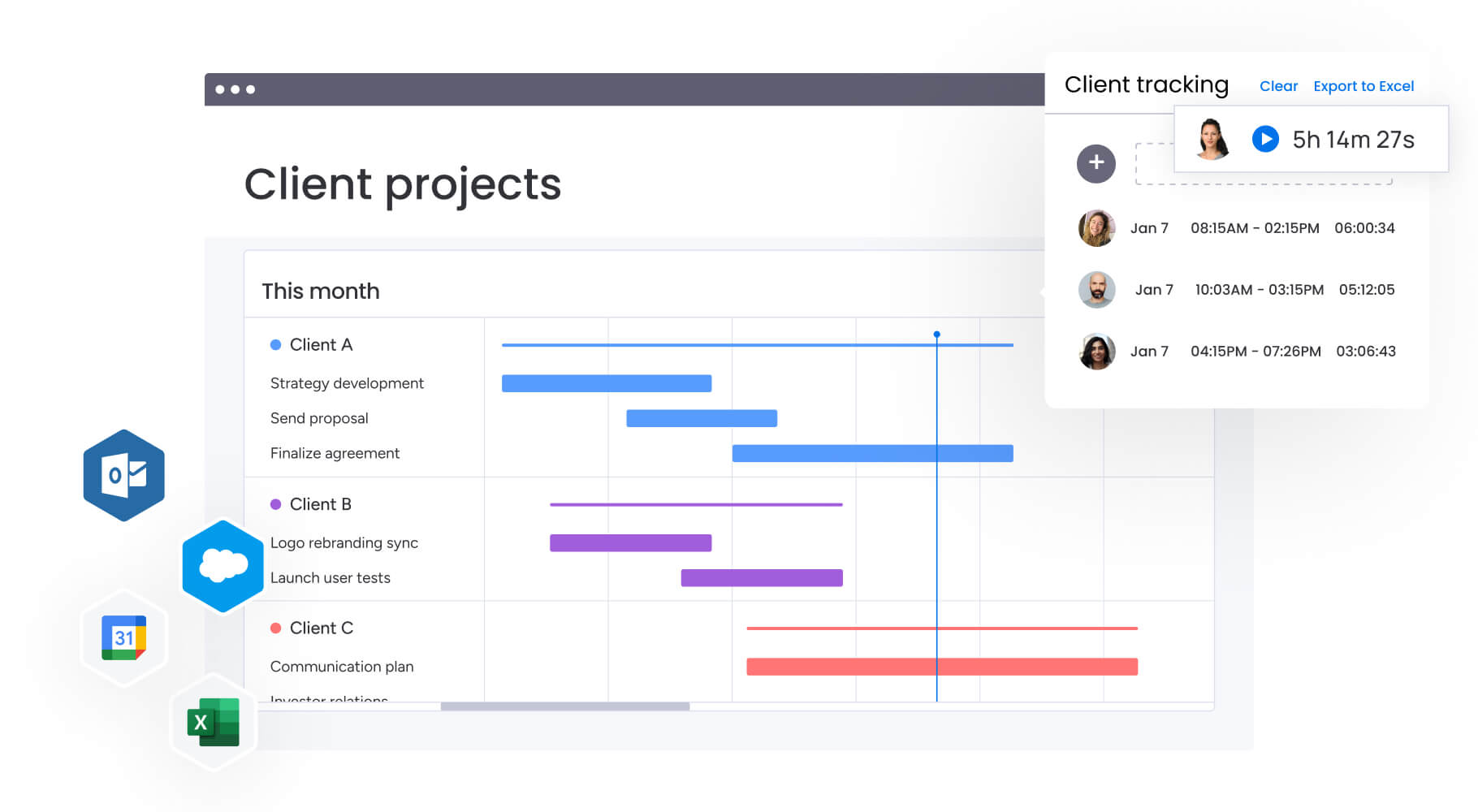
What is a scope of services template?
A scope of services template clearly outlines what you will deliver for a client and, just as importantly, what falls outside that agreement. Unlike broad contracts that focus on legal terms, this document gets into the details of activities, deliverables, and boundaries. As a result, it connects high-level strategy directly to daily execution and becomes a reliable reference point for both sides.
Additionally, organizations rely on these templates to prevent scope creep, where extra, unplanned work quietly eats into margins and timelines. For instance, an IT firm may include software updates but exclude hardware replacement. Without that clarity, clients may assume everything is covered, which can lead to friction and lost revenue.
Moreover, when your scope lives inside a work management platform, it becomes more than a static document. Every deliverable ties to a task, milestones trigger alerts, and logged hours align with the original agreement. Because of this, you gain real-time visibility into progress and can spot overruns early, before they become costly issues.
Scope of services vs scope of work
Although the terms are often used interchangeably, the scope of services and the scope of work serve different purposes. One defines the ongoing relationship and boundaries, while the other focuses on specific project outcomes.
A scope of services outlines availability, response times, and how work is handled over time. On the other hand, a scope of work is tied to a defined project with clear deliverables and deadlines. In many cases, both are used together to balance flexibility with structure.
The table below highlights how these two approaches differ across key areas:
| Aspect | Scope of services (SOS) | Scope of work (SOW) |
|---|---|---|
| Primary focus | Ongoing relationship and defined boundaries | Specific project outcomes and deliverables |
| Timeline | Continuous or long-term (annual retainer) | Finite start and end dates |
| Deliverables | Service availability, response times, general support | Concrete assets, builds, or reports |
| Flexibility | High; adapts to client needs within boundaries | Low; changes require formal change orders |
| Payment model | Retainer or subscription-based | Fixed price or milestone-based |
Key components of a scope of services document
A well-structured scope of services creates clarity from the start and keeps everyone aligned as work progresses. It reduces misunderstandings, protects revenue, and strengthens the working relationship. Not only that, but it also ensures expectations are documented before any work begins.
These are the essential components you should include:
- Service description and objectives: This part explains the purpose of the engagement and connects services to broader business goals. It also sets the tone for the relationship by defining what success looks like from the beginning.
- Deliverables and expected outcomes: Clarity matters here, so replace vague terms with measurable outputs. This ensures both sides can easily confirm whether work meets expectations.
- Project timeline and key milestones: Even long-term services need structure. Setting review dates, reporting cycles, and renewal points creates a steady rhythm and keeps everyone informed.
- Roles and responsibilities matrix: Defining ownership prevents confusion. A RACI-style structure ensures tasks are assigned clearly and nothing is left unaddressed.
- Payment terms and conditions: Outlining billing cycles, fees, and expense handling upfront avoids financial misunderstandings later. It also keeps administrative processes smooth and predictable.
- Change management procedures: This section explains how additional requests are handled. As a result, any extra work follows a clear, billable process instead of causing disputes.

7 steps to create a scope of services that works
A strong scope of services does more than list tasks. It sets expectations, defines limits, and becomes a working reference throughout the engagement. To keep it effective over time, it helps to follow a structured approach from the start.
The steps below guide you through building a scope that stays clear, practical, and easy to enforce:
Step 1: define service boundaries and exclusions
Start by explicitly stating what is not included. Listing exclusions, such as “weekend support” or “third-party licensing fees”, is as vital as listing inclusions.
This manages expectations immediately and empowers the team to say “no” or “that costs extra” confidently.
Step 2: detail specific deliverables
Break down broad services into measurable outputs. Instead of using vague terms like “website maintenance,” specify “four hours of content updates per month and daily security backups.”
Precise language creates a binary standard for completion that eliminates subjective disputes.
Step 3: establish timeline and milestones
Next, map out the engagement’s rhythm. Set concrete dates for onboarding, initial reviews, and quarterly strategy sessions to maintain momentum.
Furthermore, for recurring services, it is essential to establish a transparent schedule for performance reporting and contract renewal discussions.
Step 4: assign roles and accountability
Clearly identify the primary stakeholders and decision-makers on both sides of the engagement. Establishing a formal framework for ownership ensures that no critical task remains unassigned due to assumed responsibility or fragmented communication.
Moreover, defining exactly who holds the authority to approve deliverables or grant system access removes administrative friction and significantly accelerates the entire engagement lifecycle.
Step 5: set payment terms and schedule
Anchor payments to value delivery. Whether using a monthly retainer, subscription model, or milestone-based billing, being specific prevents cash-flow friction. Clearly define billing cycles, reimbursable expenses, and late-payment protocols.
Step 6: add quality standards and acceptance criteria
Use objective benchmarks to define what “done” looks like. Criteria such as “bugs resolved within 24 hours” or “designs provided in Figma format” remove subjectivity from performance reviews and ensure the client knows exactly what quality level to expect.
Step 7: include risk management and change procedures
Finally, prepare for the inevitable “one small addition.” Establish a formal protocol for handling scope expansion so new requests generate additional revenue rather than eroding margins. This step turns potential conflicts into routine, billable business transactions.
Try monday.comBenefits of using the scope of services templates
Scope of services templates are more than convenience; they help you standardize how work gets defined and delivered. Instead of starting from scratch each time, you build on proven structures that improve both speed and consistency.
In fact, government data shows that standardized approaches have driven over $111 billion in savings since 2026. That’s why more organizations rely on templates to improve efficiency and protect margins.
To understand their value, it helps to look at where they make the biggest impact:
1. Accelerates document creation
The benefit here is that teams stop writing contracts from scratch. Pre-approved legal language allows account managers to generate proposals in minutes, not days, reducing time-to-close for new deals.
2. Ensures consistent service delivery
Every client receives the same baseline of care and structure. Templates enforce standard operating procedures across distributed teams, ensuring clients in New York receive the same service structure as clients in London.
- Prevents scope creep and disputes: Defined boundaries protect profit margins. Studies show that owner-led delivery models with strong scope governance reduce change-order volumes by 30–40%, directly preventing the scope creep that erodes profitability. When a client asks for “just one small thing,” the document provides an objective reference point for additional billing.
- Improves client relationships: Transparency builds trust. Clients appreciate knowing exactly what they’re paying for and how the relationship will function. A defined scope eliminates anxiety about hidden costs or unmet expectations.
- Enables accurate project planning: Defined deliverables allow for precise resource allocation. Managers can forecast capacity needs based on signed scopes rather than vague promises, leading to more efficient staffing and higher team morale.

“monday.com has been a life-changer. It gives us transparency, accountability, and a centralized place to manage projects across the globe".
Kendra Seier | Project Manager
“monday.com is the link that holds our business together — connecting our support office and stores with the visibility to move fast, stay consistent, and understand the impact on revenue.”
Duncan McHugh | Chief Operations Officer4 types of scope of services templates by engagement type
Different business contexts require different emphases on liability, timing, and deliverables. The structure of your scope must adapt to the nature of the relationship. Understanding which template type fits your situation ensures you address the right priorities from the start.
Here are four common types and where they fit best:
- Client project templates: These focus on external revenue generation, prioritizing payment terms, intellectual property rights, and strict acceptance criteria to ensure the agency gets paid. Therefore, the language is often more formal to serve as a binding legal agreement.
- Vendor and supplier templates: These protect the organization when buying services, emphasizing service level agreements (SLAs), penalties for non-performance, and data security requirements. The goal is to ensure the vendor delivers the value promised and mitigates supply chain risks.
- Internal services templates: These manage cross-functional requests, such as IT or HR tickets, focusing on response times and resource availability rather than billing. Organizations using solutions like monday.com often digitize these into forms to triage requests and assign them to the correct internal team using automations.
- Cross-department service templates: These align shared goals between teams like sales and marketing, defining handoff points such as “Marketing delivers 50 leads; Sales contacts them within two hours.” These “internal SLAs” break down silos and ensure accountability across the revenue engine.
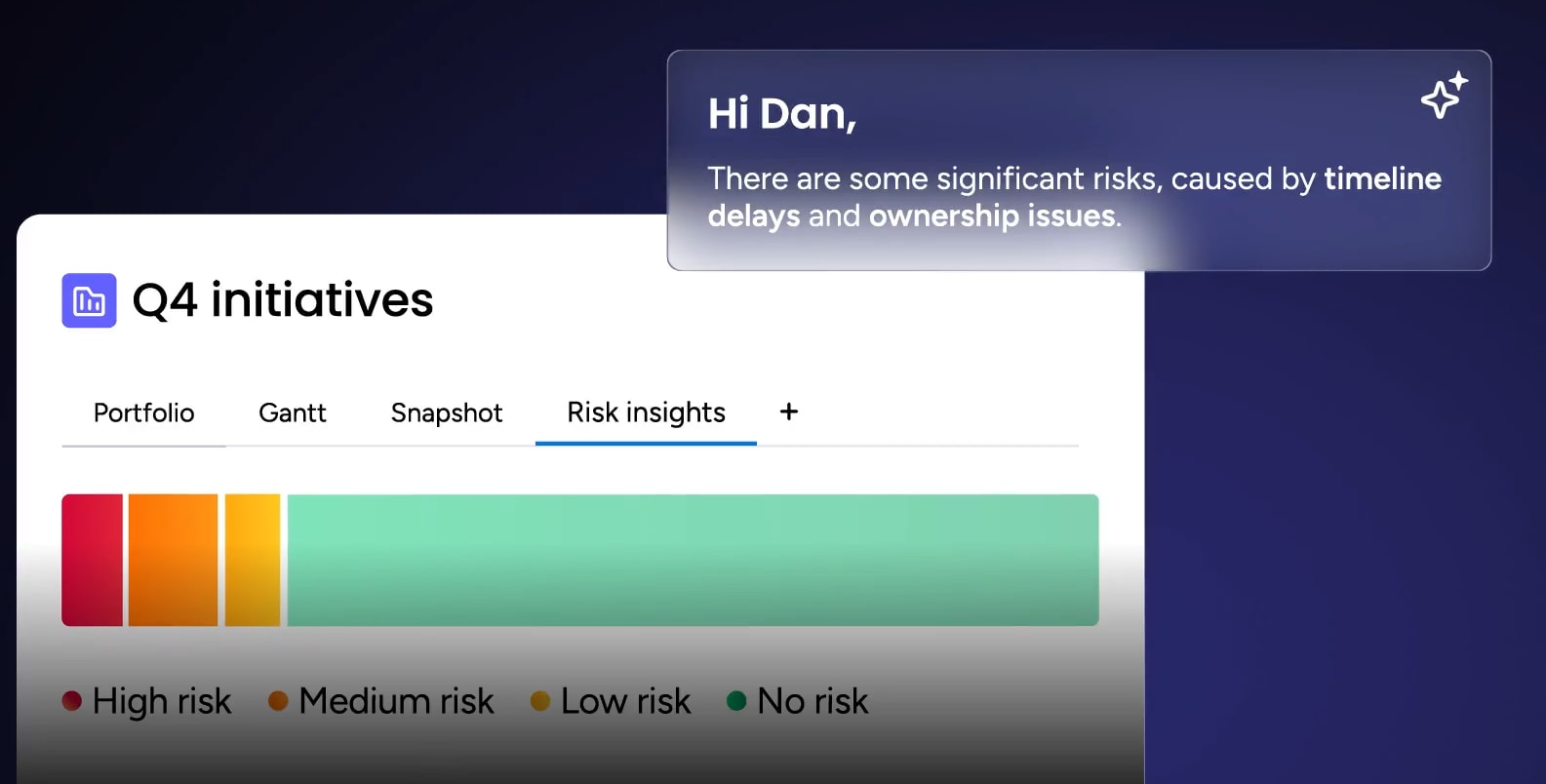
Turn static scope documents into dynamic service management
A static PDF quickly loses value once work begins. In contrast, dynamic scope management keeps everything visible and actionable throughout the engagement. This shift allows teams to track progress, spot risks early, and stay aligned without constant manual follow-ups.
The capabilities below show how organizations move from documents to execution:
- AI-powered scope analysis and optimization: Historical data helps estimate timelines and resources more accurately. So, you start with realistic commitments instead of guesswork.
- Real-time scope monitoring and alerts: Dashboards track actual effort against the agreed scope. As a result, managers receive alerts before budgets or timelines slip.
- Automated stakeholder collaboration: Approvals happen directly within workflows. Instead of chasing emails, stakeholders review and sign off in one place, creating a clear audit trail.
- Continuous service improvement tracking: Insights from completed work feed into future scopes. Over time, this helps refine pricing, timelines, and delivery expectations.
Success lies in execution, not just documentation.
5 best practices for scope of services success
Success lies in execution, not just documentation. Integrating these best practices ensures the scope of services remains a useful reference rather than a forgotten file. These proven approaches help teams maintain scope integrity while building stronger client relationships.
- Write with precision: Ambiguity is the enemy of execution. Use active verbs and specific numbers (“three revisions” not “unlimited changes”) to leave no room for interpretation.
- Include visual workflow diagrams: Text can be misinterpreted; visuals specify. Embedding process maps or Gantt charts directly into the scope document ensures everyone visualizes the same timeline and dependency structure.
- Implement version control systems: Using a centralized platform ensures everyone works from the latest agreement, preventing work on outdated specs.
- Schedule regular scope reviews: Business needs change. Quarterly reviews allow the scope to evolve with the relationship, turning a static contract into a living partnership that adapts to new market realities.
- Build in flexibility for changes: Rigid scopes break under pressure. Including a “flex bucket” of hours or a predefined rate card for extra work keeps projects moving without stalling for contract renegotiations every time a small change is needed.
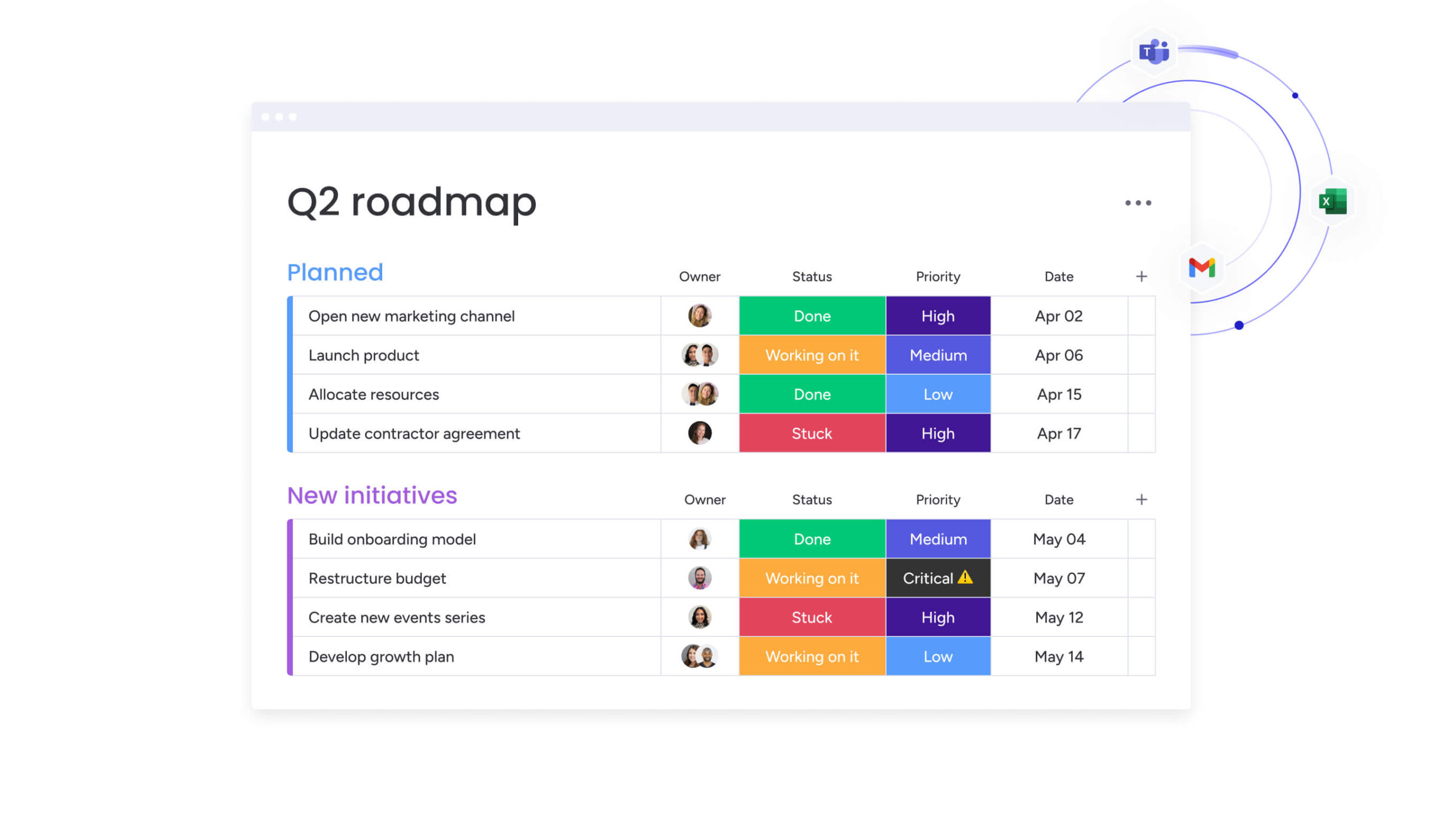
Scope of services examples you can adapt for your organization
Most organizations do not rely on a single scope format. The structure often changes depending on whether the work involves advisory services, recurring support, technical delivery, or creative output. Aligning the template with the engagement model helps ensure expectations remain clear as projects evolve.
Below are examples of how scope frameworks are typically adapted across different service environments.
- General business services template: Use this for standard service agreements, administrative work, operational support, or ongoing roles where you need flexibility. It sets a baseline for recurring work and availability without micromanaging daily tasks.
- Consulting services template: Focuses on advisory roles, defining strategic deliverables, engagement hours, and specific expertise provided, similar to a consulting proposal. It draws a clear line between giving advice and doing the work, protecting you from liability for business outcomes.
- Professional services template: Designed for agencies and firms that deliver concrete outputs: websites, campaigns, and reports. It covers project phases, what the client needs to provide, and clear acceptance criteria. Plus, it handles IP transfer and warranty periods.
- Technology services template: Perfect for software implementation, IT support, or development work, as it includes clauses for uptime, maintenance windows, and data security. It also spells out who handles hardware versus software.
- Marketing and creative services template: Use this to define campaign deliverables, revision rounds, creative rights, and approval workflows. Most importantly, it caps revision rounds so subjective creative work doesn’t spiral out of control.
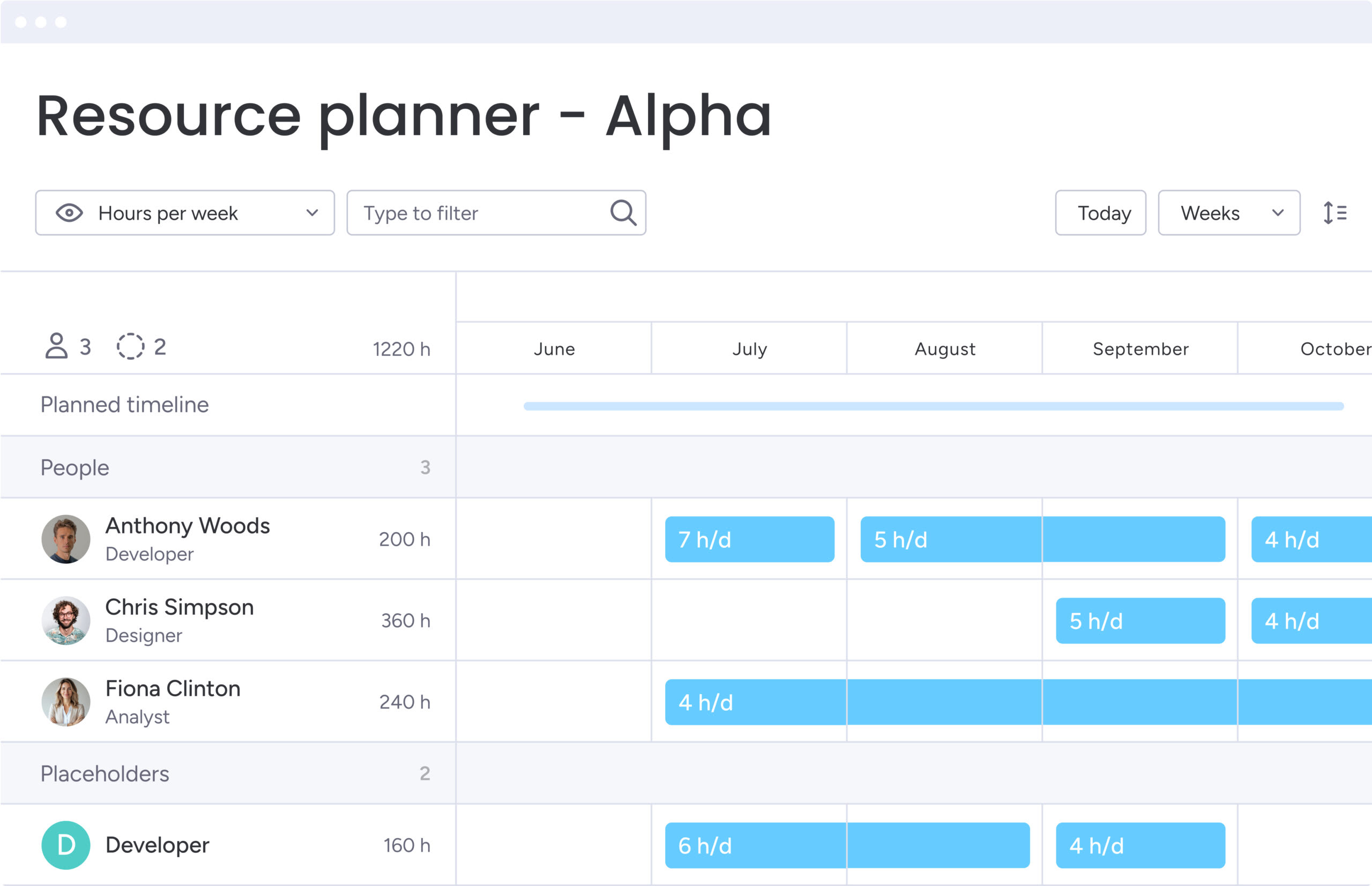
Manage your scope of services seamlessly with monday.com
With monday.com, scope evolves from a static document into an operating system for service delivery. It connects the promise of the contract to the reality of the work, ensuring alignment between what was sold and what is delivered.
| Aspect | Traditional templates | monday work management |
|---|---|---|
| Document updates | Manual version control via email | Real-time collaboration in WorkDocs |
| Change tracking | Disconnected email chains | Automated workflows and logs |
| Stakeholder visibility | Static, outdated reports | Live dashboards and status views |
| Risk identification | Reactive fire-fighting | AI-powered proactive alerts |
| Integration | Siloed in file storage | Unified with execution workflows |
Core capabilities that transform scope management include:
- Project management capabilities: Boards and Gantt charts visualize the scope, instantly revealing dependencies and bottlenecks that static text hides. Teams see exactly how scope changes impact the overall timeline.
- Automation features: Automations handle the administrative burden of scope changes, routing requests to the right approvers, and updating timelines instantly without manual data entry.
- Dashboard and reporting: Executives gain real-time visibility into scope adherence across the portfolio, identifying which accounts are profitable and which are suffering from creep.
- Collaboration capabilities: WorkDocs allows teams to co-edit the scope directly within the project workflow, while integrations with platforms like Slack keep communication centralized and context-aware.
- AI-powered enhancements: AI capabilities assist in summarizing long contracts and categorizing incoming requests to match them against agreed-upon deliverables.
This unification transforms service management from a cost center into a strategic advantage. Organizations deliver projects more predictably, maintain stronger client relationships through transparency, and protect margins by catching scope creep before it impacts the bottom line.
Use scope management as a strategic advantage
Even with a well-defined scope, things can slip once work begins. Requests come in through different channels, approvals get delayed, and visibility starts to fade. As a result, teams spend more time managing confusion than delivering outcomes.
That’s where monday.com helps you stay in control by connecting your scope directly to daily execution:
- Scope boundaries become unclear during execution: Tasks, deliverables, and timelines stay connected in one shared workspace, so nothing drifts beyond the agreed scope.
- Change requests create delays and confusion: Structured workflows route approvals instantly, ensuring every change is tracked, reviewed, and accounted for.
- Limited visibility into scope performance: Real-time dashboards show progress, resource usage, and potential overruns before they impact delivery.
- Manual tracking leads to missed risks: Automated alerts and AI-powered insights highlight delays, dependencies, and workload issues early.
- Disconnected teams slow down delivery: Centralized collaboration keeps communication, documentation, and execution aligned in one place.
Frequently asked questions
What is the main difference between scope of services and scope of work?
A scope of services defines an ongoing relationship and general boundaries, whereas a scope of work details specific tasks and outcomes for a finite project.
How do I handle changes to the scope after signing?
Changes require a formal change order process where both parties agree to the new requirements and any associated costs before work proceeds.
What format is the use case scope of services templates?
Digital, collaborative formats are superior to static PDFs as they allow for real-time updates, version control, and direct integration with project management workflows.
Can I customize a scope of services template for my industry?
Yes, templates serve as a baseline structure that should be tailored with industry-specific terminology, compliance requirements, and standard deliverables.
How detailed should my scope of services document be?
The document must be detailed enough to remove ambiguity regarding deliverables and exclusions, but concise enough to be readable and actionable.
When should I use a scope of services instead of a scope of work?
Use a scope of services for retainers, maintenance agreements, or long-term consulting relationships where exact activities may fluctuate, but the service level remains constant.

 Get started