


Imagine a SaaS marketing engine where every channel works in concert, campaigns build on each other, and proving ROI is a seamless part of your workflow. While many teams struggle with disconnected efforts, a unified strategy allows you to capture market share with coordinated, high-impact initiatives that deliver consistent results.
SaaS marketing strategy requires a fundamentally different approach than traditional marketing. Instead of focusing on one-time purchases, successful SaaS companies build systems that acquire customers cost-effectively, activate them quickly, and retain them long enough to generate profitable lifetime value. This shift demands coordinated efforts across content, paid channels, product-led growth, and customer success that work together rather than compete for resources.
This guide covers a plethora of proven tactics that create scalable SaaS marketing engines, from content strategies that drive pipeline to AI-powered operations that optimize performance automatically. You’ll discover how to select the right channels for your market, measure what matters for sustainable growth, and build marketing operations that scale with your business using platforms that connect strategy to execution.
Key takeaways
- Build for lifetime value, not quick wins: successful SaaS marketing prioritizes retention, expansion, and activation alongside acquisition to maintain a healthy 3:1 LTV:CAC ratio.
- Anchor every tactic to a clear ICP and value proposition: defining who you serve and why you win determines which channels, messages, and campaigns will actually scale.
- Orchestrate inbound and outbound across the full funnel: content and SEO create durable demand while outbound, ABM, and paid channels accelerate pipeline at key growth stages.
- Connect strategy to execution with monday work management: centralize campaigns, align cross-functional teams, and use AI-powered insights to keep SaaS growth initiatives visible, measurable, and on track.
- Measure performance across the entire customer lifecycle: track CAC, activation rates, churn, net revenue retention, and expansion revenue to optimize for sustainable growth, not vanity metrics.
What is SaaS marketing?
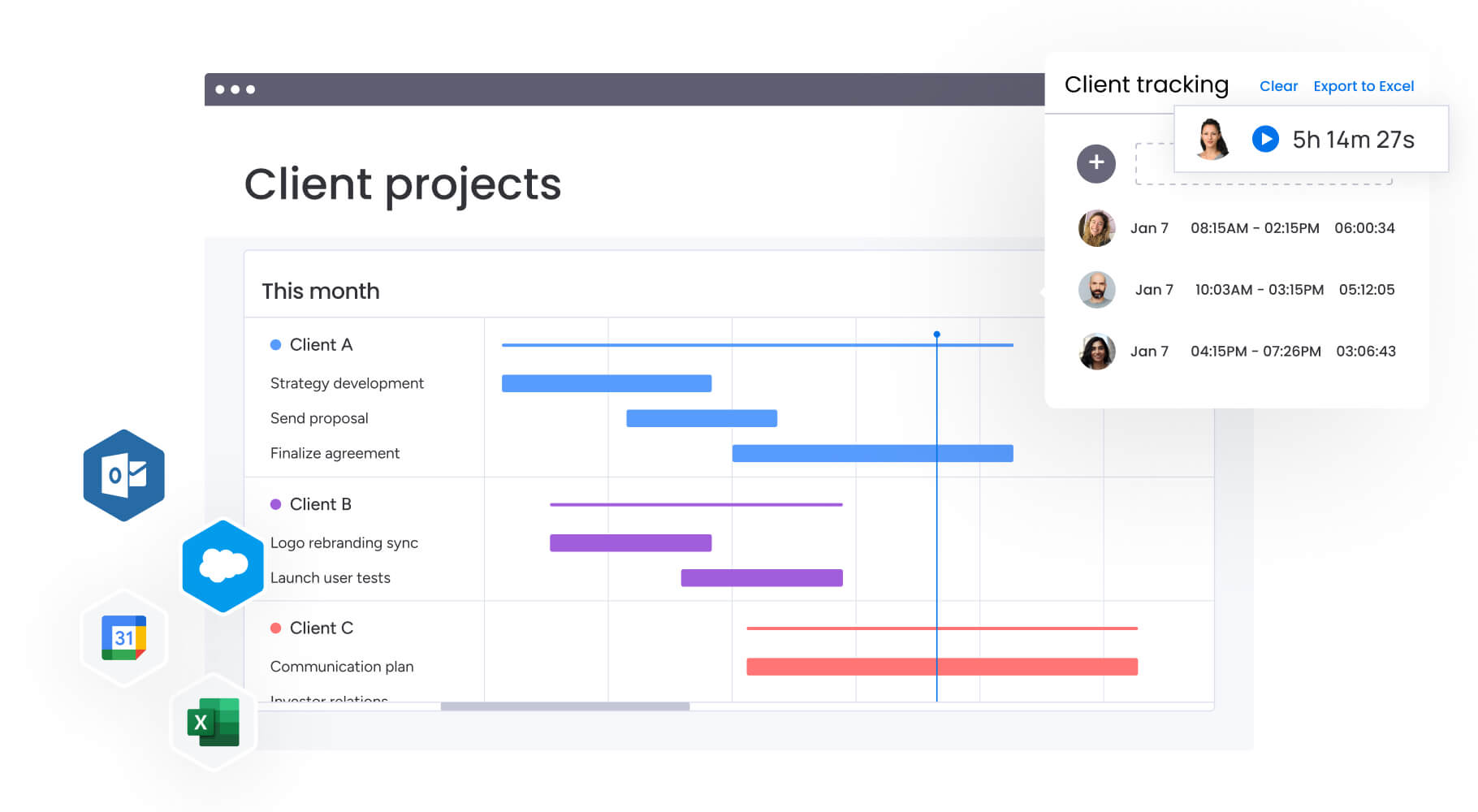
On a very basic level, SaaS marketing promotes subscription software by putting lifetime value ahead of one-time sales — a fundamental shift that changes everything about how marketing works. While traditional marketers chase individual purchases, SaaS teams view acquisition as just the beginning — the first step in building relationships that drive monthly or annual recurring revenue.
This shift rewrites the marketing playbook from the ground up. Traditional businesses measure success by units sold or revenue generated at the point of sale. SaaS companies track customer acquisition cost (CAC) against lifetime value (LTV), maintaining an LTV: CAC ratio of at least 3:1 for healthy growth, which requires alignment between marketing efforts and sales strategy.
Monthly recurring revenue (MRR) becomes the heartbeat metric. A SaaS company with 1,000 customers paying $100 per month generates $100,000 in MRR. Growth comes from three sources:
- New customer acquisition: expanding market reach and converting prospects.
- Revenue expansion: upselling and cross-selling existing customers.
- Churn prevention: retaining customers to maximize lifetime value.
Why SaaS marketing requires a unique strategic approach
Four unique challenges require a new approach, making traditional marketing playbooks ineffective for SaaS. Each one forces us to rethink how we design, execute, and measure our marketing efforts.
Retention drives sustainable revenue growth
The SaaS profit equation is strikingly simple: keep customers longer than it takes to earn back what you spent acquiring them. Spend $3,000 to win a $100/month customer? They need to stick around for 30 months just to break even.
Net revenue retention (NRR) measures how much revenue a cohort generates over time, including expansions and churn. Top-quartile B2B SaaS companies post 113% NRR vs 98% for bottom quartile, demonstrating how retention-powered growth separates market leaders. Marketing’s role extends beyond the initial sale to:
- Customer marketing programs: ongoing engagement that drives adoption.
- Educational content: resources that help customers extract maximum value.
- Community building: platforms that foster user connections and advocacy.
Competition from free alternatives
The SaaS marketplace contains dozens of viable alternatives in every category, many offering generous free tiers. Low switching costs compound this challenge since many SaaS products can be replaced within days.
Successful SaaS companies differentiate through:
- Ecosystem depth: comprehensive integrations and workflows.
- Vertical specialization: industry-specific features and expertise.
- Service quality: superior support and reliability.
- Brand positioning: value propositions that transcend features.
Complex sales cycles with multiple stakeholders
B2B SaaS purchases involve multiple stakeholders with different priorities. End users evaluate ease of use, IT assesses security and integrations, finance scrutinizes costs, and leadership considers strategic alignment.
Marketing must address this complexity through:
- Multi-threaded content strategies: different materials for each stakeholder type.
- Consensus-building resources: ROI calculators and comparison guides.
- Long-term nurturing: educational sequences that guide evaluation.
- Sales enablement: materials that address objections and accelerate decisions.
Service quality matters as much as features
SaaS customers buy ongoing access to a service that must perform reliably and evolve continuously. A single outage or support failure can trigger churn regardless of product strength. Service quality becomes a marketing differentiator influencing recommendations, reviews, and advocacy.
In fact, eight in ten B2B decision‑makers will actively look for a new vendor if performance guarantees aren’t offered, underscoring that reliability and outcomes drive vendor selection as much as features.
Try monday work managementBuild your SaaS marketing strategy framework
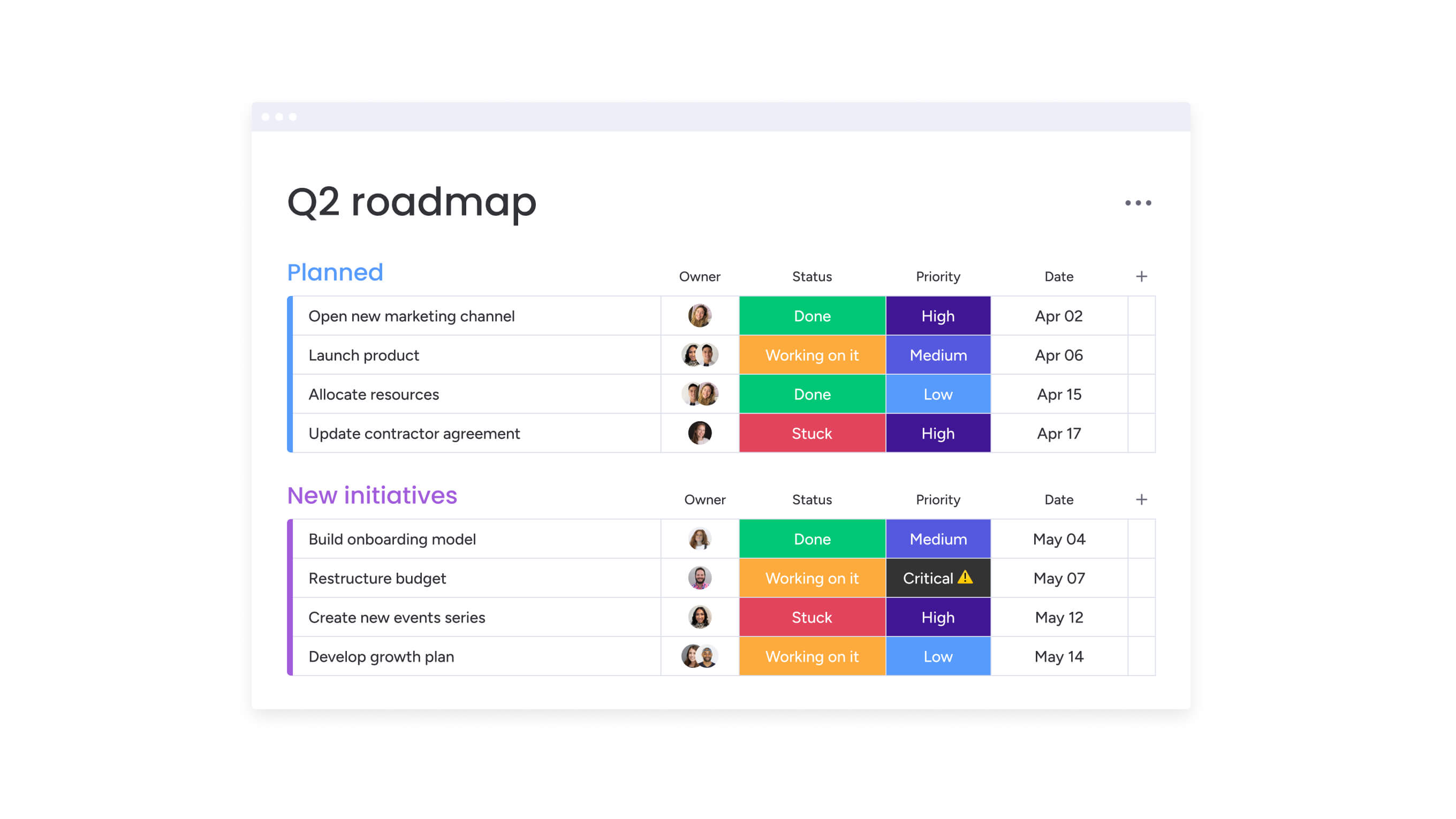
Your strategy foundation makes or breaks your tactics. Before jumping into execution, nail these three core elements that will align your team and create a growth engine that actually works.
Step 1: define your ideal customer profile
Your ideal customer profile (ICP) pinpoints exactly who gets the most value from your product — and, not coincidentally, who brings you the most lifetime revenue. Building a comprehensive ICP requires analyzing multiple data categories that predict success and retention:
Data category What to capture Why it matters
Firmographic data Company size, industry, geography, growth stage Identifies organizations with budget and need
Technographic information Current tech stack, integration requirements, digital maturity Reveals implementation fit and expansion potential
Behavioral patterns Buying process, decision timeline, stakeholder involvement Shapes campaign timing and content strategy
Pain points and triggers Specific challenges, business events creating urgency Drives messaging and positioning
The most effective ICPs include negative indicators that predict poor fit or high churn risk. Validate and refine continuously using data from closed-won deals and churned accounts.
Step 2: craft your unique value proposition
A strong value proposition articulates specific, measurable outcomes customers achieve and serves as the foundation for your overall marketing strategy. It answers why customers should choose you in terms that resonate with their priorities and business objectives.
Effective SaaS value propositions follow this structure: for [target customer] who [faces specific challenge], our [product category] provides [key benefit] by [unique approach]. Testing requires gathering feedback through:
- A/B testing: compare messaging variations across landing pages.
- Conversion analysis: track which propositions drive highest engagement.
- Win-loss interviews: understand decision factors from prospects directly.
Step 3: design your go-to-market motion
Go-to-market strategy determines how products reach customers through market entry, pricing, sales methodology, and channels, requiring comprehensive marketing strategies across multiple touchpoints.
The right motion depends on product complexity, deal size, and target market characteristics:
- Product-led growth: works when products demonstrate value quickly through self-service trials.
- Sales-led growth: suits complex products with longer implementation cycles.
- Hybrid approaches: combine both, offering self-service for smaller customers while providing sales support for enterprise deals.
15 proven SaaS marketing tactics for scalable growth
These tactics build upon your strategic framework to create a comprehensive marketing system. Content marketing feeds SEO, which generates leads for email nurturing, converting trial users who provide data for account-based campaigns.
1. Content marketing that drives pipeline
Content that drives pipeline zeros in on high-intent keywords — the searches people make when they’re actively looking to buy. Strategic content mapping addresses different buyer journey stages:
- Bottom-of-funnel content: comparison and alternative pages capturing prospects evaluating solutions.
- Middle-of-funnel content: guides and templates helping prospects understand problems deeply.
- Top-of-funnel content: industry analysis and educational resources building awareness.
2. SEO strategy for SaaS buyer journeys
SaaS SEO captures high-intent search traffic from prospects researching solutions. Product-led content targets keywords like “[category] for [specific application]” while comparison pages capture prospects considering multiple options. Building domain authority requires:
- Consistent content production: regular publishing schedules that demonstrate expertise.
- Strategic link building: earning mentions from industry publications and partners.
- Technical optimization: fast loading speeds and mobile-friendly experiences.
3. Strategic PPC campaigns
While your SEO is gaining traction (and it will take time), PPC campaigns deliver immediate visibility to keep your pipeline flowing. Campaign types include:
- Account-based advertising: target specific companies through LinkedIn and display networks.
- Retargeting campaigns: re-engage prospects who visited without converting.
- Landing page optimization: impact ROI through message match, minimal forms, and social proof.
4. Account-based marketing for enterprise
With ABM, you stop treating enterprise prospects as part of a crowd. Instead, you create campaigns tailored specifically to each company’s challenges — treating them as markets of one. Account selection starts with identifying targets matching ICP criteria and showing buying signals. Personalization extends beyond names to:
- Custom content: industry-specific case studies and use cases.
- Multi-channel orchestration: coordinated outreach across email, social, and direct mail.
- Stakeholder mapping: identifying and engaging all decision influencers.
5. Free trial optimization
You’ve got three-five days — that’s it. Most trials either convert or abandon within that window, so your onboarding needs to showcase value fast. Activation metrics identify actions correlating with conversion, allowing optimization toward those behaviors. Onboarding sequences guide users through:
- In-app guidance: progressive disclosure of features based on user goals.
- Triggered emails: contextual messages based on trial behavior.
- Personal outreach: human touchpoints for high-value trial users.
6. Email marketing automation
Don’t sleep on email — it’s still delivering some of the highest ROI in SaaS, especially when you leverage smart segmentation and behavior-based triggers. Behavioral triggers send emails based on actions like trial activation, feature adoption, or engagement decline. Lead scoring prioritizes outreach based on:
- Engagement signals: email opens, content downloads, website visits.
- Fit indicators: company size, industry, technology stack.
- Buying intent: pricing page visits, demo requests, competitor research.
7. B2B social media engagement
B2B social builds awareness and thought leadership rather than direct conversions, requiring a structured social media plan to maintain consistency and measure impact. Platform strategies include:
- LinkedIn: reach decision-makers through long-form posts and employee content.
- Twitter: engage tech-savvy audiences through real-time conversations.
- YouTube: build trust through tutorials and customer success stories.
8. Influencer and affiliate partnerships
Industry influencers provide credibility and reach that accelerates awareness. Partnerships work best when aligned with authentic expertise. Affiliate programs offer recurring commissions for referred customers, aligning incentives with retention through:
- Performance-based compensation: rewards tied to customer success metrics.
- Tiered commission structures: higher rates for larger deals or longer commitments.
- Co-marketing opportunities: joint content creation and event participation.
9. Review platform optimization
Review platforms like Gtwo and Capterra influence buying decisions significantly. Generating positive reviews requires:
- Strategic timing: request reviews after success milestones or positive interactions.
- Simplified submission: direct links and clear instructions for leaving reviews.
- Targeted outreach: focus on satisfied customers with strong relationships.
Responding to negative reviews demonstrates commitment to customer success and continuous improvement.
10. Technology partnerships
Partnerships with complementary providers create mutual value through integration and co-marketing. Co-marketing opportunities include:
- Joint webinars: shared expertise addressing common customer challenges.
- Co-branded content: guides and resources highlighting integrated solutions.
- Referral agreements: formal programs incentivizing mutual recommendations.
Partner enablement ensures effective representation through training and collateral.
11. Event marketing and webinars
Events create high-value engagement opportunities that build relationships and generate leads. Effective webinars address specific challenges with actionable frameworks and position products as one approach among many. Follow-up determines ROI through:
- Presentation materials: slides and recordings for continued engagement.
- Segmented outreach: personalized follow-up based on attendance and engagement.
- Nurture sequences: educational content series for non-converting attendees.
12. Video content for storytelling
Video demonstrates SaaS products effectively, making complex features understandable. Content types include:
- Product demos: realistic scenarios highlighting key features and workflows.
- Customer testimonials: authentic social proof with specific outcomes and metrics.
- Tutorial videos: educational content that helps customers extract value, improving activation and retention.
13. Referral programs
Referral programs turn satisfied customers into acquisition channels by incentivizing recommendations. Successful programs make referring easy, provide valuable incentives, and create mutual benefit. Program mechanics include:
- Two-sided incentives: rewards for both referrer and new customer.
- Tiered rewards: increasing benefits for multiple successful referrals.
- Non-monetary benefits: early feature access, exclusive events, recognition.
14. Conversion rate optimization
CRO systematically improves conversion at every customer journey stage. Small improvements compound significantly across the funnel. Key optimization points include:
- Homepage messaging: clear value propositions and compelling calls-to-action.
- Pricing page optimization: addressing objections and highlighting value.
- Trial signup forms: reducing friction while capturing essential information.
- Upgrade prompts: contextual offers based on usage patterns and feature adoption.
Qualitative research through user testing and interviews reveals why conversions happen or fail.
15. Proactive churn prevention
Churn prevention starts before customers consider canceling. Customer health scoring aggregates engagement signals, support interactions, and usage patterns to predict risk. Early warning signals include:
- Declining usage: reduced login frequency or feature adoption.
- Increased support tickets: growing frustration or implementation challenges.
- Organizational changes: new leadership or budget constraints.
Win-back campaigns target recently churned customers who often reconsider after experiencing alternatives.
Try monday work managementHow to select the right SaaS marketing channels
Channel selection determines resource allocation, balancing immediate results against long-term advantages. The optimal mix depends on audience behavior, product complexity, budget, and organizational capabilities to execute effectively.
Balance inbound and outbound strategies
Inbound marketing builds sustainable acquisition engines generating leads with minimal ongoing cost. These channels require upfront investment but create compound returns over time. Outbound provides immediate results and precise targeting but requires continuous investment to maintain momentum.
Early-stage companies rely on outbound for initial traction while building inbound assets, requiring a coordinated sales strategy that aligns with marketing investments:
- Growth-stage companies: shift toward inbound as content matures and organic channels scale.
- Enterprise-focused companies: maintain significant outbound investment for account-based strategies targeting high-value prospects.
Adapt channels for market segments
Channel effectiveness varies across segments based on buying behavior and decision-making processes:
Market segment Primary channels Key characteristics
SMB customers Search, content marketing, social media Self-service research and evaluation
Mid-market customers Multi-channel approach, webinars, email Longer evaluation with multiple touchpoints
Enterprise customers Account-based marketing, events, direct sales Relationship-driven with complex stakeholder groups
Industry differences can also influence channel selection. Technology companies engage on Twitter and developer communities. healthcare organizations prioritize compliance-focused content and industry conferences.
Further, geographic expansion requires adapting to local search behavior, social preferences, and buying processes.
How to transform SaaS marketing with AI-powered operations
AI isn’t replacing your marketing team — it’s supercharging them by handling the grunt work, spotting patterns humans miss, and making true 1:1 personalization possible at scale.
AI‑powered next‑best‑experience programs raise customer satisfaction 15–20%, increase revenue 5–8%, and cut cost‑to‑serve 20–30%, providing measurable improvements across key SaaS marketing outcomes.
Rather than replacing marketers, AI augments capabilities, handling operational work so teams focus on strategy and creativity.
Step 1: automate workflows with AI blocks
AI automation handles routine tasks that previously required manual effort. Content categorization systems automatically tag and organize marketing assets. Lead scoring models analyze prospect behavior to identify high-quality leads without manual review.
Marketing teams leveraging platforms like monday work management can implement AI Blocks without technical expertise, while integrating with CRM for SaaS to maintain unified customer data across marketing and sales. These components handle work like:
- Meeting note summarization: extract key decisions and action items automatically.
- Status update generation: create progress reports from project data.
- Campaign performance analysis: identify trends and optimization opportunities.
Teams chain multiple AI Blocks together to create sophisticated workflows that categorize leads, route them to campaigns, and trigger personalized sequences based on engagement.
Step 2: deploy digital workers for execution
AI-powered digital workers handle complex marketing work autonomously, performing analysis that previously required human judgment. These workers analyze campaign performance, identify optimization opportunities, and provide strategic recommendations.
The Campaign Manager digital worker monitors performance across channels, identifies underperforming campaigns, and recommends optimizations. It analyzes metrics continuously, alerting teams to issues or opportunities in real-time.
Step 3: enable hyper-personalization
AI enables personalization beyond basic segmentation by analyzing individual behavior patterns. Applications include:
- Dynamic email content: messages that change based on recipient characteristics and preferences.
- Website experiences: landing pages highlighting relevant case studies and features.
- Campaign targeting: identifying prospects similar to high-value customers for lookalike audiences.
Measuring and optimizing SaaS marketing performance
The gap between top-performing SaaS companies and everyone else? The winners make decisions with data, not gut feelings. Measurement frameworks connect marketing activities to business outcomes, enabling optimization, performance improvement, and demonstrating contribution to revenue growth.
Track essential metrics across the customer lifecycle
SaaS marketing metrics organize into four lifecycle categories that provide comprehensive visibility into performance:
Category Key metrics What it measures Target benchmark
Acquisition Website traffic, MQL volume, CAC, conversion rates How effectively marketing attracts and converts prospects CAC < one/three LTV
Activation Trial signup rate, time to value, activation rate How quickly users experience product value 40%+ trial activation
Retention Churn rate, NRR, customer health score How well customers are retained and expanded
Revenue MRR, ARR, expansion revenue, pipeline velocity Overall business growth and marketing contribution 3:1 LTV: CAC ratio
Leading indicators predict future performance, enabling proactive optimization. Website traffic forecasts lead volume, trial activation predicts conversion, and health scores anticipate retention challenges.
Create real-time dashboards for visibility
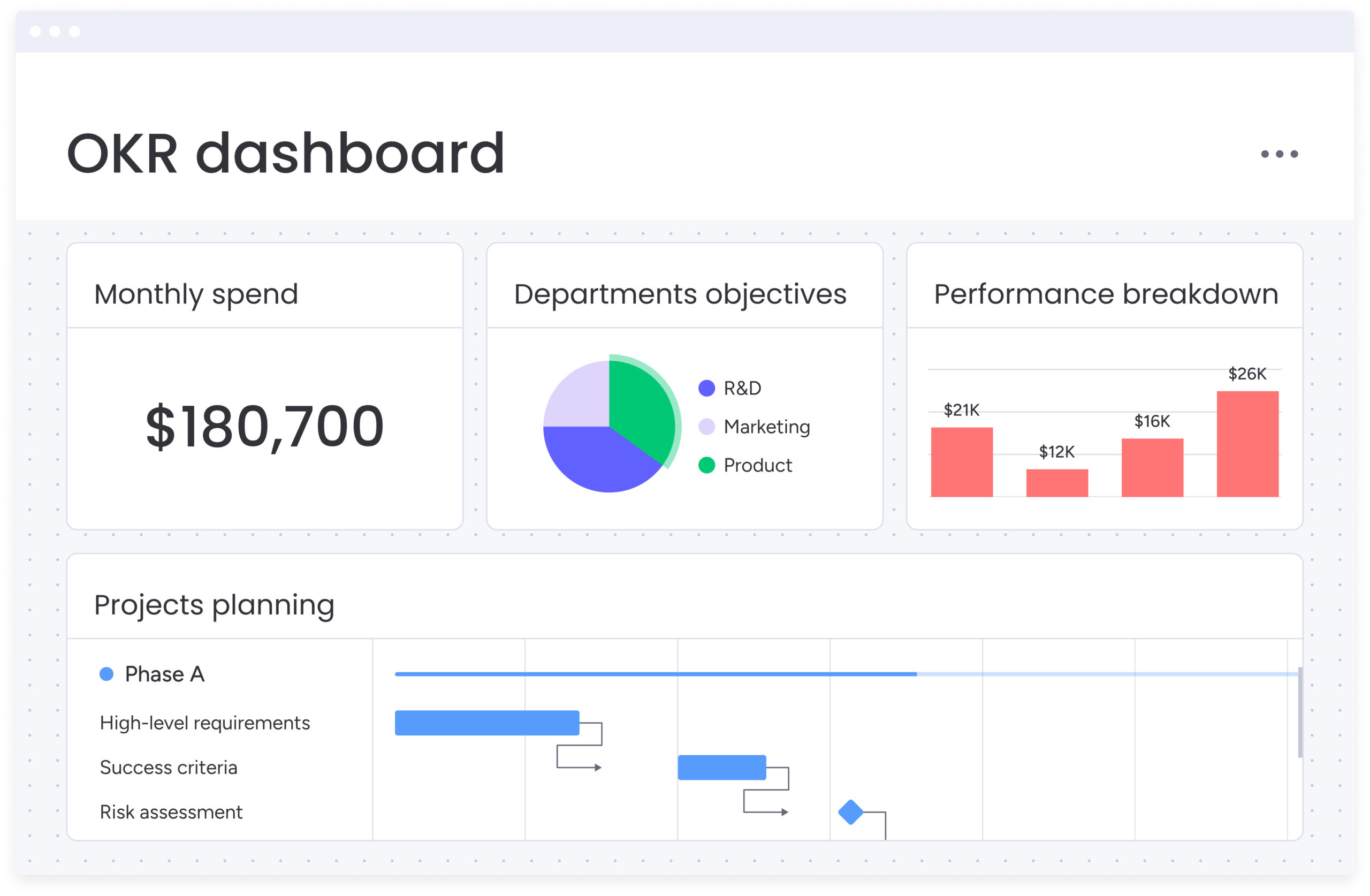
Marketing dashboards provide visibility into performance across channels, campaigns, and lifecycle stages. Executive dashboards show high-level metrics while operational dashboards provide detailed data for optimization.
Teams using monday work management create boards for each campaign, tracking deliverables, deadlines, and dependencies while leveraging SaaS app analytics to measure performance across all initiatives. combining:
- Website analytics: traffic sources, conversion rates, and user behavior.
- Advertising performance: cost per click, impression share, and quality scores.
- Email metrics: open rates, click-through rates, and unsubscribe trends.
- CRM data: lead progression, sales velocity, and win rates.
Real-time updates ensure current information, and customizable views let each team member focus on relevant metrics.
Drive continuous improvement through testing
Performance analysis identifies optimization opportunities and informs strategic decisions. Regular review cycles create structured improvement processes that compound results over time.
Testing frameworks establish:
- Clear hypotheses: specific predictions about what changes will improve performance.
- Success metrics: quantifiable measures that determine test outcomes.
- Significance requirements: statistical thresholds for confident decision-making.
Scale your SaaS marketing operations effectively
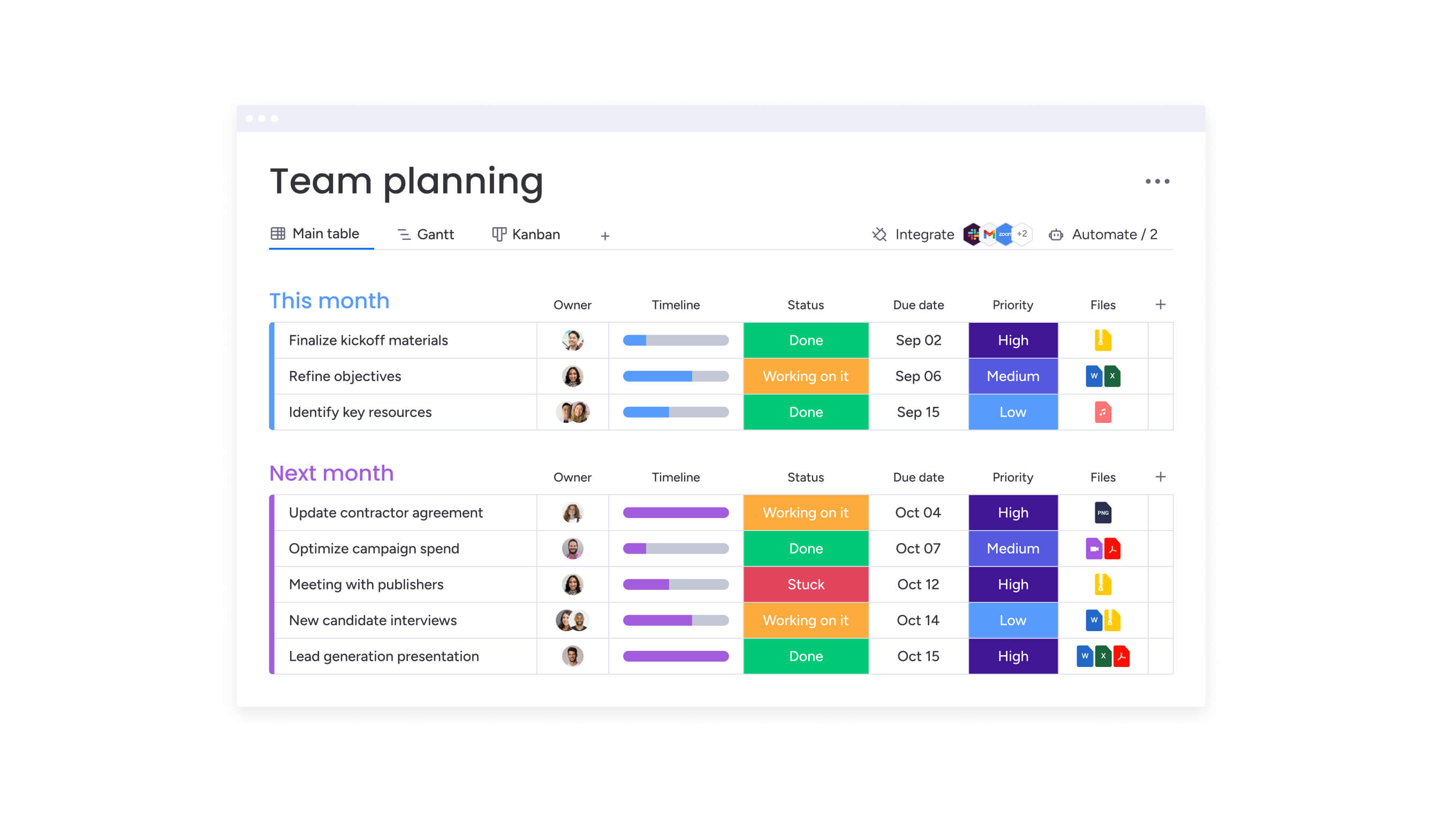
Even the strongest marketing strategy will stall without the operational backbone to support it. As SaaS teams scale, success depends on turning high-level plans into coordinated daily execution — without losing speed, visibility, or cross-functional alignment.
Centralized workspaces make campaign execution far more manageable by keeping strategy and delivery in sync. Teams using monday work management plan and run campaigns in one place, with clear ownership, timelines, and dependencies — so nothing slips through the cracks as volume increases.
This operational foundation supports scale in a few critical ways:
- Campaign coordination at scale: track deliverables, deadlines, and approvals across multiple campaigns while automated workflows move work forward without manual follow-ups.
- Portfolio-level visibility: leadership teams see all campaigns, channels, and initiatives in a single view, making it easy to understand priorities, performance, and resource allocation.
- Smarter resource management: visual workload views reveal capacity constraints early, helping teams balance initiatives, prevent burnout, and sequence work realistically.
- Goal-driven execution: campaigns stay tied to strategic objectives, with real-time progress tracking and alerts when performance drifts off course.
What sets monday work management apart is flexibility. Instead of forcing SaaS teams into rigid processes, the platform adapts to how teams actually work — while still providing the structure, automation, and visibility needed to scale a modern marketing strategy with confidence.
The content in this article is provided for informational purposes only and, to the best of monday.com’s knowledge, the information provided in this article is accurate and up-to-date at the time of publication. That said, monday.com encourages readers to verify all information directly.
Frequently asked questions
What is the difference between SaaS marketing and traditional marketing?
SaaS marketing differs from traditional marketing by focusing on customer lifetime value and retention rather than one-time transactions. SaaS businesses prioritize metrics like monthly recurring revenue, churn rate, and net revenue retention because profitability depends on keeping customers longer than acquisition cost recovery time.
How much budget should I allocate to SaaS marketing?
SaaS companies typically allocate 20-30% of revenue to marketing during growth stages, with early-stage companies sometimes investing 40-50% to build initial traction. Budget allocation should maintain customer acquisition cost below one-third of customer lifetime value.
Which marketing channel works best for B2B SaaS companies?
Channel effectiveness depends on target audience and product characteristics, but content marketing and SEO provide foundational channels for most B2B SaaS companies as part of comprehensive marketing strategies that drive sustainable growth. These inbound channels generate qualified leads with lower ongoing costs compared to paid advertising.
How long before I see results from SaaS marketing efforts?
Content marketing and SEO typically show meaningful results after six-twelve months of consistent effort, while paid advertising and email marketing can generate leads within weeks. Building sustainable growth engines takes 12-18 months of coordinated effort across multiple channels.
What is a healthy CAC to LTV ratio for SaaS businesses?
A healthy SaaS business maintains customer lifetime value at least three times higher than customer acquisition cost. This 3:1 LTV: CAC ratio ensures sufficient margin to cover operating costs, invest in growth, and generate profit.
How do I align marketing and sales teams effectively?
Marketing and sales alignment requires shared revenue goals, agreed-upon lead qualification criteria, regular communication through joint planning sessions, and unified processes for lead handoff and follow-up, all supported by a cohesive sales strategy. Service level agreements defining marketing's lead generation commitments and sales' follow-up responsibilities create mutual accountability.

 Get started