


Resource managers sit at the center of modern execution. As organizations scale, projects multiply, priorities compete, and capacity becomes harder to see. Without clear oversight, teams drift into overload, idle time, or costly misalignment.
A resource manager brings structure to that complexity. The role ensures the right people with the right skills are assigned to the right initiatives at the right time. It connects strategic goals to actual capacity, balancing business ambition with human sustainability.
In this guide, you’ll learn what a resource manager does, the skills that define high performers, and why the role has become essential for organizations focused on growth, efficiency, and long-term performance in 2026.
Key takeaways
- Move from reactive to predictive planning: Resource managers use data and forecasting to prevent bottlenecks and avoid project delays.
- Align skills with business opportunities: Matching people to projects based on expertise and development goals improves outcomes and retention.
- Enhance cross-departmental collaboration: Shared visibility into team capacity helps break down silos and streamline resource allocation.
- Leverage modern work platforms for strategic impact: Platforms such as monday.com enable real-time visualization of team capacity and AI-assisted assignment suggestions.
- Treat resource management as a long-term strategic function: Effective resource managers balance portfolio-wide capacity, prioritize high-impact work, and ensure the organization scales efficiently.
What is a resource manager?
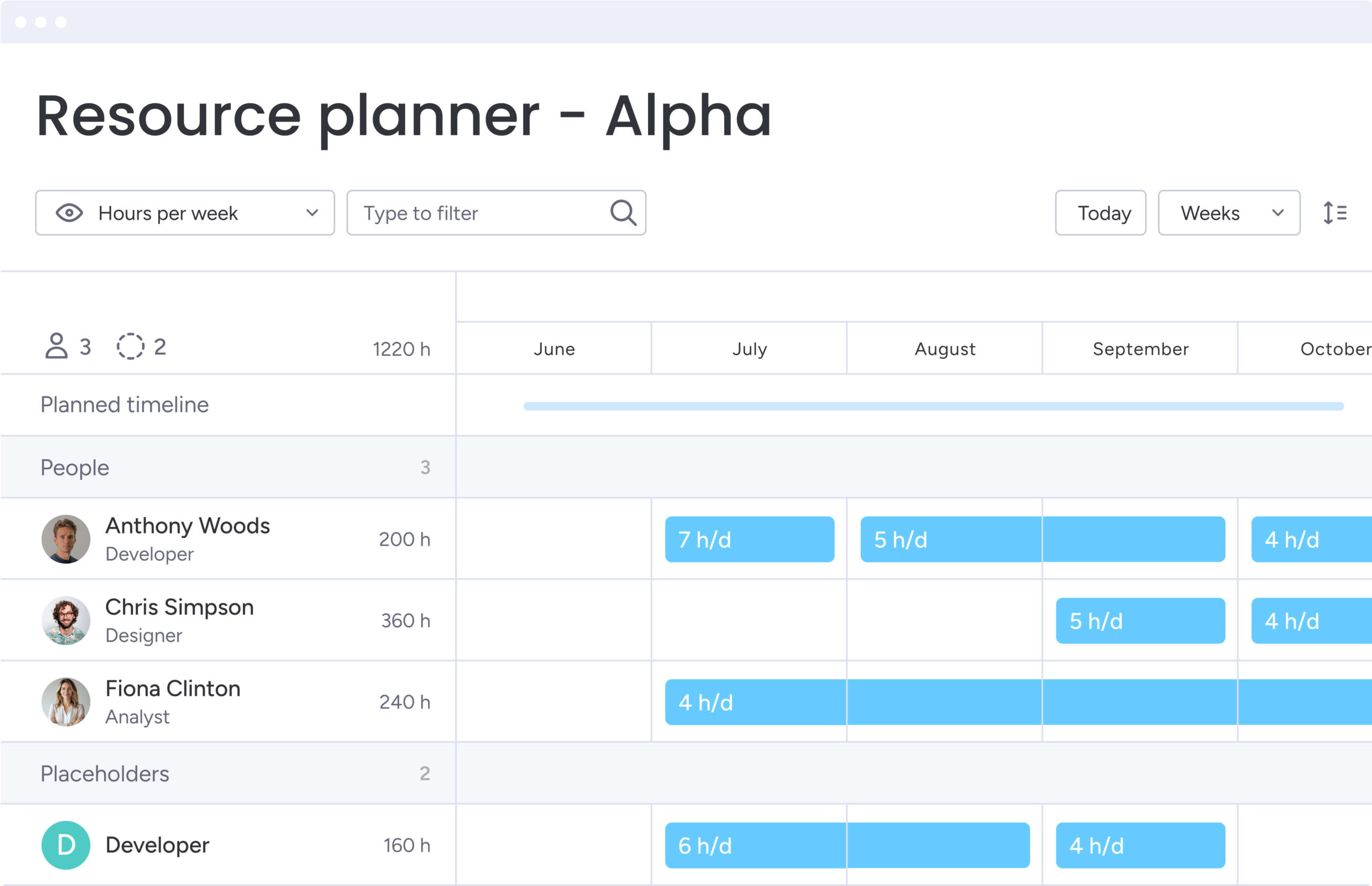
A resource manager is the person who figures out who should work on what, and when, across your entire organization. Project managers deliver specific initiatives. Resource managers look at the big picture matching available people and skills with what needs to get done, without overloading anyone.
Resource managers also act as the bridge between high-level business strategy and on-the-ground execution, utilizing capacity planning to translate quarterly revenue goals and product roadmaps into concrete staffing requirements.
Defining the strategic business role
Resource management only works when it connects business priorities to real capacity. It’s not about filling slots on a schedule. It’s about making smart decisions that keep teams productive without burning them out.
The table below outlines the three core levers behind that responsibility — optimizing how talent is used, forecasting future capacity, and assigning work based on actual skills. When these three are managed well, projects move faster and teams stay balanced.
| Concept | Definition | Business impact |
|---|---|---|
| Resource optimization | Ensuring talent is utilized efficiently across the portfolio, minimizing bench time while preventing overutilization | Reduces wasted salary costs and prevents burnout-related turnover |
| Capacity planning | Forecasting future availability to determine if the organization can take on new work or needs to hire | Enables accurate client commitments and proactive hiring decisions |
| Skills-based allocation | Assigning work based on competency and development goals rather than just job title or availability | Improves project outcomes and accelerates employee growth |
Imagine landing three AI projects at once. Instead of defaulting to expensive contractors, a resource manager spots the gap early and invests in upskilling the existing data team. Costs stay under control, delivery continues smoothly, and the organization builds long-term expertise instead of short-term fixes.
Beyond traditional resource allocation
Old-school resource management treated people like interchangeable parts. Modern resource management doesn’t work that way. Today’s resource managers factor in career goals, team dynamics, and how people actually work best.
This shift turns resource management from logistics into a retention strategy. When an employee is consistently matched with projects that align with their growth trajectory, satisfaction rises and turnover drops. In today’s world this is hugely important, especially given that there were 3.2 million voluntary quits in November 2025 alone.
A resource manager notices a senior designer stuck on maintenance work and moves them to a high-visibility innovation project. Problem solved, talent retained.
The evolution: from reactive to predictive management
Managing resources with static spreadsheets and constant firefighting? That’s over. Old methods only fix problems after they’ve already caused delays. Modern resource management uses data to spot conflicts weeks or months before they happen.
Platforms like monday.com facilitate this transition by centralizing data, allowing resource managers to visualize capacity trends in real time and optimize resource allocation decisions. Instead of asking “who is free today?”, the question becomes “who will be free in six weeks, and what skills will they have acquired by then?”
Resource managers also act as the bridge between high-level business strategy and on-the-ground execution, utilizing capacity planning to translate quarterly revenue goals and product roadmaps into concrete staffing requirements.
What are the responsibilities of a resource manager?
Every day, resource managers analyze data, negotiate priorities, and optimize schedules. Their job is vital, keeping the business running smoothly without burning out the people doing the work.
Here’s what resource managers actually do, and the value they create:
Core responsibilities that drive business value
- Strategic planning and demand forecasting: Resource managers review the sales pipeline and product roadmap to anticipate upcoming work. They also consult stakeholders and analyze historical project data to determine how future initiatives will affect team capacity.
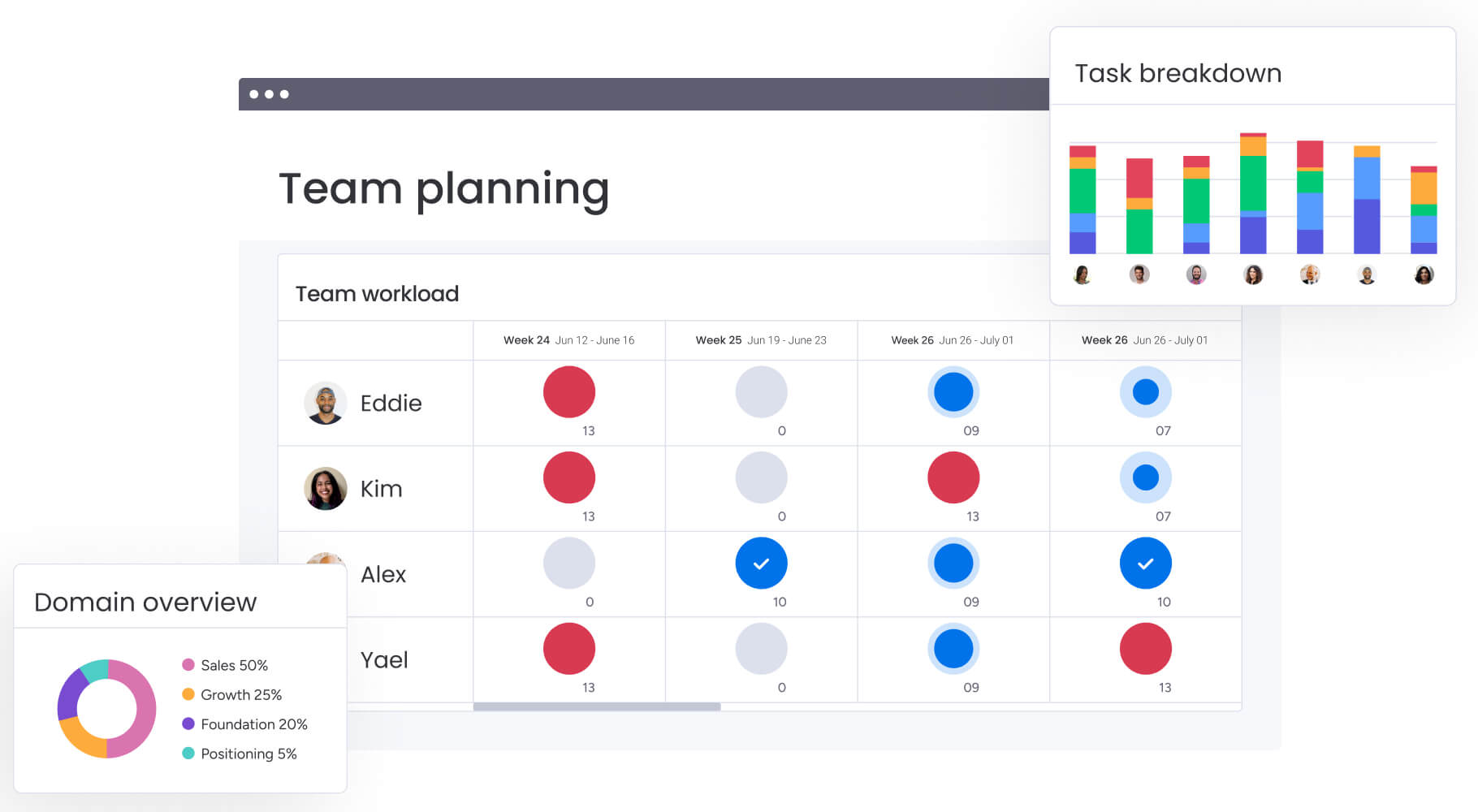
- Capacity planning and workload optimization: Managers continuously assess team and individual bandwidth to identify constraints through workload optimization practices. Using workload visualization and resource management platforms, they can see that the creative team is fully booked for Q3 while the copy team has availability, adjusting project timelines or scope accordingly.
- Skills-based resource matching: Resource managers track team capabilities and match projects to employees based on both skill sets and career development goals. Assigning a junior developer to a complex project alongside a senior mentor, for instance, addresses immediate resourcing needs while advancing long-term organizational expertise.
- Cross-departmental coordination: By facilitating collaboration between departments, resource managers prevent talent hoarding. When marketing requires engineering support for a launch, the resource manager works with the engineering lead to free capacity. This approach ensures that critical talent is available for the most strategic initiatives.
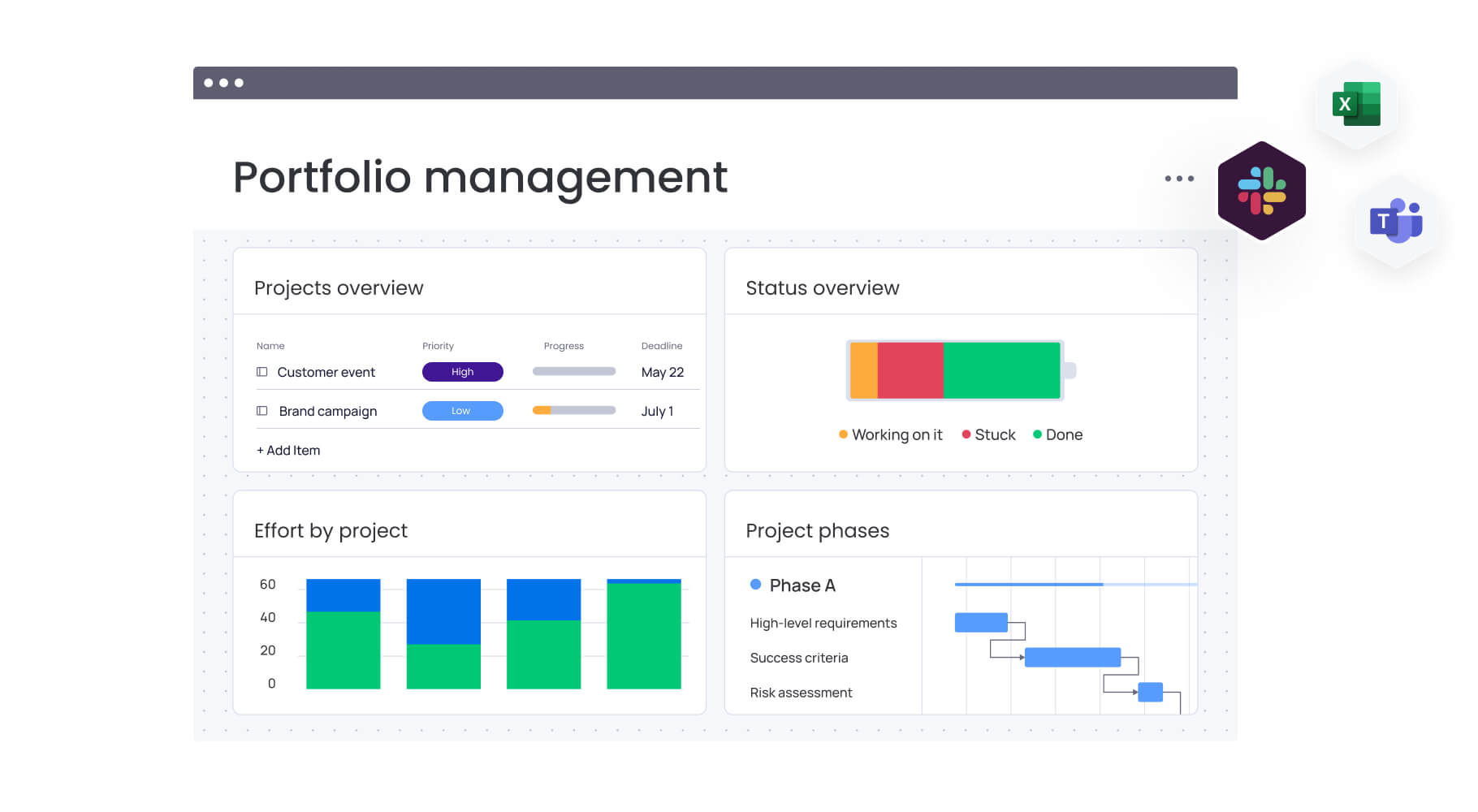
- Real-time performance monitoring: Resource managers track utilization and project progress continuously, intervening early to mitigate risks. Dashboards highlight projects exceeding expected timelines, enabling managers to rebalance teams or adjust scopes before delays escalate.
How resource managers differ from project managers and HR
Resource managers don’t work in isolation. They sit alongside project managers and HR, but the focus of each role is different. When those boundaries blur, priorities clash and accountability suffers.
Resource manager vs project manager
The comparison below highlights how the two roles measure success and where their responsibilities diverge.
| Feature | Resource manager | Project manager |
|---|---|---|
| Primary focus | Optimization of the talent pool and capacity | Delivery of specific project scope and quality |
| Scope | Organization-wide or department-wide | Single project or program |
| Timeline | Continuous, long-term, and quarterly planning | Finite, bounded by project start and end dates |
| Key metrics | Utilization rates, billable efficiency, bench time | On-time delivery, budget adherence, scope creep |
| Stakeholder | Department heads, operations, finance | Clients, project sponsors, team members |
Project managers are accountable for delivering a defined scope on time and within budget. Resource managers step back and look across the portfolio, deciding where talent should be deployed to support the most important work. One drives execution on a specific initiative. The other protects overall capacity and balance.
Resource management vs human resources
The distinction between resource management and HR is just as important.
HR focuses on people strategy and compliance — hiring, onboarding, benefits, performance reviews, and culture. Resource management focuses on how those people spend their time and where their skills create the most value.
HR recruits and onboards a new software architect. The resource manager determines which projects that architect supports, how their time is divided, and how their expertise contributes to business priorities. One ensures the architect is supported and compliant. The other ensures the architect’s time is used effectively.
Collaborative success
When these roles are aligned, the impact compounds. Resource managers surface skill gaps that influence hiring and training decisions. Project managers flag delivery pressures that require capacity shifts. HR builds pipelines based on real demand signals.
The result is a simple but powerful system: hire the right people, assign them to the right work, and deliver consistently.

“monday.com has been a life-changer. It gives us transparency, accountability, and a centralized place to manage projects across the globe".
Kendra Seier | Project Manager
“monday.com is the link that holds our business together — connecting our support office and stores with the visibility to move fast, stay consistent, and understand the impact on revenue.”
Duncan McHugh | Chief Operations Officer5 essential skills every resource manager needs
The modern resource manager combines the analytical precision of a data scientist with the diplomatic skills of a mediator. These five competencies separate effective resource managers from those who simply shuffle names on a roster.
1. Strategic business planning
Resource managers must understand the company’s broader objectives to make allocation decisions that drive growth. They analyze market dynamics to ensure resources are focused on high-value activities.
If the company strategy shifts toward enterprise clients, the resource manager prioritizes senior staff for those accounts, aligning daily operations with the boardroom vision.
2. Data analysis and predictive modeling
Proficiency with data visualization and statistical analysis is non-negotiable. Resource managers interpret complex datasets to identify trends that are invisible on the surface.
They use predictive modeling to forecast how a delay in project A will ripple through to project B and C, allowing leadership to mitigate risks proactively.
3. Stakeholder communication and influence
Managers negotiate with leaders across departments, presenting data-driven trade-offs and solutions. They build consensus around allocation decisions and can decline requests that would disrupt team capacity.
4. Technology and AI proficiency
Understanding the capabilities of modern work operating systems is essential. Resource managers leverage platforms like monday.com to automate routine allocation and generate insights.
They also understand how to configure these platforms to capture accurate data and use AI features to optimize schedules, moving beyond manual tracking methods.
5. Adaptive problem-solving
Plans rarely survive contact with reality. Resource managers excel at rapid, creative problem-solving when unexpected changes occur, such as a sudden resignation or a scope explosion.
Additionally, they quickly reassemble the puzzle pieces, finding ways to keep critical paths open without overloading the remaining team members.
Key signs your organization needs strategic resource management
Organizations often realize they need a dedicated resource management function only after operational pain becomes acute. The following indicators signal that informal approaches are no longer sufficient for your organization’s scale and complexity.
Indicators it’s time for a strategic approach
- Teams face constant overload or idle time: A “feast or famine” cycle indicates a lack of capacity planning. Some employees burn out from 60-hour weeks while others sit on the bench, costing the company money in both overtime and wasted salary.
- Resource conflicts delay business-critical projects: With a clear governance process, projects are prioritized based on strategic importance, ensuring the right initiatives receive the resources they need to succeed. This internal friction delays revenue-generating initiatives.
- No visibility into team capacity: Leadership cannot answer basic questions about who is available to take on new work. Decisions are made based on gut feeling or who walks past the office first, leading to inaccurate commitments to clients.
- Skills and project assignments misalign: Senior talent spends time on administrative work while juniors struggle unsupported on complex problems. This misalignment degrades project quality and frustrates employees who feel their skills are underutilized.
- Manual resource planning drains productivity: Highly paid managers spend hours every week reconciling spreadsheets and chasing updates via email. This administrative burden prevents them from focusing on strategic oversight and team mentorship.
- Scaling operations becomes increasingly difficult: Processes that worked for 20 people break at 100. As the organization grows, the informal “shoulder-tapping” method of assigning work fails, creating bottlenecks that stall expansion.
- Resource utilization metrics remain unknown: The organization lacks data on billable vs. non-billable time. Without these metrics, leadership cannot calculate true project profitability or make informed decisions about hiring and pricing.
How AI is transforming modern resource management
Artificial intelligence is changing how resource management decisions are made. What used to rely on spreadsheets and manual adjustments can now be analyzed in real time across thousands of variables. Instead of reacting to capacity issues after they surface, organizations can predict constraints, rebalance workloads, and make smarter allocation decisions earlier.
AI shifts resource management from administrative coordination to strategic optimization — improving accuracy, speed, and long-term planning.
AI-powered resource allocation
AI algorithms analyze thousands of data points, including skills, availability, time zones, and past performance, to suggest the ideal team for a project. Unlike manual selection, which often relies on recency bias, AI identifies the best fit based on objective criteria.
Modern work platforms with AI can assign the right people to the right projects by taking into account effort, level, availability, and skills.
Predictive capacity planning
AI models ingest historical project data to forecast future resource requirements with high accuracy. These systems predict seasonal spikes and identify potential bottlenecks months in advance.
The system might flag that based on current pipeline velocity, the design team will be over capacity in November, prompting early hiring or contractor onboarding.
Automated skills matching
AI maintains a dynamic skills inventory that updates automatically as employees complete work. It matches people to projects that align with their development goals.
If an employee expresses interest in learning Python, the system flags them for relevant upcoming opportunities, automating the alignment of business needs with employee growth.
Managing mixed human and digital workforces
As organizations integrate AI agents and automation into their workflows, resource managers must allocate work across a hybrid workforce. AI helps determine which components of a project are best suited for human creativity and which should be routed to automated processes, optimizing the total cost and speed of delivery.
How monday.com powers modern resource management
Spreadsheets and disconnected tools make resource planning fragile. As teams grow, updates lag, visibility shrinks, and allocation decisions rely on outdated data. An intelligent platform changes that dynamic by connecting planning directly to execution.
The comparison below shows how traditional methods stack up against a modern, integrated approach.
| Feature | Traditional methods (spreadsheets) | Basic resource software | monday work management |
|---|---|---|---|
| Visibility | Siloed, static, often outdated | Limited to resource managers | Real-time, organization-wide |
| Automation | None (manual entry) | Limited scheduling rules | Custom automations and workflows |
| AI capabilities | None | Basic suggestions | Predictive insights and allocation |
| Integration | Disconnected | Rigid integrations | Open API and deep integrations |
| Scalability | Breaks at scale | Expensive to scale | Scales with organization growth |
| User adoption | Low (frustrating) | Low (specialist application) | High (intuitive interface) |
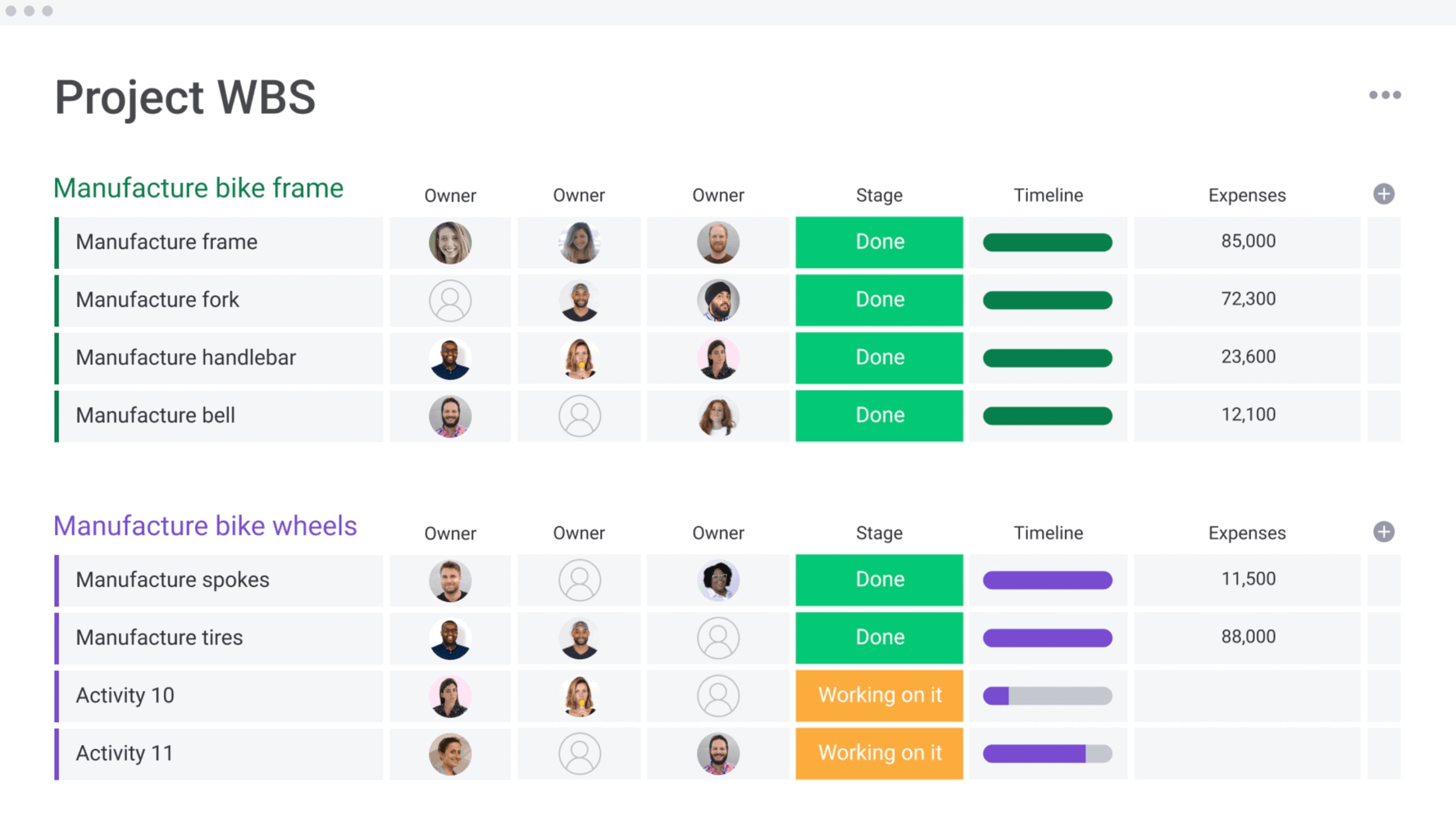
monday.com goes beyond static tracking. It brings resource allocation, live project data, automation, and AI insights into one intelligent Work OS — so decisions are always based on what’s actually happening across the organization.
Visual resource management at scale
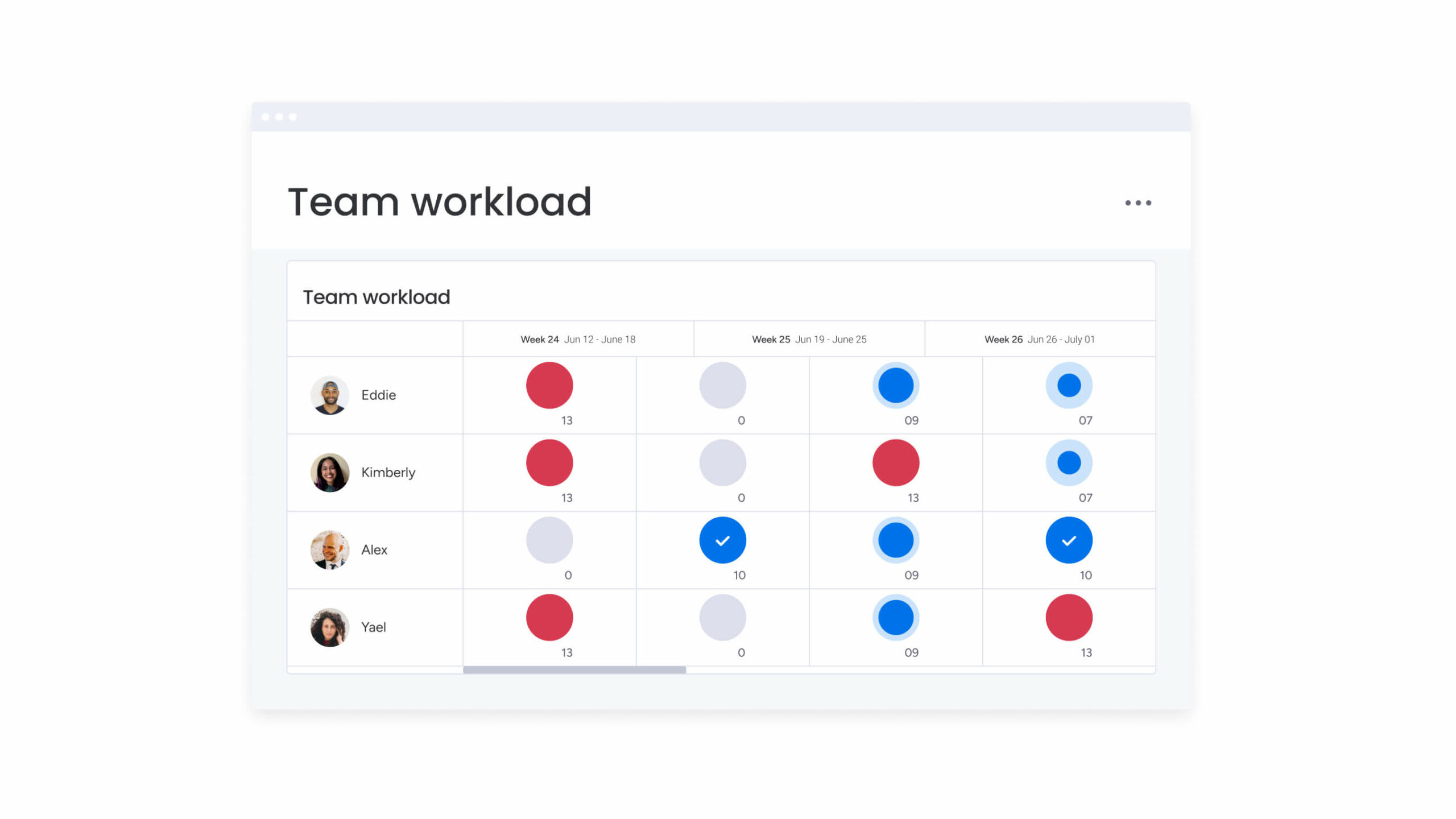
The Workload View provides an instant, color-coded snapshot of capacity across teams and projects. Managers can immediately see who is overloaded, who has availability, and where priorities need to shift.
Reallocating work is seamless. Drag and drop assignments across boards, rebalance effort, and keep projects moving without complex manual updates.
AI-powered allocation and early risk signals
Built-in AI strengthens every allocation decision. The platform analyzes availability, effort, and skills to suggest the right people for the right work. Portfolio Risk Insights scans boards continuously, flagging potential capacity conflicts before they turn into delays.
Instead of reacting to missed deadlines, teams gain the foresight to adjust early and stay ahead.
Organization-wide visibility and collaboration
Because work lives in one connected system, departments operate from the same data. Marketing can see engineering capacity. Operations can assess upcoming workload spikes. Leaders gain a portfolio-level view without requesting manual reports.
Resource management becomes proactive, transparent, and scalable.
Organizations ready to move beyond reactive planning can unify resource allocation and execution inside one intelligent platform designed for growth.
Frequently asked questions
What is the difference between resource management and workforce planning?
Resource management is tactical and operational, focusing on allocating current employees to specific projects over the short to medium term. Workforce planning is strategic and long-term, focusing on hiring, analyzing future skill requirements, and structuring the organization for years ahead.
How does resource management benefit small businesses?
Small businesses operate with tighter margins and fewer people, making efficiency critical. Effective resource management ensures that every hour is billable or strategic, preventing the waste and burnout that can quickly derail a smaller company's growth.
Can resource management software replace a resource manager?
No, software enhances the role but does not replace the human judgment required for negotiation and strategy. While software handles the data analysis and visualization, a resource manager is needed to manage stakeholder relationships, resolve complex conflicts, and make nuanced decisions.
Which industries benefit most from resource management?
professional services, agencies, it consulting, and construction firms benefit most from enterprise resource management because their revenue is directly tied to billable hours and project delivery. However, any organization with cross-functional projects and shared resources, such as software development or manufacturing, sees significant value.
How do resource managers handle remote and distributed teams?
Resource managers rely on cloud-based platforms to maintain visibility into remote team capacity and progress. They focus on output and availability windows rather than physical presence, using digital collaboration capabilities to ensure distributed teams remain aligned and supported.
What makes AI-powered resource management different from traditional methods?
AI-powered management moves from reactive tracking to proactive prediction. It automates complex matching logic and forecasts future constraints based on data trends, allowing managers to solve problems before they impact the business, rather than just recording them after the fact.

 Get started