


Engineering teams may complete a strong product design, yet production timelines continue to shift. Quality requires additional validation, procurement faces sourcing delays, and existing production lines are already operating near capacity. Any disruption risks missed deliveries and downstream revenue impact.
This is the reality of project management in manufacturing. Projects must deliver new products, processes, or facilities while live operations continue uninterrupted. Unlike digital or office-based projects, manufacturing initiatives operate within fixed physical, regulatory, and safety constraints.
This guide outlines the five stages of manufacturing project management, from shop floor feasibility to final operational handover. It explains which methodologies work best in production environments, how to manage cross-functional complexity, and how structured work management connects strategy to execution without disrupting daily operations.
Key takeaways
- Manufacturing projects must coexist with live operations: Successful delivery depends on aligning project activities with production schedules, maintenance windows, and capacity constraints to avoid downtime and revenue loss.
- Early cross-functional involvement reduces costly rework: Engaging production, quality, and supply chain teams from the start helps ensure designs are manufacturable, compliant, and executable at scale.
- Methodology choice should reflect physical constraints: Waterfall works best for capital-intensive assets, Agile supports continuous improvement, and hybrid models balance innovation with production discipline.
- Success requires tracking both project and production metrics: Monitoring milestones alongside indicators like yield, OEE, and defect rates ensures projects deliver value without harming operational performance.
- Connected work management improves visibility and control: Platforms like monday work management help unify project timelines, resource capacity, and shop floor execution, enabling teams to identify risks earlier and coordinate across functions more effectively.
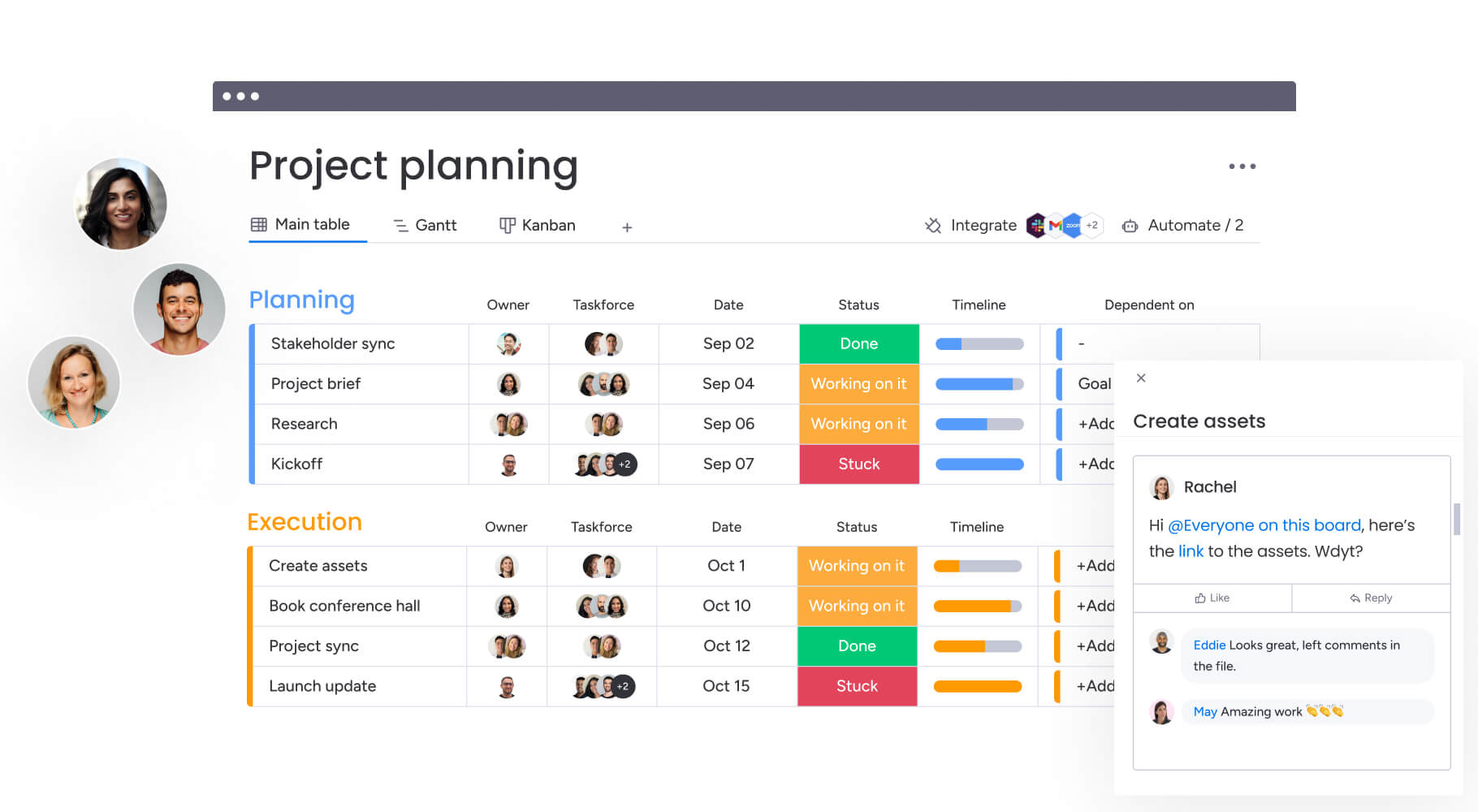
What is project management for manufacturing?
Manufacturing project management involves planning, coordinating, and overseeing initiatives that result in physical outputs. These include new product launches, equipment installations, process improvements, and facility expansions.
Unlike general project management, manufacturing operates within physical production constraints that directly influence outcomes.
This discipline requires close coordination across engineering, production, quality assurance, and supply chain teams. In addition to managing timelines and budgets, teams must account for equipment availability, material flow, and labor capacity throughout the project life cycle.
The scope extends beyond a core project group too. Shop floor operators, quality inspectors, and logistics coordinators all play an active role in execution.
Manufacturing project managers also implement change while maintaining stable operations, where a single decision can affect inventory levels, machine uptime, and safety compliance.
Manufacturing vs general project management
Manufacturing projects have stricter constraints and higher stakes than typical business projects. Physical deliverables mean errors cost you scrapped materials or expensive rework, not just simple revisions.
In fact, McKinsey’s modeling shows that a six-month delay on launching a $2B product can forfeit more than $750M in NPV, demonstrating the huge importance of schedule-first project management in manufacturing.
Key components of manufacturing PM
Manufacturing project management stands on four foundations that connect strategic planning to shop floor execution. Master these, and you’ll soon build intelligent systems that actually work.
- Production scheduling integration: Project timelines must align with master production schedules. Equipment upgrades cannot occur during peak production, and new product introductions require coordination with existing manufacturing commitments.
- Quality management systems: Deliverables move through defined testing and validation steps to meet strict quality standards. Requirements such as ISO certifications, FDA regulations, and industry-specific controls must be embedded directly into project workflows.
- Supply chain coordination: Project success depends on timely material and component availability. Procurement and logistics often sit on the critical path, determining whether schedules are met or delayed.
- Regulatory compliance tracking: Every change requires documentation, validation, and formal approval. Strong document control supports audit readiness and ensures compliance across regulated manufacturing environments.
Why manufacturing demands specialized project management
Manufacturing projects happen in the middle of real operations. Production lines are active, customer orders are moving, and margins are tight. Introducing change in that environment is never theoretical. It affects equipment uptime, inventory flow, and people on the floor.
That is why standard project approaches often fall short in manufacturing. Success depends on balancing live production with change, aligning teams that think and work differently, and maintaining strict quality and regulatory standards at every step.
Balancing production with change implementation
Implementing change in manufacturing means working around live production. Lines are running, orders are moving, and downtime is expensive. There is no pause button. Projects must fit into the rhythm of daily operations, not interrupt it.
That makes coordination critical. Teams need to carefully plan:
- Scheduling equipment installations during planned maintenance windows.
- Running pilot lines alongside full scale production.
- Aligning material deliveries with existing production schedules.
- Managing workforce shifts between project work and operational responsibilities.
In this environment, even small timing mistakes can ripple across the entire facility.
Managing cross-functional complexity
Manufacturing projects cross functional areas that work in completely different ways. Engineering cares about specifications. Production wants throughput. Quality enforces standards. Supply chain manages inventory. When these teams aren’t aligned, engineering designs products production can’t build efficiently. Or procurement buys materials that fail quality specs.
This challenge is compounded by the fact that 76% of organizations face sustained challenges hiring engineering talent and 56% report challenges sourcing skilled trades, making cross-functional coordination even more critical.
Organizations using monday work management create unified workspaces where these diverse teams collaborate daily, reducing miscommunication and ensuring alignment across all manufacturing project phases.
Meeting regulatory and quality standards
Manufacturing projects follow a structured life cycle adapted for physical and operational constraints. These stages evaluate feasibility against production capacity early and ensure that delivery includes a thorough operational handover. Each stage supports both project success and production continuity.

The 5 stages of manufacturing project management
Manufacturing projects follow a structured path, but that path looks different from a typical office-based initiative. Each phase has to account for equipment limits, production schedules, and operational readiness from the start.
The five stages below reflect how manufacturing teams move from early feasibility through full production handover, while protecting both project outcomes and day-to-day operations.
Stage 1: Project initiation and feasibility analysis
The initiation phase confirms whether a project is operationally and physically viable before significant resources are committed. The objective is to determine whether the product, process, or facility can be delivered profitably and at scale.
Key activities in this stage include:
- Capacity analysis: Evaluating if equipment and facilities handle projected volume without degrading existing operations.
- Supply chain assessment: Verifying suppliers meet quality and volume standards within cost structures.
- Regulatory review: Identifying certifications and safety standards early to prevent compliance blockers.
- ROI calculation: Analyzing capital expenditure against expected operational savings or revenue gains.
Stage 2: Planning from shop floor to supply chain
Planning translates high-level objectives into detailed execution roadmaps that account for every process, resource, and machine hour. This phase integrates project schedules with master production schedules to surface conflicts before they affect delivery.
Effective planning connects engineering, production, quality, and supply chain requirements into a single coordinated plan. It ensures that projects progress without compromising throughput, safety, or delivery commitments.
Critical planning elements include:
- Resource loading: Assigning engineers, operators, and machines while accounting for shift patterns and maintenance.
- Material requirements planning: Synchronizing orders with project phases for just-in-time delivery.
- Quality planning: Defining inspection points, testing protocols, and acceptance criteria.
- Risk management: Developing contingencies for equipment failure, supplier delays, or yield issues.
Stage 3: Execution and production integration
Execution means bringing plans to the shop floor, coordinating actively between project teams and production leadership. Physical implementation needs careful management across several areas.
Key execution activities include:
- Change management: Implementing line changes using controlled processes for safety and minimal disruption.
- Visual management: Using dashboards and boards to keep staff informed of activities and timeline changes.
- Contractor coordination: Managing external vendors while ensuring adherence to site protocols.
- Real-time problem solving: addressing fit-up errors or software bugs without stopping project momentum.
Stage 4: Monitoring quality and progress
Monitoring focuses on both project advancement and operational health. Success at this stage means meeting milestones while preserving core production metrics.
Teams track a combination of leading and lagging indicators to detect issues early. This balanced approach also prevents small deviations from escalating into costly failures during ramp-up.
Teams monitor multiple performance indicators, including:
- Process capability through Cpk and Ppk values during pilot runs.
- Defect rates in real-time to identify quality issues before full-scale production.
- Material and labor costs that can escalate through overtime or expedited shipping.
- Schedule adherence using predictive indicators to identify if critical path items slip due to operational priorities.
Stage 5: Delivery and operational handover
Delivery shifts from project mode to operations, transferring ownership, knowledge, and responsibility to production teams.
The handover process includes several critical steps:
- Validation and testing: Completing acceptance tests to prove equipment meets specifications.
- Operator training: Conducting hands-on training and certification for daily operations staff.
- Documentation transfer: Providing maintenance manuals, spare parts lists, and standard operating procedures.
- Ramp-up support: Project teams remain engaged during initial production to troubleshoot and optimize.
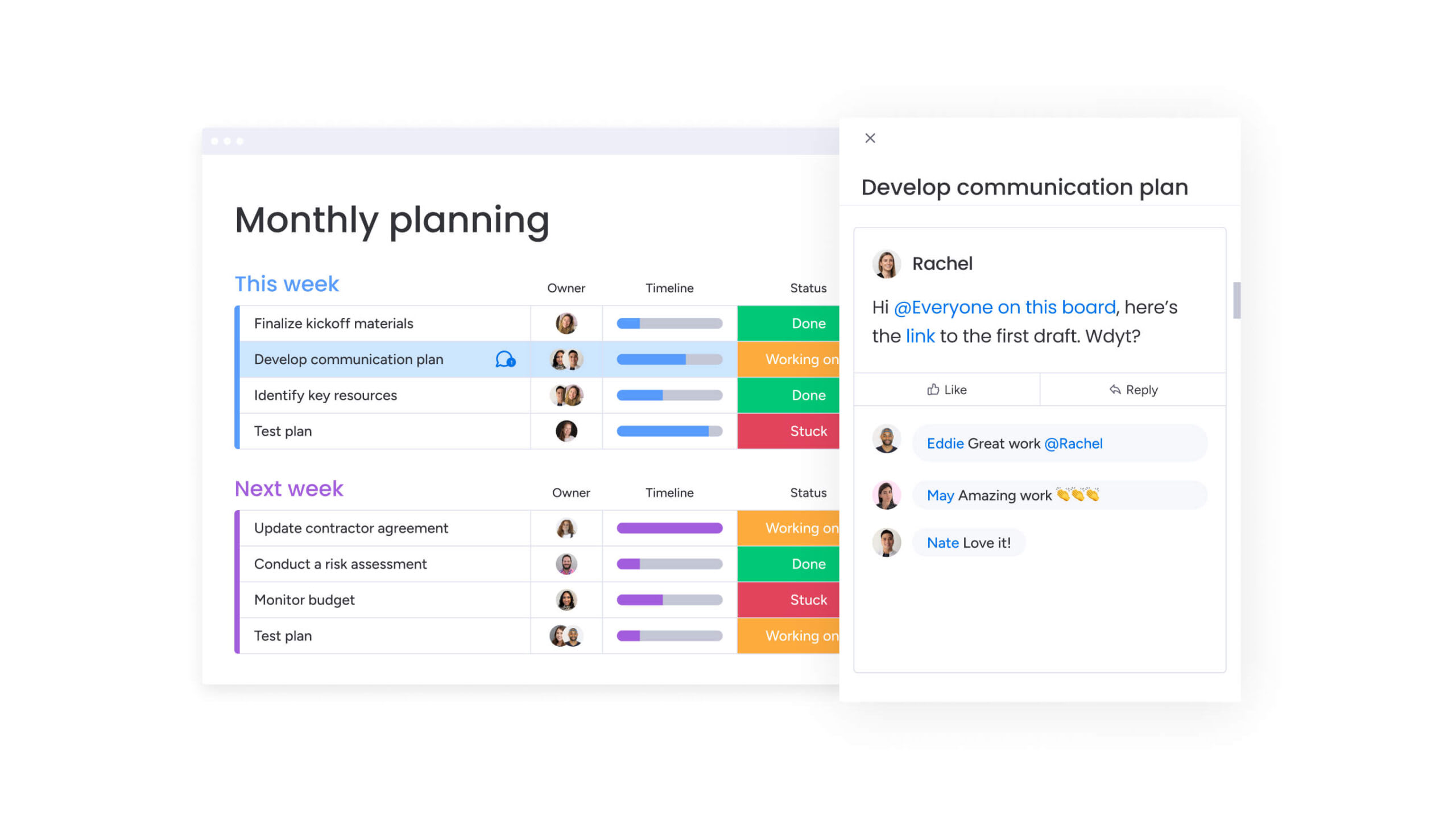
Manufacturing project management methodologies that work
Manufacturing projects are not all built the same. Installing new capital equipment is very different from improving a process on an existing line or launching a new product into production. The level of risk, flexibility, and change tolerance shifts with each type of initiative.
Choosing the right methodology makes the difference between controlled execution and unnecessary disruption. The approaches below show how Waterfall, Agile, and hybrid models fit into real manufacturing environments, and when each one works best.
Waterfall for capital equipment projects
Waterfall is often the safest choice for capital heavy initiatives such as facility construction, major line expansions, or large equipment installations. In these projects, late changes are costly. Once foundations are poured or machinery is installed, adjustments are not minor tweaks.
A structured, phase by phase model brings clarity early. Requirements are defined in detail, designs are approved, and regulatory and safety checks are completed before anything moves to physical execution. That level of discipline protects both budget and uptime in environments where trial and error simply is not an option.
Agile for continuous improvement
Agile methodologies excel in process improvement initiatives, software integration, and R&D projects. In manufacturing, Agile means short sprints that solve specific problems, reducing changeover time or improving quality metrics.
Teams test improvements directly on production lines, collect feedback, and refine solutions incrementally. Modern platforms like monday work management support this approach by enabling flexible workflows, shared visibility, and rapid iteration as teams learn and adapt.
Hybrid models for product development
New product introduction often blends Agile and Waterfall approaches. Early design and prototyping benefit from Agile flexibility, allowing teams to iterate based on testing and feedback.
Once designs are finalized, execution transitions to Waterfall for tooling, supplier onboarding, and production ramp-up. This hybrid model balances speed with the discipline required for scale.
Best practices for manufacturing project excellence
These practices connect theoretical project management to what actually happens on factory floors. They create systems that scale across departments and facilities without sacrificing project success or operational continuity.
- Align projects with production schedules: Synchronize project timelines with Master Production Schedules. Use maintenance shutdowns and holiday breaks for disruptive installation work to minimize revenue impact.
- Build strong cross-functional teams: Include representatives from production, maintenance, quality, and supply chain from day one. This prevents design-for-manufacture issues where engineers create products difficult or expensive to assemble.
- Implement visual progress tracking: Display project status in real-time on shop floors through digital dashboards and Andon boards. Transparency ensures operators and managers understand upcoming changes and timeline expectations.
- Strengthen supplier partnerships: Treat suppliers as project team extensions. Integrated communication platforms enable real-time updates on material status, design changes, and quality requirements.
- Maintain compliance documentation: Automate documentation continuously rather than scrambling at project end. Digital systems capture approvals, test results, and change logs in real-time for audit readiness.
- Optimize resource allocation: Account for dual responsibilities where key staff balance project work with operational duties. Capacity planning visualizes conflicts between project work and daily firefighting.
- Establish continuous feedback systems: Capture insights from shop floor operators who know machinery best. Bottom-up information flow identifies practical issues that top-down planning misses.

Resource management across production and projects
Manufacturing projects compete for the same resources that keep production running. Engineers split time between improvement initiatives and troubleshooting. Equipment is booked for both customer orders and upgrades. Materials must serve today’s output and tomorrow’s launch.
That overlap makes resource management one of the hardest parts of manufacturing project management. Without clear visibility into people, machines, and materials, conflicts surface too late and disrupt delivery.
The following areas show where coordination matters most and how teams keep projects moving without sacrificing throughput.
Capacity planning for dual priorities
Managing shared resources requires understanding how project work affects operational availability. When technicians support installations, coverage for maintenance activities decreases.
For a real-world example, U.S. manufacturing capacity utilization reached 76.0% in November 2025, meaning spare capacity remains limited. Proactive planning enables teams to adjust timelines, staffing, and coverage before constraints become disruptive.
Capacity planning enables managers to:
- Backfill roles during critical project phases.
- Schedule overtime to maintain operational coverage.
- Adjust project timelines based on resource availability.
- Balance competing demands across business units.
Intelligent platforms like monday work management provide workload views that can help teams see and balance these competing demands across business units.
Equipment and material coordination
Shared equipment like forklifts, cranes, and testing labs require booking systems to prevent conflicts. Projects get delayed when the equipment you need is busy serving the shipping department.
Material planning must distinguish between:
- Project inventory (prototypes, spares).
- Production inventory to prevent accidental consumption.
- Emergency stock for operational continuity.
- Vendor-managed inventory for just-in-time delivery.
Skills-based team assignment
Manufacturing projects require specific certifications, including welding, electrical safety, and PLC programming. Resource management systems track skills matrices to make sure assigned staff are qualified, not just available.
That prevents safety incidents and quality errors when untrained personnel try to do specialized work. Cross-training programs create backup for critical skills, so you’re not dependent on specific individuals.
Try monday work managementManufacturing project KPIs that drive results
Effective measurement combines project performance with operational impact. These KPIs outlined below provide a balanced view of delivery, quality, and financial outcomes.
Schedule and delivery metrics
Schedule adherence measures the percentage of milestones completed on time. Time to market tracks the duration from concept approval to full production release.
Production downtime impact captures both planned and unplanned disruptions caused by project activity.
Quality and compliance indicators
First pass yield measures the percentage of products meeting quality standards without rework during the pilot and ramp-up phases. Validation pass rate tracks the percentage of validation tests passed on the first attempt.
Defect density identifies defects per production unit during project execution.
Cost and efficiency measures
Cost of poor quality captures the financial impact from scrap, rework, and warranty claims resulting from projects. Overall equipment effectiveness measures the productivity of new equipment or processes against design targets.
Budget variance tracks actual spend against approved budgets, including hidden costs like overtime and expedited freight.
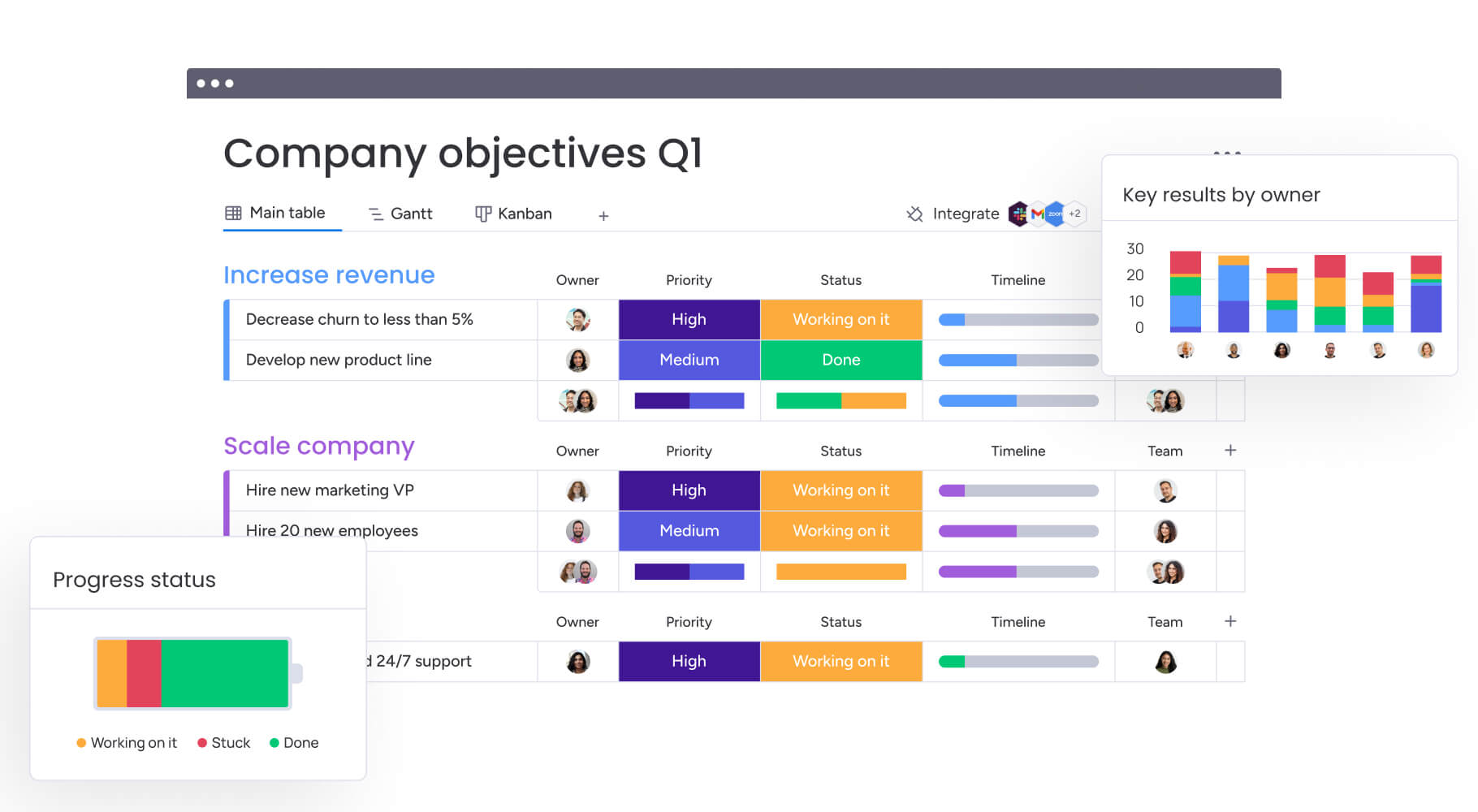
How AI and smart manufacturing enhance project management
Artificial intelligence transforms manufacturing project management from reactive to predictive. AI predicts issues and optimizes complex variables in real-time, enabling proactive decision-making that protects both project timelines and operational performance.
Predictive risk analytics
Manufacturing projects generate patterns long before problems show up on the floor. AI can spot those signals early by analyzing historical project data, supplier performance, and production metrics. That might mean identifying a likely supplier delay or flagging elevated failure risk during a critical installation phase.
On monday work management, Portfolio Risk Insights scan project boards automatically and highlights risks by severity. Teams can see what needs attention immediately and act before small issues turn into costly disruptions.
Automated resource optimization
Smart algorithms optimize human and machine resource allocation by processing thousands of constraints simultaneously. Systems automatically suggest optimal schedules for machine upgrades by analyzing production demand, technician availability, and spare parts windows.
This automation reduces administrative burden and maximizes utilization across both project and operational activities.
Digital twin integration
Digital twins create virtual replicas allowing project teams to simulate changes before implementation. Engineers test production line layouts, validate control software, or train operators virtually.
Virtual commissioning significantly reduces errors during physical installation and shortens ramp-up time for new processes.
Essential manufacturing project management software features
Software for manufacturing must handle the complexity of physical production environments beyond simple project plans. The right platform connects strategy to execution while providing the specialized capabilities manufacturing teams need to succeed.
Core capabilities for production environments
Manufacturing teams need specific functionality to manage complex projects effectively:
- Production schedule integration: Overlay project timelines with production calendars to visualize conflicts.
- Quality management integration: Track defects, manage inspections, and store compliance documentation.
- Supplier collaboration portals: Secure spaces for vendors to view drawings, update status, and submit documentation.
- Mobile accessibility: Robust apps allowing shop floor staff to update progress and report issues directly.
- Document control: Version-controlled storage ensuring everyone works from latest specifications.
System integration requirements
Manufacturing project management software connects the tech stack. It must integrate with Enterprise Resource Planning systems to sync cost and inventory data, Manufacturing Execution Systems to track real-time production status, and Product Lifecycle Management platforms to access engineering designs.
This data flow eliminates manual entry and ensures a single source of truth across all systems.
Multi-site scalability
Organizations with multiple plants need standardized frameworks replicable globally. Software supports multi-site portfolio management, allowing executives to compare project performance across regions, share best practices, and manage resources globally.
Time zone management and multi-language support prove critical for global manufacturing teams.
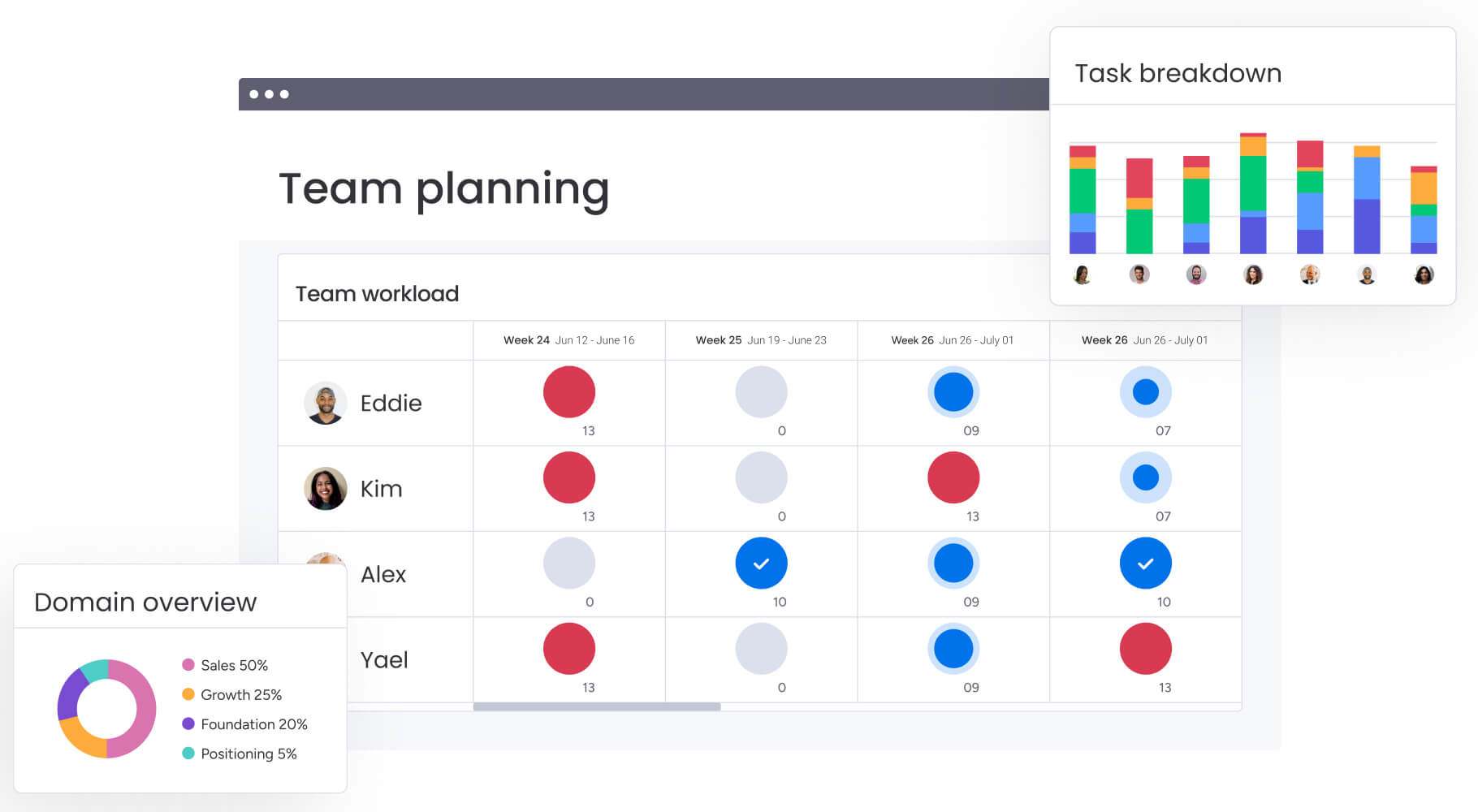
Transform manufacturing project outcomes with monday work management
Manufacturing teams juggle a lot at once. New initiatives need to move forward. Production cannot slow down. Quality and compliance standards must hold. And every decision ripples across engineering, supply chain, and the shop floor.
When projects live in separate spreadsheets and updates sit in email threads, that coordination gets harder than it needs to be.
monday work management brings everything into one connected system so teams can see the full picture and act with confidence:
- Integrated production aware planning: Align project timelines with production schedules, capacity limits, and maintenance windows to avoid unnecessary downtime.
- Real time cross functional visibility: Keep engineering, production, quality, and supply chain aligned through shared dashboards and live updates.
- Embedded quality and compliance tracking: Manage inspections, approvals, and documentation directly within project workflows.
- Proactive risk and resource management: Surface conflicts, delays, and capacity constraints early using centralized data and AI powered insights.
When project management reflects operational reality, teams move faster and make better decisions. monday work management helps manufacturing organizations reduce risk, protect throughput, and deliver measurable results without adding extra layers of complexity.
Frequently asked questions
What are the five phases of manufacturing project management?
The five phases of manufacturing project management are initiation and feasibility analysis, planning from shop floor to supply chain, execution and production integration, monitoring quality and progress, and delivery and operational handover. Each phase addresses the unique constraints of physical production environments.
How is manufacturing project management different from construction project management?
Manufacturing project management focuses on integrating projects with ongoing production operations and supply chains, while construction typically involves standalone builds. Manufacturing also requires continuous quality compliance and coordination with active production lines.
What makes manufacturing project management software effective?
Effective manufacturing project management software offers production schedule integration, real-time resource visibility, robust compliance documentation features, and cross-functional collaboration capabilities that connect shop floor to executive teams.
Can lean and Agile methodologies work together in manufacturing?
Yes, lean and Agile complement each other in manufacturing. Lean focuses on waste reduction and flow efficiency while Agile provides the iterative framework for implementing improvements and adapting to change.
How do you measure manufacturing project success?
Manufacturing project success is measured through on-time delivery, budget adherence, production impact metrics like OEE, quality indicators including yield and defects, and safety performance across all project phases.
What skills do manufacturing project managers need most?
Manufacturing project managers need strong understanding of production operations, cross-functional leadership abilities, knowledge of regulatory standards, and technical proficiency in risk and resource management systems.

 Get started